Home Blog Page 2576

Obsolete treatment cannot heal country’s wounds (VIDEO)

0

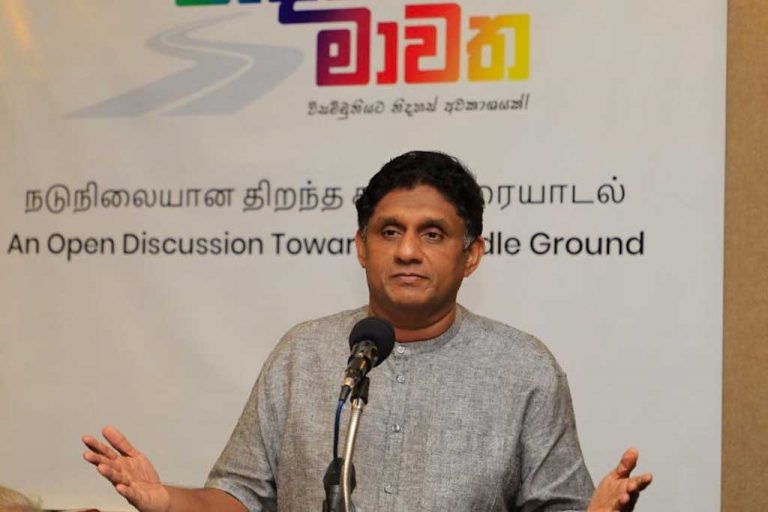
The problems faced by the country cannot be solved by the implementation of obsolete solutions, said Leader of the Opposition Sajith Premadasa, speaking to the “Sammuthiyata Nidahas Awakashayak” programme organised by the “Medahath Mawatha” Civil Movements Collective to days (22) ago.

The event was graced by many civil, political and social activists.

The country can be saved from the economic abyss it has fallen into by a genuinely sustainable programme, he noted.

He added that the President, the Prime Minister and Parliament cannot build a country via an isolated approach, for the legislature, the executive and the judiciary should exist with the checks and balances system.

The Opposition Leader went on saying that he believes that the country’s problems should be resolved on the basis of social democracy and that the need for a more pragmatic and common agenda has now become more acute unlike ever before. This programme should be practical and honest and can be discussed regularly, he emphasised.

Suggesting that the trajectories for economic development addressed today are not practical, Premadasa stressed that it would be ridiculous to disregard income inequality, which is a burning issue in the country, and speak of economic growth.

In the midst of this calamity, a diplomatic intervention would be vital, the Opposition Leader went on, adding that the ambassadors assigned to Sri Lanka in other countries have a huge responsibility in this regard. Most of these ambassadors, on the other hand, have failed to recognise their role rather pitiably, he noted.

The civil movements must be included in the five main pillars of the country’s development, Premadasa pointed out, adding that the representation of the civil movements would be essential for good and optimal governance.

MIAP

Former Salt Corporation Chairman denies new appointment at Film Corporation – a trend on rise?

0

Nishantha Sandabarana, who was appointed as the new Chairman of the Film Corporation, has reportedly denied the appointment.

Sandabarana previously served as the Chairman of the Ceylon Salt Corporation and was ousted from his position days ago.

His dismissal came in in response to the pressure exerted by Hambantota Mayor Eraj Fernando, who had even staged a death fast against Sandabarana’s role in the Salt Corporation.

Reports claimed that Fernando’s strong objection to the former Salt Chief was actually due to losing his ransom from the Corporation under Sandabarana’s regime. The matter at one point was intervened by Minister Chamal Rajapaksa to ensure Sandabarana’s dismissal, reports added.

The event being investigated, our correspondents revealed that the affairs at the Salt Corporation are being handled as per the will of a certain family for a long time and that Fernando was merely being a proponent.

There is a rising trend of heads of state-run institutes being ousted, offered new positions and denying them.

Nevertheless, whether the ‘huge profits’ they claim they gained with their talents over the last two years were actually due to the country’s economic policies should separately be investigated into.

MIAP

Previous reports:
Salt Corporation Chairman ousted
Former MILCO Chairman denies appointment at Fertiliser Company Ltd.

Every roof can be turned into a power plant. A ‘clan’ of engineers doesn’t allow it: State Minister Jayantha Samaraweera

0

Every roof can be turned into a power plant in the event that Sri lanka is a country receiving sunlight 12 hours a day, but a ‘clan’ of engineers does not allow it, said State Minister of Warehouse Facilities, Container Yards, Port Supply Facilities and Boats and Shipping Industry Development speaking to media yesterday (23).

The current power crisis exists in the country under this circumstance, Samaraweera noted.

“This is a country receiving sunlight 12 hours a day. Every roof can be turned into a power plant. This has been ceased by a ‘clan’ of engineers. Instead of looking for an answer, they have proceeded with a project that depends on fuel-based power generation and wastes money, and are saying that there is no money to import fuel,” he said.

The State Minister added: “We say, that this matter should be solved in the Cabinet, gentlemen. These shall not be disclosed to the people. People have enough problems to deal with. The man who had his three meals can afford to only two, the one with two only one, and the one with one suffers from hunger. Do they have to see these ministers’ drama on TV?”

MIAP

Power cuts under four sections from today: CEB Engineers

0

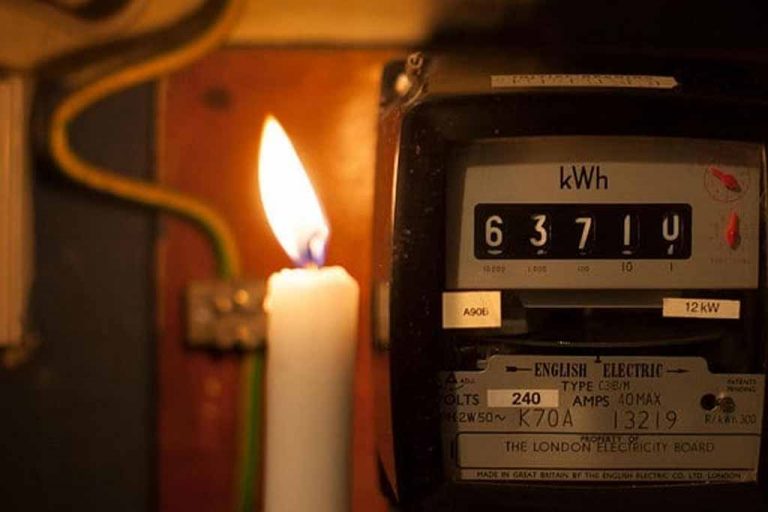
The action of cutting power may have to be carried from today (24) itself given the ongoing fuel shortage, said the Engineers’ Association of the Ceylon Electricity Board (CEB), speaking to a briefing yesterday (23).

“Sapugaskanda Plant has been inactive since about 22 noon. The Power Barge Plant has fuel oil only for about a day and a half. The Uthuru Janani Power Plant has a storage of oil sufficient for about four days, hence diesel for about four and a half days.

Considering the situation, the national grid may lose a capacity of about 160 – 180 megawatts from the evening of Monday. Therefore, a power cut may have to be proceeded for a shorter period on Monday night and from 2.30 pm to 3.00 pm, a period of about an hour and a half, on Monday eve. The Yugadanavi Plant has fuel oil only for about ten days.” said Eranga Kudahewa, Committee Member of the Engineers’ Association of the CEB.

Contributing, Union Secretary Dhammika Wimalaratna said,”Should this fuel situation continue, we may be compelled to cut power for about an hour on Monday and for about one hour and forty five minutes – two hours from Tuesday, running up to a couple of days. These cuts may be carried out under four sections; from 2.00 pm, or 3.00 pm in the eve to 9.00 pm at night, under four sections. The exact timetable will be revealed on Monday. The timetable will be forwarded to the Public Utilities Commission by Monday morning.”

MIAP

Former MILCO Chairman denies appointment at Fertiliser Company Ltd.

0

Lasantha Wickramasinghe, who was appointed as the new Chairman of the Ceylon Fertiliser Company Ltd. has reportedly denied his appointment.

Wickramasinghe previously served as the Chairman of MILCO and was ousted from the position on January 19. Renuka Perera, Control Secretary of the Sri Lanka Podujana Peramuna (SLPP) the Ruling Party, was appointed in replacement the following day.

Nevertheless, Wickramasinghe, who was appointed as the Fertiliser Company Chairman on January 21, has denied the offer and informed his concern to the Finance Ministry in writing, sources said.

MIAP

Construction industry raises concerns on cement shortage urging CB support

0

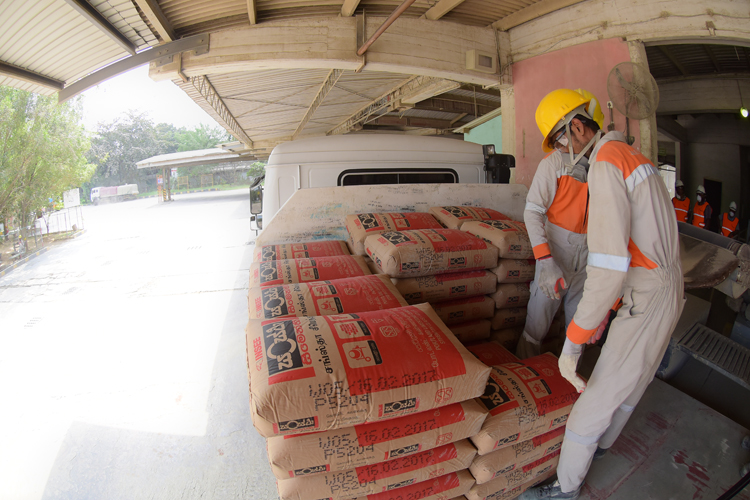
Despite the recent price hike of cement, the cement shortage in the local market is expected to continue for at least another two months, according to industry sources.

 Lanka Ready-mix Concrete Association (LCRA) Chairman Anura Vithanage claimed that there are about 300 ready-mix concrete companies in Sri Lanka who are all facing dire circumstances due to the shortage of cement in the local markets.

Withanage further stated: “Prior to the current shortage, my monthly requirement was about 1,000 tonnes. However, I can barely get 500 tonnes now. It doesn’t matter if you have money, there is no cement in the market.”

Explaining further, he claimed: “According to cement suppliers, when they open LCs (letters of credit) for cement imports, they are granted approval only for a limited amount. 

Where once a ship would bring about 4,000-5,000 tonnes of cement, now when a LC is opened, approval will be granted for only about 2,000 tonnes. From these limited stocks of cement, the cement suppliers will give priority to their continuous cement buyers. Consequently, there is no cement available for the normal consumer.”

The Ceylon Institute of Builders (CIB) raised concerns over the worsening cement shortage and urged for swift solutions from the Central Bank.

CIB said the construction industry, being one of the largest GDP contributors and employment generators, is paralysed due to the massive shortage of cement in the country.

“We require local production of approximately 8.8 million tons, and presently, we can’t release this because LCs cannot be opened to import raw materials. 

Further, there is no stable selling price for cement. Although a fixed rate has been indicated in the range of 1,300, this is not our reality,” CIB Chairman Dr. Rohan Karunaratne said.

He said cement prices are dangerously volatile and the issue of such abnormal prices is overshadowed by the larger issue that cement (at any price) is markedly unavailable.

“Therefore, the Central Bank should offer an appropriate solution for banks to open up LCs for raw material importers of cement,” Dr. Karunaratne added.

According to CIB over the last two years, the cement market has struggled. First, there was a 11% year-on-year drop in total local production and imports, to 7.2 million tons in 2020 from 8.1 million tons in 2019. 

Then, imports fell by 18% year-on-year to 1.83 million tons from January to August 2021 from 2.24 million tons.

“Local production has stepped up to mitigate this, producing a final growth in total local production in 2021, and continuing this effort in 2022. But they cannot retain this untiring support to Sri Lankan building without their raw materials,” CIB Chief said.

“The cement industry is a good example of how dangerous exchange rate effects are, once again, making the survival of thousands of Sri Lankan workers and many of our copious businesses, an almost impossible job,” he added.

It was pointed out that the largest supplier Tokyo Cement (accounting for approximately 38% of production), INSEE (35%), Ultratech (13.6%), Singha etc., when questioned about the cement shortage, have warned the industry that no relief should be expected anytime soon and that this may continue, unless they are given the ability to open up LCs. 

Batticaloa Airport upgrades to a fully- fledged domestic airport soon

0

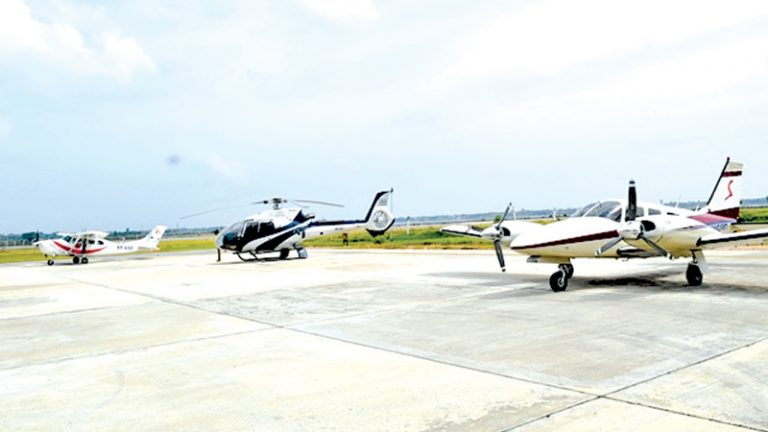
Batticaloa International Airport is to be redeveloped as a fully fledged domestic airport following its previous attempt of upgrading it in 2018-2019 period with the aim of facilitating tourist arrivals in the country especially from India, Tourism and Civil Aviation Minister, Prasanna Ranatunga revealed.

A tripartite agreement will be signed by Airport and Aviation Services Pvt Ltd (AASPL), Civil Aviation Authority (CAA) and Sri Lanka Air Force to prepare a suitable plan for this purpose and implement it.

This plan is being devised by CAA to improve basic facilities at the airport including the building of control towers and the Northern section of the runway and installing fire fighting and rescue systems etc.

A special programme will be implemented to identify commercial investment opportunities inside the airport focusing attention on other investment opportunities relating to the domestic aviation industry, he said.

Batticaloa Airport and its infrastructure facilities are now being developed with the assistance of tourist hotel owners and activists in the field of tourism, he added.

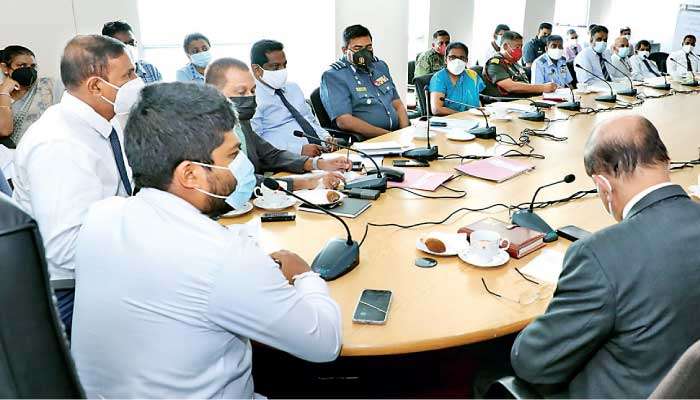
A special meeting was held recently at the Batticaloa International Airport (BTIA) under the patronage of the Minister to discuss the future development opportunities of the airport and how it could contribute to domestic travel and the tourism industry in Sri Lanka.

The BTIA, the Gateway to Eastern Sri Lanka, was reopened for civil operations in 2018 and is geo-strategically located 2.4km South East of the city of Batticaloa awakening the eastern coast of Sri Lanka connecting to all domestic Airports of the country.

In a much hyped-up event in March 2018 the previous government declared open the airport after the reconstruction of the runway, apron and terminal building at a cost of staggering Rs. 1.4 billion with Treasury funding.

It was also then gazetted as an international airport as it enhances business and trade prospects in the Jaffna peninsula.

At that time Alliance Air of India was to launch direct flights from northern Sri Lankan to Chennai and Tiruchi but the plan halted midway due to COVID-19 outbreak and several other logistics issues, officials said.

Along with the development in Palaly, the government proposes to upgrade the other two regional airports — Ratmalana, located South of Colombo and Batticaloa — in the island to international airports.

For northern Tamils, it was a historic development in their region, which was badly affected by the civil war that spanned three decades until 2009, official sources said.

In addition to linking them to the Indian cities they frequent, the opening of an international airport also enhances business and trade prospects in the Jaffna peninsula.

The Palaly airport, some 20 km north of Jaffna town, has now been renamed Jaffna International Airport. Similar plans are afoot in the east as well,

The previous government has put in about Rs. 3 billion to upgrade Palaly from a regional to an international airport, extending its runway up to 2.3 km, with a plan to further extend it by another kilometer in the next phase.

Ratmalana Airport serves regional and international flights from Jan. 29

0

The Ratmalana International Airport is to service global and regional flights from 29 January, revealed State Minister of Aviation and Export Zones Development D.V. Chanaka recently.

He said that initially the airport would handle flights from South India, the Maldives and Bangladesh.

The co-existence of the airport with its locality on identified five key areas in the plan will create renewed hopes for a new era with its growing strategic significance along with the emerging Colombo Financial City, High End Tourism and business travel needs of High Net Worth Individuals (HNWIs). 

The key strategies will take the airport to a level where there will be increased usage of lands and other resources to fully meeting its growing national socioeconomic requirements. 

With the renewed hopes and ambitious plans of the Colombo International Airport Ratmalana, this will be a beginning of a new era.

These facts were revealed during a discussion on the development of the Ratmalana Airport held at the State Ministry of Aviation and Export Zones Development. 

Secretary to the Ministry Janaka Chandragupta, Chairman of Airports and Aviation Retired Major General G.A. Chandrasiri, Chairman of the Civil Aviation Authority Upul Dharmadasa and Director General Captain Themiya Abeywickrama were also present at the discussion.

The Colombo International Airport, Ratmalana was established in 1938 and regional international flights were not operational due to the commencement of flights from Katunayake International Airport in 1968. Mr. Chanaka said that steps have already been taken to launch new regional international flights using the resources available at the Ratmalana Airport.

Two airlines have already agreed to launch regional international flights based on India and the Maldives. The minister said talks were underway with several other airlines and those discussions were positive. 

He said steps have been taken to develop the Ratmalana International Airport in several key areas. It is also being developed as a local aviation hub, recreational aviation hub and aviation training centre. 

In addition, measures will be taken to encourage private jets to Sri Lanka targeting high income earners and to meet the requirements of technical and parking services for private jets such as jet refueling.

In addition, promotions are expected to be launched at Ratmalana Airport for international, commercial and corporate flights.

The Master Plan of the Colombo International Airport Ratmalana has been developed for its envisioned future, for the period from 2018 through 2030, positioning it as an “Exclusive Gateway to Colombo, Sri Lanka’’. 

Colombo International Airport Ratmalana has great potential to contribute to the growth of the tourism industry in Sri Lanka. 

Considering the socioeconomic changes taking place within the country, the region, and the world, Airport and Aviation Services (Sri Lanka) (Private) Limited (AASL) looks into the emerging opportunities in order to meet the growing demands in the foreseeable future. 

The long term strategic goal of Colombo International Airport is to bring the airport to the optimum operational capacity by maximum utilization of existing resources.

Colombo International Airport Ratmalana is the first International Airport in Sri Lanka Since 1935, which is located in Ratmalana just 14 km south of the Sri Lanka’s Business Capital of Colombo.

 This Airport operates around 70 Aircraft movements per day as the Domestic Aviation Hub by-serving to all domestic aviation needs.

 These facilities included Commercial Passenger Aircraft, Aviation Training Schools, International Corporate Jets, VIP & VVIP movements, humanitarian missions during national crisis situations and SLAF operations. 

Well-established socio economic, local community and environmental adaptation of the airport operations will be an advantage for existing and future developments.

Potential business opportunities such as High End Tourism, foreign investments for FBO, demand of domestic operators for expansions, growing trends in aviation training in the region, growth of private jet operations, and domestic connectivity to internationally arriving passengers may stress the development needs of Colombo International Airport Ratmalana.

Considering the strategic significance, capacities and capabilities, the Colombo International Airport Ratmalana will be developed under five main areas during this period.

It is now necessary to adjust Colombo International Airport Ratmalana to cater this potential demand of International Corporate Jets in both business and national aspects.

Colombo International Airport Ratmalana is the Domestic Aviation Hub of Sri Lanka and facilitating all 15 domestic airlines in all aspects and there are a number of requests from new operators and existing operators for expansion.

Domestic Aviation Hub strategy is focused on promoting the airport for the local, business tourists and connecting destination for international high-end tourists visiting Sri Lanka.

 For the implementation of this strategy, it is required to shift SLAF Hangars to the Northern side of the Runway along with structural modifications of the hangars, overlay the Apron and construct a new taxi way etc.
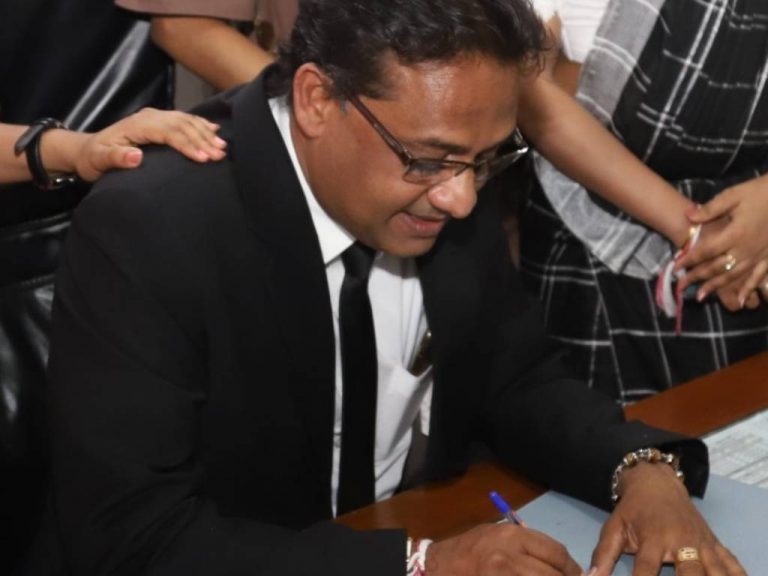
CB Governor says Sri Lanka honoured debt servicing without blemish

0

The Central Bank (CB) has heralded its settling of a maturing $500 million sovereign debt on Tuesday making use of its scarcely  available foreign currency reserves to repay bond holders but at the same time, economists said its total foreign currency borrowings has skyrocketed.

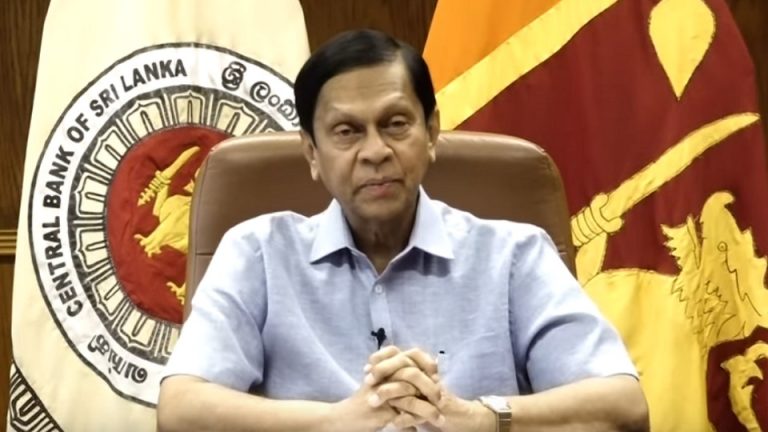
CB Governor Ajith Nivard Cabraal told a media conference on Thursday January 20 that Sri Lanka has honoured its debts without blemish and the CB has done it as usual notwithstanding the ‘cry’ to default by some misguided elements.

The repayment of the $500 million International Sovereign Bond (ISB) demonstrated that so-called economic experts, politicians and rating agencies were wrong, he said.

He noted that the over subscription of a recent Rs. 97 billion Treasury bill auction was an indication of investor confidence, disproving predictions of defaulting of the ISB by some economists and interested parties.

Responding to questions, Mr. Cabraal categorically stated that there was no intention of devaluation of the rupee or seeking IMF assistance as the CB’s Monetary Board is following the necessary economic programme.

The rupee depreciated by 7 per cent against the dollar in 2021 and has been broadly stable at Rs. 203 thus far in 2022, he added.

“Those interested parties who advocated default obviously have no knowledge about ISBs or international obligations,” he said, adding that they also have no clue about the repercussions of sovereign default.

“It may even be that they know the consequences, but would still prefer the country to be destroyed so that they can be getting political advantage,” he said, adding that ISB default is disastrous for the country.

The CB is also following a restructuring process like obtaining a swap facility to boost reserves and make repayments of debt fulfilling its obligations without suspending the repayment which is disastrous for the country, he opined.

“A country does not need outside enemies when it has some persons or so called experts who vociferously advise the authorities to default on international loans and dishonour sovereign obligations.” He asked whether any foreign supplier will be insane enough to make any kind of supply to a defaulting country?

The last minute credit line from India allowed some breathing space while the funds were released by the CB helped by New Delhi’s offer of a $400 million currency swap with the Reserve Bank of India and a deferment by two months of repayment of a $515 million loan.

This $515 million loan facility has been offered by Asian Clearing Union, a network of nine central banks in the region, followed by ministerial-level discussions with the South Asian neighbours.

A relief package from India with a $1 billion credit line for essential food and medicine — that follows a 10 billion yuan ($1.5 billion) swap with the People’s Bank of China in late December – also helped to strengthen foreign exchange reserves which stood at $3.1 billion in December 2021.

Referring to measures taken by the CB to tackle the dollar crisis, Mr Cabraal said that all local commercial banks have been directed to bear payments for fuel and essential commodities with the aim of facilitating dollar payments in the process of clearing Letters of Credit (LCs) held up in banks.

Banks should make use of its dollar reserves in addition to CB release of dollars from time to time to clear shipments of fuel and essential commodities giving a special priority rather than non-essential imports, Governor Cabraal disclosed.

While usually state banks opened LCs for fuel imported by the Ceylon Petroleum Corporation, now other banks too are allowed to share it, he added.

In accordance with another CB directive, registered tourist hotels and hospitality industry establishments have been asked to accept only foreign exchange for services rendered to foreign travelers and residents outside Sri Lanka.

The Monetary Board has also decided to distribute the financing of essential import bills for fuel purchases among the licensed banks in proportion to their foreign exchange inflows.

It has also decided to extend the payment of an additional Rs. 8 per US dollar for workers’ remittances paid in addition to the incentive of Rs. 2 per US dollar offered under the “Incentive Scheme on Inward Workers’ Remittances” until 30 April 2022.

Measures will be taken to reimburse the transaction cost borne by Sri Lankan migrant workers through the payment of Rs. 1,000 per transaction, when remitting money to rupee accounts via licensed banks and other formal channels with effect from 01 February 2022.

It will introduce higher interest rates for both foreign currency and rupee denominated deposits of migrant workers.The Monetary Board was of the view that the new measures will curtail the possible build-up of underlying demand pressures in the economy, which would also help ease pressures in the external sector, thus promoting greater macroeconomic stability

Government trims diplomatic mission expenses for cost-cutting

0

Cash trapped and debt-ridden government   is now pruning funds allocated to foreign missions overseas in the wake of dwindling foreign reserves with limited forex inflows and scarcity of US dollars.

As a cost cutting exercise, Sri Lanka Foreign Ministry has directed all heads of foreign missions to bring down additional expenses with a view of conserving the country’s much needed foreign reserves and minimising expenditure related to maintenance of Sri Lanka’s Missions / Posts overseas.

These measures are necessary to save foreign exchange while ensuring the effective conduct of bilateral relations, in the backdrop of the grave economic challenges posed by the Covid-19 pandemic, foreign secretary Admiral (Prof.) Jayanath Colombage disclosed.

 Although the  Foreign Ministry budgetary allocation from the budget 2022 has been slightly increased to Rs .12.85 billion for recurrent expenditure from Rs.12.36 billion in 2021, it is compelled to reduce spending in diplomatic missions overseas, he said.

In another communique issued on January 12, foreign secretary Colombage had also informed Heads of Foreign Missions that a decision has been taken to temporarily suspend the reimbursement of the representational allowance given to top officials of diplomatic missions.

A sum of $ 700 -$ 3600 was being paid for heads of missions as representational allowance while other raking officers were used get around $ 200 -$ 400 , provisions estimates revealed.

The representational allowance granted to Diplomatic Missions are used for important activities such as strengthening ties with the authorities of each country, promoting Sri Lanka’s tourism, trade, political, economic and security ties, and presenting official gifts at diplomatic meetings.

This allowance is granted to chiefs of mission, special envoys, permanent delegates or representatives to international bodies, principal officers, and other ranking diplomatic officers, and ranking Foreign Service officers stationed abroad.

The allowance was given to them to enable such officers to uphold the prestige of the Island nation, to represent the country with dignity and distinction, and to carry out their functions more effectively.

Foreign Ministry pointed out that while all related expenses are audited, these expenses incurred by the Missions are only reimbursed after the presentation of bills to the Ministry.

According to the circular issued by the ministry, the same set amount has been dispensed to all Sri Lankan Missions since 2001.

“For example, the maximum representational allowance granted for the Mission in Seoul, South Korea, one of the most expensive cities, is US$ 700 per month but it isn’t sufficient to cover expenses for a week,” informed sources added.

Meanwhile, it has been revealed that Heads of Foreign Missions had been informed that they are allowed to exceed the limit of the allowance on ‘special occasions’ but many had been turned down despite making requests to exceed the allowance when necessary.