Home Blog Page 2581

Sri Lanka expects tourism industry recovery to solve BOP troubles

0

Sri Lanka’s recovering tourism sector will help end the balance of payments troubles, Central Bank Governor Nivard Cabraal said, echoing statements made by ministers.

“When the pandemic is in the world for around two years there will be a pressure for the country. With the pandemic, the tourism sector is also under pressure,” Governor Cabraal said.

However tourism industry is heading for booming recovery with record number of tourist arrivals exceeding 31600 to Sri Lanka  posted in the first 11 days of 2022, Tourism Ministry said .

He said, in 2021, even though the foreign reserves had five billion US dollars, Sri Lanka was able to pay six billion US dollars in debt, and save three billion US dollars as well.

Cabraal said, with the tourism sector under pressure the country is not getting an income of nine billion US dollars.

“We are doing all this while we are lacking that income at the moment. What I see is not having patience,” he said.

“In another two-three months, the tourism sector will develop further. When that happens, the pressure we have will reduce.”

Economic analysts using classical principles however have warned that tourism fall is not the reason for currency troubles but liquidity injections.

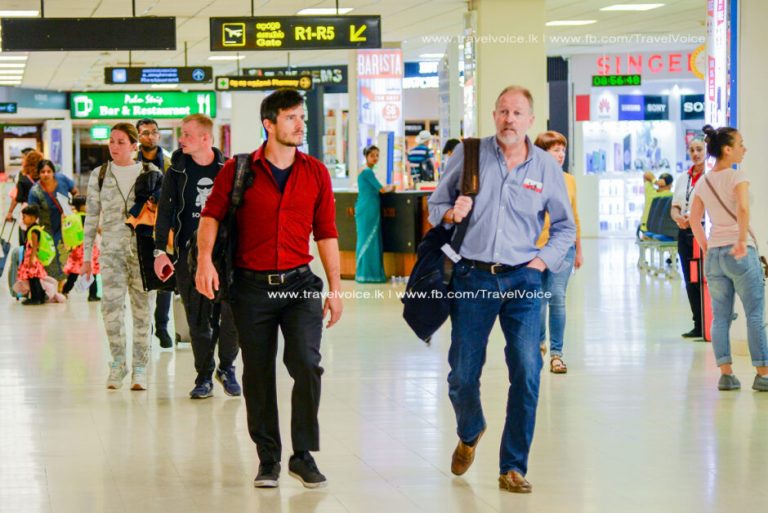
Tourism receipts are owned by the people who earn the money and the government does not own it.Tourist arrivals to Sri Lanka have exceeded 31,600 in the first 11 days of 2022, despite the challenges emanating from the global COVID pandemic and reinforcing the industry’s optimism. From 1 to 11 January, Sri Lanka received a record 31, 688 tourists, a significant rebound from 2021. 

Sri Lanka Tourism Development Authority (SLTDA) said during the first 11 days the highest number of tourist arrivals was from the Russian Federation – 5,726.

In addition, tourists have also arrived from India – 5,566, Ukraine – 3,028, UK – 2,370, Germany – 2,046, Maldives – 1,269, France – 1,241, Australia – 1,093, Poland – 771 and US – 662.

However, future trend of tourism remains uncertain amidst the evolving nature of the pandemic and other correlated variables such as vaccination rates and efforts in curtailing the pandemic.

“It is great to see the tourism is beginning to rebound amidst concerns on highly infectious COVID variant Omicron. The collective effort of all citizens contributed to the successful recovery of the industry,” Sri Lanka Tourism Chairperson Kimarli Fernando told journalists yesterday. 

Speaking at a discussion titled ‘Tourism Resumes’ organised by Presidential Media Centre (PMC) she said Sri Lanka needs to ‘ride with the tide’ to sustain the industry despite the challenges emanating from the COVID pandemic.

Fernando said they were also concerned about the continuity of the current arrival trends, given the global spike in COVID cases.

“We saw several cancellations particularly from European countries and India following resurgence of COVID Omicron variant. Certain countries have imposed restrictions already, these are inevitable in a pandemic situation,” Fernando said.

With partial reopening in January 2021 which saw 1,682 tourists, arrivals have been on the rise in tandem with the vaccination rollout, improved health and safety precautions, and easing of travel restrictions.

SLTDA Director General Dhammika Wijayasingha said that the majority of incoming tourists stay for 14 or more days on an average, from the previous 7 to 10 days.

“Post-pandemic we saw a lot of tourists coming to Sri Lanka for wellness tourism and vacation with family. These tourists stay longer than the usual, which extends to minimum 14 or more days. It’s a great trend that we hope would continue from long-haul travellers,” she added. 

Given the challenges they encounter to reach final destination amidst health protocols, Wijayasingha pointed out that the travellers under new normal will want to explore the long haul countries to the fullest.

Since mid-2021, Sri Lanka Tourism Promotion Bureau (SLTPB) rolled out promotions in several countries, including Russia, France, Germany and the UK. The inflow of tourists has been boosted by increased connectivity as well by international airlines.

National carrier SriLankan Airlines also launched direct flights to Russia and France after a lapse of six years.

In November, four international airlines resumed operations to Colombo, these include France flag carrier – Air France, Swiss leisure airline – Edelweiss, Russia’s flag carrier – Aeroflot and Tata-SIA joint venture – Vistara Airlines.

In addition, Russia’s Azur Airlines and Kazakhstan’s Air Astana commenced direct flights to Sri Lanka, while popular European airlines Poland’s flag carrier Lot Polish Airlines and Italy’s Neos Airlines commenced operations from December 2021.
SRI LANKA: Participatory Constitution-making – The essentials

0

An Article by the Asian Human Rights Commission

By Basil Fernando

Today, there is a consensus that Sri Lanka has entered into a period of crisis that is worse than it has ever faced in recent history. It is also agreed among most of the people who are highly knowledgeable in the field of economics and financing that this crisis will last for a long time even if some genuine effort is made to rescue the country even at this stage. However, if such a serious and genuine effort at taking the necessary decisions to address this problem is not taken, there are also predictions being made by persons who held very high positions in the Central Bank and also in the field of economics that Sri Lanka may reach a point of no return. Thus, looking for solutions of this economic crisis is a central concern in Sri Lanka. However, seeking such solutions itself brings up many more complicated problems. As it has been analyzed by many, the economic crisis was a product of an even deeper political crisis. Had it not been the adoption of the 1978 Constitution, quite certainly, Sri Lanka would not have reached the bleak point that it has reached now. The 1978 Constitution brought about a gradual breakdown of the functioning of all the major public institutions in Sri Lanka. The ludicrous notion that one person could make all the decisions that are needed for every area of the country’s life which is the most deeply embedded notion in the 1978 Constitution has necessarily brought about a situation where the decision making capacity of all those public institutions has been seriously suppressed. A senior Indian journalist in a televised interview compared the situation in Sri Lanka to what happened in China when Chairman Mao Zedong ordered all the sparrows to be killed in order to get over the problem of the damage done by these birds to the agricultural products. The result was the emergence of other pests through the loss of the natural avian by which the control of insects was done through the natural balance. The problem was so grave that China had to ask for imports of sparrows from Russia which was by then China’s close ally. What that demonstrated was the danger of leaving decision making to the hands of a single person.

In Sri Lanka also, the decision making processes are usually done through elaborate mechanisms within public institutions which are daily engaged in dealing with various problems. For example, the management of matters relating to money is done through highly sophisticated rational processes managed by persons who are highly trained in these fields and also have acquired experience through the engagement in these issues over a long period of time. What the 1978 Constitution did was to displace the effective management of all these processes. Relevant public institutions remained but their actual power had been taken away from them and was exercised by a single individual who was given the title “Executive President”. The title “Executive President” was in fact a misnomer. Going by the substance of the powers and the lack of control over that power, the better term would have been “The Dictator”.

However, the issue now is how to get rid of this Constitution which violates all the norms of a rational Constitution as a part of the strategy of fighting back the grave economic crisis the country is facing. Thus, doing away with the 1978 model of Constitution is not a mere legal exercise but a part of an overall strategy in order to deal with seemingly insoluble economic problems faced by the country.

In that backdrop, there is now a discussion on the displacement of the 1978 Constitution, on what is to replace that Constitution and how to bring about this change. There are some basic ideas that have been discussed on this issue and some of the prominent ideas are as follows:

That the entirety of the 1978 Constitutional model should be abolished and a Constitution that is based on principles that are totally opposed to that of the 1978 one should replace it. The replacing Constitution should be able to provide for the operation of the basic notions of democracy, the rule of law and the supremacy of the law. Above all, nobody should be placed above the law. It means that the powers of the Legislature and the Executive which have been diminished should be brought back to life and it should be held together by the principle that all the three branches have equal power within the State. By operating these principles, the public institutions should be brought back to life with the necessary independence so that they could effectively manage the country’s economic establishment as well as all other areas of national life. By the combination of granting the necessary independence combined with checks and balances, these institutions would manage the country irrespective of whatever regime changes that may take place from time to time. That briefly is a vision for the basic structure of a Constitution that could provide a kind of State structure that could pull the country out of this economic mess. The next question would be how to bring about this Constitution. The 1972 and 1978 Constitutions were also made to suit the needs of a particular regime in power. Both these regimes had over two thirds majority in the Parliament and they had no difficulty in getting anything past through the Parliament without considering the possible bad consequences of the laws that they were passing. 

A new Constitution should not be made in this manner. It should be made with the full participation of the people and this is not an exceptional situation anymore. All the successful Constitutions of recent times have been made through Constitutional conventions, and not by a Government in power. One of the reasons for the strength of the Indian Constitution was that it was created through a long process of nation wide participation. The result of such participation was that all the vital questions that affect the country were addressed within the framework of Constitutional law. Due to this, a foundation was laid for the resolving of those problems. The South African Constitution is another example of this type and also the manner in which the Nepalese Constitution was made within the last few decades. Just now, another inspiring example comes from Chile where in the midst of a national crisis, people demanded for not just the change of a regime but the change of the Constitution. The people also ordered that the Constitution must be made by a Constitutional convention where there will be a representation of all sectors of society and the entire nation will participate in the process of the debate.

Those who agree with this perspective for Sri Lanka also find that there is one difficulty to achieve a Constitution through a Constitutional convention. That is because of the provisions in the 1978 Constitution which have laid down that like any other Act of Parliament, the Constitution can also be made through a two thirds majority of the Members of the Parliament and if necessary, through a referendum. If a regime in power has a two thirds majority, then the result would be that anything could be made into a Constitution, irrespective of the harm that such a Constitution could create for the nation and its people. Suggestions that are being discussed is that this problem could be overcome through a referendum by which particular limits imposed on the making of the Constitution should be changed and an internationally accepted procedure for the making of a Constitution should be adopted so as to enable to bring about a Constitution through a participatory process.

Sail Lanka implements Marine Training Project in SL’s North

0

Sail Lanka Yachting Group (SLYG) and ‘Building a Future Foundation (BAFF)’ are to replicate in the north of Sri Lanka, their successful boat-building and marine training project for youth.

Following the recent inauguration of the project in Velanai in the Jaffna district, Pierre Pringiers, Chairman of SLYG said, “Our idea is to replicate in the north of Sri Lanka, the successful ‘Building a Future Foundation’ project which we developed in south Sri Lanka to assist the local economies, following the devastating tsunami of 2004.

BAFF has already created hundreds of employment opportunities for young people in the yachting industry in the south of the island, and we hope to replicate this in Jaffna. Twelve youth from the north have already followed a theoretical and practical training course of 12-months duration at the BAFF training center in southern Sri Lanka.”

The company said the project was inaugurated with Douglas Devananda, Minister of Fisheries in the presence of several distinguished guests.

“We believe Jaffna has the potential to be our new hub for marine and experiential tourism. It will become our third centre of operations after Mirissa and the Port City Colombo Marina, and will allow us to develop local and cross-border tourism. The 540 square metre new SLYG training centre and boatyard is situated on a 4.5 acre land in Velanai,” Mr. Pringiers said.

The Jaffna training centre will conduct courses in the basic skills of mechanical engineering, electricity, welding, refrigeration and air-conditioning, followed by hands-on experience in dedicated boat building, and outboard and inboard engine repair and maintenance. 

The courses which will be conducted over one-year, will comprise a mixture of theory and practical training to enable the graduates to work in the developing boat manufacturing industry in Sri Lanka.

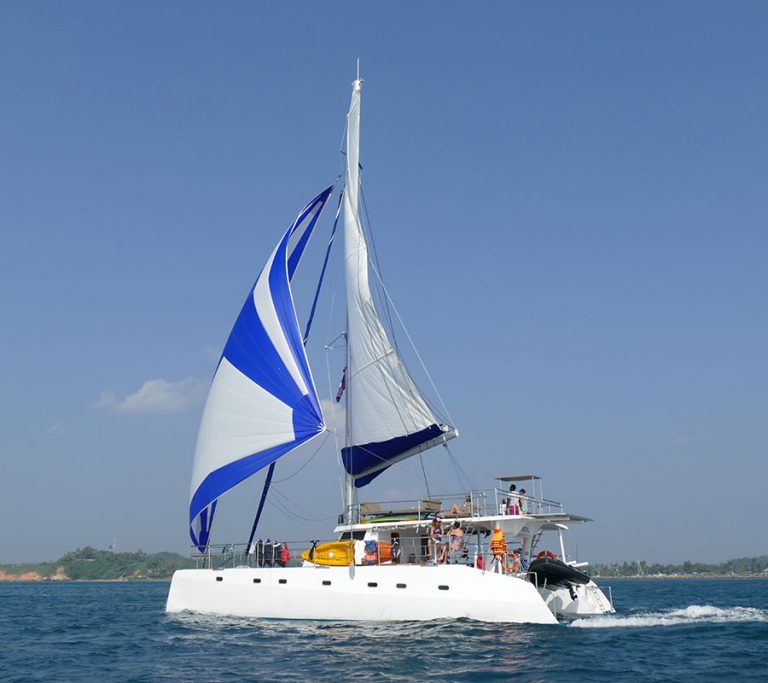
 The practical training will be in the manufacture of yachts such as the Ocean Diamond – an 80-foot floating boutique hotel, and the Ceycat – a 55-foot sailing catamaran for water-based tourism both in Sri Lanka and overseas.

Debt management reforms to tackle rising domestic borrowings

0

Sri Lanka’s domestic debt is rising at an alarming rate forcing the government to introduce management reforms to ensure that the government’s financing needs are met at the lowest possible cost, the latest fiscal report of the Finance Ministry outlined.

 Currently, the Public Debt Department of the Central Bank is handling debt servicing of around 656 foreign loans and a domestic debt portfolio of Rs.2. 13 trillion.

 An effective mechanism is in place to monitor and debt service payment obligations on time. The annual and monthly debt forecasts are monitored by the Back Office staff and payment obligations are checked and approved by an internal committee, Finance Ministry sources said.  

However proposed new reforms are consistent with a prudent degree of risk, and developing and strengthening the government securities market, while enhancing efficiency and maintaining stability, the report added. 

 Reforms that are planned to be undertaken in the near future in the area of debt management are, a debt consolidation programme, the formulation of debt management guidelines, the implementation of a risk management framework and the introduction of a domestic debt data module.

The domestic debt management strategy is decided by the Domestic Debt Management Committee comprising senior officials of both the Ministry of Finance and the Central Bank. 

The Committee meets on a monthly basis and a market based strategy is adopted by considering market conditions, market appetite, monetary developments, inflation, government cash flow needs, the maturity profile and risks in the debt portfolio etc.

Information relating to domestic debt is maintained in an in-house developed computer based debt recording system. Information on the debt portfolio is disseminated to the general public and market participants weekly, monthly and annually.

Treasury Bonds, Treasury Bills, Sri Lanka Development Bonds (SLDBS) and Provisional Advance were the main sources of domestic borrowings of the Government. 

According to latest statistics of the Finance Ministry, around 55 percent of the total domestic borrowings were raised by way of Treasury Bonds while 29 percent were raised by way of Treasury Bills and another 16 percent was raised by way of SLDBS and Provisional Advance of Central Bank in 2021.

The total borrowing limit approved by Parliament for the year 2021 amounted to Rs. 2.99 trillion, within which the utilization of Government borrowings (Book Value) for the period from 01st January to 31st August 2021 was recorded as Rs. 1.75 trillion.

Total borrowing utilization of domestic and foreign borrowings amounted to Rs. 1.47 trillion and Rs 282.3 billion, respectively as at 31st August 2021 to finance cash flow operations and development projects during the period.

Domestic borrowing accounts for almost 83.9 percent of the total borrowings during the first eight months of 2021.

The debt stock which was elevated due to the rise of the fiscal deficit however, saw a change in its dynamics in line with the announced Foreign Resource Mobilisation 2020-2025 strategy, whereby with the rationalisation of the foreign debt in the share of foreign debt has reduced to almost 40 percent from the highs of nearly 50 percent in 2019, Fiscal report revealed. 

It is expected that such a path could be maintained, while also sourcing the required financing from multilateral and bilateral agencies which are provided at concessionary terms. At the same time, domestic financing will be sourced in particular to finance the public investment programme.

SRI LANKA: Who should be in the constitutional convention?

0

The making of a new Constitution through a constitutional convention is now being discussed in the community. This is against the privately-drafted Constitution through a group of lawyers which the Government intends to introduce in early 2022.

The difference between such a Constitution and one that is made with the participation of many groups and persons is that it will not only reflect the many problems that need to be solved in Sri Lanka but it will also provide the solutions coming from among the various sectors of the society itself.

Following are some persons who should necessarily be there in a constitutional convention.

Sri Lanka is traditionally and for now and the future based very much on its agriculture. The knowledge and the ideas about consolidating the agricultural aspect of the economy is an essential part of trying to develop a stable foundation for the economy as well as for the society in Sri Lanka. Thus, the agricultural experts in various associated fields should necessarily be a part of such a convention.

In the recent disputes, these experts have shown their capacity and also the understanding of how the agriculture sector in the country should be protected. With such expertise, there should also be representatives of farmers, who will represent their interests including their land rights, and the manner in which there should be State institutions which must deal with the issues of production, sale, and also consumer protection.

Another sector that should necessarily be involved in constitution making is the financial sector in the country. Among them are the Sri Lankan economists who have in the past decades shown their thorough understanding of the problems of the economy and ways to overcome the present crisis. It should also include financial experts who could help to develop a proper regulatory framework for finance in Sri Lanka which should be a major issue that should be considered in the making of a constitution.

Yet another sector that should be necessarily involved in constitution making is those who are dealing with accountability in various sectors. The Auditor General’s Department and also the former auditors and those who have expertise in this area are an essential element in the development of a stable system of finance and the control of it in the country.

We should also include those who monitor bribery and corruption. Their involvements are very essential in order to develop an effective corruption control system which should be recognised within the constitution.

Those involved in the law enforcement sectors and those whose expertise has grown around this are also very essential to ensure the proper law enforcement in the country. As it has been recognised that there is a tremendous failure of law enforcement, there should be expertise from within the Police and other sectors as well as from the society of persons who have gained knowledge of the development of an effective law enforcement aspect with guarantees of respect for the protection of individuals.

Still another sector that should be essentially there if there is going to be any effective constitutional governance in Sri Lanka is also the various sectors that represent various communities. There are sectors that represent the majority community as well as the sections that represent the minority communities such as Tamils, Muslims, and also the religious minorities. A society can hold together only on the basis of the principle of co-operation of all sectors of the society. Therefore, solving this problem that has troubled Sri Lanka over a long period should also be an integral part of the constitution making and this could be done only by opportunities for discourse between the communities themselves.

There should be necessarily persons representing the trade unions which are an essential component of safeguarding the interests of the working population. A constitution must necessarily provide opportunities for a just framework within which the disputes between the working people and the business sector could be settled in an atmosphere of justice and also with due regard to the basic rights of the various sectors of the working classes.

There should necessarily be representations of the educational sector which is a vital part of a nation’s life. There should be representatives who have expertise from school education as well as from the university sectors and also for the future development of the higher educational levels. This should include not only the professional experts but also the various sectors affected by that such as the students, teachers and also the parents.

Above is not an exhaustive list. It was meant to show that the expertise of lawyers is not at all the major contributor to the development of a constitution.

Furthermore, it should also not be left entirely to the politicians who have acquired rather dubious representations in the country.

If all sectors which have an interest in the country and the development of the country are brought together for a discourse which is genuine and open, Sri Lanka could develop a kind of infrastructure both in the economy as well as in the society, that could be reflected within the constitution by which a new beginning can be made for the future of the country.

Perhaps, a new Constitution with such a representation brought about through the constitutional convention may be the beginning of real independence in Sri Lanka.

An Article by the Asian Human Rights Commission

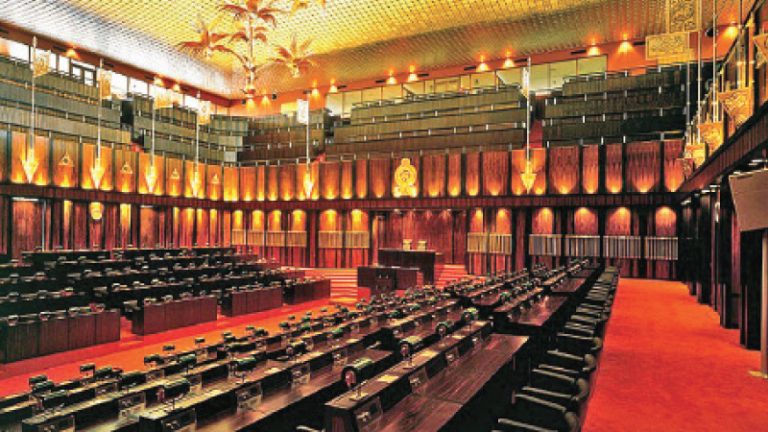
The two years lost due to covid should be given to the President and the government – Diana Gamage

0

Parliamentarian Diana Gamage states that the term of office of the President and the current government should be extended as the promises made to the people at the election could not be fulfilled due to the Kovid epidemic. Due to this, the President should be given another two years and the term of the current Parliament should be extended by two years.

She made this statement while participating in the parliamentary debate today.

Diana Gamage points out that the present government and the President would have had a lot of work to do in the past two years if it had not been for the covid epidemic. She also states that if there was no covid epidemic, the expressway system would have been completed by now.

Diana Gamage has stated that she is ready to submit a proposal to Parliament to extend the term of office of the President and Parliament.

5500 dengue patients reported in January

0

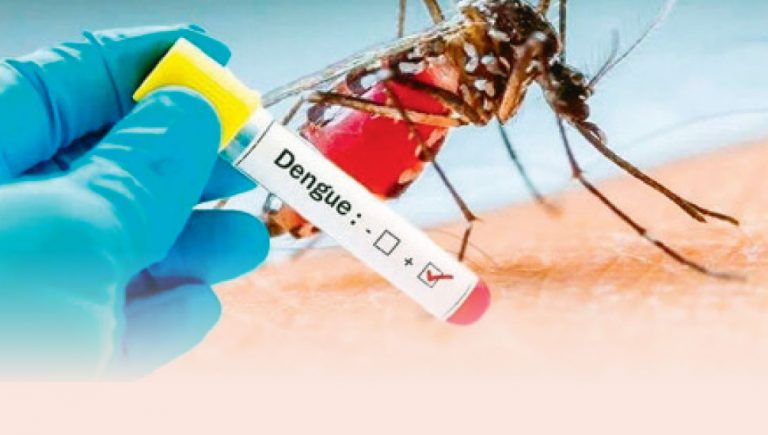
The National Dengue Control Unit states that 5500 dengue patients have been reported so far this year. The unit says there has been a rapid increase in the spread of dengue.

60% of the 5500 dengue patients found are reported from the Western Province. The majority of patients have been reported from urban areas in the province.

The National Dengue Control Unit points out that dengue has been on the rise in many parts of the country since September last year and it is the duty of the people to prevent the further spread of the disease.

TNA MP Shanakiyan Rasamanickam infected with COVID19

0

TNA Batticaloa District Parliamentarian Shanakiyan Rasamanickam has been infected with the Covid 19 virus.

The MP said in a Twitter message that he was currently in isolation.

He has been urging people who have worked closely with him over the past few days to get tested whether they are infected with the virus.

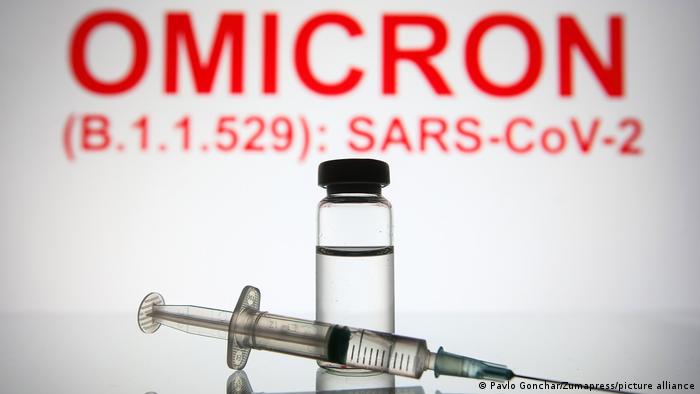
More than 3.6 million omicron cases reported worldwide!

0

Confirmed cases of COVID-19 have passed 338 million globally, according to Johns Hopkins University. The number of confirmed deaths has now passed 5.56 million. More than 9.79 billion vaccination doses have been administered globally, according to Our World in Data.

British Prime Minister Boris Johnson announced the end of COVID-19 measures introduced to curb the rapid spread of the Omicron variant in England as the country shifts towards a policy of living with the virus after a peak in cases.

China’s capital Beijing ramped up efforts to curb COVID-19 infections, ordering checks among cold-chain firms and urging residents to cut unnecessary gatherings, as the city reported an uptick in local cases weeks before the Winter Olympics.

Hong Kong will suspend face-to-face teaching in secondary schools from Monday until after the approaching Lunar New Year, authorities said, because of a rising number of coronavirus infections in several schools.

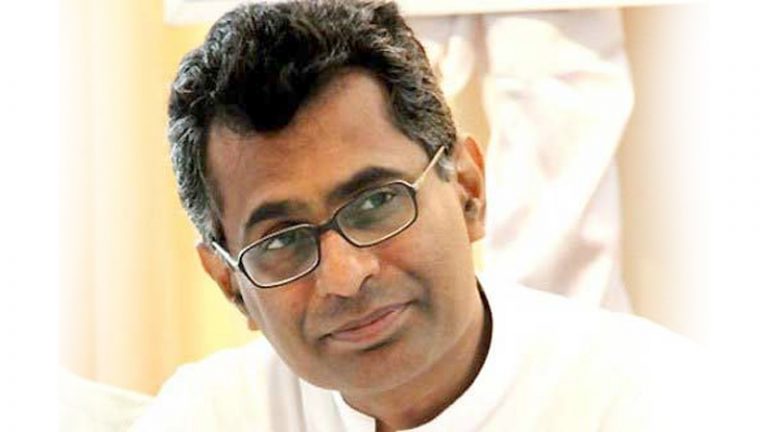
The Judicial Medical Officer confirms that Champika has no illness

0

It was revealed in court today that MP Patali Champika Ranawaka, who did not appear in court on the 11th due to being treated at the hospital, does not have any special illness.

The Colombo Chief Judicial Medical Officer has confirmed to the court that although Champika Ranawaka has undergone 10 medical examinations, no special condition has been revealed.

When the case was filed on January 10 in connection with a road accident in the Rajagiriya area during Ranawaka’s tenure as a Minister, Ranawaka’s lawyers stated that his client was not appearing in court as he was being treated at the hospital. Colombo High Court Judge Damith Thotawatte ordered the Colombo Chief Judicial Medical Officer to submit a report to the court regarding the suspect.

The suspect Champika Ranawaka appeared before the court when the case was taken up today.

Deputy Solicitor General Dileep Peiris who appeared for the High Court on behalf of the plaintiff stated that the Colombo Crimes Division had recorded a statement from the Colombo Judicial Medical Officer regarding the condition of Champika Ranawaka. Peiris has stated that 10 tests carried out by the Judicial Medical Officer have confirmed that Champika Ranawaka is in good health and is not that ill to be admitted to the hospital for treatment.

The Deputy Solicitor General requested the High Court to remand the suspect until the end of the trial. If not he asked that the case be heard on a daily basis.

Defendant’s counsel Anuja Premaratne stated that his client was hospitalized not with the intention of postponing the case. The lawyer also said that his client is scheduled to undergo another medical examination tomorrow.
After considering the facts, High Court Judge Damith Thotawatte stated that the court would not oppose any attempt to adjourn the case following due process of law. However, according to the reports issued by the Judicial Medical Officer, it is confirmed that the suspect is in good health enough to appear before the court, the judge said.

The High Court Judge stated that it was the intention of the court to conclude the case expeditiously and decided to hear the case again on February 18.