Home Blog Page 271

CEB’s Massive Losses Fuel Debate over New Tariff Increases

0

By: Staff Writer

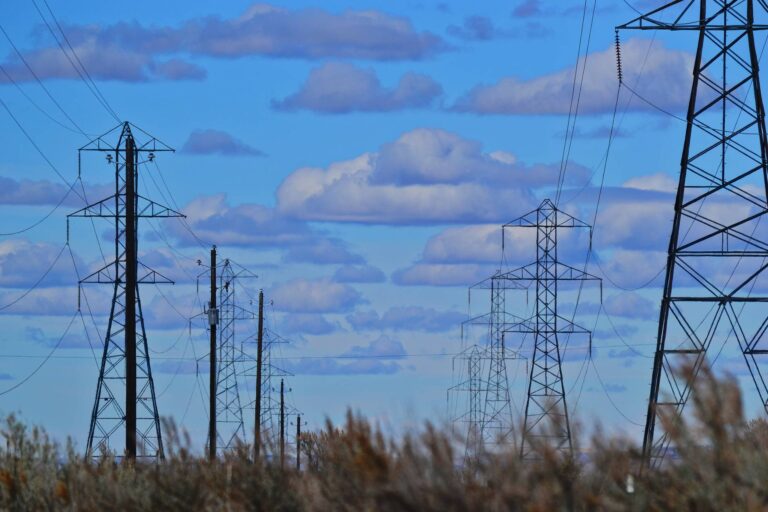
September 29, Colombo (LNW): The Committee on Public Enterprises (CoPE) recently disclosed that the Ceylon Electricity Board (CEB) recorded a jaw-dropping cumulative loss of Rs. 594.36 billion between 2014 and 2022 (excluding 2015), attributing much of the damage to internal inefficiencies and poor governance.

The revelations, made during a CoPE session chaired by MP Dr. Nishantha Samaraweera, have triggered renewed calls for deep structural reform and brought into sharp focus the proposed shift toward a cost-reflective tariff formula.

During the same hearing, the Auditor General’s performance review for 2022–2023 and related years laid bare other malpractices: irregularities in shareholding arrangements of LTL, West Coast, and ESOT entities; a failure to deliver six vehicles worth Rs. 124 million for the Puttalam Coal Project; unauthorized provident fund loans exceeding Rs. 6.6 billion; and Rs. 507 million in allowances disbursed without Cabinet approval.

Of particular note: CEB lacked a permanent internal auditor for nearly a year before corrective action. CoPE has summoned LTL to appear before the committee next month.

While CoPE’s critique centers on past mistakes, the debate now extends to present-day policy: can CEB justify increasing tariffs under a cost-reflective model, given its more recent financial performance?

According to Central Bank of Sri Lanka data, despite steep tariff cuts and market headwinds, CEB reported a net profit of Rs. 148.6 billion in 2024, up 142.8 percent year-on-year.

The 2024 result was aided by foreign exchange gains of Rs. 11.7 billion and a capital gain of Rs. 26 billion from the sale of shares in LTL Holdings.

However, the grace did not last. In Q1 2025, after regulators implemented a 20 percent tariff cut in January, CEB’s revenue tumbled 44 percent (from Rs. 167 billion to Rs. 93.9 billion), and it posted a gross loss of Rs. 18.2 billion.

The cost of sales actually increased year-on-year, compounding the damage. In the following quarter (Q2 2025), CEB engineered a turnaround with a profit of Rs. 5.31 billion (group level profit Rs. 7.4 billion), largely by reinstating tariff adjustments mid-year and containing costs. +2

Yet, over the first half of 2025, CEB still faced a cumulative loss of Rs. 13.1 billion. These volatile swings in profitability highlight the precarious balancing act CEB must perform. On one hand, the legacy losses unearthed by CoPE suggest that unsustainable cross-subsidies and operational weaknesses plagued the utility. On the other, recent figures show that tariff cuts can swiftly reverse gains and plunge CEB back into red territory.

Proponents of a cost-reflective tariff formula argue that the utility must be priced to cover its production, transmission, and financing costs to avoid perpetuating state-sponsored losses. In Sri Lanka’s context, such a move is also seen as a structural necessity under the IMF-backed reform agenda to stabilize the power sector and limit contingent liabilities.

Critics, however, warn that frequent tariff hikes if not matched with efficiency improvements risk rubbing salt into consumers’ wounds in a country already under economic stress. Tariffs that oscillate with fluctuations in fuel costs or foreign exchange rates may prove politically unsustainable unless accompanied by stricter governance, prudent capital investment, and tougher accountability at all levels of the CEB.

As CoPE prepares to grill LTL and revisit CEB’s internal control failures, the public eye remains fixed on the tariff debate. Sri Lanka may soon confront a test: can the power sector be made self-sustaining and fair after decades of losses, mismanagement, and political interference?

CEA Joins GovPay to Boost Digital, Eco-Friendly Payments

0

By: Staff Writer

September 29, Colombo (LNW): The Central Environmental Authority (CEA) has officially joined Sri Lanka’s GovPay digital payment platform, allowing the public to settle fees for a wide range of environmental services online from Friday, September 26.

The move marks a major step in the government’s digital transformation drive— promising faster, paperless transactions, while also raising questions about accessibility and digital readiness among rural users.

Under the new system, clients can now make electronic payments for inspections, environmental licences, waste management permits, Basel export consents, certifications, laboratory tests, procurement services, and annual renewals. The initiative aims to eliminate lengthy in-person queues and reduce administrative delays that have long plagued service delivery at state offices.

According to the CEA, the integration with GovPay will enhance efficiency, transparency, and accountability, ensuring payments are securely processed through 14 licensed banks and six fintech apps. Clients can also access real-time receipts and transaction records a key shift toward improving trust in government services.

The GovPay platform, introduced by the Information and Communication Technology Agency (ICTA) in collaboration with LankaPay (Pvt.) Ltd., operates under the Ministry of Digital Economy. Since its launch in February 2025, over 147 government institutions have adopted the system, facilitating Rs. 291 million in transactions across 2,017 services. The CEA becomes the latest state agency to integrate into this expanding digital ecosystem.

At the official signing ceremony held at CEA headquarters, senior officials from both organisations hailed the partnership as a milestone in Sri Lanka’s journey toward e-governance and sustainable administration. CEA representatives emphasised that digitisation not only improves service convenience but also contributes to environmental sustainability by reducing paper waste and physical travel.

However, while the system is widely welcomed by urban users and corporate clients, some experts caution that limited digital literacy and internet access in rural areas could hinder equal participation. “The platform is efficient, but public awareness and access remain key,” said an ICT consultant. “Without inclusive outreach, small businesses and rural applicants may still depend on manual processes.”

Despite these challenges, GovPay’s adoption is seen as a critical reform in improving public sector efficiency and reducing opportunities for corruption and cash leakages. With real-time transaction monitoring, the Treasury and Auditor General’s Department can track revenue collections more accurately.

For the CEA, the integration marks a significant leap in aligning environmental governance with digital transformation and transparency goals. As more state agencies join GovPay, Sri Lanka’s public service is steadily evolving toward a faster, greener, and more accountable digital future.

Jaffna MP Ramanathan Archchuna Arrested Over Alleged Obstruction of Police During Colombo Protest

0

September 29, Colombo (LNW): Jaffna District Member of Parliament Dr Ramanathan Archchuna was taken into custody earlier today by officers from the Fort Police, following an ongoing investigation into an incident during a recent public demonstration.

The arrest took place when the MP voluntarily appeared at the Fort Police Station this morning (29th) to provide a statement related to the matter. The investigation stems from a Satyagraha protest held in Colombo, during which Dr Archchuna was reportedly involved in a verbal confrontation with a police officer assigned to the area.

Authorities have confirmed that the arrest was made on allegations of obstructing a police officer in the execution of their duties.

Call for Oversight as Concerns Grow Over Unregulated Fund Collection in Schools

0

September 29, Colombo (LNW): The head of Sri Lanka’s anti-corruption watchdog Commission to Investigate Allegations of Bribery of Corruption (CIABOC) has called for a structured mechanism to oversee the collection of money from students in schools, amid rising concerns over the lack of transparency and potential misuse of such funds.

Ranga Dissanayake, Director General of the CIABOC, has stressed the importance of enforcing existing guidelines and ensuring that any fundraising or financial contributions requested by schools are managed through clearly defined and lawful procedures.

Speaking on the matter, Dissanayake acknowledged that many school principals are working under difficult circumstances and often take commendable steps to keep their institutions running smoothly. However, he cautioned that the absence of formal protocols for collecting money—whether through school development societies or other informal channels—could open the door to misinterpretation and even potential abuse.

“There have been instances reported to the Commission where money is being collected from students and parents, sometimes in ways that might be seen as improper or coercive,” he said. “Without a clearly issued directive or policy framework, these practices could be viewed by some as bordering on bribery.”

He further noted that a standardised, government-endorsed approach would not only offer protection for school administrators acting in good faith but would also help prevent misconduct by others who might exploit the system.

Touching on the sensitive issue of financial exchanges during student admissions, Dissanayake underscored the importance of addressing the pressures faced by parents during enrolment periods. “This is a matter that needs careful handling, with a clear and compassionate process in place. Any informal dealings during admissions risk undermining public trust in the education system,” he said.

Update: Three Workers Confirmed Dead After Earth Collapse at Construction Site in Mawanella

0

September 29, Colombo (LNW): Tragedy struck in the Manikkawa area of Mawanella today, as the bodies of three workers were recovered following the collapse of a mound of earth at a construction site.

Police confirmed that the victims had been engaged in construction work when the incident occurred, with all three reportedly caught beneath a sudden landslide of soil. Despite a rapid response from emergency services, the rescue effort ultimately became a recovery mission.

An extensive operation was launched earlier in the day in hopes of reaching the trapped individuals alive, but authorities later confirmed that all three had succumbed to their injuries before they could be reached.

The circumstances surrounding the collapse are still under investigation.

Previous Report:

https://lankanewsweb.net/archives/130121/rescue-operations-underway-after-earth-collapse-traps-workers-in-mawanella/

Production of Nutritional Supplement Thriposha Halted Amid Maize Shortage

0

September 29, Colombo (LNW): Sri Lanka’s long-standing fortified food programme has faced a temporary setback, with the production of Thriposha—a nutritional supplement distributed to pregnant mothers and young children—coming to a standstill due to a shortage of key raw materials.

Officials from Sri Lanka Thriposha Limited confirmed that manufacturing was suspended on September 21 after supplies of maize, a primary ingredient in the supplement, ran out. The shortage has been attributed to delays in securing import approval for new stocks.

Although Cabinet authorisation had previously been granted to bring in 18,000 metric tonnes of maize specifically for Thriposha production, the process hit a bureaucratic hurdle when the Controller General of Imports and Exports introduced revisions to the approved conditions. As a result, the planned import has been paused pending further governmental review.

Amal Attanayake, Chairman of Sri Lanka Thriposha Limited, explained that a revised Cabinet paper incorporating the proposed amendments is due to be submitted for consideration on October 07.

Production is expected to resume soon after, provided approval is granted and imports proceed without further interruption.

Rescue Operations Underway After Earth Collapse Traps Workers in Mawanella

0

September 29, Colombo (LNW): Several workers are feared to be trapped beneath a collapsed mound of earth in the Manikkawa area of Mawanella, following a construction site accident reported earlier today.

Preliminary reports indicate that the incident occurred while the workers were engaged in building a retaining wall, when a section of earth suddenly gave way, burying some of those on site.

Emergency services and rescue teams were swiftly dispatched to the location and are currently engaged in efforts to locate and extract the individuals believed to be trapped.

Authorities have not yet confirmed the number of workers affected or their condition. Local officials, along with police and disaster response units, are coordinating the operation as anxious family members and bystanders gather near the scene.

Further updates are expected as the situation develops.

Family of Late Rugby Player Thajudeen Urges Government to Reopen Long-Delayed Death Inquiry

0

September 29, Colombo (LNW): The family of former national rugby player Wasim Thajudeen has called on the current administration to relaunch investigations into his controversial death, claiming that the truth has been deliberately obscured for over a decade.

The renewed plea comes amidst growing public frustration over unresolved high-profile cases, and hopes are now pinned on the Anura Kumara Dissanayake-led administration to break the longstanding deadlock.

Speaking to reporters, a close relative of Thajudeen recounted the events of May 2012, when authorities initially reported the athlete’s death as the result of a routine car accident. According to the relative, police at the time claimed Thajudeen had been speeding, under the influence of alcohol, and had died after inhaling smoke from a vehicle fire.

However, the family never accepted that version of events. “When I reached the site, I found him seated in the passenger seat. The vehicle wasn’t even seriously damaged. It made no sense—how could anyone have died in such a minor collision?” said the uncle, clearly emotional.

It wasn’t until several years later, under a different political administration, that doubts about the original account were officially acknowledged. A panel of seven court-appointed forensic specialists exhumed Thajudeen’s remains and determined that his death was neither accidental nor alcohol-related. Their findings pointed instead to a far more disturbing truth: the young sportsman had been subjected to torture and then set alight.

The revelation sparked public outcry at the time and briefly reignited hopes for accountability. Yet, despite the gravity of the forensic conclusions, no significant legal action followed. The trail went cold once again.

“Every government since then has made promises, but none have delivered,” said the uncle. “We are not seeking revenge—only justice. It’s been thirteen long years, and we still have no answers.”

He further questioned the motive behind the brutal killing, suggesting it may have been linked to Thajudeen’s high public profile as an athlete. “What was the reason? Was it envy, or something more sinister? He was just a young man with a passion for rugby. We deserve to know why this happened.”

Expressing cautious optimism, the family voiced hope that the current leadership would bring the case back into focus. “We still believe in the legal system. But if even this government turns a blind eye, then what hope is left—not just for us, but for any family seeking justice in this country?”

Calls for a fresh inquiry have found support amongst human rights advocates and civil society groups, who argue that impunity in such cases undermines public trust in the justice system. The Thajudeen case has long been viewed as emblematic of deeper institutional failures—where truth is often buried beneath political convenience and legal inertia.

SL Weighs Legal Action After Shipping Firm Rejects $1 Bn Compensation Order for X-Press Pearl Maritime Disaster

0

September 29, Colombo (LNW): The Sri Lankan government is exploring its legal options after a Singapore-based shipping company refused to comply with a Supreme Court directive ordering a billion-dollar compensation package for the devastating X-Press Pearl maritime incident.

The 2021 disaster, considered one of the country’s worst environmental catastrophes, left a long-lasting impact on marine life, coastal communities, and the national economy.

In July this year, Sri Lanka’s highest court issued a landmark ruling compelling several companies involved with the ill-fated X-Press Pearl vessel to collectively pay US $1 billion in damages. The payment schedule was structured in three instalments: US $250 million by September 2025, US $500 million within six months of the ruling, and the remaining US $250 million by the one-year mark.

Those named in the ruling include EOS Shipping Pte Ltd, Killiney Shipping Pte Ltd (the bareboat charterer), Sea Consortium Pte Ltd (the time charterer), and their local representatives, Sea Consortium Lanka (Pvt) Ltd.

However, in a controversial statement reported by international media, X-Press Feeders CEO Shmuel Yoskovitz warned that honouring the court’s ruling could set what he described as a “dangerous precedent” for the global shipping industry. The company has yet to make any payments and appears reluctant to accept legal liability in the manner stipulated by the Sri Lankan court.

Despite this, the firm has maintained that it remains open to discussions, claiming in a recent statement that it is still seeking “constructive engagement” with Sri Lankan authorities.

The government, in response, has sought advice from the Attorney General to determine the appropriate course of action. Minister of Environment Dr Dammika Patabendi told Daily Mirror that the administration is currently awaiting legal counsel on how best to enforce the Supreme Court’s judgment in light of the company’s refusal to comply.

The X-Press Pearl disaster, which occurred off the coast of Colombo, saw the vessel catch fire and sink while carrying tonnes of toxic chemicals and plastic pellets, triggering widespread ecological damage. The incident not only disrupted the livelihoods of thousands of coastal residents but also significantly harmed Sri Lanka’s fishing industry and tourism sector. Cleanup and recovery efforts remain ongoing, with some environmental consequences expected to persist for years.

New Botanical Museum Launched in Peradeniya as Premier Outlines Vision for Sustainable, Eco-Conscious Nation

0

September 29, Colombo (LNW): A major step towards fostering environmental awareness and scientific education was taken on Sunday with the official opening of the Moon Memorial Museum at the Royal Botanic Gardens in Peradeniya.

The event was marked by a ceremonial gathering attended by dignitaries, officials, and members of the public, including Prime Minister Dr Harini Amarasuriya, who delivered a keynote address outlining the government’s broader environmental and educational ambitions.

The new museum, established in honour of Alexander Moon—the founder of the Royal Botanic Gardens—commemorates over two centuries of botanical heritage and scientific exploration. Open to the public daily from 9:00 a.m. to 3:00 p.m., the facility offers a wealth of knowledge about rare and native flora, economically significant crops, and the cultural history of plant use.

It has been designed to parallel international botanical institutions in both scope and educational purpose, serving as a hub for learning, conservation, and research.

In her address, Dr Amarasuriya described the museum as a symbol of the country’s commitment to ecological sustainability and environmental literacy. She emphasised the importance of building a future generation that not only understands but actively protects the natural world, stating that educational reform will play a central role in cultivating eco-conscious children and environmentally responsible schools.

The Prime Minister also took part in a symbolic tree planting ceremony, placing a Pini Beraliya sapling in the grounds of the Botanic Gardens—a gesture she described as a small but meaningful act of hope for the future.

She praised the museum’s potential to enrich both scientific understanding and the national tourism sector, asserting that it will draw global interest and deepen international appreciation for Sri Lanka’s biodiversity.

Speaking to a broader vision, Dr Amarasuriya noted that the path to true sustainability lies not only in new policies but in a cultural awakening—a transformation in how citizens relate to their environment, each other, and the world at large.

“To build a truly sustainable nation,” she said, “we need not only different leadership but also a different kind of citizen—free-thinking, compassionate, critical, and deeply respectful of nature and human dignity alike.”

She added that the government, led by the National People’s Power, is committed to creating the conditions necessary for this transformation. This includes embedding environmental education more deeply within schools and fostering a national identity that values biodiversity, climate awareness, and ecological stewardship.

Minister of Environment Dr Dammika Patabendi, who also addressed the gathering, announced forthcoming plans to expand the country’s network of botanical gardens beyond the five already in operation. He explained that future sites will be developed to reflect diverse climatic conditions across the island, ensuring that local ecosystems and plant life are preserved and studied more effectively.

The event drew a large and distinguished audience, including Deputy Minister of Environment Anton Jayakody, Deputy Minister of Health and Mass Media Hansaka Wijemuni, Environment Ministry Secretary K. R. Uduwawala, and Director General of the Botanic Gardens H. C. P. Jayaweera, along with members of Parliament and invited guests.