November 02, Colombo (LNW): A 25-year-old worker lost his life this morning (02) following a sudden boiler explosion at the Kiriporuwa Estate rubber factory in Yatiyanthota.
The incident occurred at around 8 a.m. when a boiler used for mixing chemicals with rubber latex reportedly malfunctioned and exploded, producing a powerful blast.
The victim, identified as Rajinikan, a resident of the estate, was working close to the machine at the time and suffered fatal injuries, dying instantly at the scene.
Three other employees sustained serious injuries and were rushed to the Karawanella Base Hospital for treatment.
Ruwanwella Police have launched an investigation into the circumstances surrounding the explosion, while safety authorities are expected to examine the factory’s machinery and operational procedures to determine the cause of the accident.
Tragedy at Yatiyanthota Rubber Factory Claims One Life, Injures Three

New Hotline Introduced to Report Environmental and Forest Crimes

November 02, Colombo (LNW): The Ministry of Environment has announced the launch of a dedicated hotline, 1995, which will become operational from tomorrow, allowing the public to report incidents of environmental damage or illegal activities affecting Sri Lanka’s forests.
According to the ministry, the new service is intended to strengthen the country’s forest and wildlife protection framework by improving coordination, enabling rapid response, and supporting the prevention and suppression of environmental offences.
Information received through the hotline will be directed to the relevant regional authorities, with security forces and officers from the Department of Wildlife Conservation expected to carry out swift action on verified reports.
Additionally, the data collected through this system will be consolidated and analysed to identify trends and high-risk areas for forest-related crimes. The insights gained will assist the government in formulating targeted strategies to protect vulnerable ecosystems and ensure more effective environmental law enforcement.
Ports Minister Highlights Regional Maritime Cooperation at India Maritime Week 2025
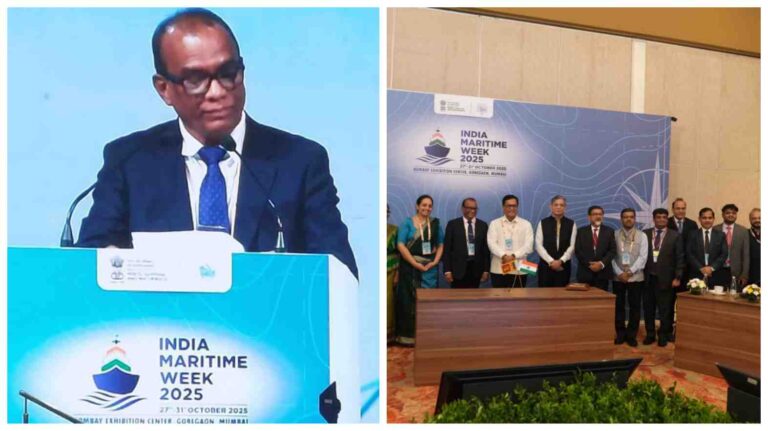
November 02, Colombo (LNW): Minister of Ports and Civil Aviation Anura Karunathilake took part in India Maritime Week 2025 (IMW), held in Mumbai from October 27 to 31, an event organised by India’s Ministry of Ports, Shipping and Waterways.
Addressing the ministerial plenary session, Minister Karunathilake emphasised that the oceans serve as vital links connecting nations, cultures, and economies, forming the backbone of global trade, energy exchange, and regional connectivity.
He commended India’s Sagarmala initiative and the Maritime India Vision 2030, describing them as key frameworks for advancing collective prosperity and collaboration across the Indian Ocean region.
The Minister observed that enhanced cooperation among Sri Lanka, India, and other neighbouring nations could lead to a more integrated network of ports, fostering economic resilience and facilitating the smooth movement of goods throughout South Asia.
Minister Karunathilake also participated in Sagarmanthan – The Great Oceans Dialogue, co-hosted by the Observer Research Foundation and India’s Ministry of Ports, Shipping and Waterways. Taking part in a panel discussion titled Shaping the Future Global Logistics: Building Resilient, Smart and Sustainable Supply Chains, he outlined Sri Lanka’s ambition to position itself as a regional hub for bunkering and energy services, centred on the ports of Colombo, Trincomalee, and Hambantota.
He further highlighted the importance of automation and digital transformation in improving port capacity and operational efficiency.
During the event, the Minister held bilateral talks with India’s Union Minister of Ports, Shipping and Waterways, Sarbananda Sonowal. Their discussions focused on strengthening collaboration in port infrastructure investment, training and skill development, digital innovation, and industrial partnerships.
Minister Karunathilake also visited the newly opened Navi Mumbai International Airport and the Jawaharlal Nehru Ports Authority as part of his engagements. He was accompanied by Sri Lanka’s Consul General in Mumbai, Priyanga Wickramasinghe, Consul (Commercial) Shirani Ariyarathna, and Private Secretary Sidath Perera.
Ban on A/L Exam-Focused Tuition Classes from November 4
November 02, Colombo (LNW): The Department of Examinations has announced that all tuition classes, seminars, and related activities aimed at the 2025 GCE Advanced Level examinations will be banned from midnight on November 04.
According to the department, this restriction covers the organisation or conduct of subject-based revision classes, mock exams, and workshops, as well as the printing, distribution, or promotion of examination-focused materials. Publicity through electronic media, posters, or banners will also fall under the ban.
Officials stated that the measure is intended to maintain the integrity of the examination process and prevent any unfair advantages to candidates. Anyone found violating these regulations—whether an individual or an institution—will face legal action under the provisions of the Examinations Act.
Prime Minister Pledges Greater Support for Schools in Underserved Areas
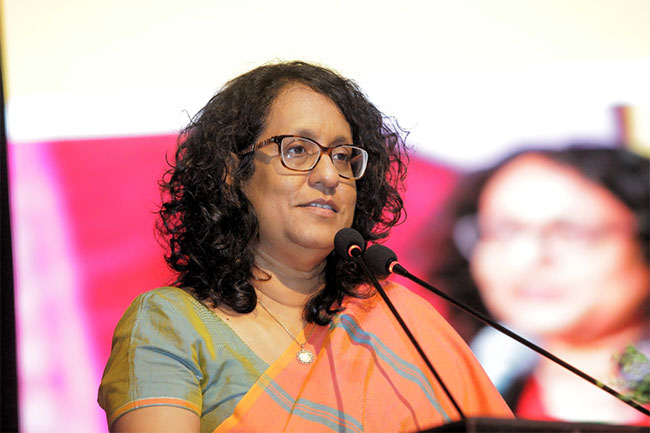
November 02, Colombo (LNW): Prime Minister and Minister of Education, Dr Harini Amarasuriya, has announced that the government will extend special assistance to schools located in disadvantaged regions as part of the forthcoming education reforms.
During visits to the Kalkuda and Eravur Zonal Education Offices in the Batticaloa District, Dr Amarasuriya met with education officials, teachers, and parents to review preparations for the 2026 reform programme. She emphasised that no challenge is insurmountable when the government, educators, and the public work collectively towards a shared goal.
Acknowledging the particular difficulties faced by Batticaloa, including uneven academic outcomes, the Prime Minister said that the area would receive targeted attention under the new reform framework. She underscored that improving school infrastructure, strengthening teacher training, and enhancing the efficiency of educational administration are central to ensuring every child in Sri Lanka receives a quality education.
“Education is the cornerstone of national progress,” Dr Amarasuriya remarked. “When we join forces, we can overcome any obstacle and secure a brighter future for our children.”
The meeting was attended by Member of Parliament Kandasamy Prabhu, regional directors of education, school principals, and teachers.
Woman Remanded for Impersonating Senior Police Officer’s Sister and Obstructing Traffic Duty

November 02, Colombo (LNW): A woman who pretended to be the sister of a Senior Deputy Inspector General of Police and interfered with the work of traffic officers in Gampaha has been ordered into remand custody until November 03 by the Gampaha Magistrate’s Court.
Her arrest followed the circulation of a widely shared video on social media showing her in a heated altercation with two traffic officers in the Kotugoda–Udugampola area. The incident quickly drew public attention and became the subject of extensive online commentary.
According to police reports, the woman, who had been driving a car, failed to comply with officers’ instructions to stop and initially fled the scene. She was later intercepted at the Udugampola Junction, where the confrontation occurred, before being taken into custody at the Minuwangoda Police Junction after again refusing to follow police orders.
Subsequent inquiries confirmed that her claim of being related to a senior police official was completely untrue.
She now faces multiple charges, including reckless and negligent driving, disregarding lawful instructions from the police, and obstructing a public officer in the execution of official duties. The police have indicated that further investigations are under way.
QR-Based Fertiliser Scheme Shows Strong Progress in Tea Sector
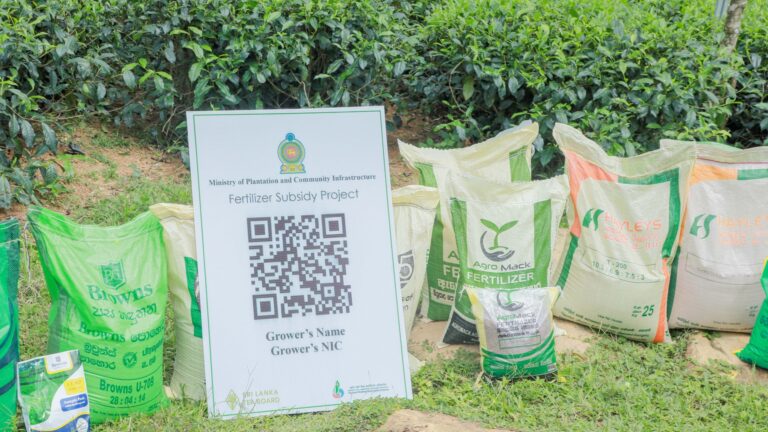
November 02, Colombo (LNW): The Ministry of Plantations and Community Infrastructure has reported marked progress in the rollout of the new QR-based system for distributing fertiliser subsidies to tea growers across Sri Lanka.
The initiative, which officially began on October 01, was introduced to streamline the fertiliser distribution process and eliminate inefficiencies in the previous system.
It forms part of the government’s broader strategy to boost national tea production to 400 million kilogrammes annually and raise export earnings to US$ 2.5 billion by 2030.
Launched in September, the QR-based mechanism replaces the earlier approach that limited distribution to the Fertiliser Corporation and allocated quantities purely on land area. Under the restructured system, approved private fertiliser companies handle distribution, and the subsidy amount is calculated according to the average yield of tea leaves over a three-month period.
At present, the government offers Rs. 4,000 per 50 kg bag of fertiliser and Rs. 2,000 per 25 kg bag to small and medium-scale tea estate owners.
According to the ministry’s latest update, 95,230 applications have been received through the new platform, with 67,056 growers already registered. By October 31, 187.4 metric tonnes of subsidised fertiliser had been distributed to 49,548 farmers using the QR system—reflecting a completion rate of just over 49 per cent.
Officials noted that the new digital model has significantly improved efficiency and transparency, ensuring that fertiliser reaches eligible farmers promptly while reducing administrative delays and misuse of subsidies.
Government to Revise Tourism Act to Boost Industry Growth
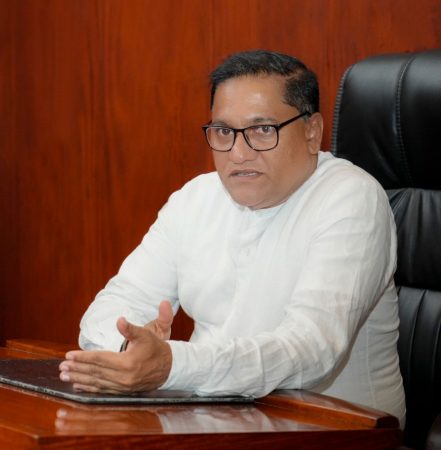
November 02, Colombo (LNW): Minister of Foreign Affairs, Foreign Employment and Tourism Vijitha Herath has announced that the government intends to amend the existing Tourism Act in order to accelerate the development of Sri Lanka’s tourism sector.
He explained that the current legal framework is no longer sufficient to meet the needs of a rapidly evolving global tourism industry. To address this, a team of specialists has been appointed to draft the necessary amendments and lay the foundation for a more dynamic and coordinated tourism strategy.
The Minister revealed that the government’s long-term vision includes the creation of a National Tourism Commission to serve as a unified body overseeing policy implementation and coordination among all tourism-related institutions. Additionally, joint tourism committees will be formed at both district and tourism zone levels to ensure better regional representation and local engagement.
Herath stressed that these structural and legislative changes are designed to streamline administration, attract investment, and enhance the quality of the visitor experience, ultimately positioning Sri Lanka as a leading travel destination in the region.
He also highlighted that the country continues to experience strong tourism growth, with more than 1.8 million foreign visitors arriving between January 01 and October 29, 2025. The month of October alone recorded 153,063 tourist arrivals, reflecting steady confidence in Sri Lanka’s appeal among international travellers.
Government Revenue Rises Sharply in 1H25

November 02, Colombo (LNW): The Ministry of Finance has reported a notable rise in government revenue, excluding grants, during the first six months of 2025 compared with the same period last year.
According to the ministry’s latest figures, total revenue for the first half of the year reached Rs. 2,321.7 billion, marking a 24.8 per cent increase from Rs. 1,860.6 billion recorded during the first half of 2024.
Tax income accounted for the majority of this growth. Revenue generated through taxation rose by 25.9 per cent to Rs. 2,151.1 billion, up from Rs. 1,709.3 billion a year earlier. The report attributes the improvement to higher collections from several key sources, including excise duties, customs levies, and value-added tax (VAT).
Excise duty on motor vehicles showed the most dramatic increase, climbing by 335.6 per cent—or Rs. 99.5 billion—reflecting both renewed import activity and revisions to tax rates. VAT receipts grew by 27.6 per cent, adding an additional Rs. 170.4 billion to the treasury.
Other major contributors included customs import duties, which rose by 92.7 per cent (Rs. 45.2 billion), and income tax, which increased by 9.2 per cent (Rs. 41.3 billion). Special commodity taxes expanded by 70.5 per cent (Rs. 32.1 billion), while social security contributions advanced by 17.7 per cent (Rs. 22.3 billion). Revenue from excise duties on petroleum and liquor also rose—by 15.5 per cent (Rs. 15 billion) and 9.2 per cent (Rs. 9.1 billion) respectively. The CESS levy brought in 9.3 per cent more revenue, equivalent to Rs. 3.5 billion.
The Ministry of Finance attributed the overall increase to stronger economic activity, improved tax administration, and policy adjustments aimed at broadening the government’s revenue base while maintaining fiscal stability.
Afternoon showers, thundershowers expected in several provinces: Mainly fair weather to prevail elsewhere (Nov 02)

November 02, Colombo (LNW): Showers or thundershowers may occur at a few places in Sabaragamuwa, Central, Southern and Uva provinces and in Ampara district after 2.00 p.m., the Department of Meteorology confirmed in its daily weather forecast today (02).
Mainly fair weather will prevail in the other areas of the island.
Misty conditions can be expected at some places in Central, Sabaragamuwa and Uva provinces during the early hours of the morning.
The general public is kindly requested to take adequate precautions to minimise damages caused by temporary localised strong winds and lightning during thundershowers.
Marine Weather:
Condition of Rain:
Mainly fair weather will prevail in the sea areas around the island.
Winds:
Winds will be variable in direction and speed will be (20-30) kmph.
State of Sea:
The sea areas around the island will be slight to moderate.