By: Staff Writer
October 26, Colombo (LNW): The Central Bank of Sri Lanka (CBSL) signaled its intention to push commercial banks toward lowering their interest margins, highlighting the need for greater competition and transparency in the financial sector as the economy stabilizes. Governor Dr. Nandalal Weerasinghe said the current net interest margin (NIM) of around 4 percent higher than the pre-crisis average of 3.5 percent must gradually decline in line with falling interest rates and the recovery of economic activity.
Despite reductions in the policy rates over the past year, Sri Lanka’s banking sector has posted exceptionally high profits. According to the CBSL’s 2025 Financial Stability Review, commercial banks reported a post-tax profit of Rs. 187.5 billion in the first half of 2025, compared to Rs. 111.8 billion during the same period in 2024 a 67.8 percent surge. Much of this improvement, the Governor explained, stemmed from the reversal of loan loss provisions made during the height of the financial crisis and debt restructuring process.
Dr. Weerasinghe noted that while both deposit and lending rates are on a downward trajectory, the net interest margin has expanded by about 0.5 percentage points due to the lag effect of monetary easing and banks’ cautious approach to adjusting rates. “We would like to see the net interest margin lower than the current level,” he said. “With improved competition and regulatory transparency, margins should normalize as the economy strengthens.”
To accelerate this adjustment, the Central Bank has mandated new disclosure and transparency measures through the Financial Consumer Relations Department (FCRD) regulations. These reforms are aimed at compelling banks to compete more aggressively on lending and deposit rates, reducing intermediation costs, and ensuring that the benefits of monetary easing reach consumers and businesses more effectively.
The Governor also pointed out that higher tax burdens and a still-elevated level of non-performing loans (NPLs) have contributed to maintaining wider spreads between lending and deposit rates. “The intermediation cost remains slightly higher, but as recovery gains pace and credit quality improves, we expect margins to compress naturally,” he added.
The Central Bank expects the narrowing of interest margins to benefit the broader economy by lowering borrowing costs for the private sector and stimulating investment-led growth. Analysts suggest that the policy stance will encourage banks to adopt more efficient lending practices and prioritize productive sectors over short-term profitability.
With steady disinflation, stable exchange rates, and a rebound in confidence, the CBSL’s strategy marks a decisive shift from crisis management to growth facilitation ensuring that the banking system supports, rather than constraints, the country’s economic revival.
Central Bank Pushes Banks to Cut Interest Margins Amid Recovery
Sri Lanka Unveils Climate Finance Strategy to Attract Global Investment
By: Staff Writer
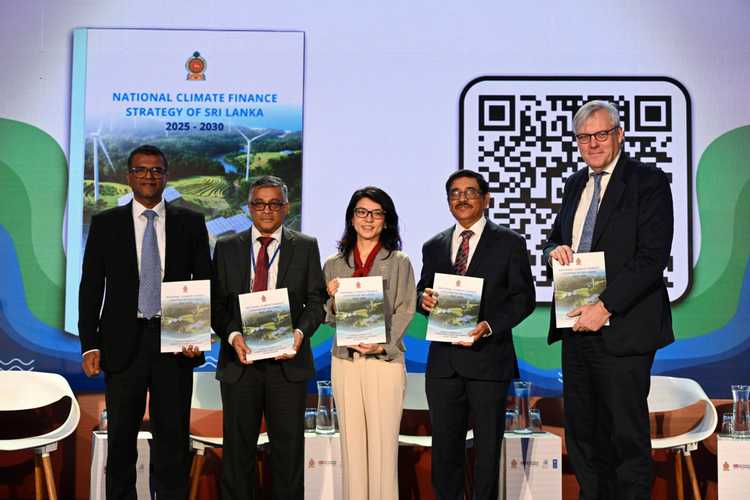
October 26, Colombo (LNW): Sri Lanka’s newly introduced National Climate Finance Strategy 2025–2030 is expected to open the door for greater access to international climate funds and attract global investors to green and sustainable projects, British High Commissioner to Sri Lanka Andrew Patrick said yesterday.
Speaking at a forum in Colombo, Patrick described the strategy as a critical milestone in Sri Lanka’s climate transition, enabling the government to meet international due diligence requirements while planning for the medium- and long-term economic impacts of climate change.
“There are some very obvious and serious challenges for Sri Lanka, particularly in the agriculture and tourism sectors, which are heavily dependent on biodiversity and natural ecosystems. Both are at risk due to climate change,” he said.
The National Climate Finance Strategy (NCFS), first conceptualised and launched under the previous administration in collaboration with the United Nations Development Programme (UNDP) and the Ministry of Finance, aims to provide a structured framework for mobilising both public and private climate-related investments. The strategy identifies funding pathways to strengthen renewable energy, climate-smart agriculture, coastal protection, water management, and disaster resilience, while improving transparency and accountability in climate finance management.
Developed with support from international partners such as the UK Government and the Green Climate Fund (GCF), the NCFS is designed to help Sri Lanka align its financing with global climate goals under the Paris Agreement. It also lays out a roadmap to integrate climate budgeting across ministries, create incentives for green investments, and develop local capacity to attract concessional loans and grants.
Patrick said the UK, as one of the world’s leading contributors to global climate finance, continues to support Sri Lanka through initiatives like the Climate Action for Resilient Asia (CARA) program. “Without a climate finance strategy of this kind, it is much harder for the Government to access those international funds,” he noted.
Highlighting Sri Lanka’s potential in renewable energy, Patrick pointed out that the island nation has enormous potential for offshore and onshore wind power, areas in which the UK has already extended technical and financial assistance. “Sri Lanka has huge capacity to generate offshore wind power, and we are glad to partner in that transition,” he said.
The British envoy also referred to several ongoing UK-backed projects, including collaboration with IMI on studying groundwater salinity in Jaffna, and regional programs aimed at enhancing climate forecasting and disaster preparedness. Improved early-warning systems, he noted, have already reduced casualties from extreme weather events despite the growing frequency of such disasters.
Patrick reaffirmed that the UK Government, the UNDP, and the Sri Lankan authorities are working in partnership to transform climate challenges into long-term investment opportunities. “International collaboration is essential for building resilience and creating sustainable growth,” he said
Sri Lanka Shines at South Asian Senior Athletics Championships with Multiple Relay and Track Medals

October 26, Colombo (LNW): Sri Lanka delivered a remarkable display of athletic prowess at the 4th South Asian Senior Athletics Championships 2025, held in Ranchi, India, leaving a strong mark across both track and field events.
The nation’s athletes demonstrated speed, strength, and consistency, contributing to a medal haul that highlighted Sri Lanka’s growing dominance in regional athletics.
The Men’s 4x100m relay team set the tone for the competition, racing to a sensational gold-medal finish in 39.99 seconds. Their flawless baton exchanges and powerful sprinting cemented Sri Lanka’s position at the top of the podium.
Not to be outdone, the Women’s 4x100m relay quartet followed with an equally impressive performance, claiming gold in 44.70 seconds and completing a clean sweep of the relay events for the island nation.
Individual successes further added to the celebration. Kalinga Kumarage claimed gold in the Men’s 400m, clocking an outstanding 46.21 seconds, while Kalhara Indupa secured bronze in the same race, demonstrating Sri Lanka’s depth in sprinting talent.
In field events, Milantha Sampath, who transitioned from long jump to discus throw, captured bronze in the Men’s Discus Throw, showcasing versatility and determination. Sayuri Mendis also contributed to the medal tally with a bronze in the Women’s 400m, further reinforcing the nation’s competitive presence.
Energy Minister Revokes Extension of Power Sector Director’s Tenure
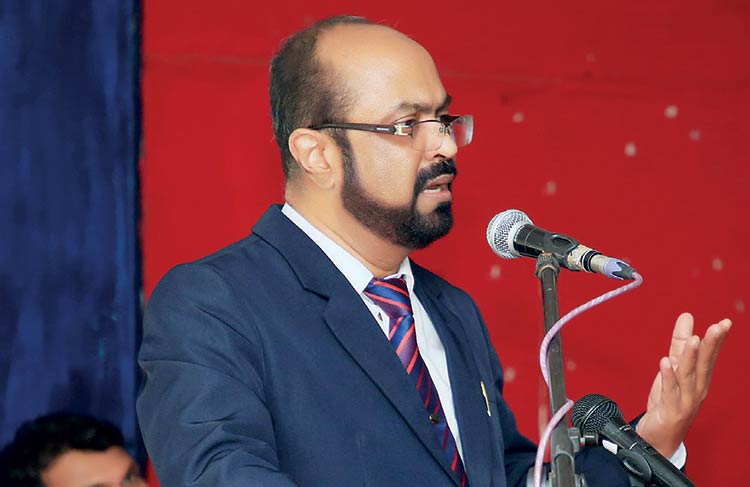
October 26, Colombo (LNW): Energy Minister Kumara Jayakodi has annulled the one-year service extension previously granted to Pubudu Niroshan, Director General of the Power Sector Reforms Secretariat.
The extension had been approved by Ministry Secretary Udayanga Hemapala but has now been rescinded by the Minister, who maintains that the authority to confirm such appointments rests solely with him.
Niroshan had initially been appointed to the post by President Anura Kumara Dissanayake for a one-year term, which concluded on October 15, 2025. Following the Ministry Secretary’s extension, his tenure was set to continue for an additional year.
The Minister’s intervention effectively terminates this extension, reflecting an apparent disagreement over procedural authority within the ministry.
Three Arrested Over Killing of Weligama Pradeshiya Sabha Chairman

October 26, Colombo (LNW): The Criminal Investigation Department (CID) has taken three individuals into custody in connection with the fatal shooting of Weligama Pradeshiya Sabha Chairman, Lasantha Wickramasekara, widely known as “Midigama Lasa.”
The suspects — a woman and two men — were apprehended in the Kekirawa area during an ongoing investigation into the high-profile murder.
Wickramasekara, aged 38 and a resident of Midigama, was gunned down inside his office at the Weligama Pradeshiya Sabha on October 22. According to police reports, two men on a motorcycle arrived at the premises under the pretext of obtaining a signed document from the chairman. Once inside, they opened fire at close range before fleeing the scene.
The victim sustained severe gunshot injuries and was rushed to the Matara General Hospital, where he later succumbed to his wounds. Preliminary forensic findings confirm that a pistol had been used in the attack.
BOI Seeks Solutions to VAT Burden Affecting Export Supply Chain
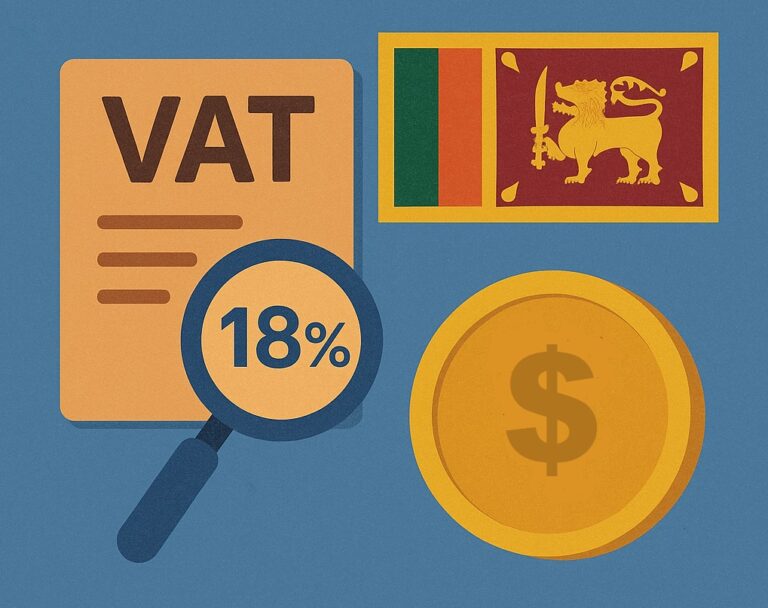
October 26, Colombo (LNW): Sri Lanka’s Board of Investment (BOI) is working closely with the government to resolve issues stemming from the imposition of value added tax (VAT) on locally manufactured inputs, which has discouraged domestic sourcing within export industries.
BOI Chairman Arjuna Herath confirmed that the agency is “actively engaged” in addressing the problem, which has become a pressing concern for sectors such as apparel and textiles.
The removal of the Simplified Value Added Tax (SVAT) system has been met with significant criticism from exporters, particularly those in the apparel sector. Under the previous SVAT framework, local producers could sell goods to exporters without charging VAT, thus avoiding cashflow disruptions and interest costs. The elimination of this system has created liquidity challenges for exporters, who must now pay VAT upfront and later wait for refunds.
Herath noted that the BOI has already submitted proposals to the Ministry of Finance as part of the forthcoming national budget to mitigate the negative impact of the tax change. Discussions have also taken place with the Inland Revenue Department to explore possible interim measures that could apply to firms operating within export processing zones.
“We are in dialogue with the authorities to find a workable solution—one that would allow deemed exporters to continue operating efficiently within the current VAT framework,” he said.
Sri Lanka’s apparel industry has invested heavily in backward integration to strengthen domestic production capacity. The Eravur Textile Zone, established to produce high-quality fabric locally, represents a major component of this strategy.
However, industry leaders warn that continued VAT-related cashflow pressure could force manufacturers to scale back these efforts, undermining the country’s competitive edge against regional rivals such as Vietnam and Taiwan—both of which maintain zero-rated VAT systems for sales to export firms.
In contrast to imported raw materials, which are exempt from VAT in Sri Lanka, locally sourced inputs are now taxed, placing domestic suppliers at a disadvantage. Analysts caution that this policy could drive local buying offices and support industries to relocate abroad, echoing the concerns voiced by exporters in recent months.
The impact has not been limited to the apparel sector. Tea exporters have reported that the removal of SVAT has increased their financing costs, with tea prices reportedly dropping by around Rs. 100 per kilogram shortly after the change, though some recovery is anticipated once VAT refunds are processed.
Economists note that such fiscal adjustments often follow balance of payments crises linked to monetary instability. Historically, Sri Lanka has responded to these crises by raising taxes, which in turn has led to calls for special tax concessions for export-oriented and foreign-invested enterprises.
Currently, Sri Lanka’s corporate tax rate stands at 30 percent—considerably higher than the 20 percent rate seen in many East Asian economies with more stable monetary frameworks.
Herath reiterated that the BOI remains committed to supporting the export sector and safeguarding local industry participation in global supply chains. “Our goal is to ensure that Sri Lanka remains a competitive and reliable destination for manufacturing and investment,” he said.
Minister Orders Police Inquiry into Death Threats Reported by MP Jagath Vithana
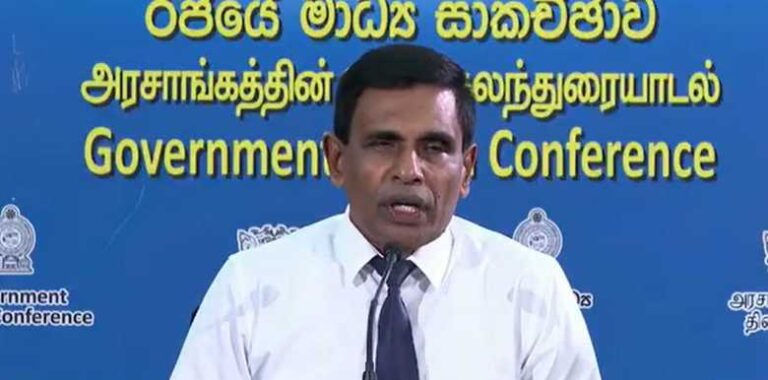
October 26, Colombo (LNW): Public Security Minister Ananda Wijepala has directed the Inspector General of Police (IGP) to initiate a full investigation into a security threat reported by Member of Parliament Jagath Vithana.
The instruction follows concerns raised by the MP during a recent parliamentary session, where he alleged that he had received death threats.
Minister Wijepala stated that the IGP has been asked to examine the situation thoroughly and take all necessary measures to ensure the safety of the parliamentarian. He emphasised that any threat made against a public representative is a serious matter and that the authorities will act swiftly to identify those responsible.
The issue came to light during a parliamentary debate held last Friday, when MP Vithana publicly disclosed that he had been threatened with death. His statement prompted immediate concern among fellow legislators, several of whom called for enhanced protection for elected officials.
Govt Pledges Greater Investment in School and National Sports Development
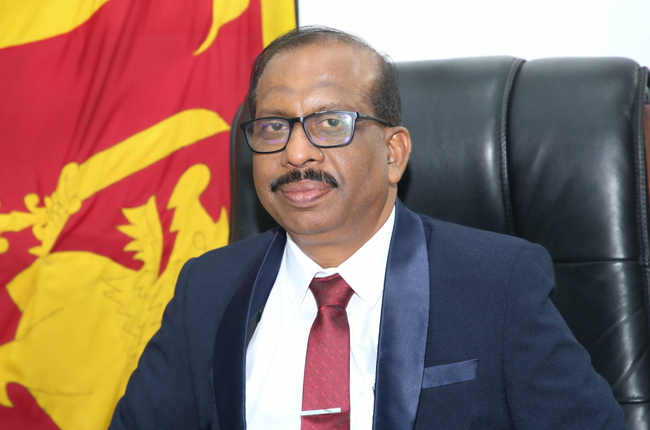
October 26, Colombo (LNW): Minister of Youth Affairs and Sports Sunil Kumara Gamage announced in Parliament on Friday (24) that Sri Lanka Cricket (SLC) allocates close to Rs. 1.5 billion annually towards the advancement and promotion of school-level cricket across the island.
Responding to a question raised by National People’s Power (NPP) MP Upul Kithsiri, the Minister highlighted that these funds are channelled through the School Cricket Association to support a wide range of initiatives — from upgrading school cricket infrastructure and providing modern training equipment, to organising tournaments that nurture emerging talent at grassroots level.
Minister Gamage further revealed that discussions are under way with the School Cricket Association to enhance cricket facilities in several districts, ensuring that young players in rural communities have better access to quality playing fields and coaching opportunities.
He noted that work has already commenced on constructing an international-standard cricket stadium in Jaffna, while another is planned for Biyagama. Several additional locations have been earmarked for future stadium projects, as part of a broader strategy to bring professional-level cricket closer to local communities.
Beyond cricket, the Minister outlined a series of government initiatives aimed at strengthening Sri Lanka’s overall sporting ecosystem. These include ongoing programmes to uplift athletics under the Mission Olympics 2028 initiative and the Kreeda Shakthi scheme, both designed to identify and nurture young athletes with international potential. Plans are also being finalised to introduce special allowances for athletics coaches, recognising their critical role in shaping the next generation of sports talent.
Minister Gamage reaffirmed the government’s commitment to transforming school and community-level sports into sustainable development platforms, emphasising that investment in youth and sports will remain a national priority in the coming years.
Navy Rescues Foreign Crew After Merchant Vessel Suffers Technical Failure in Southern Seas

October 26, Colombo (LNW): A group of 14 sailors have been safely rescued after their merchant vessel encountered a serious technical malfunction while navigating waters south of Sri Lanka.
The Sri Lanka Navy launched an emergency operation to assist the distressed ship, deploying its offshore patrol vessel SLNS Sayura to carry out the rescue.
The stricken vessel, identified as MV Integrity Star, reportedly suffered a mechanical breakdown roughly 100 nautical miles off the southern coast.
The incident prompted an immediate response from the Navy following a distress alert, with rescue teams working swiftly under challenging sea conditions to ensure the crew’s safety.
According to Navy officials, all 14 crew members—comprising nationals of India, Türkiye, and Azerbaijan—were successfully transferred aboard the naval vessel and are currently en route to Hambantota Harbour for further medical checks and logistical assistance.
Ministry Warns Against Unauthorised WhatsApp Groups Claiming Links to Education Reforms

October 26, Colombo (LNW): The Ministry of Education and Higher Education has raised concerns over the emergence of several WhatsApp groups allegedly operating under the banner “Education Council to be Formed through the New Education Reforms.”
These groups, which claim to bring together teachers from different educational zones, have been identified as unofficial and misleading.
In a public statement, the Ministry clarified that it has no connection whatsoever to these networks and that neither the Ministry of Education, the Ministry of Higher Education, nor the Vocational Education Department has authorised or endorsed their activities.
Officials stressed that any initiatives or communications related to national education reforms will only be issued through verified and official government channels.
Authorities further indicated that preliminary inquiries suggest these online groups may have been established with the intention of creating confusion among educators and tarnishing the credibility of the government’s education reform programme.
The Ministry expressed concern that misinformation circulated through such platforms could erode public confidence and disrupt genuine reform efforts aimed at improving the education system.
Teachers and education professionals have been urged to exercise caution when engaging with unofficial online platforms and to verify the authenticity of any messages or circulars before sharing them further.