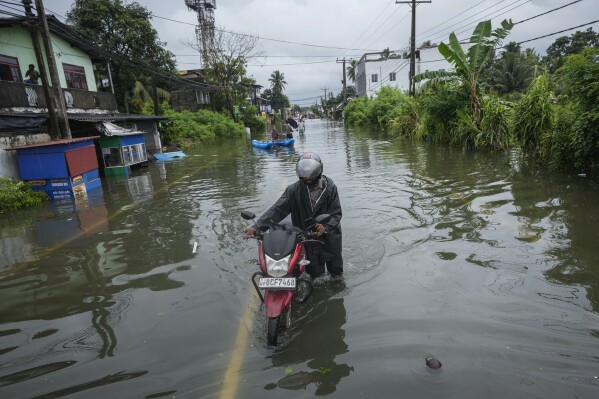
October 26, Colombo (LNW): Severe weather conditions that have persisted over the past few days have caused widespread disruption across much of the island, with 18 districts now reported to be affected.
The Disaster Management Centre (DMC) confirmed that nearly 30,000 people from over 7,000 families have suffered the consequences of the relentless downpours, which have triggered flooding, landslides, and property damage in multiple areas.
DMC Director Pradeep Kodippili noted that emergency teams have been mobilised to assist communities in the hardest-hit regions, providing temporary shelters, essential supplies, and relief assistance where necessary. Local authorities are said to be monitoring the situation closely as rainfall continues in several provinces.
Meanwhile, Dr Wasantha Senadeera, Senior Geologist at the National Building Research Organisation (NBRO), announced that the landslide warnings previously issued for 11 districts would remain in force due to persistent rain and increasingly unstable slopes. Residents living near hilly or elevated terrain have been urged to remain vigilant and to relocate to safer areas if early signs of ground movement are detected.
The Department of Irrigation has also cautioned that water levels in key rivers — including the Nilwala, Gin Ganga, Kalu Ganga, and Attanagalu Oya — are still alarmingly high following continuous rainfall. Officials have warned that further showers could cause these rivers to overflow, posing risks to nearby low-lying communities.
Authorities have called on the public to exercise caution, avoid unnecessary travel in flood-prone zones, and heed official updates as adverse weather conditions are expected to persist over the coming days.
Thousands Affected as Heavy Rainfall Continues to Batter Several Districts
Showers, thundershowers continue to persist: Fairly heavy falls exceeding 75 mm expected (Oct 26)

October 26, Colombo (LNW): The Department of Meteorology has forecast intermittent showers and thunderstorms across multiple regions of the island, with the Northern and North-Central Provinces, along with the Trincomalee and Batticaloa Districts, expected to experience particularly unsettled weather conditions.
According to the latest advisory, certain areas within these regions may record rainfall exceeding 75 millimetres, prompting officials to urge residents to remain alert for possible localised flooding and disruptions to daily activities.
In addition, the Western, Sabaragamuwa, Central, and North-Western Provinces are likely to see occasional showers throughout the day, though these are expected to be less intense than in the northern regions.
The department has also cautioned that strong gusts, ranging from 40 to 50 kilometres per hour, may affect the western slopes of the central hills and several coastal and inland provinces, including the Northern, North-Central, North-Western, Western, and Southern areas, as well as the Trincomalee District. These winds could cause minor structural damage and pose risks to outdoor activities and transport.
Authorities have advised the public to take necessary precautions against sudden bursts of strong winds and lightning strikes that could accompany thundershowers. Farmers, fishermen, and motorists, in particular, have been urged to exercise extra care over the coming days, as the weather may remain unstable.
Tariff Reforms Aim to Balance Protection and Fiscal Stability

By: Staff Writer
October 25, Colombo (LNW): Sri Lanka’s Committee on Public Finance (CoPF) has called for a comprehensive overhaul of the country’s tariff regime, even as it approved higher Special Commodity Levies (SCL) on key agricultural imports a move that underscores the continuing tension between protecting local farmers and maintaining fiscal discipline.
According to the Parliament Secretariat, the CoPF has approved an increase in the SCL on imported big onions and potatoes, effective 26 August 2025. The levy on big onions rose by Rs. 10 per kilogram from Rs. 40 to Rs. 50 while the levy on potatoes increased by Rs. 20, from Rs. 60 to Rs. 80. The revision aims to ensure fair farmgate prices during the 2025 Yala cultivation season and discourage cheap imports that undermine local producers.
Officials admitted that although the SCL was initially intended to be phased out, it continues to serve as a protective barrier for domestic agriculture. However, the CoPF cautioned that Sri Lanka’s tariff regime must evolve into a more transparent, predictable, and sustainable system, aligned with international trade norms.
The committee instructed the Ministry of Trade and the Ministry of Finance to harmonise existing legislation with the National Tariff Policy and fast-track the transition to a simplified four-band import duty structure. This reform, to be implemented between 2027 and 2030, envisions a gradual phase-out of para-tariffs such as SCL and CESS that have complicated the trade regime and created uncertainty for both importers and exporters. A comprehensive progress report is expected by March 2026.
Beyond tariff reform, the CoPF stressed the need to strengthen agricultural productivity to reduce long-term dependence on import restrictions. It recommended that the Department of Agriculture launch a national programme promoting high-yield cultivation kits for big onion farmers across all major growing regions within the next five years. The proposal includes establishing temperature-controlled storage facilities, implementing buy-back schemes, and introducing future contracts to minimise post-harvest losses and stabilise farmer income.
These measures, the committee argued, would help shift the focus from short-term tariff protection to long-term competitiveness, aligning with broader economic diversification goals.
In parallel, the CoPF also approved new regulatory measures under the Excise Ordinance to tighten enforcement and improve revenue collection from liquor manufacturers. Under the revised rules, manufacturers failing to pay duties within 30 days will face suspension of production, with sales and distribution halted after 90 days. The existing 3% monthly penalty on unpaid duties, the committee observed, has proven ineffective due to weak enforcement mechanisms.
Analysts note that these tariff and excise reforms represent a delicate balancing act between protecting domestic industries, maintaining revenue stability, and modernising Sri Lanka’s trade framework. If implemented effectively, the reforms could enhance investor confidence, boost agricultural efficiency, and reduce fiscal distortions crucial steps toward building a more sustainable and competitive post-crisis economy.
Sri Lanka Airports Brace for Tourist Air Traffic Surge

By: Staff Writer
October 25, Colombo (LNW): Sri Lanka’s aviation and airport sector is entering a critical phase of renewed activity as the winter tourism season approaches, with a notable surge in international arrivals and flight operations. Airport and Aviation Services (Sri Lanka) Ltd. (AASL) reports that both passenger volumes and air traffic are expected to rise sharply between November 2025 and February 2026 traditionally the island’s busiest travel period.
The Bandaranaike International Airport (BIA) in Katunayake and the Mattala Rajapaksa International Airport (MRIA) in Hambantota are preparing to handle expanded operations as several international airlines resume or introduce new routes to Sri Lanka. This influx is expected to support the country’s tourism recovery and boost foreign exchange inflows.
Among the new developments, Kuwait Airways will resume flights to Colombo on October 27 with four weekly services. Belarus’s national carrier Belavia Airlines will begin scheduled charter flights to MRIA from October 28, while Russia’s Red Wings Airlines is set to launch five weekly flights to Hambantota on the same day. Edelweiss, a subsidiary of SWISS International Air Lines, will also resume its winter operations to BIA, signaling confidence in Sri Lanka’s tourism rebound.
Polish carrier Enter Air will start regular charter flights between Warsaw and Colombo from October 30, operating every 10 days on Thursdays and Sundays until mid-April 2026. These additional connections are expected to strengthen Sri Lanka’s position as a winter sun destination for European travelers.
To cope with the anticipated passenger surge, AASL announced that 12 new check-in counters will be operational at BIA from November 1, 2025, as part of a short-term capacity expansion plan. The measure comes in response to growing requests from international airlines to increase flight frequencies and operate wide-body aircraft during the high season.
Further expansion of Sri Lanka’s aviation network is also on the horizon. Beijing Capital Airlines plans to commence twice-weekly flights from Beijing Daxing International Airport to Colombo in January 2026. Additionally, Jetstar part of Australia’s Qantas Group is exploring the possibility of launching scheduled services to Colombo next year, which could help tap into the growing South Asian Australian travel corridor.
Tourism performance indicators remain encouraging. By mid-October 2025, Sri Lanka had recorded over 1.8 million tourist arrivals, marking a strong post-pandemic recovery. The Government’s revised target of 2.6 million arrivals for 2025, however, requires attracting more than 800,000 visitors in the final quarter a challenge industry analysts describe as “ambitious but achievable,” contingent on global travel trends and the performance of the upcoming winter season.
Despite optimism, aviation officials stress the need for infrastructure upgrades, streamlined airport services, and policy stability to sustain growth. The expected air traffic surge underscores both the sector’s revival and the urgency to address operational bottlenecks, ensuring Sri Lanka remains competitive as a regional aviation and tourism hub.
Micro-finance Crisis Deepens: Vulnerable Borrowers Trapped in Debt

By: Staff Writer
October 25, Colombo (LNW): The Sri Lankan government has kicked off a data‐collection drive aimed at unraveling the troubling dynamics of the country’s microfinance sector an industry whose rapid expansion has saddled thousands of vulnerable borrowers with unmanageable debt and, tragically, driven some to suicide. The directive, issued by the Sub-Committee on Rural Development, Social Security and Community Empowerment, targets borrowers in four pilot Divisional Secretariat Divisions: Hatton (Nuwara Eliya), South Koralaipattu (Batticaloa), Welikanda (Polonnaruwa) and Wellawatte (Colombo), where officials will compile systematic data on individuals unable to repay microfinance loans.
The timing of the initiative signals growing alarm in Colombo about the shape of lending practices across the microfinance field. According to recent research, non-government microfinance institutions (MFIs) have succeeded in expanding outreach but at the cost of mounting borrower indebtedness: one study found that up to 70 per cent of rural borrowers were trapped in debt cycles, with average burdens around Rs 150,000.
Unregulated interest rates, rigid repayment schedules and aggressive collections have become common complaints among borrowers.
Despite the proliferation of micro-loans, the legal and regulatory environment remains weak. The long-awaited Microfinance Act is yet to be passed in Parliament, and the Central Bank of Sri Lanka (CBSL) register currently lists only four institutions, according to Governor Nandalal Weerasinghe. The discrepancy between official numbers and the many thousands of informal or semi-formal lenders operating on the ground has left swathes of borrowers outside formal oversight.
The pilot data collection aims not only to quantify the scale of default and distress, but also to design relief measures and rehabilitation programmes. Representatives of the 34 microfinance institutions registered with the Lanka Microfinance Practitioners’ Association (LMfPA) have been summoned for consultations. The Sub-Committee is discussing potential interventions for borrowers facing multiple loans, spiralling repayments and coercive recovery tactics.
From sectoral analysis, it’s clear that many micro-finance borrowers—especially women in rural or post-conflict areasare borrowing not for investment but to cover household expenses, pay prior loans or cope with income shocks.
This has produced a pernicious cycle: taking new loans to service old ones, mounting interest, and deteriorating conditions.
Critics argue that the micro-finance model in Sri Lanka has tilted toward “loan‐shark”-style practices, unchecked by robust regulation. Numerous reports link aggressive collection, multiple overlapping loans and even suicides among borrowers who feel trapped and powerless.
For the CBSL and the government, the task ahead is substantial. Crafting and passing the Microfinance Act is only the beginning. Regulatory capacity must be strengthened, interest rate caps considered, borrower protection mechanisms implemented and enforcement scaled up to bring informal lenders into oversight. Transparent data collection will help—but equally important is enforcement of fair recovery practices, financial literacy training and rehabilitation pathways for indebted households.
Without such interventions, the very tool meant for financial inclusion may become a source of deep social and economic damage undermining livelihoods, creating distress and placing the risk back on depositors, taxpayers and the broader economy. The pilot data initiative offers hope, but it must be followed by decisive regulatory action and accountability across the micro-finance sector.
Sri Lanka’s Construction Code Push Meets Industry Revival Surge

By: Staff Writer
October 25, Colombo (LNW): The Sri Lankan government is fast-tracking the development of a legally enforceable national building code, a move seen as overdue yet crucial amid a concurrent rapid rebound in the country’s construction sector. National Building Research Organization (NBRO) officials, aided by World Bank technical support, have prepared the framework for what Cabinet spokesman Nalinda Jayatissa described as comprehensive standards addressing building structural integrity, fire and electrical safety, plumbing, energy efficiency and disaster resilience.
With the building industry projected to grow by about 7.9% in real terms in 2025, driven by both public and private investment, the timing of the code rollout is critical.
The official construction PMI climbed to 52.9 in January 2025 from 51.4 in December 2024, indicating broad‐based expansion in activity, new orders, and input purchasing.
Industry insiders note that the pipeline of new residential, commercial and infrastructure projects is gaining momentum though consistent data on active building counts remain sparse.
Why now? Sri Lanka has long operated without a unified national code, which has left structural safety, build quality and regulatory oversight patchy. “In the absence of a national building code currently in force, Sri Lanka has faced serious issues relating to structural safety, quality, and regulation of the construction industry,” Jayatissa acknowledged. The IMF had previously designated developing climate-resilient building codes as a priority reform area for Sri Lanka.
The upcoming code will set legally enforceable standards across the lifecycle of buildings—from design to maintenance and alteration. This represents a major step beyond prior guidelines. Yet, the construction sector’s accelerated growth—buoyed by renewed investor interest, mass housing and infrastructure programmes, and improving economic sentiment—heightens the urgency for robust frameworks.
The expansion is not without risk. Rapid growth in construction often outpaces regulatory capacity and enforcement mechanisms. Supply‐chain strains, rising materials and labour costs, and a surge of small‐scale developments can amplify vulnerabilities unless controls keep pace. The January 2025 bulletin from the Construction Industry Development Authority (CIDA) also flagged monthly volatility in material price indices and labour cost swings.
By embedding standards for fire safety, electrical systems, plumbing, energy efficiency and disaster resilience, the new code aims to mitigate risks associated with landslides, flooding and earthquakes hazards increasingly relevant in Sri Lanka’s changing climate. The government’s recent approval of the NBRO project proposal marks the official launch of the governance architecture for the codes.
Still, implementation will be the real test. Moving from blueprint to enforcement requires clarity on institutional roles, funding, training of inspectors, and mechanisms for compliance and penalties. The code’s success will depend on how swiftly it can be rolled out across both high-end and informal construction, and how effectively it aligns with the industry’s growth trajectory currently.
As Sri Lanka’s construction sector regains momentum, the national building code stands as a necessary partner to that revival ensuring growth is not just fast, but safe, sustainable and resilient.
Government Issues New Directive to Streamline Requests for Attorney General’s Advice
October 25, Colombo (LNW): The Ministry of Public Administration, Provincial Councils, and Local Government has issued fresh instructions to all state bodies, reminding officials that any request for legal advice or opinion from the Attorney General’s Department must be accompanied by a full and clearly articulated explanation of the matter in question.
In a new circular, Secretary S. Aloka Bandara underscored that each submission should include a detailed statement of facts, outlining the background, relevant legal context, and the specific issues on which clarification is being sought.
Where reference is made to official correspondence or files, the precise page numbers and relevant sections must also be identified to ensure clarity and efficiency in the review process.
The circular follows repeated observations from the Attorney General’s Department that government agencies often deviate from established procedures when requesting legal guidance. Some institutions, it was noted, have even resubmitted matters on which the Attorney General has already issued a clear opinion, creating unnecessary administrative delays and duplications.
Secretary Bandara emphasised that such practices hinder the timely delivery of legal advice and place an avoidable burden on the Attorney General’s Office. He reminded all departments that the procedures governing requests for legal consultation are already clearly defined under the Establishments Code and must be adhered to without exception.
Sri Lanka Strengthens Coastal Preparedness with Nationwide Tsunami Drill Planned for Nov 05

October 25, Colombo (LNW): Sri Lanka’s Disaster Management Centre (DMC) has announced plans for a comprehensive island-wide tsunami simulation on November 05, aimed at testing the country’s readiness to respond swiftly and effectively to potential seismic threats.
The announcement was made by the DMC’s Director General, Major General (Retd.) Sampath Kotuwegoda, who confirmed that preparations are already underway for the large-scale exercise involving national and regional authorities.
Speaking during a high-level meeting attended by representatives from the Tri-Forces, Police, government departments, and humanitarian agencies, Major General Kotuwegoda highlighted the importance of vigilance, noting that a series of minor tremors had recently been detected near the Sumatra Trench — the same fault line responsible for the devastating 2004 Indian Ocean tsunami.
The upcoming simulation, coordinated under the framework of the Indian Tsunami Early Warning Centre (ITEWC), will include participation from 28 countries across the region. The exercise is designed not only to assess the effectiveness of early warning systems but also to ensure that evacuation routes, communication protocols, and inter-agency coordination mechanisms are fully functional.
According to the DMC, key coastal districts such as Kalutara, Matara, Jaffna, and Batticaloa will serve as focal points for the drill, though all other districts are expected to take part in varying capacities. Local authorities, schools, and community organisations are being encouraged to participate actively to strengthen public awareness and response capacity.
Major General Kotuwegoda underscored the importance of preparedness, explaining that any undersea earthquake exceeding 6.5 on the Richter scale near the Sumatra Trench could generate tsunami waves with the potential to reach Sri Lanka’s coastline within hours. He stressed that proactive training and coordination are essential to protect lives and minimise damage in the event of such a natural disaster.
SL Navy Launches Sea Rescue After Merchant Vessel Suffers Engine Failure South of Island
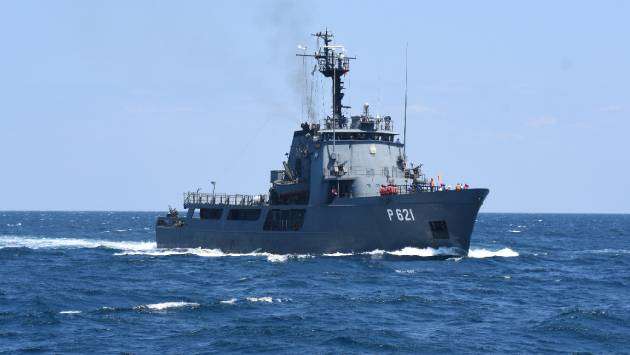
October 25, Colombo (LNW): The Sri Lanka Navy has deployed its offshore patrol vessel SLNS Samudura to assist in the rescue of a foreign merchant ship that ran into serious mechanical trouble in the Indian Ocean, roughly 100 nautical miles south of the island.
The operation began on October 24, 2025, after the Maritime Search and Rescue Coordination Centre received an urgent distress alert from the MV Integrity Star, reporting a major malfunction in its main engines that left the vessel adrift in open waters.
Responding swiftly to the call, the Navy dispatched Samudura, one of its key long-range patrol ships, equipped to handle both rescue and towing operations under challenging sea conditions. Naval officials confirmed that 14 crew members were on board the Integrity Star at the time of the incident, representing Indian, Turkish, and Azerbaijani nationalities.
Sri Lanka Among Most AI-Exposed Nations as World Bank Reports Sharp Rise in Tech-Driven Jobs Across South Asia

October 25, Colombo (LNW): A new assessment by the World Bank has revealed a dramatic surge in demand for artificial intelligence (AI) expertise across South Asia, with Sri Lanka emerging among the most affected nations.
The report indicates that from January 2023 to March 2025, the proportion of AI-linked job advertisements in the region more than doubled—from 2.9 per cent to 6.5 per cent—signalling a profound shift in the regional labour market. This surge in demand for AI-related roles is estimated to be expanding nearly 75 per cent faster than non-AI job categories.
According to the findings, roughly one in five jobs in South Asia—around 22 per cent—are now considered to have some level of AI exposure. Encouragingly, a majority of these roles, approximately 70 per cent, are categorised as “AI-complementary,” suggesting that automation is more likely to enhance rather than replace human work. Occupations such as educators, legal professionals, architects, and research specialists are among those expected to benefit most from AI-assisted productivity.
However, the study also points to a smaller yet significant segment—around 7 per cent of jobs—that faces a high risk of displacement. These include repetitive or process-driven roles such as customer service representatives, accountants, and text proofreaders, all of which have already seen a reduction in new vacancies since the emergence of advanced generative AI systems like ChatGPT.
While the World Bank acknowledges the potential for AI to accelerate innovation and efficiency, it warns that South Asia lags behind other regions in preparing its workforce for the technological transition. Persistent challenges in digital infrastructure, limited access to advanced training, and slow policy adaptation are cited as key obstacles preventing countries from fully capitalising on AI’s benefits.
The report further highlights notable variations within the region. Nepal has the lowest level of AI exposure, whereas Bhutan and Sri Lanka show the highest, largely due to their comparatively skilled and better-educated labour forces.
Interestingly, AI-related occupations—often higher-paying and more knowledge-intensive—account for an estimated 42 per cent of total wage earnings in these nations, underscoring the growing importance of digital and analytical competencies in securing economic mobility.