October 06, Colombo (LNW): A homegrown nutraceutical product, designed to target cancer stem cells, is gaining both domestic acclaim and international interest, with export revenues projected to reach approximately two million US dollars by the year 2027.
The development represents a promising intersection between modern science and natural therapeutics in Sri Lanka’s ongoing contribution to global health innovation.
The formulation, first introduced to the local market three years ago, has since cultivated a strong user base. Early adopters have reported notable improvements in overall wellbeing, prompting growing confidence in its potential to support those undergoing cancer treatment.
Although the product is not classified as a pharmaceutical drug, its formulation has been carefully designed to act as a complementary therapy in oncology care.
According to Professor Sameera R. Samarakoon of the Institute of Biochemistry, Molecular Biology and Biotechnology at the University of Colombo, the primary objective was to create a scientifically grounded supplement that offers support beyond conventional treatment.
“Cancer is addressed through a variety of interventions—ranging from surgery and chemotherapy to radiotherapy, targeted agents, and immunotherapy,” he stated. “Our aim was to develop a compound that addresses cancer stem cells, which are often implicated in relapse and treatment resistance, while enhancing quality of life.”
He added that the nutraceutical may also reduce the harsh side effects associated with mainstream therapies. “Many patients undergoing treatment suffer from toxicity-related complications. If we can ease that burden with a safe, adjunctive supplement, we’re not only treating the illness but also improving the journey through it.”
A consumer survey conducted by the University of Kelaniya in the previous year, involving more than 300 individuals, revealed a 93 percent satisfaction rate with the product—an encouraging indicator of its real-world impact.
Respondents reported perceived benefits such as improved energy levels, appetite regulation, and general resilience during ongoing cancer therapies.
The development process has been collaborative and interdisciplinary. Current preclinical and clinical trials are being conducted in conjunction with several academic institutions, including the University of Ruhuna and the Faculty of Indigenous Medicine at the University of Colombo. These partnerships seek to deepen scientific understanding of the compound’s bioactivity and safety profile.
Professor Samarakoon also confirmed that discussions are underway with international research bodies to undertake further validation studies. The intention is to build a robust portfolio of evidence that meets global standards and paves the way for international recognition and regulatory acceptance.
“This is not about replacing conventional treatments, but about offering patients and healthcare providers an additional, evidence-informed option,” he remarked. “With continued research and strategic global collaboration, we believe this Sri Lankan innovation could gain a place in the wider spectrum of integrative oncology.”
Sri Lankan-Developed Nutraceutical Poised to Boost Exports and Offer Hope in Cancer Care

President Champions Inclusive Housing at National World Habitat Day Observance
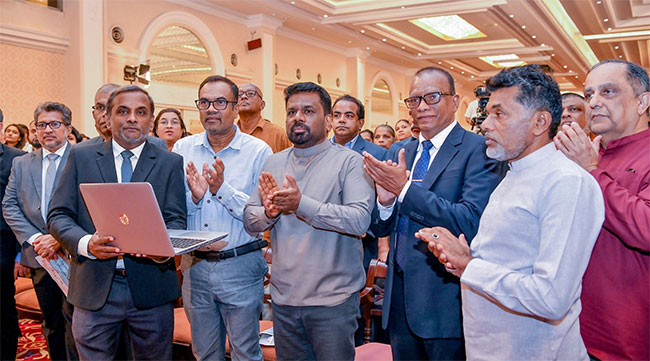
October 06, Colombo (LNW): A national ceremony commemorating World Habitat Day took place yesterday (05) at Temple Trees, with the event presided over by President Anura Kumara Dissanayake.
The occasion served not only as a reflection on the global significance of housing and urban development but also as a platform to reaffirm the Sri Lankan government’s commitment to ensuring secure, dignified living conditions for all its citizens.
This year’s national theme, “A Place to Belong – A Beautiful Life”, echoed the core message of the United Nations’ World Habitat Day, which encourages sustainable urbanisation and equal access to shelter.
In recognition of this initiative, the week leading up to the main event – from October 01 to 05 – was designated as Habitat Week, during which a variety of awareness campaigns, educational programmes, and community outreach activities were held across the country.
As part of ongoing efforts to bridge the housing gap among low-income communities, the National Housing Development Authority has launched a large-scale programme aimed at providing homes to families unable to construct their own.
During the ceremony, 1,000 newly built houses were ceremonially handed over to selected beneficiaries via a digital platform, enabling real-time engagement with recipients located in various parts of the island.
Further highlighting the government’s multi-pronged housing strategy, the event included a symbolic handover of the Ambatale Water Supply Project to President Dissanayake. This vital infrastructure initiative is set to be realised with assistance from the Government of India and support from the Coalition for Disaster Resilient Infrastructure (CDRI), coordinated through the UN-Habitat Sri Lanka Office.
Efforts to regularise land ownership also featured prominently. As part of a national drive to issue long-overdue land titles, a total of 357 land deeds were presented in a symbolic gesture to beneficiaries. Simultaneously, a financial support programme offering grants of one million rupees each to 1,000 families lacking the means to build homes saw 157 of those cheques ceremonially handed over during the event.
In addition to policy announcements and symbolic gestures, the ceremony embraced community and creativity. Young artists from across the country were celebrated for their participation in a nationwide art competition themed around housing and belonging.
The President personally handed out awards to the winners, recognising the importance of artistic expression in national dialogue. He also toured an accompanying exhibition showcasing student artwork and innovative housing design concepts, organised to inspire public engagement in urban development.
Urban Development, Construction and Housing Minister Anura Karunathilaka addressed the gathering, underscoring the government’s holistic approach to addressing the nation’s housing challenges. He stated that beyond mere infrastructure, the administration is committed to promoting thoughtful, inclusive housing policies that respond to the needs of present and future generations.
He also stressed the importance of fostering public discourse on sustainable urban living, ensuring that housing remains not just a basic need, but a fundamental right.
The official message from United Nations Secretary-General António Guterres was shared at the event by Harshini Halangoda, Programme Manager for UN-Habitat in Sri Lanka, reinforcing global solidarity in the pursuit of adequate shelter for all.
The ceremony drew participation from a broad cross-section of stakeholders, including senior government officials, local authorities, and international representatives. Notable attendees included Minister of Labour and Deputy Minister of Economic Development Anil Jayantha Fernando; Deputy Minister of Housing T. B. Sarath; Western Province Governor Haniff Yusuf; Colombo Mayor Vraie Cally Balthazar; and Navya Singla, First Secretary (Political) at the High Commission of India. Senior presidential and ministerial officials, along with key figures from the Urban Development Authority, were also present.
Evening thunderstorms to make another comeback: Fairly heavy falls above 50 mm expected (Oct 06)

October 06, Colombo (LNW): Atmospheric conditions are favourable for thunderstorms in the evening, and therefore, general public is advised to take adequate precautions to minimise damages caused by strong winds and severe lightning during thundershowers, the Department of Meteorology warned in its daily weather forecast today (06).
Showers or thundershowers will occur at most places of the island after 1.00 p.m.
Fairly heavy falls above 50 mm are likely at some places in Northern, North-central, Eastern, Central and Uva provinces.
Showers may occur at a few places in Western and North-western provinces and in Galle and Matara districts in the morning too.
Marine Weather:
Condition of Rain:
Showers or thundershowers may occur at several places in the sea areas around the island.
Winds:
Winds will be south-westerly or variable and wind speed will be (25-35) kmph.
State of Sea:
The sea areas around the island can be slight to moderate.
Temporarily strong gusty winds and very rough seas can be expected during thundershowers.
Ex-President Mahinda Rajapaksa Reflects on Enduring Public Affection, Describes Bond as Deeply Personal
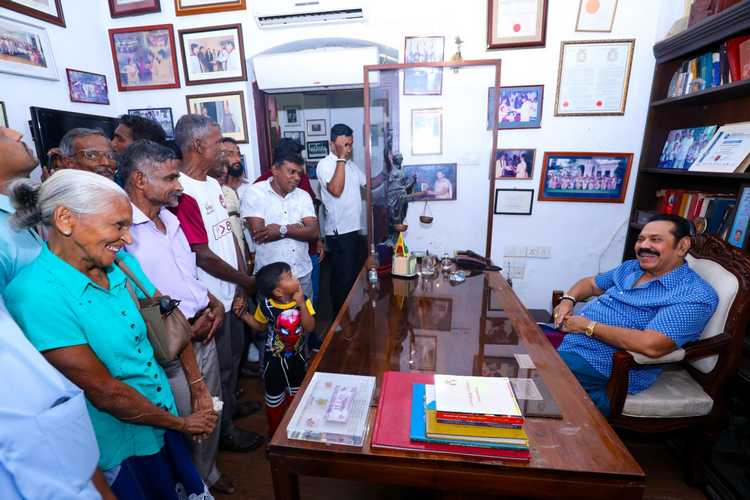
October 05, Colombo (LNW): Former President Mahinda Rajapaksa has expressed heartfelt gratitude for what he described as an enduring and sincere connection with the people, underscoring that the relationship is one built on trust, respect, and shared history—rather than political convenience or personal gain.
In a reflective note shared via his official Facebook account, Rajapaksa looked back on his decades in public life, highlighting the unwavering support he has received throughout his political journey. He emphasised that the affection shown to him over the years transcends typical political allegiance, calling it a “heartfelt bond” that has grown stronger even when tested.
“This is far more than a political alliance,” he wrote. “It is a connection forged through shared experience and mutual respect, one that has withstood the test of time. Often, attempts to weaken such ties only strengthen them further.”
He went on to describe his time among the people as the most rewarding aspect of his leadership, saying it brought him “the greatest joy” of his public service career. Concluding his message, Rajapaksa offered his sincere appreciation to the public, thanking them for what he called a profound and unbreakable bond.
Severe Lightning Alert Issued as Storm Conditions Loom Across Multiple Regions

October 05, Colombo (LNW): The Department of Meteorology has sounded an ‘Amber’ warning as unsettled weather conditions are expected to bring intense lightning activity across several areas of the country.
The alert, which signals a heightened risk to public safety, covers a wide geographical stretch and comes amid forecasts of heavy thundershowers.
According to the advisory, regions likely to experience severe lightning include the Northern, North Central, Eastern, Uva, and North Western provinces, along with the Matale district.
Meteorologists have cautioned that storms in these areas may be accompanied by sudden, gusty winds that could cause additional localised hazards.
In light of the forecast, residents in the affected zones are being urged to exercise heightened caution. The Department has advised the public to remain indoors during periods of thunder and lightning and to avoid activities that increase exposure, such as working in paddy fields, tea estates, or navigating open bodies of water.
Use of wired telephones and electrical devices that are plugged into the mains during storm conditions has also been discouraged, given the risk of lightning-induced surges. Those residing in vulnerable areas are further advised to remain alert for updates from local authorities and to be prepared for sudden changes in weather.
Hundreds Set to Join Postal Assistant Ranks After Years-Long Recruitment Freeze
October 05, Colombo (LNW): After a significant pause in hiring, the Department of Posts is set to induct 731 new personnel into the position of Postal Assistant, Grade III, within the Primary Non-Skilled Service Category.
The formal appointment letters are expected to be distributed on the October 06 at Temple Trees, with the proceedings to be officiated by the Minister of Health and Mass Media, Dr Nalinda Jayatissa.
This ceremony signifies not just a personal milestone for the recruits, but a critical turning point for the Department of Posts, which has not seen a permanent intake for this role since 2021.
The prolonged halt in hiring led to a backlog of nearly 2,000 vacancies by the close of 2024. This gap in staffing placed considerable strain on the department’s day-to-day operations, severely impacting postal services and logistics nationwide.
In light of these challenges, Minister Jayatissa submitted a proposal to the Cabinet earlier this year, seeking approval to urgently fill part of the vacant positions. On August 19, 2025, Cabinet gave the green light to recruit 1,000 new Postal Assistants.
The 731 individuals now set for permanent appointment were selected from a pool of substitute employees who had already been serving within the department and possessed the required qualifications.
Concerns Raised Over Proposed Interest Rate Shift in Central Expressway Financing
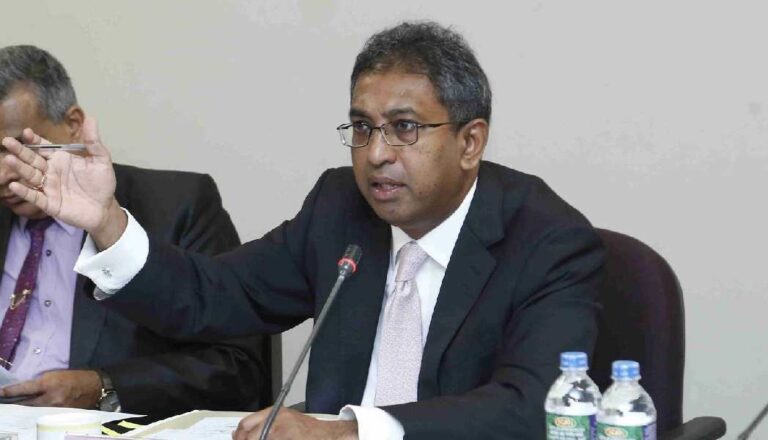
October 05, Colombo (LNW): Dr Harsha de Silva, Chair of the Committee on Public Finance (CoPF), has raised alarm over a proposal to amend the financing terms of the Central Expressway project, warning that such a move could ultimately inflate Sri Lanka’s external borrowing costs.
Posting on X (formerly Twitter), Dr de Silva drew attention to what he described as troubling developments surrounding the LKR 226 billion infrastructure initiative, which has already faced repeated delays and mounting financial burdens due to accruing interest and stalled negotiations.
Despite the project’s recent relaunch under the administration of President Anura Kumara Dissanayake, Dr de Silva noted that critical financial arrangements remain unresolved. In particular, discussions between the government and China EXIM Bank over a revised USD 500 million loan, as well as ongoing contractual disputes with the project’s primary contractor, MCC, have yet to reach final agreement.
Of particular concern to the CoPF, Dr de Silva said, is a proposal by the Ministry of Highways to transition the loan’s existing 15-year fixed interest rate of 2.5% to a floating structure. The proposed new arrangement would introduce a variable rate, with a minimum of 2.5% and a ceiling of 3.5%, depending on changes in Chinese sovereign lending rates over time.
This shift from a fixed to a variable rate raises serious questions, he said, warning that Sri Lanka may end up exposed to higher repayment obligations if global or Chinese interest rates rise significantly in the coming years.
The CoPF has formally advised the Ministry to pursue a more balanced approach—one that would ensure parity for both sides in the event of future fluctuations in borrowing costs. The committee is seeking reassurance that any revised agreement will preserve the country’s long-term fiscal interests while safeguarding against avoidable risk exposure.
Dozens Impacted as Adverse Weather Sweeps Across Multiple Provinces
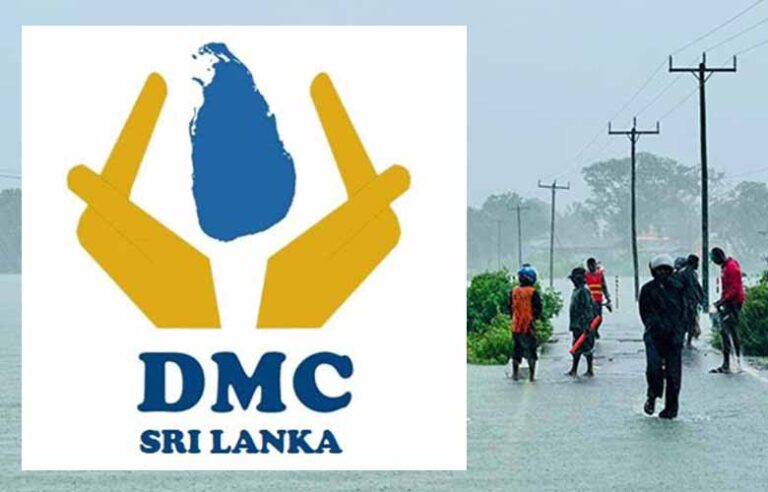
October 05, Colombo (LNW): Unsettled weather conditions have left dozens of individuals affected across several regions of Sri Lanka, with strong winds and heavy rainfall causing injury and property damage in recent days.
According to the latest situation report from the Disaster Management Centre (DMC), a total of 84 people belonging to 49 families have been impacted in five provinces: Central, North Central, Northern, Southern, and North Western.
The report highlights that four individuals sustained injuries—two in the Jaffna District and two in Kurunegala—mainly due to falling debris and wind-related incidents. While no fatalities or evacuations have been recorded, the DMC confirmed that 49 houses have suffered partial damage as a result of the adverse weather.
Nuwara Eliya was among the hardest-hit districts, with 48 residents affected by intense rainfall accompanied by lightning. In Anuradhapura, 17 people experienced disruption due to a combination of rainfall and strong winds, while Jaffna saw 14 individuals impacted by similar conditions.
In the south, a tree fall incident in Galle affected five individuals. Kurunegala, meanwhile, reported 25 people affected as gusty winds swept through the area.
Local disaster response teams have been placed on standby, and public advisories are expected to be issued if conditions deteriorate further.
Officials are urging residents in vulnerable areas to exercise caution, secure loose outdoor items, and stay indoors during periods of severe weather.
Historic Fuel Station to Be Established on Delft Island in Landmark Development
October 05, Colombo (LNW): In a significant step towards improving infrastructure and daily life for remote communities, plans are now in motion to establish the first-ever fuel station on Delft Island.
The initiative comes through a newly formalised agreement with the Ceylon Petroleum Corporation (CEYPETCO), announced by Minister of Highways, Ports and Civil Aviation Bimal Ratnayake during a public address in Jaffna.
The project, which is being rolled out in partnership with the Sri Lanka Navy, is set to drastically reduce the time and cost involved in transporting fuel to the island. At present, residents must endure a logistical challenge that takes nearly seven hours simply to deliver fuel to the island’s power generator. The new facility is expected to cut that process down to just 45 minutes, once fully operational.
In its initial phase, the CPC will allocate Rs. 50 million towards construction and setup, with further expansion planned in a second phase. The station will offer fuel at standardised national rates—matching those in Colombo—bringing much-needed price parity and accessibility to an area that has long struggled with fuel shortages and inflated costs due to transport difficulties.
“This development represents more than just a fuel station,” said Minister Ratnayake. “It symbolises our government’s commitment to inclusive progress—connecting even the most isolated communities to national development efforts.”
He underscored the broader vision behind the initiative, describing it as part of a nationwide push to bridge regional divides and strengthen social cohesion. “We are building a country where people can travel freely from Nagadeepa to Amman Kovil, not only in peace but in unity,” he said, referring to significant religious and cultural landmarks in the north.
The Minister also called on the public to support what he described as a government rooted in unity and clean governance—one that seeks to dismantle barriers, be they economic, regional, or communal.
Fatal Collision on Narammala–Kurunegala Road Claims Three Lives

October 05, Colombo (LNW): A tragic road accident in the heart of Narammala has left three people dead and three others seriously injured following a collision between a heavy lorry and a passenger bus.
The incident occurred along the busy Narammala–Kurunegala main road, a stretch frequently plagued by speeding and high traffic volumes.
Police in Narammala have launched a full investigation to determine the cause of the accident.