Home Blog Page 371

Multiple provinces to witness showery conditions (Aug 05)

0

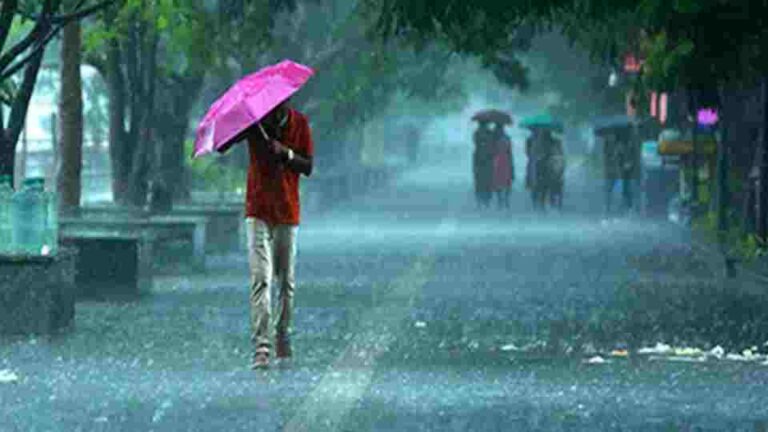
August 05, Colombo (LNW): Several spells of showers will occur in Western, Sabaragamuwa, Central and North-Western provinces and in Galle and Matara districts, the Department of Meteorology said in its daily weather forecast today (05).

Showers or thundershowers will occur at several places in Northern, North-Central, Uva and Eastern provinces after 1.00 p.m.

Fairly heavy falls above 50 mm are likely at some places in Uva province and in Ampara and Batticaloa districts.

The general public is kindly requested to take adequate precautions to minimise damages caused by temporary localised strong winds and lightning during thundershowers.

Marine Weather:

Condition of Rain:
Showers may occur at several places in the sea areas off the coast extending from Colombo to Matara via Galle. Showers or thundershowers may occur at a few places in other sea areas around the island during the evening or night.

Winds:
Winds will be westerly to south-westerly and wind speed will be (30-40) kmph.

Wind speed can increase up to (50-60) kmph at times in the sea areas off the coast extending from Galle to Pottuvil via Hambantota.

Wind speed can increase up to 50 kmph at times in the sea areas off the coast extending from Puttalam to Galle via Colombo.

State of Sea:
The sea areas off the coast extending from Galle to Pottuvil via Hambantota will be rough at times.
The sea areas off the coast extending from Puttalam to Galle via Colombo will be fairly rough at times.

The wave height may increase about (2.5-3.0) m in the sea areas off the coast extending from Chilaw to Matara via Galle (this is not for land area).

Naval and fishing communities are requested to be vigilant in this regards.

Amid BYD Tax Evasion Drama, Legal Battle Over ‘City of Dreams’ Casino Begins: Developer Seeks Rs. 15 Bn in Damages

0

August 05, Colombo (LNW): A legal battle is set to commence today (05) at the Colombo Commercial High Court concerning the recently launched casino complex in Colombo known as City of Dreams – Sri Lanka.

The dispute centres on allegations of a serious breach of contract tied to the development of the high-profile entertainment venue.

The lawsuit has been brought forward by businessman Ravi Wijeratne, the proprietor of Rank Entertainment Company. According to legal documents, the claim pertains to an agreement made several years ago involving multiple corporate entities connected to the casino’s development.

Mr Wijeratne alleges that commitments made under the agreement were not honoured, resulting in substantial financial loss to his company.

Rank Entertainment is seeking compensation to the tune of Rs. 15 billion from the parties named in the petition. The respondents include Waterfront Properties (Pvt) Ltd as the first respondent, John Keells Holdings PLC as the second, Hong Kong-listed Melco Resorts & Entertainment Ltd as the third, and Blue Heaven Services (Pvt) Ltd as the fourth.

This is the first court hearing in the case, which is expected to attract considerable attention due to the involvement of high-profile companies and the scale of the claims. President’s Counsel Harsha Cabral is set to represent the petitioner in court.

Separately, one of the companies involved – John Keells Holdings – is already under scrutiny in an unrelated tax investigation. Allegations have surfaced that the firm may have significantly underpaid import taxes in relation to the entry of BYD-branded vehicles into the country. Authorities are examining the importation and clearance of approximately 2,000 vehicles, with an estimated tax liability nearing Rs. 10 billion. Should the investigation result in penalties, the company could face fines totalling as much as Rs. 30 billion – three times the original amount.

Singer Sri Lanka serves as official retailer for Starlink internet services

0

August 05, Colombo (LNW): Singer Sri Lanka has officially announced that it is now the authorised retailer of Starlink, the satellite-based internet service developed by SpaceX, marking a significant advancement in the country’s digital connectivity landscape.

In a public statement issued via its official Facebook page, Singer declared that Starlink is now “officially available right here in Sri Lanka”, positioning the company at the forefront of next-generation internet solutions.

Starlink, a project by Elon Musk’s aerospace firm SpaceX, provides high-speed, low-latency broadband internet through a constellation of low Earth orbit (LEO) satellites. The technology is particularly suited for remote and underserved areas where traditional fibre or mobile internet is limited or unavailable.

Singer (Sri Lanka) PLC is a publicly listed company owned by Hayleys PLC, which is under the leadership of Sri Lanka’s prominent business magnet Dhammika Perera.

Singer’s announcement reflects a major step forward for consumers and businesses in Sri Lanka seeking reliable, high-speed connectivity regardless of location. “Stay connected. Anywhere. Anytime. With the power of SpaceX, now brought to you by Singer,” the company said in its promotional message.

With this partnership, Singer is expected to manage the local distribution and customer engagement for Starlink products and services, further strengthening its role in the country’s digital infrastructure ecosystem.

Sri Lanka’s Casino Industry Bets on Survival amid Heavy Taxes, Scrutiny

0

By: Staff Writer

August 04, Colombo (LNW): Sri Lanka’s newly opened City of Dreams integrated resort, a $1.2 billion mega-development by John Keells Holdings (JKH) in partnership with global gaming giant Melco Resorts and Entertainment, is positioning itself as a game-changer in the island’s tourism industry. However, the project’s launch comes at a time when the country’s casino industry is facing mounting challenges, including a tough tax regime and increasing scrutiny over alleged money laundering by some operators.

Conceived in the early 2010s as Sri Lanka emerged from decades of conflict, the integrated resort was designed to help reposition Colombo as a premier high-end tourism hub in South Asia. “We recognized the need to attract outbound tourists, especially from our giant neighbor India, and also from the Middle East and Southeast Asia,” JKH Chairman Krishan Balendra said during the opening. The proximity to large regional markets, along with a post-conflict vision of economic revival through tourism, drove the concept forward.

The resort features a combination of luxury offerings, including the Cinnamon Grand Hotel, Melco’s Nuwa Hotel, a casino, high-end apartments, a shopping complex, and expansive conference and banqueting facilities. Inspired by regional success stories like Marina Bay Sands in Singapore, the project aims to generate a wide array of revenue streams, from hospitality and retail to gaming and real estate.

Melco Resorts Chairman Lawrence Ho, who operates similar integrated gaming destinations in Macau, Manila, and Cyprus, believes Sri Lanka holds unique potential as a destination. “Sri Lanka isn’t just a city with casinos. It’s a full-fledged tourism destination. Unlike Macau, which is more urban-centric, Sri Lanka offers beaches, culture, and experiences. You can spend one or two weeks here easily,” he noted.

According to Ho, the island is strategically located as a gateway to fast-growing feeder markets such as India, China, Russia, and the Gulf states. He compared Sri Lanka’s potential to become the “Macau of South Asia,” particularly due to rapid economic growth in India’s upper-middle-class segment.

Despite the optimism surrounding the City of Dreams, the broader casino industry in Sri Lanka is navigating turbulent waters. The government has imposed significantly higher taxes on gaming operators, with casinos now subject to steep licensing fees, annual levies, and a turnover-based tax. In addition, some casino operators in Colombo have faced allegations of financial irregularities and potential money laundering, drawing heightened attention from regulators and raising concerns over compliance and transparency.

Nevertheless, JKH remains confident. The company expects to generate long-term income from fixed and variable payments from the casino, in addition to hotel revenues, commercial rentals, and apartment sales. Early signs are promising, with bookings picking up and expectations for a strong winter tourist season ahead, Balendra said.

As Sri Lanka seeks to rebuild its tourism economy post-crisis, the success or failure of this integrated resort could define the future direction of the island’s tightly regulated and closely watched gaming sector.

Customs Surpasses Revenue Targets amid Crackdown on Corruption.

0

By: Staff Writer

August 04, Colombo (LNW):Sri Lanka Customs has posted record-breaking revenue figures in 2025, collecting Rs. 1,227 billion by August 1, with July alone bringing in an all-time high of Rs. 231 billion. This surge—driven primarily by a sharp increase in motor vehicle imports—comes even as the department faces growing scrutiny over corruption, fraudulent practices, and the unauthorized release of cargo.

Officials confirmed that over 28,000 vehicles were imported in July, contributing significantly to the Rs. 300 billion collected from motor vehicle imports this year. However, this revenue windfall is accompanied by serious concerns over malpractices, including the alleged fraudulent registration of vehicles and the release of 312 containers without proper inspection.

The Commission to Investigate Allegations of Bribery or Corruption (CIABOC) has launched inquiries into these cases in collaboration with the Department of Motor Traffic and Sri Lanka Customs. Among the high-profile investigations is a case involving ten BYD vehicles suspected of undervaluing duties. One vehicle has already been re-exported over documentation discrepancies, while others remain under scrutiny.

Customs spokesperson Seevali Arukgoda noted that these incidents have not derailed the department’s broader revenue goals. “By end-July, we exceeded our revenue expectations by Rs. 116 billion, and we are confident of surpassing the annual target of Rs. 2,115 billion,” he said. Arukgoda attributed the success to strategic planning under a five-year operational roadmap launched in 2024.

He also reiterated that any attempts to defraud Customs will result in severe penalties, including the confiscation of goods and fines up to three times their value. To ensure fairness and transparency, Customs uses the global Harmonized System (HS) classification for determining duties—applied uniformly to all importers.

Despite the department’s strong performance, concerns about inefficiencies remain. Arukgoda acknowledged that delays in port clearance—especially for vehicles—are common due to the complexity of verifying documentation, vehicle age, and tax compliance. However, he emphasized that delays are often due to coordination issues with other agencies rather than Customs itself.

Meanwhile, Sri Lanka is rolling out institutional reforms to tackle corruption systemically. A National Anti-Corruption Action Plan (NACAP) for 2025–2029 is in development, focusing on prevention, education, institutional capacity-building, and legal reform. Under the Anti-Corruption Act No. 9 of 2023, CIABOC has been empowered with greater authority to investigate and prosecute corruption cases.

As Sri Lanka Customs celebrates unprecedented revenue gains, authorities face a dual challenge: sustaining fiscal momentum while rooting out deep-seated corruption that continues to cast a shadow over one of the government’s most vital revenue-generating agencies.

Fish Harvest Improves as Sri Lanka Ramps Up Seafood Distribution

0

By: Staff Writer

August 04, Colombo (LNW): Sri Lanka’s seafood export industry, a vital contributor to the national economy, is regaining momentum following recent setbacks. In 2023, the country exported seafood worth USD 288.62 million, and authorities now aim to build on this figure by increasing local fish harvests and bolstering infrastructure.

After a sharp dip in fish harvests due to adverse weather conditions, the sector is showing signs of recovery. Officials are optimistic that consistent supply will return, supporting both domestic nutrition goals and foreign exchange earnings through exports.

Fish remains a critical protein source, particularly for rural communities and vulnerable groups. In line with this, the Ceylon Fisheries Corporation (CFC) is actively promoting fish consumption to combat malnutrition. It has launched initiatives to provide high-quality sea fish at affordable prices, especially in major urban and semi-urban areas, including Colombo and Kandy. Mobile sales trucks are now serving remote regions to ensure accessibility.

To further enhance distribution, CFC plans to acquire small Bolero-type cooler trucks suited for navigating narrow rural roads in provinces such as Sabaragamuwa and Central. This move comes amid rising local demand and logistical challenges in reaching isolated markets.

A notable success is the revival of the domestic canned fish industry. With imports now halted, 16 local manufacturers — including a facility formerly operated by CFC in Galle — have stepped up production. In 2024, local factories produced 11,200 metric tons of canned fish, supplying a significant portion of the roughly 200,000 cans consumed daily.

CFC plays a central role in the industry’s supply chain — from purchasing fish from local fishermen to providing cold storage and delivering to retail outlets across the island. The Corporation operates 20 regional fish purchasing centres in locations including Galle, Negombo, Jaffna, and Polonnaruwa. These are supported by dozens of satellite outlets and growing partnerships.

However, outdated cold storage infrastructure remains a concern. The blast freezers at CFC’s Mutwal headquarters, used to store large fish at -40°C, have been out of operation since 2017. Currently, the CFC leases blast freezing capacity from private firms to manage large fish storage. Plans are underway to modernize these facilities with government-backed funding and a request for long-term credit repayment over 20 years.

To counter seasonal price volatility, CFC has also begun stockpiling fish during peak seasons using two newly hired 40-foot freezer containers, releasing them at controlled prices during lean months.

CFC has teamed up with Lak Sathosa to distribute frozen fish through 27 additional outlets, and now operates a total of 90 outlets island-wide. Recently opened sales centres in Wadduwa and Polgahawela highlight its continuing expansion into underserved areas, with a focus on affordability and accessibility.

With infrastructure upgrades, expanded distribution, and government support, Sri Lanka’s seafood industry is positioning itself for a stronger, more sustainable future — both as an economic driver and a pillar of public nutrition.

Sri Lanka Forex Gains Offset by Soaring Vehicle Import Demand

0

By: Staff Writer

August 04, Colombo (LNW): Sri Lanka is walking a fiscal tightrope as it seeks to sustain macroeconomic stability amid rising vehicle import pressures and stringent IMF foreign reserve targets. While the country reported a significant current account surplus in June 2025 and robust export growth, analysts warn of looming risks if import demand outpaces sustainable foreign inflows — especially with Letters of Credit (LCs) worth $1.2 billion already opened for vehicle imports.

Strong External Earnings in June

Sri Lanka recorded foreign exchange earnings of $2.285 billion in June 2025, according to official data, buoyed by goods exports, worker remittances, and services exports — including tourism and IT/BPO services. This figure exceeded monthly goods imports by $604 million, reflecting a positive trade balance.

Goods exports rose by 6% year-on-year to $1.14 billion, while remittances surged 22% to $635 million. Services exports, which totaled $508 million, were driven largely by IT/BPO services ($338.5 million) and tourism ($169.5 million) which are at risk due to heavy taxation .

The Central Bank of Sri Lanka (CBSL) reported that total exports (goods and services) for June stood at $1.46 billion, an 8.73% year-on-year growth. For the first half of 2025, merchandise exports reached $6.5 billion (up 5.86%), and total exports climbed to $8.34 billion, a 6.7% improvement over the same period last year.

Rising Imports: Investment or Inflation Risk?

Despite strong inflows, concerns are mounting about the pace of import growth, especially in non-essential sectors. Imports rose to $1.682 billion in June from $1.507 billion in May — a sharp increase partly driven by a rebound in investment goods and base metals, which climbed to $378 million.

The pressure is now intensifying with the government confirming that $1.2 billion in LCs for vehicle imports have been opened since February.

Analysts warn that this sudden surge in consumer imports — after a near five-year restriction — could strain foreign reserves unless matched by stable, sustainable inflows. While credit conditions remain tight, any relaxation through expansionary monetary policy — such as rate cuts or liquidity injections — could aggravate forex shortages and undermine IMF benchmarks.

IMF Benchmarks and Reserve Risks

Sri Lanka’s program with the International Monetary Fund (IMF) mandates the maintenance of adequate gross official reserves and disciplined fiscal and monetary policy. Any misalignment — such as allowing credit-fueled imports without corresponding foreign currency earnings — risks missing targets and delaying fund disbursements.

Critically, reserves are essentially domestic savings invested abroad. Weak credit growth helps suppress imports and allows reserve buildup. However, if the central bank cuts rates or injects liquidity under the guise of flexible inflation targeting, this could lead to higher domestic consumption and reduced forex accumulation, especially if the rupee comes under pressure.

Indeed, despite running a record current account surplus in the first half of 2025, the rupee has depreciated modestly. This paradox reflects ongoing central bank dollar purchases for reserve accumulation — but without adequate fiscal tightening or genuine deflation, such efforts risk backfiring.

The Road Ahead

The return of vehicle imports signals a growing appetite for consumption — a politically popular but fiscally risky move. With Sri Lanka still recovering from a deep economic crisis, policymakers must ensure that macroeconomic discipline isn’t compromised.

The government must now strike a careful balance: supporting growth through investment and export promotion, while ensuring that rising imports — particularly of non-essential goods — don’t derail progress made in stabilizing external accounts. Adherence to IMF benchmarks, prudent credit management, and a focus on sustainable FDI and service exports will be critical in avoiding a repeat of past vulnerabilities.

In this context, the months ahead will test Sri Lanka’s economic management — as it navigates between external confidence and internal consumption demands, all under the close watch of its international creditors

Govt pledges to tackle national housing crisis within a decade

0

August 04, Colombo (LNW): Labour and Foreign Employment Minister Wasantha Samarasinghe said the government intends to resolve the country’s housing deficit over the next five to ten years.

Speaking at a state housing assistance programme held in Anuradhapura yesterday (03), the Minister outlined a series of new initiatives designed to offer meaningful relief to public sector employees and low-income families.

According to Minister Samarasinghe, the current administration is prioritising practical solutions over political spectacle, contrasting its approach with what he described as the previous government’s tendency to spend extravagantly on public relations rather than actual housing development.

He noted that more than Rs. 520 million had been allocated solely for promotional campaigns under the former regime—funds that, he said, could have been better used to support real families in need of housing.

Under the present scheme, the government has already extended direct support to 140 individuals, with more than 100 applicants approved for low-interest housing loans. In addition, over 80 state employees have been granted loans of Rs. 1 million each, aimed at either constructing new homes or undertaking much-needed renovations.

Minister Samarasinghe emphasised that the selection process for these benefits has been structured to prioritise fairness and transparency. Unlike in the past, he claimed, beneficiaries are now chosen through a standardised evaluation system, designed to minimise favouritism and political influence.

High Court defers bail ruling for key accused in controversial medical procurement case

0

August 04, Colombo (LNW): The Colombo High Court has postponed its decision on a bail request submitted by Sudath Janaka Fernando, a businessman at the centre of a high-profile pharmaceutical procurement scandal.

Fernando, who has been in remand custody for over 18 months, is the primary accused in a case involving the supply of allegedly substandard human immunoglobulin to Sri Lanka’s state-run healthcare system.

The bail ruling, originally expected today (04), has been rescheduled for August 07, following a brief hearing presided over by High Court Judge Indrika Kalingawansa.

Fernando stands accused alongside several others, including former Minister of Health Keheliya Rambukwella. The matter is currently being heard before a special Trial-at-Bar panel of the High Court, established due to the gravity and complexity of the allegations.

According to court submissions, Fernando has repeatedly sought release from custody, citing prolonged detention without conviction and what his legal team argues is a lack of direct evidence linking him to the alleged importation of faulty medical supplies. He also pointed out that the Maligakanda Magistrate’s Court has consistently rejected his previous bail applications, prompting his legal team to appeal to the High Court for reconsideration.

At the core of the case are shipments of human immunoglobulin—an essential blood-derived medicine used in the treatment of immune deficiencies and neurological disorders—which were allegedly brought into the country without proper authorisation or quality assurance.

The controversy sparked public outcry and prompted investigations into regulatory lapses, as well as the alleged involvement of politically connected individuals.

Fernando’s defence argues that the delays in proceedings and prolonged remand period violate his fundamental rights and that the court should consider bail under strict conditions, pending trial. However, prosecutors maintain that releasing the accused at this stage could jeopardise the integrity of the ongoing case, given its far-reaching implications and the possibility of interference with witnesses or evidence.

Update: Tourism earnings disputed as Minister’s statement clashes with Central Bank data

0

August 04, Colombo (LNW): Fresh questions have arisen over the accuracy of official claims on Sri Lanka’s tourism revenue, following a striking discrepancy between recent remarks made by Minister of Tourism Vijitha Herath and figures released by the Central Bank of Sri Lanka (CBSL).

During the inauguration of a newly built meditation hall at the Seetha Amman Temple in Nuwara Eliya—a key religious site popular among Indian visitors—Minister Herath confidently stated that the country had generated US$ 3.7 billion from tourism in the first six months of 2025.

He further suggested that a comparable amount could be anticipated in the latter half of the year, aligning with the government’s broader target of drawing three million tourists by year-end.

However, the Central Bank’s most recent report paints a different picture. According to its data, tourism-related earnings for the January–June 2025 period totalled just US$ 1.71 billion, reflecting a moderate 10% rise compared to the US$ 1.56 billion recorded over the same stretch in 2024. The Minister’s figure, therefore, appears to overstate actual earnings by nearly US$ 2 billion.

This notable inconsistency has prompted speculation as to whether the Minister inadvertently included projected income or unverified sources in his statement, rather than relying on confirmed figures.

Industry observers have called for greater clarity and alignment in official communications, particularly as Sri Lanka looks to tourism as a cornerstone of its economic recovery strategy.

Related Stories: