Home Blog Page 372

Tourism drives economic revival as island sees $3.7 bn boost in just six months

0

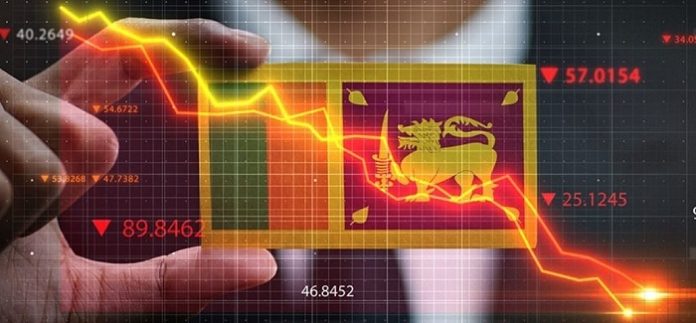
August 04, Colombo (LNW): Sri Lanka’s tourism sector has emerged as a vital pillar in the country’s economic recovery, generating an impressive US$ 3.7 billion in revenue within the first half of the year. The projection for the remainder of 2025 is equally promising, with a similar amount expected to be added to the national income by December.

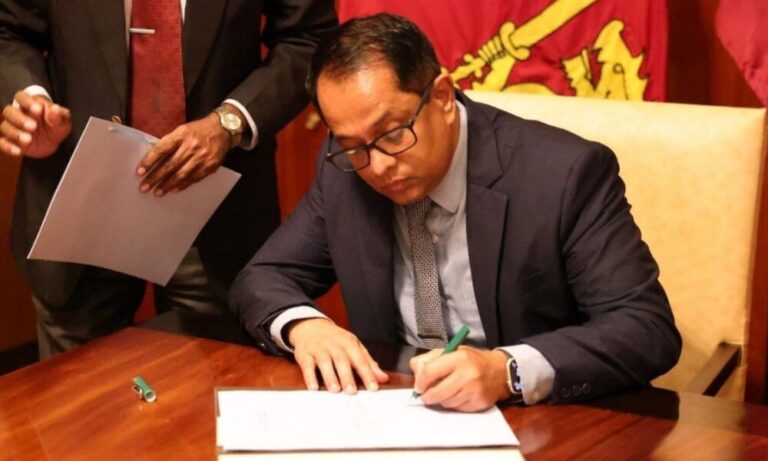
This positive outlook was shared by Minister of Foreign Affairs, Foreign Employment, and Tourism Vijitha Herath, during his address at a religious event held at the historic Seeta Amman Kovil in Nuwara Eliya. The Minister described tourism as one of the few engines capable of propelling the country out of its recent economic hardships.

With a target of attracting three million visitors this year, the government is actively positioning Sri Lanka as a premier destination for both leisure and spiritual tourism. So far, approximately 1.3 million tourists have entered the country in 2025, contributing significantly to foreign exchange reserves and bringing renewed energy to a sector that had been battered by the pandemic and economic collapse in prior years.

Minister Herath acknowledged that Indian nationals make up the largest proportion of foreign visitors, with a substantial number travelling for religious reasons. Sacred sites such as the Koneswaram Temple in Trincomalee and the revered shrine at Kataragama continue to draw steady streams of pilgrims from across the Palk Strait. “This religious and cultural connection is one of our strongest assets,” the Minister said, emphasising that faith-based tourism is playing a critical role in both people-to-people ties and economic rejuvenation.

In his remarks, the Minister reiterated the government’s commitment to revitalising the industry through targeted infrastructure upgrades, improved service quality, and international partnerships. He also highlighted the importance of diversifying the country’s tourism appeal to include wellness, eco-tourism, and heritage experiences, all of which hold strong potential for growth.

BASL urges swift appointment to RTI Commission amid prolonged vacancy

0

August 04, Colombo (LNW): The Bar Association of Sri Lanka (BASL) has issued a renewed call to the Constitutional Council to urgently nominate the final member required to complete the Right to Information (RTI) Commission.

In a formal letter dated August 01, 2025, addressed to the Chairperson and members of the Constitutional Council, the BASL expressed serious concern over the continued delay in filling the vacant position.

The vacancy arose following the resignation of retired Supreme Court Justice Upali Abeyratne, the former Chairperson of the Commission, who stepped down in March 2025. Despite a previous letter sent by the BASL on May 28, 2025, the post remains unfilled.

Citing its earlier correspondence, the BASL reiterated the importance of the Commission in upholding the public’s right to information under the RTI Act No. 12 of 2016. It stressed that the Commission’s ability to function effectively and discharge its statutory responsibilities has been significantly hindered due to the absence of a Chairperson.

“The office of the Chairperson is integral to the effective functioning of the Commission and the fulfilment of its mandate under the Right to Information Act,” the letter stated. “The absence of a Chairperson hampers the Commission’s ability to operate efficiently and discharge its duties.”

Signed by BASL President Rajeev Amarasuriya and Secretary Chathura A. Galhena, the letter called upon the Constitutional Council to act in the public interest and to ensure that trust reposed in the Council is honoured through a prompt and appropriate appointment.

The BASL reaffirmed its confidence that the Council would make a suitable and acceptable recommendation, and stressed the urgency of fully constituting the RTI Commission to safeguard citizens’ right to access information.

Sri Lanka eases outbound investment rules to support global growth of local businesses

0

August 04, Colombo (LNW): Sri Lanka has taken a significant step toward liberalising its capital framework, as Parliament’s Committee on Public Finance (CoPF) has approved a new set of regulations aimed at expanding the capacity of local businesses to invest abroad.

The decision signals a strategic shift in economic policy, focused on fostering international competitiveness among domestic enterprises.

The revised rules, formalised through a Gazette notification and now officially ratified by the committee chaired by MP Harsha de Silva, raise the thresholds for outward investment, while simultaneously simplifying the procedural framework that governs cross-border capital movement.

Under the updated structure, the outward investment cap for companies listed on the Colombo Stock Exchange has been increased from USD 500,000 to USD 750,000. Meanwhile, the limit for unlisted companies has been raised from USD 150,000 to USD 200,000.

These revised ceilings are intended to accommodate the growing demand among Sri Lankan firms for overseas expansion, particularly in emerging sectors such as IT services, software development, and digital infrastructure.

In an effort to support larger ventures, the new policy permits companies to source up to USD 2 million in external borrowing, provided such arrangements fall under the purview of the Central Bank of Sri Lanka. Investments exceeding this threshold will continue to require special regulatory approval, preserving a measure of oversight on substantial capital outflows.

To enhance operational efficiency, the guidelines mandate that all overseas investments be channelled through a designated Outward Investment Account (OIA), ensuring transparency and regulatory traceability. The Central Bank has also granted broad authorisation to licensed commercial banks to process such transactions without delay, streamlining what was previously a time-consuming and bureaucratic process.

Central Bank representatives also clarified that short-term supplier credit transactions conducted on DA (documents against acceptance) terms will continue to be treated as current account transactions, and will not be subject to new limitations—providing further reassurance to exporters and importers alike.

The reforms were enacted through an Order issued under Section 22 of the Foreign Exchange Act, No. 12 of 2017, and published in Gazette Extraordinary No. 2441/14 dated 18 June 2025.

Ranithma shows the power of combining the best into one in England.

0

Ranithma Liyanage, who has shown the potential to change the history of Sri Lankan women’s badminton, has broken her silence for a short time and is back in action. It was in England where she emerged as the female star of the Yonex All England Junior Badminton Championships in the under-19 age group.
With this victory, Ranithma was able to add meaning to the sponsorship of Ranithma, which is one of the most valuable gifts received from the McLarens Group to Sri Lankan badminton. Currently ranked 109th in the international rankings, Ranithma’s hopes for the upcoming Olympics are shining brightly as the excellence of the McLarens sponsorship has been strengthened by adding more victorious hands.


Currently, her coaching duties are entrusted to two other strong badminton players that Sri Lanka has produced, Diluka Karunaratne and Dinuka Karunaratne. She is also supported by another nationally distinguished player, Sachin Dias. They are players who have brought honor to Sri Lanka through international victories while representing the nation. It should be recalled that Ranithma, who is training with the OSTRELEY Badminton Academy based in London, is managed by Niluka Karunaratne, who is currently considered the greatest badminton player that Sri Lanka has produced to date.
Accordingly, it is important that McLarens has prepared Ranithma for her future by doing everything possible to prepare her. Accordingly, under the supervision of the Osterley Academy, Ranithma is currently receiving all the facilities such as accommodation, food, and drinks, the warmth of the South’s friendliness, and the reliable relationship and friendship that has been created under the London sky. Taking as an example the fighting spirit of the Karunaratnes, who do not give up easily on their goals, and the sponsorship of McLarens, which has a vision to generously provide the necessary international facilities to reach their goals and to realize their dreams of success with a plan, Ranithma is standing tall with the sponsorship of McLarens, which has a vision to guide her to achieve her dreams of success with a plan. Winning the England Junior Championship can be considered as her first victory.


Ranithma displayed a mature style of play in all five matches of this tournament, from the round of 64 to her final defeat of England’s Ahana Bhatia. The scoreline for defeating Bhatia was 21-11 and 21-7. She finished the semi-final by defeating Ireland’s Michelle Shochhan 21-15 and 21-10. She exited the quarter-finals by defeating England’s Rajiv Prabha 21-7 and 21-12.
Ranithma, who completed this triumphant feat on August 3rd, will return to Sri Lanka on August 4th to compete in the Sri Lankan-organized International Junior Championship, which begins on the 5th in Naiwala. It will be a moment that will raise hopes of another victory for the country, at a time when a group of greats have come together.

Showers and Thunderstorms Expected Across Several Provinces with Heavy Rainfall in the North and Central Regions

0

Colombo (LNW): Several spells of showers will occur in Western, Sabaragamuwa, Central and North-Western provinces and in Galle and Matara districts.

Cloudy skies can be expected over Northern and North-Central provinces.

Showers or thundershowers will occur at several places in Northern, North-Central and Eastern provinces after 1.00 p.m.

Fairly heavy falls above 50 mm are likely at some places in Northern, North-Central, Eastern and Sabaragamuwa provinces and in Kandy and Nuwara-Eliya districts.

The general public is kindly requested to take adequate precautions to minimize damages caused by temporary localized strong winds and lightning during thundershowers.

Lessons from the Sri Lankan Supreme Court Ruling: A Wake-Up Call for Police Misinterpretation and Unfair Arrests

0

By: Ovindi Vishmika

August 04, Colombo (LNW): In a landmark decision, the Sri Lankan Supreme Court recently ruled that the arrest of Abdul Rahim Masahina in 2019, a woman from Kolongoda, was a violation of her fundamental rights. The arrest was made after police officers mistook a symbol on her dress for a Dharma Chakra, a sacred Buddhist symbol. However, upon further investigation, it was revealed that the symbol was actually a ship’s steering wheel, with no religious significance. The Court’s ruling not only highlighted the misinterpretation of symbols but also underscored the serious implications of police officers overstepping their authority in enforcing laws.

While the decision is a significant win for human rights, it offers crucial lessons that the public, police forces, and policymakers should learn from, especially in relation to preventing arbitrary arrests based on flawed assumptions or misunderstandings.

  1. The Danger of Police Misinterpretation

One of the key lessons from this case is the potential harm of police misinterpreting everyday symbols, actions, or clothing as a violation of the law. In this particular case, the police misidentified a simple design on a woman’s dress as a sacred Buddhist symbol, which led to her arrest. This raises the question: how often are other people unjustly detained or arrested based on misinterpretation of their actions or appearances?

The problem isn’t isolated to one specific case or symbol. Police officers, due to the nature of their work, are often required to make quick decisions based on visual cues and context. However, when such decisions are made hastily or without a proper understanding of the situation, they can result in unnecessary arrests, unnecessary detention, and severe emotional distress for innocent individuals.

In the case of Masahina, it took a court ruling for the truth to come to light. The design on her dress was nothing more than a ship’s wheel. The lesson here is clear: police officers must exercise greater caution and take the time to verify facts before taking drastic actions such as arrests. Assumptions based on appearances or superficial judgments can lead to irreversible damage to a person’s reputation and mental well-being.

  1. The Importance of Individual Liberty and Human Rights

This case also sheds light on the crucial role of safeguarding individual rights, especially when it comes to arbitrary arrest and detention. The Supreme Court emphasized that the arrest of Abdul Rahim Masahina violated her fundamental rights under the International Covenant on Civil and Political Rights (ICCPR). When authorities act without reasonable cause or fail to respect the dignity of individuals, the very foundation of personal freedom is eroded.
The verdict reinforces the idea that human rights must always take precedence over misunderstandings, biases, or hasty judgments.

What can the public learn from this? We are all entitled to our dignity, regardless of our background, religion, or appearance. No one should be subjected to arbitrary detention without clear evidence or just cause. This case is a reminder to all citizens about the importance of challenging unlawful practices and standing up for their rights, especially in situations where they feel their freedoms have been violated.

  1. Accountability Within Law Enforcement

The Supreme Court’s decision to order the police officer responsible for the wrongful arrest to personally pay Rs. 30,000 as compensation serves as a strong message about accountability. While the victim was wrongfully detained, the Court held the police officer personally liable for his actions, stating that the compensation must come from his personal funds, not the public purse. This decision sends a clear signal that law enforcement officers must be held accountable for their actions, and that actions that infringe upon a citizen’s rights should have consequences.

The police force, as the primary law enforcement agency, must act with transparency and fairness. When individuals in positions of power make mistakes that lead to harm, they should not be shielded from responsibility. This aspect of the ruling teaches us that accountability must be a key component in law enforcement. Officers who act carelessly or unjustly should face consequences, whether through fines, disciplinary action, or even termination.

  1. The Need for Clear Guidelines and Proper Training

The Supreme Court’s directive to the Inspector General of Police (IGP) to issue clear guidelines on implementing the ICCPR Act is another important takeaway. This ruling emphasizes the necessity for comprehensive training and established protocols to guide police officers in making decisions about arrests. This should include not only the legal framework they operate under but also cultural and social sensitivity training to help them better understand the context of various situations.

It’s evident that a lack of proper training can lead to costly mistakes, such as misidentifying harmless clothing as a criminal or disrespectful act. Such errors often arise from a lack of awareness or understanding of the cultural and societal diversity present in any given nation. Thus, police forces across the world, and especially in Sri Lanka, need to invest in better training and clear guidelines to ensure that such violations do not occur again.

  1. Encouraging Public Vigilance and Advocacy

Finally, this case serves as a powerful reminder that the public has a responsibility to be vigilant when it comes to defending their rights. Abdul Rahim Masahina’s legal victory came about due to the persistence of her lawyer and the support of her community in bringing the case to court. What can we, as citizens, learn from this? If we are wrongly detained, arrested, or otherwise treated unfairly by law enforcement, we must be willing to stand up for our rights and seek redress.

Furthermore, there is a larger role for society to play in promoting awareness about human rights and holding law enforcement agencies accountable. If the public does not actively advocate for justice, incidents like this can easily slip through the cracks, leading to ongoing systemic abuse.

A Call for Fairness, Accuracy, and Respect

The Sri Lankan Supreme Court’s ruling stands as an important reminder to police forces, legal institutions, and citizens alike about the significance of fairness, accuracy, and respect in upholding the law. Police officers must understand the power they hold and exercise it with caution, ensuring they don’t violate the fundamental rights of individuals in the process. At the same time, the public must be vigilant in protecting their rights and challenging unjust practices. In a world increasingly marked by diverse cultures, symbols, and beliefs, respect and understanding should always precede judgment.

Ultimately, this ruling is not just a legal victory for Abdul Rahim Masahina; it’s a victory for the preservation of individual freedoms and the promotion of a fairer, more just society.

BYD Tax Evasion Scandal: ATTO 3 Not the Only Model Subject to Firmware Shift?

0

By: A Special Correspondent

August 04, Colombo (LNW): Following multiple reports disclosing what it appears to be an unfolding controversy surrounding the importation of BYD electric vehicles into Sri Lanka, with serious allegations that the engine capacities of certain models—most notably the ATTO 3—were deliberately understated to evade taxes, the latest developments indicate that the purported scandal has reached into a depth in which several other BYD models may have also been subjected to similar practices, sources told LNW.

Over 1,000 ATTO 3 units are reportedly being held at customs without release, pending further investigation

Sri Lanka Customs has launched an inquiry into the matter, and officials have accused John Keells CG Auto Pvt. Ltd., the sole authorised agent for BYD vehicles in the country, of not extending sufficient cooperation during the investigation.

The focal point of the investigation concerns the ATTO 3 model, which was declared with a 100kW motor and taxed accordingly. However, it has now been revealed that the actual motor capacity is 150kW, which would subject the vehicle to a higher tax bracket. The company maintains that although the motor installed is indeed 150kW, it is limited to 100kW through ‘firmware’, and thus the declared capacity is accurate. Yet, multiple stakeholders in the automotive sector—including other vehicle importers—have pointed out that Sri Lanka has no formal framework for taxing vehicles based on firmware-limited capacities, and insist that the law must be applied uniformly. Several parties have gone so far as to label this a deliberate attempt to fraudulently circumvent taxes.

Latest developments indicate that the other BYD models subject to the so-called firmware shift are as follows:

  • The BYD Dolphin Dynamic was taxed under the 49kW category, though its original motor capacity is 70kW.
  • The BYD Dolphin Premium was taxed under the 99kW category, despite having a motor capacity of 150kW.
  • The BYD M6 was taxed under the 100kW category, although its original motor capacity is 120kW.
  • The BYD Seal Dynamic was similarly taxed under the 100kW category, but has a motor capacity of 150kW.

Industry experts argue that, under current law, this constitutes the submission of false declarations to Customs and results in significant tax revenue losses for the government—a situation they describe as extremely serious.

John Keells CG Auto Pvt. Ltd., a joint venture between Sri Lanka’s corporate giant John Keells Holdings Ltd. and Nepal’s leading conglomerate, Chaudhary Group Ltd., is at the centre of the controversy. Despite the scale and influence of the two entities, industry sources claim the matter has escalated beyond the point where it can be brushed aside as a “minor error” or a “simple misunderstanding”, nor can it be pinned solely on gaps in the Customs system.

Further complications are anticipated in Nepal as well, given that Chaudhary Group has been responsible for BYD imports there too. The outcome of the Sri Lankan inquiry may therefore set a precedent with cross-border implications.

In Sri Lanka, John Keells CG Auto Pvt. Ltd. has made substantial investments in showrooms, service centres, charging infrastructure, and marketing campaigns in support of BYD’s entry into the local market. Over 1,000 BYD vehicles imported at considerable cost remain stuck at port, and a significant number of customers who paid advance deposits are still awaiting delivery of their vehicles. The situation has become increasingly complex and fraught with financial implications.

Industry sources warn that if Sri Lanka Customs were to accept the company’s justification regarding firmware-limited motors, it would open the floodgates for similar tactics by other importers, potentially resulting in a massive loss of government tax revenue running into billions of rupees. Such a loss is something Sri Lanka, still recovering from a severe financial crisis, is in no position to absorb.

In light of these developments, sources within the industry describe the current scenario as an intricate and escalating mess—one not easily untangled.

NMSJ welcomes Trump’s tariff concession, but warns of formidable challenges ahead

0

By: Isuru Parakrama

August 03, Colombo (LNW): The National Movement for Social Justice (NMSJ) has welcomed the recent decision by US President Donald Trump to reduce the export tariff on Sri Lankan goods to 20 per cent, calling it a timely concession amidst the country’s mounting economic challenges.

However, the NMSJ warns that without collective and strategic action, the benefits of this move could be short-lived.

In a statement issued by its leader, Karu Jayasuriya, the NMSJ urged both the Government and the private sector to come together to address deep-rooted structural weaknesses in Sri Lanka’s manufacturing sector.

“The challenges are formidable,” the statement read, highlighting issues such as low productivity, exorbitant electricity costs, and the frequent disruptions caused by public sector strikes.

Sri Lanka’s industrial landscape, already under pressure, is further hampered by a high number of public holidays, discouraging industrial growth and long-term investment. With neighbouring Asian countries creating increasingly attractive environments for manufacturing and exports, the NMSJ stressed that Sri Lanka must act swiftly to remain competitive in the global market.

The organisation called on policy-making institutions, private entrepreneurs, and professional bodies to join forces in crafting comprehensive, forward-looking economic strategies. “Without entering such a transformational era, the challenges facing the export economy will not be overcome,” Jayasuriya warned.

The statement closed with a patriotic appeal for unity and realism in addressing the economic reality. Whilst acknowledging the advantage gained through Trump’s tariff reduction, the NMSJ underscored that internal reform and cohesion are essential for long-term sustainability and growth.

Full Statement:

The concessions made by President Trump are of advantage, but the challenges are formidable.

The fact that US President Donald Trump has reduced the export tariff rate on Sri Lanka to 20% can be considered a form of concession in view of the challenges we face as a country, but we would like to emphasise the need for us as a country to act collectively and wisely in view of the competitive situation arising from Asian countries in the future export of goods from Sri Lanka to the US.

As the National Movement for Social Justice (NMSJ), we request the Government led by the President, especially the institutions that plan policies related to the country’s economy, as well as private entrepreneurs and professional organisations, to come together and prepare future plans regarding the challenges that may arise.

There are a number of areas that we must pay attention to. Sri Lanka’s manufacturing sector is considered to be one of the least productive sectors. It also has the highest electricity tariffs. As a country with the most holidays in the world, we are in an environment that discourages industries. In addition, the constant strikes in the ports and other public transport sectors pose a mortal threat to our country’s manufacturing sector.

We should pay more attention to these situations, considering the favourable manufacturing environments maintained by other countries in the Asian region that compete with us. We believe that without entering such a transformational era, the challenges facing the export economy will not be overcome.

Therefore, the NMSJ calls on the Government, the entrepreneurial community representing the private sector, and the patriotic people to understand the reality and work together to overcome the challenges before us.

Karu Jayasuriya
Leader
National Movement for Social Justice

Sri Lanka Lowers Trade Barriers to Secure U.S. Tariff Cut

0

By: Staff Writer

August 03, Colombo (LNW): In a bid to retain market access and ease export pressures, Sri Lanka has granted wide-ranging trade concessions to the United States, prompting Washington to reduce its newly imposed “reciprocal tariff” on Sri Lankan goods from 30% to 20%, effective from August 1, authoritative sources revealed.

The concession deal follows intense bilateral negotiations after the U.S. announced earlier this year—under an executive order by President Donald Trump—a reciprocal tariff scheme aimed at countries with significant trade surpluses against the U.S. While this move remains under legal scrutiny in the U.S., Sri Lanka has sought to mitigate the impact by agreeing to a broad set of reciprocal trade measures.

As part of the agreement, the U.S. granted tariff relief to 1,161 industrial goods and 42 agricultural products exported from Sri Lanka. However, these items will still be subject to Most Favoured Nation (MFN) tariff rates, which vary by product. The MFN status allows Sri Lanka to access standard U.S. trade benefits, but the relief from reciprocal tariffs on selected items will cushion the blow.

According to trade officials, a majority of the Sri Lankan goods covered under the list will face a zero reciprocal tariff, meaning only MFN tariffs will apply. A smaller segment will be subject to MFN rates plus a 10% reciprocal tariff, while all goods outside the covered list will attract the full 20% reciprocal tariff.

In return, Sri Lanka has opened its market considerably to U.S. goods. Concessions were granted on around 2,000 U.S. industrial products, alongside some agricultural items. Sources noted that a “very high percentage” of American goods will now enter Sri Lanka duty-free, aligning with Washington’s goal of narrowing its trade deficit with Sri Lanka, which has long been tilted in Colombo’s favor.

Sri Lanka has also committed to strategic purchases from the U.S., including US$500 million worth of crude oil and US$300 million worth of liquefied petroleum gas (LPG)—significant procurement that underscores the broader geopolitical and economic considerations behind the deal.

Furthermore, U.S. negotiators are reportedly pressing Sri Lanka to fully remove duties on U.S. exports, similar to arrangements already in place with Bangladesh, Vietnam, Cambodia, Pakistan, and Indonesia.

Sri Lanka has expressed interest in expanding its own concessionary list to cover additional lines in apparel, coconut-based products, gems and jewellery, and fisheries, as it seeks to boost exports and diversify trade within the limits of U.S. trade frameworks.

This development underscores the increasing strategic importance of trade diplomacy in Sri Lanka’s economic recovery and foreign policy, especially amid ongoing economic restructuring efforts and dependency on foreign trade and fuel imports.

Taxpayer identification deadline extended as digital filing becomes mandatory

0

August 03, Colombo (LNW): The Inland Revenue Department has announced an extension to the validity of Personal Identification Numbers (PINs) issued to taxpayers, pushing the deadline to November 30.

This development offers taxpayers—whether individuals, partnerships, or corporate entities—additional time to ensure their compliance with evolving digital requirements.

The PIN, a crucial component of the department’s Revenue Administration Management Information System (RAMIS), serves as each taxpayer’s unique gateway to their digital tax profile. Through this system, users are able to access, manage, and file their returns online.

Authorities reiterated that for the 2024/2025 assessment year, filing tax returns online is no longer optional but legally required. This mandate underscores the department’s commitment to streamlining tax compliance and minimising manual processing, while aiming to improve transparency, accuracy, and efficiency in the collection of public revenue.

Officials urged taxpayers not to delay in verifying the status of their PINs and ensuring that their digital credentials are up to date, particularly as the online system is expected to experience higher-than-usual traffic closer to the filing deadlines.

Advisory notices and technical support have been made available to assist those unfamiliar with the RAMIS platform.