By: Staff Writer
September 23, Colombo (LNW): On the invitation of United Nations Secretary-General António Guterres, three representatives from the UN Global Compact Network Sri Lanka (Network Sri Lanka) joined the 2025 United Nations Private Sector Forum (PSF) in New York yesterday. The high-level roundtable, held during the UN General Assembly week, brought together 50 global CEOs, government leaders, UN Principals, and the UN Secretary-General to discuss how private capital and investment can drive sustainable, inclusive growth.
Representing Sri Lanka were Dilhan C. Fernando, Chairman/CEO of Dilmah Ceylon Tea Company and Chairman of Network Sri Lanka; Supun Weerasinghe, Group CEO of Dialog Axiata PLC and Network Sri Lanka Board Member; and Rathika de Silva, Executive Director of Network Sri Lanka.
The 2025 UN PSF comes at a pivotal time. This year marks a decade since the launch of the 2030 Agenda for Sustainable Development and 25 years since former UN Secretary-General Kofi Annan’s call for businesses to join the UN Global Compact. It also precedes a series of key global milestones, including the 4th International Conference on Financing for Development, the World Social Summit, the Food Systems Summit, and COP30.
The Forum convenes amid climate disruption, rapid technological change, economic uncertainty, and geopolitical tensions. UN Secretary-General Guterres stressed the need for urgent investment in energy infrastructure, green technologies, trade reform, and modernised financial systems while ensuring equity and opportunity for all.
According to the upcoming UN Global Compact–Accenture CEO Study, 66% of CEOs remain committed to the Sustainable Development Goals (SDGs). Businesses increasingly see sustainability not as a regulatory burden but as a driver of profitability, innovation, and resilience. The study highlights a shift from waiting for perfect conditions to acting decisively, recognising that delay heightens risks and erodes long-term value.
For Sri Lanka, still navigating economic stabilisation and recovery, participation in such a forum is particularly significant. Network Sri Lanka’s presence highlights the private sector’s role in shaping resilience and sustainable growth at home. From sustainable agriculture and food security to digital inclusion and climate adaptation, Sri Lankan businesses are contributing to challenges that transcend borders.
This visibility also positions Sri Lanka within global decision-making spaces, reinforcing that even small markets have a voice in shaping the future of inclusive growth.
Unlike traditional summits, the UN PSF serves as a working roundtable where solutions are discussed, partnerships built, and practical ideas advanced. The 2025 edition focuses heavily on unlocking private capital to meet the SDGs, requiring trillions of dollars annually. Discussions resonated strongly with Sri Lanka’s own development priorities, including climate action, food systems, and digital transformation.
Network Sri Lanka’s engagement in New York signals the country’s determination to participate in and benefit from the global transition toward sustainability. As the UN marks key anniversaries this year, Sri Lankan leaders’ presence affirms the nation’s role in a collective journey to a just, inclusive, and resilient future.
Through this engagement, Network Sri Lanka aims to encourage more Sri Lankan companies to align with international sustainability standards and deepen cross-border partnerships, positioning the island as a credible partner in building a thriving global economy.
UN Forum Spotlights Sri Lanka’s Private Sector Role in Recovery

India-Sri Lanka Foundation Strengthens Bonds Creating New Boon
By: Staff Writer
September 23, Colombo (LNW): The India–Sri Lanka Foundation (ISLF), a bilateral initiative established in 1998, has once again taken center stage in fostering cross-border collaboration. At its 40th meeting in Colombo, the foundation approved a series of new proposals spanning education, culture, health, environment, agriculture, and capacity building. While these initiatives underscore the enduring partnership between the two nations, they also raise questions about balance, dependency, and long-term impact.
The Pros: Strengthening Ties and Building Capacity
One of the most promising aspects of the newly approved projects is their diversity. Academic collaborations in library science and the performing arts can help nurture talent and strengthen intellectual exchange between Sri Lanka and India. Similarly, cultural workshops and tourism promotion have the potential to revive heritage sectors that are struggling post-crisis, offering soft-power benefits to both countries.
In the health sector, awareness programs on cancer and menstrual health for vulnerable communities, along with training opportunities for Sri Lankan professionals in India, could address critical knowledge gaps. These projects are particularly significant given Sri Lanka’s ongoing healthcare challenges, where resources remain stretched and specialized training is often limited.
The environment-focused initiatives, including mangrove restoration and microbiome engineering research to prevent plant diseases, represent another forward-looking approach. Sri Lanka’s coastal ecosystems and agriculture are both highly vulnerable to climate change, and India’s scientific expertise could contribute valuable support. At the same time, fisheries capacity-building efforts will directly benefit livelihoods in coastal communities, an area vital to both economies.
Women’s empowerment initiatives also deserve recognition. Targeted workshops and support programs for underprivileged communities could help tackle gender inequities and enhance social inclusion, aligning with broader sustainable development goals.
The Cons: Dependency and Soft Power Dynamics
Despite the positive outlook, several concerns warrant scrutiny. First, while the ISLF frames its efforts as joint initiatives, many of the training and capacity-building opportunities are hosted in India, creating a risk of one-sided dependency. Sri Lanka may become increasingly reliant on Indian expertise rather than developing homegrown solutions.
Second, the heavy emphasis on Indian-led initiatives could reinforce perceptions of India’s soft power dominance in the region. Cultural and academic collaborations, while valuable, may risk overshadowing Sri Lanka’s unique identity if not carefully balanced. Critics argue that projects of this nature, though framed as cooperative, often tilt toward India’s geopolitical interests.
Another challenge lies in implementation. With more than 600 projects supported since its inception, questions remain about how effectively these initiatives are monitored and whether they achieve their intended long-term benefits. The risk of overlapping programs without measurable outcomes could dilute the foundation’s impact.
A Balanced Path Forward
The ISLF remains a valuable platform for fostering goodwill and strengthening bilateral relations, particularly at a time when regional cooperation is crucial. However, Sri Lanka must ensure that its participation in such initiatives enhances, rather than undermines, its autonomy and local capacity. A stronger focus on joint ownership, transparent evaluation, and alignment with Sri Lanka’s development priorities will be key to maximizing benefits.
In essence, the new projects approved at the 40th ISLF meeting symbolize opportunity, but their ultimate success will depend on how equitably the partnership evolves in practice.
Private Maritime Weapons to Be Held Under Navy Control: Defence Ministry
September 23, Colombo (LNW): The Sri Lankan Ministry of Defence has confirmed a new policy directive requiring all weapons, ammunition, and associated gear used by private maritime security firms to be stored within Sri Lanka Navy facilities, subject to strict military oversight.
The announcement, made in Parliament today (23) by a Defence Ministry representative citing a communication from the President, forms part of a broader initiative to strengthen control over privately held armaments linked to maritime operations.
According to the Ministry, the move is designed to improve accountability and minimise potential risks arising from the handling and storage of high-powered weaponry by non-state actors.
The decision also builds on a Cabinet-approved resolution from July 2025, which authorised the Sri Lanka Navy to take a more central role in maritime security duties across key commercial ports. Under that resolution, the Navy is permitted to operate independently in designated maritime zones, operating under the broader guidance and authority of the Ministry of Defence.
UN Condemns Shipping Giant’s Refusal to Pay Damages for X-Press Pearl Disaster
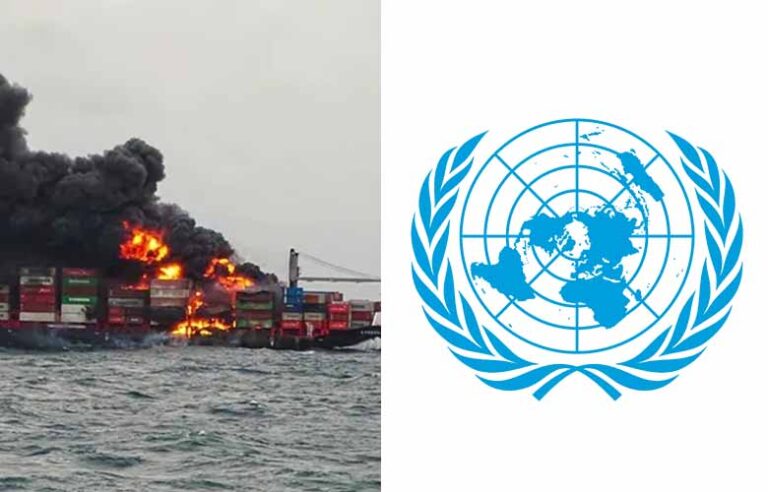
September 23, Colombo (LNW): The United Nations office in Sri Lanka has voiced serious alarm over the decision by Singapore-based maritime operator X-Press Feeders to reject a Supreme Court order to pay US$1 billion in compensation for the catastrophic environmental damage caused by the X-Press Pearl vessel.
In a statement shared via its official account on X (formerly Twitter), the UN office described the company’s refusal to comply with the court’s ruling as “deeply concerning”, and called for greater corporate accountability in light of the scale of destruction left in the wake of the disaster.
“We urge the shipping company to reconsider the magnitude of harm caused to affected communities, coastal regions, and marine ecosystems,” the statement read. “Justice must be upheld—not only for the people whose livelihoods have been shattered, but for the environment that continues to suffer the long-term consequences.”
The UN’s comments follow remarks made by X-Press Feeders CEO Shmuel Yoskovitz, who defended the company’s position during an interview with international media. He argued that accepting the Sri Lankan court’s verdict could disrupt the foundations of maritime law by disregarding the long-established principle of limiting liability in international shipping disputes.
Yoskovitz insisted that the decision to decline payment was rooted in legal principle rather than disregard for the incident’s impact. “The judgment poses a threat to the established norms of maritime commerce. The whole industry functions on a framework that limits liability, and this ruling undermines that framework,” he said. He further criticised what he described as the “open-ended” nature of the financial penalty.
The X-Press Pearl, which flew the Singaporean flag, sank off Sri Lanka’s western coastline in May 2021 following a prolonged onboard fire. The vessel was carrying a volatile cargo, including chemicals and plastic pellets, when it caught fire and eventually sank, unleashing extensive environmental damage that affected marine life, fisheries, and coastal communities.
The incident has since been recognised as one of the most severe marine pollution events in Sri Lanka’s history. In the years following, the disaster has triggered legal battles, diplomatic tensions, and mounting calls from civil society and environmental groups for international accountability.
With the UN now weighing in, pressure continues to mount on X-Press Feeders to reassess its stance. The case is being watched closely by legal experts and environmental advocates, who view it as a test case for how international maritime law responds to large-scale ecological harm in the age of globalised shipping.
The X-Press Pearl disaster caused catastrophic harm to Sri Lanka’s marine ecosystems, livelihoods, and coastal communities.
— UN in Sri Lanka (@UNSriLanka) September 23, 2025
The Supreme Court’s ruling is a vital step toward justice and accountability.#MarinePollution #JusticeForOceans https://t.co/CVfb89cTHh
Related Stories:
Honouring a Trailblazer: Subhadra Mohotti Samarakoon Vithanage Named Sri Lankan Iconic Woman 2025
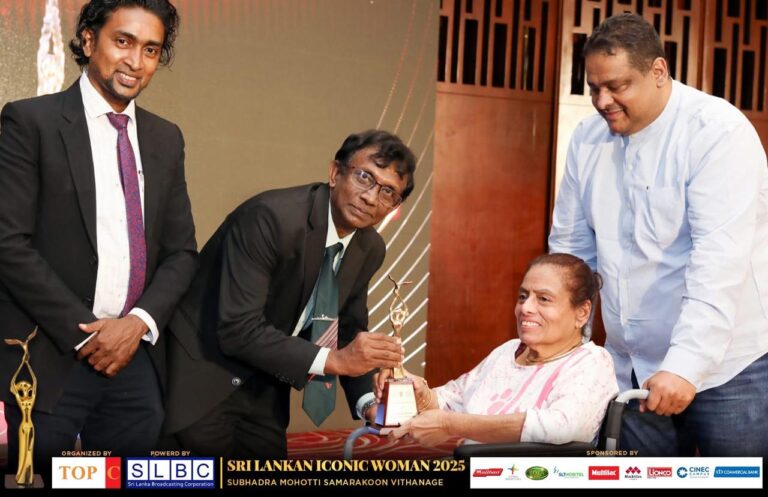
September 23, Colombo (LNW): In a heartfelt ceremony celebrating the achievements of exceptional Sri Lankan women, Subhadra Mohotti Samarakoon Vithanage was honoured with the prestigious Sri Lankan Iconic Woman 2025 award.
The event, organised by TOP C magazine of Action Media Solution (PVT) Ltd and powered by the Sri Lanka Broadcasting Corporation (SLBC), recognised her enduring contributions and inspirational journey.
Surrounded by family and well-wishers, Subhadra graciously accepted the award, smiling from her wheelchair as she was presented the iconic trophy. The award recognises women who have made lasting impacts in society, embodying resilience, leadership, and service.
Also present at the occasion was her husband, Ariyasiri Vithanage, a celebrated former SLBC broadcaster and founder of Tradlanka (Ariya Foods), a company known for promoting Sri Lanka’s agricultural heritage through rice, tea, and spices.
Ariyasiri continues to serve the nation through his role on the State Radio Advisory Board of the Arts Council of Sri Lanka.



Former Immigration Controller Harsha Ilukpitiya Jailed for Contempt Over Visa Scandal

September 23, Colombo (LNW): Harsha Ilukpitiya, the former head of Sri Lanka’s Department of Immigration and Emigration, has been handed a two-year prison sentence by the Supreme Court, following a high-profile contempt of court case linked to a contentious visa arrangement.
The ruling was delivered earlier today by a panel of three Supreme Court justices—Yasantha Kodagoda, Janak de Silva, and Arjuna Obeyesekere—who found Ilukpitiya guilty of wilfully disregarding a previous court directive in connection with the controversial visa agreement that has drawn significant public and legal scrutiny.
The matter stems from a September 2024 order in which the Supreme Court directed Ilukpitiya to take specific actions related to the disputed visa contract.
His failure to comply led to the initiation of contempt proceedings, culminating in a decision last year (25 September 2024) to remand him pending the final outcome of the case.
Sri Lanka Urges Peaceful Dialogue at Beijing Defence Forum
By: Staff Writer
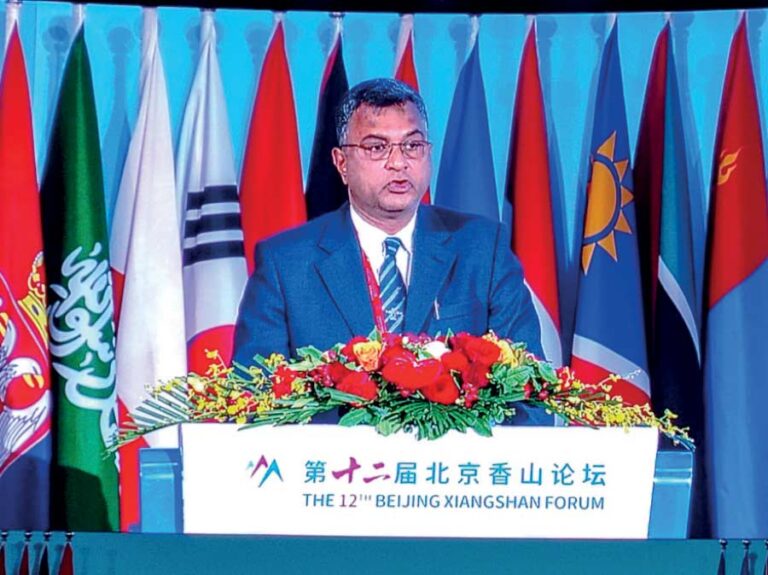
September 23, Colombo (LNW): Sri Lanka has reaffirmed its commitment to peace, dialogue, and cooperation in international relations, emphasizing the importance of keeping the Indian Ocean free from conflict while acting as a bridge between East and West.
Addressing the 12th Beijing Xiangshan Forum, Defence Secretary Air Vice Marshal (Retd.) Sampath Thuyacontha said Sri Lanka’s strategic location placed unique responsibilities on the island nation. “Sri Lanka stands ready to serve as a bridge of peace and cooperation, enabling connectivity, trade, and cultural dialogue between East and West,” he told the gathering of defence officials from across the Asia-Pacific.
Thuyacontha highlighted Sri Lanka’s longstanding ties with China, noting that the relationship spanned more than seven decades and was “built on trust, mutual respect, and partnership.” He acknowledged Beijing’s role in protecting Sri Lanka’s sovereignty, extending military training opportunities, and supporting the island’s infrastructure development.
On broader regional security, he stressed that disagreements between nations were unavoidable but should never escalate into confrontation. “Dialogue and consultation remain the only sustainable path forward,” he said, underlining Sri Lanka’s preference for diplomacy over rivalry.
Thuyacontha also called for regional initiatives, including China’s Belt and Road Initiative (BRI) and the Association of Southeast Asian Nations’ (ASEAN) Outlook on the Indo-Pacific, to work in harmony rather than in competition. “We must solve our problems among ourselves, guided by equality and mutual respect,” he stated. “This is the spirit we take from the Beijing Xiangshan Forum towards a future where peace prevails over conflict.”
Recognizing the complexity of regional security, he urged nations to take into account the legitimate security concerns of all parties. He advocated peaceful settlement of disputes, an open and inclusive regional order, and steady progress toward deeper economic integration.
Thuyacontha further echoed sentiments expressed by Chinese President Xi Jinping, observing that genuine peace is achieved “not merely through the absence of conflict but through dialogue, understanding, and constructive engagement.”
The Beijing Xiangshan Forum, co-hosted by the China Association of Military Science and the China Institute of International Strategic Studies, convened in Beijing from September 17 to 19. The event brought together senior defence officials and experts from across the Asia-Pacific to deliberate on security challenges and ways to promote cooperation.
For Sri Lanka, participation in such platforms reinforces its foreign policy stance—anchored on neutrality, peaceful coexistence, and engagement with all major powers. With its central location in the Indian Ocean, Colombo seeks to leverage its geostrategic position not as a flashpoint of rivalry, but as a hub for dialogue and constructive regional engagement.
Fear and Inefficiency Grip Sri Lanka’s Bloated Public Sector

By: Staff Writer
September 23, Colombo (LNW): Sri Lanka’s public sector, long criticized for its inefficiency, excess size, and politicized recruitment, finds itself at a crossroads.
A recent World Bank review has highlighted the urgent need for gradual but well-planned rightsizing, noting that the country employs far more public servants than comparable economies, even as compensation remains uncompetitive.
Yet the more immediate problem lies not only in numbers but in a growing climate of fear among top officials, who are increasingly reluctant to take policy decisions under the government’s sweeping anti-corruption drive.
According to the World Bank’s Sri Lanka Public Finance Review, the country’s public sector headcount peaked at 1.27 million civil servants in 2020 before declining marginally to 1.21 million in 2023 due to a hiring freeze.
State-owned enterprises and government-funded institutions employ an additional 212,000, bringing the total size of the workforce to levels far higher than regional peers. Notably, the security sector remains disproportionately large, with armed forces personnel per capita triple the South Asian average.
Despite its size, productivity is abysmally low. Real wages have eroded by over 30% in the last three years, and allowances rather than performance-based pay dominate compensation.
Highly skilled workers now earn between 8% and 22% less than their private sector counterparts, undermining morale and encouraging brain drain.
Meanwhile, wage costs, though reduced from 7.2% of GDP in 2020 to 5.0% in 2023, still weigh heavily on strained public finances.
The World Bank recommends a gradual workforce reduction through attrition, ensuring frontline education and health services remain protected while eliminating overstaffing in other sectors.
It also calls for modern payroll management systems, transparent pay commissions, and functional reviews to restructure bloated cadres.
However, translating these prescriptions into action requires political courage and administrative leadership qualities in short supply today.
A deeper malaise now haunts the public administration. The new government’s aggressive anti-corruption campaign, initially welcomed as a step toward accountability, has evolved into what critics call a tool to suppress dissent and intimidate officials.
Senior bureaucrats, wary of being targeted or falsely implicated, increasingly avoid taking bold policy decisions. This “fear psychosis” has paralyzed decision-making, delaying critical reforms in finance, energy, and state enterprise restructuring.
Even moderate officials, who were not part of past corrupt networks, are hesitant to act lest they draw political scrutiny.
The result is a vicious cycle: an oversized, underpaid, and demoralized workforce trapped in a culture of inertia, overseen by senior administrators unwilling to make the decisions necessary for reform.
While the World Bank’s roadmap offers a practical framework for rationalizing the workforce, its success hinges on restoring confidence among civil servants. Without safeguarding professional independence and insulating officials from political vendettas, even the best-designed reforms will stagnate.
Sri Lanka’s public sector dilemma is thus twofold quantitative inefficiency and qualitative paralysis. Rightsizing the workforce may ease the fiscal burden, but unless the climate of fear is lifted, efficiency will remain elusive.
At a time when the country urgently needs competent policy execution to attract investment, boost growth, and rebuild public trust, a demoralized bureaucracy is the last thing it can afford.
NPP Govt Policy Drift Clouds Recovery amidst Sri Lanka’s global Ratings lifted
By: Staff Writer
September 23, Colombo (LNW): Sri Lanka’s economy has received a symbolic boost with all three major global ratings agencies lifting the country’s sovereign credit rating out of default. Yet, behind the headline upgrades lies a sobering reality: heavy debt, fragile revenues, and policy uncertainty under the year-old National People’s Power (NPP) government continue to cloud the outlook for sustainable recovery.
S&P Global Ratings last week raised Sri Lanka’s long- and short-term foreign currency ratings to ‘CCC+/C’ from ‘SD/SD’, citing progress in debt restructuring. Fitch Ratings had earlier upgraded the sovereign to ‘CCC+’ from ‘RD’ in December 2024, while Moody’s elevated its grade to Caa1 from Ca around the same time. Collectively, the moves mark the end of Sri Lanka’s technical default status following its 2022 financial collapse.
However, all three agencies stopped well short of optimism. S&P warned that Sri Lanka’s debt dynamics remain “exceptionally vulnerable” despite restructuring gains. Fitch flagged that interest costs, expected to absorb over half of government revenue in 2025, “leave little fiscal space for development spending.” Moody’s, while acknowledging the stabilisation of foreign reserves, cautioned that “weak governance and policy execution risks weigh heavily on investor confidence.”
The numbers underline these concerns. Net government debt is projected at 101% of GDP in 2025, falling only modestly to 93% by 2028. Interest payments will consume about 51% of government revenue this year, compared with a peer median of just 16%. Government revenue has climbed from a crisis-era low of 8.3% of GDP in 2021–22 to around 15% now, but the base remains narrow. Reserves have improved to $6.1 billion by August 2025, while GDP grew 4.9% in the second quarter Sri Lanka’s first solid growth after two years of contraction.
Yet this fragile recovery is being undermined by policy drift. In its first year in office, the NPP government has struggled to outline a clear strategy to lift growth, boost foreign inflows, or attract meaningful foreign direct investment (FDI). Investor sentiment remains cautious, with many international businesses citing regulatory uncertainty, slow reforms, and an absence of incentives as key deterrents. Exports have stagnated, remittance growth has plateaued, and new FDI commitments remain negligible.
Ratings agencies have all highlighted governance and policy execution as a central risk. “The sustainability of Sri Lanka’s recovery depends heavily on consistent adherence to IMF-backed fiscal and structural reforms,” Fitch noted. S&P went further, warning that political uncertainty could delay reforms “crucial to securing long-term financing and investor participation.”
The IMF’s Extended Fund Facility has provided a lifeline, helping rebuild reserves and stabilise the rupee, but implementation gaps threaten momentum. Without a coherent industrial and trade policy, Sri Lanka risks being locked into low growth, high-debt equilibrium. Analysts stress that the government’s focus should shift quickly toward expanding export capacity, attracting sustainable FDI in technology and services, and improving governance to restore credibility.
For now, Sri Lanka’s exit from default is a step forward, but the upgrades remain firmly in speculative territory—a reminder that the country’s path back to creditworthiness will be long and uncertain. Unless the NPP government can deliver tangible reforms that raise GDP, diversify foreign inflows, and build investor confidence, the recovery risks stalling before it gathers pace.
Major Drug Haul Uncovered in Tangalle as Police Probe Possible Triple Homicide
September 23, Colombo (LNW): Sri Lankan law enforcement has uncovered one of the largest narcotics consignments in the country’s history, following a dramatic turn of events in Tangalle. The discovery was made amidst a developing investigation linked to the suspicious deaths of three individuals in the coastal town.
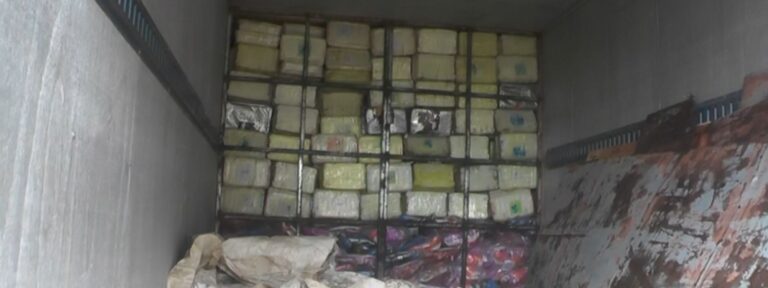
The illicit cache, which carries an estimated black market value close to Rs. 10 billion, was found hidden in three lorries abandoned in the areas of Seenimodara and Kadurupokuna. Weighing over 705 kilogrammes, the haul includes a staggering 284 kilogrammes of heroin and more than 420 kilogrammes of crystal methamphetamine—commonly referred to as ‘ice’. The scale of the seizure places it among the most significant narcotics operations ever intercepted on Sri Lankan soil.
The breakthrough came after two bodies were discovered at a residence in Seenimodara yesterday (22) morning, under circumstances that authorities have since described as suspicious. A third individual, believed to be connected to the same location, died shortly after being admitted to hospital.
These deaths prompted immediate action from the Tangalle Divisional Crimes Investigation Unit, supported by officers from the local headquarters. As the investigation intensified, officers were led to the parked lorries, where the concealed drugs were found.
Police are now conducting a full-scale inquiry, focusing on the source of the drugs, the operational structure of the trafficking network, and the chain of custody leading to the three deaths. Forensic teams have been deployed to examine the crime scenes, and efforts are underway to identify all individuals involved.
Law enforcement officials have indicated that further arrests may follow, and are calling on the public to provide any information that could assist with the ongoing investigation.