Home Blog Page 387

US Ambassador and USTR Delegation Meet President Anura Kumara Dissanayake

0

United States Ambassador to Sri Lanka, Julie Chung, along with a senior delegation from the Office of the United States Trade Representative (USTR), held discussions with President Anura Kumara Dissanayake at the Presidential Secretariat on Thursday (11).

During the meeting, the USTR officials commended the Sri Lankan Government’s negotiating team for its efforts in addressing US tariffs on products imported from Sri Lanka. They also praised the progress the country has made in its ongoing economic recovery, noting the positive steps taken to stabilize the economy and foster trade relations.

The discussions reflected the continuing partnership between Sri Lanka and the United States, with both sides emphasizing the importance of strengthening economic ties and enhancing trade cooperation.

Sri Lanka Tourism Unveils First-Ever Destination Wedding Promotion in India

0

The Sri Lanka Tourism Promotion Bureau (SLTPB) has launched its first dedicated destination wedding campaign for the Indian market, opening a new chapter in strengthening tourism ties between the two countries. The campaign, rolled out in partnership with LINKIN REPS, features a series of luxury multi-city wedding showcases in India, positioning Sri Lanka as a premier wedding destination.

Growing Popularity of Sri Lanka for Indian Weddings

Sri Lanka is witnessing a surge in Indian couples choosing the island for weddings and pre-wedding celebrations. According to SLTPB Chairman Buddhika Hewawasam, the momentum is strong: “Last year we doubled the numbers, hosting about 30 large weddings of Indian couples in Sri Lanka, each with more than 500 guests, plus another 50 smaller celebrations.”

The country has also attracted weddings from the Indian diaspora in the Gulf region, with some events hosting up to 750 guests across week-long celebrations. While Indian weddings dominate, European couples from Poland, Germany, and the UK are increasingly drawn to Sri Lanka’s beaches and heritage sites.

Expanding Wedding Hotspots

Colombo, Hikkaduwa, Hambantota, Kandy, Dambulla, and Negombo remain popular venues, but SLTPB is looking to expand the appeal of the East Coast, offering pristine beaches and more exclusive backdrops. Sri Lanka’s natural beauty has also driven a sharp increase in pre-wedding shoots.

Strategic Push in the Indian Market

With India already being Sri Lanka’s biggest tourism source market, the wedding promotion is part of a broader strategy to capture growing demand. “India is our biggest tourist market. We’re reaching 100,000 visitors now and expect 500,000 Indian travellers to visit Sri Lanka,” Hewawasam noted.

Highlighting Sri Lanka’s unique advantages, he said the island can accommodate the full array of Indian religious ceremonies, thanks to its multi-faith infrastructure. The country also benefits from visa-free entry, excellent air connectivity, and world-class culinary offerings catering to Jain, Sattvic, Halal, vegan, and gluten-free requirements.

Sustainable and Evolving Experiences

As couples increasingly seek eco-conscious celebrations, many Sri Lankan properties now provide “green wedding” packages featuring plastic-free décor, local floral arrangements, and community-led performances. Hewawasam added: “In the past two to three years, our tourism landscape has transformed. We are now equipped to host both grand weddings and more intimate celebrations, reflecting the evolving preferences of the new generation.”

Boosting MICE Tourism

Alongside weddings, Sri Lanka is also eyeing India’s lucrative MICE (Meetings, Incentives, Conferences, Exhibitions) market. Colombo’s enhanced conference facilities and entertainment options, combined with visa-free access and short flight times from India, are driving increasing demand. SLTPB has also strengthened its presence at MICE expos, with over 35 local participants representing Sri Lanka.


CoPF Approves 2026 Budget Estimate for Bribery Commission

0

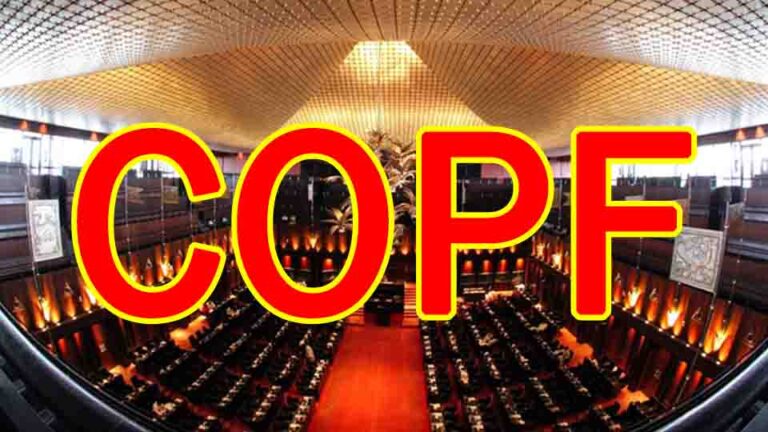
The Committee on Public Finance (CoPF) has granted approval for the 2026 budget estimate of the Commission to Investigate Allegations of Bribery or Corruption (CIABOC).

This decision was made during a Committee meeting held on Thursday (11) in Parliament, chaired by MP Dr. Harsha de Silva.

During the session, the Chairman emphasized the importance of granting financial autonomy to key oversight institutions such as the Bribery Commission and the Auditor General’s Department, similar to the financial independence enjoyed by the Central Bank of Sri Lanka (CBSL). He noted that such independence would allow these bodies to operate free from political influence and government control, thereby ensuring greater accountability.

The Committee further resolved to bring this matter to the attention of the Minister of Finance, who also serves as the President.

Additionally, Dr. de Silva highlighted the need to align the remuneration of the CIABOC Chairman, Director General, and members with that of the President of the Court of Appeal. He stated that as the salary of the Court of Appeal President is revised, the salaries of these officials should also be updated accordingly, and assured that necessary interventions will be made in this regard.

Members of Parliament Ravi Karunanayake, Harshana Rajakaruna, (Dr.) Kaushalya Ariyaratne, Wijesiri Basnayake, Sunil Rajapaksha, Nimal Palihena, Thilina Samarakoon, and Nishantha Jayaweera were also present at the meeting.

Sri Lanka Climbs 15 Places in 2025 Global Democracy Index

0

COLOMBO – Sri Lanka has advanced 15 places in the 2025 Global Democracy Index, marking one of the strongest year-on-year improvements worldwide, according to the latest Global State of Democracy 2025 report published by the Stockholm-based International Institute for Democracy and Electoral Assistance (IDEA).

The country is now ranked 58th with a score of 0.655, placing it in the mid-range across all four categories of the Global State of Democracy framework. Only Botswana (+20) and Mauritius (+23) recorded higher gains this year.

“Sri Lanka is among the top 25 per cent of countries in Civic Engagement and Electoral Participation. Over the last five years, it has seen advances in Elected Government, Freedom of Expression and Freedom of the Press, though declines remain in Freedom of Association and Assembly,” the report stated.

Sri Lanka, a lower-middle-income economy currently recovering from its most severe post-independence economic crisis, showed progress in democratic governance while much of the world witnessed declines.

Across South Asia, the picture was more mixed:

  • India slipped three places to 73rd
  • Pakistan fell to 113th (down three places)
  • Bangladesh dropped sharply by 24 places to 151st

Globally, 94 countries saw a decline in at least one democracy indicator between 2019 and 2024, compared to only one-third making progress. Africa registered the steepest share of global decline (33%), followed by Europe (25%), while West Asia ranked lowest overall in democratic performance.

Positive examples highlighted include Botswana and South Africa, both of which held landmark elections in 2024 that strengthened democratic credibility.

European nations continued to dominate the upper tiers of the index, with Denmark, Germany, Switzerland, Norway, and Luxembourg among the leaders, alongside strong performers outside Europe such as Costa Rica, Chile, and Australia.

At the other end of the scale, Afghanistan, Burkina Faso, and Myanmar suffered the sharpest declines, while South Korea also posted notable setbacks. The United States ranked comparatively lower among OECD countries, standing at 35th for representation and 32nd for rights.


WEATHER FORECAST FOR 13 SEPTEMBER 2025

0

Few spells of showers will occur in Western and Sabaragamuwa provinces and in Galle, Matara, Kandy and Nuwara-Eliya districts.
Showers or thundershowers will occur at several places in Eastern and Uva provinces after 1.00 p.m.

The general public is kindly requested to take adequate precautions to minimize damages caused by temporary localized strong winds and lightning during thundershowers

WEATHER FORECAST FOR 13 SEPTEMBER 2025

WEATHER FORECAST FOR 13 SEPTEMBER 2025

“Touch. Look. Check.”TLC Triathlon 2025…

0

Rashika Hennayake September 12, Colombo (LNW):

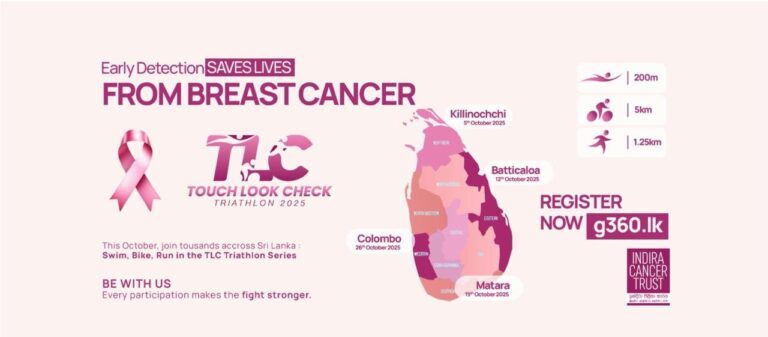
The Sri Lanka Medical Association (SLMA), together with the Indira Cancer Trust, the Ministry of Health, the Sri Lanka College of Oncologists, the Sri Lanka Society of Breast Surgeons, the College of Community Physicians, and civic partners including Rotary, Lions, Red Cross, and Scouts, cordially invites you to a press briefing on the upcoming TLC Triathlon 2025.

This historic event marks Sri Lanka’s first-ever nationwide triathlon dedicated to breast cancer awareness, taking place across the four corners of the island:

  • 5th October – Kilinochchi (North)
  • 12th October – Batticaloa (East)
  • 19th October – Matara (South)
  • 26th October – Colombo (West)

The campaign, themed “Touch. Look. Check.” (TLC), is designed to emphasise the importance of monthly self-breast examination for all women over 20 years of age. With 15 women diagnosed and 3 lives lost daily, this initiative is not just an event, but a national movement for survival, solidarity, and prevention.

Backed by leading media partners—Sirasa/MTV, Shakthi TV, and Wijeya Newspapers Ltd.—the TLC Triathlon will be supported by an unprecedented two-month nationwide campaign beginning 1st August 2025. Over 4,000 participants and many thousands more supporters are expected to take part.

We warmly invite you to attend this briefing to learn more about the triathlon, the partners, and how the media can help amplify this life-saving message.

Your presence and coverage will help us ensure that every family in Sri Lanka hears this call to action: Do it for her.

Prima KottuMee backs Young Footballers with Scholarships

0

Rashika Hennayake September 12, Colombo (LNW): Prima KottuMee has reaffirmed its commitment to nurturing football in Sri Lanka through the second edition of the AC Milan Advance Camp held in collaboration with the Colombo Athletic & Football Academy.

Together with the Academy, the company has built on its earlier association with the world-renowned AC Milan Junior Camp Project in Sri Lanka, which gave young players the opportunity to train under internationally recognised coaches.

As part of its ongoing support, Prima KottuMee has announced a number of scholarships for this year’s camp. These will enable talented youngsters to take part in the programme and benefit from exposure to advanced coaching techniques and professional standards of development.

Training with a prestigious club like AC Milan offers Sri Lankan youth invaluable opportunities, providing them with international coaching exposure and motivating them to set their sights higher in their football journey. Through this initiative, Prima KottuMee continues to inspire and support the next generation of Sri Lankan footballers, strengthening its long-standing contribution to youth development in sport.

AKD Should Be Presidential: Cutting the Benefits for Former Presidents Looks Vindictive

0

By Adolf

In most democracies, the privileges extended to former heads of state are not seen as luxuries but as safeguards to uphold the dignity of the office. These entitlements ensure that those who once carried the heaviest burdens of leadership are not reduced to indignity in retirement. Sri Lanka’s recent decision to slash the benefits of former presidents—reportedly to save Rs. 80 million annually, or barely four rupees per citizen—reveals not prudence but sheer pettiness.

Other Countries

Look abroad. In the United States, under the Former Presidents Act, ex-presidents receive a lifelong pension, office staff, security, and medical coverage. The logic is not generosity but preservation of institutional respect. In the United Kingdom, former prime ministers are provided with a Public Duty Costs Allowance to cover their ongoing public roles. India’s former presidents enjoy lifelong accommodation, security, and staff. The principle is universal: treat the office with dignity, no matter how popular or unpopular the individual may be.

Small-Minded

Against this backdrop, Sri Lanka’s decision looks small-minded. The amount saved is negligible in a trillion-rupee budget. Stripping former presidents of dignity for the price of a cup of tea per citizen is not fiscal responsibility—it is a political stunt. President Anura Kumara Dissanayake (AKD) would do well to reflect on this. Leadership demands magnanimity, not vindictiveness. There is room to tone down benefits in line with today’s economic realities—reduce extravagance, streamline staff, limit vehicles—but such adjustments can be made with grace and fairness, not as a public spectacle. When cuts are framed as punishment, they demean not the individual but the institution itself.

Contribution

It is also important to acknowledge the contributions of past leaders, whatever their flaws. Mahinda Rajapaksa presided over the end of a 40-year conflict, a chapter of enormous historical consequence. Ranil Wickremesinghe, in his own way, steered the country through its worst economic crisis and prevented state collapse. One may debate their legacies, but both, at critical moments, bore the weight of national survival. That record alone merits a basic level of dignity in retirement. President AKD has a government to run today in no small part because of the interventions of these two individuals.

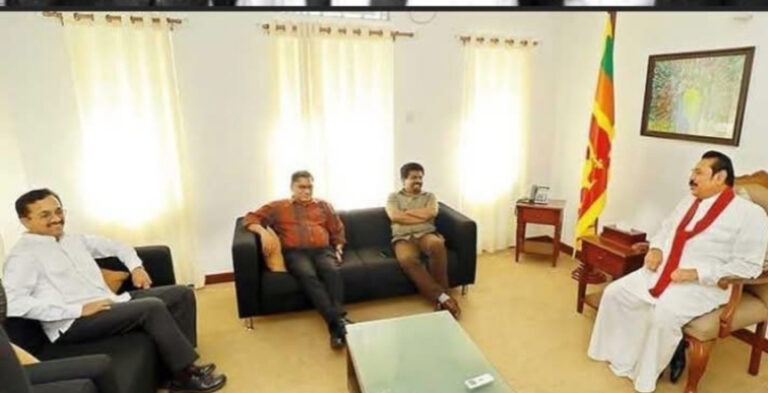
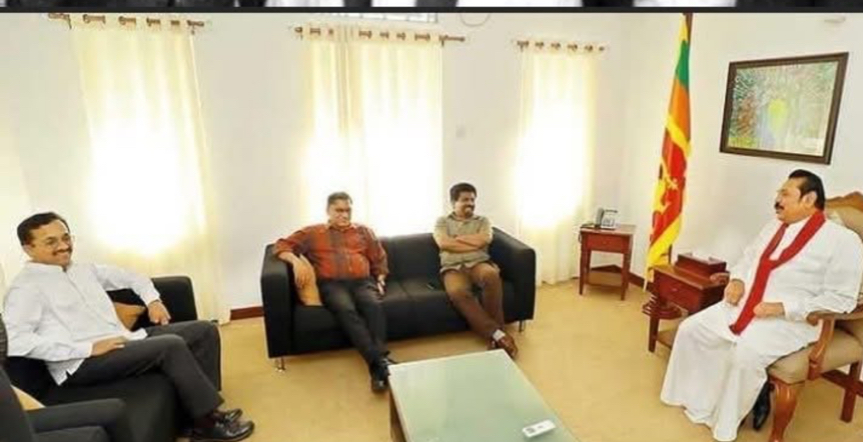
AKD enjoying a joke in the very house that Mahinda was asked to vacate 

Humiliating

The danger of stripping benefits so crudely is not simply humiliation for individuals. It risks setting a precedent where each incoming president uses entitlements as a weapon against predecessors. That cycle weakens institutions and fuels vindictive politics. Mature democracies understand that safeguarding the dignity of the presidency, even after office, is part of safeguarding democracy itself. Sri Lanka’s leaders must rise above pettiness. If reforms to entitlements are necessary, let them be rational, proportionate, and respectful. What the country cannot afford is the erosion of institutional dignity for the sake of four rupees a head. In the end, the presidency belongs not to the individuals who hold it, but to the people. And a nation that fails to respect its highest office risks diminishing respect for itself. Anura must also remember: you reap what you sow. Bangladesh and Nepal are vivid reminders of how quickly vindictive politics can backfire. Ironically, the majority who voted for the bill are not even direct tax payers .

ICC Sri Lanka Opens South Asia’s First Arbitration and Mediation Hearing Center

0

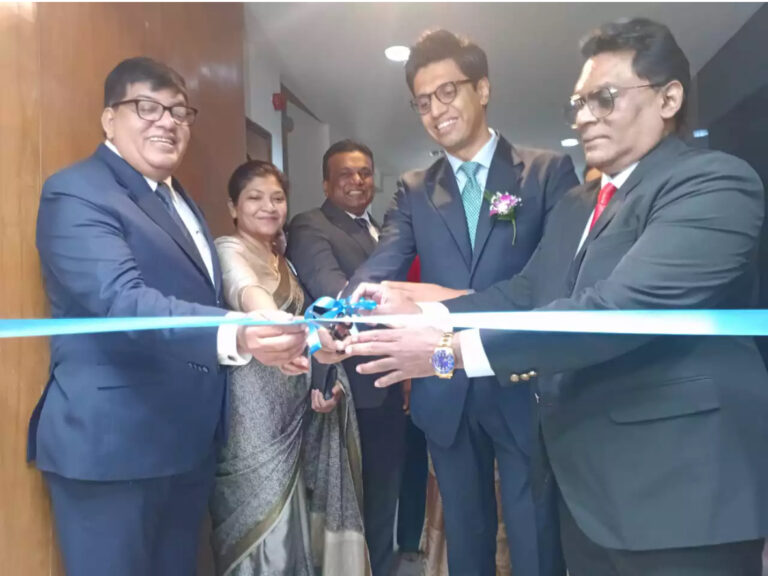
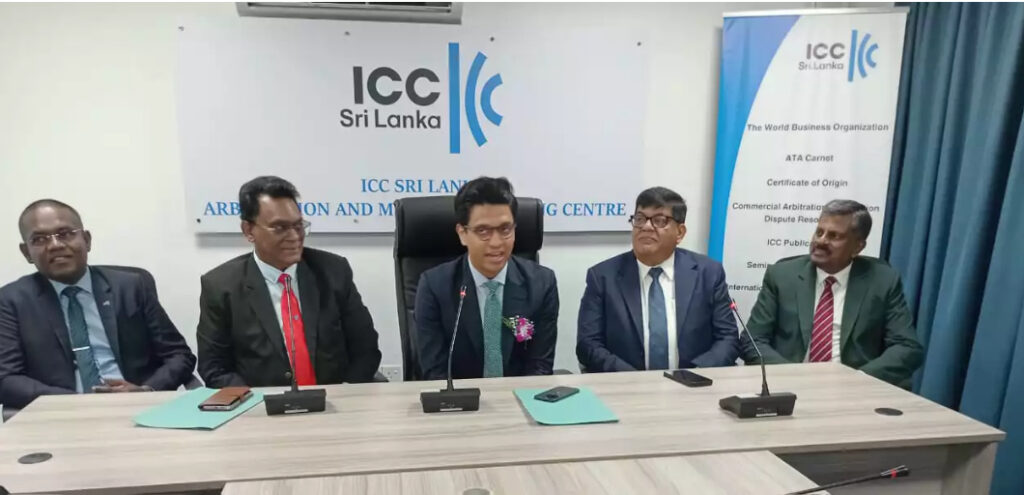
The International Chamber of Commerce (ICC) Sri Lanka has established the South Asia Arbitration and Mediation Hearing Center in Colombo, marking a historic milestone for the region. The official opening took place on the morning of September 10, 2025, at the ICC Sri Lanka headquarters in Colombo 03, under the patronage of Tojus Chauawan, Regional Director of ICC Asia.

ICC, a 102-year-old global institution with over 45 million corporate members across 170 countries, launched the center through its Sri Lanka chapter. Speaking at the event, Shanil Fernando, Chairman of ICC Sri Lanka, highlighted that the new center will handle international commercial arbitration and mediation cases, helping resolve business disputes efficiently. He also emphasized plans to operate the center as an educational hub for those interested in learning about arbitration processes.

Fernando further noted that ICC Sri Lanka, established nearly 70 years ago, takes pride in hosting this international facility—an achievement that positions Sri Lanka as a significant player in global dispute resolution. The center aims to introduce a new “Control Arbitration” system, designed to conclude cases within shorter timeframes while minimizing costs and resource usage for both parties.

Addressing the gathering, ICC Asia Regional Director Tojus Chauawan stressed the importance of this development, adding that Sri Lanka now joins leading global arbitration hubs such as Singapore, Hong Kong, New York, Abu Dhabi, and Paris. He described the initiative as a highly productive and historic step, especially given Sri Lanka’s pool of top-level professional legal experts.

The ceremony was also attended by ICC Sri Lanka Vice Chairmen Hemakumara Gunasekara and Jonny Perera, Secretary Indika Rajapaksha, and Sri Lanka Board of Investment Director-General Renuka M. Weerakoon, among other distinguished guests.

Sri Lanka at a Crossroads: Domestic Justice or International Oversight?

0

By: Ovindi Vishmika
September 12, Colombo (LNW):
Sri Lanka once again finds itself under the microscope of the United Nations Human Rights Council (UNHRC), as High Commissioner for Human Rights Volker Türk tabled a critical report at the Council’s 60th session in Geneva. The report called on Colombo to establish a dedicated judicial mechanism, with an independent special counsel, to address allegations of wartime atrocities and systemic human rights abuses.

The High Commissioner emphasized that while accountability primarily lies with Sri Lanka’s government, international engagement remains “essential” to ensure long-term reconciliation and sustainable peace. This recommendation, however, reopens a familiar debate: Should accountability be pursued through domestic institutions, or is international involvement necessary to guarantee impartiality?

Foreign Minister Vijitha Herath, representing Sri Lanka, addressed the Council with a firm message: reconciliation and reform must be rooted in “nationally-led, inclusive processes.” He argued that the new administration, now in its first year in office under the National People’s Power (NPP) coalition, has already embarked on meaningful reforms ranging from legislative changes to initiatives for intercommunal dialogue and asked the world for “time and space” to allow these domestic efforts to bear fruit. Yet, victims’ families and rights advocates remain skeptical.

The lingering wounds of atrocities such as the 1983 Welikada Prison massacre where 53 Tamil political prisoners were brutally killed have never been addressed through credible judicial mechanisms within Sri Lanka. Campaigners insist that only international involvement can deliver justice in such cases, pointing to decades of state impunity and political shielding of perpetrators. This tension between domestic and international approaches has profound implications not only for reconciliation and justice, but also for Sri Lanka’s fragile political stability and its place in the international community.

The Domestic Path: Sovereignty, Reform, and Political Risks

Minister Herath’s intervention at the Council reflected Sri Lanka’s long-standing position: accountability must remain in the hands of Sri Lankan institutions. The government argues that international mechanisms undermine sovereignty, politicize human rights, and risk alienating sections of the population who view such moves as foreign interference.

A domestically led accountability process allows Sri Lanka to uphold its sovereignty and demonstrate that it is capable of addressing its internal issues without external imposition. For many in the majority Sinhala community, this is seen as vital to national dignity. Domestic processes may also be more palatable to the military and political establishment. Since the armed forces remain powerful stakeholders, especially in the north and east, reforms implemented domestically could avoid the perception of being externally forced, potentially making them more sustainable.

Proponents further argue that accountability cannot be divorced from broader democratic renewal. By tying justice to ongoing institutional reforms such as repealing the Prevention of Terrorism Act (PTA), strengthening judicial independence, and restoring land rights,Sri Lanka could embed accountability into a wider project of political transformation. Moreover, national ownership of the process could foster dialogue between communities. The government insists reconciliation is not merely about trials and prosecutions, but about reshaping political culture and rebuilding trust.

But there are serious drawbacks. Successive governments have pledged reforms at Geneva, only to stall, dilute, or abandon them once international pressure eases. From the Lessons Learnt and Reconciliation Commission (LLRC) to various domestic inquiries, credibility has been undermined by poor follow-through. The record of state-enabled violence against Tamil detainees—including the Welikada Prison massacre, the 1997 Kalutara killings, the 2000 Bindunuwewa massacre, and the 2012 Vavuniya prison deaths—shows that domestic mechanisms have consistently failed to deliver justice. Investigations were obstructed, inquests flawed, and prosecutions non-existent.

With the military and political figures implicated in many abuses still influential, there are serious doubts about whether domestic institutions can operate independently. Critics fear that trials will be symbolic, or that lower-level officials will be scapegoated while senior figures escape accountability. Above all, for Tamil communities, trust in the Sinhala-dominated state machinery remains weak. As the son of slain political prisoner Selvarajah Yogachandran (Kuttimani) asked: “How can the court say genocide is not a crime? Then is there no one accountable?” Such voices underline the deep skepticism toward domestic-only solutions.

The Case for International Engagement

High Commissioner Türk’s report underscores that international engagement remains vital to prevent a cycle of promises without progress. Victims’ groups and civil society have long demanded independent international investigations, pointing to cover-ups and the destruction of evidence in cases like Welikada.

International mechanisms are seen as free from domestic political pressures. For victims, this offers a measure of hope that justice will not be derailed by vested interests within the Sri Lankan state. UN-led evidence-gathering also keeps alive the possibility of prosecutions abroad under the principle of universal jurisdiction. This deters future abuses and signals that impunity will not be tolerated. Continued UN scrutiny ensures that Sri Lanka cannot simply delay indefinitely; it keeps human rights on the agenda even as economic or political issues dominate domestically. International engagement need not mean replacing domestic mechanisms; it can complement them through technical assistance, expertise in forensic investigation, and independent monitoring, strengthening Sri Lanka’s capacity while ensuring credibility.

Still, international involvement comes with its own risks. For many Sri Lankans, particularly within the Sinhala majority, international intervention is perceived as a violation of sovereignty and an attempt to punish the nation collectively for the civil war. This perception risks fueling nationalist backlash. Externally driven mechanisms may also deepen ethnic and political divides, with reforms portrayed as foreign impositions serving separatist interests.

Even if evidence is collected internationally, prosecutions often face practical and jurisdictional hurdles. Without cooperation from the Sri Lankan state, such efforts may stall, frustrating victims further. Finally, some states argue that country-specific mechanisms risk politicizing human rights and diverting limited UN resources. They warn that imposing accountability frameworks from outside may undermine national institutions rather than strengthening them.

Legal Dimensions: Between Domestic Law and International Norms

At the heart of this debate lies a legal dilemma. Under international humanitarian law and the International Covenant on Civil and Political Rights (ICCPR), Sri Lanka is obligated to protect detainees and investigate serious violations. The Welikada massacre, where prisoners under state custody were killed, represents a textbook breach of these obligations.

Yet, Sri Lanka’s legal framework through instruments such as the Emergency Regulations and the Public Security Act allowed successive governments to override judicial oversight, as seen in the disposal of Welikada victims’ bodies. This entrenched a culture of impunity within domestic law itself. International law, however, insists that crimes such as torture, extrajudicial killings, and enforced disappearances cannot be shielded by claims of sovereignty. The challenge is how to reconcile these universal principles with the realities of Sri Lanka’s fragile political landscape.

Between Memory and Justice

For the families of the victims, legal debates are inseparable from human grief. As Yogachandran’s son, now in exile, pleaded: “Just tell us where they were burned. Let us mourn them with dignity.” Four decades after Welikada, and over a decade since the end of the civil war, the struggle for truth and accountability continues to shape Sri Lanka’s relationship with the international community. Each UNHRC session becomes a stage where Colombo defends sovereignty, while victims’ groups demand that the world not look away.

A Nation at a Crossroads

Sri Lanka faces a dilemma that is both moral and strategic. If it pursues a domestic-only process, it risks reinforcing skepticism, particularly among Tamils, that justice will never arrive under Sinhala-majority rule as they believe. This could deepen ethnic grievances and undermine reconciliation. If it accepts international mechanisms, it may face nationalist backlash, political instability, and charges of ceding sovereignty but could also regain international credibility and ensure that victims’ voices are heard. Both paths carry risks. Both paths also carry possibilities.

The Question Ahead

As Sri Lanka’s delegation returns from Geneva and the High Commissioner’s report reverberates across international capitals, the question remains unresolved: Should accountability for Sri Lanka’s past abuses be pursued through a domestically-led process, or does the history of impunity demand international oversight? The answer may determine not only the fate of justice for the victims of Welikada and countless others, but also the future of reconciliation and democracy on the island.

What do you think? Is justice better served by trusting Sri Lanka’s own institutions to reform themselves, or by inviting international involvement to guarantee impartiality?