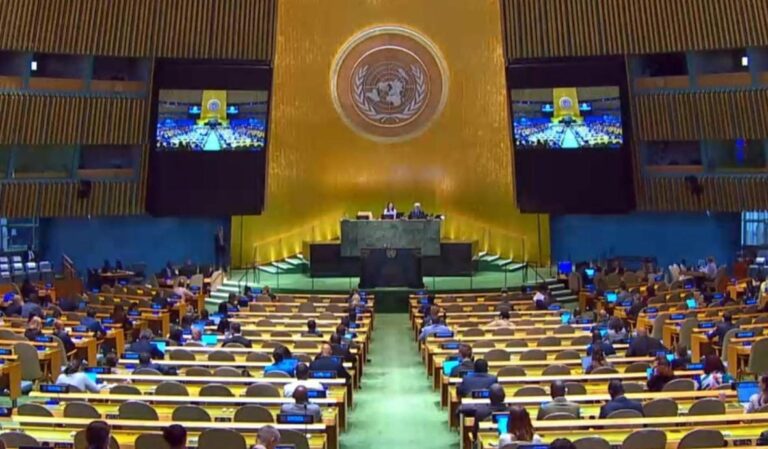
September 14, Colombo (LNW): The Government of Sri Lanka has expressed strong support for the United Nations General Assembly’s recent adoption of a resolution endorsing the New York Declaration on the peaceful settlement of the Question of Palestine, reaffirming its longstanding commitment to a two-State solution.
Sri Lanka was among the 142 nations that voted in favour of the resolution, which seeks to advance a just and lasting peace in the Middle East through the establishment of an independent Palestinian state, coexisting alongside Israel.
In a statement issued following the vote, the Sri Lankan Government extended its sincere appreciation to Saudi Arabia and France for their leadership in bringing forward the resolution, describing it as a significant step towards lasting peace in the region.
Reaffirming its unwavering support for the Palestinian people’s inalienable right to statehood, Sri Lanka underscored its alignment with the principles of the United Nations Charter and the relevant UN resolutions that serve as the foundation for the two-State framework.
The Government reiterated that a peaceful and negotiated resolution to the conflict is essential to regional stability and the rights of all peoples involved.
Government Backs UN Resolution Endorsing Two-State Solution for Palestine
Foreign Minister Concludes Visit to Geneva Following Pledge to Establish National Reconciliation
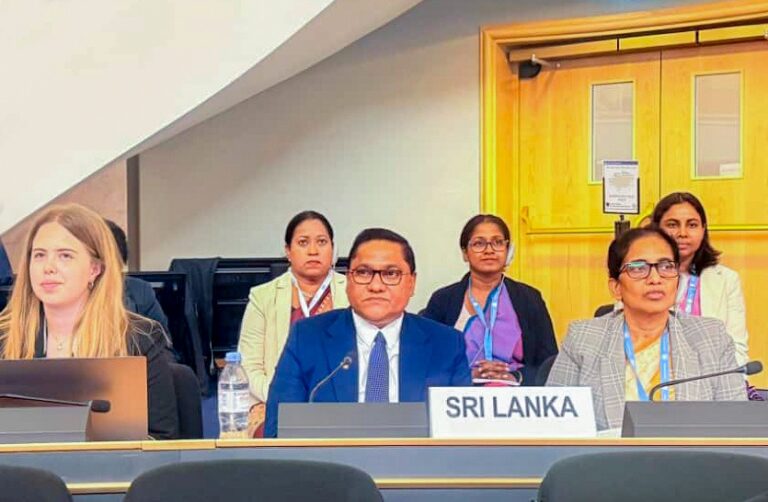
September 14, Colombo (LNW): Foreign Minister Vijitha Herath has concluded a diplomatic visit to Geneva, where he participated in the 60th Session of the United Nations Human Rights Council (UNHRC), delivering an address on behalf of the Sri Lankan Government during a key session focused on the country’s progress in the field of human rights.
In his remarks to the Council on 8 September, Minister Herath underscored the Government’s ongoing commitment to national reconciliation through home-grown mechanisms, reiterating that sustainable peace and justice in Sri Lanka must emerge through locally led efforts rather than externally imposed solutions.
He outlined a number of reforms and initiatives already underway, highlighting that these are aimed at ensuring dignity, rights, and equal opportunity for all citizens, regardless of background.
The Minister used the platform to provide an overview of the steps the Government has taken to improve institutional accountability, community dialogue, and the protection of economic, social, and political rights. He stated that while progress has been made, a lasting transformation requires both time and space—emphasising that meaningful change cannot be rushed nor externally dictated.
During the visit, Minister Herath held a series of bilateral meetings with key international figures, including UN High Commissioner for Human Rights Volker Türk. The discussions centred on how the United Nations could constructively engage with Sri Lanka by offering technical cooperation and advisory support, particularly in the advancement of inclusive development and the safeguarding of civil liberties.
In this context, both parties agreed on the importance of addressing the full spectrum of human rights—civil, political, economic, and social—in a manner that reflects the country’s unique social fabric and post-conflict realities. High Commissioner Türk, who has visited Sri Lanka in the past, conveyed appreciation for the Government’s openness and noted the significance of the current moment as an opportunity to pursue meaningful reconciliation with determination and integrity.
Minister Herath also met with Ambassador Jürg Lauber of Switzerland, President of the Human Rights Council, who welcomed the engagement as a positive signal of Sri Lanka’s willingness to maintain high-level dialogue with the international community. The two exchanged views on strengthening constructive engagement between Sri Lanka and the Council moving forward.
In addition to these official meetings, Minister Herath interacted with numerous representatives from countries that have consistently supported Sri Lanka’s sovereign right to shape its post-conflict journey. Expressing gratitude for their ongoing solidarity, he stressed the importance of international partnerships rooted in mutual respect, rather than prescriptive oversight.
New Safety Checks for Long-Distance Buses to Roll Out Next Month
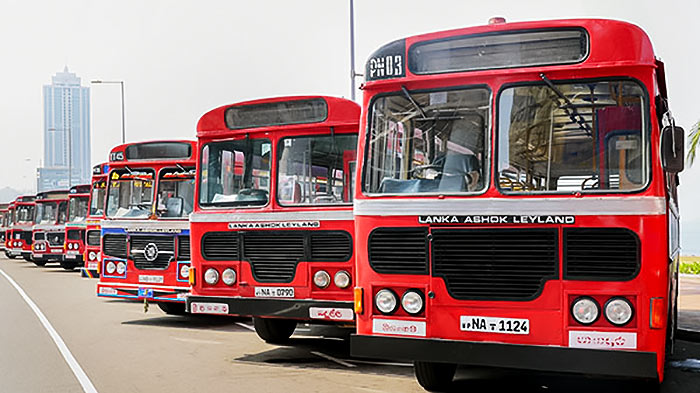
September 14, Colombo (LNW): A comprehensive new system of mandatory safety and quality checks for long-distance buses is set to come into force at the start of next month, as part of a broader government effort to enhance passenger safety and improve standards across the public transport sector.
Under the forthcoming regulation, buses undertaking journeys over 100 kilometres will be required to obtain a certificate of roadworthiness at least 48 hours prior to departure.
This includes not only regular intercity transport but also privately hired excursion coaches and tour buses, all of which must now meet minimum safety criteria before being permitted to operate.
In the pilot phase of the programme, inspections will be conducted at the Bastian Mawatha terminal and the Makumbura Multimodal Centre, overseen by the National Transport Commission (NTC). These locations have been selected due to their high traffic volumes and central role in the country’s long-distance travel network. The Department of Motor Traffic (DMT), which is spearheading the initiative, has indicated that this system will serve as a testing ground for a broader, island-wide rollout in the near future.
As part of the preparatory work, the DMT is drafting a formal circular to define the inspection criteria, outline compliance procedures, and provide guidance to transport operators and inspection centres alike. This circular is expected to be distributed ahead of the implementation date, offering stakeholders sufficient time to familiarise themselves with the new requirements.
Officials have also confirmed that, once the system is expanded nationally, it will include regular inspections of vehicle repair centres and service providers responsible for maintaining long-distance buses. The DMT will assess the competence and credibility of these centres before authorising them to carry out inspections and issue compliance certificates.
The new framework is being introduced in response to growing public concern over the condition of vehicles used for long-distance travel, following a number of incidents linked to mechanical failures and poor maintenance.
Prime Minister Underscores Interfaith Harmony as Cornerstone of National Unity
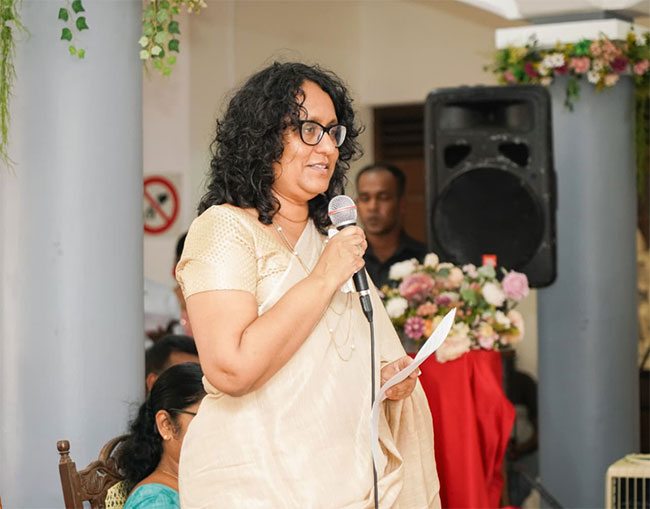
September 14, Colombo (LNW): During a deeply symbolic visit to the revered Our Lady of Matara shrine, Prime Minister Dr Harini Amarasuriya called for strengthened interfaith harmony as an essential path toward achieving justice, equality, and lasting peace in Sri Lanka.
Her remarks came as part of the 118th anniversary celebrations of the historic Marian sanctuary, which drew religious dignitaries and community leaders from across the country.
Marking more than a century of religious significance, this year’s annual festivities saw a ceremonial blessing led by the Bishop of Badulla, Most Rev. Dr Jude Nishantha Silva, and the Bishop of Galle, Most Rev. Dr Raymond Wickramasinghe, offered on behalf of the Prime Minister. Their prayers served not only as a spiritual tribute but also as a gesture of goodwill and shared commitment to national reconciliation.
In a special gathering that followed the religious rites, the Prime Minister engaged in a warm and constructive dialogue with leading Buddhist monks, Catholic clergy, and other interfaith figures from the Matara region. The meeting, held in the main hall of the shrine, was aimed at fostering greater collaboration across religious lines in addressing societal challenges.
Speaking on behalf of the Government and the President, Dr Amarasuriya expressed her appreciation for being part of the venerated celebration. She emphasised that the harmony displayed between the shrine and other religious institutions in the region should serve as a model for the rest of the nation.
“The unity and mutual respect nurtured among faiths in this region is not just admirable—it is necessary. We must carry that spirit of solidarity beyond Matara, into every corner of the country,” the Prime Minister stated. “I am thankful to all the venerable theros and reverend fathers for exemplifying this path. May you continue with renewed strength in your efforts towards social justice and communal wellbeing.”
The event was attended by a diverse array of dignitaries, including the Vicar General of Galle, Very Rev. Fr Michael Rajendram; Shrine Administrator Rev. Fr Jude Sampath Wilegoda; and leading Buddhist clergy such as Shastravedi Panditha Ven. Indrananda Nayake Thero of Tissamaharama and Ven. Yatigala Somatilaka Nayake Thero of Kotuwegoda Jayasumanaramaya Temple. Also present were members of the Venerable Maha Sangha, political figures including Leader of the Opposition Mr Sajith Premadasa, Minister of Women and Child Affairs Ms Saroja Paulraj, and Southern Province Governor Mr Bandula Harischandra.
A number of districts to witness showers (Sep 14)

September 14, Colombo (LNW): Several spells of showers will occur in Western, Sabaragamuwa and
North-western provinces and in Galle, Matara, Kandy and Nuwara-Eliya
districts.
Showers or thundershowers will occur at several places in Eastern and Uva provinces after 1.00 p.m.
The general public is kindly requested to take adequate precautions to minimise damages caused by temporary localised strong winds and lightning during thundershowers.
Marine Weather:
Condition of Rain:
Showers may occur at a few places in the sea areas off the coast extending from Colombo to Matara via Galle.
Winds:
Winds will be south-westerly and wind speed will be (30-40) kmph.
Wind speed can increase up to (50-60) kmph at times in the sea areas off the coast extending from Matara to Pottuvil via Hambantota.
Wind speed can increase up to 50 kmph at times in the sea areas off the coast extending from Kankasanthurai to Matara via Puttalam, Colombo and Galle.
State of Sea:
The sea areas off the coast extending from Matara to Pottuvil via Hambantota will be rough at times.
The sea areas off the coast extending from Kankasanthurai to Matara via Puttalam, Colombo and Galle may be fairly rough at times.
South Asian Think Tank ambitions Test Sri Lanka’s Policy Credibility

Sri Lanka entered a new chapter in its intellectual and policy landscape this week with the inauguration of the South Asia Sustainability & Security Research Institute (SASSRI). Launched at Colombo’s Cinnamon Grand, the event featured a high-profile roundtable with India’s Synergia Foundation on maritime security, attended by diplomats, scholars, and international experts.
SASSRI’s stated mission is ambitious: to advance sustainability, regional security, economic resilience, and good governance through research-driven dialogue. In his keynote, Dr. Harinda Vidanage of General Sir John Kotelawala Defence University stressed that Sri Lanka must leverage both its strategic geography and intellectual capital to influence the fast-shifting dynamics of South Asia and the Indian Ocean.
Promise and Opportunities
The creation of SASSRI addresses a long-standing gap in Sri Lanka’s policymaking structure, where fragmented research often leaves decisions vulnerable to political expediency rather than evidence. Advocates argue that SASSRI could position Colombo as a regional knowledge hub, drawing on lessons from Singapore’s ISEAS–Yusof Ishak Institute or India’s Observer Research Foundation (ORF), both of which significantly shape government strategies while building global partnerships.
By focusing on sustainability and security, SASSRI could attract international funding, partnerships, and research grants—a welcome boost for a country battling economic recovery. Its findings could also help policymakers adopt long-term solutions on climate adaptation, food security, and maritime governance, while improving Sri Lanka’s standing in international forums.
Risks, Criticisms, and Structural Hurdles
Yet the challenges are formidable. Global experience shows that think tanks succeed only when they balance independence with policy relevance. For instance, Washington’s Brookings Institution is valued for rigorous independence, while Beijing’s think tanks, though influential, are often criticized as government echo chambers.
Sri Lanka must avoid the pitfall of becoming the latter. Concerns about political influence, funding transparency, and intellectual autonomy could undermine SASSRI’s credibility both locally and abroad. Without a clear firewall between research and political agendas, it risks being dismissed as a state propaganda tool rather than a neutral knowledge platform.
There is also the issue of duplication. Sri Lanka already has policy centers at universities and ministries, but many struggle with limited funding, staff retention, and publication reach. Unless SASSRI differentiates itself through global-standard output and impact-oriented research, it risks fading into the same cycle of underperformance.
The Road Ahead
If SASSRI can overcome these hurdles, it may provide Sri Lanka with an intellectual compass at a time of geopolitical uncertainty and domestic fragility. Its real test will lie not in ceremonial launches or roundtables, but in whether its research meaningfully influences policy reforms, regional cooperation, and public trust.
Think tanks have proven their value globally. India’s Observer Research Foundation (ORF) has become a central voice in global policy debates, hosting high-profile platforms like the Raisina Dialogue, while Singapore’s ISEAS–Yusof Ishak Institute provides critical insights shaping ASEAN strategies. If SASSRI can emulate such models, Sri Lanka could position itself as a knowledge hub in the Indian Ocean, attracting global funding, talent, and credibility.
The institute also promises to bridge a crucial gap in domestic governance by offering long-term, evidence-based insights, something often sidelined by Sri Lanka’s short-term political cycles.
Sri Lanka’s Growth Outlook Faces Conflicting Fiscal, Monetary Forecasts

Sri Lanka’s economic growth projections for 2025 are under close scrutiny following conflicting estimates presented by key state institutions, raising questions about the credibility of the country’s fiscal and monetary forecasting mechanisms.
At a recent review before the Parliamentary Committee on Public Finance (CoPF), Treasury officials expressed confidence that the economy could expand by 3.1% in 2025, citing stronger-than-expected fiscal performance in the first half of the year.
According to the Parliament Secretariat, CoPF Chairman MP Dr. Harsha de Silva pressed the Finance Ministry on whether the official growth target was achievable. Ministry representatives responded that their data supported a 3.1% expansion.
This figure, however, stands below the Central Bank’s more optimistic forecast of 4.5% and the International Monetary Fund’s (IMF) 3.5% projection, exposing a troubling divergence in Sri Lanka’s economic outlook.
Such discrepancies raise concerns over coordination between fiscal authorities and the monetary regulator, especially at a time when policy alignment is critical to investor confidence and debt restructuring efforts.
Finance Ministry officials highlighted that government revenue collection had exceeded expectations during January June 2025, with Rs. 2,318 billion raised compared to an estimated Rs. 2,241 billion, a 3% increase.
This contrasts sharply with the same period in 2024, where mid-year revenue targets were missed. Officials credited reforms in tax administration and compliance, including the expansion of Tax Identification Numbers (TINs) to 1.3 million adults, as contributing to the revenue surge.
Yet, expenditure pressures remain daunting. Total spending for the first half of 2025 amounted to Rs. 3,467 billion, up by Rs. 367 billion year-on-year. Debt servicing alone consumed Rs. 1,984 billion more than half of total expenditure.
Meanwhile, recurrent spending on salaries, pensions, and social welfare schemes such as Aswesuma and Samurdhi also expanded, tightening fiscal space for capital investment.
During deliberations, Dr. de Silva urged Treasury officials to brief the Committee on the government’s cigarette tax policy, pointing to broader concerns about tax structure and revenue sustainability.
The Committee also noted a mismatch between Central Bank and Finance Ministry projections on foreign reserves, suggesting possible risks in external stability assessments.
Inland Revenue Department (IRD) officials confirmed better-than-expected tax collections, recording Rs. 1,040 billion against an estimated Rs. 1,022 billion. Still, whether these fiscal gains can translate into sustainable growth remains uncertain, given the heavy debt burden and inconsistencies in official projections.
Why Do Forecasts Diverge?
Analysts point out that the Central Bank and the Treasury may be working with different assumptions, leading to a gap in their growth forecasts.
The Central Bank’s 4.5% projection is premised on stronger capital inflows, foreign reserve stability, and revival in private investment, banking on confidence gained through progress in the IMF-supported reform programme.
In contrast, the Treasury’s 3.1% estimate reflects a more cautious outlook, factoring in the drag from high debt servicing costs, limited fiscal space for development spending, and potential shortfalls in external financing.
Moreover, while the Central Bank tends to emphasize monetary stability, easing inflation, and banking sector resilience, the Treasury’s projections are tied more closely to fiscal realities such as tax collection, subsidies, and recurrent spending obligations. The result is a widening gap in how policymakers assess the economy’s recovery trajectory.
This misalignment is not merely technical, it has real implications. Divergent signals from two of the country’s most influential economic institutions could unsettle markets, complicate debt restructuring negotiations, and erode public confidence in economic management.
The mixed signals now leave policymakers, investors, and the public grappling with a crucial question: is Sri Lanka’s recovery on a steady path, or is the optimism overstated? With growth estimates diverging, transparency and policy alignment will be vital in the months ahead.
Planters renew socio-economic push to reinstate palm oil cultivations
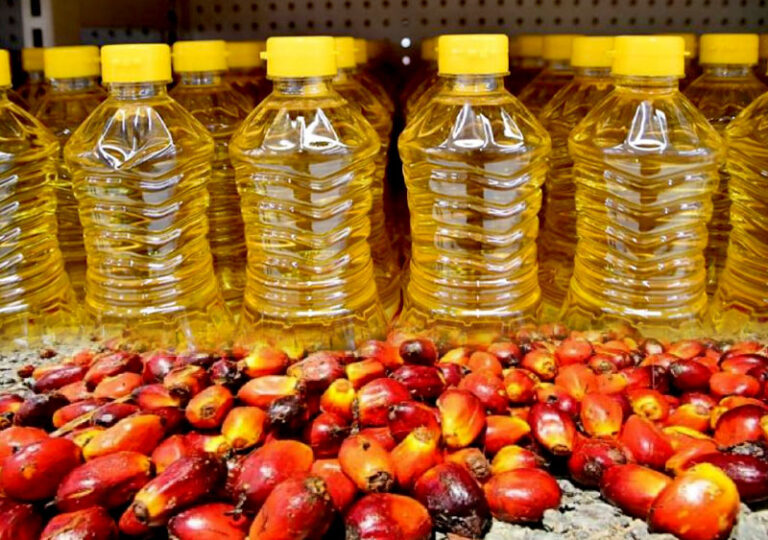
The Planters’ Association of Ceylon (PA) has renewed calls on the Government to urgently reverse the 2021 ban on oil palm cultivation, warning that the decision has inflicted deep damage on the plantation sector, rural incomes, and the wider economy.
Oil palm, once hailed as Sri Lanka’s most promising crop diversification strategy, was introduced in 1968 but began expanding significantly only in the 2000s when Regional Plantation Companies (RPCs) sought alternatives to loss-making rubber.
Encouraged by strong government backing, including tax concessions and formal approval to expand up to 20,000 hectares by 2016, companies such as Watawala, Namunukula, and Horana invested billions in nurseries, milling facilities, and research.
However, the abrupt ban in 2021 reversed decades of progress, resulting in the destruction of Rs. 550 million worth of seedlings and placing Rs. 23 billion in investments at risk.
The PA warned that no compensation has been provided, leaving both companies and workers exposed. More than 5,000 direct jobs and 21,000 dependent livelihoods were tied to the sector, with oil palm workers earning nearly double the wages of their counterparts in tea and rubber.
The industry also generated over Rs. 2.5 billion annually in household income, particularly in rural areas where poverty is entrenched. Its sudden halt, the PA noted, has thrown many families into financial insecurity at a time when the national economy is already under stress.
Ripple effects have spread across industries reliant on crude palm oil. Refiners and manufacturers now face supply shortages and higher costs, while the Rs. 200 billion bakery and confectionery sector has reported price hikes in bread, biscuits, and margarine. Pharmaceuticals, personal care, and industrial products have also been disrupted, compounding the burden on consumers.
The economic fallout has been particularly damaging for Sri Lanka’s foreign exchange reserves. Annual edible oil demand is 264,000 metric tons, but local production now meets only a quarter of this requirement.
The shortfall is bridged through imports, draining $35 million in foreign reserves annually. Over five years, this could exceed $175 million, an unsustainable cost for a nation struggling with recovery.
The PA argues that environmental concerns cited in defence of the ban are misplaced. Oil palm cultivation in Sri Lanka was restricted to degraded rubber lands, not virgin forests.
Globally, palm oil is recognised as the most efficient vegetable oil crop, yielding 40% of the world’s vegetable oil on just 6% of agricultural land. Countries like Malaysia and Indonesia have adopted sustainability standards such as RSPO and ISPO certifications to ensure minimal ecological damage.
Highlighting the nutritional value of palm oil naturally trans-fat free, rich in vitamin E and antioxidants the PA insisted the crop can be produced responsibly in Sri Lanka. It urged the Government to adopt global best practices, integrate smallholder farmers, reform import taxation, and invest in research and traceability systems.
Citing India’s expansion of palm oil cultivation by 45% in five years, the Association said Sri Lanka, with ideal growing conditions, cannot afford to miss the opportunity. “At this decisive moment, we urge the Government to embrace palm oil as a core strategy for plantation revival, food security, and foreign exchange generation,” the PA stressed
VAT Hikes Deepen Poverty While Rich Escape Fair Tax Share
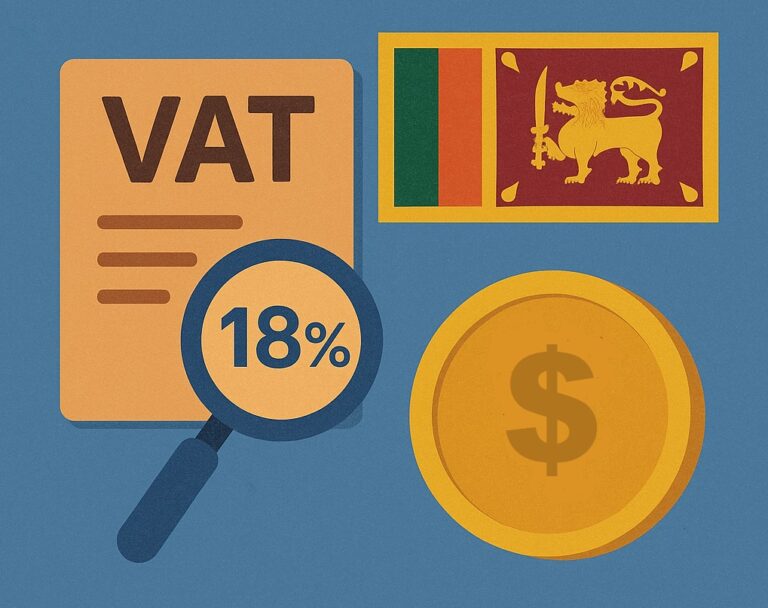
Sri Lanka’s fragile path to fiscal recovery has exposed deep cracks in its taxation system. A new World Bank report has slammed the country’s heavy reliance on Value Added Tax (VAT), warning that the steep rate hikes, compounded by subsidy removals, have disproportionately hurt the poorest households.
While VAT has helped boost government revenue, it has also fuelled inflation, raised the cost of living, and pushed thousands deeper into poverty. With the NPPP government preparing its 2026 budget, analysts say the urgent priority should be to shift the tax burden away from the poor and onto the wealthy.
Recent data highlights this stark dilemma. Sri Lanka’s economy grew by around five percent in 2024, largely buoyed by construction and tourism.
Yet the benefits have not been evenly distributed. Poverty, measured at the international benchmark of living on less than US$3.65 per day, still affects nearly a quarter of the population, standing at 24.5 percent.
On the fiscal front, revenue improved significantly: the primary surplus reached 2.2 percent of GDP in 2024, aided by VAT and the withdrawal of exemptions. The country’s tax-to-GDP ratio also climbed from a low of 7.3 percent in 2022 to about 9.2 percent in 2023. Even so, Sri Lanka lags behind many of its regional peers in overall revenue mobilisation.
The cost of these gains, however, has fallen heavily on ordinary people. The World Bank estimates that between 2022 and mid-2023, poverty increased by nearly four percentage points as a direct result of tax reforms and subsidy removals.
The poorest ten percent of households lost about five percent of disposable income, while their risk of falling into poverty rose by almost two percentage points. Rising electricity tariffs and cost-recovery pricing hit hardest, stripping the poorest of already fragile incomes.
Meanwhile, import duties and protectionist taxes on rice, maize and other staples have kept food prices 50 percent higher than in neighbouring countries, punishing the very groups least able to cope.
Despite these realities, Sri Lanka’s policymakers continue to lean heavily on VAT because it is a reliable revenue source. Globally, VAT tends to raise six to eight percent of GDP compared to one or two percent from income taxes.
Yet, without strong exemptions for essential goods, VAT is inherently regressive, forcing low-income households to shoulder a heavier relative burden than wealthier groups. Critics argue that Sri Lanka’s reliance on consumption taxes while allowing loopholes and evasions in corporate and personal income taxes reflects both political weakness and policy inertia.
The World Bank and domestic experts agree on what must happen next. The 2026 budget must prioritise fairness by taxing wealth more directly. Higher income brackets, corporate profits, large properties and capital gains should be brought more firmly into the net.
VAT exemptions must be expanded to shield food, medicine and utilities, while welfare should be targeted at the poorest rather than delivered through blanket subsidies that benefit richer households too. Public sector wage and hiring reforms, along with digitised tax administration, would also reduce inefficiency and improve compliance.
Sri Lanka’s recent fiscal turnaround has been built on fragile ground. If the NPPP government fails to rebalance its tax policy, the country risks achieving macro-stability while entrenching social inequality.
Taxing wealth fairly, protecting essentials, and reforming public spending may be politically challenging, but without these measures, stability will come at the cost of human welfare and social cohesion.
Sri Lanka Showcases Gem and Jewellery Excellence at Bangkok Fair 2025
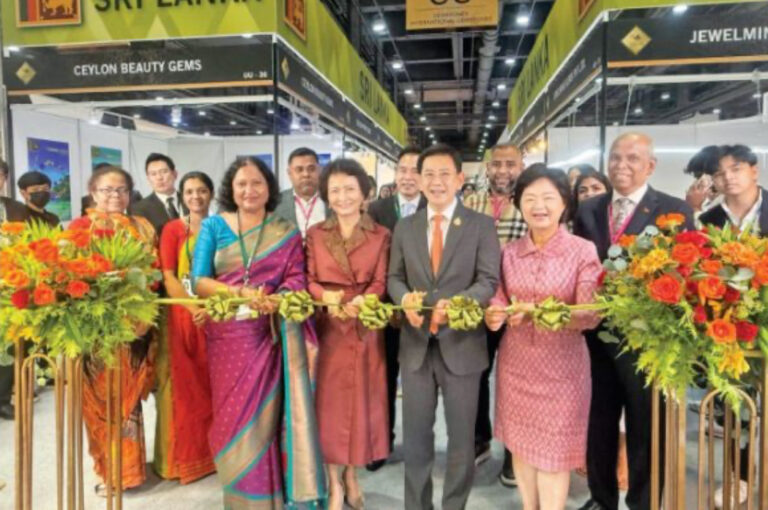
The Embassy of Sri Lanka in Bangkok has facilitated the participation of 35 Sri Lankan companies at the 72nd edition of the Bangkok Gems and Jewellery Fair (BGJF) 2025, taking place from September 9 to 13 in Bangkok.
The companies are exhibiting under the Sri Lanka Pavilion, which collectively features 48 booths. Participants are showcasing a diverse range of high-quality gemstones and fine jewellery, highlighting Sri Lanka’s renowned craftsmanship and global reputation as the “Island of Gems.”
The initiative underscores Sri Lanka’s commitment to strengthening its presence in the international gem and jewellery market, while creating new opportunities for trade partnerships and exports