
Former Minister Rajitha Senaratne, who appeared before the Colombo High Court today (29), has been ordered to be remanded in custody.
Former Minister Rajitha Senaratne Appears in Colombo High Court

Former Minister Rajitha Senaratne, who has been the subject of an outstanding arrest warrant, appeared before the Colombo High Court today (29).
He is facing a case filed by the Bribery Commission, which was scheduled to be taken up before Colombo High Court Judge Lanka Jayaratne today. In addition, another case against him is also due to be heard later in the day at the Colombo Magistrate’s Court.
Police sources noted that despite months of efforts, authorities had previously been unable to locate Senaratne in order to execute the arrest warrant. His appearance in court today marks the first time he has presented himself following those attempts.
Government Misstep Risks Tourism Visibility in Booking.com Clash

Sri Lanka’s tourism industry, which showed promising signs of recovery in 2025, now faces a self-inflicted setback as the government moves to challenge international online travel agents (OTAs) such as Booking.com, Agoda, and Expedia.
Tourism Minister Vijitha Herath has accused these global platforms of tax evasion and monopolistic practices, vowing to create a government-backed centralised booking system through the Sri Lanka Tourism Development Authority (SLTDA). The proposed platform is intended to handle bookings for hotels, transport, tours, and even souvenirs, thereby reclaiming control of the country’s digital tourism space.
While the government insists the move will secure fair taxation and regulatory oversight, industry experts fear it may backfire. Hoteliers and tour operators warn that Sri Lanka could face a blackout on international booking sites, stripping the country of vital global visibility. Already, some properties have reportedly been delisted from Booking.com, raising alarm within the sector.
Analysts argue that the attempt to compete head-on with established international platforms is misguided. Booking.com and its peers built their dominance by offering seamless usability, instant confirmation, verified reviews, global marketing reach, and price competitiveness—all features tourists rely on. By contrast, Sri Lanka’s proposed system is still in development and, according to insiders, falls short on technical readiness and customer confidence.
Smaller hotels and guesthouses are particularly exposed. Many already pay 18 percent commissions to global booking sites and could face an additional 18 percent VAT under new rules. “We’re running under capacity already. Piling on more costs will make us uncompetitive,” one hotel owner said.
The crisis is compounded by the dysfunctional domestic online train ticketing system. Tourists attempting to book scenic journeys such as Kandy–Ella frequently fail to secure tickets due to brokers bulk-buying and reselling them at inflated prices. “Visitors end up paying double, which damages Sri Lanka’s image,” a tour guide noted.
Despite such setbacks, the country welcomed 1.37 million visitors in the first seven months of 2025, with July alone recording 200,244 arrivals—a 6.6 percent increase over last year. Tourism earnings from January to June reached US$1.71 billion, up 10 percent year-on-year. Visa liberalisation for 40 countries has also boosted arrivals. Yet experts caution that without monthly arrivals exceeding 290,000, Sri Lanka will fall short of its 2025 targets of 3 million tourists and US$5 billion in earnings.
Critics stress that policy ambiguity, ad hoc promotions, and antagonism toward global OTAs risk undermining recent gains. Instead of isolating itself, Sri Lanka must strengthen cooperation with international platforms, modernise digital infrastructure, and address systemic flaws. Otherwise, the sector’s fragile recovery could unravel, leaving the island struggling to compete in a highly competitive global tourism market.
Sri Lanka Apparel Exports Rise, Face Challenges from US Tariffs, GSP+
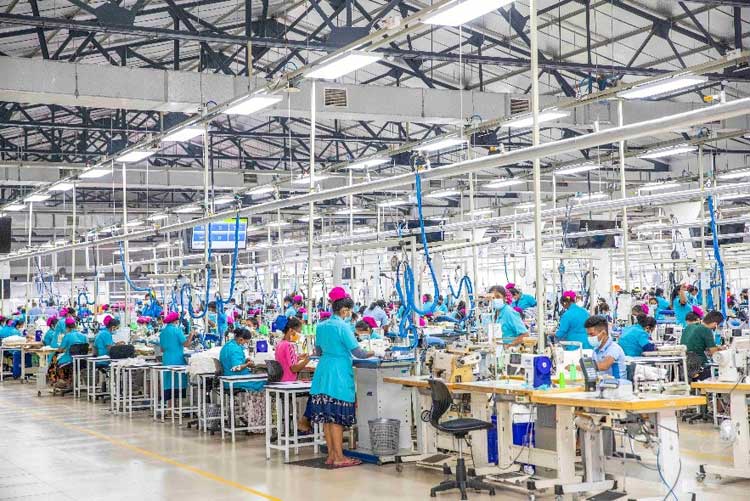
Sri Lanka’s apparel industry, the country’s single largest export earner, continued to post healthy growth in July 2025 despite looming uncertainties over United States tariffs and the European Union’s review of the GSP+ trade concession.
According to the Joint Apparel Association Forum (JAAF), export earnings rose 9.84% year-on-year in July, reaching $455.16 million compared with $414.38 million in July 2024. The strongest expansion came from the European Union (excluding the UK), where shipments jumped 26.69%, underscoring the importance of GSP+ access in sustaining competitiveness.
Exports to “other” destinations grew 24.24%, while the UK market posted only a marginal increase of 0.72%. The United States — traditionally Sri Lanka’s largest buyer — recorded a 2.7% decline, raising concerns over potential fallout from trade policies and buyer shifts.
For the first seven months of 2025, cumulative apparel exports totaled $2.92 billion, up 9.09% from $2.67 billion during the same period in 2024. EU shipments led with an 18.2% increase, followed by growth of 11.02% to “Other” markets, 5.65% to the UK, and 2.91% to the US.
A JAAF spokesperson said the steady performance reflected the sector’s resilience and ability to adapt to evolving buyer requirements on speed, quality, sustainability, and compliance. “The growth in July and over the first seven months highlights Sri Lanka’s firm position in global markets, particularly the EU. However, sustaining this momentum will require expanded trade opportunities, value addition, and supportive policy frameworks,” the spokesperson added.
Current Challenges and Risks
Despite the encouraging numbers, analysts caution that external headwinds could dampen the outlook. The United States, which accounts for nearly 40% of Sri Lanka’s apparel exports, has already imposed additional tariffs on several product categories under its ongoing trade policy review. Although Sri Lanka has so far avoided the worst of these measures, industry experts warn that escalating protectionism could erode competitiveness against low-cost producers such as Bangladesh and Vietnam.
Meanwhile, Sri Lanka’s access to the EU’s GSP+ preferential trade scheme, which grants duty-free access to most apparel categories, remains under review due to governance and human rights concerns. Any suspension of GSP+ would directly impact earnings, particularly given that the EU has emerged as the strongest growth market in 2025.
Industry Outlook
Looking ahead, JAAF and exporters are pushing for a diversification strategy, targeting emerging markets in Asia and the Middle East to reduce dependency on the US and EU. Greater emphasis is also being placed on high-value segments, including sustainable fashion, digital design integration, and nearshoring strategies to meet buyers’ fast-changing demands.
The apparel sector contributes nearly 6% of Sri Lanka’s GDP and employs over 350,000 workers directly. Industry leaders stress that a clear policy direction, consistent trade diplomacy, and investment in innovation and value addition will be critical to safeguarding the sector’s future growth.
New Companies Act Spurs Transparency But Raises Concerns Over State Control

Sri Lanka’s new Companies (Amendment) Act No. 12 of 2025, certified on August 4 and hailed by the government as a milestone in corporate governance, has sparked mixed reactions within the business community. While international audit firm Deloitte Sri Lanka has praised its alignment with global compliance standards, many private-sector stakeholders question whether the Marxist-oriented government’s reforms reflect an underlying distrust of the very sector that drives national economic growth.
The Act introduces 21 wide-ranging amendments to the Companies Act of 2007, with the most significant being the mandatory disclosure of beneficial ownership (BO). All companies, including offshore and overseas entities operating locally, are now required to maintain and update records of their ultimate beneficial owners. Supporters argue that this move strengthens transparency, curbs money laundering, and positions Sri Lanka closer to Financial Action Task Force (FATF) and Asia-Pacific Group (APG) anti-money laundering benchmarks.
However, private-sector leaders voice concern that while beneficial ownership disclosures improve accountability, they may also deter legitimate foreign investment. For listed companies, tracking beneficial ownership among diverse overseas investors is a complex task that could raise compliance costs and discourage capital inflows.
Deloitte’s analysis emphasizes the long-term advantages. Companies will need digital tools to automate compliance, detect politically exposed persons (PEPs), and protect sensitive data under the Personal Data Protection Act (PDPA). These requirements may initially burden firms, but ultimately enhance investor confidence and support Sri Lanka’s case in the FATF mutual evaluation in 2026.
Other reforms include provisions for stricter enforcement. The Act introduces a general penalty clause (Section 513A) for non-compliance where specific penalties are absent, alongside mechanisms such as Section 484A, which grants extensions for furnishing information to the Registrar of Companies. Such measures aim to eliminate ambiguity and strengthen the regulator’s hand.
Still, critics argue that the sweeping powers given to regulators may reflect the government’s skeptical view of private enterprise. The Marxist-oriented administration has often portrayed the private sector as insufficiently transparent and overly profit-driven. Business chambers fear that excessive monitoring, if implemented without dialogue, could create a climate of state overreach, deterring entrepreneurial risk-taking at a time when economic recovery relies on private-led growth.
From Deloitte’s standpoint, the reforms represent a shift from optional governance to mandatory trust-building. “Transparency and governance are no longer optional, they are the foundation for sustainable business,” said Disna Perera, Director – Corporate Secretarial, Deloitte Sri Lanka and Maldives.
Analysts suggest the real test will be in implementation. Success will depend on modernizing digital infrastructure, building inter-agency coordination, and balancing regulatory oversight with business competitiveness. Without these, reforms may burden firms without delivering the promised investor confidence.
Ultimately, the Companies (Amendment) Act marks a double-edged development. On one side, it modernizes Sri Lanka’s corporate law and boosts international credibility. On the other, it risks reinforcing perceptions of a government wary of the private sector — the very engine of growth the economy desperately needs.
Sri Lanka, US unite to safeguard maritime heritage through archaeology
Sri Lanka’s cultural heritage will gain new international attention this September, as the United States joins hands with local authorities to highlight one of the island’s most remarkable archaeological discoveries the Godawaya Ancient Shipwreck.
The U.S. Embassy in Colombo announced that, in collaboration with the Central Cultural Fund’s Maritime Archaeology Unit, it will host a three-day exhibition and symposium from September 3–5 at the BMICH Cinema Lounge, showcasing ongoing work to document and preserve artifacts from the Godawaya site.
The exhibition, opening to the public at 11:00 a.m. on September 3, and from 10:00 a.m. to 5:00 p.m. on September 4–5, will not only present historical treasures but also emphasize the broader message of protecting cultural identity in the Indo-Pacific. U.S. officials linked the initiative to the region’s importance in ensuring peace, stability, and sovereign rights.
A Shipwreck Frozen in Time
Discovered off the southern fishing village of Godawaya, the shipwreck is considered the oldest known wooden vessel in the Asia-Pacific, dating back more than 2,100 years to the 1st or 2nd century BCE. Archaeologists describe it as a “time capsule” that sheds light on early Indian Ocean trade, shipbuilding techniques, and Sri Lanka’s central role as a hub of maritime commerce.
Recovered artifacts include clay pottery, grinding stones, glass and metal ingots, and semi-precious carnelian beads — clear evidence that the island was deeply embedded in the network of trade routes linking South Asia, the Middle East, and Southeast Asia. Experts believe further study may reveal the ship’s exact origins, possibly linking it to ancient trade between Sri Lanka and ports as far as Rome or China.
U.S. Support and Global Recognition
The project is being funded under the Ambassadors Fund for Cultural Preservation (AFCP), a U.S. Government program that has supported more than 1,100 projects in over 130 countries. In Sri Lanka, AFCP has previously contributed to the conservation of Buddhist temples, colonial-era structures, and traditional art forms. The Godawaya initiative marks a shift toward protecting maritime heritage, an area where Sri Lanka holds unique global significance.
Preserving for Future Generations
Artifacts recovered from Godawaya will be permanently preserved and displayed at the Maritime Archaeology Museum in Galle, ensuring accessibility for both Sri Lankans and international visitors. Scholars say this will not only enrich academic research but also boost heritage tourism, providing new opportunities for Sri Lanka’s economy.
A Deeper Message
Beyond archaeology, the collaboration signals how heritage diplomacy can strengthen bilateral ties. By helping safeguard Sri Lanka’s past, Washington is also investing in goodwill and shared cultural understanding. Analysts note that such projects underline the importance of heritage in national identity, while also reminding Sri Lanka of the strategic value of its geography and history in the wider Indo-Pacific.
Saudi Envoy Commends Sri Lanka’s New People-Friendly Health Policy

Saudi Arabia’s Ambassador to Sri Lanka, Khalid Hamoud Nasser Alkahtani, has praised the Government’s new policy aimed at establishing a people-friendly health service free from corruption and malpractices.
He also assured Saudi Arabia’s continued support for the development of Sri Lanka’s health and media sectors.
The Ambassador made these remarks during a meeting with Health and Mass Media Minister Dr. Nalinda Jayatissa at the Ministry recently.
PM Stresses Women’s Dignity and Equal Participation at UNFPA Forum

Prime Minister Dr. Harini Amarasuriya participated in the policy and research forum titled ‘Unlocking the Gender Dividend: Driving Policy Change Through Knowledge’, hosted by the United Nations Population Fund (UNFPA) Sri Lanka in Colombo on Wednesday (27).
At the event, four landmark reports were presented to the Prime Minister, providing policymakers, researchers, and civil society with critical evidence and policy recommendations to address persistent gender inequalities and emerging challenges in Sri Lanka, while promoting a more inclusive and equitable society.
Delivering the keynote address, the Prime Minister said, “Every woman and girl must be able to live with dignity, to be safe, and to contribute fully to the life of our country. When that is true, the whole nation moves.”
She also drew attention to the disproportionate burden of unpaid care work on women, noting that enabling women to balance employment and caregiving responsibilities is essential for national progress.
The forum was attended by UNFPA Sri Lanka Representative Kunle Adeniyi, Members of Parliament, and Women and Child Affairs Ministry Secretary Dr. Nalint Abeysinghe.
SLAF Warns Against Kite Flying Near Airport Runways

The Sri Lanka Air Force (SLAF) yesterday cautioned the public that flying kites near airport runways poses a serious safety hazard and has been identified globally as a contributory factor to air accidents.
“Such activity directly obstructs aircraft operations and endangers both passengers and crew. In Sri Lanka, kite flying in areas surrounding Katunayake, Ratmalana, Hingurakgoda, China Bay, Palaly, Katukurunda, Koggala, Vavuniya, Weerawila and Mattala is considered especially hazardous,” the SLAF said in a statement.
While acknowledging that kite flying is a popular pastime enjoyed by both children and adults during the season, the SLAF urged the public to refrain from flying kites in the vicinity of airport runways due to the grave danger it poses.
Five Arrested for Killing Pregnant Doe in Wilpattu National Park

Wildlife officers have arrested five suspects for shooting and killing a pregnant doe in the Kukulkatuwa area of the Wilpattu National Park.
During the raid, officers also seized a firearm and the motorbikes used by the suspects early yesterday (28).
The arrested individuals, aged 31, 40, and 52, are drivers and employees of several private companies residing in Ranorawa, Nochchiyagama, and Anuradhapura. The raid was carried out following information that this group was frequently roaming in the Kukulkatuwa area and engaged in a meat-selling racket by hunting wild animals in the park at night.
The five suspected poachers are scheduled to be produced before court.