By: Ovindi Vishmika
September 03, Colombo (LNW): Sri Lanka’s fight against corruption is being reshaped by a law passed more than forty years ago. The Offences Against Public Property Act No. 12 of 1982, long considered one of the most stringent pieces of legislation in the country, has become the foundation of a sweeping campaign to prosecute officials accused of misusing state assets. Its revival underscores both the seriousness of today’s anti-corruption drive and the unique power of a law designed to put public property beyond private reach.
A Law Ahead of Its Time
When Parliament certified the Act in March 1982, it responded to growing fears that state property was being exploited for personal or political gain. Unlike many other statutes of the time, it cast a wide net, covering assets belonging not just to ministries but also to state banks, corporations, cooperative societies, and unions. The drafters recognized that corruption could take many forms, and so they deliberately gave the law sweeping definitions to capture any misuse of resources tied to the state.
Covering More Than Theft
The Public Property Act was not limited to obvious crimes such as robbery or mischief. It also criminalized dishonest misappropriation, cheating, criminal breach of trust, and financial fraud. By explicitly including forgery and falsification of accounts, the law ensured that paper-based corruption would be punished as seriously as physical theft. In effect, the Act recognized that corruption could be hidden in documents as easily as in stolen goods, and it gave prosecutors the tools to pursue both.
Punishments Designed to Deter
Penalties under the Act remain among the harshest in Sri Lankan law. Anyone convicted faces a minimum of one year and up to twenty years in prison. In addition, fines must be either at least Rs. 1,000 or three times the value of the loss, whichever is higher. The statute also empowers courts to seize property belonging to offenders to recover unpaid fines. Where forfeiture is impractical, community service can be ordered instead, ensuring that every conviction carries a tangible consequence. These provisions reflect the Act’s clear purpose: to make corruption too costly to risk.
Little Room for Bail
Perhaps the most distinctive feature of the Act is its approach to bail. If the alleged loss exceeds Rs. 5,000—a modest figure by today’s standards—the accused is usually held in remand until the trial concludes. Courts may release an individual only in exceptional circumstances, and judges must record specific reasons when doing so. This rule has proven crucial in cases involving politically powerful figures, reducing the risk of interference with investigations and signaling that accused officials will be treated no differently than ordinary citizens.
A Former President in the Dock
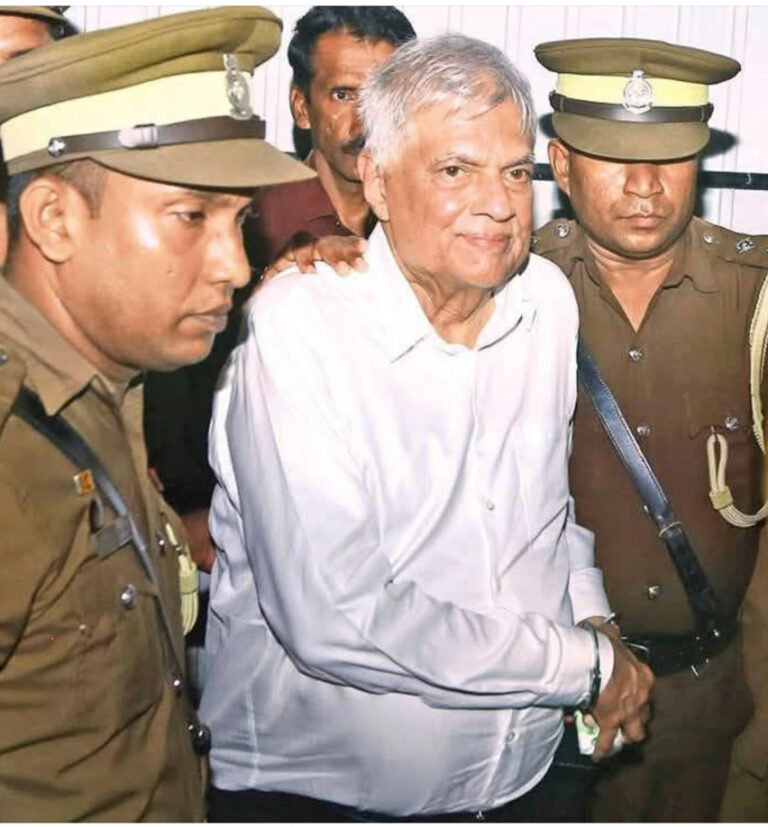
The reach of the law was dramatically illustrated in August 2025, when former President Ranil Wickremesinghe was arrested under its provisions. He was accused of misusing about Rs. 16.6 million in state funds during an overseas trip in 2023, which allegedly included a private detour to London. In line with the Act’s strict bail rules, he was initially remanded before being released on health grounds. His arrest marked the first time a former head of state faced prosecution under the Public Property Act, a development widely seen as a turning point in the country’s anti-corruption campaign.
A Growing List of Defendants
Wickremesinghe is far from alone. In recent months, the Act has been used to prosecute a wide range of political figures. Former State Minister Shasheendra Rajapaksa was charged with misusing nearly Rs. 900,000 in compensation funds. Ex-Health Minister Keheliya Rambukwella faced allegations linked to counterfeit drug imports. Former ministers Nalin Fernando and Mahindananda Aluthgamage were convicted over procurement scandals costing millions. Land fraud and forgery cases have also implicated figures like Prasanna Ranaweera and Mervyn Silva. Collectively, these prosecutions show that the law is being applied to both financial crimes and abuses of administrative power.
Public Support and Political Debate
The Act’s revival has been welcomed by citizens long frustrated with corruption and political impunity. For many, the message is clear: misuse of public assets will no longer be tolerated, regardless of who commits the offense. Yet critics argue that enforcement is sometimes politically selective, targeting rivals more aggressively than allies. International observers have also emphasized that the credibility of Sri Lanka’s anti-corruption effort depends on impartial and transparent application of the law.
From Law to Lasting Change
The Public Property Act remains the backbone of Sri Lanka’s legal response to corruption. Its broad definitions, uncompromising bail rules, and severe punishments make it uniquely powerful. The arrest of a former president under its authority shows that even the highest offices are no longer beyond reach. Whether the current momentum produces lasting change, however, depends on how consistently and fairly the Act is enforced. If applied without bias, it could help build a culture of accountability that Sri Lankans have demanded for decades.
Sri Lanka’s Public Property Act: A Tough Law Driving a New Era of Accountability

Reforming the Presidential System in Sri Lanka
By Adolf
The recent arrest of a former President has once again highlighted the weaknesses and ambiguities in Sri Lanka’s Presidential system. It has sparked fresh debate on the interpretation of the law by law enforcement and the balance between accountability and the dignity of the office.
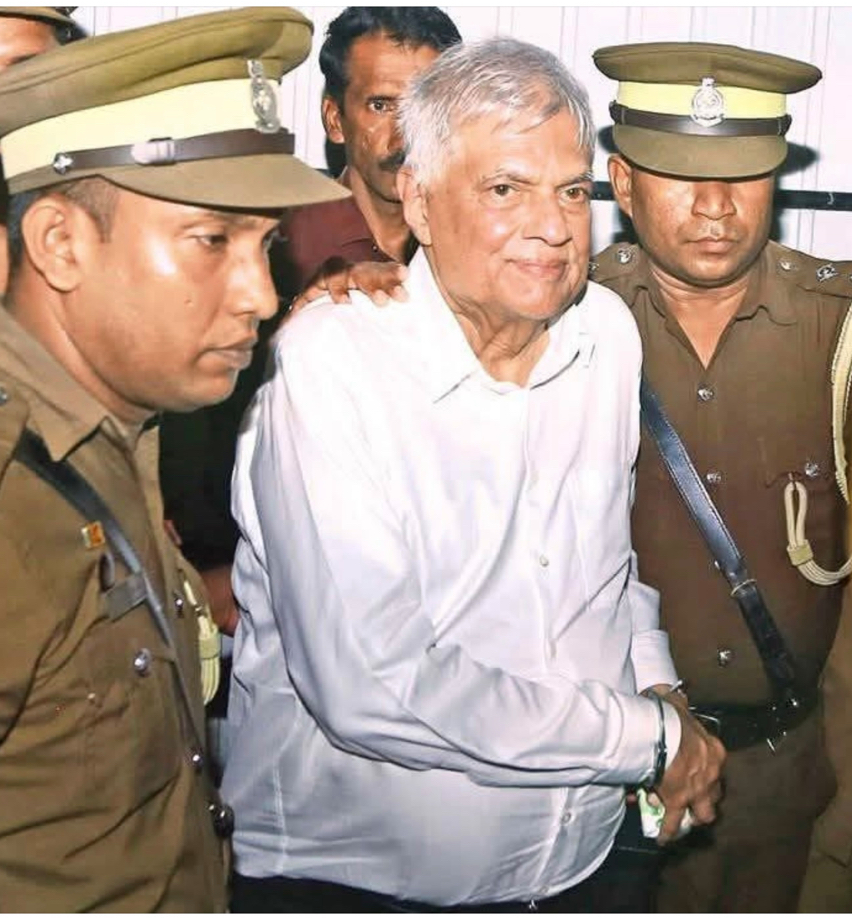
Since its introduction in 1978, the Executive Presidency has been the subject of continuous discussion. While it provides stability through a directly elected President, it has also created tensions over legitimacy, accountability, and the misuse of power. To strengthen democracy and reinforce respect for the highest office in the land, reforms must focus on electoral rules, succession, dignity of office, and accountability mechanisms.
Proposed Reforms
1. Electoral Process
• Run-off Requirement: If no candidate secures more than 50% of valid votes in the first round, a second-round run-off should be held between the top two candidates within three weeks.
• A President without a 50% mandate lacks full legitimacy to govern.
• This reform would ensure that the elected President represents the majority, preventing a candidate from assuming office with only a small plurality.
2. Succession and Continuity
• Death or Resignation of a Sitting President:
◦ If more than two years remain in the term, a fresh national election must be held within 90 days.
◦ If less than two years remain, the Prime Minister or Speaker (as designated by law) should serve as Acting President until the end of the term.
•
• This arrangement guarantees continuity of governance while safeguarding the people’s right to elect their Head of State.
3. Dignity of the Office
• The President symbolizes the unity of the nation and must be shielded from trivial or vindictive attacks.
• Protocols should reinforce the dignity of the presidency by ensuring:
◦ A clear separation between official duties and political activities.
◦ Strict codes of conduct for Parliament, media, and political parties when addressing the office of the President.
◦ Official functions and security provisions are not misused for political advantage.
•
4. Accountability and Legal Immunity
• During Office: The President should enjoy functional immunity for actions taken in the discharge of official duties, to allow independence and decisiveness.
• After Office:
◦ A former President may be tried before a Special Tribunal or Constitutional Court for misconduct, corruption, or abuse of office.
◦ Safeguards must be in place to prevent political witch-hunts:
▪ Cases should be screened by an independent panel of judges before proceeding.
▪ Only serious, well-documented charges should be entertained.
▪ A time limit (e.g., within five years of leaving office) should apply, to prevent harassment decades later.
◦
•
5. Broader Democratic Rebalancing
Reforms should also address structural imbalances by:
• Strengthening Parliamentary oversight over major executive decisions, including key appointments, treaties, and fiscal commitments.
• Establishing recall or impeachment procedures that are clear, transparent, and based on high thresholds to prevent abuse.
• Safeguarding the independence of commissions—Elections, Police, Public Service, and Judiciary—from presidential interference.
Conclusion
These reforms would preserve the strengths of a directly elected presidency while addressing its weaknesses. A run-off system would ensure legitimacy, clear succession rules would prevent uncertainty, dignity protocols would protect the office, and balanced accountability would prevent both impunity and political persecution.
For Sri Lanka to restore public trust in its highest office, Parliament should urgently study comparative models such as France, South Korea, and Brazil, where strong presidencies coexist with democratic checks and balances.
S L’s External Sector Shows Resilience, but Sustainability Hinges on Policy and Stability
Sri Lanka’s external sector continued to demonstrate resilience in the first seven months of 2025, with the current account maintaining consistent monthly surpluses despite a widening merchandise trade deficit, the Central Bank of Sri Lanka (CBSL) reported.
The current account surplus reached USD 1.7 billion during January–July 2025, a 36.5% increase from USD 1.2 billion in the same period last year, driven by robust export growth, higher workers’ remittances, and improved earnings from services and tourism.
Despite the overall surplus, the merchandise trade deficit widened to USD 3.8 billion, up 22.5% from USD 3.1 billion a year earlier, reflecting a surge in imports. Imports grew 11.8% year-on-year to USD 11.64 billion, while merchandise exports rose 7.1% to USD 7.8 billion over the same period.
June 2025 alone highlighted this trend, with imports totaling USD 1.68 billion, a 16.3% increase, compared to exports of USD 1.14 billion, widening the monthly trade gap to USD 540 million.
Vehicle imports also contributed to import pressures, totaling USD 668 million during the first seven months, including USD 193 million in July alone.
The CBSL noted a deterioration in terms of trade in July 2025, as import prices rose faster than export prices, while the Sri Lankan rupee depreciated 3.3% year-to-date against the US dollar.
On the positive side, the services sector continued to support external inflows, with net earnings rising 3.3% to USD 2.4 billion for January–July.
Tourism has been a significant contributor, with 200,244 tourist arrivals in July, a 6.6% increase compared to July 2024, generating USD 318 million in earnings for the month and USD 2 billion for the seven-month period.
Workers’ remittances reached USD 697 million in July, marking the highest monthly inflow since December 2020.
However, foreign investment activity remained mixed. Net inflows persisted in government securities, but the Colombo Stock Exchange (CSE) experienced a net outflow, reflecting investor caution amid ongoing political and economic uncertainties.
Gross official reserves, including the swap facility with the People’s Bank of China, held steady at USD 6.1 billion at the end of July, despite ongoing debt servicing obligations.
IMF benchmarks emphasize that sustaining these inflows requires sound macroeconomic management, fiscal consolidation, and political stability.
While current surpluses indicate short-term resilience, maintaining external sector stability will depend on continued export growth, stronger tourism recovery, and disciplined import management, alongside policies to attract foreign direct investment.
Analysts warn that widening import bills and currency pressures could undermine these gains if structural and political reforms are not effectively implemented.
The CBSL’s latest data suggests that while Sri Lanka’s external position is on a relatively firm footing, ongoing vigilance and policy coordination are critical to ensure that the current account surpluses translate into durable economic stability and compliance with IMF sustainability benchmarks.
SL Private Sector Agri Innovation Thrives as NPP Policies Stifle Growth

Sri Lanka’s agriculture sector is at a critical juncture, with modernization and export potential increasingly dependent on private sector initiatives. Yet, government policies under the National People’s Power (NPP) administration risk slowing progress. While state-led agriculture programs remain largely non-operational, private companies are demonstrating how innovation can transform the industry and benefit thousands of farmers.
HJS Condiments Ltd., Sri Lanka’s largest exporter of processed fruits and vegetables and part of the Hayleys Group, recently launched the OMNIX Digital System. This digital platform streamlines farmer engagement, strengthens traceability, and improves operational efficiency across the agricultural value chain.
Approximately 12,500 gherkin farmers, supplying to HJS across 350 crop collection centres and more than 20 agricultural projects nationwide, now benefit from faster payments, real-time support, and data-driven decision-making.
Before OMNIX, critical functions such as farmer registration, crop collection, input issuance, and payments relied on semi-automated processes, limiting speed, transparency, and accuracy. The new system introduces centralized registration, real-time crop and input tracking, predictive forecasting, mobile-based farmer management, automated payments, and analytics dashboards integrated with SAP systems. Exporters gain greater oversight, reduced waste, and reliable traceability for global markets.
While OMNIX sets a benchmark for modern agriculture, analysts caution that the NPP government’s focus on state-run initiatives could undermine the sector’s growth. Policies emphasizing government-managed agriculture, without clear incentives for private investment, risk discouraging innovation and slowing the modernization of supply chains. Experts argue that supportive measures such as tax incentives, easier access to credit, and streamlined regulations—are essential for scaling private sector solutions and boosting exports.
The platform aligns with Sri Lanka’s 2030 Digital Economy strategy, showcasing how technology can elevate productivity and competitiveness. By replicating such private sector innovations across the wider industry, the country can expand value-added exports, strengthen smallholder livelihoods, and improve global market positioning.
However, without timely government support and policy clarity, these opportunities may be lost. Analysts warn that continued emphasis on largely symbolic government programs, instead of facilitating private enterprise, threatens to slow sectoral growth, limit export potential, and reduce the economic benefits to farming communities.
In conclusion, modernization is happening in Sri Lanka—but it is being led by the private sector. For agriculture to reach its full potential, the government must shift from control to facilitation, providing incentives and removing obstacles. The success of initiatives like OMNIX demonstrates that when private innovation is empowered, Sri Lanka’s agriculture sector can achieve both growth and global competitiveness.
NPP Govt Policies Threaten Sri Lanka Tourism despite Rising Tourist Arrivals

Sri Lanka welcomed 198,235 tourists in August 2025, reflecting a 20.4% year-on-year increase. On the surface, the figures suggest growth, yet the reality for the island’s tourism industry is far less encouraging. Arrivals fell short of the official monthly target of 249,019, meeting only 79.6%, and lagged behind July’s 200,244 and August 2018’s 200,359, signaling that momentum is softening at a critical point in the year.
Cumulative arrivals for 2025 now total over 1.56 million, registering 13% YoY growth. However, reaching the ambitious target of 3 million visitors by December would require an additional 1.43 million tourists in just four months. Monthly arrivals would need to average roughly 358,000—a nearly 81% jump from August levels and far above historical peaks. Even with the upcoming winter season, analysts warn this is an increasingly unlikely scenario.
Weekly data from August illustrates a front-loaded boost from the Kandy Esala Perahera festival, which drew over 54,000 tourists in the first week. Subsequent weeks saw declines to 44,400 and 46,400, highlighting how temporary spikes fail to sustain momentum. Daily averages of 6,395 tourists, while higher than last year, remain insufficient to close the growing gap with annual targets.
Source markets remain highly concentrated, with India accounting for 23.4% of August arrivals, followed by the UK, Germany, China, and Italy. Year-to-date, India continues to dominate with over 325,000 arrivals, underscoring an over-reliance on a few key markets. Stakeholders warn that this narrow focus, coupled with inconsistent visa policies and delays in global marketing campaigns, leaves the industry vulnerable.
The government’s heavy-handed approach to governance, particularly its crackdown on alleged corrupt politicians, has compounded challenges. While President Anura Kumara Disanayake recently established a Presidential Task Force to implement a five-year
Sri Lanka Tourism Development Program, industry insiders note that the timing is too late to materially influence 2025’s performance. Delays in critical initiatives, including the nation branding campaign and visa facilitation reforms, continue to hamper industry confidence.
Analysts warn that unless these initiatives move from policy announcements to tangible, high-impact actions, the winter peak could represent a missed opportunity rather than a turning point. Even under optimistic scenarios, achieving the 3 million visitor target now appears increasingly aspirational.
Beyond short-term targets, experts caution that the current environment risks longer-term damage to Sri Lanka’s tourism brand. Policy unpredictability, slow implementation, and bureaucratic delays send mixed signals to international investors and travellers alike, undermining confidence in the country as a stable and welcoming destination.
For many tourism operators, the worry extends beyond 2025: the combination of a restrictive political climate and inconsistent government policies threatens the industry’s competitiveness and could have lasting implications for Sri Lanka’s position in the global travel market.
EV Confusion Hits Sri Lankans: Policy Gaps Leave Buyers Stranded

Sri Lanka’s electric vehicle (EV) sector is facing fresh turmoil as the National People’s Power (NPP) government detained nearly 1,000 BYD Atto 3 cars this week over alleged tax irregularities linked to motor capacity. The move has sparked confusion among consumers, importers, and industry watchers, raising serious questions about the government’s approach to regulation and its impact on ordinary citizens.
Authorities cited that the BYD Atto 3 imported with a 100kW motor in Sri Lanka is sold with a 150kW motor in Australia and Thailand. While the government claims this affects tax classification, critics say the real issue lies in inconsistent enforcement. A previous shipment faced similar scrutiny but was cleared only after a court ruling, leaving buyers and businesses uncertain about compliance rules.
The problem extends beyond BYD. Other EV brands, including Deepal, Tata, MG, GAC, and Dongfeng, also offer models in Sri Lanka with lower power outputs than those sold overseas. Examples include the Deepal S07 with 99kW locally versus 160kW in Australia, the Tata Currve with 98kW locally versus 123kW abroad, and the GAC Aion Y with 100kW here versus 150kW internationally.
Customs Director General Seevali Arukgoda announced a committee will be appointed this week to conduct tests on detained vehicles. While officials insist the review will ensure compliance, importers and buyers are already facing delays, financial losses, and uncertainty about their purchases. For the average consumer, this means delayed access to greener, more affordable vehicles and frustration over lack of clear government guidance.
Industry analysts warn that Sri Lanka’s unclear and shifting policy approach is undermining public trust. EV makers often release the same model with multiple outputs in different markets for pricing, tax, or range optimization reasons, a practice well-known globally. Without clear local regulations reflecting these realities, consumers bear the brunt, left in limbo while the government figures out its stance.
For a country seeking to cut fuel imports, promote cleaner transport, and meet climate commitments, policy inconsistency comes at a high cost to the public. Citizens and businesses alike are left questioning why governance delays continue to impede access to modern technology, leaving the EV market—and the public’s interests stuck at customs.
Arugam Bay Emerges as Top Tourist Hotspot with Growing International Arrivals

Arugam Bay in the Pottuvil division of the Ampara district has become the most popular destination among tourists visiting Sri Lanka, according to Pottuvil Divisional Secretary M.A.C. Ahamed Nazeel.
Currently, around 3,000 foreign tourists are staying in the coastal town, with numbers steadily increasing as the peak surfing season progresses. The surfing season, which runs from April to October, is marked by predominantly offshore winds that create ideal conditions for surfers from across the globe.
Beyond its world-renowned surf, Arugam Bay offers a range of attractions. Just two kilometres inland lies the scenic Pottuvil Lagoon, where boat tours are popular with visitors. From May to September, tourists also flock to the bay for off-shore dolphin viewing, which coincides with the high season.
Twelve kilometres south of Arugam Bay is Panama, the last inhabited village before Yala East National Park, known for its rich birdlife. The region’s diverse natural attractions complement Arugam Bay’s sweeping sandy beach at Ulla village, a year-round spot for swimming.
Located 320 km from Colombo, Arugam Bay is accessible via Moneragala, with a travel time of about seven hours by road.
Deputy Defence Minister Visits Abhimansala Centres, Reaffirms Commitment to Differently-Abled War Heroes
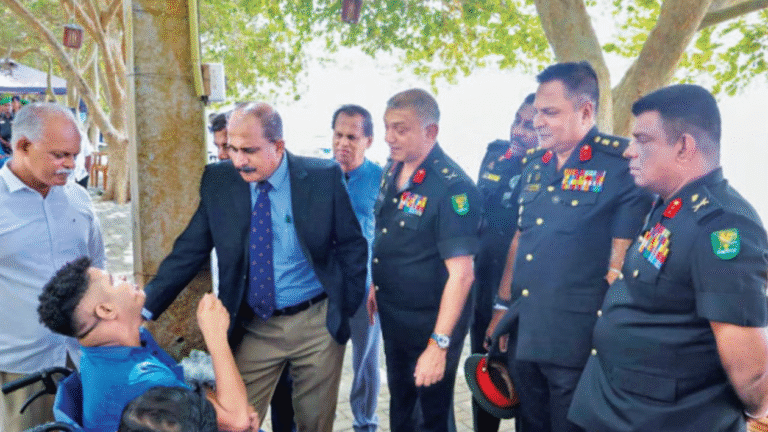
Deputy Defence Minister Major General Aruna Jayasekara (Retd) visited Abhimansala-3 in Pangolla, Kurunegala, and Abhimansala-1 in Anuradhapura on August 29 and 30, reaffirming the Government’s commitment to the welfare of differently-abled War Heroes.
Established by the Sri Lanka Army, the Abhimansala Centres provide lifelong healing and rehabilitation for soldiers injured in service to the nation. The facilities offer medical consultations, prosthetic and orthotic support, physiotherapy, and mental health counseling, ensuring holistic care and dignity for residents.
During the visits, the Deputy Minister personally engaged with War Heroes, listening to their experiences and assuring them of the Ministry’s continued support. His compassionate approach reflected the Government’s recognition of their immense sacrifices in safeguarding national peace and security.
He also held discussions with officials overseeing rehabilitation operations, reviewing current services and stressing the importance of continuous improvements to elevate standards of care.
The visits, joined by Women and Child Affairs Deputy Minister Dr. Namal Sudarshana, MPs Prof. Sena Nanayakkara and Nimal Palihena, underscored the Ministry of Defence’s vision of sustained care and rehabilitation—honouring War Heroes with dignity, compassion, and enduring support.
Govt Launches ‘Dream Destination’ Project to Modernise 100 Railway Stations

The first phase of the national programme “Dream Destination”, aimed at renovating 100 railway stations across the country, was launched yesterday (Sep 2) at the Talpe Railway Station under the patronage of Transport and Highways Deputy Minister Dr. Prasanna Gunasena.
The initiative, carried out through a partnership between the Government, the private sector, and the public, seeks to rebrand Sri Lanka’s railway stations with a modern identity that meets international standards. Oversight of the project will be shared by the Transport, Highways, Ports and Civil Aviation Ministry, the Clean Sri Lanka programme, and private sector contributors.
Deputy Minister Gunasena described the revitalisation of the railway service as “awakening a sleeping giant,” underscoring the Government’s commitment to transforming public transport into a high-quality service. He added that improvements in transport infrastructure would also provide a significant boost to tourism, noting his confidence that Sri Lanka would achieve rapid development within the next two years as a nation “built on hard work.”
The event was attended by Fisheries and Aquatic Resources Deputy Minister Rathna Gamage, COPE Committee Chairman MP Dr. Nishantha Samaraweera, Railways General Manager Ravindra Padmapriya, Clean Sri Lanka officials, private sector representatives, and local government leaders.
Sri Lanka Briefs Colombo Diplomats on Human Rights Progress Ahead of UNHRC Session
Foreign Affairs Minister Vijitha Herath yesterday briefed Colombo-based diplomats on the progress made by the Government in the field of human rights and reaffirmed Sri Lanka’s commitment to working closely with UN agencies.
Speaking at the Foreign Ministry premises ahead of the 60th session of the UN Human Rights Council (UNHRC) in Geneva on September 8, Minister Herath outlined key initiatives taken by the new administration to foster reconciliation. These include the return of a large extent of land to citizens and measures to strengthen democratic institutions.
He stressed that since assuming office, the Government has not received reports of human rights violations and highlighted that the recent Local Government Elections were conducted in line with election law.
The Minister also noted that the Government, which holds a two-thirds majority in Parliament, represents all communities and includes the highest number of female parliamentarians in Sri Lanka’s history.
Foreign Ministry spokesperson Thushara Rodrigo told the Daily News that diplomats were briefed on efforts to strengthen mechanisms linked to the Office of Missing Persons (OMP) and the Office for National Unity and Reconciliation (ONUR).
Minister Herath further underscored that the Prevention of Terrorism Act (PTA) will soon be replaced, while amendments are planned to the Online Safety Act. He emphasized that Sri Lanka remains committed to technical collaboration with UN agencies, while safeguarding national interests.