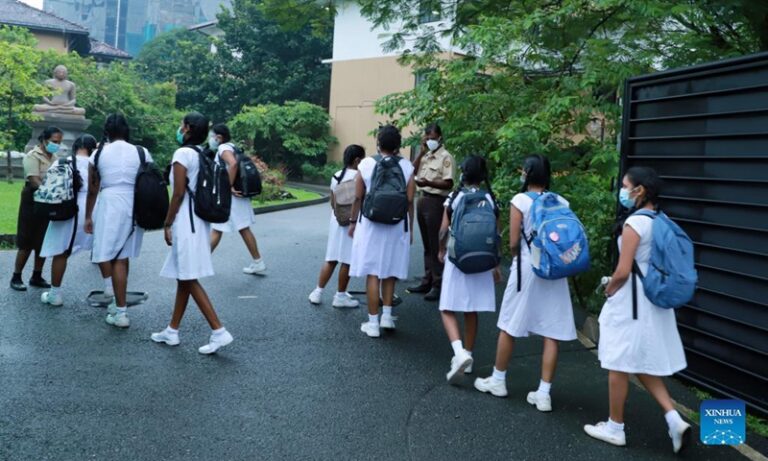
August 18, Colombo (LNW): Government and government-recognised private schools across Sri Lanka are set to reopen today (18), marking the beginning of the first stage of the third academic term for 2025, confirmed the Ministry of Education.
This term, which will run until November 07, signals a return to routine for thousands of students and teachers following the conclusion of the second term break.
Schools have been instructed to resume full academic programmes immediately, with a particular emphasis on syllabus coverage and exam preparation, as the education calendar begins to tighten in the latter part of the year.
However, schools catering to the Muslim community have been granted a deferred start, with classes scheduled to commence on Monday (25). This adjustment has been made in recognition of recent religious observances and the need to accommodate a brief extension to the holiday period.
Officials from the Ministry of Education have called on school administrators to ensure a smooth transition back to in-person learning, urging staff to focus on academic catch-up where necessary. In many schools, additional measures are being taken to support students who may have fallen behind during earlier parts of the year due to regional disruptions, absenteeism, or weather-related closures.
New school term begins for most students across the country
Postal services paralysed for second day as union strike escalates across Sri Lanka
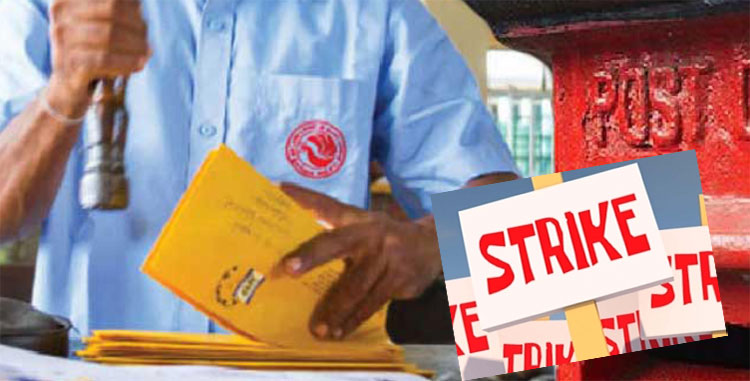
August 18, Colombo (LNW): Postal operations across Sri Lanka face a second consecutive day of complete disruption as trade union action by the Postal and Telecommunications Officers’ Union and the United Postal Trade Unions’ Front (UPTUF) intensifies.
The widespread strike, driven by a list of 19 unresolved demands, is creating growing pressure on the government and public services alike.
Union leaders insist the core of their protest centres on longstanding issues, including the demand for overdue overtime payments and strong opposition to the recent requirement mandating the use of biometric fingerprint systems for administrative staff to register attendance.
Workers argue that such measures are intrusive and unnecessarily bureaucratic, particularly given the already strenuous working conditions they face.The protest was initiated on the afternoon of August 17 at the Colombo Central Mail Exchange and quickly escalated into a nationwide walkout, affecting not only regular postal delivery but also the administrative operations critical to the day-to-day running of the Department of Posts.
Chinthaka Bandara, co-convener of the UPTUF, stated that postal services would remain at a standstill until meaningful dialogue was initiated. “This is not a decision we took lightly,” he noted. “Our members have raised these issues repeatedly. The strike will continue until tangible solutions are offered.”However, the government has pushed back against the strike.
Speaking at a press briefing in Colombo, Postmaster General Ruwan Sathkumara dismissed the protest as unreasonable, claiming that many of the issues raised had already been addressed or were in the process of being resolved. He suggested the strike action was disproportionate and risked damaging public trust in the service.
Further criticism came from Minister of Mass Media and Postal Services, Dr Nalinda Jayatissa, who warned that the disruption posed serious financial implications. “Even a brief lapse in operations can result in significant revenue losses for the department,” he said, adding that these shortfalls might jeopardise future wage increases and budget allocations, including for overtime and infrastructure improvements.
Dr Jayatissa argued that the timing of the strike was particularly problematic, as the department was in the midst of important reforms — including digitisation efforts, fleet upgrades, and staffing increases — all of which aimed to modernise and stabilise postal services.
In a direct appeal to workers, he urged a return to duty, calling for employees to act in the broader national interest. “This strike only hinders progress. We’re asking our staff to recognise the realities, get back to work, and help us build a stronger, more efficient postal service that benefits everyone.”
Showery trend to persist across island (Aug 18)

August 18, Colombo (LNW): Several spells of showers will occur in the Western and Sabaragamuwa
provinces and in Kandy, Nuwara-Eliya, Galle and Matara districts, the Department of Meteorology said in its daily weather forecast today (18).
A few showers may occur in North-western province. Mainly fair weather will prevail over elsewhere of the island.
Strong winds of about (40-50) kmph can be expected at times over Western slopes of the central hills and in Northern, North-central, North-western and Southern provinces and in Trincomalee district.
Marine Weather:
Condition of Rain:
Showers will occur at a few places in the sea areas off the coast extending from Colombo to Matara via Galle.
Winds:
Winds will be south-westerly to westerly and wind speed will be (30-40) kmph.
Wind speed can increase up to (50-60) kmph at times in the sea areas off the coast extending from Chilaw to Mannar via Puttalam and from Matara to Pottuvil via Hambantota.
Wind speed can increase up to 50 kmph at times in the sea areas off the coast extending from Mannar to Trincomalee via Kankasanthurai and Mullaittivu.
State of Sea:
The sea areas off the coast extending from Chilaw to Mannar via Puttalam and from Matara to Pottuvil via Hambantota will be rough at times.
The sea areas off the coast extending from Mannar to Trincomalee via Kankasanthurai and Mullaittivu will be fairly rough at times.
Foreign Jobs for Sri Lankans in Singapore: Policy or Political Show?
By: Staff Writer
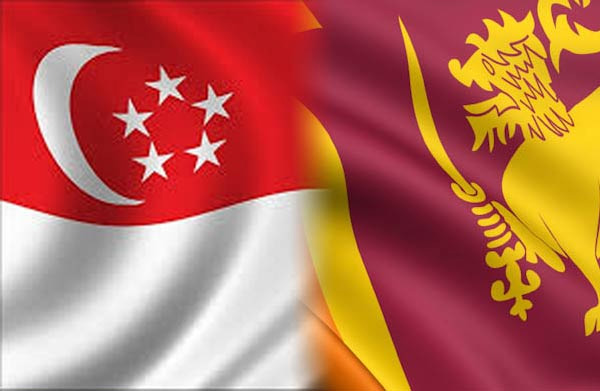
August 17, Colombo (LNW): Sri Lanka’s government has recently touted efforts to create overseas employment opportunities, particularly in Singapore, raising questions about whether these initiatives are genuine policy measures or politically driven promises.
High-level discussions were held between Labour and Deputy Economic Development Minister Prof. Anil Jayantha Fernando and Singapore’s Ministers of State, Dinesh Vasu Dash and Alvin Tan, focusing on potential roles for Sri Lankans in hospitality, healthcare, manufacturing, and other sectors.
While official statements emphasize skills recognition, worker protection, and ethical recruitment practices, critics point out a historical pattern of governments using foreign employment pledges as political currency.
Successive administrations have often linked overseas job opportunities to political support, creating expectations among the public that rarely materialize due to bureaucratic bottlenecks and inadequate training infrastructure.
During the Singapore visits, Minister Fernando highlighted Sri Lanka’s reform agenda, including financial sector modernization, green financing, and economic recovery measures.
The government’s narrative suggests that these reforms will make it easier to send skilled workers abroad and attract foreign investment.
Singaporean officials, meanwhile, expressed interest in competent workers and expanding trade and investment links, signaling that opportunities exist—but only for candidates who meet strict standards.
This raises a key concern: can Sri Lanka realistically prepare enough workers to match Singapore’s high skill requirements? Current vocational training and workforce development programs face structural limitations, and the government has yet to demonstrate large-scale, depoliticized mechanisms to bridge the skills gap. Without this, the initiative risks becoming a symbolic gesture rather than a practical solution to unemployment.
Moreover, there is a political dimension. Foreign employment programs can be used to reward loyal supporters, leaving vulnerable workers without access to promised opportunities. The lack of transparent selection and training processes undermines confidence in the government’s ability to deliver on its promises equitably.
Ultimately, the success of this initiative will depend less on ministerial visits or high-level statements and more on structural reforms, transparent recruitment, and genuine investment in human capital. Otherwise, Sri Lanka risks repeating a familiar cycle: ambitious foreign employment pledges that generate headlines and political goodwill but fail to translate into meaningful jobs for the majority of its citizens
USS Santa Barbara Docks in Colombo, Stressing SL Strategic Role in Indian Ocean Security
By: Staff Writer
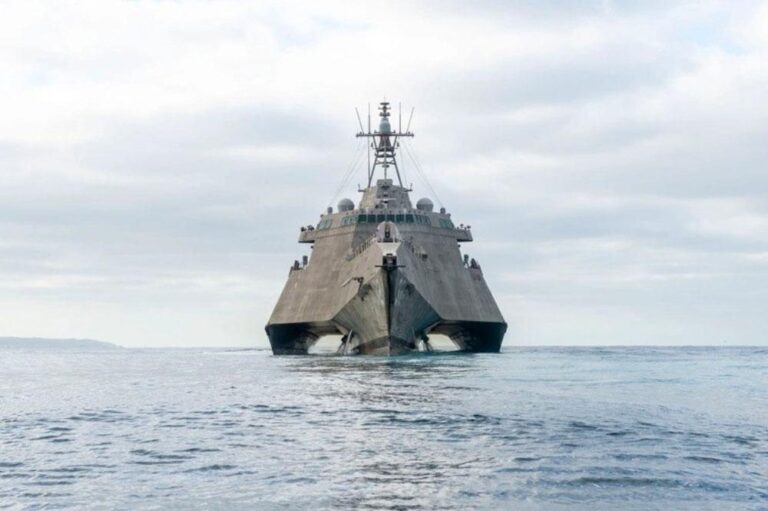
August 17, Colombo (LNW): The United States Navy’s USS Santa Barbara, an Independence-variant Littoral Combat Ship belonging to the U.S. 7th Fleet, made its first-ever port call at the Port of Colombo this morning, signaling Washington’s continued focus on maritime partnerships in the Indian Ocean region.
The sleek warship, christened in October 2021 and stretching 127.5 meters in length, is currently deployed under Destroyer Squadron 7, which operates across the Indo-Pacific. Its mission profile includes deterring aggression, strengthening military partnerships, and enhancing future warfighting capabilities. The Colombo stop is primarily for refueling and resupply before the vessel resumes its regional patrols.
The U.S. 7th Fleet—the world’s largest forward-deployed naval fleet—plays a pivotal role in safeguarding sea lanes stretching across the Western Pacific and Indian Oceans. By bringing the USS Santa Barbara to Colombo, Washington underscores Sri Lanka’s strategic positioning at the heart of major international shipping routes, where maritime security concerns such as smuggling, piracy, and geopolitical competition remain pressing.
U.S. Ambassador to Sri Lanka Julie Chung, accompanied by Secretary to the Ministry of Defence Retired Air Vice Marshal Sampath Thuyacontha and Commander of the Navy Vice Admiral Kanchana Banagoda, toured the vessel shortly after its arrival.
Speaking at the event, Ambassador Chung described the port call as a symbol of the “strong and growing partnership” between Washington and Colombo.
Highlighting Sri Lanka’s critical role in the Indian Ocean, she stressed that joint efforts with Sri Lanka’s Navy have been instrumental in tackling transnational threats such as drug trafficking and human smuggling.
Ambassador Chung further announced that the U.S. will provide Sri Lanka with a fourth Coast Guard cutter later this year, enhancing the island’s maritime surveillance and interdiction capacity. “Our collaboration reflects a shared commitment to ensuring a free, open, and secure Indo-Pacific,” she said.
For Sri Lanka, the visit comes at a time when global powers are vying for influence in the region. Colombo’s ports, particularly in the west and south, have become focal points of strategic interest for both Washington and Beijing, making balanced diplomacy crucial for the island nation.
Defense analysts suggest that U.S. naval visits serve not only operational purposes but also reinforce Washington’s message of partnership to smaller Indo-Pacific states navigating a complex geopolitical environment.
As the USS Santa Barbara departs Colombo to continue its Indo-Pacific patrols, its presence leaves behind a clear signal: Sri Lanka remains a key maritime partner for the United States in its broader effort to uphold freedom of navigation and regional stability in the Indian Ocean.
Adani Pullout Puts Sri Lanka’s Green Energy Push in Jeopardy

By: Staff Writer
August 17, Colombo (LNW): The Sri Lankan government confirmed yesterday (August 17, 2025) that only the refundable deposits placed by the Adani Group for the proposed Mannar Wind Power project will be reimbursed. Energy Minister Kumara Jayakody, addressing reporters at the Government Information Department, emphasized that while the Sustainable Energy Authority (SEA) will determine what qualifies as refundable, non-refundable deposits will not be repaid
.Adani Green Energy had committed approximately US $442 million to develop two wind power facilities in Mannar and Pooneryn, with a combined output of 484 MW under a 20-year power purchase agreement set in May 2024. The agreed tariff stood at 8.26 US cents per kilowatt-hour (kWh)
Following a change in government, Cabinet moved to review and renegotiate the tariff, seeking to lower it to around 6 US cents per kWh or even below
A government committee had been convened to conduct this review, although reports later emerged that the power purchase agreement had been revoked amid scrutiny linked to U.S. bribery allegations involving Adani executives
The Adani Group initially denied cancellation claims, calling them “false and misleading,” and stating the review was standard practice under the new administration
However, months later, the company formally announced its withdrawal from the projects, citing the renegotiation process as misaligned with its expectations. At that stage, it confirmed having spent around $5 million in pre-development activities
In the absence of the project and with Adani pulling out, Sri Lanka now faces a dilemma: proceed with potentially more expensive power procurement—or seek alternatives.
If the government rejects the proposal due to elevated tariffs, there is no financial obligation to return non-refundable deposits or early-stage expenditures already made by Adani, while only the limited refundable portion is set to be reimbursed. The SEA’s forthcoming breakdown will clarify how much that actually is.
The rejection or derailment of Adani’s proposal could have mixed implications. On one hand, Sri Lanka avoids locking in a higher-cost renewable energy deal—especially one priced at 8.26 cents per kWh, which critics argue is substantially above more competitive renewables being pursued locally
On the other hand, cutting ties with a major foreign investor may dampen investor confidence and delay urgently needed green energy deployment.
The final financial impact hinges on what portion of the deposits are refundable—if nominal, the state saves immediate costs but sacrifices future renewable capacity. Conversely, a larger refundable amount would require more immediate fiscal outlay. Meanwhile, Sri Lanka’s push for cost-effective renewable energy continues, but investor caution and project delays may slow progress.
Sri Lanka’s Red Tape Risks Blocking U.S. Trade Opportunities
By: Staff Writer
Washington presses Colombo to reform business climate and remove hidden barriers
August 17, Colombo (LNW): Sri Lanka’s ability to deepen its trade and investment relationship with the United States may depend on how quickly it can dismantle the hidden non-tariff barriers that continue to frustrate exporters and investors.
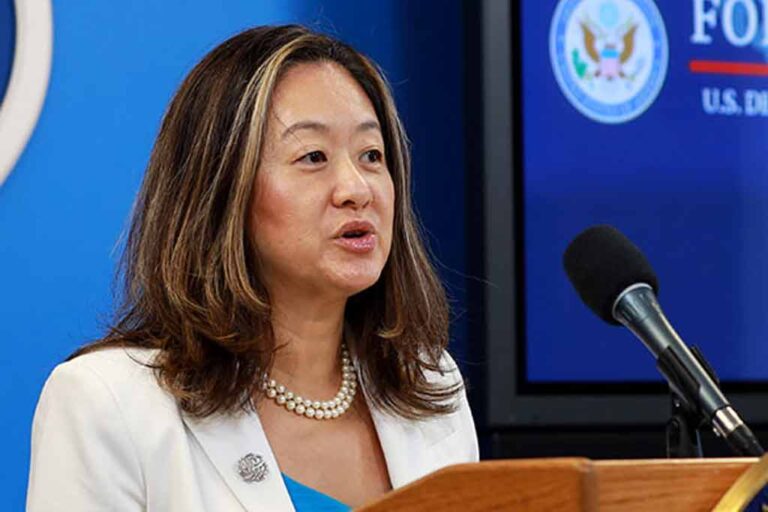
U.S. Ambassador Julie Chung, addressing business leaders at the Ceylon Chamber of Commerce this week, said Colombo must act swiftly to enhance trade facilitation and create a more predictable environment for international companies.
Although Sri Lanka’s formal tariff structure is not excessively high compared to regional competitors, businesses complain that layers of red tape make the actual cost of trade much steeper. Customs clearance processes are still heavily paper-based, requiring multiple approvals and causing lengthy delays at ports.
Import licensing requirements and regulatory permits remain opaque, particularly in sectors such as pharmaceuticals, food items, and agricultural products. At times, sudden government decisions—such as overnight import bans—have unsettled global suppliers and undermined business confidence.
Ambassador Chung pointed out that these barriers erode Sri Lanka’s competitiveness at a time when U.S. companies are actively looking to diversify supply chains in South Asia. Countries such as Vietnam and Bangladesh have already capitalized on this shift by simplifying procedures and investing in trade infrastructure, while Sri Lanka risks being left behind unless urgent reforms are undertaken.
The United States remains one of Sri Lanka’s most important export markets, with apparel, tea, and rubber products continuing to dominate shipments. Yet American firms interested in entering new sectors such as energy, pharmaceuticals, and technology frequently cite excessive bureaucracy and unpredictable policy changes as deterrents.
The suspension of U.S. tariff preferences under the Generalized System of Preferences (GSP) scheme has further narrowed Sri Lanka’s competitive edge, making the reduction of non-tariff barriers all the more critical to sustaining export growth.
At her meeting with Ceylon Chamber officials including newly appointed Chairman Krishan Balendra, Vice Chairman Bingumal Thewarathanthri and Deputy Vice Chairman Vinod Hirdaramani, Ambassador Chung commended Sri Lanka’s willingness to pursue constructive negotiations aimed at building a “fair, balanced and reciprocal” trade partnership.
She stressed that the current global trade realignment represents a window of opportunity for Sri Lanka to position itself as an attractive destination for American business, provided it can streamline procedures, increase transparency and modernize trade Infrastructure.For Sri Lanka, the message is clear: dismantling bureaucratic obstacles is not simply a matter of administrative efficiency, but a prerequisite for attracting investment and ensuring that the island remains relevant in a shifting global trade landscape
New Police Chief outlines new tactics to dismantle organised crime networks
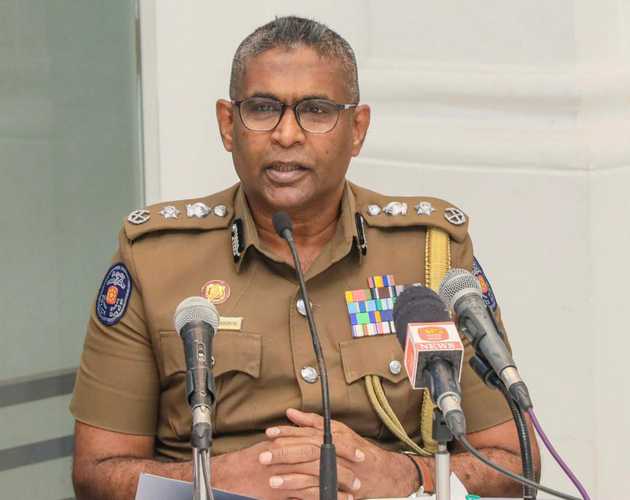
August 17, Colombo (LNW): A more comprehensive and intelligence-driven strategy is now being deployed to tackle organised criminal activity across the country, according to Inspector General of Police (IGP) Priyantha Weerasooriya.
Speaking to the media during a visit to Kandy—following formal meetings with the senior Buddhist clergy of the Asgiri and Malwathu chapters—the IGP outlined a renewed national plan designed to confront the growing menace of underworld gangs, contract killings, and illicit narcotics operations.
He emphasised that this new approach marks a clear shift away from previously used methods, describing the current plan as more methodical, data-led, and collaborative in nature. According to the police chief, close coordination is now underway with the armed forces and other government agencies, whilst ordinary citizens are being encouraged to come forward with information that could assist investigations.
IGP Weerasooriya acknowledged the complexity of the problem, noting that some of these criminal networks have, over time, been shielded by political interference and aided by the complicity of a few within the police and military ranks.
However, he was quick to point out that, at present, law enforcement efforts are proceeding without obstruction from political quarters, and that the government has offered its full backing to the crackdown.
“Violent crime and the drug trade did not emerge overnight,” he said, addressing reporters. “These operations have often been propped up by individuals in positions of influence, and in some cases, the very systems meant to stop them have been exploited. But we now have a clear framework in place and are acting decisively.”
He further revealed that many of the most serious crimes, including recent shootings, have links to individuals residing overseas. International cooperation has therefore become a central pillar of the strategy, with Sri Lankan authorities now working with foreign counterparts to monitor, trace, and apprehend suspects beyond national borders.
The IGP added that several suspects linked to recent violent incidents have already been apprehended, and that the ongoing campaign will involve heightened surveillance, rapid-response measures, and enhanced border monitoring to disrupt the flow of drugs and weapons into the country.
Sri Lanka sees continued growth in tourist arrivals as August figures top 99,000

August 17, Colombo (LNW): Sri Lanka continues to witness a steady rise in international tourist arrivals, with nearly 100,000 visitors entering the country during the first half of August alone.
Fresh figures from the Sri Lanka Tourism Development Authority (SLTDA) reveal that 99,406 travellers touched down in the country so far this month, reflecting growing momentum in the island’s tourism revival.
India remains the leading source market, contributing 19,572 visitors—representing just under 20 per cent of August’s total arrivals. The United Kingdom followed closely with 10,970 visitors, while notable numbers also came from Italy (7,641), France (6,870), and China (6,762).
Industry observers note that European travel to Sri Lanka remains resilient, with the island maintaining its appeal as a winter escape and cultural destination.
Cumulatively, arrivals for the year 2025 have now reached 1,467,694, signalling strong performance despite global economic uncertainties and regional travel fluctuations. Indian travellers continue to dominate the charts with 268,694 arrivals recorded so far this year, followed by 142,347 from the UK and 117,322 from Russia—a country that has emerged as a key market in recent years due to improved air connectivity and targeted promotional campaigns.
Tourism officials are optimistic that the current pace could push annual figures past the anticipated targets, especially with upcoming seasonal events, religious festivals, and the continued rollout of destination marketing efforts.
There is also renewed interest from East Asian markets, which saw a temporary lull in previous years due to travel restrictions and geopolitical concerns.
Sri Lanka’s tourism authorities are now focusing on enhancing visitor experiences, expanding accommodation options, and improving infrastructure in less-explored regions to ensure the country maintains its upward trajectory as a competitive travel destination.
Sri Lanka Customs Rolls Out Web-Based Notification System
By: Staff Writer
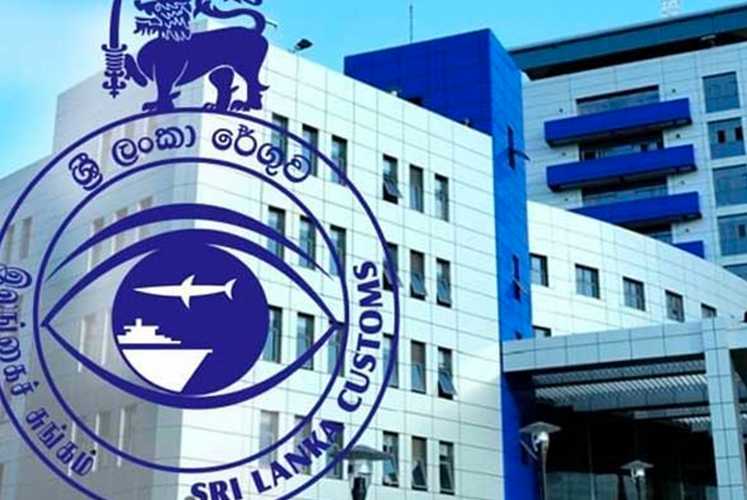
August 16, Colombo (LNW): Sri Lanka Customs has officially launched its new web-based Customs Document Notification System (CDNS), a digital platform aimed at enhancing transparency and efficiency in cargo clearance. The CDNS allows consignees and declarants to monitor the real-time status of customs declarations and cargo movements, providing vital visibility and timely feedback for improved compliance, the agency said in a statement.
This digital leap marks the conclusion of Phase 1 of the Automated Risk Management System Project, which signals a major modernization milestone for customs operations. The software, developed by Creative Web Technologies through a competitive bid among eight local firms, reflects the agency’s ambition to streamline trade facilitation and bolster stakeholder trust.
The CDNS addresses long-standing criticisms of Sri Lanka’s manual customs processes, which have been plagued by inefficiencies, paperwork delays, opaque procedures, and opportunities for corruption. Reports from the World Bank and local trade associations have emphasized the need for a digitized, accountable system to reduce transaction costs, combat undervaluation and tax evasion, and encourage foreign investment.
The system launch comes amid robust financial results in the first half of 2025. Customs has collected over Rs. 1 trillion in revenue by June, marking nearly half of its Rs. 2.115 trillion annual target—of which vehicle imports alone contributed approximately Rs. 165 billion through mid-June. Overall collections indicate a strong start to the year, with customs on track to exceed government revenue expectations
However, the department’s performance has not been free of controversy. Media scrutiny intensified following reports that over 300 containers were released without physical inspection. Sri Lanka Customs clarified that in January 2025, under acute port congestion, a new Screening Unit was deployed to expedite low-risk cargo. Based on risk criteria, roughly 60% of containers were released document-based only. An estimated 1,500 to 3,000 containers arrive daily, while inspection facilities can handle only a fraction. Thus, the selected “auto-release” policy was part of a broader congestion-relief effort aligned with international customs norms
At a press briefing, Additional Director General Seevali Arukgoda reassured the public that the 323 containers in question held only declared industrial raw materials—plastics, textiles, chemicals, cement, pesticides, machine parts, fertilizers, and wood—from countries including India and China. No arms, narcotics, or undeclared valuables were involved, he affirmed. A post-clearance audit and investigation by a Ministry of Finance panel and the CID are ongoing to ensure full transparency
Overall, the CDNS represents a progressive shift in Sri Lanka Customs’ digitization journey. Coupled with solid revenue inflows, it underscores the department’s modernization drive. Yet, the container-clearance controversy underscores the delicate balance between operational efficiency and public accountability—a challenge that underscores the ongoing need for oversight and reform.