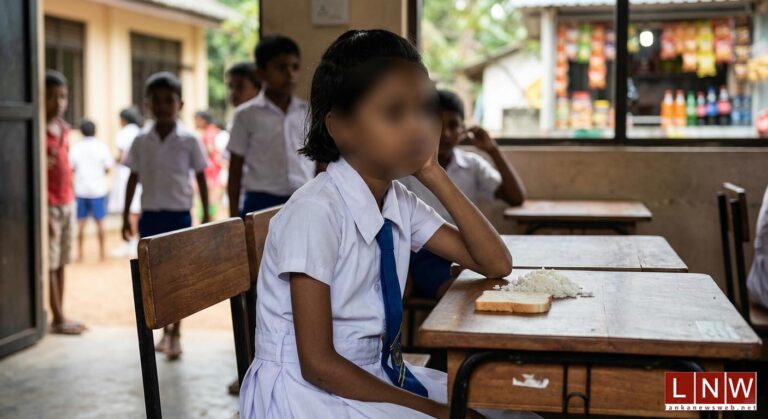
June 04, Colombo (LNW): More than 20 per cent of Sri Lankan schoolchildren are grappling with nutritional deficiencies, raising concerns about the country’s long-term public health outlook, according to Health Ministry Secretary Dr Anil Jasinghe.
Addressing a media briefing organised by the Health Promotion Bureau to mark National Nutrition Month, Dr Jasinghe highlighted the growing burden of malnutrition among children and cautioned that inadequate nutrition during childhood can contribute to obesity and other health complications later in life.
Referring to recent national survey findings covering children both below and above the age of five, he noted that 10.1 per cent suffer from stunted growth, while 16.1 per cent are underweight. Although the prevalence of overweight children remains comparatively low at 0.5 per cent, health experts remain concerned about future trends.
Dr Jasinghe explained that the figures reveal a significant proportion of children are not receiving adequate nutrition during crucial stages of development. He added that many youngsters who experience malnutrition in their early years are more likely to become overweight or obese during adolescence and adulthood due to metabolic and lifestyle factors.
The Health Ministry has also identified rising obesity levels among the adult population as a growing concern. Current estimates indicate that obesity affects nearly half of all women and close to one-third of men in Sri Lanka. Health authorities warn that without stronger intervention programmes and greater public awareness surrounding healthy diets and lifestyles, the country could face an increasing burden of non-communicable diseases in the years ahead.
Officials stressed the importance of improving access to nutritious food, promoting healthier eating habits and strengthening community-based nutrition initiatives to safeguard the wellbeing of future generations.
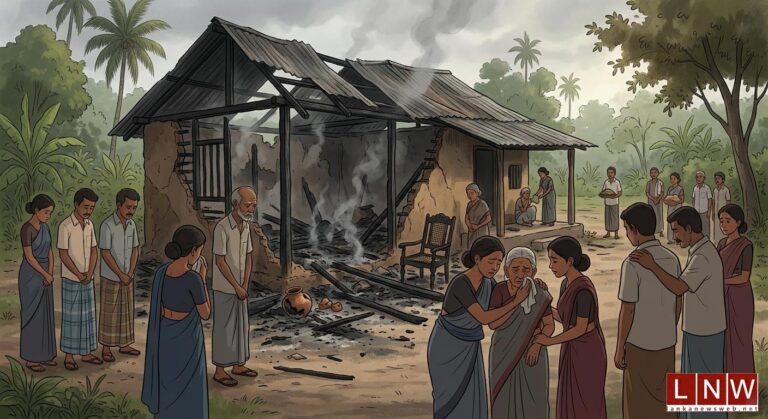
June 04, Colombo (LNW): A devastating fire at a well-known elders’ care facility known as “Senehase Kedella” in Anguruwatota, Horana has left at least 11 residents dead, while authorities continue searching for three individuals who remain unaccounted for in one of the deadliest such incidents reported in recent years.
The blaze erupted on Wednesday (03) evening, rapidly engulfing sections of the home and triggering a large-scale emergency response involving police officers, firefighters, medical personnel and local residents. Despite frantic rescue efforts, the tragedy claimed numerous lives and left several others injured.
Officials confirmed that seven residents who sustained injuries were admitted to Horana District Hospital, where they are receiving treatment. The condition of the injured has not yet been officially disclosed.
At the time of the incident, 72 elderly residents were believed to be living at the facility. Emergency teams managed to evacuate dozens of occupants, with 44 residents reportedly escaping without physical injuries.
However, the intensity and speed of the fire complicated rescue operations and prompted an extensive search of the premises after the flames were brought under control.
Authorities initially reported several residents missing in the aftermath of the disaster. Subsequent searches led to the discovery of multiple victims within the building, raising concerns that the final death toll could change as investigations and identification procedures continue.
The elders’ home had gained widespread recognition in recent years through social media platforms, particularly TikTok, where videos showcasing the daily lives of its residents regularly attracted large audiences. From birthday celebrations and festive gatherings to light-hearted moments between staff and residents, the content earned the facility a devoted online following and transformed many of its elderly residents into familiar faces among social media users.
News of the tragedy prompted an outpouring of grief online, with thousands of followers expressing shock, sorrow and condolences. Many shared memories of the home’s uplifting videos and paid tribute to the residents whose warmth and humour had touched audiences across the country and beyond.
Investigators have yet to determine the cause of the fire. Specialists are expected to examine the scene in detail to establish how the blaze began and whether any structural, electrical or safety-related factors contributed to the disaster.
A magistrate’s inquiry is scheduled to take place as part of the legal process, while findings from the Judicial Medical Officer are expected to assist authorities in determining the precise causes of death and confirming the identities of the victims.
Meanwhile, relief efforts remain underway. Fifty-one displaced residents have been relocated to temporary accommodation at Batagoda Primary School, where arrangements have been made to provide shelter, food and essential support until longer-term solutions can be identified.
Horana Police, together with other relevant agencies, are continuing investigations into the incident as the community comes to terms with a tragedy that has deeply saddened both local residents and the many people who followed the home’s residents through social media.
June 04, Colombo (LNW): Showers or thundershowers will occur at times in Western, Sabaragamuwa and North-western provinces and in Galle, Matara, Kandy and Nuwara-Eliya districts, the Department of Meteorology said today (04).
Heavy falls about 100 mm are likely at some places in Western and Sabaragamuwa provinces and in Galle, Matara, Kandy and Nuwara-Eliya districts.
Strong winds about (40-50) kmph can be expected at times over Western slopes of the central hills, Northern and North-central provinces and in Hambantota and Trincomalee districts. Fairly strong winds about (30-40) kmph can be expected at times over other areas of island.
The general public is kindly requested to take adequate precautions to minimise damage caused by temporary localised strong winds and lightning during thundershowers.
Marine Weather:
Condition of Rain: Showers or thundershowers will occur at several places in the sea areas off the coast extending from Puttalam to Hambantota via Colombo and Galle.
Winds: Winds will be southwesterly. Wind speed will be (30-40) kmph. Wind speed can increase up to (50-60) kmph at times in the sea areas off the coast extending from Mullaittivu to Pottuvil via Kankasanthurai, Mannar, Puttalam, Colombo, Galle and Hambantota.
State of Sea: The sea areas off the coasts extending from Mullaittivu to Pottuvil via Kankasanthurai, Mannar, Puttalam, Colombo, Galle and Hambantota will be rough at times. The other sea areas around the island will be moderate.
The wave height may increase about (2 – 3) meters in the sea areas off the coast extending from Mannar to Pottuvil via Colombo, Galle and Hambantota. The near shore sea areas from Chilaw to Matara via Colombo and Galle may experience surges as well.
Temporarily strong gusty winds and very rough seas can be expected during thundershowers.
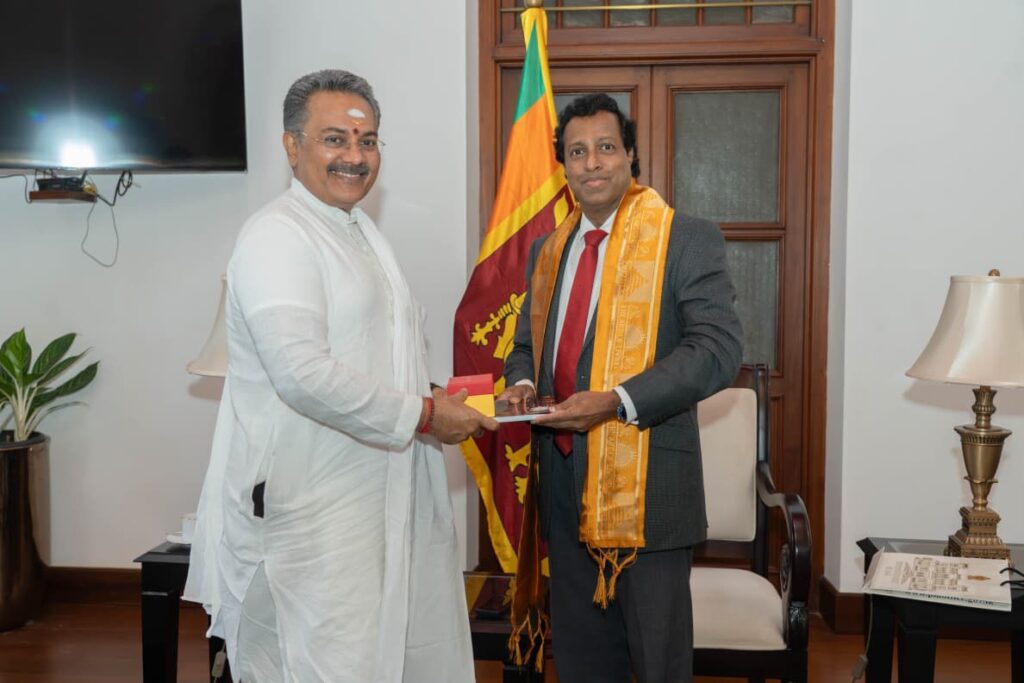
Art of Living Chief Trustee Shri Prasanth S. Nair is visiting Sri Lanka to attend the state celebrations for the Vesak Festival and to brief Sri Lankan authorities on the foundation’s global initiatives.
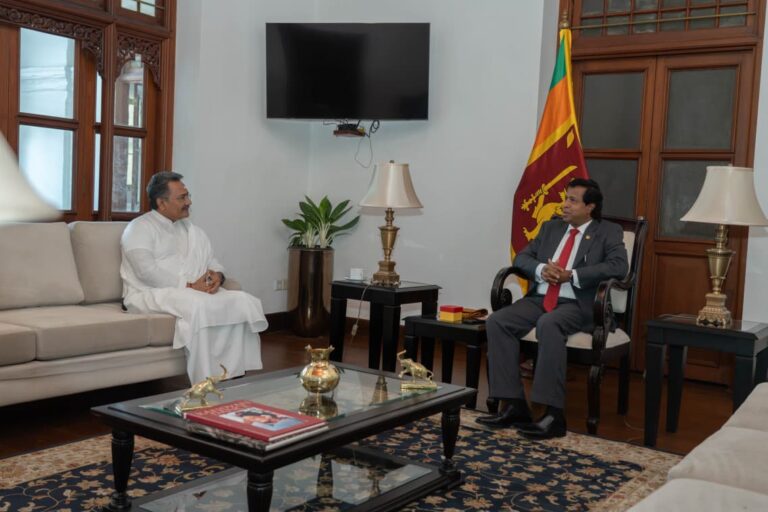
The meeting between Prime Minister’s Secretary Pradeep Saputhanthri and Art of Living trustee Prasanth Nair, focused on new avenues of collaboration between Sri Lanka and the Bangalore-based foundation.
The Art of Living is an international movement founded by Global Ambassador for Peace, Humanitarian and Spiritual Leader, Gurudev Sri Sri Ravi Shankar, with presence in over 180 countries and an active following of 1 billion people across continents.
Prime Minister’s Secretary, during the meeting, expressed interest in exploring new avenues for collaboration towards social, economic, and human development in Sri Lanka.
Chief Trustee Prasanth Nair arrived in Sri Lanka on the invitation of Budhdha Rashmi Vesak Festival Organising Committee.
He also graced the Buddha Rashmi Vesak Festival spearheaded by Chief Incumbent of the Gangaramaya Temple, Venerable Dr. Kirinde Assaji Thero.
Sri Lankan politics has long been plagued by a culture of promises that are made with great conviction during election campaigns and quietly abandoned once power is secured. While every political party has been guilty of this practice at some point, the current administration came to power on the back of promises that created enormous expectations among a frustrated and struggling population.
The National People’s Power (NPP) movement successfully convinced many Sri Lankans that it represented a new political culture. Its leaders presented themselves as different from the traditional political establishment and promised a government that would prioritize honesty, accountability, and integrity. President Anura Kumara Dissanayake, a gifted and persuasive Sinhala orator, connected with voters who were desperate for change after years of economic hardship and political disappointment.
Many citizens believed promises that the cost of living would fall significantly, that electricity, medicine with no vat and fuel prices would be reduced, and that the tax burden on ordinary people would ease. These assurances resonated strongly with a public battered by inflation, declining incomes, and economic uncertainty. However, the reality experienced by many households today is very different. Living costs remain high, taxes continue to weigh heavily on citizens and businesses, and many families feel that their financial struggles have not eased.
Perhaps the greatest promise of all was the commitment to eradicate corruption. The public was told that a new era of transparency and accountability would begin. Yet many observers argue that the government’s anti-corruption efforts have focused disproportionately on past controversies rather than addressing concerns about governance and accountability within the current administration. Critics contend that investigations often appear selective, raising questions about whether justice is being pursued consistently or politically. For example the coal tender , containers slipping through customs, oil tender to name a few.
The concern extends beyond any individual case or institution. When political leaders repeatedly make promises that are impossible or unlikely to be fulfilled, public trust is eroded. Citizens become increasingly cynical about politics, government institutions, and democratic processes. The damage is particularly severe among younger generations who are watching closely and learning important lessons about leadership and public conduct.
Young people deserve examples of honesty, responsibility, and accountability from those who occupy the highest offices in the land. When politicians routinely make exaggerated claims or promises they cannot keep, it sends a dangerous message that success can be achieved through rhetoric rather than results. A society cannot thrive when truth becomes secondary to political expediency.
Compounding the problem is the weakness of the opposition. Sri Lanka desperately needs a credible and principled opposition capable of holding governments accountable and presenting realistic alternatives. Unfortunately, many opposition figures carry political baggage of their own, making it difficult for them to effectively challenge the government’s shortcomings.
Sri Lanka’s future depends on restoring honesty to public life. Political leaders must recognize that trust, once lost, is difficult to regain. The country needs fewer slogans, fewer unrealistic promises, and far more candour about the challenges that lie ahead. Only then can Sri Lanka begin to rebuild confidence in its democratic institutions and political leadership.
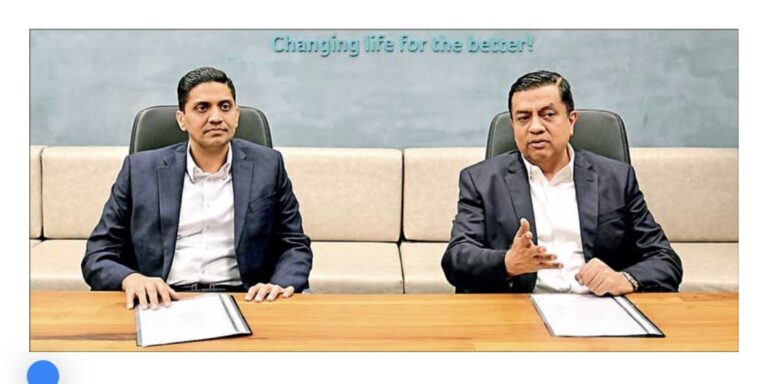
Group Managing Director Sajjad Mawzoon (right) and Director/Group Chief Operating Officer Thanveer Siddique – Pix by Sameera Wijesinghe
Food business giant with dominance in edible oil and fats, consumer goods to add few more big-ticket products
To enhance local manufacturing and value addition with enabling Govt. policy
Stresses need for proper regulation of sale of edible oils
Credits two-decades of success to unwavering commitment to quality and resilience to the adaptability to change whilst being agile
By Nisthar Cassim
Celebrating two decades of pioneering success, the food industry specialist Pyramid Wilmar has set sights on doubling its top line in the next five years with further innovation and value offering both in B2B and consumer segments.
Pyramid Oil Mills, the local oil miller in the year 2004 forged a strategic 50:50 joint venture with Wilmar International Ltd., Asia’s leading agribusiness group, headquartered in Singapore; with over a 1000 manufacturing plants in over 50 countries. Wilmar is a global leader in processing and merchandising palm and lauric oils and also leads the market in flour and rice milling. It is amongst the top 10 raw sugar producers and traders in the world.
The business commenced its first production with Vanaspati ghee for the Indian market under the Indo–Sri Lanka Free Trade Agreement.
In the second year in 2005, the company made a major move acquiring the fats and margarine business from Unilever under the “Masterline” brand. This acquisition significantly strengthened the company’s product portfolio and market presence in the B2B segment. Subsequently they launched their edible oil consumer pack brand under “Fortune”.
Pyramid Wilmar’s core business today has evolved to be one of the largest food manufacturing and marketing companies in the country catering to B2B, Consumer, Institutional and HoReCa segments.
Today, Pyramid Wilmar has diversified interests in plantations (Watawala Plantations PLC), dairy (Watawala Dairy) and hospitality and real estate (Shangri La Hotels in Colombo and Hambantota).
The Group employing around 4,000 people has invested close to $ 1 billion to date whilst its turnover is around $ 250 million.
“Bringing Shangri-La to Sri Lanka in 2010, was a key milestone giving the country the biggest investor confidence in post-war Sri Lanka,” recalls Pyramid Wilmar Group Managing Director Sajjad Mawzoon.
In 2010 Pyramid Wilmar established a facility for the margarine manufacturing sector and commenced in house production under the Masterline brand, added Mawzoon in an interview with the Daily FT along with Pyramid Wilmar Director/Group Chief Operating Officer Thanveer Siddique.
The ‘Fortune’ brand, recently awarded Superbrand status, was launched in 2011 alongside the commencement of in-house edible oil packing operations,
a move that enhanced operational efficiency and strengthened brand control. It also allowed faster market responsiveness and improved supply chain integration for the business.
At present Pyramid Wilmar’s major businesses are edible oils, fats and import of sugar, and trading. In addition to making further inroads into these existing portfolios, Pyramid Wilmar is also exploring a few more big-ticket consumer items as part of doubling the turnover. “Growth to date has been due to increase in market share and product differentiation which has attracted more demand. Growth will come from our fat spread business and differentiating the same, while also considering brand and product line extensions where we see consumer demand. We are trying to launch some products which will purely cater to the Hotels, Restaurants and Caterers (HORECA) segments,” said Director/Group Chief Operating Officer Thanveer Siddique.
In 2017, Pyramid Wilmar launched MeadowLea fat spread, the product was manufactured in Sri Lanka. “This was a moment of pride as Sri Lanka became the only country in the world to manufacture this brand apart from Australia, which is its birthplace,” said Mawzoon.
The Fortune brand was extended to include texturized soya protein retail product range in 2019 and, production of icing sugar under the Fortune brand in 2023. Pyramid Wilmar’s latest addition to the portfolio of brands was Fondré, a healthier fat spread brand developed to meet evolving consumer preferences in 2023.
In 2024, Pyramid Wilmar commenced in-house production of texturized soya protein. This investment enhanced manufacturing self-sufficiency and cost efficiency.
Empowering the bakeries
Pyramid Wilmar also takes pride in empowering the bakery segment with world class fresh products at affordable prices. “We believe in the fact that you have to uplift the entire industry around you,” said Pyramid Wilmar leadership referring to the launch of the Bakery School. The company invests in R&D as part of enhancing the baker’s expertise, know-how and technology.
In terms of plans and scope for launch of new products in its key business segments, Pyramid Wilmar has a conscious strategy.
“We are very careful on what products we want to bring into our business. We want to be able to bring products,which synergise or complement our existing product portfolio. The second most important thing is products which will also further create efficiency in our distribution channel,” explains Siddique.
“The distribution run strategy needs to be integrated very well into the product portfolio. These two are the most important things we factor when deciding what new products we want to bring in. We always strive to bring in world-class brands at an affordable price with differentiation and value addition,” he added.
Support for local manufacturing
With local manufacturing and local value addition segments growing, Pyramid Wilmar is keen that the Government and the policymakers would make the process more enabling, especially with policy consistency.
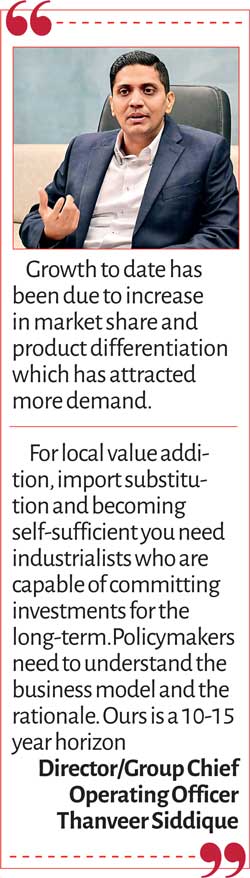
“For local value addition, import substitution and becoming self-sufficient you need industrialists who are capable of committing investments for the long-term. Policymakers need to understand the business model and the rationale. Ours is a 10-15 year horizon,” Thanveer emphasized.
Such a long-term perspective and support is critical if the food industry is focused on enhancing local manufacture or value addition since the business is price-sensitive, policy-sensitive amidst competing imports and fluctuations in consumer sentiments.
In that context, Pyramid Wilmar credits its long-term success to unwavering commitment to quality. Another facet to its resilience is the adaptability to change whilst being agile in the market. “We are as agile and adaptable to the market. It has given us the first-mover advantages in most of the things we have done,” Mawzoon stressed.
Sri Lanka produces the world’s best fats and margarines
Pyramid Wilmar has invested over $ 50 million in setting up and scaling its local manufacturing and value addition operations in a 10-acre area. Further, modernisation and efficiency and capacity enhancing initiatives are underway as well. Singapore joint venture partner Wilmar’s expertise and experience have helped local manufacturing operations.
“Our plant in Sri Lanka produces the best fats and margarines for the entire world,” declared Mawzoon. “We have been able to carve out a name for ourselves in global giant Wilmar’s international network comprising representation in over 50 countries”.
Pyramid Wilmar in 2010 obtained ISO 22000 (Food Safety Management System) and ISO 14001 (Environmental Management System) certifications for manufacturing operations. In 2012 they obtained ISO 9001 (Quality Management System) certification for manufacturing operations, followed by FSSC 22000 Food Safety System certification, and URSA/SEDEX certifications in 2013. These achievements reflect the company’s commitment to international food safety standards and environmental sustainability. In 2018 the manufacturing facility received RSPO and AIB certifications highlighting the company’s commitment to sustainable palm oil sourcing and stringent food safety practices.
Need for proper regulation of sale of edible oils
Among challenges for Pyramid Wilmar and the industry, is lack of effective regulation of the edible oil market. The Company stresses there is a need for a proper framework from the Government.
Sri Lanka is one of the few countries in the world to have no regulatory compliance for oil. In most countries you cannot sell a bottle of oil without being labelled, confirming the packer’s or manufacturer’s name. Sri Lanka remains perhaps the only country where oil can be sold in loose and bulk form. The Consumer Affairs Authority and all the line agencies are really worried about adulteration. In that context some sort of legislation ensuring responsibility and accountability is critical.
From a supply chain angle, Pyramid Wilmar executives observed that the cost of trader retailer margin is above average in comparison to most other countries in the region. In some products, the middlemen could be making more margin than the manufacturer. “This is an inconsistency because on one side you have the industry which has invested heavily, the other side the consumer and you have the middlemen making more money. The costs in this system needs to be re-strategised to ensure consumers get products at an economical price,” they explained.
Reflection of 20-year success
In concluding its 20-year journey, Pyramid Wilmar launched ‘ChefsHunt’ in 2025, a CSR initiative aimed at identifying, nurturing and developing young culinary talent across the country.
As Pyramid Wilmar reflects on two decades of operations, the company takes measured pride in a journey defined by resilience, adaptability, and steady progress, achieved against the backdrop of the many economic and social challenges experienced by Sri Lanka over the past 20 years. From its early foundations in commodity trading, the company has progressively evolved into a creator of trusted, value-added brands that confidently stand alongside some of the most established names in the market.
This transformation has not been driven by a single factor, but rather by a consistent commitment to strengthening the fundamentals of the business, including the collective effort of a dedicated workforce, which has enabled Pyramid Wilmar to remain agile while delivering sustained value to its stakeholders.
As the company looks to the future, it does so with confidence, building on a legacy of thoughtful growth and a clear focus on continuing to innovate, adapt, and contribute meaningfully to the nation’s evolving economic landscape.
Mongolia, where Tibetan Vajrayana Buddhism has been practiced since the first century AD, received the relics of the great monk Sariputta Mughal for the first time in the history of the Buddhist order recently (30).
The relics of the great monk, which were found during the excavations carried out during the British rule at the Sanchi Chaitya complex, built during the reign of King Ashoka, are currently enshrined in the Chetiyagiri Temple in Sanchi.
The relics of the great disciple are enshrined in the Sanchi Chethiyagiri Temple and the Sri Lanka Mahabodhi Society, which is the custodian of the relics, led by the Most Venerable Banagala Upatissa Thero, the Chief Sanghanayake of Japan, and the Governor of Assam, India, Lakshman Prasad Achsrya, and a group of distinguished representatives including Udugama Thapassi Thero, the custodian of the relics of Banagala Wimala Tissa Thero, were flown to Mongolia by a special Indian Air Force aircraft recently (30).
In Mongolia, the relics of the great disciple were received by the former President of Mongolia, Nambaryn Enkhbayar, and the Minister of Education of Mongolia, Narayan Bayar.
The relics will be kept for public worship at the Gandan Monastery in the Mongolian capital of Ulaabaatar for ten days from June 1st to June 10th, said Venerable Banagala Wimalatissa Thero, who arrived in Mongolia with the relics.
The Indian media reports that the relics arrived in Mongolia in response to the requests made by Mongolian President Ukhanagiin Kharelsukh, who visited India last year, to Indian Prime Minister Narendra Modi.
A new report by Amnesty International has cast a spotlight on the harsh realities faced by Malaiyaha Tamil tea workers employed on private tea estates and smallholdings across Sri Lanka’s Southern Province. The investigation, conducted over a two-year period between January 2024 and January 2026, documents widespread labour rights violations and reveals conditions that rights advocates say bear the hallmarks of forced labour.
Researchers visited 45 tea estates and smallholdings in the districts of Galle and Matara, interviewing workers about their experiences. The findings paint a troubling picture of a community trapped by poverty, discrimination and dependence on estate owners.
According to the report, many workers face a combination of intimidation, threats, physical abuse, sexual harassment, debt-related coercion and restrictions on their personal freedom. Amnesty argues that these conditions align with internationally recognised indicators of forced labour identified by the International Labour Organisation (ILO).
The report highlights that Malaiyaha Tamils continue to suffer long-standing discrimination linked to their ancestry, ethnicity, caste background and language. This systemic exclusion, researchers say, has left many workers marginalised and heavily reliant on estate employers for housing, employment and access to basic welfare services.
Despite Sri Lanka’s commitments under international human rights treaties and its ratification of numerous ILO conventions, the report argues that significant shortcomings remain in protecting plantation workers. While general labour laws apply to estate workers, gaps persist in areas such as wages, occupational safety and working conditions. For many workers, accessing legal remedies is difficult due to structural inequalities and economic dependence.
One of the most significant concerns raised is the abuse of vulnerability. Amnesty alleges that employers exploit workers’ social and economic disadvantages, making it difficult for them to resist unfair treatment or seek alternative employment. Caste-based discrimination within the community was also identified as a factor contributing to exploitation.
Housing insecurity emerged as another recurring theme. Workers across all 45 estates reported depending on their employers for accommodation. Many expressed fears of eviction if they challenged management or complained about poor conditions. This dependence, researchers note, creates a powerful tool of control.
The report also documents incidents of verbal and physical abuse. Workers from 15 estates reported either experiencing or witnessing mistreatment by management. Complaints ranged from punishment for questioning unpaid wages to retaliation for criticism of estate operations. Threats of violence were reportedly used to discourage dissent and enforce compliance.
Amnesty concludes that these practices reflect deep-rooted structural issues within segments of Sri Lanka’s tea sector. The organisation is urging authorities to strengthen legal protections, improve enforcement mechanisms and ensure that vulnerable workers are protected from exploitation. It warns that without meaningful reforms, thousands of workers may continue to face conditions that undermine both their dignity and fundamental human rights.
Growing geopolitical tensions and disruptions to international trade routes are driving German companies to seek new investment destinations, and Sri Lanka is increasingly being viewed as a promising candidate. German business leaders attending the Sri Lankan-German Business Forum 2026 signaled strong interest in expanding economic ties, particularly in sectors linked to logistics, renewable energy, maritime services, and sustainable development.
The forum, held in Colombo, served as a platform for examining how both countries can strengthen commercial relations during a period of significant global economic transformation. German delegates repeatedly highlighted the need for resilient and diversified supply chains as businesses adapt to evolving geopolitical realities.
Dr. Nicole Renvert, Managing Director for International Economic Relations at the German Chamber of Commerce and Industry (DIHK), explained that recent global disruptions have prompted German firms to rethink traditional supply chain models. Companies are increasingly prioritising diversification strategies to reduce vulnerabilities and ensure business continuity.
Within this context, Sri Lanka’s strategic position in the Indian Ocean has gained renewed significance. Its location along major maritime routes, combined with a skilled workforce and expanding logistics capabilities, has attracted attention from German investors searching for reliable regional partners.
German officials identified several sectors where collaboration could expand rapidly. Renewable energy projects, green technology solutions, energy-efficiency initiatives, logistics services, and maritime industries were all cited as areas offering substantial opportunities for investment and long-term cooperation.
However, enthusiasm was accompanied by calls for continued reforms. German representatives stressed that transparent procedures, streamlined regulations, and reliable administrative systems are essential for attracting sustained foreign investment. Strengthening vocational education and workforce development was also highlighted as a priority to support future economic partnerships.
Tobias Pierlings, Head of Division for South and Southeast Asia at Germany’s Federal Ministry for Economic Affairs and Energy, described Sri Lanka as a strategically important gateway linking Europe, Africa, and Asia. He noted that current geopolitical developments have increased the importance of dependable trade corridors and diversified transport networks.
Germany and the European Union, he said, are seeking partnerships based on transparency, long-term cooperation, and mutual economic benefit. He also reaffirmed support for Sri Lanka’s ongoing efforts to improve its investment climate and strengthen economic recovery.
Adding to the positive outlook, German Asia-Pacific Business Association Executive Member Almut Rößner said recent political exchanges and growing engagement between private sectors in both countries have generated fresh momentum for bilateral relations. She urged businesses to capitalise on this favourable environment before opportunities shift elsewhere.
Rößner pointed to increasing investor interest in renewable energy, tourism, infrastructure, agriculture, and maritime logistics. She also praised the resilience demonstrated by Sri Lankan businesses despite economic hardships and external challenges in recent years.
With 40 German delegates participating in the forum, the gathering underscored a growing belief that Sri Lanka could become a more significant partner in Germany’s Indo-Pacific strategy—provided reforms continue and investor confidence is maintained.
Sri Lanka is turning to greener industrial development as policymakers and industry leaders seek new ways to boost competitiveness, attract foreign investment, and modernise ageing industrial infrastructure.
A European Union-funded capacity-building programme is now working with more than 1,000 stakeholders across the country to promote the Eco-Industrial Park (EIP) model, an approach increasingly viewed as a pathway to strengthening industrial productivity while meeting global sustainability standards.
The initiative comes at a crucial time for Sri Lanka’s manufacturing sector, which faces mounting pressure to improve efficiency, reduce operational costs, and comply with increasingly stringent environmental requirements demanded by international markets.
The programme, implemented under the Green Recovery Facility project, brings together policymakers, industrial park operators, manufacturers, and local communities to explore how industrial zones can become more attractive destinations for investors seeking sustainable production hubs.
According to project officials, the concept extends beyond environmental protection. Eco-industrial parks are designed to create industrial ecosystems where businesses share resources, reduce waste, improve energy efficiency, and collaborate on common infrastructure, ultimately lowering operating costs and improving competitiveness.
European Union representatives argue that global investors are increasingly prioritising sustainability when selecting manufacturing destinations. Industrial parks that embrace cleaner technologies and circular economy practices are therefore better positioned to secure investment and participate in international supply chains.
“EU experience with eco-industrial parks shows that linking parks to innovation, cleaner technologies and markets is key to attracting investment and scaling circular economy practices,” said Dr. Johann Hesse, Head of Cooperation at the Delegation of the European Union to Sri Lanka and the Maldives.
The programme includes 25 policymakers, 32 industrial park operators, 475 tenant industries and 640 representatives from surrounding communities. Organisers say the broad participation reflects the need for coordinated action if industrial zones are to achieve meaningful transformation.
Industry analysts note that many of Sri Lanka’s industrial parks continue to grapple with challenges ranging from inefficient resource use and outdated infrastructure to rising environmental compliance costs. Without modernisation, these shortcomings could weaken the country’s ability to compete with regional manufacturing hubs.
To address these issues, participants are undergoing specialised training on regulatory frameworks, green financing opportunities, environmental management systems, industrial symbiosis, and stakeholder engagement. The programme combines virtual learning sessions with in-person workshops focused on practical implementation and experience sharing.
A notable feature of the initiative is its emphasis on collaboration. Rather than imposing solutions through regulations alone, the programme encourages voluntary partnerships among businesses operating within industrial zones. This approach has delivered positive results in several European countries, where companies have jointly reduced costs by sharing resources and adopting common sustainability measures.
Supporters believe the initiative could help position Sri Lanka as a more competitive destination for export-oriented industries at a time when global buyers are increasingly scrutinising environmental performance throughout supply chains.
As the country seeks to accelerate economic recovery and attract new investment, the success of eco-industrial parks may ultimately determine whether Sri Lanka can align industrial growth with the evolving demands of the global marketplace.