Home Blog Page 43

BYD Hosts Media Tour in China Amid Local EV Controversy

0

November 24, Colombo (LNW): Sri Lankan journalists from leading newspapers and prominent social media influencers were recently invited on an extensive tour of BYD’s operations in China, sources disclosed.

Insiders suggest that BYD is planning to organise a second delegation once the current group returns to Sri Lanka.

The initiative appears aimed at providing first-hand insight into the company’s operations and innovations, following recent debates over electric vehicle imports managed by BYD’s local distributor, John Keells.

Observers note that such tours are increasingly being used by corporations to engage directly with media and social platforms, potentially shaping public perception in response to controversies surrounding import practices and product quality.

CPC Reviews Global Oil Surge as Sri Lanka Prepares for Next Fuel Price Adjustment

0

November 24, Colombo (LNW): The Ceylon Petroleum Corporation is closely analysing the sharp rise in international oil prices, as global market volatility continues to mount, Daily Mirror reported citing a senior company source.

During its routine evaluation of refined fuel prices, the state energy supplier has observed a steady climb in crude and product rates throughout the first three weeks of November. Industry regulators attribute this trend to a combination of seasonal demand and geopolitical strain.

According to CPC analysts, the onset of winter in major consumer regions has pushed energy consumption upward, while increasingly strict sanctions on Russia—one of the world’s key oil exporters—have further tightened supply. The official, who declined to be named, noted that restrictions imposed on more than 100 vessels carrying Russian fuel have intensified pressure on shipping routes and contributed to the global price uptick.

Even so, rumours of fresh negotiations between Moscow and Kyiv prompted a small dip in prices around November 22, offering brief relief to jittery markets by easing concerns about extended supply disruptions.

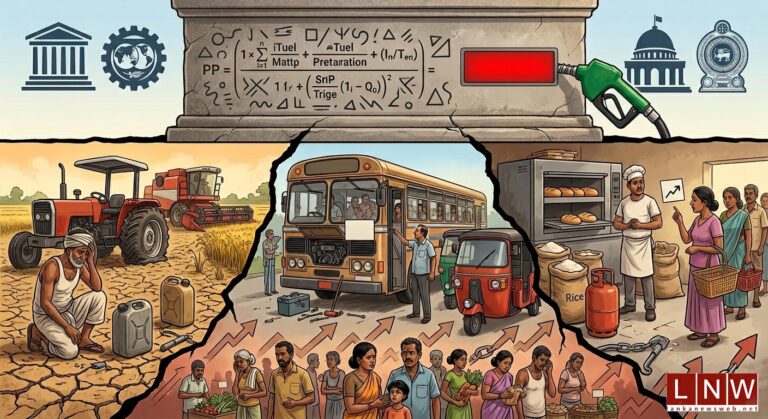
Sri Lanka typically imports two to three consignments of fuel each month, and the CPC is now reviewing the latest data before finalising its next domestic price update. The corporation continues to apply a cost-reflective pricing formula to ensure that local pump rates mirror shifting conditions in the international energy market.

Lack of Support Leaves Vulnerable Young Women Drifting into Sex Trade, Group Warns

0

November 24, Colombo (LNW): A Sri Lankan social welfare organisation has raised alarm over the growing number of young women leaving state-run probation and child detention centres who find themselves with so few options that they end up turning to sex work soon after they turn 18.

According to H. A. Lakshman, Executive Director of the Praja Shakthi Development Foundation, many of these girls arrive at such institutions after suffering severe neglect, harassment, or sexual abuse, while others are placed there simply because they have no parents or stable home environment.

Once released, he said, they are left to fend for themselves with little training, no financial cushion, and almost no guidance.

Lakshman added that the absence of structured vocational support means many struggle even to secure basic employment. Faced with immediate economic pressure, some turn to sex work as the only readily available source of income.

Others, upon returning to unsafe environments, encounter further exploitation, making it even harder for them to break away from the cycle.

He stressed that the foundation does not compel these young women to abandon their current means of survival but stands ready to work with the government on any initiative that provides safer, more dignified opportunities.

Approximately 10,000 female sex workers are currently registered with the organisation, many of whom entered the trade shortly after leaving state care.

Deputy Minister of Women and Child Affairs Namal Sudarshana acknowledged that precise figures are difficult to track but admitted that girls leaving detention at 18 often do so without guardians, mentors, or community support.

He noted that the government is considering extending their stay in such centres until the age of 20 or 21, giving them more time to access stability and training.

Planned programmes include vocational instruction in areas such as baking, beauty therapy, and courses leading to NVQ qualifications—efforts aimed at helping these young women step into the workforce with genuine skills rather than desperation.

Thousands Facing Years-Long Wait for Heart Operations at Colombo National Hospital

0

November 24, Colombo (LNW): Almost 5,000 people awaiting cardiac procedures at Colombo National Hospital are facing delays so severe that some may wait as long as four years before undergoing life-saving surgery, according to Dr Chamal Sanjeewa, head of the Doctors’ Trade Union Alliance for Medical and Civil Rights.

Drawing on figures released through the Right to Information Act, Dr Sanjeewa said the hospital’s cardiac units are overwhelmed, with individual waiting lists running into the hundreds—and in one ward, well over two thousand. The length of the queues, he warned, places already vulnerable patients at considerable risk.

Many of those waiting come from families with modest means and have no realistic alternative to state care, as private-sector heart surgery typically costs upwards of Rs. 2 million. “For a significant number, the danger is not just the delay but the possibility they may never reach the operating theatre in time,” he cautioned.

Dr Sanjeewa also criticised the government’s budget priorities, noting the absence of targeted assistance from the President’s Fund for patients in urgent need of cardiac interventions. He urged authorities to provide immediate relief and to treat the growing surgical backlog as a national health emergency.

Although the government has announced plans for a 16-storey cardiac complex at the Colombo National Hospital, only Rs. 200 million has been earmarked for the project—an amount Dr Sanjeewa said falls far short of what is required to make a meaningful impact on the crisis.

AI Deep fakes Lure Sri Lankans into Costly Investment Scams

0

By: Staff Writer

November 24, Colombo (LNW): A chilling new wave of cybercrime is sweeping across Sri Lanka, as scammers use artificial intelligence (AI) to create convincing deep fake videos featuring well-known business leaders, government officials, and celebrities all promoting fake investment schemes that promise extraordinary returns.

At first glance, these slick videos look genuine. Shot as professional “interviews” in Sinhala and seamlessly dubbed into fluent English, they feature familiar faces appearing to endorse financial products or digital platforms. Many of the ads promise staggering profits even claiming returns of up to US$ 12,000 for a US$ 100,000 investment enough to tempt ordinary citizens struggling with the rising cost of living.

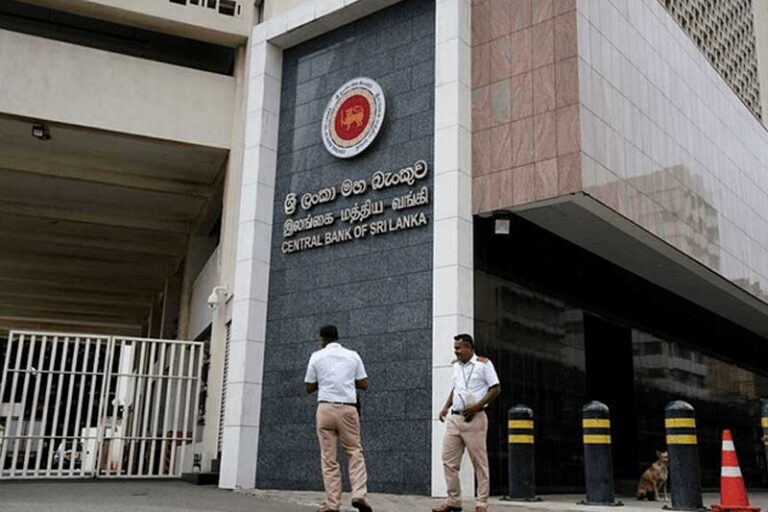
But behind these convincing faces lies deception powered by AI. The Central Bank of Sri Lanka (CBSL) has now sounded the alarm, warning that such videos are “entirely fake and artificially generated.” The Bank stressed that it does not promote or support any private investment, crypto currency, or deposit scheme.

“These scams are dangerous because they exploit public trust,” said an officer from Sri Lanka CERT, the country’s main cyber security agency. The technology has become so real that at times, even for a trained eye, it’s tough to figure out. People should understand that anything that seems too good to be true probably is.”

Most of these deep fakes are created overseas by powerful AI tools that can clone voices and facial expressions, according to cyber security analysts.

]Once created, the clips are circulated through Facebook, YouTube, and other social media platforms targeting Sri Lankan users. The intent is simple to build trust using familiar faces and persuade people to deposit money into fraudulent schemes.

Victims are usually led to professional-looking websites or messaging platforms such as WhatsApp or Telegram, where they’re persuaded to invest in dollars or crypto currency. In many cases, they’re shown fake dashboards displaying impressive “profits” to convince them to invest even more. Once significant sums are transferred, the fraudsters disappear without a trace, leaving behind financial ruin and emotional distress.

CBSL’s Financial Consumer Relations Department is urging citizens to be extremely cautious and verify any investment offer through official banking channels. “We encourage the public to report such fake promotions immediately by contacting the Central Bank hotline 1935 or Sri Lanka CERT,” the Bank said in its latest advisory.

Experts fear that as AI technology continues to evolve, these scams could become even more sophisticated and harder to detect. The Central Bank has categorically denied any involvement in such promotions and reiterated that all official communications are released only through verified channels.

“This is not just a cybercrime issue it’s a growing social problem,” a cyber-security expert noted. “People are losing not only their savings but also their confidence in digital information. Combating these scams requires both awareness and caution.”

As AI continues to blur the lines between real and fake, Sri Lankans are being urged to think twice before believing what they see online and to place their trust only in verified financial institutions regulated by the CBSL.

Sri Lanka to Benefit from NZ Expertise in Manufacturing and Innovation

0

By: Staff Writer

November 24, Colombo (LNW): New Zealand government agency, NZ Product Accelerator (NZPA) charged with helping businesses overseas is ramping up efforts to strengthen ties with Sri Lanka by providing expertise and connections to help develop and commercialise new products and technologies, a senior expert of the agency divulged

It is ready to connect in areas like manufacturing, design innovation, and agricultural technologies with research expertise to address industry or market needs and, at the same time, try and accelerate the development of innovative products and processes in the country, a Senior Materials Expert at the NZPA Dr Karnika De Silva said.

She was in the island on a short visit to establish contacts and help Sri Lankan businesses identify and connect with relevant research expertise within New Zealand’s network.

In doing so, the NZPA brings together over 100 experts from nine research organizations, i.e., 7 universities across New Zealand, facilitating this integration, she disclosed.

“We also tap into our national network of over 300 researchers across eight universities and Crown Research Institutes (CRIs) to identify the right mix of expertise, capabilities, and facilities” Dr Karnika said. .

The New Zealand manufacturing industry is a SME based economy with only a few vertically integrated large companies, so any Innovative technologies by SME will have a significant contribution to the economic growth, she explained

“The NZ Product Accelerator helps businesses, especially SMEs, to define and de-risk their R&D investments, delivering practical solutions faster.

In this contex, EML Consultants Sri Lanka has entered into an agreement with NZPA to adopt its model into its operations through collaboration

This process includes introducing advanced manufacturing through NZ Product Accelerator expertise in automation, digital twins, sensing, robotics, and implementing “AI” in manufacturing, monitoring air pollution, and making sustainable material choices to meet economic, social, and environmental challenges in manufacturing.

EML connects directly with NZPA with relevant NZ research expertise in materials, manufacturing, process integration, or bio-innovation to deliver the test pilot solutions collectively, so that EML can scale or implement its regional projects, in collaboration with or without NZPA.

“In addition, we can introduce our supply chain or value chain stakeholders to EMl for fast delivery of the targeted objectives to their clients” she said.

This collaboration allows EML to tap into NZ’s deep science and engineering expertise within a wider network of expertise in NZ as a one-stop shop while building a track record of inclusive, high-impact innovation in developing markets—delivering mutual benefit to both parties and the communities in both countries they serve.

Ceylon Shipping at Crossroads: Reviving a National Maritime Asset

0

By: Staff Writer

November 24, Colombo (LNW): Once regarded as a cornerstone of Sri Lanka’s maritime identity, the Ceylon Shipping Corporation Ltd (CSC) stands today as a reminder of both resilience and risk within the state enterprise landscape.

After weathering years of operational and financial storms, the corporation’s return to profitability in 2023/24 offers a glimmer of renewal but also exposes the fragility of its recovery.

CSC’s journey mirrors the fate of Sri Lanka’s broader public sector: burdened by legacy inefficiencies yet striving to redefine its purpose in a global shipping industry transformed by competition, technology, and economic uncertainty, several shipping sector experts said.

CSC was originally set up to serve the country’s import and export shipping needs, with the vision of retaining foreign exchange by reducing reliance on foreign carriers. Operating vessels such as Ceylon Breeze and Ceylon Princess, its income streams today come from voyage earnings, vessel leasing and charter-hiring.

In 2023 alone, the company reported earnings of Rs 878.67 million from voyage income and Rs 5,336.83 million from charter hiring, shipping ministry sources revealed.

But beneath these headline numbers lies a more fragile reality. CSC still carries negative net assets, a clear warning flagged repeatedly in its audit reports, they added.

The primary burden stems from a US$ 70 million loan plus US$ 5.44 million in capitalised interest secured in 2016, used to purchase its two ships.

With the rupee depreciating by 12.4 percent in FY 2023, CSC recorded a massive exchange loss of Rs 2,811.9 million, eroding much of its operational turnaround.

Moreover, despite the 2016 Cabinet decision (No CP/16/0035/737/003) and Public Finance Circular No 415 directing all government importing agencies to prioritise CSC, the policy has been largely ignored.

Between 2021 and 2023, over 300 waivers were granted allowing agencies to bypass CSC and use other shipping providers a major blow to its revenue base and the very purpose of its establishment.

Officials at the Ministry of Ports, Shipping and Aviation are aware of this predicament. As noted in parliamentary documentation, the Ministry remains committed “to make Sri Lanka a service supply centre with maximum competition,” signalling intention to revitalise the shipping sector.

Yet implementation remains weak. A high official of the ministry stated that it has to “ensure that strategic assets such as CSC are firmly embedded within national logistics policy.”

CSC has attempted to diversify exploring container feeder services to Bangladesh and Oman, passenger/ferry operations, and bunkering ventures at Colombo but momentum is slow. Financial constraints, foreign debt exposure, and bureaucratic inertia continue to hold back progress.

External pressures such as port congestion at the Sri Lanka Ports Authority’s Colombo terminal and global shipping disruptions increase its risk profile.

If Sri Lanka wishes to keep CSC as a viable national asset rather than yet another loss-making SOE, decisive intervention is needed.

The government must enforce its import policy, ensuring that all state and donor-funded imports are channelled through CSC, and back it with fiscal and institutional support, shipping sector exper said. .

A strategic partnership model combining private management expertise and state ownership would bring flexibility and innovation to an otherwise stagnant enterprise, he pointed out. .

Investment in digital platforms, optimisation of fleet utilisation, and integration of CSC into the broader Indian Ocean regional logistics network can unlock latent potential.

Without such reforms, the company risks drifting further into irrelevance, losing not just revenue but strategic control over maritime logistics and foreign-exchange flows, he emphasised.

Hidden Risks behind Sri Lanka’s Multi-Billion Rupee Guarantees

0

By: Staff Writer

November 24, Colombo (LNW): Sri Lanka’s extensive reliance on government guarantees has become a double-edged sword, intertwining public finances with the fortunes of state-owned enterprises (SOEs) and state banks.

As of September 2024, outstanding government guarantees and letters of comfort totaled Rs 1,660 billion roughly 5.5 percent of GDP according to the Finance Ministry.

While these instruments have been critical in financing infrastructure and public services, the International Monetary Fund (IMF) has repeatedly warned of the fiscal risks they carry if left unchecked.

The IMF’s 2025 Technical Assistance Report highlights that “fiscal risks in areas such as state-owned enterprises, guarantees, public-private partnerships, financial sector, and natural disasters remain substantial.”

Much of these guarantees stem from currency swaps and trade credits provided by the Reserve Bank of India to Sri Lanka’s Central Bank, backed by government guarantees. Prominent SOEs, including the Ceylon Electricity Board, Ceylon Petroleum Corporation, Road Development Authority, SriLankan Airlines, and the National Water Supply and Drainage Board, account for over half of these outstanding obligations.

The state banks, the Bank of Ceylon, National Savings Bank, and People’s Bank, have emerged as the biggest local lenders of these guaranteed loans, increasing systemic risks.

Historically, guarantees and on-lending were issued without rigorous credit assessments or safeguards. This approach often subsidized loss-making SOEs to sustain essential services and infrastructure projects, while the absence of clear eligibility criteria allowed indiscriminate guarantee issuance exposing the government to mounting fiscal vulnerability.

In response, Sri Lanka introduced the Public Debt Management Act (PDMA) in June 2024, creating a legal framework for responsible management of guarantees and on-lending.

The PDMA obliges the Public Debt Management Office (PDMO) to conduct credit risk assessments before issuing guarantees, capping support to non-distressed parties. This is complemented by the Public Finance Management Act (PFMA), which lowered the outstanding guarantee ceiling to 15 percent from 7.5 percent of GDP, improving sustainable debt management.

Despite these reforms, the IMF indicates that fiscal risks “remain substantial.” The government has been working on the regulations to implement into operation the PDMA, including the credit risk assessment, mitigation, monitoring, and reporting procedures. These policies will seek to enhance reporting and transparency requirements and closing previous loopholes in fiscal coverage.

Sri Lankan experience provides an example of the delicate balancing act that must be achieved between employing government guarantees to foster economic activity and limiting fiscal risk inherent in them. The success of the PDMA and PFMA will determine whether guarantees prove to be a long-term growth impetus or a chronic fiscal drain.

With the nation setting its economic direction, the path forward is a function of responsible risk management and transparent governance ensuring that the guarantee lifeline never becomes an invisible time bomb for public finances

Lawmakers Raise Concerns Over Land Deals for New Aerodromes

0

November 24, Colombo (LNW): Sri Lanka’s Committee on Public Finance (CoPF) has pressed officials for clarity on how land is being allocated for the development of new aerodrome facilities, noting that the valuations used in these transactions appear to bear little relation to actual market prices.

During the session, CoPF Chair Dr Harsha de Silva drew particular attention to land acquired for an aerodrome linked to Bandaranaike International Airport.

He pointed out that the Civil Aviation Authority is reportedly paying only Rs. 50,000 per hectare, despite property in the surrounding area fetching around Rs. 1 million per perch—an enormous disparity that, he argued, cannot be overlooked.

Dr de Silva urged the authorities to reassess their procedures to ensure that landowners are treated fairly and that the State’s own financial interests are not compromised.

Members of the committee suggested that a transparent valuation mechanism should be introduced, given the strategic importance of airport expansion and the rising pressure on land near major infrastructure hubs.

US Envoy and Sri Lankan Premier Discuss Deeper Educational Partnership

0

November 24, Colombo (LNW): The United States Ambassador to Sri Lanka, Julie Chung, held talks with Prime Minister Dr Harini Amarasuriya at Parliament, focusing largely on expanding cooperation in education and cultural engagement.

According to the Prime Minister’s Media Division, Ambassador Chung spoke warmly of the ongoing work of the Peace Corps and a range of joint programmes that have helped strengthen ties between the two countries.

She highlighted the longstanding impact of the Fulbright exchange initiative, which enables students, researchers, and academics from more than 160 nations to pursue study, teaching, and collaborative research in the United States—an effort aimed at cultivating global understanding.

Prime Minister Amarasuriya, in turn, outlined Sri Lanka’s current push to modernise its education system. She noted that the country is seeking specialised expertise to assist reforms across the Ministry of Education, the Department of Examinations, and the National Institute of Education.

The government’s aim, she said, is to move away from an exam-heavy culture and towards more interactive learning methods that prioritise critical thinking, creativity, and continuous assessment.

She also underscored the value of nurturing early-career academics whose fields of study align with Sri Lanka’s long-term development goals, suggesting that international exchange programmes could play a greater role in helping such scholars thrive.

Senior representatives from both nations participated in the discussion. The US delegation included Public Affairs Officer Menaka Nayyar, Dr Patrick McNamara of the US–Sri Lanka Fulbright Commission, and Professor Prabha Manuratne of the University Grants Commission. On the Sri Lankan side, Additional Secretary Sagarika Bogahawatta and Pramuditha Manusighe from the Foreign Affairs Ministry attended the meeting.