August 12, Colombo (LNW): The Cabinet of Ministers has nodded green for the removal of Dhammika Jayasundara from his position as the General Manager of Railways.
The decision stemmed from the ongoing administrative concerns within the department.


August 12, Colombo (LNW): The Cabinet of Ministers has nodded green for the removal of Dhammika Jayasundara from his position as the General Manager of Railways.
The decision stemmed from the ongoing administrative concerns within the department.

August 12, Colombo (LNW): A serious road accident in the early hours of this morning has left 26 people injured following a collision between a long-distance passenger bus and a heavy-duty tipper truck on the Colombo–Batticaloa highway near Batu Oya in Minneriya.
The crash, which occurred at approximately 3:00 a.m. this morning, involved a bus travelling from Maduroya towards Colombo and a tipper lorry that was reportedly moving in the opposite direction. Initial reports suggest that the impact was severe, leaving the front sections of both vehicles significantly damaged.
Emergency response teams were dispatched to the scene shortly after the incident, and the injured were rushed to nearby hospitals in Polonnaruwa, Minneriya, and Hingurakgoda for urgent medical treatment.
Medical staff at the hospitals have confirmed that several victims are in critical condition, with some requiring intensive care due to the extent of their injuries.
Minneriya Police have launched a full inquiry to determine whether any traffic violations or negligence contributed to the incident. Authorities are also expected to examine the mechanical condition of both vehicles involved and will likely obtain statements from surviving passengers and witnesses.
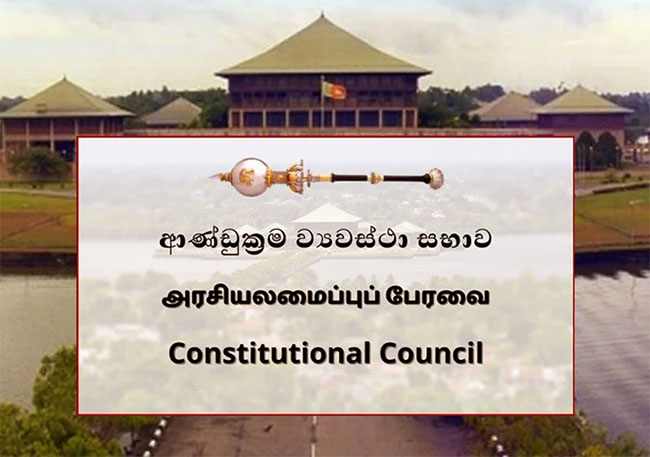
August 12, Colombo (LNW): The Constitutional Council is set to hold a crucial meeting today (12), under the leadership of Speaker of Parliament Dr Jagath Wickramaratne. The session, scheduled for 1:30 p.m., is anticipated to address significant developments in the nation’s law enforcement leadership and police oversight.
One of the central matters on the agenda is the nomination of a new Inspector General of Police (IGP), following the recent dismissal of Deshabandu Tennakoon. His removal, enacted through a parliamentary resolution, left the top post in the police force vacant, prompting widespread speculation over who might be chosen to fill the role.
In accordance with constitutional procedure, the President, Anura Kumara Dissanayake, is expected to propose a candidate for the IGP position. The Constitutional Council will then deliberate on the nomination, with indications suggesting that a final decision may be reached during today’s meeting.
The appointment is seen as especially significant given ongoing public discourse about law enforcement accountability, institutional reform, and the rule of law. The selection of a new police chief is likely to shape both the direction and credibility of future policing efforts in Sri Lanka.
In a separate but related development, Renuka Ekanayake has formally stepped down from her role on the National Police Commission. Her resignation has already been submitted to the Constitutional Council, according to official sources. With her departure, the Commission now finds itself operating with two unfilled positions, raising concerns about its current capacity to effectively carry out its mandate.

August 12, Colombo (LNW): Showers will occur at times in Western and Sabaragamuwa provinces and in Nuwara-Eliya, Kandy, Galle and Matara districts, the Department of Meteorology said in its daily weather forecast today (12).
Several spells of showers will occur in the North-western province, with a few showers being expected to occur in the Northern Province.
Showers or thundershowers may occur at a few places in Uva province and in Ampara and Batticaloa districts after 2.00 p.m. Fairly strong winds of about (30-40) kmph can be expected at times over Western slopes of the central hills and in Northern, North-central, North-western and Sothern provinces and in Trincomalee district.
The general public is kindly requested to take adequate precautions to minimise damages caused by temporary localised strong winds and lightning during thundershowers.
Marine Weather:
Condition of Rain:
Showers are likely at several places in the sea areas off the coast extending from Puttalam to Matara via Colombo and Galle.
Winds:
Winds will be south-westerly and wind speed will be (30-40) kmph.
Wind speed can increase up to (50-60) kmph at times in the sea areas off the coast extending from Chilaw to Kankasanthurai via Mannar and from Matara to Pottuvil via Hambantota.
Wind speed can increase up to 50 kmph at times in the sea areas off the coast extending from Chilaw to Matara via Colombo and Galle and from Kankasanthurai to Trincomalee via Mullaittivu.
State of Sea:
The sea areas off the coast extending from Chilaw to Kankasanthurai via Mannar and from Matara to Pottuvil via Hambantota will be rough at times.
The sea areas off the coast extending from Chilaw to Matara via Colombo and Galle and from Kankasanthurai to Trincomalee via Mullaittivu will be fairly rough at times.
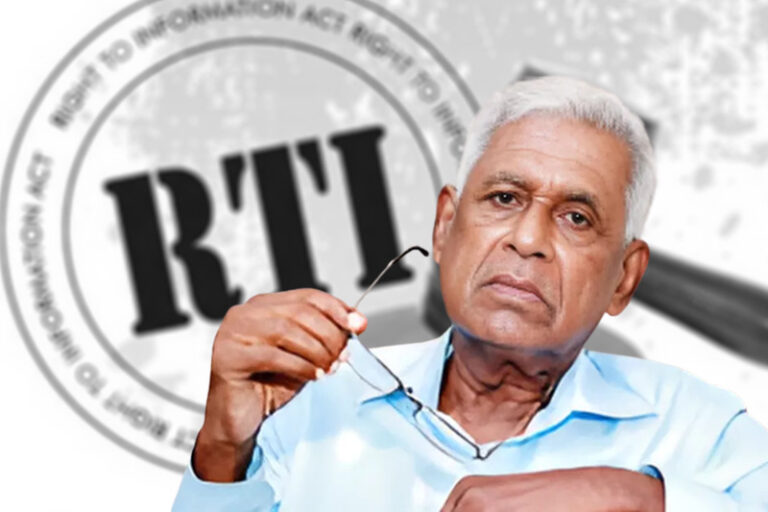
August 11, Colombo (LNW): Daya Lankapura, a seasoned media professional with decades of experience in journalism and editorial leadership, has been appointed to lead Sri Lanka’s Right to Information Commission.
His appointment marks the end of a prolonged vacancy that had raised concerns among media watchdogs and civil society advocates.
The role had remained unfilled for close to five months, prompting growing calls from journalists, transparency advocates, and rights groups for a swift and responsible nomination. President Anura Kumara Dissanayake has now moved to address those concerns with the formal installation of Lankapura at the helm of the institution tasked with safeguarding citizens’ access to public information.
Lankapura’s career spans a wide range of roles in the country’s media landscape, including senior editorial positions in both print and broadcast journalism. He has been an outspoken proponent of media independence and has played an instrumental role in campaigns for greater openness and accountability in government.

August 11, World (LNW): Five members of the press, including respected journalist Anas al-Sharif, have been killed in an Israeli airstrike near the gates of Al-Shifa Hospital in Gaza City, according to Al Jazeera. The group, which included two correspondents and three cameramen, had reportedly been sheltering in a tent marked for media when the attack occurred.
The fatalities have drawn sharp condemnation from press freedom advocates, with Al Jazeera describing the strike as a deliberate attempt to silence independent reporting. The news organisation characterised the incident as a “targeted assassination” and labelled it a grave attack on the rights of journalists to report without fear.
The Israel Defense Forces (IDF) have acknowledged responsibility for the strike and claimed that Anas al-Sharif was not a legitimate journalist, but rather a high-ranking member of Hamas, accused of directing attacks on civilians and soldiers. However, these assertions have been met with deep scepticism by global press organisations.
The Committee to Protect Journalists (CPJ), which monitors media safety worldwide, has criticised the IDF’s justification, calling for concrete evidence to support the claim. CPJ’s CEO, Jodie Ginsberg, highlighted what she described as a troubling pattern, where journalists are posthumously labelled as militants without substantive proof.
Al Jazeera’s managing editor, Mohamed Moawad, emphasised that al-Sharif was a credentialed reporter and an essential voice in a region where international media access remains severely restricted. Since the conflict began, foreign journalists have been largely barred from entering Gaza independently, making local reporters the only source of frontline coverage.
Moawad condemned the attack, asserting that the journalists had not been near active combat zones and had clearly identified themselves as members of the press. He accused the Israeli government of attempting to stifle media reporting from within Gaza entirely.
Al-Sharif, 28, had been actively posting updates on social media shortly before his death, warning of intensified airstrikes in the area. His final post appeared to have been scheduled in advance and was published after his death by a colleague.
The United Nations has also weighed in. Irene Khan, a UN special rapporteur on freedom of expression, previously called Israeli accusations against al-Sharif “unfounded” and warned of an alarming trend of media professionals being targeted in the region.
This is not the first such incident involving journalists from Al Jazeera. In 2024, Ismael Al-Ghoul was also killed in an Israeli airstrike, prompting similar outrage. The IDF alleged he was involved in the October 2023 attacks, but the broadcaster firmly rejected the claim.
According to the CPJ, at least 186 journalists have lost their lives in Gaza since Israel’s military campaign began in October 2023. Many of those still reporting from the area face not only aerial bombardment but extreme shortages of food and basic supplies.
As conditions worsen, major global news agencies including the BBC, AFP, Reuters and AP have jointly voiced urgent concern for the wellbeing of their local teams, some of whom have gone days without proper meals.
Despite increasing international appeals for the protection of journalists and civilians alike, the conflict shows little sign of abating. The humanitarian toll continues to rise, with over 61,000 reported deaths in Gaza and growing fears of famine across the besieged territory.
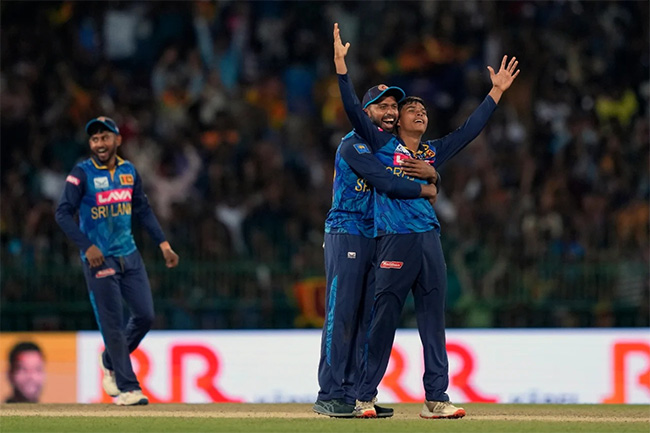
August 11, Colombo (LNW): Sri Lanka have made a notable leap in the ICC Men’s One Day International (ODI) Team Rankings, reclaiming a place among the top four sides in the world. The latest rankings, released on 10 August 2025, show the island nation rising to fourth position with a rating of 103, nudging Pakistan down to fifth.
Sri Lanka’s climb comes after accumulating 4009 points from 39 ODIs, reflecting consistent performances over recent months. Their advancement sees them narrowly edge past Pakistan, who now trail with a rating of 102 following a dip in form.
India remain firmly at the summit of the table, maintaining a commanding lead with a rating of 124. New Zealand and Australia occupy the second and third spots respectively, both tied on 109 points, with decimal margins separating their positions.
Completing the top ten are South Africa in sixth, followed by Afghanistan in seventh, England in eighth, West Indies in ninth, and Bangladesh rounding out the list in tenth place.

August 11, Colombo (LNW): Authorities have apprehended over 700 individuals in a large-scale anti-crime and narcotics operation conducted across the country, police officials confirmed.
The extensive operation, which took place the day before, saw officers carry out checks on more than 25,000 individuals in various parts of the island. The coordinated effort aimed to disrupt criminal networks, apprehend wanted individuals, and strengthen public safety.
Out of the 704 individuals arrested, 29 were identified as being directly involved in active criminal cases. A further 203 people were taken into custody on the basis of long-standing arrest warrants, with another 107 being held for failing to respond to open warrants issued by the courts.
In addition, 100 individuals were arrested for driving under the influence, highlighting the operation’s broad scope that extended to addressing road safety concerns alongside its primary focus on crime and drug enforcement.
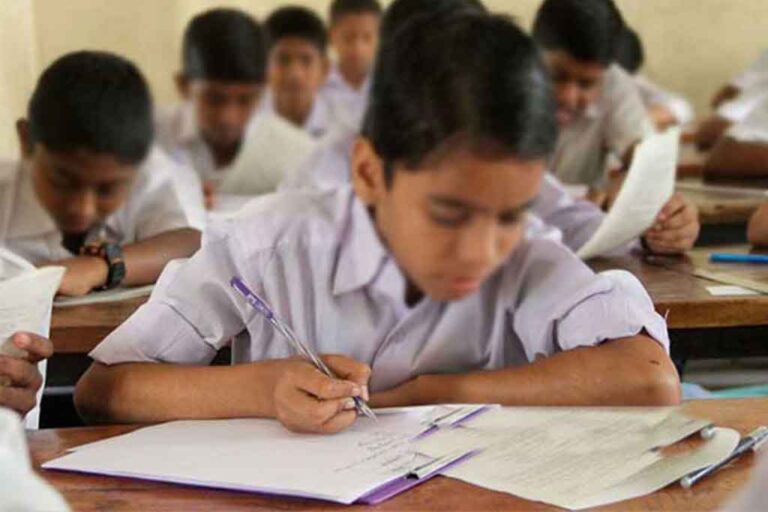
August 11, Colombo (LNW): The Department of Examinations has confirmed that the initial phase of evaluating scripts for the Grade 5 Scholarship Examination is officially underway from today (11), following the successful administration of the test across the island on the previous day.
Commissioner General of Examinations Indika Liyanage, reported that the examination was held simultaneously at 2,787 centres spread throughout the country. A total of 379,951 pupils had qualified to participate in this highly competitive assessment, which serves as a gateway to academic opportunities for young learners.
All logistical arrangements and marking protocols have been fully established in advance. The formal marking process is slated to begin on August 22 and will continue until August 27 at 43 specialised centres equipped for the task. Authorities anticipate that final results will be made public by September 20, in line with the department’s academic calendar.
Meanwhile, the application period for the 2025 G.C.E. Advanced Level (A/L) Examination is drawing to a close, with the submission window officially ending at midnight tomorrow (12). The Department of Examinations has streamlined the process this year, enabling students to apply online via a dedicated portal, in an effort to ensure wider accessibility and efficiency.
The A/L examinations are scheduled to take place from November 10 to November 05. Educational authorities have urged eligible candidates not to delay, as no extensions to the application deadline will be granted.

August 11, Colombo (LNW): Adithya Weliwatte, a celebrated figure in Sri Lanka’s music scene, has made headlines once more — this time not for her musical achievements, but for earning international acclaim on the beauty and tourism stage.
She returned to the island in the early hours of Sunday, having clinched the top title at the 2025 Miss Tourism Universe pageant held in the Philippines.
The grand event, which unfolded in the bustling city of Manila from July 30 to August 08, featured 17 contestants representing an equal number of nations. Weliwatte distinguished herself not only by claiming the coveted overall crown — formally titled “Queen of the International Tourism” — but also by securing two individual honours: Best National Costume and Most Beautiful Photogenic.
Her elaborate national costume, inspired by elements of Sri Lanka’s rich cultural and artistic heritage, reportedly drew admiration from both judges and international audiences. Meanwhile, her photogenic accolade reflected a commanding presence throughout the competition’s promotional campaigns and media engagements.
Weliwatte, whose reputation in the music industry spans several years and has earned her recognition both at home and abroad, landed at Bandaranaike International Airport shortly after midnight. Arriving on Thai Airways flight TG-307 from Bangkok at approximately 12:20 a.m., she was welcomed by family, supporters, and officials, many bearing flowers and national flags in celebration.
Photo: Daily Mirror