Home Blog Page 45

Nine Reported Dead as Heavy Rains Trigger Floods and Landslide Alerts Across Sri Lanka

0

November 23, Colombo (LNW): The Disaster Management Centre (DMC) has reported that the death toll from ongoing severe weather has climbed to nine, as widespread rainfall continues to disrupt life across the country.

DMC Director Pradeep Kodippili said the prolonged downpours have caused flooding in multiple areas, while numerous incidents of rocks tumbling onto roads have been reported, creating hazards for motorists and residents alike.

Meanwhile, the National Building Research Organisation (NBRO) has extended landslide warnings for ten districts. Senior Geologist Dr Wasantha Senadeera confirmed that alerts remain in effect for several Divisional Secretariat Divisions in Colombo, Kalutara, Galle, Kandy, Kegalle, Matara, Ratnapura, Badulla, Hambantota, and Nuwara Eliya.

The Meteorological Department noted that persistent atmospheric disturbances have brought continuous rainfall to many parts of the island, with heavy showers expected to continue into the evenings. Strong winds have also caused trees to topple onto power lines along the Mapalagama–Galle main road, resulting in traffic disruptions in Nagoda.

In Matara district, flooding was reported across several areas of Deniyaya town, prompting security forces to assist residents whose daily routines were interrupted. The Baddanwala section of the Matara–Kotapala road was completely submerged, blocking passage. The Uruboku Oya also overflowed near Katuwana town overnight, inundating the town and surrounding communities.

The Matara District Relief Services Centre reported that 363 people from 100 families have been affected by the adverse weather. Additional low-lying areas and roads in Bulathsinhala, Kalutara, have also been submerged, compounding the impact of the ongoing heavy rainfall. Authorities continue to monitor the situation closely and advise residents to exercise caution.

“Nation United” Anti-Drug Raids Net Over 1,000 Arrests in a Single Day

0

November 23, Colombo (LNW): More than a thousand people were taken into custody across the island yesterday (23) as part of the Government’s intensified “Nation United – National Drive” campaign, a sweeping operation aimed at eliminating the illegal drug trade.

According to police, the coordinated raids—carried out in multiple districts over several hours—resulted in the seizure of a significant haul of narcotics. Officers recovered around 319 grammes of heroin, over 1.5 kilogrammes of crystal methamphetamine (‘Ice’), approximately 2.5 kilogrammes of hashish, as well as quantities of cocaine and various other illicit substances.

Twenty-one suspects have been placed under detention orders to facilitate extended investigations, while a further twenty-nine individuals have been directed to rehabilitation programmes.

Police officials noted that similar operations will continue in the coming weeks as part of a sustained national effort to curb drug-related crime and strengthen community safety.

Why Sajith Made a Foolish Move?

0

By Adolf

The recent political developments surrounding the opposition landscape reveal a strategic misstep by the Samagi Jana Balawegaya (SJB)—one that could weaken its positioning at a pivotal moment. The Nugegoda rally, organised jointly by three parties, exposed a fundamental problem: the SJB failed to assume its natural role as the principal opposition force. Instead of leading, it ceded the space to smaller parties that together command only a modest share of public support. This was, politically, a foolish move. Sajith Premadasa failed to read the public mood . He could pay the price for his indecision. In the last local government elections, the three parties that joined forces at Nugegoda collectively secured just 17.58% of the vote. By contrast, the SJB remains the second-largest political party in Sri Lanka, with the organisational strength and voter base capable of mobilising large crowds and dominating the opposition narrative. In addition the best professional team . Yet, at a moment when the government is facing public dissatisfaction, for repeated lies and deception, economic strain, and governance-related criticism, the SJB chose hesitation over leadership.

This hesitation carries consequences

Firstly, it creates a leadership vacuum within the opposition, allowing smaller groups to project themselves as the real challengers to the government. Politics abhors a vacuum. If the largest opposition party does not set the agenda, others will—regardless of their support base. The Nugegoda event demonstrated this clearly: a coalition of weaker parties seized the moment because the SJB left the space open.

Secondly, the SJB’s delay emboldens rival factions within the opposition ecosystem. The post refers to concerns that the UNP, weakened and unable to organise large rallies on its own, still plays a disruptive role by complicating alliances and offering alternative platforms for dissatisfied voters. The SJB, unlike the UNP, does not suffer from severe organisational decline. Yet its reluctance to mobilise at scale gives the impression of an uncertain or lethargic leadership strategy.

Thirdly, the SJB’s failure to act risks fragmenting the anti-government vote once more. The last decade of Sri Lankan politics repeatedly showed how divided opposition forces—regardless of ideology—pave the way for the incumbent to win comfortably. The post hints at fears that the opposition vote may splinter into clusters, enabling the “Pohottuwa” to re-emerge stronger in the next cycle. A divided opposition, even if individually loud, is collectively ineffective.

Fourth, the SJB’s passive stance undermines its credibility among its own supporters. Opposition parties thrive on momentum, visibility, and the perception of inevitability. When a party appears disengaged, supporters drift. Some migrate to louder alternatives. Others disengage entirely. The SJB’s core strength—its nationwide organisational network—risks erosion if it does not provide direction, energy, and action.

Finally, the broader electorate expects the leading opposition party to articulate grievances and solutions boldly, especially during periods of public frustration. When the SJB avoids taking the centre stage, citizens turn to whoever is willing to speak forcefully about national issues—even if those voices come from smaller political entities.

In essence, the SJB made a foolish move not because it lacked resources, popularity, or legitimacy, but because it failed to play the role the moment demanded. Politics rewards those who seize opportunities, not those who hesitate. Unless corrected quickly, this misstep could permanently shift the balance within the opposition—and determine the outcome of the next national election. Sajith Premadasa should not lose the opportunity to lead the opposition. Whoever advised Sajith Premadasa to refrain from participating in the rally from his party SJB, definitely needs his head examined.

Government Rallies Divisional Secretaries to Drive New Phase of ‘Praja Shakthi’ National Programme

0

November 23, Colombo (LNW): The Government convened Divisional Secretaries from across the island yesterday (22) for a comprehensive orientation session on Praja Shakthi, its flagship initiative aimed at strengthening social empowerment and ensuring that economic progress is shared more evenly among communities.

The meeting, held at the Presidential Secretariat, focused on practical implementation at the grassroots and the wider reforms required within the public sector to support the programme.

Officials were briefed on the digital platforms underpinning Praja Shakthi, their responsibilities within the national digital economy agenda, and their role in supporting the “A Nation United” campaign, which targets bribery, corruption and narcotics. The session also emphasised the importance of administrative leadership in delivering services efficiently and with transparency.

Addressing the gathering, the Minister of Rural Development, Social Security and Community Empowerment, Dr Upali Pannilage, said Praja Shakthi represents a decisive shift from fragmented poverty alleviation schemes of the past. Instead of leaving the issue to a single institution, he said the programme seeks to create a unified national movement, backed by a Presidential Policy Council and an integrated operational structure involving multiple ministries, provincial councils and local authorities. He stressed that development must come from the ground up, driven by genuine community engagement and continuous monitoring of results.

Secretary to the President, Dr Nandika Sanath Kumanayake, noted that tackling multidimensional poverty remains a key priority under the Government’s new development model. He urged public officials to recognise the responsibility they bear in ensuring that state programmes genuinely reach citizens. Highlighting rising public expectations since recent political changes, he said the public service must evolve and adopt more efficient, people-focused practices.

Also speaking at the event, Deputy Minister of the Digital Economy Eranga Weeraratne emphasised that digitisation is essential to cutting administrative costs and improving citizen services. He noted that the Government has already committed substantial funds toward digital transformation in 2026 and expects Divisional Secretariats to align fully with this national effort.

Finance Ministry Secretary Dr Harshana Sooriyapperuma outlined that Rs. 180 billion has been earmarked for rural development in the 2026 Budget, including allocations for Praja Shakthi. He said Divisional Secretaries will play a crucial role in pushing economic growth from its current 5% to the targeted 7% over the medium term.

Senior government officials, ministry secretaries and advisers contributed to the discussion, underscoring the shared view that the success of Praja Shakthi depends on effective collaboration across institutions and a shift towards modernised, citizen-centred governance. The session concluded with a renewed call for Divisional Secretaries to embrace new methods, strengthen accountability and lead the transformation expected of the public service.

Opposition Alleges Judicial Independence at Risk Amid Allegations of Political Interference

0

November 23, Colombo (LNW): Opposition MP Dilith Jayaweera has raised fresh concerns over what he describes as growing political pressure on Sri Lanka’s judicial system, warning that recent developments could erode public confidence in the courts.

In a strongly worded statement, Jayaweera argued that judicial independence—central to any functioning democracy—has come under strain since the present administration assumed office. He alleged that decisions regarding the appointment, transfer and removal of judges have been influenced by political actors, including instances where judges were reportedly removed at the request of the Inspector General of Police. Such interventions, he said, have no precedent and threaten the separation of powers.

“The judiciary is not an auxiliary of the police. It is a cornerstone of our constitutional framework and essential to protecting the sovereignty of the people,” he stated.

Jayaweera expressed particular concern that these developments could compromise the authority of the upper courts and diminish public trust in the justice system. As a response, he has formally asked the Speaker to establish a dedicated parliamentary committee to scrutinise the actions of the Judicial Service Commission relating to judicial appointments and career decisions.

He noted that several opposition MPs, including Opposition Leader Sajith Premadasa, have supported the initiative. Jayaweera stressed that Parliament carries a constitutional responsibility to shield the judiciary from undue influence and ensure it operates with full independence and integrity.

Sri Lanka–New Zealand Parliamentary Group Relaunched with Renewed Focus on Cooperation

0

November 23, Colombo (LNW): Minister Wasantha Samarasinghe, who oversees Trade, Commerce, Food Security and Cooperative Development, has been chosen to lead the Sri Lanka–New Zealand Parliamentary Friendship Association for the current Parliament.

The Association was officially revived on November 20 during a meeting held within the Parliamentary complex, chaired by Speaker Dr Jagath Wickramaratne. New Zealand’s High Commissioner to Sri Lanka, David Gregory Pine, attended as Guest of Honour, joined by several ministers, MPs, deputy ministers and Parliamentary Secretary General Kushani Rohanadeera.

MP Thanura Dissanayake was appointed Secretary of the Association, while MP and attorney-at-law Geetha Herath will take on the role of Treasurer.

During the proceedings, participants reflected on the long-standing ties between Sri Lanka and New Zealand, noting that cooperation between the two nations has been marked by mutual respect and shared priorities. Speakers highlighted the potential for closer collaboration across a range of fields, from trade and tourism to labour mobility, sports development and educational exchanges.

The Speaker thanked the New Zealand Government for the assistance it has extended to Sri Lanka over the years, acknowledging its consistent support in areas of economic and social development.

High Commissioner Pine reiterated his country’s interest in strengthening bilateral cooperation, particularly in tourism, trade and sport, with special emphasis on women’s cricket and men’s rugby—two areas in which New Zealand holds significant international expertise.

Both delegations expressed optimism that the reactivated Friendship Association would create a practical forum for advancing joint projects and deepening parliamentary engagement. During his visit to Parliament, the High Commissioner also met separately with the Speaker to explore ways of expanding collaboration at the legislative level and enhancing the overall partnership between the two countries.

Experts Urge Deeper Reforms as Sri Lanka Charts Post-Crisis Economic Course

0

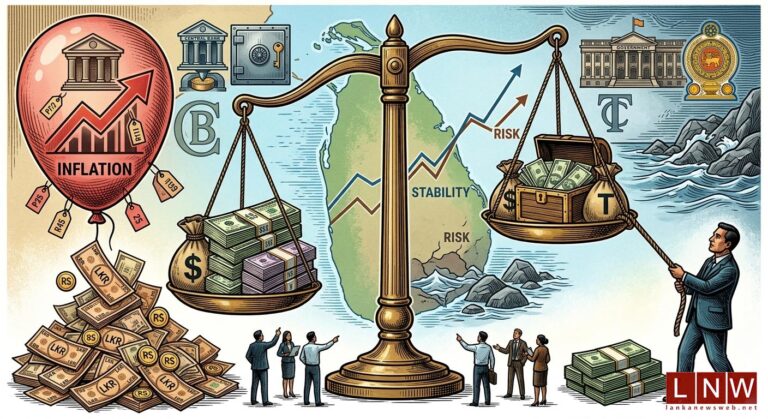
November 23, Colombo (LNW): Sri Lanka’s steady recovery from the turmoil of 2022 has drawn praise from international analysts, yet concerns remain about whether the country can secure long-term economic stability.

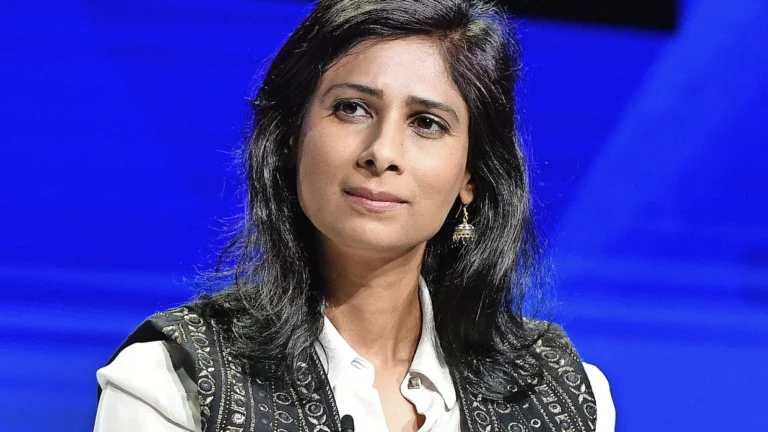
Development specialist Dr Ganeshan Wignaraja said the latest national budget reflects a firming of the stabilisation effort, with renewed attention on trade, digital innovation and the ongoing Port City project. But he cautioned that the next phase demands more decisive structural change if the nation is to avoid slipping back into cycles of austerity.

Sri Lanka’s collapse into sovereign default in 2022 triggered its most severe economic downturn in decades, marked by soaring inflation, shortages and widespread public anger. Unlike many countries that have suffered similar shocks, however, the downturn was relatively brief. By mid-2025 the economy had grown by nearly 5 per cent in the first six months, inflation had steadied at around 2 per cent, though poverty remained deeply entrenched.

The rebound has been attributed to a mix of Indian support, a stringent IMF programme worth US$2.9 billion, and firm action by both the Government and the Central Bank. President Anura Kumara Dissanayake, in office since late 2024, has persisted with IMF-aligned reforms despite earlier pledges from his coalition to renegotiate conditions in favour of greater welfare provision.

With the IMF programme at its midpoint, attention is turning to whether the current momentum can be sustained. The 2026 Budget, presented by the President in his capacity as Finance Minister, is framed around “Steady and Strong: Committing to Fiscal Discipline for a Resilient Economy.” It envisions a primary surplus of 2.5 per cent of GDP, revenue of 15.4 per cent of GDP and a deficit of 5.1 per cent next year. But its 7 per cent growth forecast has been met with scepticism due to the IMF’s more modest projection of just over 3 per cent and global economic uncertainty.

Still, the administration has some political breathing room after raising the tax-to-GDP ratio to an estimated 13.5 per cent—a substantial climb from the 2022 low. The budget outlines funds for housing for vulnerable families, irrigation improvements, public sector wage adjustments, and plans for 75,000 new civil service positions. It also includes allocations for MPs’ vehicles, a decision that has drawn mixed public reactions.

Economist Prof Sirimal Abeyratne noted that the budget proposes adjustments to taxation, governance reforms and a push towards digital public services. He pointed out that lowering the VAT threshold to Rs 36 million could broaden the tax net, though he emphasised that real progress hinges on long-term structural reforms. He also warned that poverty—both visible and hidden—remains widespread, with millions struggling silently despite recent stabilisation.

Prof. Abeyratne emphasised the need for stronger support for SMEs, export expansion and higher foreign investment. Meanwhile, financial analyst and Advocata Institute Chairman Murtaza Jafferjee described the VAT changes as a sensible shift towards a more coherent tax system but said even more exemptions could have been removed to reduce distortions. He also argued that para-tariffs, which typically serve narrow interests, should finally be abolished after years of unfulfilled promises.

Jafferjee cautioned that generous tax concessions under various investment laws should be approached carefully, noting that investors prioritise policy consistency and market conditions over one-off incentives. He suggested widening welfare transfers such as Aswasuma to protect vulnerable families while creating room to streamline VAT without harming equity.

Both economists agreed that without immediate structural reforms, the window for decisive action may soon close. Sri Lanka’s recovery has so far benefited from benign external conditions, they noted, but if global or domestic shocks emerge in 2026, the country will have limited fiscal space to respond.

Sri Lanka Showcases Blue Economy Ambitions at ‘Aqua Planet 2025’ Exhibition

0

November 23, Colombo (LNW): Sri Lanka’s flagship aquatic exhibition, Aqua Planet 2025, opened on November 21 at the Lotus Tower, presenting a wide array of fisheries products, aquaculture technology, ornamental species, water plants and industry innovations.

Organised by the Ministry of Fisheries, Aquatic and Marine Resources, the event is being held under the theme “A Prosperous Tomorrow through Water Resources” and will run until 23 November.

Prime Minister Dr Harini Amarasuriya, addressing the gathering at the inauguration, stressed the importance of fresh thinking and technological progress in the aquatic sector. She remarked that Sri Lanka must position itself more competitively in international markets by nurturing advanced aquaculture practices and promoting high-value seafood products.

The exhibition, she said, fits neatly within the government’s policy blueprint, “A Prosperous Country – A Beautiful Life,” which highlights sustainable resource use and export-led growth.

Dr Amarasuriya also drew attention to the government’s continued backing for fishing communities and small-scale producers. She referenced the 2026 budget allocations that strengthen the country’s Blue Economy strategy, including significant investments in port facilities, harbour upgrades, fishermen’s safety gear, and advanced satellite technology for mapping fishing zones. Additional funding is earmarked for aquaculture development centres and modern equipment to increase productivity and resilience in the sector.

During the ceremony, the Prime Minister awarded newly introduced pension benefits to members of the fishing community, while also releasing a commemorative stamp and first-day cover marking the significance of Aqua Planet 2025.

Fisheries Minister Ramalingam Chandrasekaran noted that the exhibition forms a key part of broader plans to rejuvenate the struggling fisheries industry and heighten public appreciation of Sri Lanka’s maritime wealth. By encouraging collaboration across communities and industry stakeholders, he said, the government hopes to boost export revenues and promote sustainable growth.

The event drew participation from several deputy ministers, parliamentarians, ministry officials, diplomatic envoys and representatives from coastal communities, reflecting the wide interest in strengthening the country’s marine-based economy.

President Calls for Unity and Equal Freedom Ahead of Sri Lanka Day Celebrations

0

November 23, Colombo (LNW): President Anura Kumara Dissanayake has underscored that every individual in the country should enjoy the right to live freely and without fear, speaking at a meeting held at the Presidential Secretariat yesterday (23).

The discussion brought together senior figures from Tamil and Muslim opposition parties to review preparations for the upcoming Sri Lanka Day, set to take place in December. The event is being developed as a national celebration intended to highlight the country’s cultural richness and encourage meaningful interaction among communities.

During the meeting, the President stressed that all citizens must be able to uphold their religious and cultural practices without facing discrimination or marginalisation. He extended an invitation to all political parties to collaborate with the government’s efforts to strengthen mutual respect and promote an inclusive national identity.

According to a statement from the President’s Media Division (PMD), Sri Lanka Day aims to serve as a platform for community-building, creating opportunities for people from every background to engage with one another in an atmosphere of openness and goodwill. MPs from different communities were invited to offer suggestions, with several proposing additional cultural, educational and youth-focused activities to broaden participation.

The President also instructed the organising committee to structure the event so that people from all walks of life can participate together, ensuring that the festivities emphasise unity rather than highlight divisions.

Card Payments on Buses to Launch Nationwide from Tomorrow

0

November 23, Colombo (LNW): Bus passengers will from tomorrow (24) be able to settle their fares using bank-issued credit and debit cards, as the long-awaited electronic payment system begins rolling out on services fitted with modern ticketing machines.

The official launch is set to take place on Sunday morning at the Makumbura Multimodal Transport Centre, where the first public demonstration of the system will be held.

The initiative is a joint effort between the Ministry of Digital Technology and the Ministry of Transport, Highways, Ports and Civil Aviation, and will be inaugurated by Subject Minister Bimal Rathnayake.

Addressing Parliament earlier, Minister Rathnayake noted that passengers had long complained about not receiving proper change when paying bus fares, an issue that has persisted for decades.

He stressed that enabling card payments would significantly reduce disputes over balance money and provide a more transparent and efficient system.

The Minister also pointed out that fare-related malpractice remains a serious concern across many bus routes. He added that both commuters and transport operators had repeatedly called for a secure and accountable payment method, making electronic card transactions a timely and practical solution.

Officials say the technology will be expanded to more buses in the coming months, with the ultimate aim of phasing in a fully cashless public transport system.