The government has decided to move forward with a comprehensive plan to establish a national network of daycare and therapy centres for children with autism spectrum disorder (ASD) and other neurodevelopmental conditions, according to the President’s Media Division (PMD).
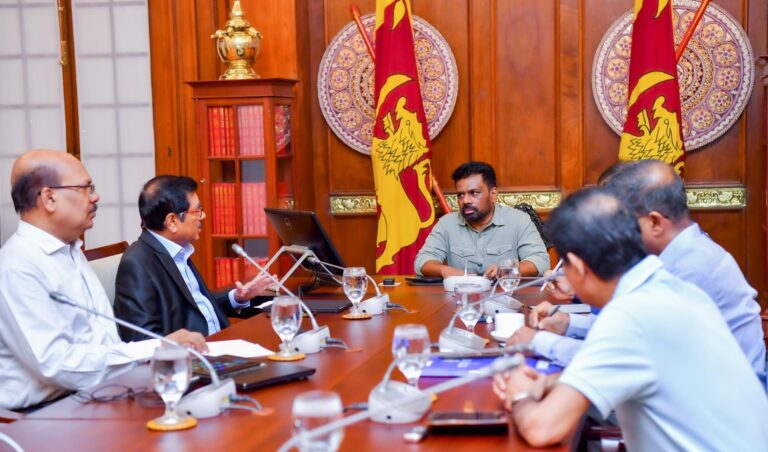
As per the directive of President Anura Kumara Dissanayake, Secretary to the President Dr. Nandika Sanath Kumanayake has instructed officials to submit a detailed concept proposal within two weeks, following discussions held at the Presidential Secretariat, the PMD stated.
This initiative will be implemented under the supervision of the Presidential Secretariat and will involve a coordinated effort across multiple ministries and government departments. A sum of Rs. 250 million allocated in the 2025 budgetwill be utilised through the Ministry of Women and Child Affairs, with funding directed to district-level administrators for effective rollout.
The programme focuses on developing specialised human resources, creating a scientifically validated care model, and setting up operational guidelines for the centres. Officials stressed the importance of an integrated, multi-sectoral approach involving healthcare professionals, education specialists, and social services to ensure comprehensive support for children and their families.
The initiative represents a significant step toward inclusive care and early intervention for children with neurodevelopmental challenges across Sri Lanka.
A discussion was held between Minister of Energy Kumara Jayakody and representatives of Ceylon Electricity Board (CEB) trade unions regarding the draft legislation and process related to the restructuring of the CEB, the Ministry of Energy said in a statement.
The meeting took place at the Ministry premises, where union representatives raised concerns — particularly about the protection of employee rights and benefits during the restructuring process.
Addressing these concerns, Minister Jayakody assured participants that it is the Government’s firm policy to retain the electricity sector under state ownership, and that the restructuring process would not compromise the rights or benefits of employees.
Trade union representatives expressed appreciation for the opportunity to engage directly with the Minister and welcomed the commitment to state ownership and employee protection. They also extended their support and pledged cooperation in efforts to develop the sector.
According to the Ministry, representatives from 42 trade unions affiliated with the CEB were invited to the discussion.
An individual was injured in a shooting incident reported earlier today (11th July) in Hirana, Panadura, according to Police.
The victim sustained injuries as a result of gunfire and has been admitted to hospital for treatment. The circumstances surrounding the incident are still under investigation, and further details, including the identity of the victim and motive, have yet to be released.
Police said that search operations are underway to apprehend the suspect or suspects involved.
The Department of Examinations has officially released the results of the 2024 G.C.E. Ordinary Level (O/L) Examination, which are now available online.
For inquiries related to the results, candidates may contact the following hotlines provided by the Department of Examinations: 📞 1911 📞 011 2 785 922 📞 011 2 786 616 📞 011 2 784 208 📞 011 2 784 537
The Department further announced that applications for the re-scrutiny of results will be accepted from July 14 to July 28.
This year, a total of 474,147 candidates sat for the G.C.E. O/L examination, comprising 398,182 school candidates and 75,965 private applicants. The examination was held from March 17 to 26 across 3,663 examination centers islandwide.
Several spells of showers will occur in the Western and Sabaragamuwa provinces and in Kandy, Nuwara-Eliya, Galle and Matara districts.
A few showers may occur in the North-western province.
Showers or thundershowers may occur at a few places in Uva province and in Ampara and Batticaloa districts during the afternoon or night.
Fairly strong winds of about (30-40) kmph can be expected at times over Western slopes of the central hills and in North-western, North-central and Southern provinces.
The general public is kindly requested to take adequate precautions to minimize damages caused by temporary localized strong winds and lightning during thundershowers.
July 10, Colombo (LNW): The Association of Medical Specialists (AMS) has issued an urgent call for an investigation into what it describes as a dangerous trend of misinformation and unethical practices damaging Sri Lanka’s healthcare system and the credibility of its medical professionals.
In a formal letter addressed to Health Minister Dr. Nalinda Jayatissa, the AMS expressed deep concern over non-expert commentary circulating in the media about complex surgical procedures, warning that such speculation is eroding public trust and sparking undue fear among patients.
Signed by AMS President Dr. T.G.Y. Rasika Gunapala and Secretary Dr. R. Gnanasekaram, the letter asserts that unverified claims—particularly those amplified on social media—are undermining the professional integrity of qualified specialists and causing anxiety among patients awaiting life-saving treatment.
The association labeled this as an “unsafe trend” and called for a full technical review by the Ministry of Health, urging it to issue a clear, expert-backed statement to reassure the public.
The appeal comes against the backdrop of a major scandal at Sri Jayewardenepura General Hospital, where a specialist neurosurgeon was arrested and remanded for allegedly selling surgical equipment at inflated prices outside standard procurement protocols.
The Commission to Investigate Allegations of Bribery or Corruption (CIABOC) is leading the inquiry, which has already identified 77 victims and 92 further complaints, with estimated financial losses to patients exceeding Rs. 300 million.
According to investigators, the neurosurgeon bypassed established hospital tender procedures, directing patients to acquire crucial neurosurgical devices—such as external ventricular drains and ventriculoperitoneal shunts—through unofficial channels at much higher costs.
In a disturbing twist, there are allegations that the doctor may have kept clinically dead or non-viable patients on artificial life support to justify the use and sale of these devices.
This has reignited serious ethical debates about the difference between coma and brain death—two conditions often misunderstood but medically and legally distinct.
A coma refers to a deep, unconscious state where some brain function remains, and recovery is sometimes possible. Brain death, on the other hand, is the total and irreversible cessation of all brain activity, including the brainstem, and is legally recognized as death in most jurisdictions.
Performing non-therapeutic surgeries on brain-dead patients—if proven—constitutes a severe violation of ethical and legal medical standards.
Experts emphasize the importance of strict medical protocols for diagnosing brain death and the necessity of obtaining informed consent from families for any procedures involving such patients.
The AMS has highlighted the urgent need for accurate communication and evidence-based assessment to protect both patients and healthcare professionals.
The association is pushing for the Health Ministry not only to clarify facts through expert medical panels but also to ensure the public is fully informed about the legal and ethical standards governing life-support decisions and complex surgeries.
A copy of the AMS’s letter has also been sent to the Health Ministry Secretary, Dr. Anil Jasinghe, reinforcing the association’s call for immediate and transparent action.
As investigations continue, the healthcare sector stands at a critical crossroads. While the alleged misconduct underscores the urgent need for procurement reform and ethical safeguards, the AMS warns that undermining public confidence through speculative commentary may result in lasting damage to patient care and medical morale.
July 10, Colombo (LNW): The Sri Lankan government is set to revise generous tax holidays and exemptions granted to mega and mixed development ventures under the Strategic Development Act (SDA) and the Colombo Port City Act, following strong recommendations from the International Monetary Fund (IMF).
In its 2023 Governance Diagnostic Assessment, the IMF warned that prolonged and broad tax concessions are undermining the country’s ability to generate revenue and repay debt sustainably. It specifically called for the phasing out of the SDA, suggesting it be replaced with a more targeted Priority Investment Project Act. The IMF has urged Sri Lanka to reduce tax holiday periods — some of which extend up to 40 years — to more reasonable durations and remove exemptions for projects not deemed truly strategic.
Projects within the Colombo Port City, developed under significant Chinese investment, have been granted sweeping tax exemptions, including waivers on customs duty, VAT, and other levies. The Port City Commission currently determines which businesses qualify for tax concessions, in consultation with the President or relevant minister, under the label “Business of Strategic Importance” (BSI).
However, the IMF is pressing for stricter, rule-based criteria and greater transparency in awarding such incentives. Amendments to the Port City Act are planned for October 2025, while the SDA will be revised by August 2025, as part of the government’s structural reform agenda.
Despite earlier promises to halt new exemptions, 24 companies have already been gazetted as eligible for BSI status without IMF consultation. These approvals — including four primary, three duty-free, and 17 secondary businesses — will not be reversed due to legal concerns, the government admitted.
Concerns have also been raised about Chinese investors pushing for additional tax breaks in exchange for backing election campaigns of the JVP/NPP alliance, adding a political dimension to the economic debate.
Sri Lanka’s high corporate tax rate (30%) — in stark contrast to regional peers like Cambodia (20%), Vietnam (20%), Thailand (15%), and Singapore (17%) — has been blamed for driving businesses to set up in more stable, low-tax jurisdictions such as Dubai. Some fear that companies may now shift to the Port City enclave to benefit from its exemptions, potentially causing revenue leakage from the domestic tax base.
The IMF cautioned that such unchecked exemptions were a key contributor to Sri Lanka’s financial crisis. It emphasized that a sound investment environment cannot rely solely on tax breaks but must be supported by stable governance, legal reforms, and monetary credibility.
Sri Lanka has agreed to submit monthly reports to the IMF on all tax exemptions granted, as part of its commitment to restoring fiscal discipline. Regulations for registering Port City offshore companies and imposing new investor taxes were also submitted to Parliament this week.
As the country continues its recovery path under the IMF program, the government appears poised to tighten its tax incentive framework to ensure better revenue collection, reduce corruption risks, and promote sustainable foreign investment.
July 10, Colombo (LNW): Sri Lanka Insurance Corporation (SLIC) has posted profits in 2024, following the legal segregation of its life and general insurance businesses into separate entities, according to the Insurance Regulatory Commission of Sri Lanka.
Founded in 1962 as the State-owned insurer, Sri Lanka Insurance played a pivotal role in shaping and establishing the insurance industry in the country, paving the way for private sector insurers.
Later it was converted into a private limited liability company before being reinstated as a nationalised entity in 2009
Over the past six decades, it has emerged as the strongest and largest insurer, contributing significantly to the nation’s development by safeguarding lives and assets and creating substantial job opportunities, particularly for the youth
Specifically, Sri Lanka Insurance Corporation Life Limited (SLICLL) reported a profit before tax of Rs. 30.7 billion and a Gross Written Premium of Rs. 26.3 billion, marking a 25 percent growth.
The general insurance arm, Sri Lanka Insurance Corporation General Limited (SLICGL), also showed strong performance, particularly in the motor and non-motor segments, with growth attributed to strategic positioning and performance monitoring.
The segregation was in accordance with the regulatory framework set by the Insurance Regulatory Commission of Sri Lanka (IRCSL) in adherence to the regulations set forth in the Insurance Industry (Amendment) Act, No. 03 of 2011,.
It is expected to enhance operational efficiency and effectiveness in serving customers and it will be focusing on capitalising on emerging opportunities, particularly in medical and non-motor insurance products.
Sri Lanka Insurance Corporation Life Limited (SLICLL) and Sri Lanka Insurance Corporation General Limited (SLICGL) hold an asset base of Rs. 238.6 billion and Rs. 51.13 billion, respectively at the end of 2024, finance ministry report revealed
Further, SLICLL holds the largest life fund of Rs. 216.8 billion in the insurance industry at the end of 2024. SLICLL recorded a revenue of Rs. 49.7 billion in 2024, while SLICGL recorded a revenue of Rs. 20.2 billion in 2024.
The Gross Written Premium (GWP) from the life insurance business was Rs. 24.5 billion in 2024 and SLICGL reported a GWP of Rs. 23.6 billion for non-life insurance in the same year
SLICLL recorded a profitability of Rs. 29 billion while SLICGL recorded a profitability of 3.6 billion. Meanwhile, the declared dividends amounted to Rs. 1.3 billion last year.
Under the State Enterprise Reform Program, the share ownership of Canwill Holdings Private Limited, a subsidiary of SLIC, valued at Rs. 10.5 billion was transferred to the Secretary to the Treasury during the year 2024.
July 10, Colombo (LNW): Starting July 1, Sri Lankan job seekers heading to the Middle East and several other countries for employment in industrial and corporate sectors must have their job contracts certified by Sri Lankan embassies in those respective nations.
This mandatory rule, introduced by the Sri Lanka Bureau of Foreign Employment (SLBFE), is part of a wider strategy to prevent exploitation and ensure better protection for migrant workers, a senior official at the Ministry of Foreign Employment revealed.
Initially scheduled for implementation on June 7, the regulation faced a brief delay but is now fully in force. Under the new rule, Sri Lankan labor attachés stationed in 13 key countries—such as Saudi Arabia, the United Arab Emirates, Qatar, and South Korea—are responsible for validating employment agreements. Each certification will carry a processing fee of US$60.
The regulation follows a rising number of complaints from migrant workers, particularly in Gulf countries, regarding abuse, harassment, contract substitution, wage fraud, and other forms of mistreatment. The SLBFE noted that many victims were job seekers who had traveled abroad through informal channels or unregulated job agents.
This new requirement is expected to impact mainly those securing employment independently, bypassing licensed recruitment agencies. Unlike those recruited through official channels, self-arranged workers often lack the safeguards embedded in agency-led processes.
However, the rule provides exemptions for professionals such as doctors, engineers, and IT specialists. These individuals may bypass the certification process if they can submit proof of their professional status—such as a valid passport and recognized qualifications—when registering with the SLBFE.
The move comes as foreign employment continues to serve as a crucial lifeline for many Sri Lankans struggling amid persistent economic challenges at home. With over 1.5 million Sri Lankans working abroad—most in Gulf nations—remittances remain a key source of foreign exchange for the country.
However, this dependency has historically come at the cost of worker welfare, with rights groups reporting frequent abuses against low-skilled laborers, including domestic workers and construction staff.
According to the SLBFE, the contract certification rule forms part of a broader initiative to promote ethical recruitment practices, protect vulnerable workers, and improve transparency in overseas job contracts. The bureau has urged all potential migrant workers to verify job offers through official channels and avoid dealing with unauthorized agents.
Authorities hope that strengthened oversight will not only reduce cases of exploitation but also maintain a steady flow of remittances vital to the national economy.
July 10, Colombo (LNW): President Anura Kumara Dissanayake said he held a meeting at the Presidential Secretariat as a follow-up to the updated tariff imposed on Sri Lanka by the United States.
“I held a discussion at the Presidential Secretariat this morning (10) with representatives involved in the relevant process regarding the next steps to be taken by our government following the reduction of the previously imposed U.S. tariff rate from 44 per cent to 30 per cent,” the President wrote.
Earlier, U.S. President Donald Trump announced that Sri Lanka is amongst a group of countries targeted for newly imposed tariffs.
Trump personally issued formal notices to the respective heads of state, confirming the measures, and signalled further action may be imminent. He indicated that more countries would soon be added to the growing list, stating online that additional announcements were expected the same day.