Home Blog Page 473

UK MP Catherine West Meets Sri Lankan Prime Minister to Discuss Key National Priorities

0

Catherine West, UK MP and Foreign, Commonwealth and Development Office Minister for the Indo-Pacific, met with Sri Lankan Prime Minister Dr. Harini Amarasuriya yesterday (27) at the Prime Minister’s Office.

The meeting focused on pivotal government priorities, including poverty eradication, regional development, and economic equity. Discussions also encompassed Sri Lanka’s digital transformation efforts and the “Clean Sri Lanka” programme, with Prime Minister Amarasuriya emphasizing the significance of social responsibility and inclusive governance in advancing national progress.

The British delegation included Andrew Patrick, British High Commissioner to Sri Lanka, while the Sri Lankan delegation featured Secretary to the Prime Minister Pradeep Saputhanthri, Additional Secretary Ms. Sagarika Bogahawatta, and Assistant Director of the Europe & North America Division at the Ministry of Foreign Affairs Ms. Damithri Samangika.

Supreme Court Concludes Hearings on Local Authorities Elections Bill

0

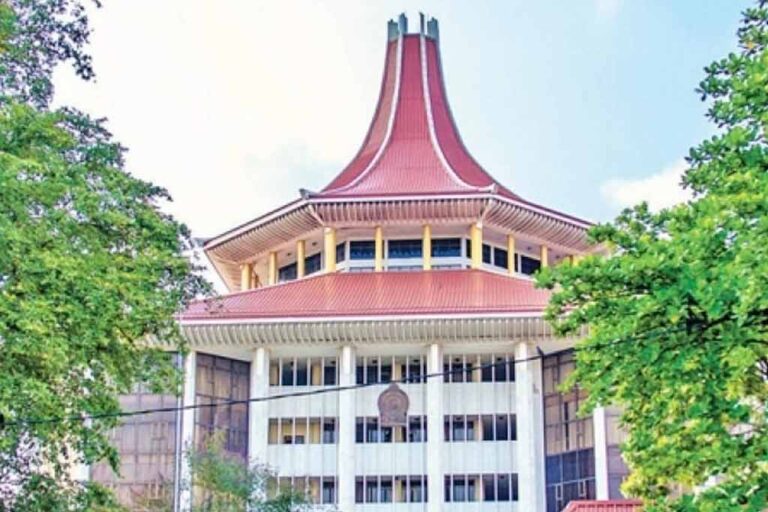
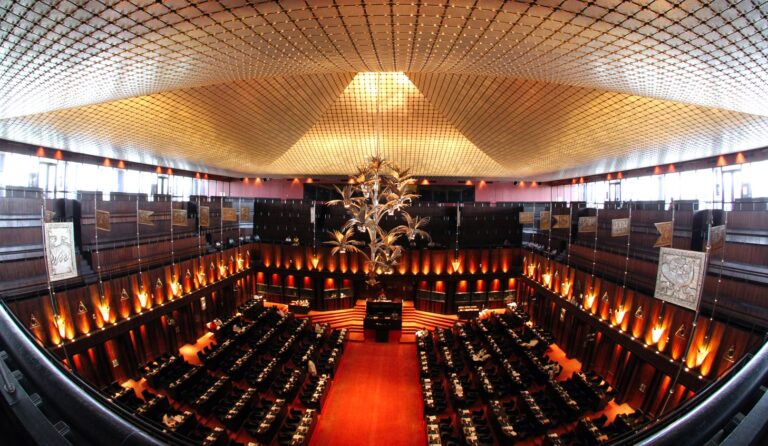
The Supreme Court yesterday concluded arguments on the constitutionality of the ‘Local Authorities Elections (Special Provisions) Bill,’ following four Special Determination petitions filed in opposition to it.

The court’s final determination on the Bill will be communicated to the President and the Speaker in due course. The Three-Judge bench presiding over the case comprised Justices Yasantha Kodagoda, Janak de Silva, and Arjuna Obeyesekere.

The Bill, tabled in Parliament, seeks to facilitate fresh nominations and elections for specific local authorities where elections were previously called and subsequently postponed.

Petitioners, including Sri Lanka Muslim Congress (SLMC) General Secretary Nizam Kariapper, PC, argued that the Bill infringes on citizens’ voting rights, thus violating fundamental rights. They further contended that certain provisions of the Bill necessitate approval by a special majority in Parliament and ratification through a referendum.

Sri Lanka Targets $36 Billion in Export Revenue by 2030 under New National Policy

0

In line with the government’s ambitious vision of “A Thriving Nation – A Beautiful Life”, President Anura Kumara Dissanayake has directed officials to implement measures aimed at increasing Sri Lanka’s export revenue to US$ 36 billion by 2030.

The announcement was made during the Export Development Council of Ministers (EDCM) meeting held at the Presidential Secretariat yesterday (27), marking a historic milestone as the council resumed its activities after a 28-year hiatus.

The EDCM, established on September 11, 1980, has convened sporadically in the past but had remained largely inactive since 1992. Although a meeting was held in 2020, no significant policy outcomes were implemented. The 2025 gathering is set to revitalize the council’s role in driving the country’s export agenda.

Sri Lanka’s export revenue, which stood at US$ 16.1 billion in 2024, is projected to rise to US$ 18.2 billion in 2025, with a long-term target of US$ 36 billion by 2030.

The meeting underscored a comprehensive action plan to achieve this ambitious target, emphasizing strengthening domestic production and transitioning towards an export-driven economy by enhancing local manufacturing capabilities, leveraging Sri Lanka’s strategic geographic location, skilled workforce, and abundant natural resources. Participants also focused on revitalizing struggling industries, boosting the competitiveness of export sectors, and adopting innovative strategies to penetrate global markets.

Participants highlighted the importance of ensuring infrastructure readiness, such as reliable energy, transport, and logistical systems, to support the planned economic expansion. The President stressed the need to create a conducive environment for investments, reduce barriers, and provide the resources required for sustainable growth.

This renewed focus on export-led growth is expected to drive industrial development, enhance foreign exchange earnings, and position Sri Lanka as a competitive player in global markets.

Rainy Conditions Expected to Enhance Across the Country

0

From today, the rainy condition is expected to temporarily enhance over Northern, North-central, Eastern, Uva, Southern, and Central provinces for the next few days.

Showers or thunder showers will occur at times in Uva and Southern provinces and in Ampara, Batticaloa, Matale and Nuwara-Eliya districts. Several spells of showers will occur in Northern and North-Central provinces and in Trincomalee district.

Showers or thundershowers will occur at several places elsewhere in the evening or night.

Cloudy skies can be expected over Southwestern part of the island.

Misty conditions can be expected at some places in Western, Sabaragamuwa, Central, and Northwestern provinces and in Galle and Matara districts during the morning.

The general public is kindly requested to take adequate precautions to minimize damages caused by temporary localized strong winds and lightning during thundershowers.

Mannar Wind Energy Park Phase II gets underway with plant factor above 40-pct

0

By: Staff Writer

January 27, Colombo (LNW): The Sri Lankan government is moving forward with Phase II of the Mannar Wind Energy Park, a 100 MW project that includes a 5 km, 132 kV transmission line.

This phase will incorporate advanced wind turbines with grid-support features, allowing for semi-dispatchable operations, similar to those in Phase I managed by the Ceylon Electricity Board (CEB). The turbines will be located 2 km from the existing installations, ensuring operational efficiency.

The Mannar wind energy projects have demonstrated significant potential. A state-run 103.5 MW wind farm built by CEB in Mannar has generated over 1.1 billion kWh of electricity in the last three years, achieving an average plant factor exceeding 40%.

 Funded by a $200 million Asian Development Bank (ADB) loan, the project surpassed its expected generation targets, producing 347 GWh in 2022, 391.22 GWh in 2023, and 365 GWh in 2024.

These figures indicate strong performance and return on investment, with revenue ranging between $69 million and $117.43 million, depending on pricing models.

Windorce Plc was awarded a 50 MW wind plant in June 2026 for 4.88 US cents per kWh, reflecting competitive pricing.

 In contrast, a prior agreement with India’s Adani Group for 484 MW projects in Mannar and Pooneryn priced electricity at 8.26 US cents per kWh. Mannar’s advantageous wind patterns, driven by monsoonal activity, have resulted in high energy yields.

Despite these successes, the environmental impact of the wind farms has sparked controversy. Phase I, established in 2020 with ADB funding, drew criticism for its location along a critical bird migratory corridor.

Bird radar systems were installed to mitigate this, shutting turbines when flocks are detected, though this reduces energy generation.

The environmental concerns echo criticisms of past projects, such as the Canadian-funded Sinharaja Mechanized Logging Project of the 1960s and 70s.

However, economic imperatives often take precedence, as demonstrated by the government’s decision to accept an unsolicited proposal from Adani Green Energy Sri Lanka Ltd. during the country’s economic crisis.

Adani’s proposed 250 MW Mannar Wind Power Project (Phase II) involves 52 turbines of 5.2 MW capacity each, projected to generate 1,048 GWh annually, fulfilling 6% of Sri Lanka’s energy needs.

Critics highlight that while onshore wind energy provides short-term benefits, offshore wind farms could yield significantly greater energy without the environmental and logistical constraints of land-based projects.

Offshore facilities also hold the potential to produce alternative fuels like hydrogen and ammonia, paving the way for a more sustainable energy future.

In summary, the Mannar Wind Energy Park represents a critical step in Sri Lanka’s renewable energy journey, balancing economic growth and environmental challenges.

 While Phase II promises to enhance energy output, long-term strategies must consider sustainable, less invasive technologies to meet the nation’s growing energy demands.

Controversy over SL Railways’ Breach of Contract Jeopardizes Iconic Viceroy Special

0

By: Staff Writer

January 27, Colombo (LNW): Sri Lanka Railways (SLR) faces criticism for allegedly violating a Cabinet-approved contract with JF Tours, resulting in the cancellation of bookings for the historic Viceroy Special steam train.

This luxury tourism venture, operated by JF Tours for over four decades, has played a vital role in promoting Sri Lanka’s heritage to local and international visitors.

According to JF Tours Managing Director Pavithra Fernando, the company holds a five-year agreement approved by the Cabinet on July 17, 2023.

The contract outlines clear operational responsibilities, service standards, and enhancements for the steam train experience. JF Tours manages the carriages’ interiors, operations, and marketing, while SLR is responsible for maintaining operational engines with at least ten days’ notice.

However, JF Tours claims SLR has failed to meet its obligations, including canceling a $15,600 reservation from January 11–13 without explanation.

Further, JF Tours had requested SLR to service three steam engines ahead of the peak tourist season, but no action was taken. Attempts to address the issue, including correspondence with the Minister of Transport and requests for booking confirmations, have gone unanswered.

As a result, JF Tours has initiated legal proceedings against SLR for breach of contract, seeking damages and highlighting the risk of canceling additional bookings worth over $630,000 through March 2025.

Fernando stressed that these cancellations jeopardize long-term tourism partnerships with UK and Australian agents, who plan itineraries a year in advance. The company anticipates legal action from foreign tour operators over damages such as canceled air tickets and pre-booked services.

The Viceroy Special, the only operational steam train in Sri Lanka, features two air-conditioned observation saloons with 64 reclining seats and a restaurant car adorned with Edwardian-style decor, complete with ribbed fans, teak-trimmed wood paneling, a fully equipped kitchen, and a bar.

Passengers enjoy guided commentary, scenic photo stops, and the rare chance to ride in the driver’s cabin. Popular routes include Pinnawala, Kandy, the hill country, and the west coast’s beach resorts.

 Since its revival after being abandoned for years, the Viceroy Special has significantly contributed to Sri Lanka’s tourism industry.

 It attracts high-end travelers, particularly as the country shifts its marketing focus to premium clientele following record tourist arrivals post-conflict. Restoring and operating the train was no small feat, requiring the recovery of carriages, sourcing rare spare parts, and re-engaging retired railway employees with expertise in steam locomotives.

Despite its iconic status and tourism potential, the current contractual dispute threatens the Viceroy Special’s operations and its ability to continue drawing affluent travelers to Sri Lanka. JF Tours calls on authorities to honor the agreement and avoid long-term damage to the nation’s tourism reputation.

Dutch-Funded Bridge Project Stalled amid Poor Planning

0

By: Staff Writer

January 27, Colombo (LNW): The Ministry of Provincial Councils and Local Government has announced that a Netherlands-funded bridge project has been halted midway due to insufficient planning.

According to Deputy Minister Ruwan Senarath, the initiative, launched in 2021 with a target completion date of 2024, aimed to construct 162 prefabricated bridges across rural areas.

However, only 101 bridges have been completed, significantly falling short of expectations.The project was supported by €70.7 million (Rs. 14.1 billion) in funding from Rabobank of the Netherlands, with 35% of the total cost provided as a grant.

Two agreements were signed between the Sri Lankan government and Rabobank for the construction of 200 rural bridges and the establishment of a national vocational training institute in Hingurakgoda, Polonnaruwa.

The agreements were formalized by former  Finance Ministry Secretary Dr. R.H.S. Samaratunga and Rabobank Director Han Bartelds, with the Netherlands’ Ambassador to Sri Lanka, Tanja Gonggrijp, present during the signing ceremony.

The government prioritized the “Construction of Rural Bridges” initiative to improve connectivity in underdeveloped areas and integrate remote villages into the nation’s mainstream development activities.

The program aimed to provide transport infrastructure to remote regions, helping residents access markets, medical services, and schools more easily.

The lack of adequate bridge infrastructure in rural areas has caused significant hardships. Villagers often resort to dangerous means, such as crossing rivers on ropes or tree trunks, risking their lives to carry out daily tasks.

 In response, the yjen government initiated a 4,000-bridge program in 2016 to address these challenges, with financial assistance from the Netherlands and Belgium. Janson Bridging, a Netherlands-based company, was selected to supply steel bridges for the project.

Although the project was meant to transform rural connectivity, officials now claim that the earlier administration rushed its implementation, hastily obtaining cabinet approval without sufficient planning. As a result, progress has been slower than expected.

 To finance the initiative, Rabobank of the Netherlands provided two Export Credit Facilities to cover 75% of the contract costs, with the remaining 25% covered by grants from the Dutch Development Related Infrastructure Investment Vehicle (DRIVE). This funding arrangement enabled the construction of approximately 250 steel bridges across the island.

The current administration has reaffirmed its commitment to rural development and improving national connectivity.

The project also aligns with the government’s broader goals of promoting vocational education and training to enhance youth employability and support economic growth. However, due to ongoing challenges and delays, the future of this ambitious initiative remains uncertain.

While the bridge program holds potential to alleviate the struggles of rural communities and boost local economies, its success depends on addressing the planning and execution flaws that have hindered progress thus far.

Sri Lanka and China Revive FTA Negotiations amid Strategic Geopolitical Dynamics

0

By: Staff Writer

January 27, Colombo (LNW): Sri Lanka and China have agreed to establish a working group to resume discussions on a long-delayed Free Trade Agreement (FTA), according to Foreign Minister Vijitha Herath. 

This decision follows President Anura Kumara Dissanayake’s recent state visit to China, during which both nations reaffirmed their commitment to advancing the bilateral trade agreement.

The FTA discussions, stalled since 2018 due to disagreements over key clauses, are now back on track, with both sides pledging to finalize a comprehensive deal.

 A joint statement emphasized the principles of equality, mutual benefit, and win-win outcomes.

Sri Lanka expressed gratitude for China’s efforts to promote Sri Lankan exports, while China reiterated its support for Sri Lanka’s tea, gem, and other industries.

Efforts include connecting Sri Lankan enterprises with Chinese importers and facilitating their participation in expos such as the China International Import Expo and other trade platforms.

Negotiations had previously faltered over Sri Lanka’s concerns regarding tariff liberalization timelines, tariff line percentages, and review periods. 

Sri Lanka sought immediate zero tariffs for 500 items and a 10-year review clause, while China proposed broader liberalization, favoring 90% of tariff lines and a 20-year review. 

However, recent virtual negotiations suggest China is now more flexible on these issues.

The geopolitical backdrop adds complexity to the FTA discussions. Analysts highlight Sri Lanka’s delicate position in a proxy cold war involving China, India, and the U.S. 

This rivalry has often made Sri Lanka cautious in engaging with major powers. 

However, the 2022 economic crisis and sovereign debt default have forced the country to seek diversified foreign investments and trade partnerships to stabilize its economy.

During President Dissanayake’s visit, Sri Lanka welcomed increased Chinese investments and committed to fostering a favorable business environment. 

The joint statement outlined plans to expand cooperation in logistics, green development, and the digital economy, aiming for sustainable development and economic transformation in Sri Lanka.

China’s renewed interest in the FTA and willingness to address past disagreements reflect its broader strategic goals in the region. 

For Sri Lanka, a comprehensive FTA could provide critical economic relief by boosting exports and attracting investments. Both countries appear eager to move forward, signaling a potential breakthrough in their economic partnership.

As the working group begins its deliberations, the focus will be on addressing outstanding issues and achieving a balanced agreement that benefits both nations.

Government Takes Responsibility for Release of Uninspected Containers amid Port Congestion Issues

0

By: Staff Writer

January 27, Colombo (LNW): The Sri Lankan government recently took responsibility for the release of 323 containers by Sri Lanka Customs without inspection, citing operational bottlenecks at the Colombo Port.

According to Ports Deputy Minister Ruwan Kodithuwakku, this decision was made to address delays and congestion caused by the daily arrival of over 2,000 containers.

He clarified that this was an uncommon measure, implemented through a three-member committee based on specific criteria.

Samagi Jana Balawegaya (SJB) MP Harshana Rajakaruna raised concerns in Parliament regarding these uninspected containers, some of which were reportedly flagged in the ‘red zone,’ signaling potential risks.

 He expressed fears about the lack of transparency surrounding their contents, which could lead to regulatory lapses. In response, the Deputy Minister acknowledged these concerns and emphasized the need for long-term solutions, such as expanding container yards, to prevent similar issues in the future.

The Association of Container Transporters criticized the government’s handling of the situation, stating that the current infrastructure and manpower were insufficient to manage inspections properly.

They suggested implementing a streamlined digital system to improve monitoring and accountability. Meanwhile, the Customs Trade Union Alliance (CTUA) distanced itself from the decision, refusing to take responsibility for the uninspected containers.

The union raised concerns that some containers might contain substandard goods, such as unapproved medicines, unsafe cosmetics, or even illegal items like unauthorized cigarettes, drugs, or weapons. They warned that such lapses could jeopardize public safety and national security.

The CTUA also questioned the legal framework that allowed the bypassing of mandatory customs inspections, emphasizing that around 80% of the goods in these containers required thorough examination.

The union called for clarification on the higher authorities responsible for authorizing the release, pointing to potential gaps in oversight and accountability within the customs process.

Critics argue that releasing uninspected goods undermines public confidence in regulatory institutions and compromises the integrity of customs operations. The risk of harmful or illegal items entering the market raises significant concerns for public safety.

This incident has sparked widespread apprehension about legal compliance, transparency, and national security, putting pressure on the government to provide clear explanations and implement measures to prevent similar occurrences.

Potential risks include public health hazards if substandard goods, such as unapproved medicines or unsafe cosmetics, are allowed into circulation. There is also the possibility of illegal imports, such as prohibited drugs, unauthorized cigarettes, or weapons, which could pose serious security threats.

The CTUA’s questioning of the legal basis for releasing these containers without inspection highlights concerns about procedural lapses. They are seeking clarification on the legal provisions that permitted such actions, particularly since a significant portion of the goods required mandatory customs checks.

The union’s disassociation from the decision signals potential weaknesses in accountability within the customs process. This situation underscores the importance of a robust oversight system to ensure compliance with legal standards and maintain public trust.

In conclusion, the government’s decision to release these containers without proper inspection has raised significant concerns about public safety, legal compliance, and regulatory integrity. It is crucial for the authorities to provide transparent explanations and take steps to prevent similar incidents in the future to safeguard national security and maintain the public’s confidence in customs operations.

Apparel Exports Gain 5% Growth in 2024 amid Industry Challenges

0

By: Staff Writer

January 27, Colombo (LNW): Sri Lanka’s apparel export earnings reached $4.7 billion in 2024, reflecting a 5% year-on-year (y-o-y) growth, according to the Joint Apparel Association Forum (JAAF). 

When combined with the country’s textile exports, the total export value surpassed $5 billion, showcasing the resilience of the industry despite local and global challenges.

Compared to the pre-pandemic benchmark of 2019, when exports were $5.3 billion, 2024 figures reflect a 10.3% shortfall. This underscores the need for focused interventions to reclaim lost ground and exceed pre-pandemic levels.

Performance across key markets revealed mixed outcomes. Exports to the US, Sri Lanka’s largest market, rose by 5.23% to $1.9 billion but remained 19.4% below 2019 levels.

Exports to the UK recorded a strong 7.65% growth, nearing pre-pandemic figures, driven by demand for ethically and sustainably manufactured garments. 

Growth in the EU was modest at 0.81%, highlighting challenges in a highly regulated and competitive market.

Meanwhile, exports to other destinations increased by 10.13%, reflecting successful penetration into new markets and the industry’s evolving ability to label, pack, and ship directly to third countries on behalf of customers.

To strengthen the industry’s competitiveness, localised fabric production has emerged as a priority. The Eravur Textile Zone, a 300-acre facility, is designed to house textile-dyeing, washing, knitting, and weaving plants. 

This project is expected to significantly reduce production costs, save foreign exchange, and enhance Sri Lankan exports’ appeal to global buyers who demand traceability and sustainability.

JAAF Secretary-General Yohan Lawrence highlighted the significance of the Eravur Textile Zone, calling it a “lifeline” for the industry.

 He stressed that localising fabric production is critical to boosting competitiveness and meeting global market demands.

Analysis of the past five years reveals a gradual recovery for the sector. The pandemic caused a significant dip in 2020, with exports dropping to $4.1 billion, a 22% decline from 2019. 

Exports briefly peaked in 2022 but saw setbacks in 2023 due to global inflation and reduced consumer spending. The modest growth of 5% in 2024 also reflects pricing pressures faced by the industry.

JAAF emphasizes the importance of continued collaboration between industry stakeholders and the government. 

Critical areas include enhanced market access, infrastructure projects like the Eravur Textile Zone, predictable electricity tariffs, and improved operational efficiency at Colombo Port. 

Recent electricity tariff adjustments have been welcomed, as Sri Lanka’s energy costs remain high compared to competitors. J

AAF has advocated for energy sector reforms to adopt cost-effective generation and pass savings to consumers.

In a key policy development, Sri Lanka and Indonesia have jointly applied to the UK DCTS authorities for fabric cumulation. If approved, apparel made in Sri Lanka using Indonesian fabric could enter the UK duty-free, boosting competitiveness in that market.

 Looking ahead, JAAF is optimistic about surpassing pre-2019 export levels. Strategic investments and reforms could help the industry achieve $6 billion in export earnings, solidifying Sri Lanka’s position as a global leader in quality and ethical manufacturing. 

With a focus on sustainability and traceability, the sector remains poised for growth if the right measures are implemented.