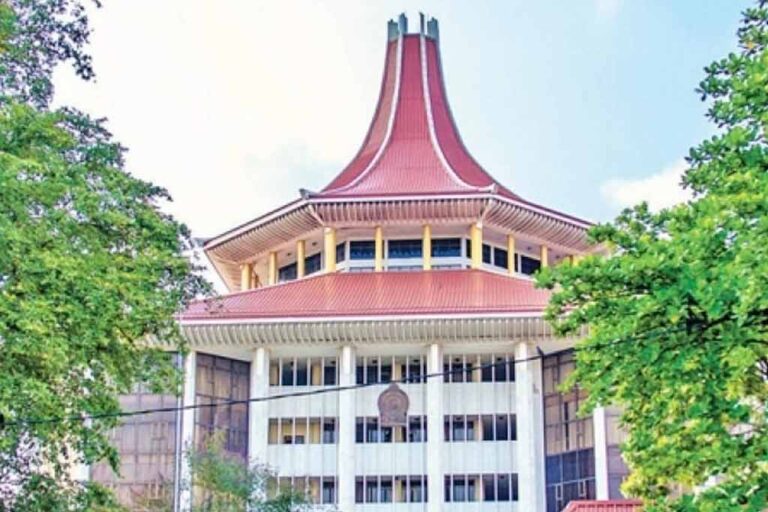
July 07, Colombo (LNW): A legal dispute concerning the exclusion of Sri Lankan students from the MBBS programme at the General Sir John Kotelawala Defence University (KDU) may soon reach an amicable resolution, the Supreme Court was informed today (07).
The development follows the university’s recent decision to resume admissions for local applicants, a move that could render the matter moot.
The case was initiated by a group of ten prospective medical students who had sought entry into KDU’s undergraduate medical programme. They filed a Fundamental Rights application challenging what they saw as an arbitrary and unjustified decision to deny local students the opportunity to enrol.
The petition named a range of officials and institutions as respondents, including the KDU administration, the University Grants Commission, and several senior government figures such as the Minister of Education, the Minister of Health, and the Prime Minister.
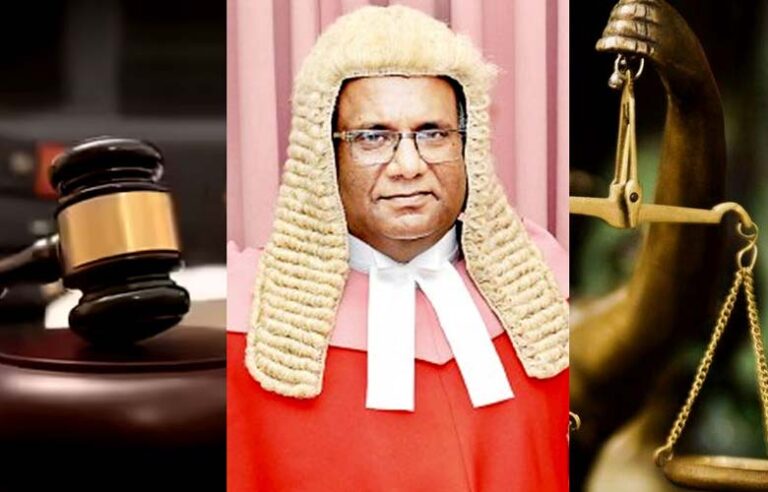
When the matter came before the Supreme Court, presided over by Chief Justice Murdu Fernando and Justices Mahinda Samayawardena and Menaka Wijesundara, legal counsel for the petitioners indicated that the basis of the petition may no longer exist, given the university’s reversal of its earlier stance.
Barrister Hafeel Farisz, appearing on behalf of the petitioners, informed the court that a settlement was under consideration and that his clients were in the process of reviewing the new developments. He added that a final position would be presented after obtaining formal instructions from the students involved.
The court was satisfied with the update and agreed to adjourn the matter until July 24, providing time for both parties to finalise their respective positions.
Legal representation for the petitioners included Hafeel Farisz, alongside Nishika Fonseka and Shannon Tillekeratne, instructed by Shayamalee Athukorale. Deputy Solicitor General Nirmalan Wigneswaran appeared on behalf of the KDU and other respondents.
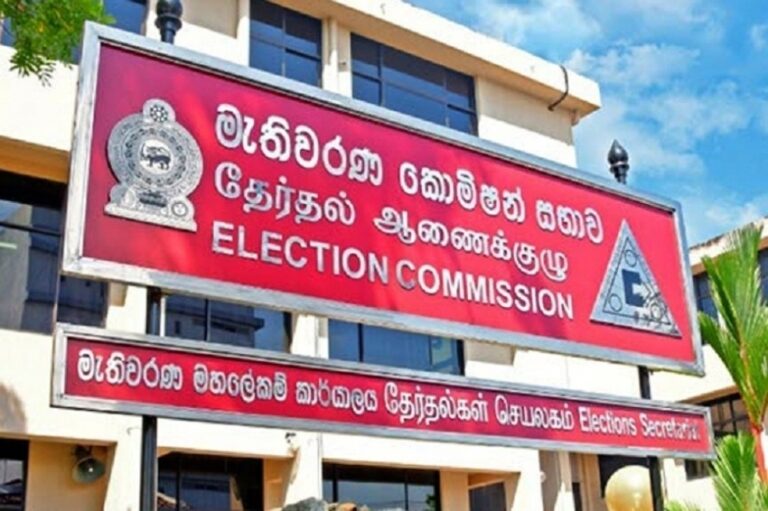
July 07, Colombo (LNW): The National Election Commission has temporarily shut down access to all its online platforms and digital services, citing the need for critical maintenance and system enhancement.
The suspension, which took effect today, will remain in place until further notice, according to an official statement released by the Commission.
As part of the temporary suspension, a wide range of public-facing digital tools—such as voter registry lookups, online registration for new voters, district-wise data retrieval, and the issuance of voter-related declarations—will be inaccessible.
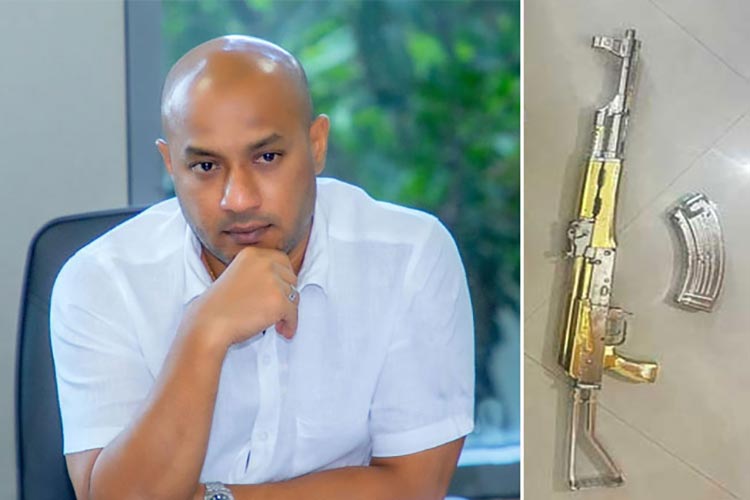
July 07, Colombo (LNW): Former Cabinet Minister Duminda Dissanayake has been ordered to remain in remand custody until July 15, following a court appearance earlier today (07) before the Mount Lavinia Magistrate.
The decision relates to an ongoing investigation into the startling discovery of a gold-plated T-56 assault rifle at a residential complex in the Havelock Town area of Colombo.
Dissanayake, who was arrested in late May, remains at the centre of a high-profile probe being conducted by the Terrorism Investigation Division (TID). His arrest on May 23 followed a raid carried out just days earlier, on May 20, when authorities uncovered the ornamental yet fully operational weapon concealed within a woman’s travel bag at the apartment building.
The weapon’s presence at the site, and the unusual nature of its lavish customisation, immediately raised questions regarding its ownership, origin, and purpose.
Whilst police have yet to publicly confirm how the weapon was linked to the former minister, investigators are reportedly pursuing several leads, including possible connections to illicit arms holdings and questions surrounding misuse of political influence.
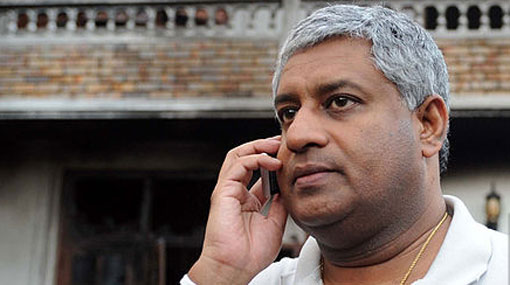
July 07, Colombo (LNW): Former Minister of Public Security Tiran Alles has reportedly been the target of serious death threats allegedly issued by a notorious criminal figure currently operating out of Dubai.
According to informed sources, the former minister received multiple threatening phone calls on July 05, believed to have originated from a leading figure in the organised underworld with known international ties.
Alles, who has played a central role in the government’s law enforcement and anti-organised crime efforts during his tenure, wasted no time in alerting authorities.
He formally lodged a complaint with the Acting Inspector General of Police, prompting immediate instructions for an in-depth investigation into the matter.
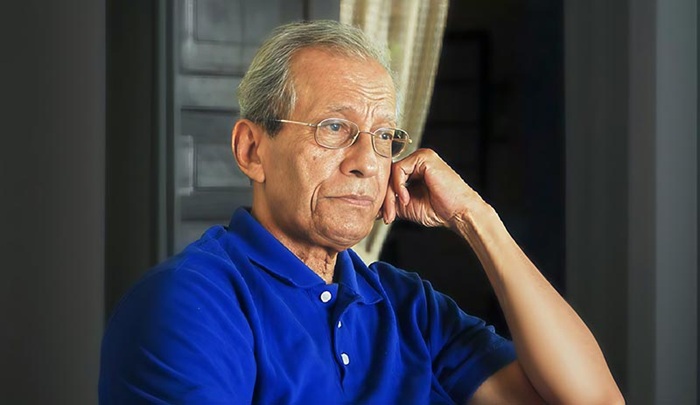
July 07, Colombo (LNW): Bradman Weerakoon, one of Sri Lanka’s most respected and long-serving public servants, has died at the age of 94, his family confirmed.
Known for his extraordinary career in the upper echelons of government, Mr Weerakoon was a trusted advisor to numerous national leaders over the course of nearly five decades in public life.
With a reputation for discretion, diplomacy, and dedication, Weerakoon served as the secretary to a total of nine heads of government, including both prime ministers and presidents.
His civil service career spanned an era of profound political, economic, and social transformation in Sri Lanka, and his role often placed him at the heart of pivotal national decisions.
Educated first at Holy Cross College in Kalutara, Weerakoon later joined S. Thomas’ College, Gurutalawa, as one of its earliest boarders—a school that would later produce several key figures in Sri Lankan public life. He went on to read for a Bachelor of Arts in Economics and Sociology at the University of Ceylon, where he graduated with upper second-class honours. His academic talents earned him a prestigious Fulbright scholarship, allowing him to pursue postgraduate studies at the University of Michigan in the United States. There, he obtained a Master’s degree in Sociology, further broadening his global perspective and analytical insight.
Returning to Sri Lanka, Weerakoon entered the Ceylon Civil Service in 1954—a time when the country was still navigating its early post-independence years. His early postings took him across the island, giving him a deep understanding of the country’s regional complexities. He was later appointed as Secretary to Prime Minister Sir John Kotelawala, a role that would mark the beginning of his long association with the highest levels of government.
Over the ensuing decades, Weerakoon continued to serve successive leaders—seven prime ministers and three presidents in total—advising them through periods of both peace and turbulence. His ability to remain apolitical, while consistently offering sound and measured guidance, earned him respect across party lines.
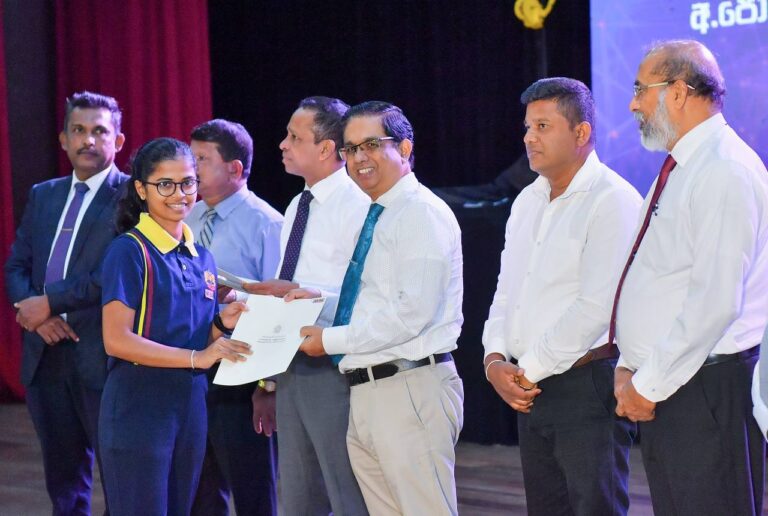
July 07, Colombo (LNW): A total of 361 high-achieving students from Sri Lanka’s Southern Province have been honoured with a financial award of Rs. 100,000 each, in recognition of their exceptional academic performance in the G.C.E. Advanced Level examinations of 2023 and 2024. The awards were conferred under a newly restructured initiative overseen by the Presidential Fund.
The celebratory event took place at the Rabindranath Tagore Auditorium of the University of Ruhuna earlier today, where students representing the districts of Galle, Matara, and Hambantota were acknowledged for their academic excellence. The recipients included the top ten performers in each of the six main subject streams across the two exam years.
In total, the Presidential Fund has disbursed Rs. 36.1 million towards this initiative. This is part of a broader, island-wide programme aiming to extend similar support to outstanding students from all districts in the near future.
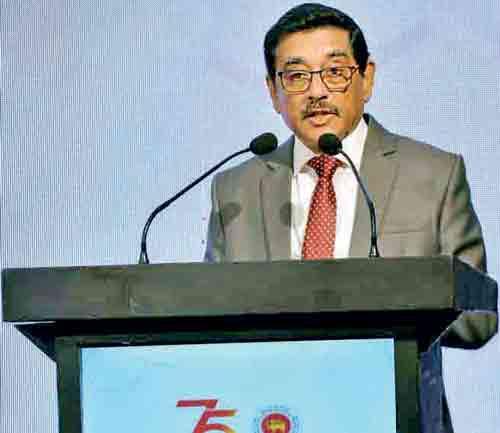
Speaking at the event, Dr Nandika Sanath Kumanayake, Secretary to the President, underscored the current government’s efforts to reform and revitalise the Presidential Fund. Under the guidance of President Anura Kumara Dissanayake, the fund has reportedly been streamlined to improve transparency and expand access to previously underserved communities.
Dr Kumanayake addressed long-standing concerns over the misallocation of public funds, noting that corrective steps have been taken to ensure that financial support now reaches genuinely deserving recipients. He also revealed plans for digital transformation and decentralisation of fund operations, aimed at improving administrative efficiency.
He further emphasised the pivotal role of education in national development, encouraging the young scholarship recipients to make full use of the opportunity presented to them—not only for personal advancement but to serve the country with integrity in the years ahead.
Minister of Industry and Entrepreneurship Development, Sunil Handunnetti, echoed these sentiments. He remarked that what was once viewed as an exclusive presidential reserve had now evolved into a people-centred welfare mechanism, rebranded as “the People’s Fund.” He spoke candidly about past misuse of the fund for the benefit of political associates and pledged that such practices have been discontinued.
Minister Handunnetti issued a passionate call to the students, urging them to uphold moral responsibility in return for the public investment made in their education. He implored them to act as ethical future leaders who reject corruption and remain accountable to the citizens who financed their educational journey.
Also addressing the audience was Minister of Women and Child Affairs, Mrs Saroja Savithri Paulraj, who described education as a fundamental pillar of the government’s national agenda. She highlighted the administration’s commitment to providing the younger generation with the tools they need to realise their potential, not only academically, but also as compassionate, socially conscious individuals.
Minister Paulraj stressed that the scholarships were more than just financial aid; they represented a promise to build a more educated, humane, and inclusive society. She expressed confidence that many of the awardees would go on to serve in positions of influence both nationally and internationally, and cautioned that their future decisions must be guided by ethics and empathy to honour the public trust placed in them.
A vote of thanks was delivered by Miss Sithmini Madanayake of Southlands College, Galle, who spoke on behalf of the student body. She described the initiative as a life-changing opportunity for students from less affluent backgrounds and expressed heartfelt gratitude to the President and the fund administrators for their support.
The ceremony drew a diverse gathering of dignitaries and stakeholders, including Members of Parliament L.M. Abeywickrama, Lal Premnath, and Aravinda Senarath; Roshan Gamage, Senior Additional Secretary to the President and Secretary of the President’s Fund; Vice-Chancellor of the University of Ruhuna, Senior Professor P.A. Jayantha; District Secretaries Chandana Tilakaratne (Matara), W.A. Dharmasiri (Galle), and Bimal Silva (Hambantota); as well as military officials, education administrators, parents, and the honoured students themselves.
July 07, Colombo (LNW): Several spells of showers will occur in the Western, Sabaragamuwa and provinces and in Kandy, Nuwara-Eliya, Galle and Matara districts, the Department of Meteorology said in its daily weather forecast today (07).
A few showers may occur in the North-western province.
Showers or thundershowers may occur at a few places in the Uva province and in Ampara and Batticaloa districts during the afternoon or night.
Strong winds of about (40-50) kmph can be expected at times over Western slopes of the central hills and in Northern, North-central and North-western provinces and in Trincomalee and Hambantota districts.
The general public is kindly requested to take adequate precautions to minimise damages caused by temporary localised strong winds and lightning during thundershowers.
Marine Weather:
Condition of Rain: Showers will occur at several places in the sea areas off the coast extending from Chilaw to Matara via Colombo and Galle.
Winds: Winds will be Westerly to South-westerly and wind speed will be (30-40) kmph.
Wind speed can increase up to (55-60) kmph at times in the sea areas off the coast extending from Chilaw to Kankasanthurai via Mannar and from Matara to Pottuvil via Hambantota.
Wind speed can increase up to (45-50) kmph at times in the sea areas off the coast extending from Chilaw to Matara via Colombo and Galle and from Kankasanthurai to Trincomalee via Mullaittivu.
State of Sea: The sea areas off the coast extending from Chilaw to Kankasanthurai via Mannar and from Matara to Pottuvil via Hambantota will be very rough at times. The sea areas off the coast extending from Chilaw to Matara via Colombo and Galle and from Kankasanthurai to Trincomalee via Mullaittivu may be fairly rough at times.
The wave height (about 2.0–2.5 m) may increase in the sea areas off the coast extending from Puttalam to Pottuvil via Colombo, Galle and Hambantota (this is not for land area).
Naval and fishing communities are requested to be vigilant in this regard.
July 07, Colombo (LNW): Justice Gamini Amarasekara, who concluded his tenure on the Supreme Court bench last week, marked his final day in court with a reflective and emotionally charged address, casting a critical eye on the state of judicial independence in Sri Lanka.
Speaking with the permission of the Chief Justice and fellow justices, Amarasekara used his farewell remarks to not only express gratitude for his career journey—from his first appointment in the Magistrate Court of Walasmulla during the turbulent years of 1988–89—but also to issue a sober warning about what he perceives as the growing fragility of judicial autonomy.
Recalling decades of service, Amarasekara noted that although the judiciary had historically withstood external pressures with the solidarity of both the bench and bar, internal erosion posed a much more insidious threat.
“It is easier to confront external intimidation when judges and lawyers stand together,” he said. “But when the rot begins from within, it becomes much harder to resist.”
He spoke of the values instilled in him early in his career by senior jurists such as the late Justice Sosa, recounting a parable about a caliph’s removal to illustrate the dangers of loyalty to power over principle.
“How do we stop the emergence of judges who trade their independence for favour in a competitive society?” he asked, with evident concern. “This is not merely a rhetorical question—it is a lived reality I have encountered.”
Amarasekara lamented a gradual disillusionment he experienced in recent years, especially during his involvement with the Judicial Service Commission. Though he refrained from naming individuals or incidents, he alluded to a culture of silence and compliance within the judiciary, warning that it is ultimately the public who would suffer the consequences.
Lawyers, he said, may hesitate to raise concerns when the questionable conduct emanates from judges they must appear before. Judges themselves may resist speaking out, fearing reputational damage. “In the end, justice becomes the casualty,” he declared.
The retiring judge’s tone shifted briefly to one of gratitude as he acknowledged the support he had received from the legal fraternity throughout his career. He gave special thanks for the community spirit within local bar associations, which had helped him navigate numerous professional challenges over the years. “I thank the almighty for allowing me to remain human in my dealings with others,” he reflected.
Yet his parting words left no doubt that he departed his post with a heavy heart. “I took pride in being a judge,” he said. “But recent experiences have left that pride wounded.”
Justice Amarasekara’s farewell serves as a powerful reminder of the vital role played by an independent judiciary in upholding the rule of law. His candid remarks underscore the responsibility borne not only by judges but by all stakeholders in the legal system to resist compromise and preserve the integrity of the bench.
July 06, Colombo (LNW): The Central Bank of Sri Lanka (CBSL) has taken a major step toward promoting financial inclusion and public empowerment with the launch of a series of strategic initiatives under its Financial Literacy Roadmap. The move is part of its long-term vision to build a “Financially Literate Sri Lanka” by equipping citizens with essential knowledge and tools for making informed financial decisions.
Spearheaded by the Central Bank’s Regional Development Department under the National Financial Inclusion Strategy (NFIS), these new initiatives fall under the roadmap’s Content Development and Harmonisation Pillar. The primary aim is to unify and standardise financial education efforts across the country, replacing disjointed campaigns with a coordinated, impactful national strategy.
A central highlight of the launch is Sri Lanka’s first-ever comprehensive Financial Literacy Curriculum. This well-researched framework has been developed with inputs from Central Bank departments, academic experts, and external consultants. Covering six key areas—Economic and Financial Environment, Personal Finance, MSME Finance, Digital Literacy, Financial Consumer Protection, and Tax Literacy—the curriculum is expected to serve as a cornerstone for future public awareness and financial education programs.
Supported by the United Nations Development Programme (UNDP) and developed in collaboration with the University of Kelaniya, the curriculum aims to deliver accurate, relevant, and practical financial knowledge to Sri Lankans across all regions and demographics.
In a bid to make financial education more engaging and accessible, the Central Bank has also launched two educational video series, backed by the UNDP and the Japan International Cooperation Agency (JICA). These videos tackle real-world financial issues such as rising debt levels, lack of savings, and increasing fraud, using clear messaging to build public awareness and resilience.
To expand the reach and sustainability of its efforts, the Central Bank has rolled out a Certified Trainer in Financial Literacy (CTFL) program in partnership with the Institute of Bankers of Sri Lanka (IBSL). Targeting banks and public institutions, the program aims to produce 100 certified trainers annually, equipped with standardised teaching tools to deliver consistent financial education nationwide.
Further reinforcing its academic approach, the Central Bank also signed a Memorandum of Understanding (MoU) with the University of Kelaniya to promote research and innovation in financial literacy.
The Central Bank has invited media professionals, educators, and community leaders to join in disseminating these resources, marking the beginning of a broad-based movement toward greater financial empowerment and inclusion in Sri Lanka.
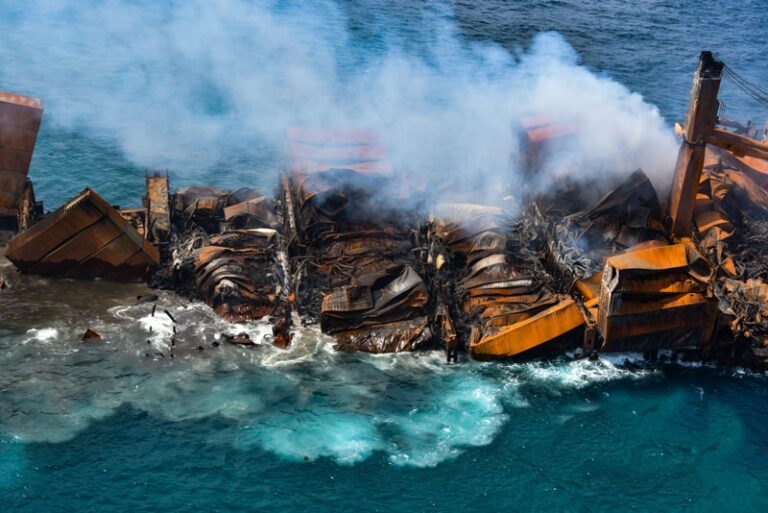
July 06, Colombo (LNW): Sri Lanka’s quest for $6.4 billion in compensation over the 2021 X-Press Pearl maritime disaster has hit a major roadblock, with the main legal case filed in Singapore now stalled due to a counter-lawsuit launched in the United Kingdom by the ship’s insurers. The delay casts uncertainty over the country’s ability to secure compensation for what has been deemed the worst marine environmental catastrophe in its history.
The Singapore-flagged container vessel X-Press Pearl caught fire on May 20, 2021, off the coast of Colombo and sank days later, releasing toxic chemicals and billions of plastic pellets into the ocean. The environmental and economic impact on Sri Lanka’s coastline, marine life, and fishing communities has been severe, with damage estimates reaching at least $6.4 billion based on expert evaluations up to late 2022.
Legal proceedings were initially launched in Singapore by the previous government, aiming to hold the shipping company accountable. However, Environment Ministry legal advisor Dammika Patabendi confirmed that progress has stalled due to counter-litigation in the UK, where insurers are attempting to limit their financial liability.
The current government is attempting to expedite the matter through the Ministry of Justice, but Attorney General Parinda Ranasinghe has cautioned that a swift resolution is unlikely. “Nobody is going to just hand over Rs. 6.4 billion,” he said, noting that compensation will require detailed legal scrutiny, similar to complex insurance claims.
Amid these international legal hurdles, a parallel legal process is unfolding in Sri Lanka. The Supreme Court is expected to rule later this month on several local cases filed by environmental groups, including one by the Centre for Environmental Justice (CEJ). CEJ Co-Founder Ravindranath Dabare said all arguments in their case have concluded, and a verdict is expected before the retirement of the Chief Justice at the end of July.
Dabare also expressed disappointment at the slow progress in Singapore, noting that earlier optimism about a faster outcome there has faded. Despite Sri Lanka not being a signatory to the international HNS (Hazardous and Noxious Substances) Convention, he remains hopeful that a favorable Supreme Court ruling can lead to internationally enforceable compensation, given the involvement of globally recognized companies.
The CEJ has also urged to initiate a probe into the handling of the disaster and the legal strategy for seeking damages. While Sri Lanka has received smaller payments for cleanup efforts and fishermen’s relief, the legal battle for the larger compensation package continues to be mired in procedural delays and jurisdictional disputes.