Home Blog Page 496

Alcohol Tax Hike Cuts Consumption, Boosts Revenue in Sri Lanka

0

By: Staff Writer

January 13, Colombo (LNW): The Alcohol and Drug Information Centre (ADIC) revealed that a 20% excise tax increase on alcohol last year led to a staggering reduction of 8.3 million litres in alcohol consumption while boosting government revenue by Rs. 11.6 billion.

Welcoming the latest hike on alcohol and tobacco taxes, ADIC Executive Director Sampath de Seram said the move is a significant step toward reducing public health risks.

He noted that such measures align with recommendations from the World Health Organization (WHO) to discourage harmful habits like excessive drinking and smoking.

“The latest step is helpful in both ways,” de Seram said, explaining that higher taxes not only reduce consumption but also provide a significant boost to state revenue.

According to ADIC, cigarette sales also saw a sharp decline last year, with volumes dropping by 521.5 million units. Despite this, tax revenue from cigarettes rose by Rs. 7.7 billion, demonstrating the dual benefits of excise tax increases.

However, de Seram urged that such measures be implemented scientifically, factoring in inflation and other economic variables to ensure long-term effectiveness.

Alcohol tax increases in Sri Lanka have been shown to reduce alcohol consumption and increase government revenue:

A 20% increase in alcohol excise tax in Sri Lanka led to an 8.3 million liter reduction in alcohol consumption. A survey found that 64% of participants saw a decrease in alcohol consumption during celebrations in 2024.

Alcohol tax increases generate additional excise tax revenue for the government. For example, a 20% increase in alcohol excise tax generated an additional LKR 1.8 billion in revenue.

Alcohol tax increases can reduce alcohol-related harm and improve public health. Alcohol-related harm is a significant burden on Sri Lanka’s health system.

Alcohol tax increases can have a progressive effect because economically disadvantaged groups are more likely to reduce their consumption when prices increase.

Taxation is a well-recognized policy tool in preventing alcohol harm. In 2023, Sri Lanka increased alcohol taxation rates in order to increase government revenue and reduce costs due to alcohol harm. In 2024, the Alcohol and Drug Information Center (ADIC) of Sri Lanka carried out a survey to investigate the impact of the policy change on alcohol consumption and harm.

ADIC carried out this survey during the Sinhala and Tamil New Year celebrations in 2024, the period when alcohol consumption is typically the highest in the country.

The survey used a sample size of 415 individuals from across all nine provinces. 46.2% of the participants were female and 53.7% were male.

According to the survey results, 64% of the participants stated that they saw a clear decrease in alcohol consumption during celebrations in 2024.

Respondents report lower alcohol consumption in their communities 64% of survey respondents stated that they saw a clear decrease in alcohol consumption during New Year celebrations in 2024.Only 26% believed that there was no change in the alcohol consumption in the country. 10% stated that they witnessed an increase in alcohol consumption during the festive period in 2024.

Pensioners Face Difficulties in Claiming Withholding Tax Refunds

0

By: Staff Writer

January 13, Colombo (LNW): Pensioners in Sri Lanka are facing significant challenges in claiming refunds for the Withholding Tax (WHT) deducted from their bank deposit interest. While the government has implemented a refund mechanism, several difficulties hinder the smooth processing and relief for retirees:

Complex Documentation and Process: Pensioners must gather various documents, such as bank statements, to prove that WHT has been deducted. Banks usually provide an annual summary, but the process of filing a tax return and applying for a refund can be daunting, particularly for those not well-versed in tax procedures.

Reports indicate that with the increase in the Withholding Tax on deposits held in banks, a significant amount of deposits has been withdrawn from the banks.

It is noted that a portion of these funds is being redirected towards investments in the Colombo Stock Exchange and other ventures, with depositors feeling anxious.This situation has also contributed to the rise in the Colombo Stock Exchange.

As a result of the withdrawal of fixed deposits from banks, a crisis regarding liquidity in the banking and non bank financial sector is currently unfolding.

This crisis is affecting not only banks but also several other major companies.

Delays and Administrative Bottlenecks: Many pensioners face frustration due to delays in processing their refunds. Mistakes in documentation or system glitches can further complicate the process, leading to additional stress for retirees who are already financially vulnerable.

Increased Administrative Burden: Both the pensioners and the government must deal with an administrative load. Filing tax returns, verifying WHT deductions, and processing refunds can be time-consuming and cumbersome, particularly if many pensioners are involved. This can create bottlenecks and delays in disbursement.

Financial Stress Due to Uncertainty: The lack of clarity regarding the exact timeline and process for receiving refunds can cause financial strain for pensioners. Many retirees rely on their bank deposit interest for daily living expenses, and any delay in refunding WHT can disrupt their financial stability.

Risk of Fraud: The refund process could potentially be vulnerable to fraud if not carefully monitored. Pensioners may find themselves at risk of being misled or manipulated due to their limited understanding of tax laws and refund procedures.

Lack of Understanding of Tax Mechanisms: Many pensioners may not fully understand how WHT applies to their interest income, leading to confusion and financial stress. The complexity of tax systems and the specific rules for retirees can contribute to a lack of awareness and frustration with the system.

Given these challenges, the government is under pressure to ensure that the refund mechanism is streamlined, transparent, and user-friendly to prevent further hardship for retirees.

Colombo Port Tackles Severe Container Congestion with 24/7 Operations

0

By: Staff Writer

January 13, Colombo (LNW): The Colombo Port is facing severe congestion as container volumes have surged dramatically, exposing critical shortcomings in infrastructure and Customs operations.

According to Additional Director General of Sri Lanka Customs, Seevali Arukgoda, the daily volume of containers passing through the port has increased significantly, rising from an average of 800–1,200 containers to over 1,500, with peak days seeing as many as 3,000 containers.

 This unprecedented increase has overwhelmed existing systems, prompting urgent intervention by the government.

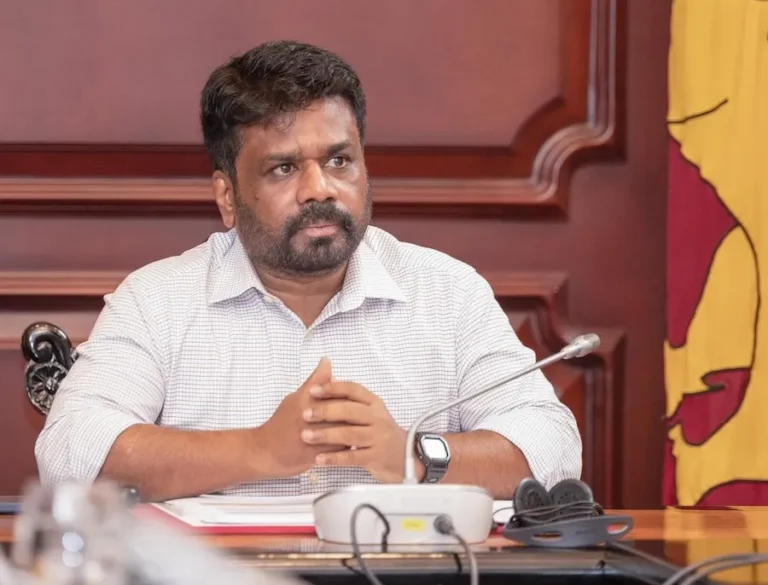
In response to the crisis, President Anura Kumara Dissanayake held discussions with stakeholders, resulting in Sri Lanka Customs agreeing to operate continuously, 24 hours a day, seven days a week, to clear the backlog of import containers.

A statement from the President’s office confirmed that Customs officers would work around the clock to expedite the clearance process.

Additionally, President Dissanayake emphasized the need for both public and private sector stakeholders to collaborate in addressing the crisis and implementing solutions to prevent future delays.

Delays caused by regulatory agencies such as the Sri Lanka Standards Institution (SLSI), the Department of Food Commissioner, and the Plant Quarantine Division were highlighted as major contributors to the congestion.

Staff shortages in these institutions were identified as a key factor, significantly slowing down the clearance process.

The President directed the relevant authorities to fill these vacancies immediately and improve welfare allowances for officers, ensuring that these institutions can function more efficiently.

To further alleviate congestion, a 5-acre plot of land in the Bloemendhal area was allocated for storing containers pending investigation.

Two acres of this land will be made available by January 31, with the remaining three acres ready by February 28.

This initiative is expected to provide much-needed space to accommodate the overflow of containers, easing the pressure on the port terminals.

Another measure to reduce congestion involves redirecting idle container trucks, which have been contributing to traffic within the terminals, to a designated parking area in Peliyagoda. This decision is expected to free up space within the port and improve the flow of operations.

Importers have also agreed to comply with stricter regulations to avoid delays. Food-related products must now be accompanied by mandatory certificates issued by accredited foreign laboratories, following proper testing.

Violations of these requirements will result in legal action in accordance with government regulations. Wharf clerks and other private service providers have been instructed to work 24/7 to ensure the efficient clearance of containers.

During the discussions, President Dissanayake stressed the importance of implementing short-term, medium-term, and long-term plans for the development of the port sector.

 He urged all stakeholders, including the port, Customs, and private service providers, to work as a unified team to resolve the crisis. Ports Minister Bimal Ratnayake added that the expedited clearance measures would remain in effect until June 30, underscoring the need for sustained cooperation.

This comprehensive approach aims not only to resolve the immediate congestion but also to create a foundation for long-term improvements in port operations.

 By addressing systemic inefficiencies and enhancing collaboration between the public and private sectors, the government is working to transform Colombo Port into a more efficient and resilient hub for trade.

New Government Revives US LNG Deal amid India, and China Partnerships

0

By: Staff Writer

January 13, Colombo (LNW): Sri Lanka’s new government has decided to reactivate a previously suspended liquefied natural gas (LNG) agreement with US-based New Fortress Energy, marking a significant step toward reducing energy costs and transitioning to cleaner fuels. This decision reflects the government’s effort to modernize its energy infrastructure while balancing relationships with global partners, including India and China, despite controversies surrounding past LNG procurement processes.

The government views LNG as a transitional energy source that complements its renewable energy goals while ensuring affordable and reliable power for citizens. Energy Minister Kumara Jayakody announced plans to revive a tender for an LNG terminal to support two major combined-cycle power plants, which currently rely on costly liquid fuels.

 Speaking in parliament, Jayakody highlighted the importance of LNG in reducing energy expenses and supporting the shift to cleaner energy, although he acknowledged coal remains the cheapest thermal option. Despite this, Sri Lanka has pledged not to expand coal-based energy projects.

Renewable Energy Expansion and LNG’s Role

Sri Lanka is striving to enhance its renewable energy capacity, particularly through solar and wind projects. However, these energy sources are intermittent and require backup to maintain supply reliability. LNG is positioned as a crucial transitional fuel to bridge the gap between liquid fuels and the country’s expanding renewable energy portfolio.

Controversies and Policy Revisions

In 2023, an open international tender awarded a China-Pakistan consortium, led by Engro, the contract to supply LNG and develop a pipeline network aimed at significantly reducing power production costs. However, this initiative was suspended in 2024 when the government, under a new energy policy, halted key LNG projects.

These included plans for a floating storage and regasification unit (FSRU) off Kerawalapitiya, an offshore and onshore LNG transmission pipeline network, and an onshore receiving facility.The suspension created an opportunity for India’s Petronet LNG Ltd. to enter the market.

India’s Petronet LNG Entry

India’s largest LNG supplier, Petronet LNG Ltd., is set to begin supplying Sri Lanka with LNG in 2025. Initially, Petronet will deliver 850 tonnes of LNG daily using containers, eventually transitioning to a floating LNG receipt facility at Colombo Port.

 According to CEO Akshay Kumar Singh, Petronet plans to source LNG from Qatar, Australia, and other suppliers, with shipments originating from its terminals in Gujarat and Kerala. This initiative aligns with Sri Lanka’s goal of diversifying energy partnerships while reducing costs.

US-Based New Fortress Energy’s Resurgence

New Fortress Energy (NFE), a US-based energy developer, has resumed its plans for LNG infrastructure in Sri Lanka after the Supreme Court dismissed opposition petitions in 2022. NFE originally signed an agreement in 2021 to develop an LNG terminal off Colombo’s coast and supply LNG to major power plants.

Under the agreement, NFE secured gas supply rights for the Kerawalapitiya Power Complex, which includes the operational 310 MW Yugadanavi Power Plant and the 350 MW Sobadanavi Power Plant, expected to begin operations in 2023.

NFE plans to supply an initial volume of 1.2 million gallons of LNG per day, significantly advancing Sri Lanka’s energy modernization efforts. Wes Edens, CEO of NFE, emphasized the project’s importance, stating it delivers cleaner, reliable, and affordable energy, while supporting sustainable development and economic growth.

Balancing Global Partnerships

Sri Lanka’s energy strategy highlights the country’s balancing act among major global players: the US, India, and China. While China’s earlier bid encountered setbacks, India’s Petronet LNG is now positioned to play a central role in Sri Lanka’s energy transition. Meanwhile, New Fortress Energy remains committed to advancing its LNG projects.LNG is seen as a transitional fuel bridging the gap to renewable energy by addressing supply reliability issues. However, Sri Lanka faces the challenge of navigating complex international partnerships while meeting domestic energy needs. Balancing these priorities will require careful policymaking as the nation seeks to achieve energy sustainability and affordability.

Prison authorities facilitate special visitations for inmates on Thai Pongal Festival

0

January 13, Colombo (LNW): In celebration of the upcoming Thai Pongal Festival on 14 January, the Department of Prisons has made special provisions for Hindu prisoners, allowing them to receive visits from their families during this important religious occasion.

To mark the festival, which is significant in the Hindu calendar, inmates who observe the traditions of Thai Pongal will be granted the opportunity to spend time with their loved ones.

The arrangements for these visitations will be implemented at prisons across the country, ensuring that Hindu prisoners are able to partake in the festive spirit with their families.

Visitors are kindly requested to bring food only for the respective inmate they are visiting, ensuring that the distribution of provisions remains manageable and in line with security protocols.

These food items will be provided in a manner consistent with prison regulations, and the Department has emphasised the importance of adhering to established guidelines for these special visits.

The visitations will be conducted in compliance with the health guidelines currently in place, ensuring both the safety of the inmates and their visitors during the ongoing pandemic.

Additionally, all arrangements will be made in strict accordance with the rules governing the operation of the prisons, so as to maintain order while facilitating the festive observance.

3,500 Sri Lankans set to undertake Hajj Pilgrimage to Saudi Arabia

0

January 13, Colombo (LNW): The Ministry of Religious and Cultural Affairs has confirmed that 3,500 Sri Lankan citizens will be granted the opportunity to participate in the Hajj pilgrimage to Saudi Arabia this year.

This significant announcement follows the successful conclusion of key agreements between Sri Lanka and the Kingdom of Saudi Arabia regarding the pilgrimage.

The formal agreement was signed by Abdulfattah Bin Sulaiman Mashat, Deputy Minister of Hajj and Umrah for Saudi Arabia, and Dr. Hiniduma Sunil Senevi, Sri Lanka’s Minister of Buddhasasana, Religious and Cultural Affairs.

This partnership marks a crucial step in facilitating the participation of Sri Lankan Muslims in the sacred religious journey.

In addition to confirming the pilgrimage arrangements for this year, the Ministry has revealed that discussions were held with Saudi officials to explore ways to enhance facilities for Sri Lankan pilgrims.

The objective is to further improve the pilgrimage experience and potentially increase the number of pilgrims allowed to travel in the future.

The Ministry of Religious and Cultural Affairs reiterated that it is committed to expanding the scope of this collaboration, ensuring that more Sri Lankans can fulfil this important religious duty in the years to come.

Move to strengthen crime investigations with provincial divisions

0

January 13, Colombo (LNW): Minister of Public Security and Parliamentary Affairs, Ananda Wijepala, has announced plans to enhance the country’s crime investigation capabilities by setting up dedicated investigation divisions at the provincial level.

This move, which aims to improve the efficiency and effectiveness of the police force, is seen as a step towards decentralising the investigation process and ensuring better coordination across regions.

Whilst the existing police stations will continue to operate as usual, the establishment of these new divisions is intended to provide a more focused and systematic approach to handling criminal investigations.

The Minister revealed that these divisions have already been set up in the Southern Province, with plans to expand them to other regions in the near future.

Minister Wijepala further explained that the objective of these divisions is to streamline the investigative process, making it more organised and responsive to the needs of the public.

By having specialised teams operating within each province, the government hopes to improve the speed and quality of investigations, ultimately leading to a reduction in crime and enhanced public safety.

Additionally, the Minister noted that certain high-profile or complex investigations will remain under the direct supervision of the Inspector General of Police (IGP).

This will ensure that cases requiring additional resources or expertise receive the attention they deserve.

Govt to compensate victims of tragic tree collapse at Matara Prison

0

January 13, Colombo (LNW): The government has announced that compensation will be provided to the families of the inmates who tragically lost their lives following a tree branch collapse at Matara Prison on 01 January.

Prisons Spokesperson, Gamini B. Dissanayake, confirmed that the victims’ families will receive Rs. 250,000 for each deceased inmate, in recognition of their loss.

In addition to the fatalities, the incident resulted in ten other prisoners sustaining injuries, some of which required hospitalisation at the Matara Hospital.

Thankfully, all those injured have since been treated and have returned to the prison.

The tragic event occurred when a large branch of a tree fell onto the prison’s premises, causing significant damage. Two buildings within the prison compound were affected by the incident, with one of them already having undergone repairs.

The refurbishment of the second building is expected to be completed soon, ensuring that the facilities are restored to a safe condition.

In response to the incident, the authorities have also arranged for the transfer of 55 inmates to the Angunakolapelessa Prison, as part of measures to ease overcrowding and maintain the security of the prison system.

President to undertake state visit to China

0

January 13, Colombo (LNW): President Anura Kumara Dissanayake is set to embark on a State visit to the People’s Republic of China from January 14 to 17, following an official invitation from Chinese President Xi Jinping.

This significant trip aims to enhance the longstanding bilateral relations between Sri Lanka and China, with a series of high-level discussions and engagements scheduled.

During his visit, President Dissanayake will meet with President Xi Jinping, where the two leaders are expected to hold comprehensive talks on a variety of mutual interests, ranging from economic cooperation to infrastructure development.

In addition to President Xi, the Sri Lankan head of state will also engage with Premier Li Qiang and Zhao Leji, Chairman of the Standing Committee of the National People’s Congress of China.

Upon his arrival in Beijing, President Dissanayake will be given a formal guard of honour at the Great Hall of the People, after which he will participate in detailed bilateral talks with President Xi.

Several Memoranda of Understanding (MoUs) are expected to be signed following the discussions, marking the next step in the strengthening of ties between the two nations.

The visit will also include an important investor forum, with leading representatives from major Chinese firms such as China Harbour Engineering Company (CHEC), China Merchant Group (CMG), Sinopec, Huawei, Build Your Dreams (BYD), and other prominent businesses.

This forum aims to deepen economic cooperation and open new avenues for investment and trade between the two countries.

Following his time in Beijing, the Sri Lankan President will travel to Chengdu, where he will visit key sites including the Donfeng Electric Corporation, Tiangi Lithium Corporation, and the Chengdu National Agricultural Science and Technology Centre.

He will also tour Zhan Qi village, a model for China’s poverty alleviation efforts. In Chengdu, the President will hold discussions with the Communist Party of China’s Secretary of the Sichuan Provincial Committee, furthering the exchange of ideas and collaboration between the two nations.

Chinese Foreign Ministry spokesperson Guo Jiakun highlighted the significance of the visit, stating that China is eager to work closely with Sri Lanka to deepen political trust and expand cooperation, particularly under the Belt and Road Initiative.

He noted that since the establishment of diplomatic ties in 1957, the relationship between China and Sri Lanka has withstood the test of time and international changes, remaining a model of mutual respect and beneficial collaboration.

13 reservoirs begin spilling amidst heavy rainfall, flood risk increases

0

January 13, Colombo (LNW): The Water Management Branch of the Irrigation Department has announced that 13 reservoirs across the island have started spilling following intense rainfall in their respective catchment areas.

Amongst these, the affected reservoirs include Mahakandarawa, Mahawilachchiya, Nuwara Wewa, Rajangana, Unnichchi, Muruthawela, Weerawila, Ellewela, Wemedilla, Mediyawa, Usgala, Ethimale, and Wan Ela, all of which have reached their spillover levels.

The rise in water levels has prompted authorities to issue a warning to residents and individuals in areas downstream of these reservoirs, urging them to stay alert for the possibility of sudden floods.

With the heavy rainfall continuing, there is an increased risk of flash floods, particularly in regions situated near the affected reservoirs.

The unusual increase in water levels is being attributed to persistent rainfall, especially in the sea areas extending from Colombo to Kankesanthurai, passing through Puttalam and Mannar.

These showers have significantly impacted the catchment areas, leading to an overflow in several major reservoirs.

The public is urged to exercise caution when travelling near water bodies and to follow the advice of local authorities to ensure their safety.