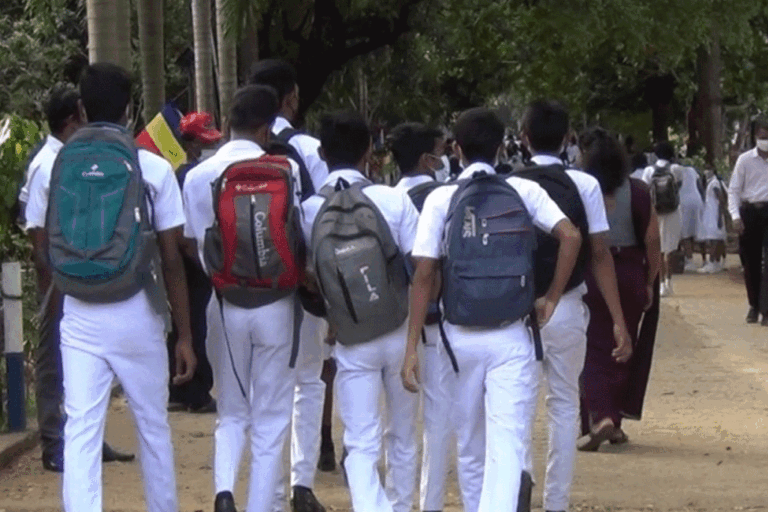
March 17, Colombo (LNW): Sri Lanka’s education authorities have confirmed that government-run schools will not operate on Wednesdays until further notice, as the country grapples with persistent fuel shortages.
Education Ministry Secretary Nalaka Kaluwewe stated that the move aligns with a broader government directive granting weekly leave to public sector workers in an effort to reduce fuel consumption and ease pressure on limited energy supplies.
The policy follows high-level discussions led by President Anura Kumara Dissanayake, who stressed the need for careful energy management while keeping vital economic and public services running. The meeting, held at the Presidential Secretariat, brought together senior ministers and top bureaucrats to map out immediate responses to the ongoing crisis.
Officials indicated that the weekly closure of schools is part of a wider administrative adjustment affecting much of the public sector. Prabath Chandrakeerthi confirmed that all state employees will be given leave every Wednesday beginning this week, with the arrangement extending to universities and courts as well.
Despite the sweeping changes, authorities have assured the public that critical services will continue uninterrupted. Sectors such as healthcare, port operations, water supply, and rail transport are expected to function normally, with employees in these areas exempt from the midweek break.
In addition, the Cabinet has reportedly established several specialised committees to monitor the evolving situation and recommend further measures. These groups are expected to play a key role in shaping both short-term responses and longer-term strategies as Sri Lanka navigates its energy constraints.
Sri Lanka to Close Schools on Wednesdays Amid Fuel Shortage
Google Challenges Sri Lankan Judge’s Plea in Indian Court Over Online Reports
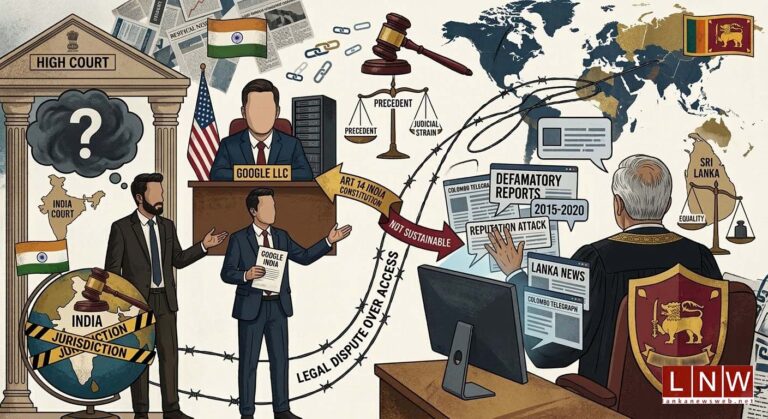
March 17, Colombo (LNW): Google has informed the Karnataka High Court that a petition lodged by a sitting Sri Lankan Supreme Court judge, seeking the removal of allegedly defamatory online reports, is not legally sustainable, a report by Indian Express disclosed.
The case centres on Justice A.H.M.D. Nawaz, who has asked the court to order Google India to take down links connected to news articles published in 2015 and 2020 by Sri Lanka-based outlets Colombo Telegraph and LankaNews. The judge contends that the material has harmed his professional standing.
Representing Google, advocate Manu P. Kulkarni argued that the Indian court lacks jurisdiction in the matter. He maintained that the petitioner, being a Sri Lankan judge, is challenging content that originated outside India, making the case inappropriate for adjudication by an Indian forum. Kulkarni further criticised the filing as overly speculative and urged the court to dismiss it outright.
He also emphasised that Google India should not be named in the proceedings, asserting that responsibility lies instead with Google LLC, the parent entity headquartered in the United States.
Google’s legal team warned that entertaining such petitions could set a precedent, encouraging individuals from across the globe to approach Indian courts over online content, thereby placing undue strain on the judicial system.
On the other side, counsel for Justice Nawaz, advocate Prabhakaran Ramachandran, pressed the court to adopt a firm stance against what he described as damaging and malicious reporting targeting members of the judiciary. He argued that judges must be safeguarded from reputational attacks that could undermine public confidence in the legal system.
During the proceedings, the petitioner’s counsel also raised concerns about social media activity allegedly linked to the journalist behind the disputed articles. It was suggested that commentary published while the matter is under consideration could potentially amount to contempt of court.
Addressing Google’s objections on jurisdiction, Ramachandran contended that the right to equality before the law, as enshrined in Article 14 of the Indian Constitution, extends to non-citizens as well. He argued that if harmful content is accessible within India, affected individuals—regardless of nationality—should be entitled to seek legal recourse in Indian courts.
Justice Nawaz has described the articles as deeply injurious, claiming they amount to a severe assault on his reputation. He further explained that initiating legal action in Sri Lanka would be problematic due to the principle that a judge cannot preside over a matter in which they have a personal interest.
Presiding over the case, Justice Sachin Shankar Magadum directed the petitioner to revise the filing and instructed both the central government and Google to submit their responses. The matter is scheduled to be heard again later this month.
Sri Lanka Bolsters High-Tech Aerial Surveillance to Combat Roadside Landslide Risks
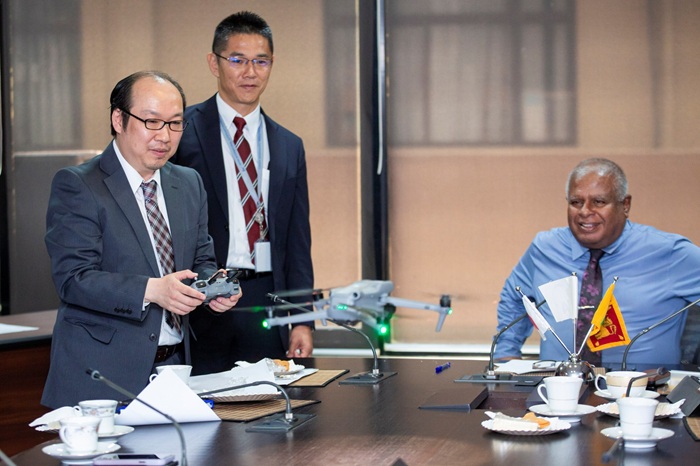
March 17, Colombo (LNW): Sri Lanka’s road infrastructure is set for a significant technological upgrade following the recent delivery of state-of-the-art unmanned aerial vehicles (UAVs) to the Road Development Authority.
These sophisticated drones, provided through a collaborative initiative with the Japan International Cooperation Agency (JICA), are earmarked for critical safety operations aimed at mitigating the country’s persistent threat of earth slips and hillside collapses.
The partnership gained momentum in the wake of the devastating Cyclone Ditwah, which battered the island late last year. Responding to the urgent need for rapid damage assessment, Japanese technical experts assisted local engineers in conducting extensive surveys of the worst-hit transport corridors.
This latest equipment handover marks a formal evolution of that cooperation, shifting the focus towards long-term resilience and preventative maintenance for the national motorway network through 2028.
Equipped with high-precision sensors, the new fleet allows for the creation of intricate 3D topographical maps and real-time monitoring of unstable slopes that were previously inaccessible or too hazardous for manual inspection. By feeding crystal-clear visual data directly into the national road management database, the technology enables officials to pinpoint vulnerabilities before they lead to catastrophic failures.
This shift toward data-driven disaster management ensures that emergency teams can deploy resources more efficiently, ultimately safeguarding commuters and maintaining vital supply chains during the monsoon seasons.
Business Leaders Urge Swift Economic Safeguards Amid Rising Global Uncertainty
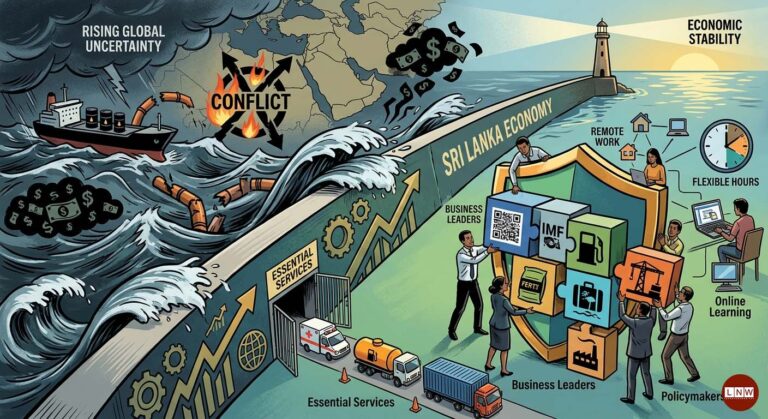
March 17, Colombo (LNW): The Ceylon Chamber of Commerce has called on the government to adopt coordinated and forward-looking measures to shield Sri Lanka’s economy from potential shocks stemming from the intensifying conflict in the Middle East and the broader global uncertainty surrounding energy supplies.
In a statement issued this week, the Chamber said it stands ready to collaborate closely with policymakers and has already presented a series of policy proposals aimed at maintaining economic stability and protecting vital sectors.
The organisation noted that in recommendations submitted on March 11, 2026, it emphasised the `importance of continuing the country’s programme with the International Monetary Fund and ensuring that upcoming financial disbursements are received on schedule.
It also advocated reforms to the fuel pricing structure to make it more responsive to market changes, as well as the revival of the QR-based fuel distribution system — measures that authorities have already begun to implement.
Earlier proposals from the Chamber also focused on strengthening energy security and supporting key industries. These included accelerating fuel procurement processes, maintaining sufficient fertiliser supplies ahead of the next cultivation season, and intensifying tourism marketing campaigns, particularly in fast-growing travel markets such as India and parts of East Asia. It also suggested expediting port clearance procedures and reassessing policies that may place additional strain on the country’s foreign exchange reserves.
Building on those recommendations, the Chamber has now proposed several further steps designed to ensure that economic activity continues even if supply disruptions occur. Among the key suggestions is the identification of essential services and priority economic sectors that should receive preferential access to limited resources such as fuel and foreign currency during periods of constraint.
The Chamber also recommended adopting a more strategic approach to securing fuel supplies by widening the range of international suppliers and strengthening procurement arrangements. It warned that maintaining adequate aviation fuel reserves would be particularly critical to sustain the country’s tourism industry and ensure uninterrupted international connectivity.
Another proposal involves permitting licensed domestic bunkering firms to independently source fuel for use by export-oriented manufacturers and tourism operators. Such purchases could potentially be conducted in foreign currency, a model that the Chamber noted had previously helped sustain certain industries during the country’s recent economic crisis.
To further reduce fuel consumption without halting productivity, the organisation suggested introducing flexible working arrangements across both the public and private sectors. Options such as remote working and staggered office hours could help limit daily travel and reduce energy demand.
The Chamber also proposed adjusting the academic calendar if necessary, including bringing forward the closure of schools and universities ahead of the traditional Sinhala and Tamil New Year holidays, while temporarily relying on online learning platforms where feasible.
Additionally, it advised that the government consider temporarily restricting non-essential outflows of foreign currency while prioritising reserves for critical imports. These would include fuel, food supplies, pharmaceutical products and raw materials required by export industries.
According to the Chamber, close cooperation between the government and the private sector will be essential in navigating potential global disruptions. It stressed that businesses should be kept regularly informed of policy developments so that companies can plan ahead and respond effectively to changing economic conditions.
AKD Laughed at His Opponents — Now gets a Dose of His Own Medicine
By Adolf
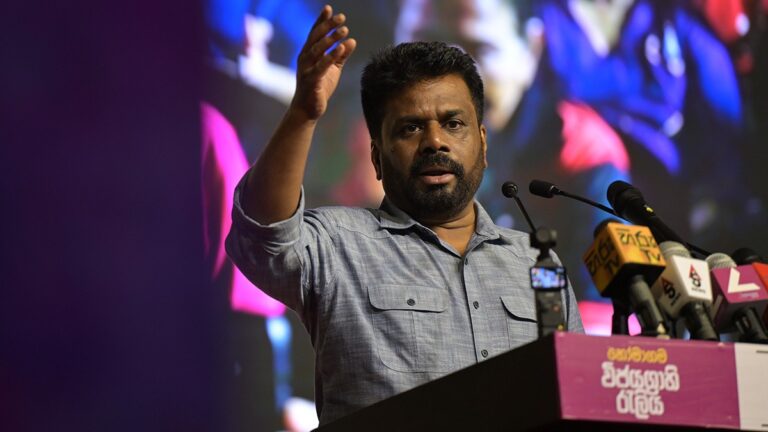
March 17, LNW (Colombo): Politics can be unforgiving. Words spoken in opposition often return to haunt leaders once they assume office. That appears increasingly to be the case for Anura Kumara Dissanayake, who built much of his political persona on ridiculing the political establishment, including former President Ranil Wickremesinghe.
For years, Dissanayake was among the most vocal critics of Sri Lanka’s traditional political class. His speeches were sharp, theatrical, and often laced with sarcasm and ridicule. Few public figures escaped his criticism. Presidents, ministers, bureaucrats, business leaders, and institutions were frequent targets of his scathing commentary.
Such rhetoric resonated strongly with voters frustrated by corruption, economic hardship, and decades of political mismanagement. In opposition, this style of politics often wins applause. It energises crowds, simplifies complex issues, and presents the speaker as a fearless challenger to entrenched power.
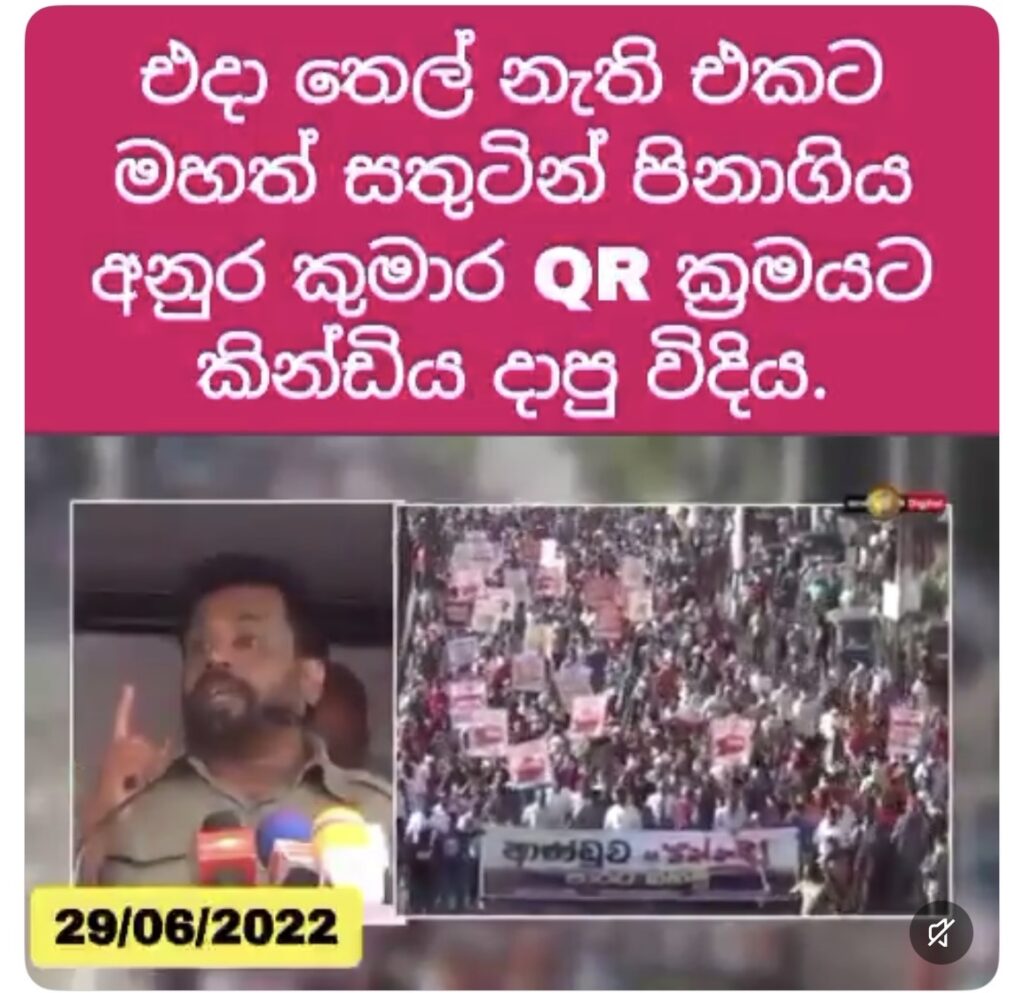
However, criticism can sometimes cross the line from political debate into mockery. In one widely circulated instance following a speech by Wickremesinghe, Dissanayake appeared to make light of the way the former president pronounced a word in English laugh Gas. AKD spoke as though he had done elocution. The moment was shared widely online, with supporters using it as a political jab.
Ridiculing
Yet such ridicule overlooked an obvious reality. Wickremesinghe was educated at Royal College Colombo, one of Sri Lanka’s most prestigious schools, and has spent decades operating on the global political and economic stage. Regardless of political disagreements, his international exposure and long experience in governance are widely recognised. Dissanayake, by contrast, emerged from a very different background. Rising through grassroots activism and the ranks of the Janatha Vimukthi Peramuna, he built his reputation as an anti-establishment campaigner who spoke the language of ordinary people. That authenticity helped him connect with citizens frustrated with traditional political elites and yearning for change. As for his English competency. People are yet to hear him speak in English. But political rhetoric that thrives in opposition can quickly become a liability in government. Today, many of Dissanayake’s own speeches and pronouncements are being scrutinised with the same intensity he once directed at others. Statements that once drew applause at political rallies are now being revisited in the context of governing responsibilities. Critics are increasingly highlighting inconsistencies between past rhetoric and present realities. Recent controversies surrounding fuel supply queues and the reintroduction or discussion of mechanisms such as the QR-based fuel distribution system have reignited debates over earlier criticisms made by opposition politicians. What once appeared to be simple solutions from the sidelines now confront the complex realities of governance.
This is not unusual in politics. Leaders everywhere discover that governing is far more complicated than criticising from the opposition benches. Policies that sound straightforward during campaign speeches often prove far more difficult to implement in practice.
In Sri Lanka’s case, the challenges are particularly daunting. The country continues to navigate the aftermath of its worst economic crisis since independence following the Sri Lankan economic crisis (2019–2023). Stabilising public finances, rebuilding investor confidence, restoring growth, and maintaining social stability require pragmatic and sometimes unpopular decisions. As a result, the political stage that once rewarded dramatic criticism now demands measured leadership. Every speech, every promise, and every policy is judged not by rhetoric but by outcomes.
Bitter Truth
In that sense, Dissanayake may be experiencing what many politicians before him have faced: the difficult transition from opposition rhetoric to governing responsibility. The scrutiny he once directed at others is now directed at him. If there is a lesson here, it is that politics requires humility. Public life inevitably exposes every leader’s words and actions to intense examination. Mockery may earn applause in the short term, but it rarely ages well. Sri Lanka’s voters today are less interested in political theatre than in results. The real test of leadership is not how effectively one criticises opponents, but how effectively one governs when entrusted with power. In politics, as in life, the medicine once prescribed for others sometimes returns to one’s own doorstep. As the old saying goes, what goes around comes around — and AKD may now be learning that lesson the hard way.
The content of this article is the viewpoint of its author and does not reflect the opinion of LNW in any way.
Government Weighs Energy-Saving Measures as Middle East Crisis Threatens Fuel Supplies
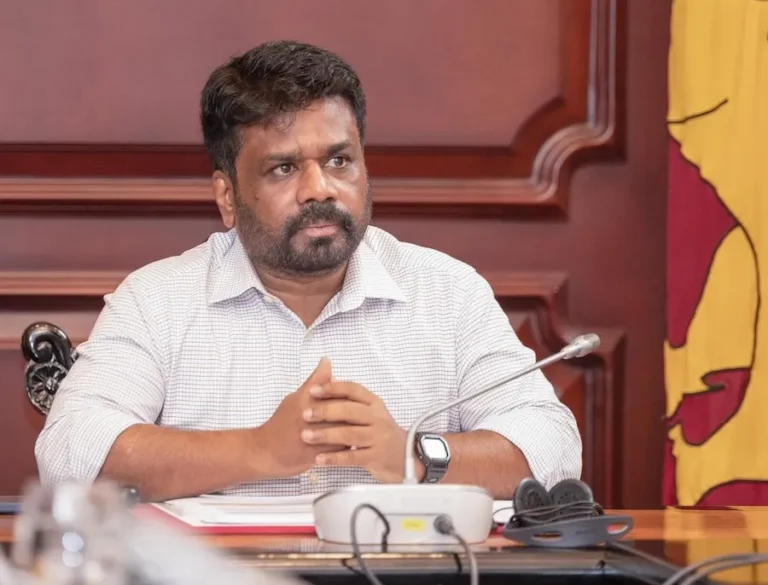
March 17, Colombo (LNW): President Anura Kumara Dissanayake has announced that the government is preparing a series of measures to manage the country’s energy resources more carefully as tensions in the Middle East continue to disrupt global fuel supplies.
The President made the remarks during a high-level meeting held yesterday afternoon at the Presidential Secretariat, where senior ministers and top officials gathered to assess the potential impact of the evolving situation on Sri Lanka’s energy availability and economic stability.
Discussions centred on immediate steps needed to ensure that key economic activities and public services continue without interruption while also reducing energy consumption across government institutions.
Among the proposals considered was the possibility of introducing a weekly public service holiday as a temporary measure to limit electricity and fuel usage in state offices. Officials also explored alternative working arrangements, including the expanded use of remote work for certain government departments where duties can be carried out online.
The meeting further examined how critical sectors such as education, healthcare, tourism, fisheries, manufacturing, agriculture, port operations, aviation services and digital infrastructure could continue operating efficiently while minimising energy demand.
To support these efforts, the President directed a committee comprising ministry secretaries and sector specialists to submit an urgent report outlining the fuel requirements needed to maintain operations in essential industries. The report was expected to provide guidance on how limited fuel resources should be allocated in the coming weeks.
Officials also discussed strengthening the national fuel distribution monitoring system, particularly the QR-based fuel allocation programme introduced during the country’s previous fuel shortages. The system is expected to help authorities track daily fuel usage more accurately and distribute supplies in a manner that protects both energy reserves and economic productivity.
The government stressed the importance of each ministry sharing updated data with the Ministry of Digital Economy to improve the efficiency of the system. Authorities are also considering further refinements to the mechanism in collaboration with recognised petroleum sector institutions.
During the meeting, attention was drawn to the pressures faced by farmers and small and medium-scale industrialists, who are particularly vulnerable to disruptions in fuel supply. The President noted that targeted relief measures could be introduced if necessary to support these sectors.
In addition, officials discussed suspending certain state ceremonies and large-scale official events as part of a broader effort to conserve resources during the current period of uncertainty.
President Dissanayake emphasised that cooperation from all sectors of society would be vital in reducing the potential economic impact of the global situation. He noted that prudent energy use and coordinated planning would help the country maintain stability while safeguarding essential services.
The meeting was attended by Prime Minister Harini Amarasuriya and several cabinet ministers, including Vijitha Herath, Wasantha Samarasinghe, Nalinda Jayatissa, A. H. M. H. Abeyratne, Anil Jayantha Fernando, Sunil Handunnetti and Bimal Rathnayake, along with senior government officials and economic advisers.
Health Ministry Introduces Wednesday Work-From-Home Policy to Conserve Fuel
March 17, Colombo (LNW): Amid the ongoing global economic strain and rising energy concerns, the Ministry of Health has introduced a new measure allowing selected government health sector employees to work remotely every Wednesday in an effort to curb fuel consumption.
The decision was communicated through an official circular issued by the Secretary to the Ministry of Health and Mass Media, Dr Anil Jasinghe. The arrangement comes into effect this week and will remain in force until further notice.
Under the new directive, staff attached to several key institutions will be required to perform their duties from home on Wednesdays. This applies to all departments operating from the New Ministry Building on Castle Street, as well as those based at the Anti-Malaria Campaign headquarters in Narahenpita. Officers attached to the National Cancer Control Programme and the Health Promotion Bureau are also included in the remote working arrangement.
However, certain essential operations will continue to function on site. Activities linked to the Ministry’s Transport Division must be carried out from the Suwasiripaya building, ensuring that logistical support for health services remains uninterrupted.
Meanwhile, officers responsible for issuing licences under the Food Control Administration Unit of the Environmental Health, Occupational Health and Food Safety Division have been instructed to report to the Suwasiripaya premises on Wednesdays. This instruction has been issued under the guidance of the Acting Deputy Director General overseeing the division.
The ministry has stressed that despite the reduced physical attendance, all essential services must be maintained. Institutions affected by the directive have been asked to make suitable internal arrangements to ensure that critical public health functions continue without disruption.
Furthermore, other divisions and units within the Ministry of Health have been encouraged to minimise staff presence on Wednesdays wherever possible, keeping only the personnel required for essential duties.
Officials have been urged to carefully coordinate these temporary work arrangements so that public health services across the country remain efficient and accessible while contributing to national fuel-saving efforts.
Afternoon showers, thundershowers expected in several areas: Misty conditions likely to occur (Mar 17)
March 17, Colombo (LNW): Showers or thundershowers will occur at several places in Central, Sabaragamuwa, Southern and Uva provinces after 2.00 pm, the Department of Meteorology said today (17).
Misty conditions can be expected at some places in Central, Sabaragamuwa and Uva provinces and in Galle, Matara and Kaluthara districts during the early hours of the morning.
The general public is kindly requested to take adequate precautions to minimise damages caused by temporary localised strong winds and lightning during thundershowers.
Marine Weather:
Condition of Rain:
Showers or thundershowers are likely at a few places in the sea areas off the coast extending from Colombo to Hambantota via Galle during the evening or night.
Winds:
Winds will be easterly or variable in direction. Wind speed will be (20-30) kmph.
State of Sea:
The sea areas around the island will be slight.
Temporarily strong gusty winds and very rough seas can be expected during thundershowers.
Colonisation in the Guise of Tourism? How Weak Enforcement Turns Sri Lanka into a Playground for Illegal Foreign Businesses
LISTEN TO STORY
WATCH STORY
By: Isuru Parakrama
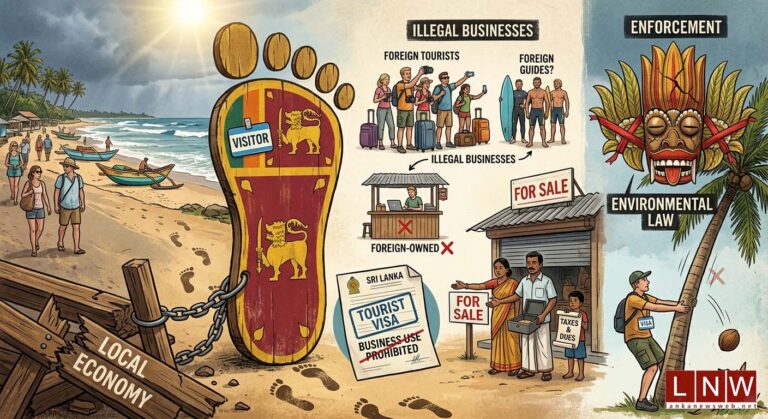
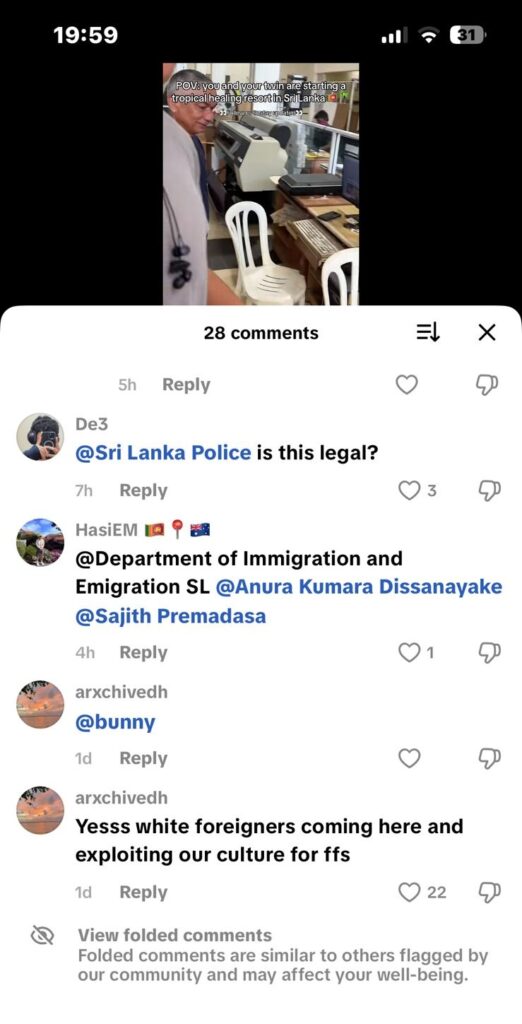
March 16, Colombo (LNW): Sri Lanka’s tourism revival is often celebrated as a symbol of economic recovery. Yet beneath the glossy marketing campaigns and official statistics lies a troubling reality: a growing number of foreigners are openly operating businesses on tourist visas, violating immigration laws, undermining local entrepreneurs, and exposing deep failures within the country’s regulatory authorities.
The issue is no longer anecdotal—it is systemic, visible, and increasingly damaging to Sri Lanka’s economy and social fabric.
Tourist Visas and the Law: Clear Rules, Frequent Violations
Under Sri Lankan immigration law, tourist visas strictly prohibit engaging in business, employment, trade, or self-employment. Such visas are intended only for activities such as sightseeing, visiting relatives, or short medical treatments, including Ayurveda. Even business visas allow only limited functions—such as attending meetings, conferences, or short training sessions—and do not permit foreigners to run ongoing commercial operations or repeatedly enter the country to sustain long-term ventures.
Yet in practice, these restrictions are routinely ignored.
Foreign nationals are establishing and promoting businesses—from wellness centres to hospitality ventures—while residing in the country on tourist visas. These informal operations often bypass legal requirements, evade taxation, and directly compete with local entrepreneurs who must comply with regulations and pay duties.
The Legal Route for Foreign Investors
The contrast with the lawful pathway for foreign investment could not be clearer. Foreigners are permitted to start businesses in Sri Lanka, but only through a structured process involving company incorporation, approvals from the Board of Investment (BOI), and appropriate visas. In many cases, enterprises must meet minimum investment thresholds—such as $250,000 under Section 16 of the BOI Law or $3 million or more under Section 17 for projects seeking incentives. Retail businesses targeting the local market require at least $5 million to allow full foreign ownership.
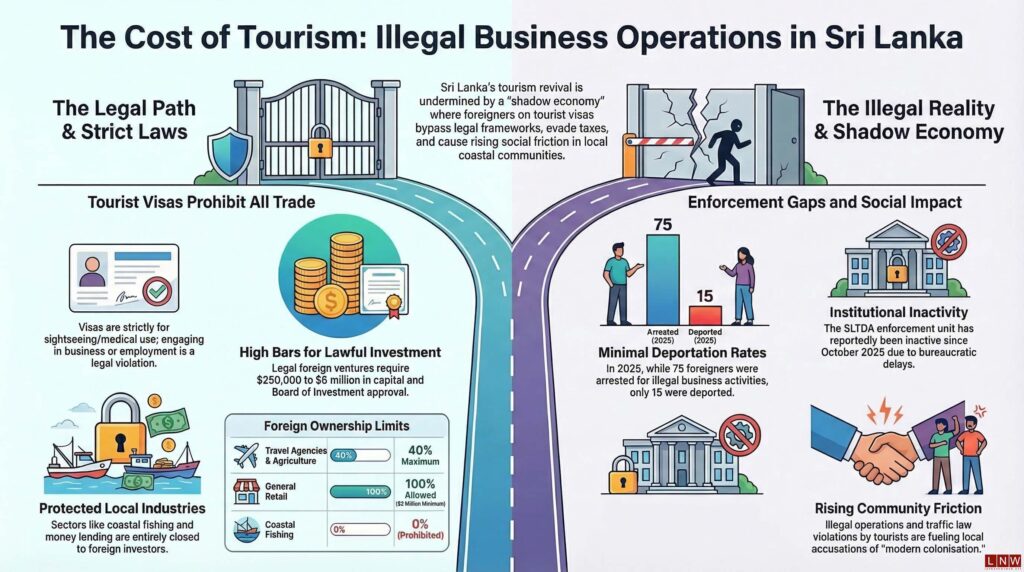
Moreover, certain sectors impose ownership restrictions. Fields such as education, travel agencies, and agriculture limit foreign ownership to 40 per cent, while industries including pawn broking, money lending, and coastal fishing are completely closed to foreign investors.
Legal investors must also follow procedural steps: reserving a company name through the eROC system, submitting corporate forms detailing directors and secretaries, publishing notices in newspapers, and obtaining a certificate of incorporation from the Registrar of Companies.
Yet informal operators bypass this entire framework.
The ‘Leela Healing Resort’ Controversy
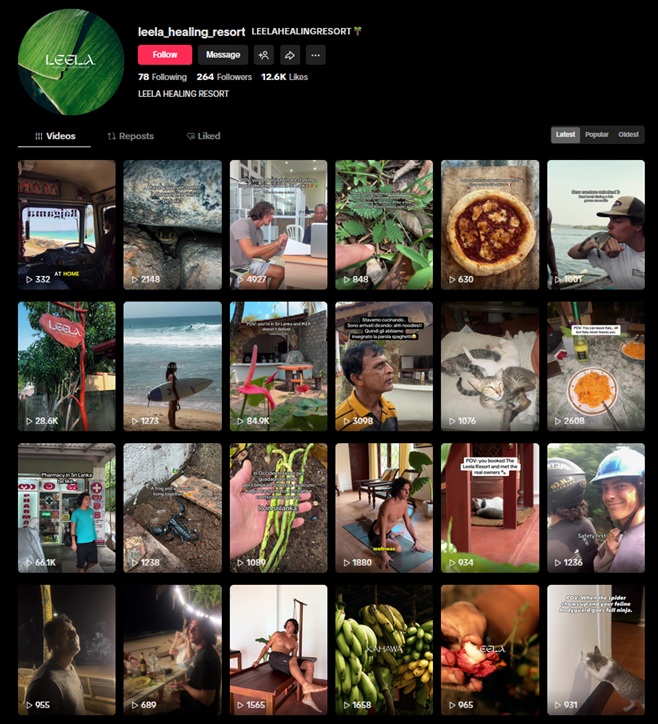
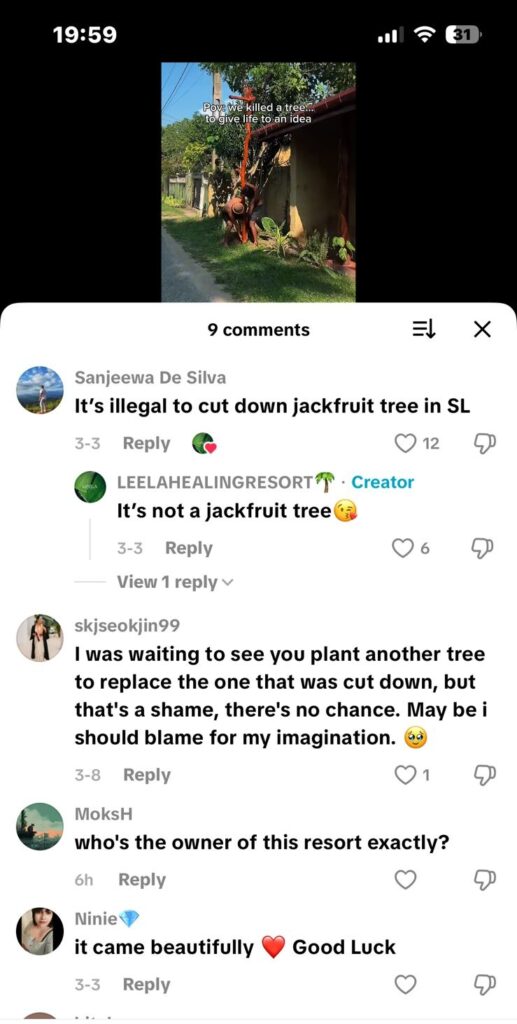
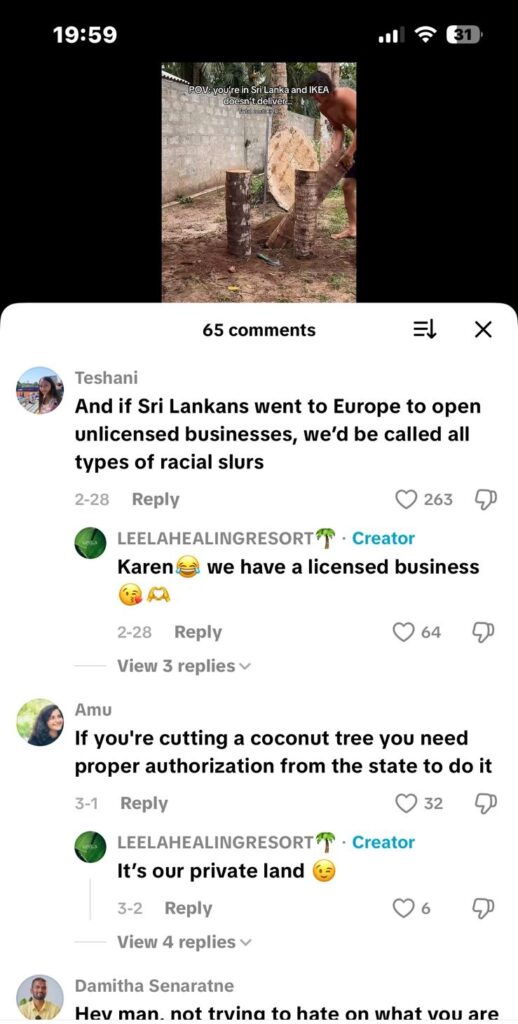
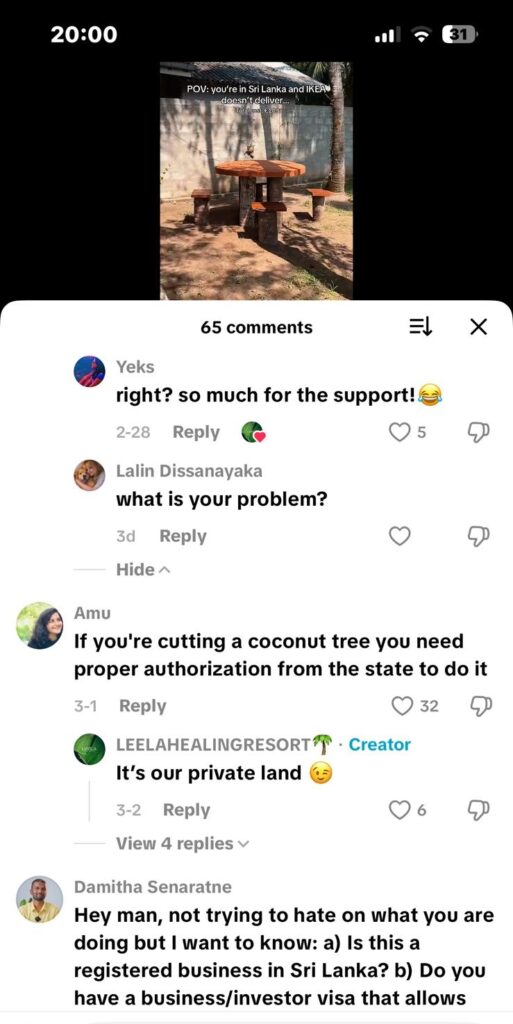
One widely discussed example involves foreign TikTok personalities who established an Ayurvedic centre known as “Leela Healing Resort” while residing in Sri Lanka on tourist visas. These individuals not only operate the centre but actively promote it on social media. When questioned about the legality of their activities and the economic outflow of earnings, they respond by highlighting small-scale job opportunities provided to local daily labourers—an argument critics say deliberately ignores the broader economic consequences.
More controversially, the same operators reportedly cut down coconut trees on what they describe as “private property” to produce furniture for their establishment. Sri Lankan law, however, requires prior approval from both the Divisional Secretary and the Coconut Development Board to remove coconut trees, particularly due to national shortages and the crop’s economic importance. Even foreigners leasing land must comply with these regulations.
Questions have also been raised about the centre’s Ayurvedic practices. Critics point out that the operators advertise fixed “menu cards” of treatments for specific diseases, despite the fundamental Ayurvedic principle that treatments must be individually tailored because patients with the same condition may require different remedies.

Sporadic Enforcement and Institutional Paralysis
Meanwhile, enforcement remains sporadic. Authorities arrested 75 foreigners in 2025 for running businesses on tourist visas, deporting 15 of them. In 2026, crackdowns intensified through joint actions involving the Sri Lanka Tourism Development Authority (SLTDA) and police, including raids on tourism hotspots along the southern coast.
But these measures reveal a deeper problem: the SLTDA’s own enforcement unit has reportedly remained inactive since October 2025 due to bureaucratic delays and procurement issues. Officials have suggested that tourism’s economic importance discourages overly aggressive crackdowns, leading authorities to prioritise regularisation rather than mass deportations. Political patronage has also been cited by sources as shielding some operations from scrutiny.
Rising Social Tensions in Tourist Zones
Beyond economic concerns, the situation is also fuelling social tensions.
In Ahangama, Israeli tourists reportedly assaulted locals in December of the previous year. In Arugam Bay, hotel owners were allegedly attacked simply for obstructing tourists. Social media videos show foreigners riding motorcycles without helmets, ignoring traffic laws, and intimidating police officers—behaviour some commentators have described as a form of “modern colonisation”.
The concentration of Israeli visitors in Arugam Bay has sparked particular controversy, with online commentators referring to the area as resembling a “small Tel-Aviv” spawned by “IDF propaganda”. Content creators allege that some of these Israeli nationals are ex-military, or more disturbingly “war criminals,” residing in small oceanic nations like Indonesia, Thailand, and Sri Lanka for personal benefit.
Double Standards in Everyday Enforcement
Yet contradictions persist even in everyday governance. At the Temple of the Tooth Relic in Kandy, locals report that police prohibit Sri Lankan visitors from taking photographs while allowing foreigners to do so, sometimes telling locals to “memorise and move on.”
“The police told us not to take photographs inside the Maligawa, but they allowed foreigners to do so. When we asked why, they told us that it’s because we’re Sri Lankans and they’re foreigners. They told us to see the Maligawa with our eyes and move on,” one pilgrim told LNW.
Another revealed that officers sometimes shout at locals with filthy words in an event of rules being breached, but exhibit a servant-like attitude towards foreigners and let them do whatever they please.
Critics argue that such behaviour reflects a troubling culture of deference toward foreign tourists while treating citizens with hostility.
Discrimination Within the Tourism Industry
Ironically, misconduct is not limited to foreigners. In Hikkaduwa, a restaurant known as “Funky De Bar” reportedly charged a foreign visitor higher prices because staff believed he was Indian based on his skin colour, even threatening him for recording the incident—raising questions about discrimination and human rights violations within the tourism sector itself.
Taken together, these incidents expose a deeper governance failure. Sri Lanka has clear laws regulating foreign investment, visa conditions, and environmental protection. The problem is not the absence of rules but the absence of consistent enforcement.
If authorities continue to turn a blind eye, the island risks transforming its tourism industry into a lawless marketplace—one where regulations apply only to those who choose to follow them, and where local entrepreneurs are left competing against a growing shadow economy operating in plain sight.

Government Introduces Weekly Midweek Holiday for Public Sector Amid Fuel Shortage
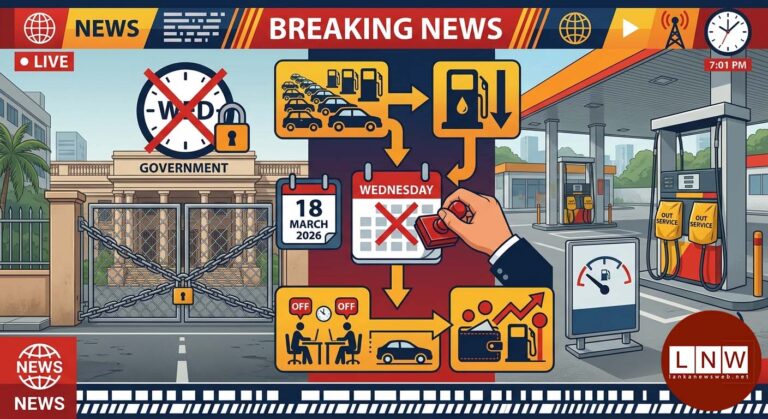
March 16, Colombo (LNW): In response to ongoing fuel shortages across the country, the Government has announced that public sector employees will receive a weekly holiday every Wednesday, beginning 18 March 2026.
Officials stated that the move is intended to reduce commuting demands and ease pressure on limited fuel supplies, which have affected transportation and daily operations in many parts of the island in recent weeks.
By cutting down one working day in the middle of the week, authorities hope to lessen fuel consumption linked to government office travel while allowing essential services to continue functioning.
The decision was confirmed by the Commissioner General of Essential Services, who explained that the measure was adopted after reviewing the current energy constraints and their impact on public administration.
He noted that the arrangement will remain in place for the time being as the Government monitors the evolving fuel situation.