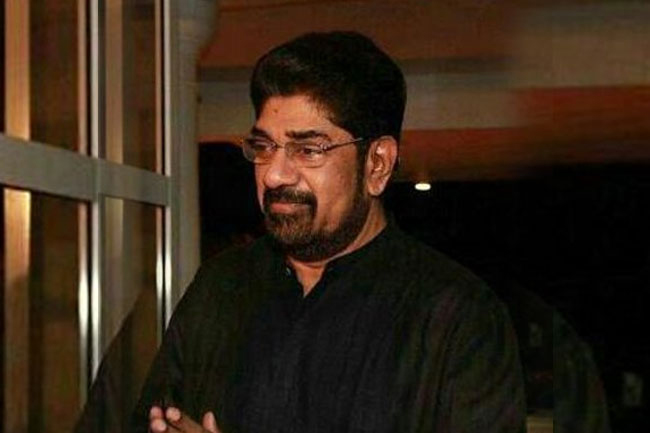
May 20, Colombo (LNW): Former Health Minister Keheliya Rambukwella was brought before the Colombo Magistrate’s Court today (20), as legal proceedings continue over three separate cases filed against him by the Commission to Investigate Allegations of Bribery or Corruption (CIABOC).
Rambukwella, who remains in remand custody, was escorted to court under the supervision of prison authorities. The hearing is being conducted before Colombo Chief Magistrate Thanuja Lakmali.
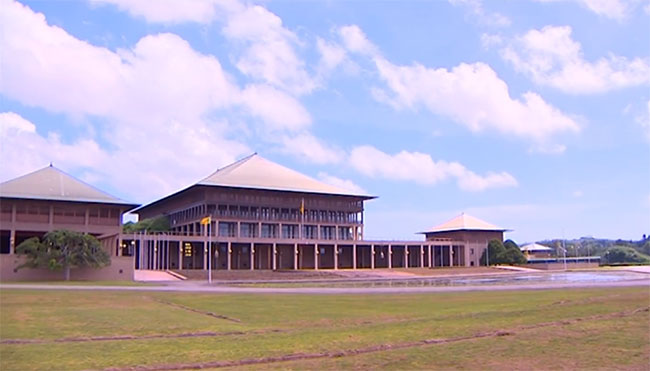
May 20, Colombo (LNW): Parliament convened this morning at 9:30 a.m. in line with Standing Orders, with time allocated to various matters of legislative procedure and public accountability throughout the day.
The session, detailed in a statement from the Parliamentary Communications Department, reflects a structured approach to legislative business amid ongoing fiscal and policy discussions in the country.
From 9:30 a.m. to 10:00 a.m., the chamber focused on general parliamentary affairs under Standing Orders 22(1) to 22(6), followed by a dedicated hour for Questions for Oral Answers until 11:00 a.m.
This segment offered MPs the opportunity to hold government ministers accountable on a range of pressing national issues. Thereafter, from 11:00 a.m. to 11:30 a.m., MPs were permitted to raise issues under Standing Order 27(2), a provision used to address matters of urgent public importance.
The main legislative focus of the day, however, was the scheduled debate from 11:30 a.m. to 5:00 p.m. on a new Order proposed under the Excise (Special Provisions) Act.
This order is expected to address tax adjustments or regulatory changes concerning the production and distribution of excisable goods such as alcohol and tobacco—sectors frequently linked to public health concerns and revenue generation.
While the details of the proposed excise amendments are yet to be disclosed in full, early indications suggest the debate could involve contentious discussions around balancing public health priorities with fiscal needs.
The opposition has already signalled its intention to question the rationale and potential socio-economic impact of the government’s excise policies, particularly in light of rising living costs and pressures on small businesses.
The day’s session is scheduled to conclude with a 30-minute debate on a Motion at the Adjournment Time, submitted by the Opposition.
May 20, Colombo (LNW): South-West monsoon conditions are gradually getting established over the island.
Showers or thundershowers will occur at times in Western, Sabaragamuwa, North-western, Central and Southern provinces.
Fairly heavy falls about 75 mm are likely at some places in Western and Sabaragamuwa provinces and in Galle, Matara, Puttalam, Nuwara-Eliya and Kandy districts.
Several spells of showers will occur in Northern and North-central provinces. Showers or thundershowers may occur in Eastern province during the evening or night.
Fairly strong winds of about (30-40) kmph can be expected at times over North-western, North-central, Northern, Central and Southern provinces and in Trincomalee district.
The general public is kindly requested to take adequate precautions to minimize damages caused by temporary localized strong winds and lightning during thundershowers.
Marine Weather:
Condition of Rain: Showers or thundershowers will occur at several places in the sea areas around the island.
Winds: Winds will be westerly to south-westerly and wind speed will be (30-40) kmph. Wind speed can increase up to (55-65) kmph at times in the sea areas off the coast extending from Puttalam to Pottuvil via Colombo, Galle, Matara and Hambanthota.
Wind speed can increase up to (50-55) kmph at times in the sea areas off the coast extending from Puttalam to Batticaloa via Mannar, Kankasanthurai and Trincomalee.
State of Sea: The sea areas off the coast extending from Puttalam to Pottuvil via Colombo, Galle, Matara and Hambanthota will be rough at times.
The sea areas off the coast extending from Puttalam to Batticaloa via Mannar, Kankasanthurai and Trincomalee will be fairly rough at times.
The wave height may increase (about 2.0 – 2.5 m) in the sea areas off the coast extending from Puttalam to Pottuvil via Colombo, Galle and Hambantota (this is not for land area).
Naval and fishing communities are requested to be vigilant in this regard.
Temporarily strong gusty winds and very rough seas can be expected during thundershowers.
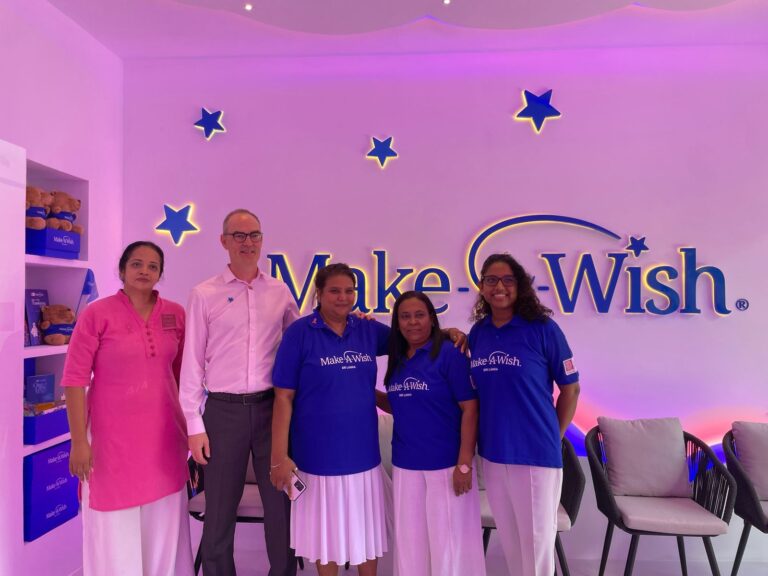
In a significant development for critically ill children across Sri Lanka, the internationally renowned Make-A-Wish Foundation officially launched its operations in the country on April 29, becoming nearly the 50th nation to join the global network dedicated to fulfilling the wishes of children facing life-threatening medical conditions.
The launch represents a powerful collaboration with the Indira Cancer Trust, an organization born from profound personal loss and transformed into a beacon of hope for thousands of cancer patients across the island nation.
A Legacy of Compassion
The story of Make-A-Wish began in 1980 with a seven-year-old boy named Christopher James Greicius. Fighting leukemia and harboring a dream of becoming a police officer, Christopher’s community in Phoenix, Arizona rallied together to transform his wish into reality. What started as a heartfelt gesture for one child blossomed into a global movement that has since granted hundreds of thousands of life-changing wishes to children battling critical illnesses.
“A wish can be that crucial turning point in these children’s lives—that spark helping them believe anything is possible and giving them strength to fight harder against their illnesses,” explained a volunteer from the foundation. This belief has driven the organization’s mission for over four decades, with a wish being granted approximately every 33 minutes in the United States and its territories alone.
From Personal Tragedy to National Mission
The Indira Cancer Trust, Make-A-Wish’s Sri Lankan partner, carries its own powerful origin story. In 2016, former Speaker of Parliament Karu Jayasuriya endured the devastating loss of his daughter, Indira, to cancer. Channeling his grief into action, Jayasuriya established the trust in her memory.
“When you lose someone you love to cancer, the pain never truly leaves you, but through the Indira Cancer Trust, we’ve found a way to transform that pain into purpose—to ensure other families have the support we wished we had during our darkest hours.” A family member of the Jayasuriya family stated.
From its inception, the trust has expanded to offer more than 20 free services to cancer patients and their families across Sri Lanka. These services span from critical medical investigations and transportation to comprehensive nutritional support, professional counseling, custom wigs for patients experiencing hair loss, livelihood initiatives for affected families, and holistic wellness programs.
A Natural Partnership
The collaboration between Make-A-Wish and the Indira Cancer Trust represents a natural alignment of values and missions. Both organizations recognize the profound impact that hope and joy can have on the healing process, particularly for children facing life-threatening illnesses.
“Children with critical illnesses often lose control over so many aspects of their lives—their health, their routine, their sense of normalcy,” noted a well known psychologist. . “When we grant a wish, we’re giving them back a measure of control and reminding them that they are more than their diagnosis.”
The partnership aims to create a robust support system that addresses both the practical needs of patients through the Indira Cancer Trust’s established services and the emotional and psychological needs through Make-A-Wish’s focus on fulfilling cherished dreams.
The Power of a Wish
Research has consistently shown that wish experiences can complement medical treatment by improving children’s emotional well-being and potentially enhancing their physical health. For many children, a granted wish represents a psychological turning point in their battle against illness.
Community Support
Both organizations rely heavily on community involvement, with tens of thousands of volunteers, donors, and supporters advancing the mission globally. In Sri Lanka, the Indira Cancer Trust is building an extensive network of medical professionals, corporate partners, and individual donors who have embraced the addition of Make-A-Wish to their collective efforts.
“When we unite around a common purpose—especially one centered on bringing joy to children who are suffering—the impact can be transformative not just for the children and families we serve, but for our entire society,” said a senior volunteer who has been with the Indira Cancer Trust since its inception.
Looking Forward
As Make-A-Wish establishes its presence in Sri Lanka, both organizations are focused on sustainable growth to reach more children in need. Plans include expanding volunteer networks to rural areas, developing culturally relevant wish experiences, and strengthening partnerships with healthcare providers to ensure no eligible child is missed.
For families navigating the difficult journey of a child’s critical illness, the launch represents a new source of light during dark times—a promise that while they cannot control their medical circumstances, they can still experience moments of pure joy and fulfillment of dreams that transcend their daily struggles.
Through this powerful collaboration, the legacy of both Christopher Greicius and Indira Jayasuriya continues, touching lives and creating ripples of hope that extend far beyond the initial impact of their own stories.
You can contact the Indira Cancer Trust / Make a Wish Sri Lanka officials on below.
The Global Tamil Forum (GTF) joins Tamils worldwide in commemorating the 16th anniversary of the end of the civil war in Sri Lanka. The final phase of the war is one of the most brutal in recent history, with the estimated deaths of over 40,000 Tamil civilians in the final months alone. This constitutes only a fraction of the total deaths, destruction and displacement suffered by the Tamil community during its 70-year political struggle for equality and justice in Sri Lanka.
Many tens of thousands of Tamil civilians were killed or made to disappear by the State of Sri Lanka.
GTF is conscious that death and destruction in Sri Lanka was not limited to the Tamil community alone and it pays tribute to all those who suffered enormously due to the violent ethnic conflict.
It is tragic that sixteen years after the end of the war, Sri Lanka is still struggling to come to terms with its past – both in terms of delivering justice to the victims of the war and addressing the root causes that led to the armed conflict. For the first five years after the war, the victorious government resorted to authoritarian consolidation of power, further weakening the Tamil community with no regards for their trauma or human rights. The next five years of the ‘coalition government’, though lessened the fear of the citizens and partially delivered on strengthening key institutions, it too failed in addressing the fundamental grievances of the Tamil community and the much-anticipated Constitutional Reform. During the first half of the last five years, a majoritarian nationalistic government further marginalized the minority communities (reversing even the minimalist reforms achieved by the previous government), whereas the second half of that period was preoccupied with the economic crisis, with less focus on the national question.
Sri Lanka appears to be in a new political phase now. The emergence of the progressive Aragalaya movement during the economic-political crisis, and the formation of the NPP government under President Anura Kumara Dissanayake have given hope to the Tamil people that the country might turn the corner this time, not just on promoting rule of law and good governance, but also on addressing the ethnic crisis plagued Sri Lanka for decades. This was despite the fact that Tamil people historically had misgivings about JVP (the main constituent of NPP) regarding its views on their political aspirations.
But six months on there is notable waning of hope, and a sense of disillusionment is setting in. Whether releasing long held prisoners or private lands, or repealing the notorious Prevention of Terrorism Act, or intervening when chauvinistic majoritarian elements illegally usurp private lands owned by the minority communities – there was hardly any progress.
Nor was there any progress when comes to transitional justice – hardly any family affected by enforced disappearance has ascertained the truth or received justice; on asserting criminal culpability there was zero progress; and on the Easter Sunday attacks the hope that justice will be served is receding.
Drafting a new constitution is not on the government agenda yet. While this is understandable for a relatively new government, Tamil people have serious concerns whether the new constitution when eventuates will secure the consent of the Tamil people on matters related to devolution of powers. Even conducting Provincial Council elections and fully implementing the existing 13th Amendment – the primary expectation of the Tamil people at this stage – appear to be major challenges.
A perception is emerging among the Tamil and minority communities that this government is not going to be different from its immediate predecessors when comes to issues that concern them.
In this context, it is important that the Tamil community remains conscious and sensitive to the immense suffering and sacrifices made by large sections of Tamil people during the decades-long struggle. Equally important is that the Tamil people and their leaders take stock of the challenges and opportunities in the present political climate, and act unitedly and strategically by forming partnerships with stakeholders across all communities in Sri Lanka and the international community. The importance and urgency of securing pragmatic and tangible gains, with the objective of fulfilling the political and economic aspirations of the Tamil people, cannot be overstated.
The joint Himalayan Declaration (HD) by the GTF and Sanga for Better Sri Lanka (SBSL) is one important step in this direction, and GTF is presently focused on taking the HD concept to the people, with the expectation that this will help preparing the civil society to achieve greater outcomes for all the peoples of Sri Lanka.
GTF is concerned that Tamil people, once again, could end up without achieving justice, genuine devolution of powers to the regions, or economic upliftment. With such challenges in mind, GTF will continue to engage with the international community and all stakeholders in Sri Lanka, to achieve outcomes that will meet the legitimate aspirations of the Tamil people and transition Sri Lanka into a reconciled, peaceful and prosperous country in the region.
May 19, Colombo (LNW): The 16th anniversary of the Tamil massacre in Mullivaikkal is observed every year on May 18.
Various commemorative events are being held on this day in the Tamil community and globally.
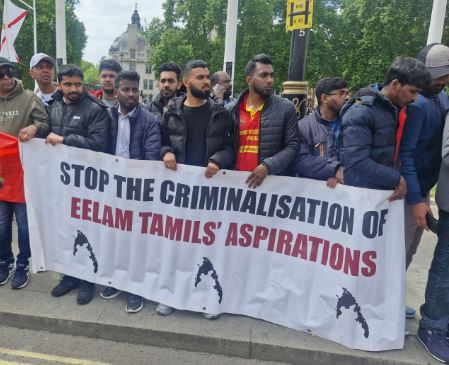
Accordingly, a rally was held in Britain on 18.05.2025 demanding justice for Mullivaikkal and the people killed in the war.
During this, the participants in the rally presented demands emphasizing a permanent solution for the people killed in the final war in Sri Lanka and for the Eelam Tamils.
The global Tamils participating in the rally also emphasized that international countries, including Britain, Canada, and European countries, should join hands in the process of providing justice for the Eelam Tamils.
Meanwhile, they also expressed their condemnation of the Sri Lankan government, which has been carrying out activities to cover up the genocide and obstruct justice over the past few days.
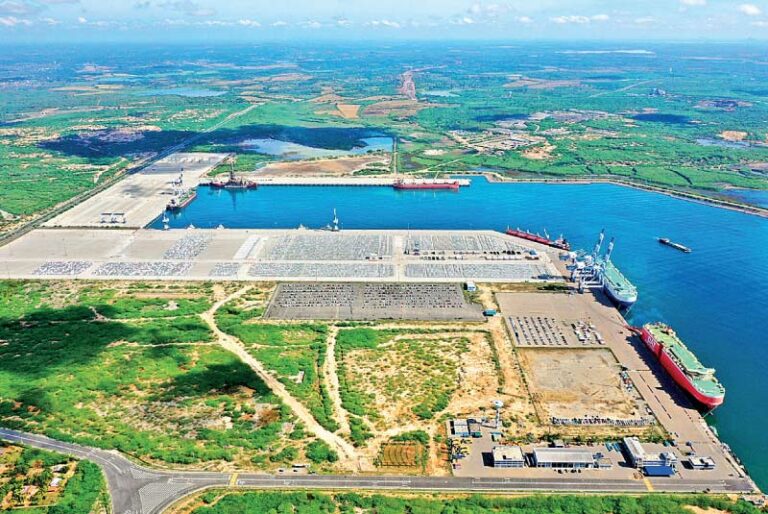
May 19, Colombo (LNW): The much-anticipated US$3.7 billion Hambantota oil refinery project, spearheaded by Chinese energy giant Sinopec, is facing fresh delays due to unresolved tax concession negotiations with the Sri Lankan government, according to official sources.
Touted as the largest foreign direct investment (FDI) in Sri Lanka’s history, the Hambantota Greenfield Oil Refinery project was initially announced in March 2019.
It is a joint venture between Singapore-based Silver Park International (70%) and Oman’s Ministry of Oil and Gas (30%). Therefore, contrary to recent political claims, this investment predates the current NPP/JVP government, energy experts clarified.
Despite this, MP Lakmali Hemachandra claimed on Sirasa TV that the project investment was secured by the current administration, asserting that previous governments had not finalized any agreements.
She highlighted that no loans were obtained for the refinery, suggesting the government’s success in attracting investments without borrowing. Her statements, however, have been criticized by energy professionals as misleading.
Former Power and Energy Minister Kanchana Wijesekera confirmed that Cabinet approved the agreement with Sinopec on 27 November 2023. The proposed refinery, with an expected total investment of $4.5 billion, aims to serve both local and export markets.
Out of seven companies that responded to an early 2023 expression of interest, only Sinopec and Singapore-based Vitol Asia were shortlisted, but Vitol later withdrew. Sinopec remains the sole bidder.
The project has encountered hurdles beyond tax terms, including land, logistics, port fees, and environmental concerns.
Though a 500-hectare land allocation has been agreed in principle under BOI regulations, no lease has been formally signed.
The then government awaited environmental clearance before moving forward, and the Central Environmental Authority has not provided recent updates on the Environmental Impact Assessment (EIA).
Prof. Udayanga Hemapala, Secretary to the Ministry of Energy, confirmed that Sinopec submitted its proposal under BOI law, which caps foreign equity at 20%. However, the company is seeking a higher stake and additional tax concessions—currently under negotiation.
Ceylon Petroleum Corporation (CPC) high official noted ongoing talks with Sinopec regarding integration into the local supply chain. He hinted that Sinopec may be considering a separate Expression of Interest (EOI) for the Sapugaskanda refinery, signaling broader ambitions in Sri Lanka’s energy sector.
While the original investment figure remains unchanged, further delays could prompt the government to issue a new RFP and invite other potential investors if talks with Sinopec fail to conclude successfully.
May 19, Colombo (LNW): Sri Lanka’s budget deficit narrowed in the first quarter of 2025, falling to 234.5 billion rupees from 281.3 billion rupees a year earlier, according to Central Bank data. While this marks an improvement in fiscal discipline, current expenditures—especially on public sector wages and subsidies—continued to outpace revenue growth.
Government revenue rose 17% year-on-year to 1,066 billion rupees as of March, driven primarily by an 18% increase in tax collections, which reached 985.9 billion rupees. A standout contributor was the financial VAT—a tax applied on value addition in financial services, not directly invoiced to customers—soaring over 400% to 40.4 billion rupees. This jump reflects higher wage bills in the banking sector, following both a currency crisis and staff losses due to increased income taxes.
Current spending (excluding interest) climbed 21% to 587 billion rupees, just ahead of a full public sector salary increment slated for April. Public salary payments alone rose from 168 billion to 182 billion rupees, while subsidies grew significantly from 53 billion to 82 billion rupees. These include rice subsidies to farmers—despite retail prices remaining 30–50% higher than regional benchmarks—and fuel subsidies for fishermen.
Despite these pressures, the current account deficit (revenue minus current expenditure) slightly improved, reducing from 169.3 billion to 153.5 billion rupees. However, critics argue that under the IMF-backed program, fiscal consolidation focuses excessively on taxation rather than expenditure reforms. This revenue-based approach has drawn scrutiny for its heavy burden on productive sectors and savers.
One notable change was the partial relaxation of the vehicle import ban, initially imposed during the 2020 currency crisis triggered by aggressive monetary easing. Although vehicles now face steep import taxes, excise revenue from them surged to 17 billion rupees from 7.8 billion the previous year. Industry sources report a softening of dealer markups as vehicle inflows stabilize.
Capital and net lending expenditures dropped to 82.1 billion rupees from 113.2 billion, though actual capital spending could be higher due to repayments from state-owned enterprises. The government anticipates an increase in capital investments once bilateral loans, particularly from Japan, resume after debt restructuring.
Interest payments edged up 5.8% to 597.2 billion rupees. However, confidence in the economy is gradually improving, aided by tighter monetary policy and a stable exchange rate. Interest rates have begun to decline, supported by shrinking budget deficits, though renewed private credit growth may offset these gains.
For the full year 2025, the budget deficit is forecast at 2.2 trillion rupees—higher than last year’s 2.04 trillion—largely due to rising salary obligations. Most of this will be financed through domestic borrowing, continuing the government’s effort to reduce external debt exposure.
May 19, Colombo (LNW): In a week of political theatrics and energy entanglements, Sri Lanka’s government has once again cranked up the drama—this time by deepening ties with China in the energy sector while dodging domestic power grid chaos with a dash of monkey mischief.
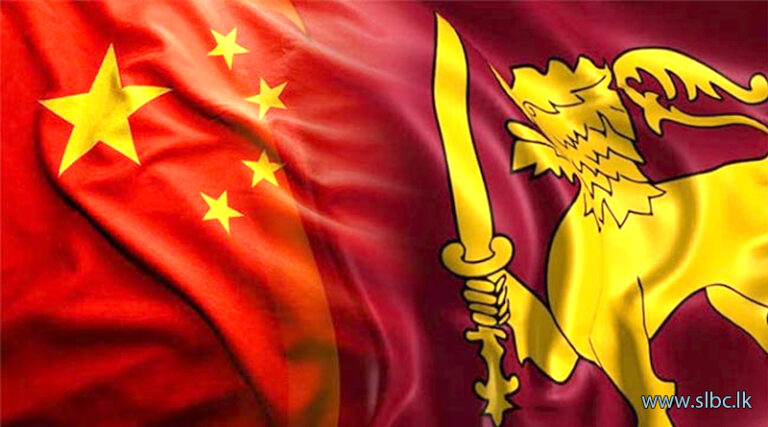
Energy Minister Kumara Jayakody told China’s Xinhua news agency that Sri Lanka is accelerating energy cooperation with Beijing, calling China a “close friend.”
The minister emphasized plans for collaboration in petroleum, solar, wind, and battery storage projects—particularly highlighting a much-delayed oil refinery in Hambantota that the government is now suddenly “in a hurry” to start.
This announcement conveniently arrived just a month after Indian Prime Minister Narendra Modi received a red-carpet welcome as the first foreign dignitary hosted by the Dissanayaka government.
India and Sri Lanka signed seven MoUs spanning defence, digital infrastructure, and energy. But while New Delhi might bring the charm, it’s Beijing that seems to be powering Sri Lanka’s long-term grid dreams.
Amid these diplomatic power plays, Minister Jayakody theatrically pledged in Parliament on May 8 to not raise electricity tariffs, only nine days before the Ceylon Electricity Board (CEB) begged for an 18.3% hike to plug its ballooning losses.
This political stunt came under Treasury directives—an example of classic tariff tango where ministers promise relief while bureaucrats tighten the screws.
In a bizarre subplot, the same minister earlier blamed a national blackout on—wait for it—a monkey. On February 9, Sri Lanka was plunged into darkness after a simian allegedly triggered a cascading failure at the Panadura substation.
“A monkey came into contact with our grid transformer,” Jayakody explained, adding that the furry saboteur caused an “imbalance in the power system.” Temperatures soared above 30°C as hospitals and water facilities scrambled for emergency power. Officials later confirmed a dead monkey was found near the transmission line.
Engineers chalked up the failure to “low system inertia,” a technical term for grid fragility worsened by heavy dependence on solar power. The Panadura incident marked the seventh island-wide blackout since 2010, raising urgent concerns about the reliability of an aging energy infrastructure vulnerable to both primates and policy paralysis.
At Sinopec’s “Clean Sri Lanka” Open Day—an event that appeared more like a PR stunt than a strategic move—Minister Jayakody again praised China’s role in shaping Sri Lanka’s energy future.
He hailed China’s battery storage tech as key to stabilizing the national grid, even as domestic experts warn of looming outages if the creaky system isn’t urgently modernized.
An unnamed senior engineer offered a grim reality check: “The national grid is so fragile that a single disruption could wipe out power island-wide.” Industrialists echoed the frustration, reporting millions in losses due to the six-to-seven-hour outage, and demanded government compensation under the Electricity Act.
As Sri Lanka juggles geopolitical suitors, a battered power grid, and bizarre animal-induced outages, one thing is clear: the nation’s energy crisis is no longer just about supply and demand—it’s about politics, promises, and a whole lot of monkey business.
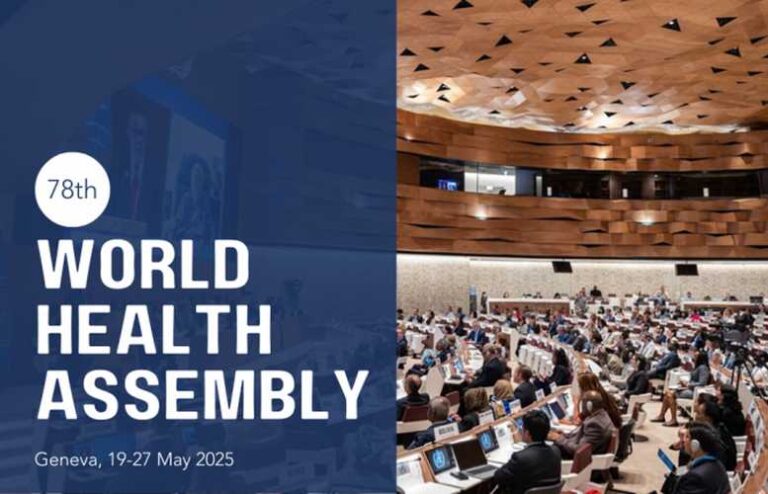
May 19, Colombo (LNW): Sri Lanka stands to unlock significant health and diplomatic advantages through active participation at the 78th World Health Assembly in Geneva, Switzerland, this week.
With global health challenges evolving rapidly, this prestigious platform organized by the World Health Organization (WHO) presents an opportunity for Sri Lanka to align with international health standards, influence policymaking, and attract technical and financial support for national health initiatives.
Minister of Health and Mass Media Dr. Nalinda Jayatissa departed for Switzerland on Saturday (May 18) to attend the Assembly, which will be held from May 19 to 27 under the theme “One World for Health.”
The event convenes health ministers and over 15,000 government officials from across the globe to engage in high-level discussions, share innovative strategies, and develop actionable policies aimed at improving global public health.
Joining Minister Jayatissa at the Assembly are Dr. Anil Jasinghe, Secretary to the Ministry of Health, Sri Lanka’s Permanent Representative to the United Nations in Geneva, Himali Arunatilaka, and First Secretary Nishanthini Victor, along with other key officials. Together, this delegation represents Sri Lanka’s voice in the global health community.
Participation in this Assembly enables Sri Lanka to engage in critical policy dialogues, gain exposure to emerging research and best practices, and forge strategic collaborations with other countries.
It is a chance to influence global health agendas while also advocating for Sri Lanka’s own pressing health priorities—such as managing non-communicable diseases, improving maternal and child health, and enhancing public health preparedness for future pandemics.
Key Benefits for Sri Lanka:
Policy Influence:
As an active member state, Sri Lanka can shape international health policies to ensure they reflect the country’s specific needs and contexts. This engagement bolsters the country’s ability to safeguard its public health interests on the global stage.
Access to Resources:
Direct engagement with WHO and allied bodies could open channels for technical assistance and funding, particularly for infrastructure development, emergency preparedness, and disease control programs.
Health Diplomacy and Collaboration:
The Assembly provides a rare opportunity to strengthen diplomatic ties, build partnerships, and explore joint ventures in healthcare delivery, research, and training. Such collaboration could lead to formal agreements and long-term support.
Showcasing Achievements:
Sri Lanka’s public health successes, such as universal vaccination and free healthcare services, can be shared globally, enhancing its reputation and encouraging further cooperation with international health agencies.
Adopting Best Practices:
Learning from other nations facing similar health challenges allows Sri Lanka to refine its national strategies with innovative, evidence-based approaches.
Strategic Alignment:
Participation helps align Sri Lanka’s health policies with international frameworks such as the Sustainable Development Goals (SDGs) and Universal Health Coverage (UHC).
To maximize these benefits, the Ministry emphasizes the importance of a focused agenda, active engagement during the Assembly, and a robust post-conference action plan to implement insights gained and follow up on potential partnerships.