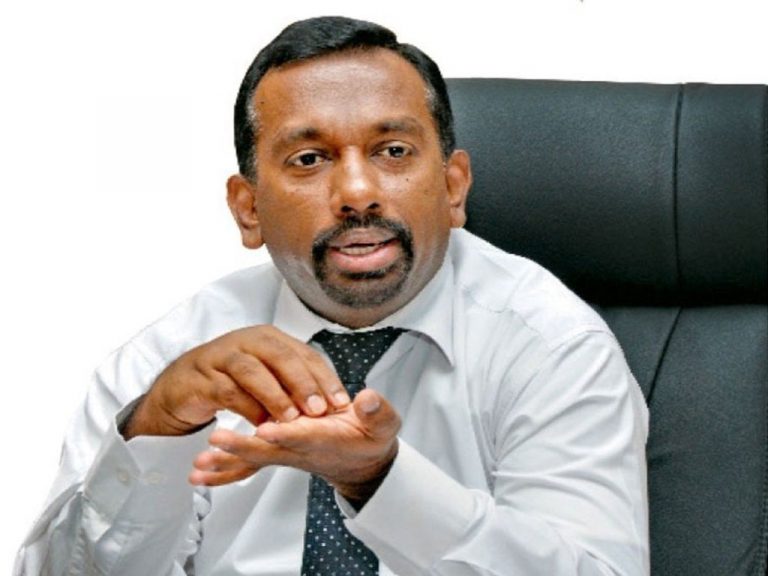
May 19, Colombo (LNW): Former Minister of Agriculture Mahindananda Aluthgamage has been ordered to remain in remand custody until May 26 following his appearance before the Colombo Chief Magistrate’s Court earlier today (19).
The decision was delivered by Chief Magistrate Thanuja Lakmali in connection with serious allegations concerning a mismanaged fertiliser import that reportedly caused significant financial and environmental damage.
Aluthgamage is accused of being directly involved in the procurement of a consignment of organic fertiliser that was found to be contaminated with hazardous bacteria and pathogens. The shipment, intended to support the country’s controversial transition to fully organic farming during his tenure, has now been linked to a financial loss exceeding Rs. 13 million to the state.
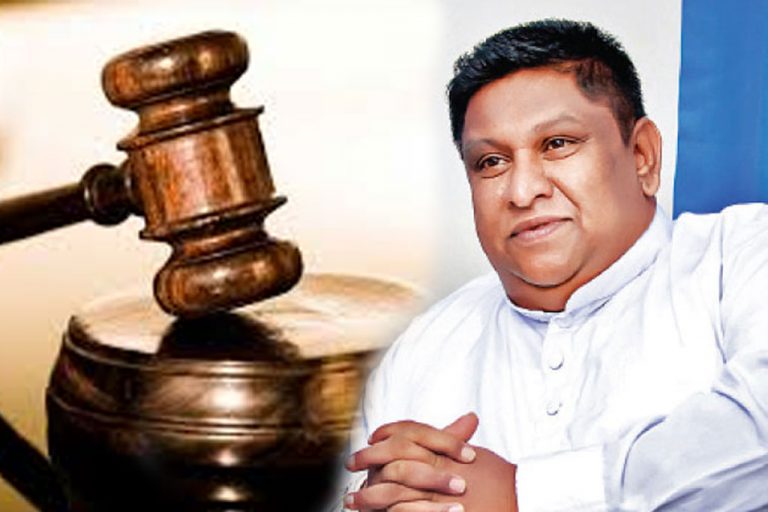
May 19, Colombo (LNW): Chamara Sampath Dassanayake, MP representing the Badulla District under the New Democratic Front (NDF), has been granted bail by the Badulla Magistrate’s Court in connection with a case concerning the alleged misappropriation of public funds.
Magistrate Nujith de Silva ordered the release of the MP on two surety bails, each valued at one million rupees. The case in question, initiated by the Commission to Investigate Allegations of Bribery or Corruption (CIABOC), revolves around a transaction dating back to Dassanayake’s term as Chief Minister of the Uva Provincial Council in 2016.
According to investigative records, Dassanayake allegedly solicited financial contributions from three state-owned banks, presenting the appeal under the guise of funding preschool bag distribution initiatives for children across the province. Two of these banks reportedly released sums of Rs. 1 million and Rs. 2.5 million, respectively.
Instead of channelling these funds into the intended programme, investigators claim the money was diverted into a personal account tied to the MP’s private foundation.
Further tension emerged when the third bank refused to comply with his request. In response, Dassanayake is alleged to have ordered the withdrawal of provincial fixed deposits from the institution, in what has been interpreted as an act of retribution using public authority.
Dassanayake’s legal troubles are not limited to this instance. He was previously remanded in connection with other bribery-related charges, all tied to his actions during his tenure in provincial leadership.
He had earlier been granted bail twice by the Colombo Magistrate’s Court over separate but related corruption allegations. His most recent remand followed proceedings at the Badulla Magistrate’s Court, which now have taken a turn with this latest bail ruling.
The MP’s legal team argues that the charges are politically motivated and lack substantive evidence of personal gain. However, the Bribery Commission continues to pursue multiple lines of inquiry, alleging a pattern of systemic misuse of public funds and abuse of influence during Dassanayake’s time in office.
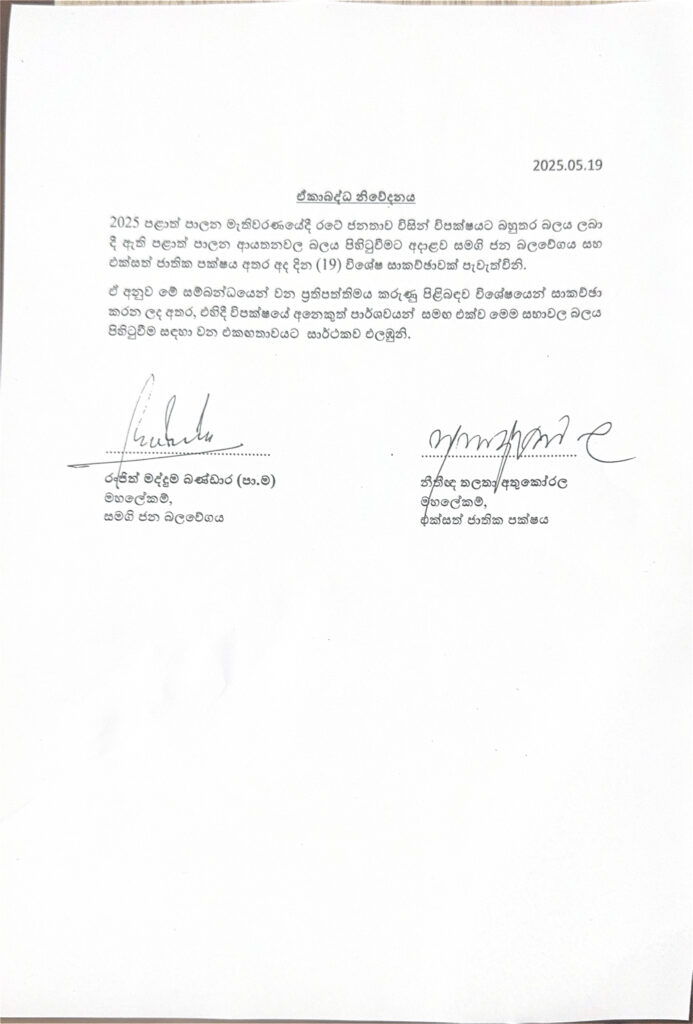
May 19, Colombo (LNW): In a notable political development, the Samagi Jana Balawegaya (SJB) and the United National Party (UNP) have reached a preliminary consensus on cooperating in local government bodies where opposition majorities have been secured.
This agreement signals a strategic alignment between the two parties in a bid to consolidate influence at the grassroots level.
The joint decision was announced this morning (19) in a formal statement issued by SJB General Secretary Ranjith Madduma Bandara and his UNP counterpart, Thalatha Athukorala.
The statement followed a discussion held earlier the same day between senior figures from both parties.
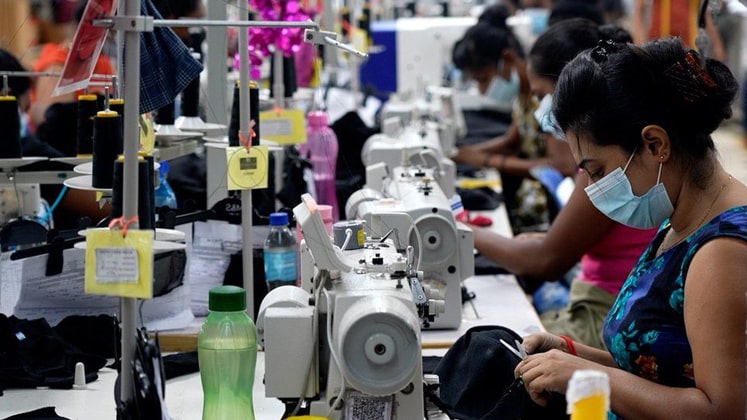
May 19, Colombo (LNW): Sri Lanka’s industrial output showed a notable slowdown in April 2025, as reflected in the latest Purchasing Managers’ Index (PMI) for manufacturing, which fell sharply to 40.1, according to a report issued by the Central Bank of Sri Lanka (CBSL). The downturn was primarily attributed to declines across key operational components, including production, new orders, inventories, and workforce levels.
A PMI reading below 50 signifies contraction, and the April figure marks a significant dip from recent months, suggesting that manufacturers are facing renewed challenges amid a fragile economic environment. Industry analysts link the slump to post-holiday disruptions, subdued consumer demand, and caution among buyers and producers alike in the face of lingering economic uncertainty.
The CBSL noted that the slowdown was not necessarily indicative of long-term decline, as manufacturing businesses maintain a generally optimistic outlook for the next quarter. Many firms anticipate a revival in orders and a stabilisation of supply chains, particularly as the mid-year trade cycle picks up.
In contrast to the manufacturing malaise, Sri Lanka’s services sector posted robust growth in April, with the Services PMI rising to 60.6, signalling a strong expansion. Growth in services was largely driven by increased activity in financial services, retail trade, and other commercial sectors. The CBSL observed a notable uptick in new business across these areas, indicating growing consumer engagement and an easing of economic constraints in the services domain.
The retail and wholesale sectors in particular appear to have benefitted from improved mobility and consumer spending patterns. The financial sector, meanwhile, has shown signs of recovery driven by stronger credit demand and increased transactional activity.
The contrasting performances in the two sectors reflect a broader trend of uneven recovery in the Sri Lankan economy. While services have managed to rebound more quickly, manufacturing continues to grapple with persistent cost pressures, logistical bottlenecks, and weak external demand.
Looking ahead, policymakers and industry leaders will be closely monitoring inflation trends, interest rates, and export conditions, which could all influence the pace of recovery. The CBSL’s report signals that while challenges remain in the production sectors, there is cautious optimism that a turnaround may be underway, especially if broader macroeconomic indicators continue to improve.
This divergence between the manufacturing and services sectors is expected to remain a key feature of Sri Lanka’s economic landscape in the coming months, as structural reforms and external investment are sought to support a balanced recovery.
May 19, Colombo (LNW): A formal inquiry into alleged misconduct and abuse of authority by Sri Lanka’s suspended Inspector General of Police, Deshabandu Tennakoon, is set to begin this afternoon (19).
Tennakoon has been summoned to appear before the inquiry committee at 2:00 p.m. in Committee Room No. 8 at the Parliamentary Complex, the Parliament Secretariat disclosed.
This marks his initial appearance before the panel, following weeks of background work by investigators.
The inquiry committee—tasked with examining serious accusations surrounding Tennakoon’s conduct during his tenure as IGP—has already undertaken a series of preliminary deliberations behind closed doors.
These discussions included internal assessments of the alleged infractions, and the gathering of relevant documentation, before extending a formal notice to Tennakoon earlier this month.
The inquiry follows growing public and institutional pressure to address concerns over alleged high-level misconduct within the country’s police force, a topic that has generated significant attention in both legal and political circles.
The investigative panel is chaired by Supreme Court Justice P.P. Surasena and includes Justice W.M.N.P. Iddawala as well as Mr. E.W.M. Lalith Ekanayake, who serves ex officio as Chairman of the National Police Commission.
The inclusion of senior members from both the judiciary and independent police oversight signals the government’s intention to conduct the inquiry with a degree of impartiality and legal rigour.
At its last meeting on May 15, the committee held discussions to finalise its approach, with particular emphasis on the scope of questioning and evidence collection. The inquiry is expected to examine a range of allegations, though precise details of the charges against Tennakoon have not been made public in full.
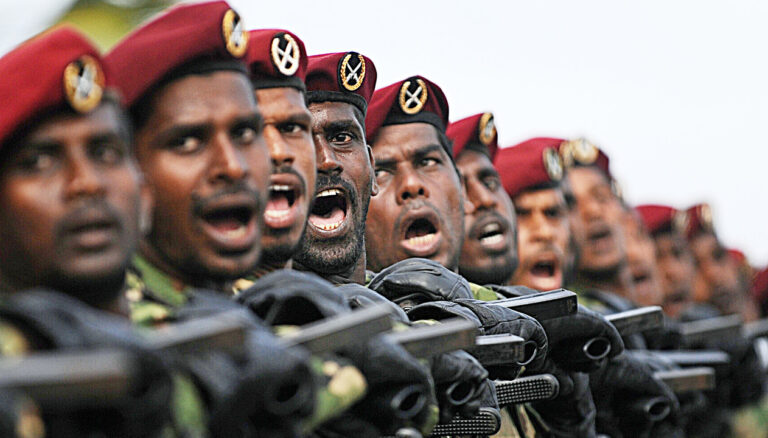
May 19, Colombo (LNW): Sri Lanka is poised to commemorate the sixteenth anniversary of the conclusion of its protracted civil conflict with a state-led event honouring the country’s military personnel.
The National War Heroes’ Commemoration will be held this evening (19) at the War Heroes Memorial in Battaramulla, paying tribute to those who fought in the final campaign that brought an end to more than three decades of bloodshed.
The remembrance ceremony, scheduled from 4:00 p.m. to 6:00 p.m., will take place under the patronage of President Anura Kumara Dissanayake. A number of key military figures who played decisive roles in the closing chapter of the war are expected to attend, including Field Marshal Sarath Fonseka, Admiral of the Fleet Wasantha Karannagoda, and Marshal of the Air Force Roshan Gunathilaka.
Their presence is expected to symbolise both the strategic coordination that led to the conclusion of the conflict and the enduring legacy of the country’s armed forces.
This year’s commemoration is expected to draw participation from across the political spectrum, military leadership, families of fallen soldiers, and representatives of civil society, signifying a collective effort to recognise the costs and consequences of war, while promoting a spirit of national reconciliation and remembrance.
The state-organised event is also intended to serve as a moment for reflection on the trajectory the country has taken since the war’s conclusion in 2009. Whilst the event honours military sacrifice, it comes at a time when Sri Lanka continues to grapple with post-conflict challenges, including questions of transitional justice, memorialisation, and ethnic reconciliation.
Security and logistical arrangements have been made to accommodate the influx of participants and to ensure the smooth conduct of proceedings. The Sri Lanka Police have advised motorists of a temporary traffic control plan in areas adjacent to Parliament.
Although no road closures will be enforced, vehicles using the stretch from Polduwa Junction to Kianyam Junction via Jayanthipura may experience slow movement due to crowd build-up.
To alleviate congestion, alternative routes have been outlined. Vehicles exiting Colombo may travel from Polduwa Junction to Battaramulla Junction, then proceed via Palam Thuna to Kianyam Junction. Incoming traffic is advised to use the reverse route for access to the city.
May 18, Colombo (LNW): The Bar Association of Sri Lanka (BASL) has voiced serious concerns over a growing wave of online commentary that it claims is undermining the country’s judiciary.
In a strongly worded statement issued on Sunday (18), the BASL condemned a series of online media posts and social media content that it says unjustly target judicial officers, thereby threatening the integrity of the justice system.
According to the association, recent digital content—some of which includes images of judges accompanied by speculative commentary—has fuelled public conjecture over matters currently under judicial inquiry.
The BASL stressed that such commentary, in the absence of verified information or legal substantiation, encourages a culture of “trial by media” that endangers the rule of law and erodes public trust in judicial independence.
Judicial officers, by the nature of their role, are constrained from responding publicly to accusations or speculation, the BASL noted. As such, unverified allegations circulated online can unfairly tarnish reputations and potentially influence ongoing legal processes.
The association reminded the public and media professionals alike that due process must be respected, especially when legal proceedings are active or pending.
Highlighting the constitutional framework governing the conduct and discipline of the judiciary, the BASL underscored that formal mechanisms already exist to review and, where appropriate, censure judicial behaviour.
Circumventing these established protocols through social media discourse, it warned, not only breaches ethical norms but also risks placing undue pressure on judges who must remain impartial.
The statement also reaffirmed the fundamental principle of the presumption of innocence, which it described as the bedrock of Sri Lanka’s legal system.
Undermining this principle—whether through irresponsible commentary, speculation, or premature judgment—was described as not merely inappropriate but dangerous to democratic governance.
In its concluding remarks, the BASL urged both legal professionals and members of the public to uphold the dignity of the judiciary and to engage in responsible discourse.
It called for restraint in commenting on judicial matters, particularly those that are sub judice, and appealed for a collective commitment to fairness, legality, and institutional respect.
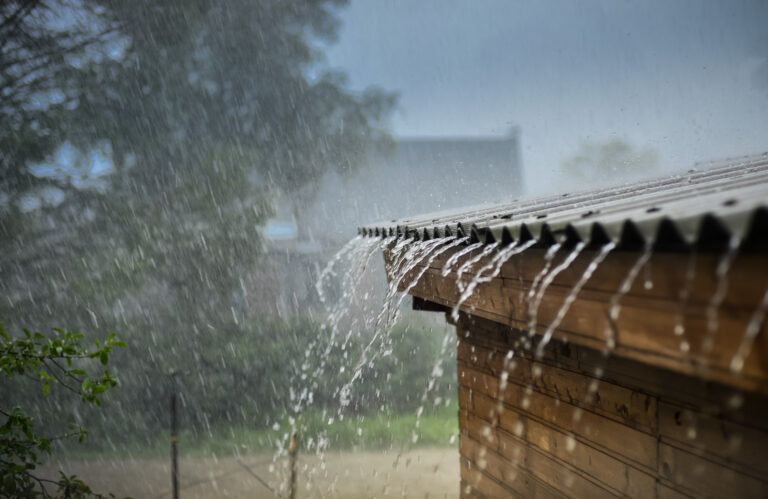
May 19, Colombo (LNW): South-West monsoon conditions are gradually getting established over the island, the Department of Meteorology said in its daily weather forecast today (19).
Cloudy skies can be expected over most part of the island.
Showers or thundershowers will occur at times in Western, Sabaragamuwa, North-western, Central, Southern and Northern provinces.
Heavy falls above 100 mm are likely at some places in Western and Sabaragamuwa provinces and in Galle, Matara, Puttalam, Nuwara-Eliya and Kandy districts.
Several spells of showers will occur in North-central province.
Showers or thundershowers may occur at several places elsewhere of the island during the evening or night.
Fairly strong winds of about (30-40) kmph can be expected at times over North-western, North-central, Northern and Southern provinces and in Trincomalee district.
The general public is kindly requested to take adequate precautions to minimise damages caused by temporary localised strong winds and lightning during thundershowers.
Marine Weather:
Condition of Rain: Showers or thundershowers will occur at several places in the sea areas around the island.
Winds: Winds will be westerly to south-westerly and wind speed will be (30-40) kmph. Wind speed can increase up to (55-65) kmph at times in the sea areas off the coast extending from Puttalam to Pottuvil via Colombo, Galle, Matara and Hambanthota.
Wind speed can increase up to (50-55) kmph at times in the sea areas off the coast extending from Puttalam to Batticaloa via Mannar, Kankasanthurai and Trincomalee.
State of Sea: The sea areas off the coast extending from Puttalam to Pottuvil via Colombo, Galle, Matara and Hambanthota will be rough at times.
The sea areas off the coast extending from Puttalam to Batticaloa via Mannar, Kankasanthurai and Trincomalee will be fairly rough at times.
The wave height may increase (about 2.0 – 2.5 m) in the sea areas off the coast extending from Puttalam to Pottuvil via Colombo, Galle and Hambantota (this is not for land area).
Temporarily strong gusty winds and very rough seas can be expected during thundershowers.
May 18, Colombo (LNW): The National Building Research Organisation (NBRO) has issued early warnings for potential landslides across six districts in Sri Lanka, urging residents to exercise heightened vigilance in the coming days.
The alerts issued today (18) apply to the districts of Colombo, Galle, Kalutara, Kandy, Kegalle, and Ratnapura—regions known for their vulnerability to slope instability during periods of intense rainfall.
The NBRO cautioned that prevailing weather conditions could give rise to landslides, slope and rock failures, subsidence, and embankment collapses.
Authorities have advised those living in hilly or low-lying areas, especially near steep slopes or recent construction zones, to be on alert for early warning signs such as cracks in the soil, tilting trees or utility poles, unusual sounds from the earth, or sudden changes in water flow.
Local disaster management teams and Grama Niladhari officers have been instructed to monitor high-risk zones closely, with preemptive evacuation being considered in particularly exposed areas if rainfall intensifies.
The Department of Meteorology has also indicated that prevailing wet conditions could continue, especially in the south-western part of the country.
The NBRO has called on the public to follow official bulletins, refrain from travelling through high-risk roads during heavy rain, and report any early signs of ground movement to local authorities without delay.
Residents are also encouraged to remain updated via NBRO and Disaster Management Centre (DMC) channels, and to prepare emergency kits and evacuation plans as a precaution.
May 18, Colombo (LNW): Sri Lanka’s Minister of Health and Mass Media, Dr Nalinda Jayatissa, departed for Switzerland this morning (18) to represent the country at the 78th World Health Assembly, convened by the World Health Organisation (WHO).
The high-level international forum is set to take place in Geneva from May 19 to 27 under the theme “One World for Health”.
This annual assembly brings together health ministers and senior delegates from all WHO member states, providing a platform for global collaboration on pressing public health issues.
This year, more than 15,000 government officials and representatives from various national health sectors are expected to attend, underscoring the significance of international cooperation in shaping the global health agenda.
The event aims to generate inclusive dialogue on a wide range of healthcare topics, with delegates expected to present proposals, share research data, and contribute to the development of long-term health strategies.
Discussions will centre on improving public health systems, tackling transnational health threats, and aligning policy frameworks for better global resilience in future health emergencies.
Dr Jayatissa is accompanied by a high-level delegation that includes Dr Anil Jasinghe, Secretary to the Ministry of Health and Mass Media; Himali Arunatilaka, Sri Lanka’s Permanent Representative to the United Nations in Geneva; and Nishanthini Victor, First Secretary to the UN Mission in Geneva. The group will engage in bilateral discussions, side events, and strategic forums throughout the assembly’s duration.
The World Health Assembly serves as the WHO’s decision-making body and plays a crucial role in setting international health priorities. This year’s focus reflects the need for cohesive global responses to emerging health challenges, following years of strain on national healthcare systems in the wake of the COVID-19 pandemic and other concurrent crises.