Home Blog Page 532

Police Chief pledges support for officers combating organised crime

0

March 27, Colombo (LNW): Acting Inspector General of Police (IGP) Priyantha Weerasooriya has reaffirmed his commitment to standing by police officers who dedicate themselves to tackling organised crime in Sri Lanka.

Speaking at an awards ceremony in Colombo, Weerasooriya underscored the government’s determination to recognise and protect law enforcement personnel engaged in crime-fighting efforts.

He emphasised that officers who take risks to uphold public safety must be duly rewarded and assured of institutional backing.

“We are committed to ensuring that those who dedicate themselves to combating organised crime receive the recognition and protection they deserve,” Weerasooriya stated.

The event saw the distribution of cash prizes amounting to over 24 million rupees and commendations for 140 officers who had made significant contributions to resolving criminal cases.

The Acting IGP highlighted that these awards are part of an ongoing initiative to encourage and appreciate the hard work of police officers.

“We intend to continue motivating our officers by organising events that honour their achievements. These cash prizes are awarded following a thorough selection process,” he added, recalling that the President had earlier introduced measures to incentivise law enforcement officers.

He further noted that major raids conducted in recent months had already been rewarded, with future arrests and operations also set to receive recognition.

Addressing resource constraints within the police force, Weerasooriya acknowledged existing human resource shortages and stressed that the government had taken steps to mitigate these challenges.

He assured that officers on the frontline of crime prevention would receive both protection and rewards for their service.

“As the head of the police force, I will always stand by officers committed to this cause. Our needs have been communicated to the government regularly, and we have received positive responses from the President and the Minister,” he said.

The ceremony was attended by several high-ranking officials, including the Secretary to the Ministry of Public Security, retired Deputy Inspector General of Police Ravi Seneviratne, and other dignitaries.

Do we need this monetary policy? Does new Parliament have an alternative? or Not interested in anyway?

0

Article’s Purpose

This article is to provide quick comments on the irrelevance of the monetary policy statement released today as part of the Central Bank’s media activisms (Read the policy statement here).

  • The Monetary Policy Board (MPB) has announced of keeping its operating policy interest rates unchanged at 7.50% (Standing Deposit Facility Rate) and 8.50% (Standing Lending Facility Rate) despite the persistent deflationary trap confronted by the economy since August 2024 that requires a considerable policy rate cut to arrest the deflationary trap to return to the statutory inflation target of 5% on a quarterly basis.
  • The policy statement has become unusually short-cut due to the non-availability of macroeconomic facts supporting such unchanged interest rates despite the deflationary course of 6 consecutive months which the MPB predicts to continue until mid-2025 and settle in the targeted levels (i.e., 5% with a margin of 3%-7% of highly inflated economy) by end of 2025. 
  • As such, the MPB has a considerable policy space for inflating the economy, given an underlying real interest rate of 2% or 4%. Therefore, the MPB only pursues a domestic inflation stability target in contrast to domestic price stability object stipulated in the law. In that context, the deflationary trap running around 4% at present is indicative of the meaningless model of the monetary policy.

Irrelevant Contents in the Policy Statement

Ten contents are highlighted below with a short response given under each as to why it is irrelevant or unacceptable.

1. The Board remains confident that the prevailing monetary policy stance will ensure that inflation will move towards the target of 5% while supporting the growth of the domestic economy.

This is irrelevant as the MPB or the Central Bank has no duel mandate on price stability and economic growth. Therefore, this statement comes from old writings of the previous central bank’s policy literature on all stability mandates.

2. Inflation remains negative at present mainly due to repeated reductions in electricity tariffs and fuel prices.

First, this violates the monetary policy principle adopted around the world that inflation (or deflation) is always everywhere a monetary phenomenon. Therefore, central banks have no mandates to select prices of commodities in the consumer basket and to decide policy instruments, accordingly. Their mandate is to follow up on movements of overall consumer price index and underlying headline inflation for the monetary policy targets.

Second, this statement itself is evidence for the MPB’s inability to control inflation at targets levels. If electricity and fuel prices can cause a deflation of 4% from an inflation of 2%-5% earlier while the MPB has been watchful, it is the government/fiscal policy that can practically control inflation. 

Third, at the last meeting with the COPF at the Parliament, the MPB informed the COPF that the MPB was not responsible for the present deflationary trend as deflation had been caused by supply side or fiscal measures (Read the article here). This shows that the MPB has grossly violated its inflation target mandate as well as domestic price stability mandate.

3. Rupee liquidity remains at surplus level. Market interest rates have continued to decline in line with the eased monetary policy stance.

The surplus liquidity has been created by the MPB. If the liquidity is abundant, market interest rates will decline. However, the policy controversy here is that if there has been an eased monetary policy stance as stated, the economy should not confront such a deflation trap.

 4. Supported by low interest rates, credit flows to the private sector remained robust.

This is an arbitrary statement without evidence. Credit flow is a result of banks and customers. Even if interest rates rise, credit tend to expand due to economic activities. As the MPB has no specific credit flow instruments, this statement is irrelevant for the monetary policy.

5. External sector performance has been more favourable than expected.

The MPB has no mandate for the external sector performances or stability. Its only mandate is to assess the factors including those of external sector performance on the inflation and take authorized policy measures independently to comply with the mandatory inflation target. Further, what was expected was not communicated in the earlier policy statement.

6. Increased net foreign purchases by the Central Bank and the receipt of the fourth tranche of the IMF-EFF programme helped increase official reserves enhancing resilience.

This is not a part of the monetary policy but the Central Bank’s normal business operations as a fiscal agent and foreign currency dealer. As the mandate of the official foreign currency reserve is not stipulated in the law, the resilience is highly questionable.

7. Risks to the inflation and growth outlook remain broadly in balance.

This is a meaningless statement copied from the US Federal Reserve. First, the MPB has no mandate for balancing the inflation and growth. It has only the domestic price stability mandate. Second, there are no statistics to establish such a balance.

8. However, the Board is watchful, among other things, of the possible impact of global trade and geopolitical uncertainties on the Sri Lankan economy.

This should be referring to Trump Trade phenomenon. It is a matter for the government and not for the MPB. The mandate of the MPB is to control inflation arising from all factors. However, the current stance of the MPB is that such conditions of inflation are supply side or non-monetary inflation which has no responsibility to the MPB. Further, Sri Lankan economy never experienced global trade and geopolitical certainty.

9. As such, monetary policy formulation will continue to be based on a forward looking and data-dependent approach. 

This is not acceptable as the members of the MPB are not divine to have such a macroeconomic foresight. Not only monetary policy but also any policy public or private is data-dependent. However, monetary policy is just past-data dependent which can be interpreted for any policy decision, policy rate cut or increase or unchanged.

10. The Board stands ready to respond to emerging risks to maintaining price stability while supporting the economy to reach its potential.

This is irrelevant as the MPB has no such a duel mandate.

Concluding Remarks

  • As such, this policy statement is nothing but a media document attempted to show that the MPB is attending to a rocket science-like macroeconomic management policy beyond the government.
  • The MPB has to submit its second non-compliance report on the inflation target to the Parliament next month covering the two quatres of December 2024 and March 2025. This report similar to the last report will be of no use as COPF members will talk about some other operations of the Central Bank such as pyramid schemes and disperse happily.
  • In Sri Lanka, as no penalty is imposed on public authorities for non-compliance with their mandatory goals, they can continue with their public seats and remuneration while submitting theoretical policy statements. Unaccountable public service mandates are poor state governance detrimental to the economy and public.
  • The MPB may state that inflation will reach the target in due course or in the medium or long-term as inflation expectations are now well-anchored. However, we all will be dead in the long run as Keynes stated and, therefore, public authorities must help living standards when people live.
  • Therefore, it is now high time to question whether this is the monetary policy that the crisis-hit economy of Sri Lanka needs for its recovery. Such questioning is not a criminal offence.
  • The US new President Donald Trump urged the Federal Reserve to cut interest rates at both meetings held on 27 January and 19 March to help his domestic economic policy. He especially requested to cut interest rates at the last meeting (19 March) to help his tariff policy, given the commencement of falling commodity prices. However, the Federal Reserve kept policy rates unchanged at 4.25%-4.50% citing uncertainties around new government policies, given elevated inflation levels (Read the policy statement). Therefore, President Donald Trump is reported to be considering a change of the mandates of the Federal Reserve to be in line with the government policy priorities. It is also reported that the new Department of Government Efficiency (DOGE) headed by Elon Must who fights waste and corruption in federal agencies is planning to make an spending efficiency audit on the Federal Reserve soon. Some media reports alert a possible removal of Gerome Powell from the post of Federal Reserve Chairman.
  • Meantime, on March 12 the Central Bank of Canada cut its policy rate by 0.25 to 2.75% despite the expected rise in inflation above 2% target, citing its intension to prevent adverse impact of the US tariff war with Canada on consumption and business investment (Read the policy statement) and to help growth.

(This article is released in the interest of participating in the professional dialogue to find out solutions to present economic crisis confronted by the general public consequent to the global Corona pandemic, subsequent economic disruptions and shocks both local and global and policy failures. All are personal views of the author based on his research in the subject of Economics which have no intension to personally or maliciously discredit characters of any individuals.)

P Samarasiri

Former Deputy Governor, Central Bank of Sri Lanka

(Former Director of Bank Supervision, Assistant Governor, Secretary to the Monetary Board and Compliance Officer of the Central Bank, Former Chairman of the Sri Lanka Accounting and Auditing Standards Board and Credit Information Bureau, Former Chairman and Vice Chairman of the Institute of Bankers of Sri Lanka, Former Member of the Securities and Exchange Commission and Insurance Regulatory Commission and the Author of 13 Economics and Banking Books and a large number of articles published.)

Source: Economy Forward

*The content in this article is of personal views of the author and does not reflect the opinion of LNW in any way.

Election Commission confirms Postal Voting schedule for 2025 LG Polls

0

March 27, Colombo (LNW): The Election Commission of Sri Lanka has officially announced the schedule for postal voting in the upcoming 2025 Local Government Elections, ensuring eligible voters have multiple opportunities to cast their ballots ahead of the main polling day.

According to the commission’s statement, postal voting will take place on April 22, 23, and 24 across all District Secretariats and designated election offices.

These arrangements cater to government employees, security personnel, and other eligible individuals who are unable to vote in person on election day due to official duties.

In an effort to maximise voter participation, additional dates have been allocated for those unable to mark their postal ballots during the initial period.

Voters who miss the primary voting window will have the chance to complete the process on April 28 and 29 at designated centres.

The Election Commission has assured that all necessary logistical and security measures will be in place to facilitate a transparent and orderly voting process.

MP Chamara Sampath arrested over corruption allegations

0

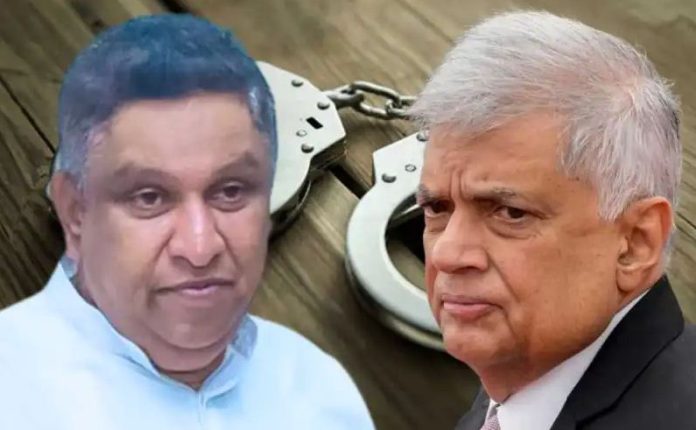
March 27, Colombo (LNW): Badulla District MP Chamara Sampath Dassanayake, a member of the New Democratic Front (NDF), has been taken into custody by the Commission to Investigate Allegations of Bribery or Corruption (CIABOC).

His arrest follows an inquiry into alleged financial irregularities linked to his tenure as the Chief Minister of Uva Province.

According to sources within the Bribery Commission, Dassanayake had been summoned for questioning regarding suspected misuse of public funds and administrative misconduct during his time in provincial office.

Following extensive interrogation, authorities deemed it necessary to detain him for further legal proceedings.

The investigation reportedly centres on allegations that provincial resources were misappropriated for personal or political gain, though officials have yet to disclose specific details of the accusations.

Dassanayake is set to be presented before the Colombo Magistrate’s Court, where legal proceedings will determine the next course of action.

Govt moves forward with parliamentary process to remove suspended Police Chief

0

March 27, Colombo (LNW): The Sri Lankan government has initiated the formal process to remove suspended Inspector General of Police (IGP) Deshabandu Tennakoon, following the legal framework outlined in the Removal of Officers (Procedure) Act, No. 5 of 2002, Cabinet Spokesman Minister (Dr.) Nalinda Jayathissa confirmed.

Speaking at a press briefing, Jayathissa outlined the steps required to dismiss the embattled police chief. Under the existing legislation, a motion seeking the removal of the IGP must be supported by at least 75 members of Parliament.

However, in a show of significant backing, 115 MPs have already signed the proposal, which has been formally submitted to the Speaker.

On Tuesday, a group of National People’s Power (NPP) lawmakers put forward the motion, listing 27 corruption allegations against Tennakoon.

Opposition Leader Sajith Premadasa has also lent his support, stating that the Samagi Jana Balawegaya (SJB) will back the initiative in Parliament.

Jayathissa expressed confidence that the motion would secure the necessary parliamentary approval when it is taken up for debate during the upcoming sittings on April 8 or 9. He further explained that, alongside the parliamentary vote, a special investigative committee would be appointed to examine the allegations against Tennakoon.

This committee will be formed with nominations from the Chief Justice and will include a serving Supreme Court judge, the chairman of the National Police Commission, and a senior government administrator. Their findings will be compiled into a report and submitted to Parliament for final endorsement.

In response to concerns regarding the ongoing legal proceedings surrounding Tennakoon’s appointment, the minister assured that the parliamentary process would not interfere with court hearings.

“All allegations against him will be investigated thoroughly,” Jayathissa stated, highlighting some of the most serious claims, including accusations that Tennakoon unlawfully received salaries from external institutions while serving in a government position.

He also referenced suspicions about an unlicensed distillery allegedly operated at Tennakoon’s residence, which the Criminal Investigation Department (CID) has been tasked with investigating.

Further inquiries will also be made into the suspended police chief’s international travel records, though Jayathissa noted that specific details might not be disclosed publicly due to the sensitive nature of the probe.

“There will be no selective justice,” he added, insisting that the law would be applied impartially. “No one is above the legal system, and all necessary measures will be taken to ensure accountability.”

Public trust in governance essential for tax compliance: Deputy Minister

0

March 27, Colombo (LNW): Encouraging citizens to willingly pay taxes requires a shift in public perception and a transparent government free from corruption, Deputy Minister of Labour and Economic Development Prof. Anil Jayanta Fernando stated.

Speaking at the annual conference of the Inland Revenue Commissioners Association, he highlighted the importance of rebuilding trust in state institutions to foster a more cooperative approach to taxation.

Fernando pointed out that tax compliance has historically been low due to widespread scepticism about how government funds are managed. Many citizens, he noted, have been reluctant to contribute financially, fearing their hard-earned money would be misused through fraud and mismanagement.

This deep-rooted distrust has led to an environment where tax evasion is seen as justifiable resistance rather than an unlawful act.

“If a government operates with integrity, without corruption or theft, people will be more willing to pay their taxes because they will see it as a contribution to their own well-being and the development of the nation,” he explained. “However, as long as the perception of corruption persists, tax compliance will continue to be a challenge.”

The Deputy Minister further criticised the government’s approach of enforcing tax collection through stringent regulations rather than fostering voluntary compliance. He warned that reliance on coercion, rather than building public confidence, reflects systemic dysfunction and could ultimately prove counterproductive.

Fernando acknowledged that the public is slowly beginning to notice a shift under the current administration, with fewer allegations of financial misconduct than in previous governments.

This, he suggested, could pave the way for a more constructive tax culture, where citizens view taxation as a means of strengthening the nation rather than an unfair burden.

“A government that upholds transparency and remains free from corruption will create a stronger, more financially stable country,” he asserted. “People should feel that their taxes are being put to good use, funding essential services and national progress, rather than lining the pockets of the few.”

He concluded by reiterating that taxation policies should go hand in hand with accountability and ethical governance, as only a responsible administration can expect genuine cooperation from its citizens in matters of public finance.

Sri Lanka’s monetary policy remains steady as economy shows signs of recovery

0

March 27, Colombo (LNW): Sri Lanka’s central bank has reaffirmed its current monetary stance, asserting that existing policies are well-aligned with the country’s economic trajectory and inflation targets.

Central Bank Governor P. Nandalal Weerasinghe stated that the monetary policy is effectively filtering through the economy and is poised to support inflation returning to positive territory in the latter half of the year.

The Central Bank of Sri Lanka maintained its overnight policy rate at 8% for the second consecutive meeting, a move that aligned with the expectations of most economists. Weerasinghe, speaking to Bloomberg TV, described this as the most appropriate course of action at present, given the country’s economic indicators.

Following a challenging period of contraction, Sri Lanka’s economy rebounded with a 5% expansion in 2024, reversing the 2.3% decline experienced the previous year. Authorities anticipate this momentum to continue, though global uncertainties—such as fluctuations in commodity prices and potential economic shifts stemming from US trade policies—will be monitored closely.

The $3 billion International Monetary Fund (IMF) bailout package has played a pivotal role in stabilising the nation’s financial situation. Since its historic default in 2022, Sri Lanka has implemented stringent tax hikes and policy measures to meet the IMF’s loan conditions.

However, further economic reforms, including adjustments to energy pricing and adherence to fiscal targets, remain necessary to secure additional financial support from the global lender.

Weerasinghe emphasised the need for Sri Lanka to remain committed to fiscal discipline and governance reforms, stating that there is strong confidence within the administration to continue on the same path. Maintaining this approach is crucial for sustaining financial stability and fostering investor trust.

Meanwhile, economic analysts caution that excessive monetary easing could lead to overheating, triggering a surge in imports, placing strain on foreign reserves, and weakening the national currency. The central bank, therefore, appears unlikely to risk such outcomes by altering its policy stance prematurely.

In addition to IMF assistance, Sri Lanka recently secured approximately $334 million in fresh loans and is engaged in negotiations to finalise debt restructuring agreements with key bilateral creditors, including India and members of the Paris Club.

Archbishop endorses Sacred Tooth Relic exposition as a symbol of religious harmony

0

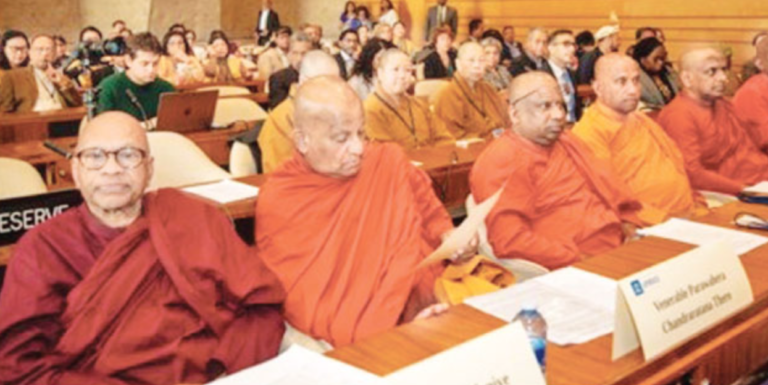
March 27, Colombo (LNW): Archbishop of Colombo, His Eminence Cardinal Malcolm Ranjith, has expressed strong support for the upcoming exposition of the Sacred Tooth Relic of the Buddha, describing it as a significant step towards strengthening religious harmony in Sri Lanka while preserving the nation’s Buddhist heritage.

Speaking on the matter, the Cardinal commended the government and the Venerable Mahanayaka Theras for their role in facilitating this revered event. He emphasised that the exposition is not merely a Buddhist ritual but a national occasion that holds deep cultural and spiritual significance for all Sri Lankans.

He urged citizens, regardless of religious background, to support and respect the event, highlighting that interfaith understanding and mutual respect are key to ensuring unity in the country.

In particular, he called upon the Catholic community to view the exposition as a meaningful occasion that reinforces peace and coexistence among different faiths.

Media watchdog demands transparency on state media reforms and China agreement

0

March 27, Colombo (LNW): The Free Media Movement (FMM) has urged the government to ensure transparency and accountability in its proposed restructuring of Sri Lanka’s state-owned media institutions, calling for public disclosure of any related agreements signed with China during President Anura Kumara Dissanayake’s recent visit.

In a strongly worded statement, the FMM expressed concern over the government’s failure to provide details on a bilateral agreement reportedly linked to state media, despite repeated requests from local media organisations.

The watchdog stressed that any reform process involving Sri Lanka Rupavahini Corporation, Sri Lanka Broadcasting Corporation, and Independent Television Network—three institutions that have long faced financial difficulties—should be made public.

While acknowledging the need for financial sustainability, the FMM underscored the importance of ensuring that any restructuring plan does not reinforce state media’s historical role as government propaganda outlets.

Instead, it argued, the reforms should focus on transforming these entities into independent public service broadcasters that serve the interests of citizens rather than political agendas.

The organisation also raised concerns over the use of state resources, particularly broadcasting frequencies, questioning whether the undisclosed agreement with China is linked to the proposed media restructuring.

The lack of government transparency has fuelled speculation about potential foreign influence in shaping the future of Sri Lanka’s media landscape.

In light of these concerns, the FMM called on the government to immediately reveal the terms of any agreements signed with China regarding state media.

Additionally, it urged authorities to open the restructuring process to public consultation, allowing input from media professionals and the broader public.

Such an approach, the statement argued, would foster an environment that upholds press freedom and strengthens independent journalism in the country.

Sri Lanka criticises UK sanctions on former officials, calls move unilateral

0

March 27, Colombo (LNW): Sri Lanka’s Ministry of Foreign Affairs, Foreign Employment, and Tourism has voiced its concerns over the recent decision by the United Kingdom to impose sanctions on three former military commanders and a former minister, calling it a unilateral action that complicates ongoing national reconciliation efforts.

In response to a press release issued by the UK’s Foreign, Commonwealth & Development Office (FCDO) on 24 March 2025, titled “UK Sanctions for Human Rights Violations and Abuses during the Sri Lankan Civil War”, the Sri Lankan government acknowledged the UK’s decision but expressed discontent over its implications.

The ministry noted that the sanctions involve an asset freeze and travel restrictions on the designated individuals, three of whom previously held senior positions within the Sri Lankan armed forces.

Furthermore, the statement highlighted the UK government’s assertion that the sanctions align with a political commitment made during the UK election campaign to prevent impunity for alleged human rights violations.

The Sri Lankan government, however, reiterated its position that any historical allegations should be addressed through domestic accountability mechanisms rather than external interventions.

The ministry emphasised that Sri Lanka is actively working to strengthen its domestic frameworks for accountability and reconciliation. It argued that external punitive measures do not contribute constructively to this process but rather create additional challenges in achieving long-term national unity.

The government’s official stance was conveyed by Foreign Minister Vijitha Herath during a meeting with British High Commissioner to Sri Lanka, Andrew Patrick, at the Ministry of Foreign Affairs.

As tensions over human rights concerns continue to shape diplomatic relations, Sri Lanka has reiterated its commitment to national reconciliation while urging international partners to respect its sovereign processes in dealing with past conflicts.