May 10, Colombo (LNW): Director General of Sports Dr. Shemal Fernando, has been charged with contempt of court for failing to implement a court order related to the Sri Lanka Rugby (SLR) elections.
The Court of Appeal had previously issued a directive mandating the DG to conduct the SLR elections in accordance with the established legal framework. However, the DG’s non-compliance with this order has led to the initiation of contempt proceedings.
The case is scheduled to be heard on June 15, 2025, where the court will examine the reasons behind the DG’s failure to adhere to its directive.
This development has sparked significant concern among sports enthusiasts and legal experts, highlighting the importance of upholding the rule of law and ensuring that governmental authorities comply with judicial decisions.
Colombo, Sri Lanka, 07 May 2025: HP has announced the introduction of an exclusive three-year warranty for a select range of laptops featuring Intel and AMD processors in Sri Lanka. This underscores the importance of purchasing from authorised sellers, as it not only guarantees product authenticity but also provides access to key benefits, making the investment in an HP laptop a more financially sound and secure choice.
The new warranty highlights the advantages of buying from authorised sellers, including access to genuine spare parts, the original Windows OS, and professional technical assistance provided by certified service engineers. This ensures devices are safeguarded from potential long-term harm caused by inferior components, which are often found in laptops purchased through unauthorised sellers.
The exclusive three-year warranty is available for laptops equipped with Intel Core i3, Core i5, Ryzen 3, and Ryzen 5 processors, ensuring top-tier performance and reliability. Eligible models include the HP Laptop 15-fd0501TU, HP Laptop 15-fc0387AU, and HP Laptop 15-fd1227TU, each combining style, durability, and functionality. Customers can take advantage of this offer through HP’s authorised sellers in Sri Lanka, including Abans, Singhagiri, and other authorised sellers across the country.
Mr Ankur Goel, Senior Director, Business Development for Sri Lanka and Bangladesh at HP, emphasised the importance of authorised resellers, stating, “Choosing an authorised reseller is the first step to ensuring the quality, reliability, and longevity of your device. Our exclusive three-year warranty reflects this commitment, offering customers peace of mind and unmatched support that only genuine HP products and certified servicing can provide.”
HP authorised partners Abans and Singhagiri make genuine HP laptops more accessible through flexible payment plans designed for students and young professionals. Abans offers instalment payment plans of up to 24 months without requiring a credit card, with monthly payments as low as Rs. 7,400. Additionally, up to 60 months with 0% interest for selected bank credit cards, along with complimentary earbuds and headphones.
Similarly, Singhagiri offers a variety of payment options, including credit card instalments of up to 60 months, 0% interest plans for up to 24 months, easy monthly cash instalments over 18 months, and the ability to split payments into three instalments with KOKO. To make the HP brand and user experience more seamless, Singhagiri includes a special bundle with every genuine HP laptop purchase. The bundle features an HP backpack, an HP 150 WD USB-A keyboard, and an HP 240 BT mouse.
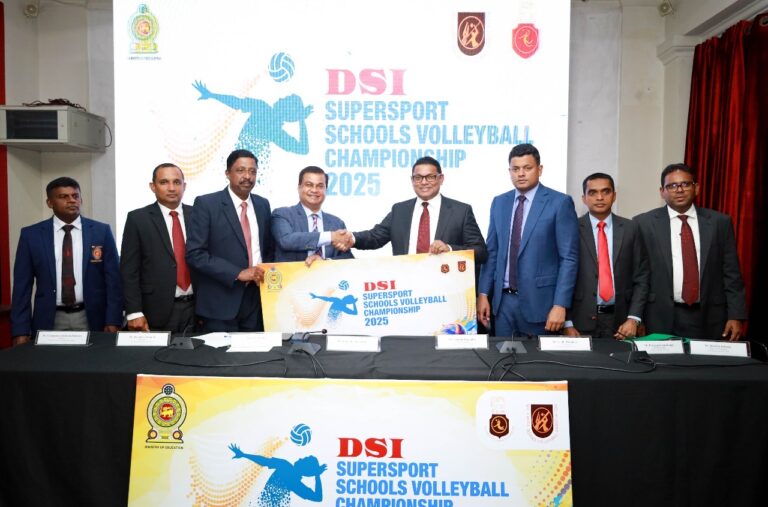
Colombo, Sri Lanka, 08 May 2025: DSI announced the launch of the 23rd DSI Supersport Schools Volleyball Championship during a press conference held at Hotel Nippon, Colombo 02, on 8th May 2025. The No. 1 footwear brand in the country has partnered with the Sri Lanka Volleyball Federation and the Schools’ Volleyball Association of the Ministry of Education to organise this prestigious tournament, which holds a significant place in the history of Sri Lankan volleyball.
Initiated by DSI in 1999, alongside the Sri Lanka Volleyball Federation and the Ministry of Education, the championship aims to provide opportunities and essential support to volleyball players from both rural and urban areas. It also serves as a national platform for showcasing their skills and advancing their careers on both national and international stages. Since its inception, the tournament has featured 198 teams and has contributed to the development of nearly 400 sporting personalities. This year, the organisers anticipate the participation of over 4,000 teams from across the island.
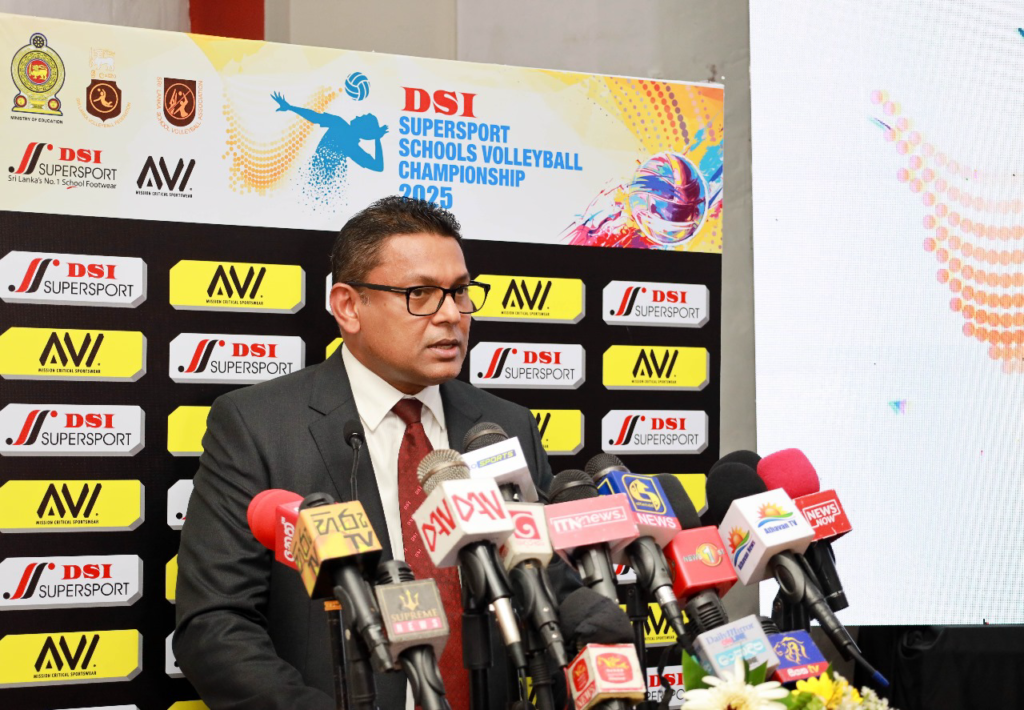
“2025 is a special year for DSI as it marks the 23rd anniversary of the DSI Supersport Schools Volleyball Championship. It is both an honour and a privilege for DSI to sponsor this highly anticipated annual event, which provides a stage for recognising the talents of young sportsmen and women from schools across the country. We also hope that the championship will continue to play a vital role in nurturing and popularising volleyball as our national sport,” stated Mr Thusitha Rajapaksa, Managing Director of D. Samson & Sons (Private) Limited.
The tournament features the following age categories: under-11 boys and girls, under-13 boys and girls, under-15 boys and girls, under-17 boys and girls, and under-19 boys and girls. The tournament will be held at district and national levels. District matches are scheduled for 14th, 15th, 21st, 22nd, 28th, 29th June, and 5th, 6th, 12th, 13th, 19th, 20th, 26th, and 27th July 2025. Teams securing first and second places at the district level will qualify for the national level, with matches taking place from 20th to 24th August 2025. The finals will be held on 15th and 16th November 2025 at Sugathadasa Indoor Stadium in Colombo.
Applications for the championship will be available at all DSI showrooms island-wide. The application can also be downloaded via the QR code posted on the official DSI Supersport Facebook page and via the official AVI website (https://avi.lk/volleyball/). For further information, applicants can contact the Sri Lanka Volleyball Federation on 011-2669344, the 25 District Coordinators, or the Secretary of the Schools’ Volleyball Association, Mr C. L. Kumara, on 0773329702. Alternatively, emails can be sent to Mr A. S. Nalaka, General Secretary of the Sri Lanka Volleyball Federation, at [email protected].
Completed applications should be submitted to the nearest DSI showroom or posted to the Corporate Marketing Department at No. 257, High Level Road, Navinna, Maharagama. The deadline for submissions is 14th May 2025.
In view of the upcoming state Vesak Festival, the Ministry of Public Administration has announced that all slaughterhouses, meat shops, and meat sections in supermarkets across Sri Lanka will be temporarily closed from May 12 to May 14, 2025.
This directive also extends to entertainment venues such as casinos, race bookies, and clubs, which must remain closed during the same period.
The move, outlined in a circular issued on April 29, is intended to honour the spiritual and cultural significance of Vesak, which marks the birth, enlightenment, and passing of the Buddha. Authorities and businesses have been instructed to ensure strict compliance.
The Board of Control for Cricket in India (BCCI) has officially suspended the TATA IPL 2025 for one week due to escalating military tensions between India and Pakistan, with immediate effect. The announcement, made through a media advisory, comes after security concerns prompted franchisees, broadcasters, and sponsors to express concern for the safety of players and staff.
“The decision was taken in the collective interest of all stakeholders, despite the BCCI’s full faith in the strength of our armed forces,” the advisory noted.
Current Situation and Immediate Impact
The IPL Governing Council made the call after consultations with franchise representatives, most of whom raised concerns from players and international boards.
The season is temporarily suspended — the Board has not yet confirmed whether or how the remainder of the tournament will resume.
Players are being repatriated:
Royal Challengers Bengaluru, currently in Lucknow, will be flown back via charter to Bengaluru.
Mumbai Indians and Kolkata Knight Riders are leaving from Ahmedabad and Hyderabad, respectively.
Australian players have been advised to return home by Saturday, with coordinated support from teams and authorities.
Security Escalation
The suspension follows a series of cross-border hostilities:
On May 9, the Indian Army reported multiple drone and munition attacks from Pakistan, which were “effectively repulsed.”
Pakistan also engaged in ceasefire violations along the Line of Control (LoC) in Jammu and Kashmir.
These were reportedly retaliatory actions after India’s ‘Operation Sindoor’ on May 7, targeting terrorist infrastructure in Pakistan and PoK in response to the April 22 terror attack in Baisaran Valley, Pahalgam, which killed 26 civilians.
Tournament Status
58 matches of the IPL 2025 had been completed, including one abandoned fixture in Dharamsala due to a “significant technical failure.”
12 group-stage matches remain, originally scheduled across Lucknow, Hyderabad, Ahmedabad, Delhi, Chennai, Bengaluru, Mumbai, and Jaipur.
Playoffs were to be held in Hyderabad and Kolkata.
The BCCI has said it will reassess the situation with relevant stakeholders and provide updates on resumption, venues, and revised schedule in due course.
Yantai City, China, hosted the Symposium and Exchange Meeting on International Zero-Carbon Island Construction on May 8 in Colombo, Sri Lanka, marking a significant step in advancing global collaboration on climate-friendly island development.
The event brought together around 50 delegates from government bodies, universities, and enterprises in Sri Lanka and China, including key Sri Lankan officials such as:
Dr. Tilak Siyambalapitiya, Chairman of the Ceylon Electricity Board
Prabhath Chandrakeerthi, Secretary, Ministry of Plantation and Community Infrastructure
K.R. Uduwawala, Secretary, Ministry of Environment
Representing China were Zheng Deyan, Mayor of Yantai and Deputy Secretary of the CPC Yantai Municipal Committee, and Zhu Yanwei, Minister-Counsellor of the Chinese Embassy in Sri Lanka.
Yantai’s Vision for Zero-Carbon Islands
Mayor Zheng highlighted Yantai’s ongoing international efforts to promote zero-carbon initiatives. He noted that at the COP29 Conference in 2024, Yantai launched the International Zero-Carbon Island Cooperation Initiative in partnership with 32 global organizations, and proposed the formation of the International Zero-Carbon Island Cooperation Organization—a non-governmental platform focused on sustainable island development and climate change mitigation.
During the Colombo symposium, Chinese companies including Dongfang Electronics, Tayho Advanced Materials, and LONGi Green Energy showcased cutting-edge technologies and solutions for clean energy and green infrastructure suitable for island environments.
Strengthening Bilateral Ties
Yantai and Sri Lanka continue to enjoy strong bilateral relations, with trade volume reaching RMB 250 million in 2024, up 28.9% year-on-year. Recent cooperation agreements signed during the visit focus on green materials and renewable energy, reinforcing long-term collaboration in sustainable development.
Mayor Zheng invited Sri Lankan institutions, universities, and businesses to join the Zero-Carbon Island Cooperation Organization, emphasizing the shared vision of climate resilience, sustainable growth, and mutual prosperity.
The event lays a robust foundation for Sri Lanka’s green transition, aligning with broader efforts to improve climate governance and livelihoods through international cooperation.
In a landmark achievement for Sri Lankan cinema, the 1978 film Gehenu Lamai, directed by the late Dr. Sumitra Peries, will be screened at the Cannes Film Festival 2025 under the Cannes Classics category. The festival, running from May 13 to 24 in Cannes, France, celebrates restored cinematic treasures from around the world.
Gehenu Lamai (Girls), a teenage drama film in Sinhala, was directed by Sumitra Peries and produced by her husband, Lester James Peries, under Lester Films. This emotionally resonant work is widely regarded as a milestone in Sri Lankan cinema, particularly for its portrayal of female adolescence and social constraints.
A Celebration of Cinematic Legacy
The film’s restoration was spearheaded by the Film Heritage Foundation, in collaboration with the Dr. Lester James Peries and Sumitra Peries Foundation, and funded by the Embassy of France in Sri Lanka and the Maldives, and the Embassy of France in India. This initiative forms part of FISCH (France–India–Sri Lanka Cine Heritage), an international effort to preserve and restore South Asian film heritage.
Sumitra Peries (1934–2023), celebrated as Sri Lanka’s first female filmmaker, directed over a dozen influential films during her career. She was also a screenwriter, producer, and film editor, and served as Sri Lanka’s Ambassador to France in the 1990s. In recognition of her contributions to the arts, the French Government honored her with the title of Chevalier of the Order of Arts and Letters.
Global Recognition for Sri Lankan Cinema
The Cannes Classics section highlights cinematic masterpieces from around the world, restored to their original glory. The world premiere of Gehenu Lamai at Cannes not only celebrates Sumitra Peries’ legacy, but also marks a significant milestone in the global recognition of Sri Lanka’s film heritage.
This selection reinforces the importance of cross-border cultural collaborations in safeguarding the region’s film history and offers a renewed global platform for Sri Lankan storytelling.
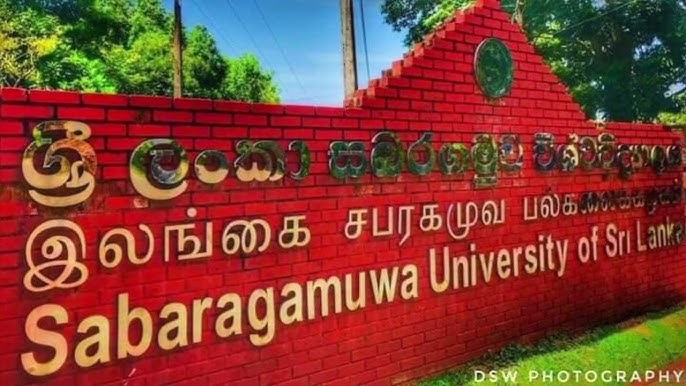
The University Grants Commission (UGC) has initiated an independent inquiry into the recent tragic suicide of a second-year engineering student at Sabaragamuwa University, allegedly due to ragging by third-year students. This probe runs parallel to a CID investigation, with a dedicated committee—comprising UGC representatives—appointed to investigate the circumstances leading up to the incident.
Addressing Parliament on May 8, Prime Minister and Minister of Education, Higher Education, and Vocational Education Dr. Harini Amarasuriya assured lawmakers that the government will not take the incident lightly. In response to a question from UNP MP Ravi Karunanayake, she stressed that both short-term punitive actions and long-term preventive reforms are being urgently implemented.
Key Government Responses:
UGC-led investigation in collaboration with the university’s internal committee, following a directive from the Vice Chancellor to include UGC-nominated members.
Activation of a 24/7 helpline by the Centre for Gender Equity and Equality to receive complaints related to ragging, harassment, and sexual or gender-based violence—expanding on its prior limited-hour service.
Complaints collected via email, physical letters, personal visits, and then logged through an online portal, routed to Gender Focal Points and Vice Chancellors for action within a fixed timeline.
Revival and intensification of awareness programmes based on findings of a 2018 research study on ragging and gender-based violence in state universities.
Recent high-level meeting held with Vice Chancellors, University Marshalls, and Gender Focal Points to propose the creation of a task force to develop a multi-phase strategy—addressing both conventional ragging and evolving forms like online harassment and psychological bullying.
Broader Strategic Measures:
The task force will identify short-, medium-, and long-term solutions, and may recommend new legislation if existing laws are found inadequate.
The government is ensuring strict implementation of current laws by university authorities, while simultaneously focusing on creating a preventive ecosystem within universities.
The Centre for Gender Equity and Equality is developing a survivor support system to assist victims and witnesses of ragging and violence, offering emotional and procedural support throughout the complaint process.
Prime Minister Amarasuriya acknowledged that ragging in today’s context has evolved beyond traditional hazing, describing it as a complex issue involving multifaceted forms of abuse. She underscored the importance of a holistic approach, combining legal enforcement, institutional reform, and a cultural shift within universities to ensure student safety and dignity.
The Government of Sri Lanka has concluded a research programme to digitise the judicial system, with implementation activities now underway, Justice and National Integration Minister Harshana Nanayakkaraannounced in Parliament on May 8. The initiative, which aims to modernize and streamline legal proceedings, is part of a wider strategy to clear the extensive backlog of court cases and ease the burden on the judicial system.
A Court Automation Committee, chaired by Justice Arjuna Obeysekera, has been appointed to spearhead the digitisation effort. Two court complexes—Negombo and Kandy—have been selected as initial implementation sites to expedite the project.
The judicial system currently faces a significant backlog, with 29,132 civil cases pending for 5 to 10 years and 17,271 cases pending for over 10 years. In response, the government is also reviving and expanding a previously stalled court expansion programme, originally halted during the COVID-19 pandemic.
Key highlights of the reform strategy include:
Reactivation of court expansion based on the Mahinda Samayawardana Report, aimed at better demarcation of jurisdictions and manageable caseloads per judge.
Establishment of more Small Claims Courts and Pre-Trial Courts, with new buildings under construction in Galle, Kantale, Matale, Nikawaratiya, Puttalam, Valachchenai, and Mahawa. Only two such courts currently exist in Kandy and Matara.
Commercial High Courts have been increased to four, with a fifth to be established soon.
Tourism Courts in seven areas—Medawachchiya, Kahatagasdigiliya, Nochchiyagama, Kalawanchikudi, Kalawana, Passara, and Narammala—have been elevated to Magistrates’ Courts.
Additional courts set up include three High Courts (in Colombo, Kandy, and Anuradhapura), 12 District High Courts, two District Courts, and one Magistrate’s Court.
The Model Courts initiative has expanded to 21 courthouses, with continued expansion underway.
The government is also working to reduce litigation costs for the public, aiming to lessen the financial burden of legal proceedings.
Minister Nanayakkara emphasized that these reforms are designed to increase judicial efficiency, reduce case delays, and make justice more accessible and affordable for the public.
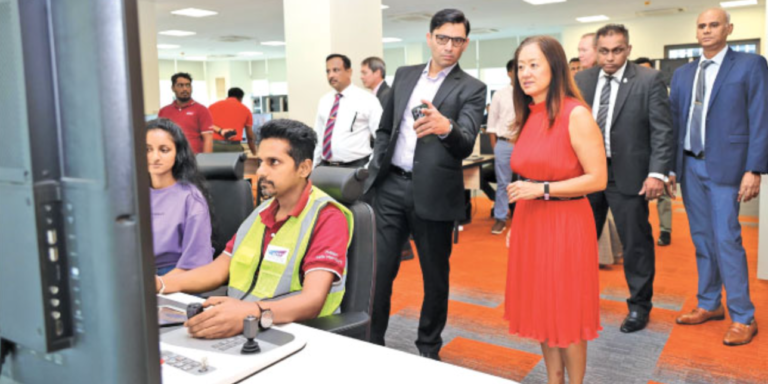
The United States has strengthened Sri Lanka’s port security with the commissioning of new radiation detection equipment at the Colombo Port’s West Container Terminal, provided through the Megaports Initiative by the US Department of Energy/National Nuclear Security Administration (DOE/NNSA)’s Office of Nuclear Smuggling Detection and Deterrence (NSDD).
US Ambassador to Sri Lanka Julie Chung led the commissioning ceremony, where she highlighted the enduring partnership between the two nations in countering nuclear smuggling. The equipment, valued at nearly US$ 500,000 (approximately Rs. 148 million), will help detect and alert authorities to the presence of radioactive materials, thereby supporting Sri Lanka’s national port security regulations and enhancing global supply chain safety.
The initiative not only bolsters local detection capabilities but also contributes to international security, by helping identify threats at key global transit hubs before they reach the US or other destinations. Senior officials from Sri Lanka Customs, the Sri Lanka Ports Authority, and the Sri Lanka Atomic Energy Board were present at the event and collaborated with US experts to train local instructors and maintenance personnel on the new systems.
The commissioning marks a milestone in the 20-year collaboration between the US and Sri Lanka under the Megaports Initiative, first formalized with a Memorandum of Understanding in 2004. Since then, the US has invested over US$ 31 million (more than Rs. 9 billion) to enhance nuclear detection infrastructure at one of the world’s most strategic maritime trade routes.
Ambassador Chung remarked, “Sri Lanka is one of our longest-standing partners in the fight against nuclear smuggling… This commissioning represents another milestone in our shared commitment to global security, non-proliferation, and the protection of international trade routes.”