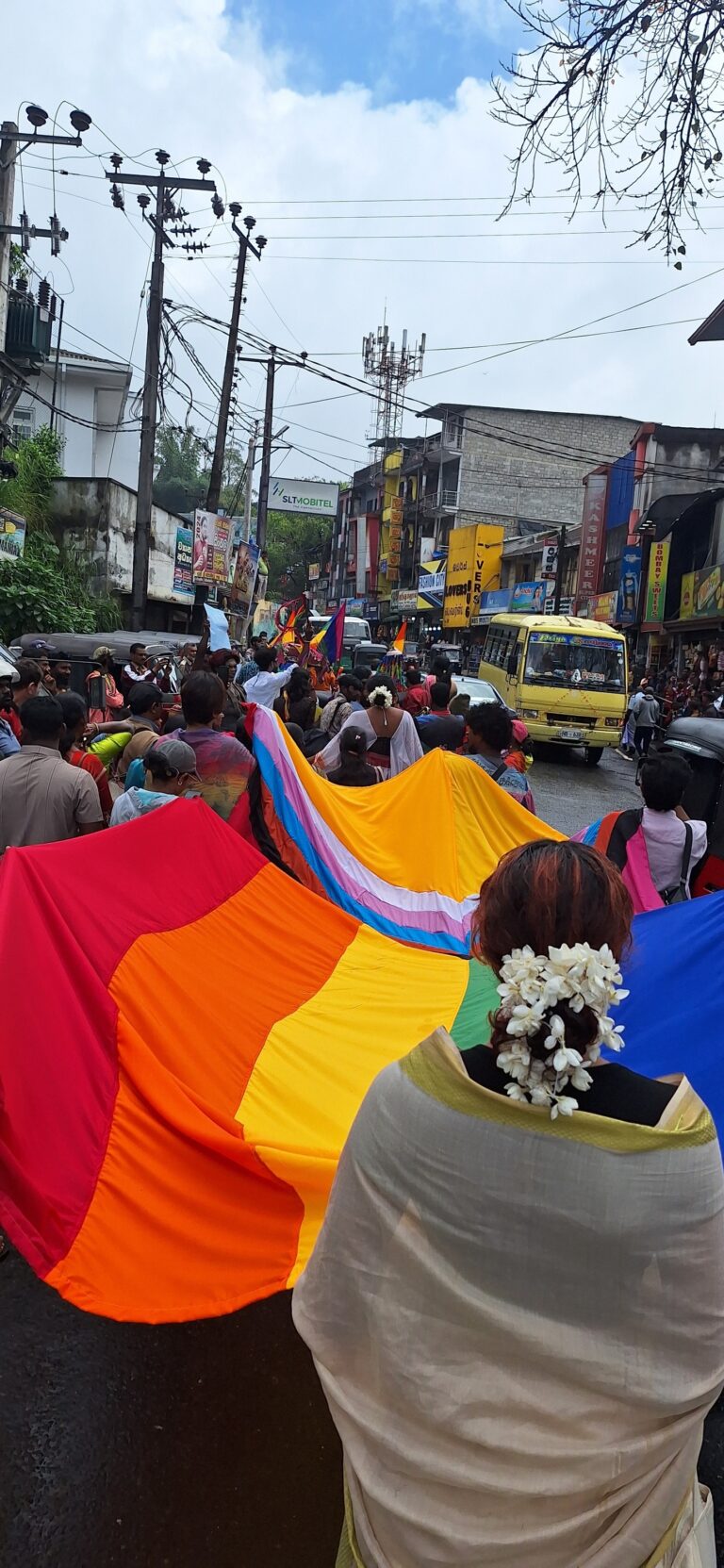
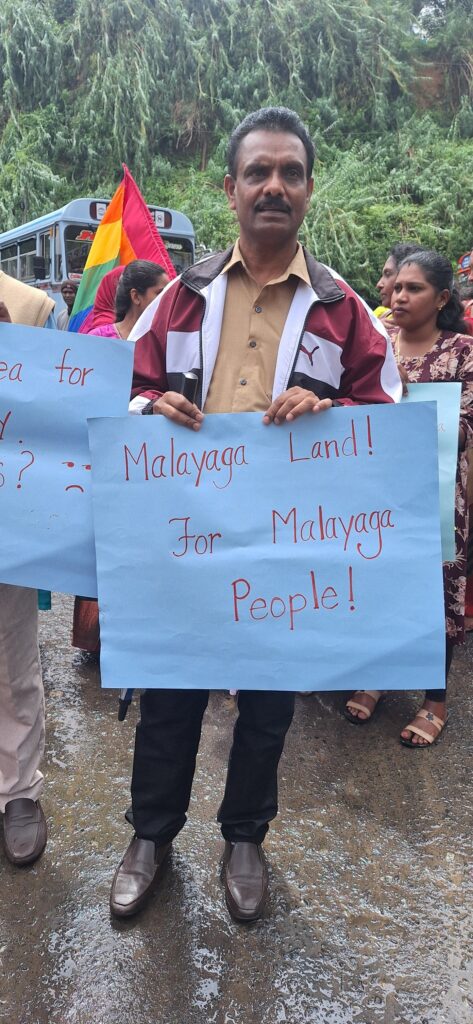
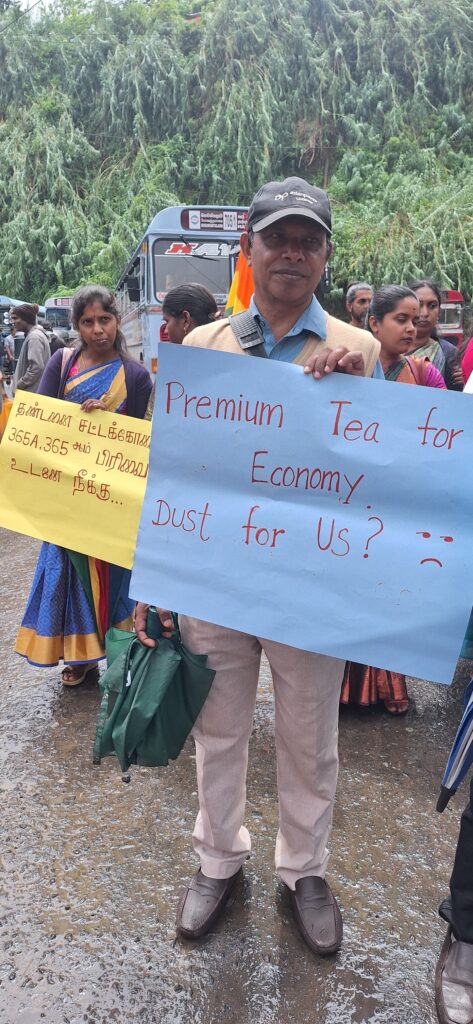
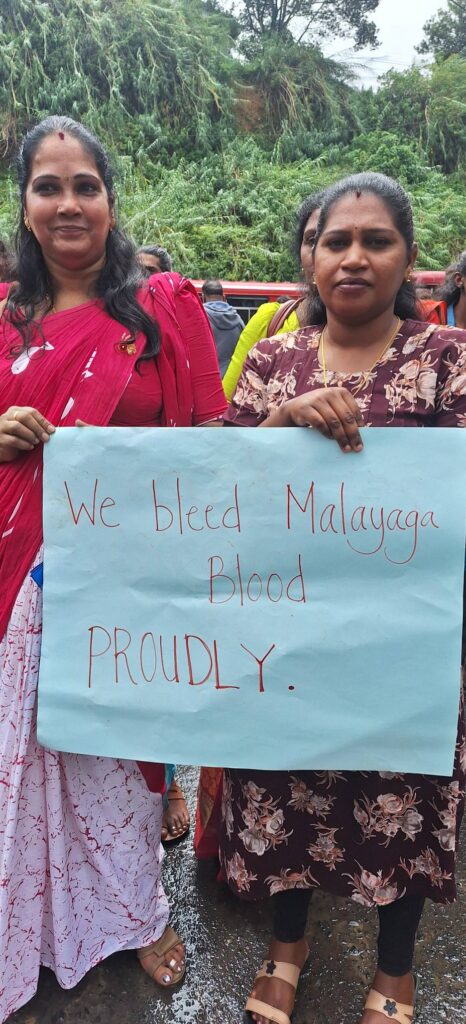
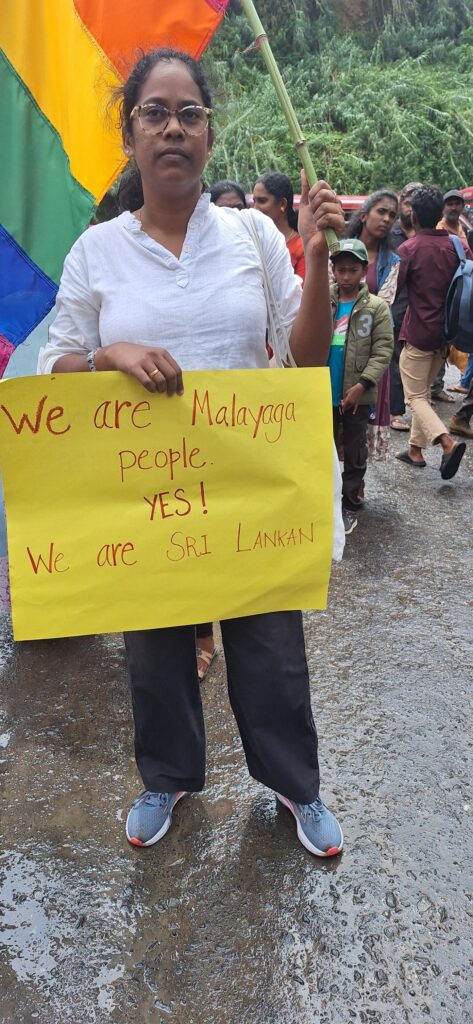
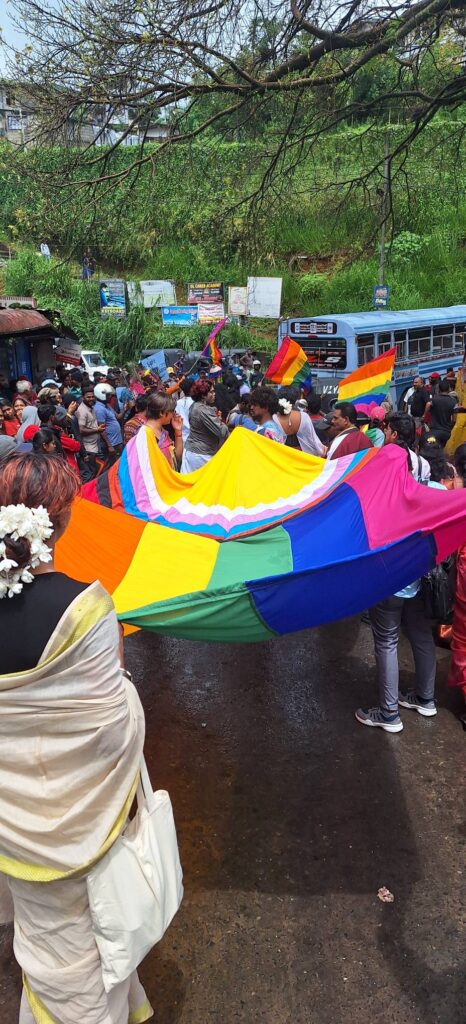
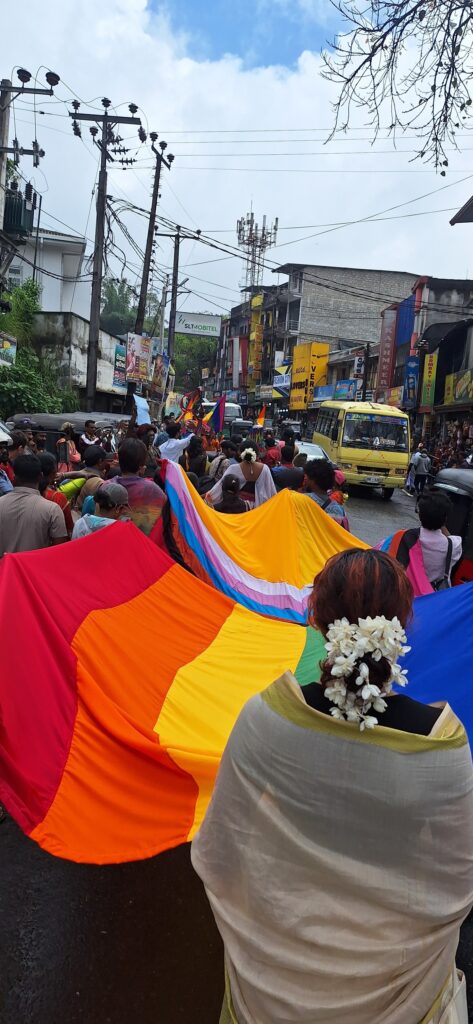
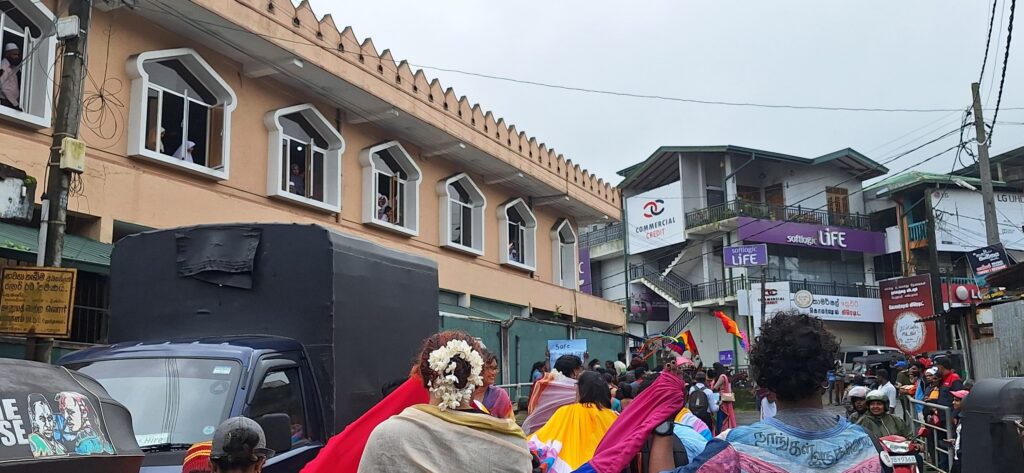
June 01, Colombo (LNW): In a vibrant and defiant show of solidarity, members of the Malayaga community and civil society allies gathered in Kandy this afternoon (June 01) to mark a landmark celebration of queer pride.
The event brought together a diverse cross-section of Sri Lankan citizens committed to challenging entrenched discrimination and calling for long-overdue recognition of the rights of individuals across the spectrum of sexual orientation, gender identity, expression, and sex characteristics (SOGIESC).
Organised under the banner of ‘Malayaga Pride’, the march coursed through the heart of the city in a colourful procession. Traditional drummers and dancers from within the queer community led the way, blending cultural heritage with modern activism.
Participants carried rainbow flags, placards, and banners, all conveying a unified call for justice, dignity, and the dismantling of outdated laws that continue to marginalise LGBTQIA+ individuals in the country.
This year’s demonstration placed a strong emphasis on the intersection of ethnic and queer identities. The Malayaga people, descendants of Indian Tamils brought to Sri Lanka during colonial times to work on tea estates, have long faced systemic socio-economic and political exclusion.
Within this historically oppressed group, queer individuals often endure double layers of discrimination — both from broader society and within their own communities.
A core demand echoed throughout the rally was the repeal of Sections 365 and 365A of Sri Lanka’s Penal Code — archaic colonial-era laws that criminalise consensual same-sex relationships between adults. Although rarely enforced in recent years, these laws continue to legitimise societal stigma and expose LGBTQIA+ individuals to harassment and discrimination by authorities.
Marchers also used the platform to highlight issues that transcend identity politics, focusing on broader struggles for economic justice and land rights — both of which disproportionately affect the Malayaga population.
Organisers noted that many within the community continue to live in informal settlements on estate land with limited access to basic public services, making it difficult for queer individuals to find safe spaces, access healthcare, or live openly.
The march was backed by grassroots organisations and activists working on both human rights and social justice. Public speeches called on legislators to move beyond symbolic gestures and deliver meaningful legal reform.
Participants also underscored the need for inclusive public policy that reflects the lived experiences of all citizens, regardless of gender or sexuality.
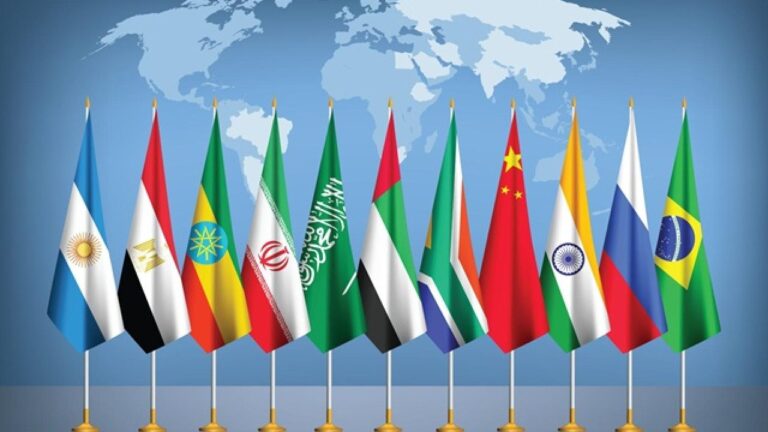
June 01, Colombo (LNW): Russia’s Ambassador to Sri Lanka has encouraged the island nation to make tangible moves if it aspires to become part of the BRICS alliance, indicating that verbal expressions of interest must be backed by concrete diplomatic engagement.
Addressing a gathering at the Bandaranaike International Centre for International Studies in Colombo, Ambassador Levan S. Jagaryan commented on the subject of Sri Lanka’s potential entry into the BRICS grouping, which comprises Brazil, Russia, India, China, South Africa and several newly admitted nations.
The envoy, whilst acknowledging that both Moscow and Beijing have shown goodwill toward Sri Lanka in recent years, expressed disappointment at what he described as a lack of visible enthusiasm from Colombo to engage meaningfully with the bloc.
Jagaryan recalled an official meeting held in October of the previous year with President Anura Kumara Dissanayake, during which he personally delivered a letter of invitation from Russian President Vladimir Putin, encouraging Sri Lanka to take part in the BRICS summit.
Despite this gesture, the ambassador noted that the Sri Lankan head of state had declined the invitation, citing the country’s then-approaching general elections as a reason for being unable to make the visit.
The ambassador was candid in his remarks, stating that he had received multiple queries from the media and diplomatic circles alike regarding whether Sri Lanka had any intention of aligning itself with BRICS.
He made it clear that admission into the group is a collective decision involving all existing members and is contingent upon the applicant nation undertaking a series of procedural and diplomatic steps.
“It’s not a one-country decision,” Jagaryan pointed out. “All BRICS members must be on board for any expansion to take place. That means if Sri Lanka is truly committed, it must initiate a serious and strategic process, rather than simply making rhetorical gestures.”
His comments have been widely interpreted as a diplomatic nudge for Colombo to move beyond passive engagement and signal its geopolitical intentions more clearly, particularly at a time when several emerging economies have shown interest in joining the bloc.
The BRICS grouping has recently expanded to include new members, as it seeks to reposition itself as a counterbalance to Western-dominated global institutions.
June 01, Colombo (LNW): Sri Lanka’s tourism sector has recorded a steady rise in international arrivals, with over 120,000 visitors entering the country in May alone, according to the latest statistics released by the Sri Lanka Tourism Development Authority (SLTDA).
This brings the total number of tourist arrivals for the year up to just over one million, signalling a continued recovery in the island’s vital tourism industry.
India remains the dominant source of inbound travellers, contributing more than 42,000 visitors in May, which accounts for nearly 36 per cent of that month’s total arrivals.
The United Kingdom, China, Germany, and Bangladesh followed as significant contributors, with each country sending thousands of holidaymakers during the month.
The UK provided over 8,300 visitors, while China sent nearly 8,000. Germany and Bangladesh trailed closely, with approximately 6,500 arrivals each.
Cumulatively, the first five months of 2025 have seen 1,017,004 tourists arrive in Sri Lanka, a figure that reflects both growing confidence among global travellers and renewed marketing efforts by the tourism authorities.
Indian tourists alone accounted for nearly 200,000 of this total, followed by significant numbers from Russia and the UK, which contributed more than 110,000 and 95,000 travellers respectively.
Industry analysts see this continued influx as a promising sign for the country’s economic prospects. Tourism, which was once a primary revenue earner for Sri Lanka, suffered severely during the pandemic and subsequent economic crisis.
However, the gradual restoration of political stability, improvements in infrastructure, and targeted promotions in key markets have helped to reignite global interest in Sri Lanka as a travel destination.
Efforts by the SLTDA and other government agencies to streamline visa processes, enhance safety for tourists, and invest in sustainable tourism practices are said to be bearing fruit.
Hoteliers, travel operators, and local businesses in popular regions such as the southern coast, the central highlands, and the cultural triangle have reported encouraging signs of recovery and forward bookings.
In parallel, Sri Lanka’s ongoing attempts to attract more diverse visitor segments — including wellness tourists, digital nomads, and eco-conscious travellers — have been supported by newer travel campaigns and strategic alliances with foreign travel agencies.
Moreover, the resumption of direct flight routes from cities like Mumbai, London, Shanghai, and Berlin has improved accessibility.
Despite global economic uncertainties and fluctuating airfares, the country’s affordability compared to other destinations in the region has made it particularly attractive to budget-conscious tourists.
Local authorities have expressed cautious optimism that the country could surpass 2.5 million tourist arrivals by the end of 2025 if the current momentum holds.
June 01, Colombo (LNW): A nationwide initiative aimed at improving public understanding of taxation and encouraging broader compliance with revenue regulations is set to commence across Sri Lanka on June 02.
Branded as ‘National Tax Week’, the campaign is part of a government-led effort to deepen civic engagement in the country’s tax framework and enhance fiscal responsibility.
President Anura Kumara Dissanayake is expected to officially inaugurate the initiative at a ceremony held at the Presidential Secretariat, marking the start of a week-long programme spearheaded by the Inland Revenue Department (IRD).
Deputy Commissioner General of the IRD, P.K.S. Shantha, confirmed that the campaign will run until June 07 and will involve extensive outreach to inform the public about the advantages of timely tax payments and the procedures for acquiring a Taxpayer Identification Number (TIN).
The initiative is expected to involve mobile units, workshops, and collaboration with local authorities to reach individuals in both urban and rural areas.
The campaign follows recent regulatory changes which have made the TIN increasingly central to everyday transactions. Under new directives, a valid TIN is now mandatory for registering a motor vehicle under a personal name, and is also required to open certain categories of bank accounts.
These measures are intended to formalise economic activity and broaden the national tax base, especially in a context where many individuals and businesses have traditionally operated outside the formal revenue system.
More than ten million Sri Lankans have already secured their TINs, with the IRD offering online verification through its official website. Authorities believe this figure could rise significantly during the week-long campaign as awareness spreads and barriers to registration are addressed.
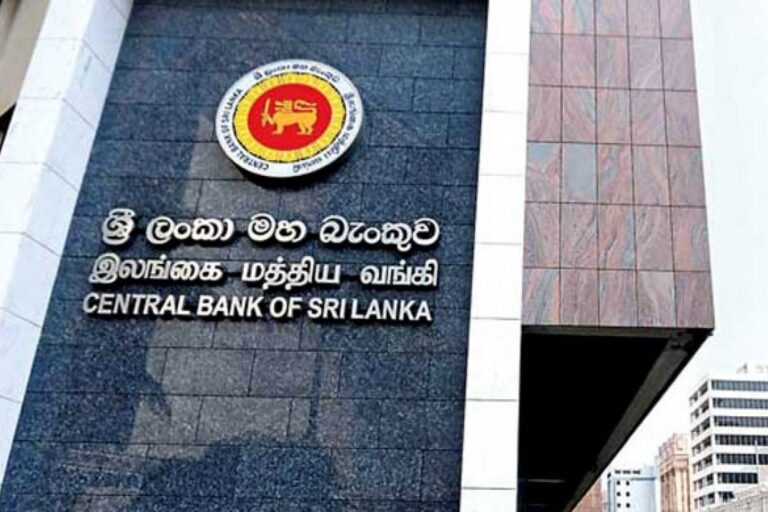
June 01, Colombo (LNW): Sri Lanka’s external economic outlook displayed notable resilience in April 2025, with sustained inflows from tourism and overseas remittances continuing to support the island’s balance of payments, according to a monthly update released by the Central Bank’s Economic Research Department.
Despite headwinds in global trade, the Central Bank reported a continuing surplus in the monthly current account for the fourth consecutive month, a sign of steady progress in stabilising the economy’s external position.
The strong inflow of foreign currency from returning tourists and migrant workers has played a central role in cushioning the country’s finances during a challenging period of recovery.
However, the report noted a widening of the merchandise trade deficit compared to the same period last year and the previous month. A key contributor to this imbalance was the surge in imports, which outpaced export growth.
April saw imports jump by 17.5 per cent year-on-year, with motor vehicle purchases alone accounting for US$ 134 million in expenditure. In contrast, merchandise exports grew by a more modest 10.4 per cent.
Whilst the increase in imports indicates a revival of domestic demand—often associated with economic recovery—it also reflects renewed strain on the country’s trade balance. Nonetheless, the Central Bank noted a favourable shift in the terms of trade, as a sharper fall in global import prices compared to export prices offered a degree of relief.
In the capital markets, the dynamics were more nuanced. Foreign participation in government securities saw a slight reversal, with a marginal outflow of US$ 12 million, following a net inflow in the preceding month.
In contrast, activity in the Colombo Stock Exchange showed signs of renewed interest from foreign investors, reversing the previous trend of capital flight with a modest net inflow of US$ 3 million into both primary and secondary equity markets.
June 01, Colombo (LNW): An official gazette has been released confirming the appointments of key leadership positions across numerous local government councils in Sri Lanka.
The document lists the individuals designated to serve as Mayors, Deputy Mayors, Chairpersons, and Vice-Chairpersons within local bodies across the island, following the recent conclusion of the Local Government elections.
The appointments stem from formal recommendations submitted by both political parties and independent groups that secured control over their respective local authorities during the polls.
These selections were compiled by the Election Commission, which has since moved to officially publish the names, aligning them with administrative districts for greater clarity.
The newly confirmed office-bearers represent a range of political affiliations, reflecting the diverse electoral landscape that emerged from the local contests. Each name listed in the gazette has been vetted and finalised based on the majority positions achieved by the respective parties and groups within the relevant councils.
Additionally, the list of elected and nominated councillors for each local authority has also been made public. This follows procedural requirements to ensure transparency and allows constituents to familiarise themselves with their local representatives ahead of the official start of duties.
The term of office for all local government institutions has been set to begin tomorrow (02), as outlined in a prior notification issued by the Ministry of Public Administration, Provincial Councils, and Local Government on February 17.
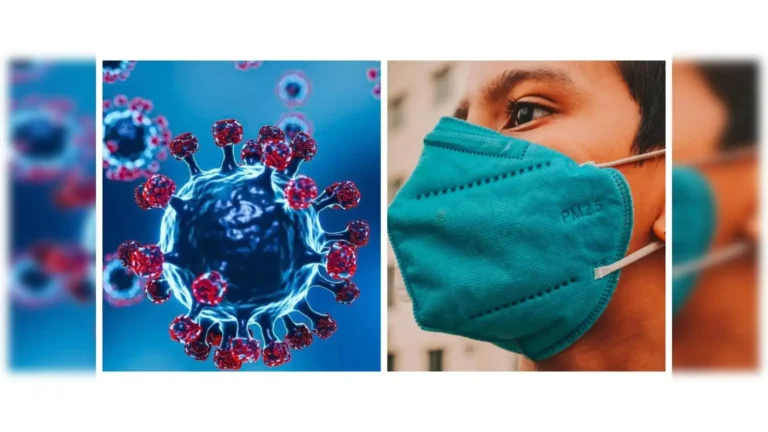
June 01, Colombo (LNW): Health authorities in Sri Lanka have confirmed the detection of two recently identified Omicron subvariants—designated LF.7 and XFG—within the country, aligning with wider regional patterns of Covid-19 evolution observed across parts of Asia.
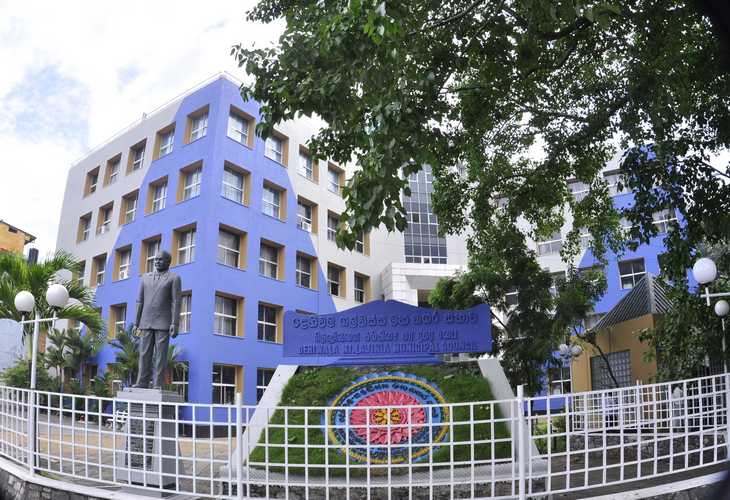
The discovery was made following laboratory analysis carried out by the Medical Research Institute (MRI) in Colombo. The samples, collected from multiple medical facilities across the island, underwent genomic sequencing which confirmed the presence of the emerging sublineages.
Dr Jude Jayamaha, a senior virology expert attached to the Ministry of Health and the MRI, stated that whilst these subvariants have indeed entered local circulation, there is currently no indication of heightened risk that would warrant public panic.
According to Dr Jayamaha, viral mutations remain a natural and anticipated aspect of SARS-CoV-2’s ongoing adaptation process.
Although no surge in hospitalisations or severe illness has been linked to these new subvariants, public health professionals continue to monitor the situation closely.
Enhanced genomic surveillance and routine viral sequencing remain core components of the government’s response, aimed at rapidly identifying any significant shifts in transmissibility or disease severity.
In light of the findings, officials are urging the public—particularly vulnerable groups such as the elderly, expectant mothers, and individuals with underlying health conditions—to adhere to basic protective measures.
These include the wearing of face masks in crowded settings, maintaining good hygiene practices, and avoiding poorly ventilated indoor spaces whenever possible.
Meanwhile, in a related development, medical investigations have confirmed that a one-and-a-half-month-old infant who died recently at Galle National Hospital had contracted the Covid-19 virus. The diagnosis was confirmed following post-mortem testing by the MRI. However, hospital authorities clarified that the infection was not attributed to either of the newly identified subvariants.
Whilst this isolated case has prompted renewed calls for attentiveness to respiratory symptoms in children and infants, health officials stress that overall case numbers remain manageable at this time.
The Ministry of Health has reiterated that it stands ready to escalate response measures should the epidemiological situation change.
June 01, Colombo (LNW): In a decision that brings a measure of relief to motorists and transport operators, the Ceylon Petroleum Corporation (CEYPETCO) has confirmed that fuel prices across the board will remain unchanged for the month of June 2025.
According to the statement issued by the state-run fuel supplier, existing prices for both petrol and diesel will continue through June without alteration.
This includes Auto Diesel at Rs. 274 per litre, Super Diesel at Rs. 325, Petrol 92 Octane at Rs. 293, Petrol 95 Octane at Rs. 341, and Kerosene at Rs. 178.
June 01, Colombo (LNW): Prevailing showery condition in the southwestern part of the island is expected to reduce gradually from today (01), the Department of Meteorology said in its daily weather forecast today.
Showers or thundershowers will occur at times in Western, Sabaragamuwa, Central and North-western provinces and in Galle and Matara districts.
Showers or thundershowers may occur at a few places in Uva province and in Ampara and Batticaloa districts during the afternoon or night.
Fairly strong winds of about (30-40) kmph can be expected at times over Western slopes of the central hills and in Northern, North-central and North-western provinces and in Hambantota and Trincomalee districts.
The general public is kindly requested to take adequate precautions to minimise damages caused by temporary localised strong winds and lightning during thundershowers.
Marine Weather:
Condition of Rain: Showers or thundershowers will occur at several places in the sea areas off the coast extending from Puttalam to Hambantota via Colombo and Galle. Showers or thundershowers may occur at a few places over the other sea areas around the island.
Winds: Winds will be south-westerly and wind speed will be (30-40) kmph. Wind speed can increase up to 50 kmph at times in the sea areas off the coast extending from Chilaw to Kankasanthurai via Puttalam and Mannar and from Galle to Pottuvil via Hambantota.
State of Sea: The sea areas off the coast extending from Chilaw to Kankasanthurai via Puttalam and Mannar and from Galle to Pottuvil via Hambantota will be rough at times.
The wave height (about 2.0–2.5 m) may increase in the sea areas off the coast extending from Puttalam to Pottuvil via Colombo, Galle and Hambantota (this is not for land area).
Naval and fishing communities are requested to be vigilant in this regard.
Temporarily strong wind gust and very rough seas can be expected during thundershowers.
Once polluted and suffering from depopulation, Naoshima has become Japan’s hottest contemporary art enclave – and there are signs that life there may be finally rebounding.
Shinichi Kobayashi has idyllic memories of growing up on Naoshima, one of the nearly 3,000 islands scattered across Japan’s Seto Inland Sea.
“We would go clam digging,” said the 75-year-old, who became the island’s mayor in 2018. “During the summer, I would spend entire days swimming in the sea, catching turban shells and fish, getting deeply tanned.”
“I don’t recall seeing any foreign visitors,” he added.
Kobayashi’s home island is no longer off the tourist radar – thanks to the power of modern art. Since the 1989 launch of what has become Benesse Art Site Naoshima – a multi-island art initiative initiated by billionaire Sōichirō Fukutake – more than 500,000 visitors now flock annually to Naoshima, whose fishing villages, rice fields and craggy coastlines have become the canvas for mesmerising art installations and ambitious museums. In 2010, the Setouchi Triennale launched. The contemporary art festival – which is now one of Japan’s foremost international art events – attracts roughly one million visitors to the region each Triennale season. The sixth edition kicked off on 18 April this year and will run until 9 November; the longest Setouchi Triennale ever.
Once polluted and facing depopulation, Naoshima now teems with edgy art installations (Credit: Alamy)
Forty years ago, few would have imagined such a transformation. In the early 20th Century, Naoshima had cemented its reputation as a copper smelting hub, but by the 1980s, it was heavily polluted; the raw, rocky land around the Mitsubishi Materials industrial plant denuded of vegetation. The population dwindled dramatically as the young left to seek opportunities in larger cities.
Fukutake’s father, publishing magnate Tetsuhiko Fukutake, and Naoshima’s then-mayor, Chikatsugu Miyake, aspired to revitalise the bleak area by founding a children’s campground. Tetsuhiko died before the project was completed, leaving it to his son. Shocked by Naoshima’s pollution, the younger Fukutake purchased a large swathe of the island’s unblighted south side. His new plan: to transform the region by erecting attractive museums against its serene coastal landscapes. To enact his vision, he tapped Osaka-born architect Tadao Andō, who had become known for designing buildings that blended seamlessly into their surroundings.
“I was surprised by the idea and thought it would be difficult to achieve,” Andō said in a 2018 interview where he and Fukutake discussed the project’s origins. “It was so inconvenient! Who would come here?”
“This project began as an act of resistance,” explained Fukutake in the interview. “It was my conscious intention to build a kind of heaven on Earth – the very first paradise that harmonises art, nature and the local community.”
Since 1992, the Benesse House Museum has been a haven for the works of today’s leading contemporary artists (Credit: Alamy)
Naoshima was named one of BBC Travel’s 25 best places to visit in 2025, a list highlighting destinations that are not only welcoming visitors, but using tourism as a force for good. See the full list here.
The island’s evolution into a globally renowned open-air museum and international contemporary arts hub was all but assured in 1994, when Yayoi Kusama’s yellow and black-spotted Pumpkin was added to the landscape’s growing collection of public artworks. This iconic work has since become emblematic of Naoshima itself.
“[The] initial goal wasn’t to promote tourism,” said Soichiro Fukutake’s son, Hideaki, who now helms the Fukutake Foundation. “But rather to revitalise the region through art and help locals feel a renewed sense of pride in their hometown.”
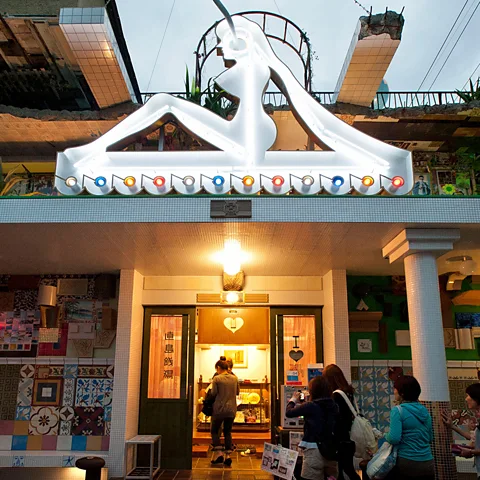
But the mission hasn’t just been about building anew. Since 1998 and the start of the Art House Project in the nearby fishing village of Honmura, “using what exists to create what is to be” has been a guiding principle, leading to many defunct buildings on Naoshima and the neighbouring islands of Teshima and Inujima to be reborn as art. These include two projects by artist Shinrō Ōtake: Haisha, an old dentist’s building transformed with collage, reclaimed materials and a partial giant copy of the Statue of Liberty; and Naoshima Bath “I♥︎湯”, a public bathhouse now plastered in a patchwork of patterned tiles on the exterior to the full-scale model of an elephant striding across the dividing wall between the male and female bathing sections.
The dynamic Naoshima Bath “I♥︎湯” installation started its life as an abandoned bathhouse (Credit: Alamy)
Some locals were initially sceptical about the general appeal of such artworks. In the 1980s Toshio Hamaguchi worked for Naoshima’s town office and guided executives from Fukutake’s company around the island when the International Camp was first being planned. “I did not expect that we would attract many people by such a project, and particularly by art,” recalls the retiree. “However, we have so many visitors thanks to art now.”
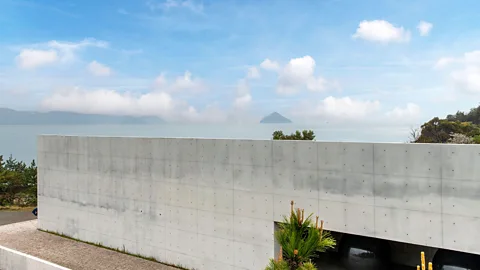
Since his initial commissions on Naoshima, Andō has designed nine other projects on the island, including the Chichu Art Museum, of which a large portion is built directly into the earth; and the Naoshima New Museum of Art, opening 31 May, which will showcase contemporary art from Japan and Asia. The inaugural exhibition – titled From the Origin to the Future – will feature works by the likes of Japan’s Takashi Murakami and Makoto Aida, Cai Guo-Qiang from China and the Korean artist Do Ho Suh.
Like the Chichu Art Museum, the Naoshima New Museum of Art blends seamlessly with the environment by burying two of its three storeys beneath the ground. “It’s one of the most ambitious and exciting projects we’ve undertaken,” said Hideaki Fukutake.
As mayor, Kobayashi notes the economic benefits: “Thanks to the increasing number of visitors, guesthouses and restaurants have flourished, helping make everyday life more vibrant for the locals.”
He added: “That said, we’ve also seen some changes, like more people locking their doors, which wasn’t common in the past… For me, what matters most is that the residents can live cheerfully, energetically and happily.”
Threatening this is the island’s persistent issue of depopulation: Naoshima currently has 3,000 residents, around half the number it had in the 1980s. “Personally, I strongly wish to increase it,” said Kobayashi. “Even if just by one person.”
However, there are glimmers of hope; a 2024 Asahi Shimbun article cited that though the island’s population was in decline in 2022, the number of newcomers has risen slightly but steadily each year since. Over the past five years, 500 people – mainly married urban couples in their 30s and 40s – moved to the island, attracted by its unique artsy beauty. Many Benesse Art Site Naoshima staff have relocated to the island while others have come to fill jobs in the booming hospitality industry – so much so that Naoshima is now facing a housing shortage. Mitsubishi Materials has also significantly cleaned up its copper smelting operations, improving the overall quality of life.
Speaking at a conference on Naoshima in 2023, Eriko Ōsaka, a respected curator and general director of The National Art Center, Tokyo, credited Benesse Art Site Naoshima organisers with changing the island’s image “from being a negative one to a positive one through the power of art”.
In Ōsaka’s opinion, visitors to Naoshima “can experience serendipity that they can find nowhere else and discover something unknown within themselves”. For her, the success of Benesse Art Site Naoshima means that some of those islanders who have moved away “will come back one day”.