Home Blog Page 560

Heavy falls over 100 mm likely to occur in several provinces (May 19)

0

May 19, Colombo (LNW): South-West monsoon conditions are gradually getting established over the island, the Department of Meteorology said in its daily weather forecast today (19).

Cloudy skies can be expected over most part of the island.

Showers or thundershowers will occur at times in Western, Sabaragamuwa, North-western, Central, Southern and Northern provinces.

Heavy falls above 100 mm are likely at some places in Western and Sabaragamuwa provinces and in Galle, Matara, Puttalam, Nuwara-Eliya and Kandy districts.

Several spells of showers will occur in North-central province.

Showers or thundershowers may occur at several places elsewhere of the island during the evening or night.

Fairly strong winds of about (30-40) kmph can be expected at times over North-western, North-central, Northern and Southern provinces and in Trincomalee district.

The general public is kindly requested to take adequate precautions to minimise damages caused by temporary localised strong winds and lightning during thundershowers.

Marine Weather:

Condition of Rain:
Showers or thundershowers will occur at several places in the sea areas around the island.

Winds:
Winds will be westerly to south-westerly and wind speed will be (30-40) kmph. Wind speed can increase up to (55-65) kmph at times in the sea areas off the coast extending from Puttalam to Pottuvil via Colombo, Galle, Matara and Hambanthota.

Wind speed can increase up to (50-55) kmph at times in the sea areas off the coast extending from Puttalam to Batticaloa via Mannar, Kankasanthurai and Trincomalee.

State of Sea:
The sea areas off the coast extending from Puttalam to Pottuvil via Colombo, Galle, Matara and Hambanthota will be rough at times.

The sea areas off the coast extending from Puttalam to Batticaloa via Mannar, Kankasanthurai and Trincomalee will be fairly rough at times.

The wave height may increase (about 2.0 – 2.5 m) in the sea areas off the coast extending from Puttalam to Pottuvil via Colombo, Galle and Hambantota (this is not for land area).

Temporarily strong gusty winds and very rough seas can be expected during thundershowers.

Landslide alerts issued for six districts amidst adverse weather

0

May 18, Colombo (LNW): The National Building Research Organisation (NBRO) has issued early warnings for potential landslides across six districts in Sri Lanka, urging residents to exercise heightened vigilance in the coming days.

The alerts issued today (18) apply to the districts of Colombo, Galle, Kalutara, Kandy, Kegalle, and Ratnapura—regions known for their vulnerability to slope instability during periods of intense rainfall.

The NBRO cautioned that prevailing weather conditions could give rise to landslides, slope and rock failures, subsidence, and embankment collapses.

Authorities have advised those living in hilly or low-lying areas, especially near steep slopes or recent construction zones, to be on alert for early warning signs such as cracks in the soil, tilting trees or utility poles, unusual sounds from the earth, or sudden changes in water flow.

Local disaster management teams and Grama Niladhari officers have been instructed to monitor high-risk zones closely, with preemptive evacuation being considered in particularly exposed areas if rainfall intensifies.

The Department of Meteorology has also indicated that prevailing wet conditions could continue, especially in the south-western part of the country.

The NBRO has called on the public to follow official bulletins, refrain from travelling through high-risk roads during heavy rain, and report any early signs of ground movement to local authorities without delay.

Residents are also encouraged to remain updated via NBRO and Disaster Management Centre (DMC) channels, and to prepare emergency kits and evacuation plans as a precaution.

Sri Lanka participates in WHO’s 78th World Health Assembly in Geneva

0

May 18, Colombo (LNW): Sri Lanka’s Minister of Health and Mass Media, Dr Nalinda Jayatissa, departed for Switzerland this morning (18) to represent the country at the 78th World Health Assembly, convened by the World Health Organisation (WHO).

The high-level international forum is set to take place in Geneva from May 19 to 27 under the theme “One World for Health”.

This annual assembly brings together health ministers and senior delegates from all WHO member states, providing a platform for global collaboration on pressing public health issues.

This year, more than 15,000 government officials and representatives from various national health sectors are expected to attend, underscoring the significance of international cooperation in shaping the global health agenda.

The event aims to generate inclusive dialogue on a wide range of healthcare topics, with delegates expected to present proposals, share research data, and contribute to the development of long-term health strategies.

Discussions will centre on improving public health systems, tackling transnational health threats, and aligning policy frameworks for better global resilience in future health emergencies.

Dr Jayatissa is accompanied by a high-level delegation that includes Dr Anil Jasinghe, Secretary to the Ministry of Health and Mass Media; Himali Arunatilaka, Sri Lanka’s Permanent Representative to the United Nations in Geneva; and Nishanthini Victor, First Secretary to the UN Mission in Geneva. The group will engage in bilateral discussions, side events, and strategic forums throughout the assembly’s duration.

The World Health Assembly serves as the WHO’s decision-making body and plays a crucial role in setting international health priorities. This year’s focus reflects the need for cohesive global responses to emerging health challenges, following years of strain on national healthcare systems in the wake of the COVID-19 pandemic and other concurrent crises.

Sri Lanka Eyes US $5 Billion in FDI amid Policy Challenges and Diplomatic Push

0

By: Staff Writer

May 18, Colombo (LNW): In a renewed push to attract much-needed Foreign Direct Investment (FDI), Sri Lanka’s Board of Investment (BOI) Chairman Arjuna Herath this week led a strategic meeting with ambassadors and diplomatic representatives from Sri Lanka’s foreign missions.

The gathering, steered by BOI’s Director-General of Human Resources and Mission Development, Sumith Dissanayake, focused on aligning diplomatic efforts with the nation’s ambitious economic goals.

Herath emphasized the importance of targeted global marketing and smart incentive frameworks to position Sri Lanka as an appealing investment hub. He urged the ambassadors to leverage their international networks to promote opportunities and forge strategic partnerships that could revitalize the island’s economic landscape.

Despite these proactive steps, Sri Lanka’s journey to attracting $5 billion in FDI by 2025 is riddled with challenges. The nation’s investment climate has long suffered from policy inconsistency, political uncertainty, and economic volatility—factors that dampen investor sentiment. According to the U.S. Department of State, frequent changes in investment regulations, especially around election periods, contribute to a “wait-and-see” mindset among foreign investors.

Adding to investor hesitancy is the country’s limited infrastructure and reliance on foreign borrowing, which exposes the economy to external shocks. Inconsistent reserve levels and a complex regulatory environment further compound the problem.

The World Bank and other multilateral agencies have consistently highlighted the need for deep structural reforms to make Sri Lanka more investment-friendly, calling for better policy coherence, reduced red tape, and greater legal predictability.

Although Sri Lanka has historically attracted up to $2.37 billion in FDI, current inflows remain modest. Investment as a percentage of GDP stood at 22.9% as of September 2024. However, there have been bright spots.

Foreign portfolio investments saw a notable increase of $146 million during the same period, signaling investor interest—albeit in more liquid, short-term instruments rather than long-term development projects.

The government is aware of the stakes. With mounting fiscal pressures and the need for sustainable economic recovery, attracting FDI has become a top national priority. Reform agendas are being rolled out, but implementation remains slow due to bureaucratic inertia and political distractions, particularly in the lead-up to national elections.

Experts suggest that unless Sri Lanka can provide a stable, predictable, and investor-friendly climate—with clear legal frameworks and improved infrastructure—the $5 billion target may remain out of reach. The recent diplomatic outreach, while encouraging, must be matched by tangible policy action on the ground to transform intent into investment.

 As Sri Lanka stands at a crossroads, the coming months will be critical in determining whether the nation can truly become a regional investment magnet—or miss yet another opportunity.

Public Backlash Grows as CEB Pushes for Mid-Year Electricity Rate Increase

0

By: Staff Writer

May 18, Colombo (LNW): The Ceylon Electricity Board (CEB) has proposed an 18.3% increase in electricity tariffs for the period of June to December 2025, citing projected financial losses and the need to ensure the long-term sustainability of Sri Lanka’s power sector. The proposal has been submitted to the Public Utilities Commission of Sri Lanka (PUCSL) for review and approval.

The proposed hike has sparked widespread debate, especially in light of the CEB’s recent profitability. In 2023, the utility reported significant gains—Rs. 61.2 billion for the Board and Rs. 75.7 billion for the Group—primarily driven by reduced dependence on expensive thermal power due to improved rainfall and a steep tariff increase implemented in October 2023. The positive trend continued into 2024, with the CEB posting a first-quarter profit of Rs. 88.3 billion, marking a stark contrast to its Rs. 35.3 billion loss during the same period in 2023.

Despite the current proposal for a tariff increase, the PUCSL had previously mandated a 20% reduction in electricity tariffs effective from January 17, 2025. This decision was based on a projected Rs. 44 billion surplus for the first half of the year. Additionally, the Ministry of Power and Energy announced in December 2024 that electricity rates would remain unchanged through June 2025, citing sound financial management and the use of accumulated profits to offset an expected revenue gap of Rs. 39 billion.

However, President Anura Kumara Dissanayake recently signaled a shift in policy, stating that a tariff revision would take place on June 1, 2025. He emphasized the necessity of adopting cost-reflective pricing models in line with recommendations from the International Monetary Fund (IMF). The President also highlighted the CEB’s substantial legacy debt of Rs. 220 billion, confirming that a portion of this liability would be incorporated into the upcoming tariff structure.

The CEB argues that the proposed tariff adjustment is essential to address a projected deficit of Rs. 42.2 billion for the second half of 2025. According to the utility, the proposal was developed using a comprehensive analysis that considered current tariffs, fuel costs and availability, hydro inflows, future price trends, energy demand, infrastructure requirements, and macroeconomic conditions.

Under PUCSL’s tariff methodology, end-user electricity rates are based on the revenue requirements of the CEB, assessed through the Bulk Supply Transaction Account (BSTA). This financial mechanism helps track mismatches between revenue and costs, ensuring that future adjustments reflect the economic realities of the power sector.

The PUCSL has announced that it will conduct a public consultation process before reaching a final decision. The outcome is expected to be revealed during the first week of June 2025.As discussions unfold, the key challenge remains balancing the financial health of the CEB with affordability for consumers. While the Board cites pressing financial obligations and infrastructure demands, the public and regulatory bodies continue to scrutinize whether another tariff hike is truly warranted in light of recent financial surpluses.

Telecom Giant Dialog Axiata Reports Rs. 4.1B Profit for Q1 2025

0

By: Staff Writer

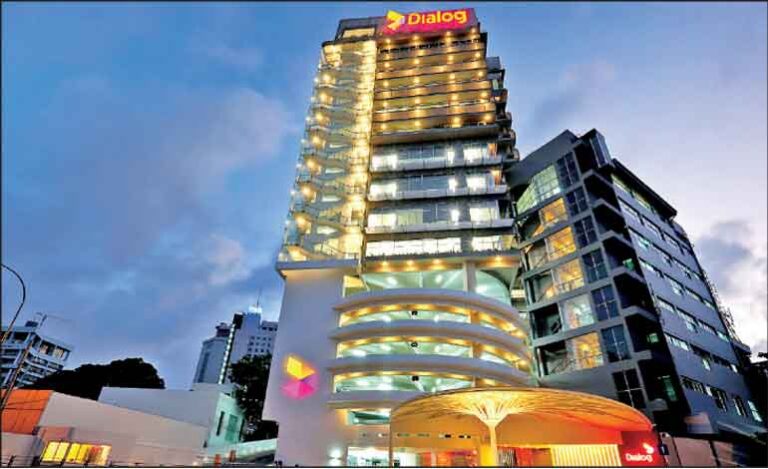
May 18, Colombo (LNW): Sri Lanka’s leading telecom operator, Dialog Axiata PLC, posted a strong financial performance in Q1 2025, with revenue rising 4% year-on-year (YoY) to Rs. 43.3 billion. Growth was driven across its Mobile, Fixed Line, Digital Pay TV, and Tele-infrastructure sectors. However, quarterly revenue declined by 5% due to a strategic reduction in low-margin international wholesale operations.

Core revenue increased by 20% YoY to Rs. 41.4 billion, while Earnings Before Interest, Tax, Depreciation and Amortisation (EBITDA) jumped 45% YoY to Rs. 19.7 billion. Despite quarter-on-quarter (QoQ) declines of 2% in core revenue and 7% in EBITDA, Dialog achieved a significant YoY net profit growth of 49% to Rs. 4.1 billion. QoQ net profit dropped 39%.

The Group contributed Rs. 14.8 billion to government revenue, including Rs. 4.5 billion in direct taxes and Rs. 10.3 billion in consumption taxes. Capital expenditure rose 36% YoY to Rs. 3.7 billion, while Operating Free Cash Flow surged to Rs. 12.3 billion—up 71% YoY.

Dialog’s mobile network was independently rated as the country’s leader in 5G experience, coverage, and overall performance.

At the entity level, the company accounted for 74% of group revenue and 72% of EBITDA. Consolidation of the Airtel business and stable consumer pricing lifted company revenue by 26% YoY to Rs. 32.3 billion. Company-level EBITDA surged 63% YoY to Rs. 14.2 billion, with net profit rising 78% YoY to Rs. 2.9 billion.

Dialog Television maintained a strong base of over 1.6 million subscribers. Its revenue remained stable YoY at Rs. 3.1 billion, while EBITDA grew 3% YoY to Rs. 475 million. The segment recorded a net loss of Rs. 367 million.

Dialog Broadband Networks reported Q1 revenue of Rs. 9 billion, down 38% YoY due to the planned international business scale-down. However, its core fixed services grew 6% YoY to Rs. 7.8 billion, and EBITDA rose 24% YoY to Rs. 5 billion. Net profit stood at Rs. 1.6 billion.

Despite short-term impacts, Dialog remains committed to innovation and leadership in Sri Lanka’s broadband and ICT landscape.

Business Confidence Slips as Caution Grips Sri Lankan Corporates

0

By: Staff Writer

May 18, Colombo (LNW): Business optimism in Sri Lanka has taken a step back, as reported in the May edition of LMD, a leading business magazine. According to the latest LMD-PepperCube Business Confidence Index (BCI), there’s a noticeable decline in corporate sentiment, reflecting increasing caution among business leaders.

The magazine reveals that businesspeople have scaled down expectations for economic recovery compared to the previous month. The BCI, based on a survey conducted in early April, dropped from 73% in March to 66% in April – a 7% decline in the number of participants who believe the economy will improve over the next 12 months.

At the same time, 25% of respondents now expect the economy to remain unchanged, up from 19% previously, while the percentage of those predicting a downturn has risen slightly to 10%.

Sales expectations have also dipped for the second consecutive month. Only 78% of executives now anticipate improved sales volumes in the year ahead – a six-point decline from March. This downward trend began in February, ending a brief period of growing optimism seen earlier.

“This reflects a broader sense of caution across the corporate landscape,” said an LMD spokesperson, emphasizing that the momentum gained in prior months appears to be fading.

Despite the setback in sentiment, LMD notes that Sri Lanka’s business confidence levels, although declining, remain above the historical average. The BCI fell from 128 points in the fourth quarter of 2024 to 123 points in the first quarter of 2025. For context, the long-term average since 2014 stands at 82.93 points, with highs of 136 in 2014 and lows of 20 in 2020 during the height of the COVID-19 crisis.

While business confidence has weakened, other economic indicators offer a more nuanced picture. Export earnings grew by 5.3% in the first quarter of 2025, driven by strong performances in textiles, spices, and tea. Additionally, the Central Bank of Sri Lanka has maintained an accommodative monetary policy to help ease inflation and promote recovery.

Nevertheless, challenges remain. Fiscal consolidation efforts and the need to sustain export momentum are pressing concerns, especially as the country continues to manage its trade deficit and debt obligations.

The latest issue of LMD, including this analysis, has been released in print and distributed digitally via WhatsApp and social media, offering deeper insights into Sri Lanka’s evolving economic landscape.

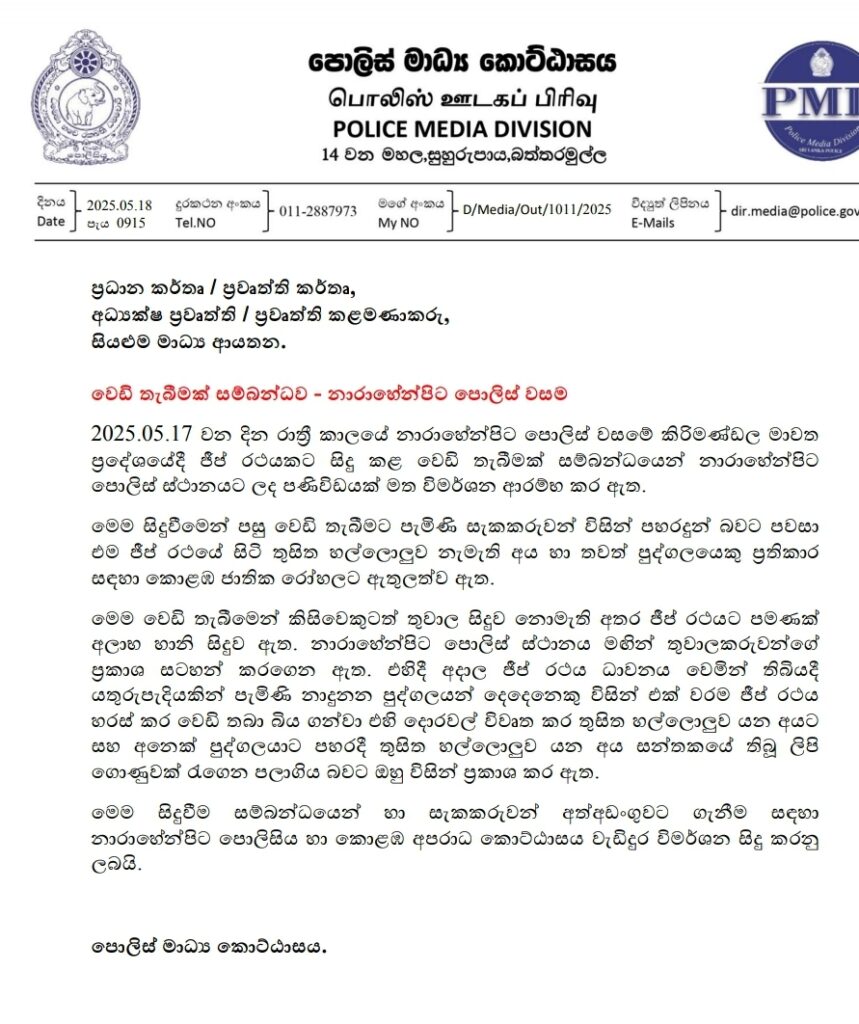
Attempted shooting of ex Presidential PR Chief referred to CCD

0

May 18, Colombo (LNW): A high-profile investigation has been launched following a targeted attack on Thusitha Halloluwa, a long-time public relations figure in Sri Lanka’s political sphere, with the case now transferred to the Colombo Crimes Division (CCD) under orders from Acting Inspector General of Police Priyantha Weerasuriya.

The incident unfolded on the night of 17 May in Narahenpita, where Halloluwa was travelling in a vehicle alongside his legal counsel, Dinesh Dodangoda. According to initial reports, two unidentified gunmen on a motorcycle trailed their car before discharging warning shots into the air.

The attackers then reportedly opened fire directly at the front of the vehicle once it came to a halt, indicating a premeditated attempt to intimidate or harm.

Following the gunfire, Halloluwa claims both he and his lawyer were physically assaulted by the assailants, who then fled the scene with a file believed to contain sensitive documents.

Both victims were admitted to Colombo National Hospital for medical evaluation and treatment, though they were later discharged without life-threatening injuries.

The motive behind the attack remains unclear. However, the seizure of documents has raised suspicions of political undertones or attempts to obstruct sensitive disclosures. Halloluwa, who has held senior roles under multiple administrations — including serving as Director General of Public Relations to former President Ranil Wickremesinghe — has been a well-known figure in government communications for decades. He recently re-entered the public eye following controversial remarks linked to alleged state investment matters.

CEB seeks 18.3% tariff hike amidst projected Rs. 42 bn shortfall

0

May 18, Colombo (LNW): The Ceylon Electricity Board (CEB) has formally proposed an 18.3% increase in electricity tariffs for the period spanning June to December 2025, citing a substantial financial deficit as the primary justification.

In a proposal submitted to the Public Utilities Commission of Sri Lanka (PUCSL), the state-owned utility outlined that it anticipates a shortfall of Rs. 42.2 billion during the second half of the year.

The proposed hike is intended to bridge this funding gap and stabilise the utility’s operations during a period of continued economic strain.

The CEB has made clear that the estimate is based on current projections and that any deviations — whether the deficit turns out to be greater or smaller than expected — will be addressed through the Bulk Supply Transaction Account (BSTA). These adjustments would then be factored into subsequent tariff revisions.

Although the proposal has not yet been approved, it signals growing financial pressure within the country’s energy sector. The CEB has struggled with mounting operational costs, including expenses related to fuel, power generation, and infrastructure maintenance.

Meanwhile, the continued expansion of renewable energy sources — whilst environmentally commendable — has required significant upfront investment, contributing further to the utility’s financial burden.

A tariff hike of this magnitude is likely to provoke concern amongst both residential and industrial consumers, many of whom are still grappling with the economic aftershocks of the 2022 crisis.

For households, increased electricity bills could strain monthly budgets, particularly in urban areas where reliance on the national grid is highest.

For businesses, especially energy-intensive sectors such as manufacturing and services, the cost implications could ripple into product pricing and profitability.

Critics have long argued that inefficiencies within the CEB, including reported losses from outdated infrastructure and operational mismanagement, have compounded its financial woes.

There are increasing calls for structural reforms within the state utility to improve accountability, reduce wastage, and ensure that tariff adjustments do not become a routine response to institutional shortcomings.

The PUCSL is expected to undertake a review of the CEB’s proposal, taking into account public feedback and broader economic considerations before reaching a final decision.

If approved, the new tariff rates would come into effect from June 2025 and remain valid until the end of the year.

Railway services resume after 24-hour station masters’ walkout: Future strike threat looms

0

May 18, Colombo (LNW): Train operations across Sri Lanka have returned to normal following the conclusion of a 24-hour token strike by the country’s railway station masters.

The industrial action, launched at midnight on May 16, ended as scheduled at midnight yesterday (17), after causing significant disruptions to passenger services, including the suspension of several night mail trains over two consecutive nights.

The decision to return to work was made in line with the originally declared time frame for the protest, according to Sumedha Somaratne, Chairman of the Railway Station Masters’ Union.

He noted, however, that the grievances which led to the strike remain unresolved and warned of further union action if authorities fail to provide satisfactory solutions.

The strike was sparked by a range of longstanding demands, which the union claims have been ignored despite repeated negotiations with the relevant government departments.