April 29, Colombo (LNW): Serious concerns have been raised after it emerged that numerous employees of the Education Department, who are standing as candidates in the upcoming Local Government elections, have unlawfully received their April salaries.
According to the Ceylon Teachers Union, this act contravenes both the election law and the country’s Establishment Code.
Speaking to reporters in Anuradhapura, Priyantha Fernando, President of the Ceylon Teachers Union, revealed that over 400 individuals attached to the Education Department – including principals, teachers, teacher advisors, and members of the non-academic staff – are contesting the forthcoming elections.
He highlighted that, as per legal provisions, any officer of staff grade contesting elections must formally resign, while all other employees are required to obtain no-pay leave during their candidacy.
Alarmingly, Fernando disclosed that an estimated 90 per cent of these candidates have flouted this mandatory procedure.
Drawing attention to the situation in the North Central Province, he noted that of the 48 teachers contesting there, only six have properly applied for no-pay leave, while the majority continue to draw their monthly salaries in breach of regulations.
He further stressed that this represents not just a technical infraction but a serious violation of public trust and accountability.
Meanwhile, Anuradhapura District Secretary and Returning Officer Ranjith Wimalasuriya confirmed the irregularity, warning that candidates who fail to comply with these legal obligations risk having their nominations cancelled.
He added that any individuals who have wrongfully drawn salaries must return the funds immediately in order to avoid facing disciplinary measures.
April 29, Colombo (LNW): Former President Maithripala Sirisena has fulfilled a financial obligation imposed by the country’s highest court in connection with his widely criticised decision to pardon a convicted murderer.
A sum of Rs. 1 million has now been paid in full, drawing a formal close to his legal involvement in the case.
The matter was addressed in the Supreme Court, where a three-judge panel, comprising Justices S. Thurairaja, Yasantha Kodagoda, and Janak de Silva, reviewed the former President’s compliance with the compensation directive.
Sirisena appeared in person for the hearing, during which his legal representative, President’s Counsel Faiszer Musthapha, confirmed that the payment had been completed in accordance with the court’s earlier ruling.
The compensation relates to the presidential pardon granted to Jude Shramantha Jayamaha, who had been sentenced to death for the high-profile Royal Park murder case.
The decision to grant clemency sparked widespread public outrage and drew criticism from legal experts and civil society groups who questioned the process and motive behind the pardon.
Following confirmation of the full payment, the court issued an order discharging Sirisena from any further proceedings linked to the matter, thereby concluding his legal entanglement with this controversial chapter of his presidency.
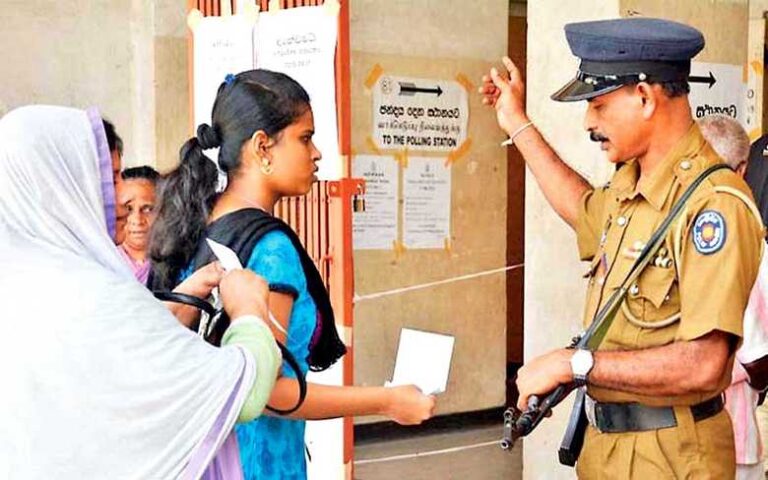
April 29, Colombo (LNW): All campaigning for the 2025 Local Government Election must come to a close by midnight on May 03, the Election Commission announced.
This official deadline marks the end of weeks of intense canvassing by political parties and independent groups vying for control over local councils across the country.
The much-anticipated Local Government Election is set to take place on May 06, with thousands of candidates competing for seats in municipal, urban, and pradeshiya sabha authorities.
In keeping with electoral regulations, the final 48-hour period before polling day will be observed as a ‘silent period,’ during which any form of campaigning, advertising, or promotional activity will be strictly prohibited.
The Election Commission has urged all political parties and candidates to respect the rules and ensure a smooth, fair, and transparent electoral process. Officials have warned that any violations during the silent period could lead to serious legal consequences, including fines and possible disqualification.
April 29, Colombo (LNW): The Intertropical Convergence Zone (where winds from the Northern Hemisphere and Southern Hemisphere converge) happens to be further affecting the island’s weather, and showers or thundershowers, therefore, will occur at most places of the island during the afternoon or night, the Department of Meteorology said in its daily weather forecast today (29).
Showers may occur in Southern and Western provinces and Puttalam, Mannar and Jaffna districts in the morning too.
Heavy falls about 100 mm are likely at some places in Central, Uva, Eastern and North-central provinces and in Vavuniya and Mullaittivu districts.
The general public is kindly requested to take adequate precautions to minimise damages caused by temporary localised strong winds and lightning during thundershowers.
Marine Weather:
Condition of Rain:
Showers or thundershowers will occur at several places in the sea areas around the island.
Winds:
Winds will be south-westerly to southerly and wind speed will be (20-35)kmph.
State of Sea:
The sea areas around the island can beslight to moderate. Temporarily strong gusty winds and very rough seas can be expected during thundershowers.
April 28, Colombo (LNW): Candidates who sat for the 2024 (2025) G.C.E. Advanced Level Examination can now conveniently access their results online, the Department of Examinations announced today (28).
Both school and private candidates are able to view and download their official results sheets by visiting https://onlineexams.gov.lk/eic and entering their National Identity Card (NIC) number.
School principals have also been granted special access to download and print results for their respective institutions using the usernames and passwords allocated during the examination registration process.
Similarly, Provincial and Zonal Education Directors have the ability to monitor and download results for all schools within their areas of responsibility, using their designated login details.
The Department has assured that printed copies of the results will be dispatched to school principals after the release of the re-scrutinised results, ensuring official hard copies are provided for record-keeping and administrative purposes.
Candidates who wish to request a re-scrutiny of their results may submit applications online via the same portal, with the submission window open from 2 May 2025 until 16 May 2025.
Authorities have encouraged candidates to ensure they complete the re-scrutiny process within the stipulated timeframe to avoid any inconveniences.
April 28, Colombo (LNW): In a bold step towards easing urban congestion and boosting eco-friendly tourism, the Sri Lankan Cabinet has approved a feasibility study for a national water-based transport and tourism network. The move aims to unlock the country’s vast potential of rivers, canals, and coastal waterways, transforming them into lively corridors for passenger travel and leisure.
Announcing the decision, Cabinet Spokesman and Minister Dr. Nalinda Jayatissa revealed that the plan will evaluate the possibility of launching boat services connecting major cities while enhancing tourism along Sri Lanka’s scenic inland and coastal routes.
“The feasibility study will assess the economic, environmental, and logistical aspects of the project,” Dr. Jayatissa stated during the weekly Cabinet briefing. Based on the study’s outcome, the project is expected to move forward as a public-private partnership (PPP), attracting local and foreign investment into water transport and tourism infrastructure.
Proposed key coastal routes include Puttalam to Colombo Fort, Fort to Galle, and Galle to Matara—offering commuters an alternative to heavily congested roads while providing tourists with picturesque travel experiences. Inland water bodies such as Hamilton Ela, Bere Wewa, Diyawanna Oya, and Madu Ganga—famous for their ecological and scenic value—will also be developed as part of the initiative.
The proposal, submitted by Minister of Foreign Affairs, Foreign Employment, and Tourism Vijitha Herath, comes at a time when traffic congestion, particularly in the Western Province, has become a severe issue. Average vehicle speeds in urban areas often fall below 10 km/h during peak hours, causing significant loss of time and money for commuters, while also contributing heavily to environmental pollution.
Previous efforts to address traffic woes through road and rail improvements have yielded limited success. Experts argue that the current transport system cannot sustainably handle increasing congestion levels. Introducing a water transportation system is seen as an environmentally friendly, cost-effective, fuel-efficient, and safer alternative—already proven successful in parts of Asia, Africa, Europe, and the Americas.
Sri Lanka’s historical network of waterways further strengthens the case for this shift. The Portuguese initially built canals around Colombo for freight, linking areas like Hendala and Bolgoda Lake. The Dutch later expanded the canal system, with the famous Colombo-Puttalam waterway, a 102-mile stretch completed in 1900, serving as a major transport route. During the British era, waterways facilitated the movement of tea, coffee, rubber, and graphite across the island.
Efforts to revive inland water transport are not new. Under the Megapolis development project, plans were drawn to establish three major lines in the Western Province: Wellawatta–Battaramulla, Fort–Union Place, and Mattakkuliya–Hanwella, using rivers, canals, and marshes. Traffic demand modelling through STRADA identified optimal locations for jetties, with boats designed to travel at an average speed of 18 km/h.
Building on recent successes like the Sri Lanka Navy-operated boat service for Open University students and staff along the Kirulupone Canal, the new national plan promises to reimagine water transport in Sri Lanka, offering a practical, scenic, and sustainable alternative for both commuters and tourists alike.
April 28, Colombo (LNW): Sri Lanka’s Inland Revenue Department (IRD) is poised to integrate operations with the Excise and Customs Departments as a crucial first step toward creating a single, unified tax authority. This move aims to maintain one centralised digital system, streamlining tax records and ensuring seamless transaction tracking across sectors.
President Anura Kumara Dissanayake has instructed officials from both the Excise and Customs Departments to collaborate closely with the IRD, with a particular focus on regulating the alcohol and tobacco industries. The integration prioritises strengthening public health, enforcing compliance, and enhancing overall governance.
The government has emphasised that more effective regulation of alcohol and other legal intoxicants is essential to promote economic growth. Authorities plan to boost state revenue through tighter control of these industries, ensuring lawful revenue generation and strict adherence to regulations.
A major component of this strategy includes robust public awareness campaigns aimed at curbing illegal alcohol distribution, the spread of hazardous drugs, and the misuse of psychoactive substances. These efforts are designed to protect public health and ensure national safety by targeting the risks associated with unregulated alcohol consumption.
According to a senior Finance Ministry official, the initiative also involves setting up a strong, strategic management and decision-making framework for integrated operations. Discussions have already begun on developing a comprehensive human resource and technological advancement plan to strengthen the operational capacity of the Excise Department.
Currently, Sri Lanka Customs is responsible for collecting import duties, while the Excise Department manages taxes on alcohol, tobacco, and similar products. The Inland Revenue Department oversees corporate and personal income taxes. Although all three agencies theoretically aim to fund government operations, they function largely in isolation, creating loopholes that enable tax evasion and inefficiencies.
The siloed structure of these departments means that critical information is not shared between them. For instance, the IRD may not know the exact quantity of alcohol imported or sold by companies, while Customs has no mechanism to verify if importers accurately report their sales for income tax purposes. Such fragmentation opens doors for tax evaders to exploit gaps in the system.
Recognising these vulnerabilities, the government is determined to merge these departments into a single authority. Officials estimate that a successful merger could boost tax revenue collection by at least 65 percent — a critical necessity given Sri Lanka’s alarming budget deficit, which currently stands at Rs. 2.2 trillion.
Without coordination, the current system facilitates manipulation, where smugglers bypass excise duties and alcohol distributors pay excise taxes but underreport corporate earnings. These loopholes result in substantial losses for the government and undermine fair taxation.
The integration of the IRD, Customs, and Excise operations is therefore seen as an urgent reform to seal revenue leaks, strengthen compliance, and build a more sustainable fiscal foundation for Sri Lanka’s future.
April 28, Colombo (LNW): The Sri Lanka Tea Board (SLTB) anticipates completing the full implementation of Geographical Indication (GI) certification for Ceylon Tea by the end of 2025, according to SLTB Chairperson Rajpal Obeyesekere.
Speaking to a local leading weekend newspaper the Morning, Obeyesekere explained that the application for GI certification was submitted around September 2024, immediately following Sri Lanka’s presidential election.
Notably, while Obeyesekere’s appointment under the new NPP Government took effect on 4 October 2024, the initial groundwork for GI certification was laid by the previous SLTB administration under then President Ranil Wickremasighe government, industry sources confirmed.
Following the submission, the European Commission (EC) requested additional clarifications, which were provided by the SLTB in March 2025. Obeyesekere noted that the Commission’s final report on Ceylon Tea’s GI certification is expected by September 2025.
“At present, the technical and legal experts are confident that the EC will deliver the report within six months of our submission in March. We are preparing parallelly by completing the necessary local processes so that we can move to full implementation as soon as we receive the green light,” Obeyesekere said.
He revealed that about seven local tasks are currently underway, in collaboration with French partners, to streamline the GI certification process. These steps, expected to conclude by October 2025, will place Sri Lanka in a strong position to immediately roll out the GI system once European approval is secured.
However, Obeyesekere also highlighted a potential challenge: after an application is accepted, there is a window for third-party objections. If objections arise, Sri Lanka would need to take legal measures to defend its claim to the Ceylon Tea GI.
The push for GI certification dates back to December 2021, when the SLTB, under then-Plantation Industries Minister Dr. Ramesh Pathirana, entered into a €1 million tripartite agreement with the French Development Agency (AFD) and the French Agricultural Research Centre for International Development (CIRAD). The grant aimed to develop a GI framework and certification system for Ceylon Tea over a four-year period.
Geographical Indication certification is critical for securing the global reputation and authenticity of Ceylon Tea by linking it to its unique Sri Lankan origin. It provides strong intellectual property protection while boosting the product’s value in both domestic and international markets.
Despite the progress made by the previous regime, the NPP government now faces significant tasks to complete the GI process.
Strengthening Sri Lanka’s domestic GI system remains a priority, alongside international outreach and stakeholder engagement. This involves officially registering Ceylon Tea as a GI within Sri Lanka—similar to the model used for Ceylon Cinnamon—and ensuring strict adherence to defined quality standards.
The National Intellectual Property Office (NIPO) must establish a local GI registry for Ceylon Tea and define the specific traits and production methods that qualify for the label. Traceability systems must also be introduced to guarantee that only compliant tea is marketed as “Ceylon Tea.”
Internationally, Sri Lanka will need to negotiate GI recognition through trade agreements and mobilize support from the tea industry, government bodies, and consumers to promote and protect the GI status.
By completing these steps, Sri Lanka aims to preserve the global prestige of Ceylon Tea, ensuring that only authentic, high-quality tea carries the iconic name.
April 28, Colombo (LNW): The Court of Appeal today dismissed a petition filed by former Minister Prasanna Ranaweera, who had sought judicial intervention to block his arrest over allegations linked to the unauthorised sale of state-owned land in Kelaniya.
The decision was delivered by a two-judge bench comprising Acting President of the Court of Appeal, Justice M.T. Mohammed Laffar, and Justice K.P. Fernando, following a detailed examination of the case.
Ranaweera had petitioned the court in an effort to prevent law enforcement authorities from detaining him in relation to the controversial land transaction.
However, the Court found no sufficient grounds to grant relief, thereby allowing investigations and legal proceedings against him to continue unimpeded.
The case stems from an incident involving the alleged illicit disposal of government property within the Kelaniya region. It has already prompted the Mahara Magistrate’s Court to issue a travel ban against three individuals, including Prasanna Ranaweera, as part of ongoing investigations.
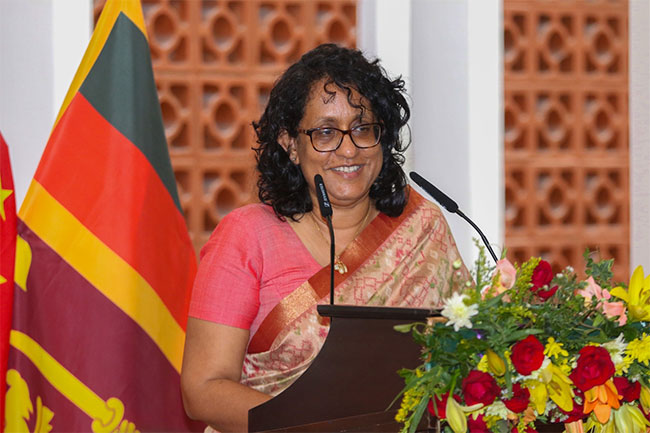
April 28, Colombo (LNW): Prime Minister Dr Harini Amarasuriya has pledged sweeping reforms to Sri Lanka’s education sector, highlighting past failures in teacher recruitment and vowing that future appointments will be made solely based on actual school vacancies.
Speaking at a series of public meetings across the Kurunegala District, including in Polgahawela, Weerambugedara, Piduruwella, Pillesse, Mawathagama, and Paragahadeniya, Dr Amarasuriya underscored her government’s commitment to addressing systemic challenges through pragmatic governance and integrity at all levels.
The Prime Minister’s Media Division confirmed that large gatherings of residents and local candidates were present at these events.
Dr Amarasuriya noted that previous governments had often neglected the realities on the ground, leading to an imbalance in teacher distribution across the country.
She stressed that her administration would recruit teachers based strictly on genuine needs, aiming to close the gaps between urban and rural schools and ensure fair opportunities for all students.
Reflecting on broader political matters, the Prime Minister dismissed speculation circulating amongst opposition groups about a potential change in national leadership later this year.
She described such talk as baseless distractions, urging citizens to focus instead on the transformative work underway under the current administration.
Highlighting the impact of Anura Kumara Dissanayake’s presidency, Dr Amarasuriya said the political culture had shifted towards transparency and fiscal responsibility.
She pointed out that wasteful spending and abuse of privilege amongst officials had been significantly curtailed, freeing up resources to benefit the public. For the first time in years, she said, there was a noticeable absence of credible allegations of misconduct against the government.
Dr Amarasuriya also pointed to recent examples of growing communal harmony, noting how Muslim business establishments in Kandy had opened to support the influx of Buddhist pilgrims visiting the Temple of the Sacred Tooth Relic. She hailed this development as a milestone in fostering national unity.
Turning to education reform, the Prime Minister was candid about the shortcomings that have plagued Sri Lanka’s system for decades. She criticised the outdated curricula, poor conditions in teacher training colleges, and the serious shortage of qualified lecturers.
The alarming rise in school dropouts, particularly amongst boys, and the intense competition between elite and underprivileged schools were cited as key areas needing urgent attention.
Dr Amarasuriya pledged a comprehensive overhaul, with a new education framework set to be introduced for Grade 1 and Grade 6 students from 2026. The reforms will focus on integrating knowledge, skills, and attitudes to produce well-rounded individuals who can contribute meaningfully to national development.
She emphasised that this initiative was not driven by electoral calculations but by a genuine desire to uplift future generations.
Plans are already underway to update subject curricula, enhance teacher training programmes, upgrade school infrastructure, and address critical issues within the Piriven education sector. A committee has been appointed to identify urgent needs and deliver actionable recommendations.
Dr Amarasuriya also stressed the importance of professionalism in teaching, drawing a stark comparison with Germany, where educators undergo nearly a decade of training before entering the classroom.
Although acknowledging that Sri Lanka has a long way to go, she maintained that the government was determined to set the country on the right path.
Closing her address, the Prime Minister asserted that clean, accountable leadership at the grassroots level would be essential for the success of these initiatives. She expressed confidence that the public would continue to place their trust in the National People’s Power (NPP) in the forthcoming elections, ensuring the continuation of these vital reforms.