November 22, Colombo (LNW): A low pressure area is likely to form over southeast Bay of Bengal around 23rd November. Thereafter, it is likely to intensify into a depression over southwest Bay of Bengal during subsequent 2 days. The system may intensify further and move near the Eastern coast of Sri Lanka. General public is requested to be attentive to the future forecasts and bulletins issued by the Department of Meteorology in this regards.Showers or thundershowers will occur at times in the Northern, North-central and Eastern provinces and in Matale district.
Showers or thundershowers will occur at several places elsewhere of the island during the evening or night.
Heavy showers above 100 mm are likely at some places in Western, Sabaragamuwa, Central and Southern provinces.
Fairly strong winds of about (30-40) kmph can be expected at times over Northern, North-central and North-western provincesand in Matale district.
Misty conditions can be expected at some places in Western, Sabaragamuwa, Central, Uva and Southern provinces during the morning.
November 21, Colombo (LNW): Sri Lanka has been recognized as an “Advancing” country in the 2024 Global Cybersecurity Index (GCI), reflecting its strong commitment to enhancing national cybersecurity practices.
Published by the International Telecommunication Union (ITU), the GCI assesses countries’ cybersecurity efforts across five key pillars: Legal, Technical, Organizational, Capacity Development, and Cooperation.
In this year’s GCI report, Sri Lanka was classified as a Tier 2 (T2) country, scoring between 85 and 95 out of 100.
This designation signifies a significant commitment to cybersecurity, with government-led initiatives covering at least four of the key pillars.
Sri Lanka’s cybersecurity efforts have notably improved since the introduction of its first national cybersecurity strategy, moving up from 83rd in the 2020 report and 84th in 2018.
Sri Lanka excelled in Legal, Technical, and Capacity Development measures, areas where it recorded the highest scores. However, there is still room for improvement in the Organizational and Cooperation pillars, which remain areas of focus for growth.
The country’s performance surpasses the regional average in the Asia-Pacific, showing significant progress in securing its cyberspace.
Sri Lanka CERT is working toward achieving Tier 1 status, a role-modeling position, through various initiatives including the implementation of a new National Cybersecurity Strategy (2025–2028), the establishment of the National Certification Authority, and the operation of the National Cybersecurity Operations Center.
The report encourages Sri Lanka to continue strengthening its cybersecurity organizational structures and international collaborations to further enhance its cybersecurity resilience.
November 21, Colombo (LNW): Sri Lanka’s tea exports reached 20.79 million kilogrammes in October 2024, a 14 percent increase from 18.21 million kilogrammes in the same month last year, with all product categories showing growth, the industry data showed.
The FOB value per kilogramme for October rose by Rs.86.54 year-on-year (YoY) to Rs.1,791.78, compared to Rs.1,705.23 in October 2023.
The cumulative tea exports for January-October 2024 totalled 203.15 million kilogrammes, up 3.45 million kilogrammes, from 199.70 million kilogrammes during the same period in 2023. While most categories recorded gains, tea packets showed a decline.
Sri Lanka’s tea exports saw a 14% increase in volume for October year-on-year (YoY), reaching 20.7 million kilograms (Mnkg).
This growth brings total exports for the first 10 months to 203.1 Mnkg, up by 3.4 Mnkg YoY.
While the strengthening Sri Lankan Rupee has influenced earnings, they still rose slightly to Rs. 360.5 billion from Rs. 354.9 billion last year, translating to approximately $1.186 billion, compared to $1.087 billion by October 2023.
This increase in dollar earnings is attributed to both higher export volumes and a stronger FOB per kilo of $5.84, compared to $5.45 the previous year.
However, exports in Value-Added forms, which exclude Bulk Tea, have fallen to a 16-year low. This decline is mainly due to an 8% drop in Tea in Packets exports, although Bulk Tea exports rose by 9%.
On a positive note, Tea Bag exports grew by 11% YoY, reaching 21.1 Mnkg, and the high-value Instant Tea segment saw a 22% increase, reaching 2.3 Mnkg.
Looking at major export destinations, Iraq remains the largest importer with 27.1 Mnkg, though this is a 4% decrease from last year.
Russia’s imports increased by 8%, totaling 20.6 Mnkg, while the UAE, a key transshipment hub, saw a rise from 14.7 Mnkg to 18.7 Mnkg.
Turkey’s imports significantly dropped by 42%, from 25.5 Mnkg to 14.7 Mnkg. Other markets like China (9.6 Mnkg) and Azerbaijan (up 15%) also showed steady performance, while Iran’s exports surged by 83% to 8.7 Mnkg.
The high-value Saudi market increased by 32% to 7.4 Mnkg, matching the volume to Libya, which fell by 10%. Chile saw a rise of 11%, reaching 7 Mnkg.
Other notable markets include Syria (6.4 Mnkg), Germany (5.6 Mnkg), the USA (5.4 Mnkg), Japan (4.3 Mnkg), and Jordan (3.9 Mnkg).
November 21, Colombo (LNW): X-Press Feeders has voiced frustration over the prolonged bureaucratic and legal challenges linked to the X-Press Pearl disaster, a 2021 incident that led to one of Sri Lanka’s worst environmental catastrophes.
Over three and a half years later, Captain Vitaly Tyutkalo remains stranded in Sri Lanka, unable to return home due to a travel ban, highlighting what X-Press Feeders describes as unreasonable and lengthy legal delays.
In a recent update, the new Sri Lankan government announced plans to reopen investigations into the X-Press Pearl case.
These renewed investigations aim to secure additional multi-billion dollar settlements from insurance companies linked to the incident. X-Press Feeders, however, has emphasized that it has already paid nearly $160 million in compensation and is eager to see the case concluded.
The company issued a statement urging the Sri Lankan authorities to consider the impact of ongoing legal actions against Captain Tyutkalo, who has been unable to leave the country for 1,280 days.
The prolonged legal entanglement has significantly disrupted the captain’s personal life, causing him to miss family milestones, including a daughter’s wedding and another daughter’s graduation.
The company contends that the delays in presenting evidence in court have exacerbated the emotional and professional toll on the captain, calling it “unreasonable.”
The disaster occurred in May 2021 when the three-month-old X-Press Pearl, a 2,700 TEU containership, caught fire and sank off the coast of Sri Lanka.
The ship was carrying hazardous materials, including nitric acid and microplastic granules, leading to severe environmental damage along the western coast of the island.
The incident resulted in the release of 1,680 metric tonnes of plastic nurdles, small plastic pellets about 5mm in size used in plastic manufacturing. These nurdles and other toxic substances spread across the Indian Ocean, causing significant ecological harm.
The environmental impact has been devastating, with local communities still involved in cleanup operations years later.
Approximately 200 women continue to collect and separate the plastic nurdles that have washed ashore, earning a modest wage of around $10 per day for their efforts.
The persistence of this manual cleanup operation underscores the scale of the disaster and the slow progress in restoring the affected coastal areas.
In response to the X-Press Pearl incident, the International Maritime Organization (IMO) has taken action to mitigate future risks.
The organization has drafted new recommendations focused on the safe transportation of plastic pellets on ships, aiming to prevent similar environmental disasters.
These recommendations are a step toward enhancing maritime safety standards, but they come too late for the communities affected by the 2021 spill.
As Sri Lanka prepares to revisit the X-Press Pearl case, there is growing pressure to balance the need for accountability and compensation with the humanitarian concerns related to those involved, such as Captain Tyutkalo.
For now, the lingering effects of the disaster continue to impact both the environment and individuals tied to the incident, keeping the case in the public eye.
November 21, Colombo (LNW): In a strategic step towards enhancing the export environment of the country, Sri Lanka’s Export Development Board recently established a Trade Facilitation Task Force with the objective of overcoming the bottlenecks present in the export value chain.
The meeting for this task force was conducted recently at the EDB with representatives from 35 public sector entities involved in cross-border trade.
Simplifying the Process of Export
The operational inconveniences faced by exporters are identified and resolved by the task force, a mechanism that exists for finding quick solutions to the barriers that do exist.
The initiative’s rationale is to simplify trade procedures through better coordination between different institutions and to enhance the overall efficacy of Sri Lanka’s export mechanisms.
In this way, the EDB aims to enhance the global competitiveness of Sri Lankan exporters by facilitating trade and improving inter-agency communication to promote economic development in the country.
Ambitious Export Targets
In keeping with the above aspirations, EDB Chairman Mangala Wijesinghe has envisaged an all-encompassing five-year export roadmap, striving to achieve US$45 billion in export earnings.
This ambitious target encompasses a broad spectrum of sectors including merchandise exports, services, and tourism, which are expected to grow annually at a rate of 15%, from the current growth rate of 4%.
The policy focuses on unlocking the potential of the country through selective reforms and initiatives.
At a recent media briefing, Wijesinghe presented a plan for increasing merchandise exports from $12 billion to $25 billion by 2030. The services sector, comprising IT/BPM, construction, financial services, and logistics, will also see a sharp increase in revenues from $3.1 billion to $11.5 billion. Tourism is also expected to explode, with revenues projected to rise as high as $8.5 billion from the current $2 billion.
Building Investor Confidence, Expanding Industries
He acknowledged that foreign investors and diplomats often question the nation for political stability and said the five-year export and investment roadmap of the current government was targeted at attracting stability and foreign direct investments.
One of the most important features of this roadmap is increasing per capita income in Sri Lanka from a current $680 to more than $1,000 within the next five years, with the lofty aim of strengthening the country’s position in global trade.
Wijesinghe also highlighted that only about 9-10% of the total exporters numbering 4,425 are current exporters of over $1 billion annually, while the rest are SMEs.
For the goal of $45 billion, scaling up by SMEs and diversification into value addition in more product categories will be required to give a harder push to become more competitive and thereby yield better export revenue.
Sectoral Focus and Future Growth
With the global maritime sector valued at US$1.5 trillion, marine industries have been earmarked as a thrust area by the EDB.
Today, Sri Lanka earns about US$ 200 million each year, but with Wijesinghe saying, “We will cross US$ one billion in a few years”. The ‘Voyage Sri Lanka’ conference on November 26 will be the vehicle to communicate the marine sector opportunities to a varied international audience.
Rubber and rubber-based products represent another high-potential sector for Sri Lanka that supplies over $800 million annually to the world rubber market, worth $500 billion.
November 21, Colombo (LNW): 29 Deputy Ministers took their oaths of office earlier this evening (21), at a ceremony held at the Presidential Secretariat in Colombo.
The event, which marked an important step in the administration’s formation, saw the officials swear allegiance to their duties in front of President Anura Kumara Dissanayake.
November 21, Colombo (LNW): The latest figures from the Department of Census and Statistics have revealed a further decline in the rate of inflation in October 2024.
The National Consumer Price Index (NCPI), which measures overall inflation, has dropped to minus 0.7 per cent, a notable reduction from the minus 0.2 per cent recorded in September 2024.
This marks a continuation of the downward trend in inflation, offering some relief to consumers across the country.
Food inflation also experienced a significant decline, falling to minus 0.16 per cent in October, compared to a moderate increase of 0.5 per cent the previous month.
This shift indicates that the prices of essential food items have stabilised, following a period of rising costs earlier in the year.
The NCPI for all goods and services for the month of September 2024 stood at 203.6, showing a decrease of 0.5 index points compared to the previous month.
This overall reduction is largely attributed to decreases in both food and non-food sectors. Food prices dropped by 0.16 per cent, while non-food items saw a slightly more significant decline of 0.35 per cent.
November 21, Colombo (LNW): The Ministry of Education has confirmed that the first phase of the third term for the 2024 academic year will conclude tomorrow (22), marking the start of the school holidays for all Sinhala and Tamil medium government and government-approved schools across the country.
As students eagerly anticipate their break, the holidays will officially begin on November 23.
This announcement has come as a relief to many families, allowing them some time for rest and to prepare for the upcoming festive season.
In a slight variation, Muslim schools will finish the first phase of their third term a few weeks later, on December 13.
Their term holidays will commence immediately after, providing a longer stretch of academic activity before the break.
Looking ahead, the second phase of the third term is slated to begin on January 02, 2025, a Thursday.
This marks the start of the new year for students who will return to school after the holiday period.
Educational authorities are ensuring that the academic calendar remains in line with national requirements while accommodating the diverse school communities.
November 21, Colombo (LNW): Several former Sri Lankan Cabinet Ministers, including Ramesh Pathirana, Roshan Ranasinghe, and Prasanna Ranatunga, arrived at the Criminal Investigations Department (CID) this morning (21) to provide statements regarding the controversial importation of substandard human immunoglobulin vials.
The vials, which failed quality tests after being cleared for import, have been at the centre of a widening investigation into alleged malpractice in the procurement process.
Former Minister Harin Fernando, who is also implicated in the case, has announced that he will appear before the CID tomorrow (22) to provide his statement in connection with the ongoing inquiry.
The investigation into the importation of the substandard human immunoglobulin vials began following a court order on November 12, when the Maligakanda Magistrate’s Court instructed that statements be recorded from 18 former Cabinet Ministers.
These individuals, including former President Ranil Wickremesinghe, former Prime Minister Dinesh Gunawardena, and several other former ministers, were part of the Cabinet that had approved the controversial Cabinet paper presented by then-Health Minister Keheliya Rambukwella, which paved the way for the importation of the drugs.
The Attorney General’s Department has specified that statements from these individuals are crucial to understanding the scope of the alleged malpractice, with some key figures from the previous administration now under scrutiny for their roles in the decision-making process.
In October 2023, the National Medicines Regulatory Authority (NMRA) disclosed that fraudulent documents had been submitted to Customs for the clearance of the consignment of human immunoglobulin vials.
The batch of vials, which was supposed to be a vital supply for patients, failed subsequent quality tests, prompting further investigations.
The case has already led to several high-profile arrests. In the months prior, a number of officials from the Health Ministry, including the former Health Secretary, former Additional Health Secretary, and the Director of the Medical Supplies Division (MSD), were arrested and remanded in connection with the scandal.
These arrests also included three other officials from the MSD, as well as the owner of the company said to have supplied the substandard vials.
The arrests have not been limited to Ministry officials; in May 2024, Dr. Thusitha Sudarshana, a former Deputy Director of the MSD, was granted bail after spending time in remand custody.
Similarly, in July 2024, the Court of Appeal ordered the release of Dr. Kapila Wickramanayake, the former Director of the MSD, on bail.
To date, a total of 12 individuals have been arrested in connection with the case, but most have been released on bail, with only one remaining in remand custody.
Sudath Janaka Fernando, the owner of the company implicated in supplying the substandard vials, is currently receiving medical treatment while in custody.
Former Health Minister Keheliya Rambukwella, who had been in remand for over seven months, was granted bail on September 11, 2024.
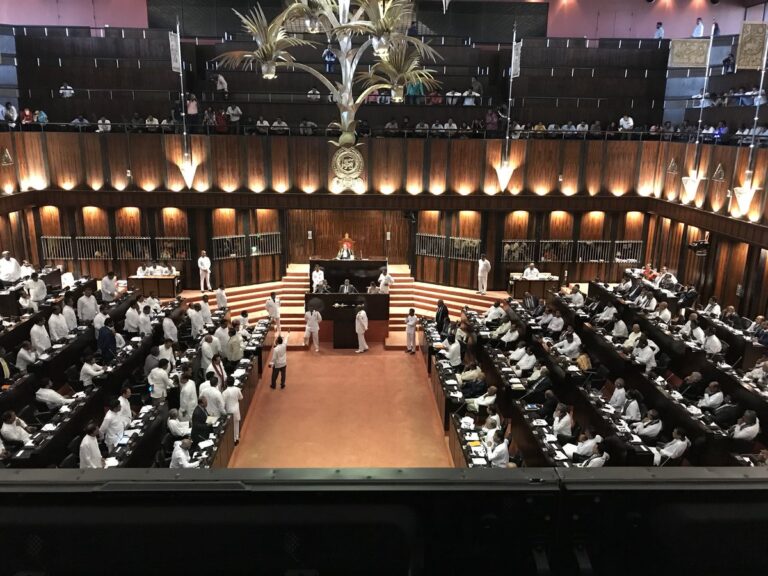
November 21, Colombo (LNW): Sri Lanka’s tenth Parliament opened today (21) with the ceremonial delivery of the Government’s Policy Statement by President Anura Kumara Dissanayake, who presided over the proceedings in the Speaker’s Chair.
The address, which took place shortly after the election of the Speaker and other formalities, outlined the new government’s vision for the future and its commitment to driving change in both political and economic spheres.
In his speech, the President boldly called for the end of a long-standing political culture in Sri Lanka that has been heavily shaped by divisions based on race, ethnicity, and nationality.
Acknowledging the historic challenges that the country has faced due to this divisive politics, the President highlighted that the new government would prioritise unity, equality, and the fair treatment of all citizens, regardless of their background.
The President emphasised that it was time to move away from the entrenched political structures that have often pitted different ethnic and religious communities against each other. Instead, he called for the fostering of a more inclusive political environment, one that transcends communal lines and focuses on shared national interests.
This shift, he suggested, would help Sri Lanka build a more harmonious society and strengthen the country’s democratic foundations. He asserted that the government will not tolerate all sorts of extremist activities, let alone religious and racist agendas.
Dissanayake assured that all people are equal before law, and law enforcement, therefore, will be implemented on controversial and unresolved crimes happened across the history without letting them to be buried in the sands of time, bringing the responsible parties to justice and thereby restoring the public’s faith in the rule of law.
The key thrust of the President’s address was his commitment to reforming Sri Lanka’s economic system. He outlined an ambitious plan to overhaul the nation’s economy, which, according to the President, has long favoured a small group rather than benefiting the majority of the population.
This inequality, he noted, had led to widespread disillusionment amongst the public and hindered sustainable development.
In terms of social policy, President Dissanayake outlined his vision for a fairer education system, one that would ensure equal access to quality education for all students, regardless of their social or economic status.
Additionally, he highlighted the government’s commitment to improving healthcare services and creating a social safety net to protect the most vulnerable populations. The President vowed in restoring trust in the public service, which has long been tarnished due to chronic corruption.
In place of the old economic order, President Dissanayake proposed a new economic framework that would ensure prosperity for all Sri Lankans. The government’s policy, he stated, would focus on inclusive growth, with particular attention given to the welfare of rural populations, the agricultural sector, and small and medium enterprises.
He outlined plans for extensive job creation, particularly in sectors that have historically been overlooked by previous governments, such as manufacturing, technology, and renewable energy.
The President also reiterated his government’s commitment to addressing Sri Lanka’s pressing financial challenges, including managing public debt and improving fiscal management.
Dissanayake acknowledged that the Extended Fund Facility (EFF) provided by the International Monetary Fund (IMF) under which the country’s debt restructuring process is currently being undertaken will continue, and renegotiation will follow.
He pointed out that a staff-level agreement will reach between the two parties ahead of the third review by December, 2024.
The President underscored that the new government would take a more transparent and accountable approach to public spending, ensuring that national resources were directed towards projects that would benefit all sectors of society, rather than being concentrated in the hands of a privileged few.
He added that a vote on account will be presented in December, 2024, aiming the 2025 Budget proposal pending Parliament approval in February, 2025, in what he described as a reflection of the practicality of the government’s policy statement, and emphasised that the government expects that the new Budget will be approved in March, 2025.