March 05, Colombo (LNW): A parliamentary committee tasked with examining the country’s level of preparedness ahead of last year’s devastating Cyclone Ditwah has been formed, with Minister of Health and Mass Media Dr Nalinda Jayatissa appointed to chair the panel.
The announcement was made by Speaker Dr Jagath Wickramaratne at the beginning of Thursday’s sitting of Parliament. The committee has been established to carry out an in-depth review of the circumstances surrounding the disaster and to determine whether adequate preventive measures had been in place prior to the cyclone’s impact.
Alongside Dr Jayatissa, several lawmakers have been nominated to serve on the body. These include Deputy Ministers Prasanna Gunasena, Anton Jayakody and Aruna Jayasekara, as well as Members of Parliament Anuradha Jayaratne, Hector Appuhamy, Rohini Kumari Wijerathna, MKM Aslam, Anushka Thilakarathne, Kanthasamy Prabhu, Ruwan Mapalagama and Pathmanathan Sathiyalingam.
The decision to establish the committee follows a motion presented in Parliament in January by opposition legislators calling for a full inquiry into the events surrounding Cyclone Ditwah. The proposal, introduced by Chief Opposition Whip Gayantha Karunathilleka, argued that the scale of destruction and loss caused by the storm warranted a thorough parliamentary investigation.
Cyclone Ditwah, widely regarded as one of the most severe natural disasters to affect Sri Lanka in recent decades, left significant damage to homes, infrastructure and livelihoods across several regions of the country. Lawmakers supporting the motion noted that a comprehensive assessment of the losses and the government’s readiness to respond to the disaster had yet to be completed.
Under the provisions of the parliamentary Standing Orders, the newly formed Select Committee will have the authority to summon witnesses, request documents and gather both written and oral evidence as part of its inquiry. It will also be responsible for examining the effectiveness of early warning systems, emergency preparedness plans and coordination among relevant state agencies.
The committee is expected to submit a detailed report to Parliament outlining its findings and recommendations. According to the motion approved by the House, the report should be presented within three months of the committee’s first meeting, unless Parliament grants an extension.
The investigation is expected to focus not only on identifying shortcomings but also on recommending improvements to disaster preparedness and response mechanisms to reduce the impact of similar events in the future.
Parliament Appoints Special Committee to Probe Preparedness for Cyclone Ditwah
President Reviews Safety Measures for Sri Lankans Abroad and Tourists Amid Middle East Crisis
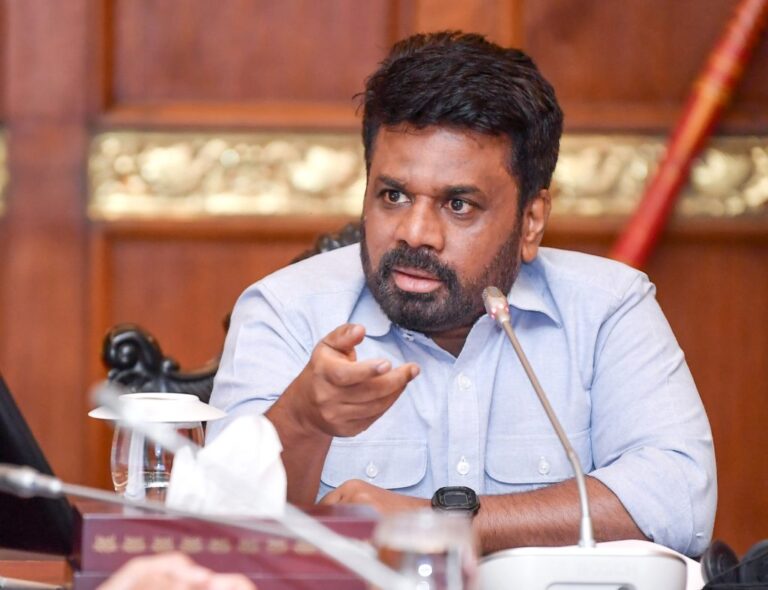
March 05, Colombo (LNW): President Anura Kumara Dissanayake on Tuesday convened a high-level meeting at the Presidential Secretariat to assess ongoing measures aimed at protecting Sri Lankan migrant workers and tourists in light of the escalating conflict in the Middle East.
The discussion focused on the steps already taken by the Ministry of Foreign Affairs, Foreign Employment and Tourism together with the Ministry of Ports and Civil Aviation to monitor developments in the region and respond to potential challenges faced by Sri Lankans overseas as well as foreign visitors currently in Sri Lanka.
During the meeting, officials briefed the President on the emergency response mechanisms introduced through Sri Lanka’s diplomatic missions. Round-the-clock assistance services have been activated through embassies and consulates in affected countries to provide immediate support for Sri Lankan nationals and tourists if required.
Authorities reported that, according to the latest information received from diplomatic missions, there have been no reports of serious injuries involving Sri Lankan citizens living in the conflict-affected areas. Embassies have also been directed to provide guidance and assistance to those who have already sought help.
Officials further noted that hotlines established by the Sri Lanka Tourism Development Authority and the Sri Lanka Bureau of Foreign Employment are continuing to receive and process inquiries. These channels have mainly dealt with administrative matters such as visa extensions and immigration-related documentation.
A number of workers have sought clarification regarding travel and employment documentation, while a small number of financial inquiries have also been recorded. However, no requests for special evacuation flights have been submitted so far.
The meeting also explored ways to support Sri Lankan migrant workers who may have temporarily returned home due to the regional tensions. Authorities agreed to communicate with relevant foreign governments through diplomatic channels to request a grace period that would allow these workers to resume their employment once conditions stabilise.
President Dissanayake also instructed officials to compile updated information on Sri Lankan citizens who had travelled to Middle Eastern countries for tourism or business and may currently face difficulties returning home. Necessary arrangements, he said, should be prepared in advance to facilitate their safe return if required.
Representatives from SriLankan Airlines informed the meeting that international flight operations are gradually returning to normal levels and that the national carrier would be able to accommodate any necessary travel arrangements without major difficulty.
Several ministers and senior government officials attended the discussion, including representatives from the foreign affairs, tourism, aviation and foreign employment sectors, along with senior administrative officials and heads of relevant state institutions responsible for travel, immigration and overseas employment.
Oil Prices Climb as Middle East Conflict Raises Supply Concerns
March 05, World (LNW): Global oil prices edged higher during early Asian trading on Thursday, reflecting mounting anxiety in energy markets over potential supply disruptions linked to the intensifying conflict in the Middle East.
U.S. benchmark West Texas Intermediate (WTI) crude rose by nearly two per cent, trading at about US$76 per barrel after finishing Wednesday’s session largely unchanged at around US$74.66. Meanwhile, Brent crude from the North Sea, which had closed the previous day near US$81.40 per barrel, had yet to resume active trading during the early Asian hours.
Market analysts attribute the upward pressure on prices to growing uncertainty surrounding shipping routes in the Gulf region, particularly the Strait of Hormuz, a narrow but crucial maritime passage through which roughly one-fifth of the world’s seaborne crude oil supply is transported. Significant volumes of liquefied natural gas also pass through the same corridor.
Tensions escalated after hostilities involving the United States, Israel and Iran intensified earlier this week, raising fears that tanker movements through the strait could face further disruptions. Shipping companies and insurers are reportedly reviewing risk assessments as the security situation evolves.
In an effort to reassure markets, U.S. President Donald Trump stated earlier this week that the U.S. Navy stands ready to escort oil tankers travelling through the area if required. He also indicated that Washington would assist shipping firms by providing insurance guarantees to help maintain the flow of energy supplies.
Regional maritime incidents have further heightened concerns. On Wednesday, Oman’s navy rescued 24 crew members from a Malta-flagged container vessel that had reportedly been struck by missiles while navigating the strait, according to state media reports.
The incident marked the fourth reported attack on commercial shipping in the region within a 24-hour period, following earlier reports that projectiles had either struck or landed dangerously close to several other vessels near the coasts of the United Arab Emirates and Oman.
Iran’s Revolutionary Guards later claimed they had established “complete control” over the strategically vital waterway, a statement that has added to market unease.
Despite geopolitical tensions, financial markets in the United States and Europe reacted relatively calmly. Wall Street ended Wednesday’s session on a positive note, with the S&P 500 gaining around 0.8 per cent, while major European indices also closed higher. In contrast, several Asian stock markets recorded notable declines as investors weighed the potential economic fallout from the deepening regional crisis.
Sri Lanka Engages Gulf Leaders in Diplomatic Talks Amid Rising Middle East Tensions
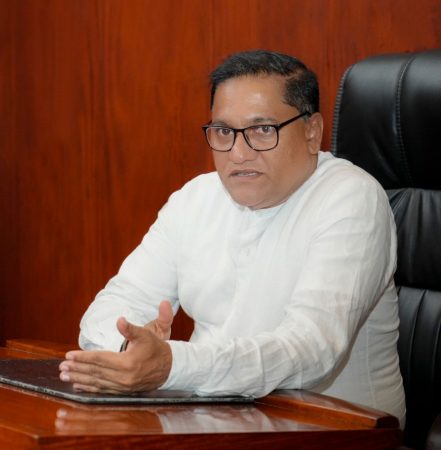
March 05, Colombo (LNW): Sri Lanka’s Minister of Foreign Affairs, Vijitha Herath, has held a series of telephone discussions with several foreign ministers from Gulf and Middle Eastern nations as concerns grow over the escalating conflict in the region.
During a conversation with Jordan’s Deputy Prime Minister and Foreign Minister, Ayman Safadi, the Sri Lankan minister reviewed the rapidly developing security situation in the Middle East and exchanged views on the broader regional outlook.
Herath also conveyed Sri Lanka’s appreciation for the continued support extended by Jordan to the Sri Lankan community living and working there.
In the discussion, both sides reportedly emphasised the urgency of restoring calm in the region, with Herath reiterating that Sri Lanka strongly supports efforts aimed at preserving peace and stability through diplomatic engagement.
The Sri Lankan foreign minister also spoke with Bahrain’s Foreign Minister, Dr Abdullatif bin Rashid Al Zayani, where the two officials discussed the potential consequences of the conflict for regional security and economic stability. Herath highlighted the importance of dialogue and restraint to prevent further escalation and thanked the Bahraini government for its assistance and protection of Sri Lankan nationals residing in the kingdom.
In a separate conversation, Herath held talks with Lebanon’s Foreign Minister, Youssef Raggi. The two diplomats exchanged views on the unfolding situation and underlined the importance of safeguarding civilian lives while pursuing diplomatic solutions to ease tensions.
Meanwhile, Herath also spoke with Kuwait’s Foreign Minister, Sheikh Jarrah Jaber Al-Ahmad Al-Sabah, focusing on the need for constructive diplomacy to stabilise the region. During the discussion, the Sri Lankan minister stressed the importance of restraint among all parties involved in the conflict and reaffirmed Sri Lanka’s support for peaceful resolution mechanisms.
He also extended gratitude to the Kuwaiti government for its continued cooperation and assistance to the Sri Lankan community living in Kuwait.
Sri Lankan authorities have indicated that ensuring the safety and welfare of these communities remains a key priority while advocating for dialogue and de-escalation across the region.
84 Bodies Recovered After Iranian Warship Sinks South of Sri Lanka Following U.S. Strike
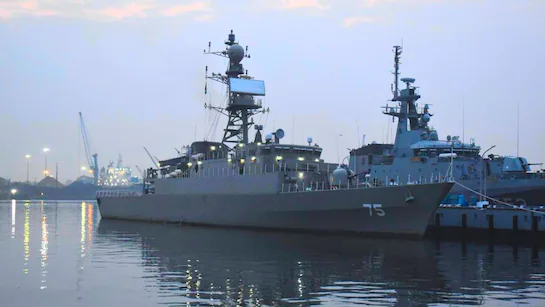
March 05, Colombo (LNW): Sri Lankan naval authorities say the bodies of 84 people have been recovered after an Iranian naval vessel went down in deep waters south of Sri Lanka, beyond the island’s maritime boundary, following what the United States described as a submarine attack.
According to the Sri Lanka Navy, search-and-rescue teams remain at sea as efforts continue to locate additional missing crew members from the stricken vessel.
The ship involved, identified as the IRIS Dena, reportedly sank in the Indian Ocean after being struck during an encounter involving a U.S. submarine. The incident occurred while the vessel was returning to Iran after taking part in a multinational fleet review and naval exercise held in Visakhapatnam, India.
Officials say the warship had an estimated 180 personnel on board at the time of the attack, though the exact number of those still unaccounted for has yet to be confirmed.
In Washington, U.S. Secretary of Defense Pete Hegseth acknowledged that an American submarine had destroyed an Iranian warship in the Indian Ocean. Speaking to reporters, he said the vessel had assumed it was operating safely in international waters before it was struck by a torpedo.
He described the strike as the first time since the Second World War that a hostile naval vessel had been sunk by a torpedo in combat, although he did not specifically identify the Iranian ship involved.
Sri Lankan naval units first became aware of the situation after receiving an emergency distress signal from the IRIS Dena in the early hours of the morning. Patrol ships and aircraft were deployed to the area, leading to the rescue of 32 survivors, who were later taken ashore and admitted to Galle National Hospital for treatment.
At a media briefing, Navy spokesperson Commander Buddhika Sampath said the priority of the operation had been the immediate rescue of survivors. He noted that when Sri Lankan rescuers arrived at the reported location, the vessel itself was no longer visible.
Instead, search crews encountered large slicks of oil on the surface along with drifting life rafts and scattered debris, suggesting the ship had already sunk beneath the waves by the time help arrived.
Authorities say recovery and search operations will continue in the coming days as hopes remain that more survivors could still be found.
Afternoon showers expected in several districts (Mar 05)
March 05, Colombo (LNW): Showers or thundershowers are likely at a few places in Uva and Sabaragamuwa provinces and in Hambantota, Nuwara-Eliya and Ampara districts after 2.00 p.m., the Department of Meteorology said in its daily weather forecast today (05).
Mainly dry weather will prevail over the other parts of the island.
Misty conditions can be expected at some places in Western, Sabaragamuwa, Central, Southern, Uva, North-western and North-central provinces and in Mannar and Vavuniya districts during the early hours of the morning.
Marine Weather:
Condition of Rain:
Mainly fair weather will prevail over the sea areas around the island.
Winds:
Winds will be variable in direction and wind speed will be (20-30) kmph.
State of Sea:
Sea areas around the island will be slight.
Breaking News: Suspicious Warship Reported Off Panadura Coast
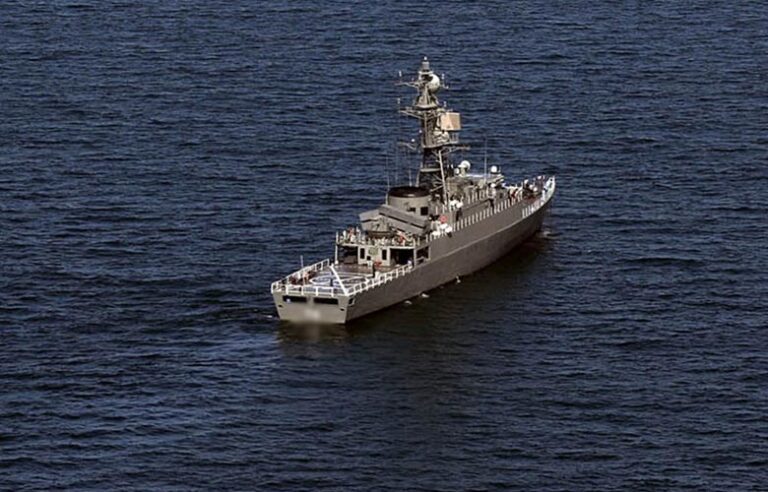
LNW (Colombo): According to sources, a suspicious warship has been spotted in the sea off the coast of Panadura.
The vessel has reportedly requested permission to enter Sri Lankan waters, but local authorities have not granted approval so far.
Sources further stated that there are concerns about the possibility of an attack targeting the ship, although no official confirmation has been issued yet.
The West’s Structural Illiteracy on Iran Is a Strategic Failure
By Indian Foreign Policy Analyst
Western analysis of Iran is not merely flawed but it is structurally illiterate. More than four decades after the Islamic Revolution, large segments of Western diplomatic, academic, and policy commentary continue to operate on assumptions that were rendered obsolete in 1979. This intellectual inertia has produced writing that is polished in tone, confident in posture, and fundamentally detached from operational reality. The central error is simple yet fatal: Iran is persistently analyzed as a centralized state. It is not. This single misunderstanding contaminates everything that follows that is sanctions logic, regime-change fantasies, leadership-decapitation strategies, escalation modeling, and crisis prediction.
The Shah-era fallacy that refuses to die
Under Mohammad Reza Pahlavi, Iran functioned as a classic centralized autocracy. Power was vertically integrated, institutionally hollow, and personally concentrated. When the Shah was removed, the system collapsed in totality and not because Iran was inherently weak, but because everything depended on a single node. Western policymakers internalized this collapse as a universal lesson about Iranian governance. That conclusion was catastrophically wrong. Post-revolutionary Iran was engineered explicitly to ensure that such a collapse could never happen again. The system that emerged was not accidental chaos or ideological improvisation. It was a deliberate act of institutional design, informed by historical trauma and guided by a single objective: anti-decapitation resilience.
Modern Iran is a distributed power system, not a command hierarchy
Contemporary Iran operates as a decentralized, redundant, and compartmentalized power ecosystem. Authority is fragmented across overlapping political, clerical, military, economic, and security institutions. Overlap is not dysfunction; it is the system’s primary defensive feature. Decision-making is slow not because of incompetence, but because no single actor is permitted decisive unilateral control. Competing centers constrain one another, absorb shocks, and prevent systemic failure. This structural reality alone invalidates:
Regime-decoupling theories
Leadership-decapitation strategies
Sanctions-induced collapse models
Yet these ideas continue to dominate Western policy discourse, recycled endlessly with cosmetic updates and zero structural revision.
The Supreme Leader is not the center of gravity
Western commentary routinely mischaracterizes Ali Khamenei as an omnipotent executive authority. This framing is analytically lazy and strategically dangerous. The Supreme Leader does not function as a CEO issuing top-down operational commands. He operates as a balancing and arbitration node and maintaining institutional equilibrium, resolving elite deadlock, and ensuring ideological continuity across competing power centers. If the Supreme Leader were removed, the system would experience turbulence, not collapse. Succession mechanisms, redundancy, and distributed authority would absorb the shock. This outcome is not hypothetical; it is the explicit purpose of the post-1979 political architecture.
The doctrine the West refuses to understand: Ātash be Ekhtiār
At the core of Western analytical failure lies a near-total misunderstanding of the Islamic Revolutionary Guard Corps (Islamic Revolutionary Guard Corps), particularly its foundational doctrine: آتش به اختیار (Ātash be Ekhtiār). In military terms, it means “fire at your own discretion.” In doctrinal terms, it mandates initiative, autonomous judgment, and decentralized execution when higher authority is silent, ambiguous, or constrained. This is not rhetoric. It is a command philosophy. For over forty years, Ātash be Ekhtiār has allowed the IRGC to function as a self-activating coercive network. Local commanders do not wait for orders to suppress dissent. Violence is locally generated, doctrinally justified, and retroactively sanctioned. Western analysts persist in modeling repression as top-down direction from Tehran. In reality, repression is structural, autonomous, and rehearsed.
Internal repression is systemic, not episodic
The IRGC has long functioned as a domestic population-control instrument, particularly during political stress. Protest movements are not treated as civic dissent but as pre-hostile battlespace conditions. The pattern is consistent:
1999 Tehran student protests : dormitories stormed, students bound and thrown from windows
2009 post-election uprising : mass arrests, disappearances, extrajudicial killings
2022 protests following a young woman’s death after hijab enforcement : nationwide repression
These were not anomalies. They were institutional rehearsal cycles, each refining coercive confidence.
The 2026 crackdown and cognitive warfare by silence
When mass repression escalated again in early 2026, resulting in large-scale civilian deaths, the global response was revealing. World leaders deliberately downgraded the violence to “internal unrest” or “domestic instability.” This was not neutrality. It was cognitive warfare by omission. By refusing moral framing, the international system granted the regime operational freedom. The message was unambiguous: internal mass violence would carry no external cost.
Externalization of crisis and cognitive counteroffensive
Iran did not merely suppress unrest; it exported the crisis outward. Using Russian and Chinese cognitive-warfare methodologies, the regime reframed domestic repression as:
Sovereignty defense
Resistance to foreign interference
Preemption of external aggression
This reframing was aimed inward as much as outward. Domestic anger was redirected into external threat perception. The result was predictable: civilizational consolidation under pressure. Western diplomats, still operating on linear escalation models, misread this as regime stabilization. In reality, it was narrative maneuver warfare.
External coercion has repeatedly rescued the regime from collapse
Iran was approaching a genuine internal legitimacy crisis. By the late 2010s, the majority of the population had turned against the ruling establishment. This was not marginal dissent but near-systemic alienation driven by economic failure, corruption, generational exhaustion, and repression. Under purely internal conditions, the system faced existential erosion of consent.
Externally manufactured confrontation that is sanctions framed as collective punishment, overt regime-change signaling, assassinations, and constant threat inflation and this reversed this trajectory. Despite deep hostility toward the regime, the Iranian population remains intensely patriotic. When external attack occurs, internal divisions are subordinated to national defense. The external enemy is confronted first; internal reckoning is deferred. Foreign coercion thus became political life-support for a regime that had otherwise squandered legitimacy.
The migration paradox strategists fail to understand
Conventional strategic doctrine assumes that unrest produces outward flight: populations escape violence, drain resistance, and weaken opposition movements. Iran defies this model. During every major cycle of repression, Iranians do migrate , but not with the psychology of permanent exit. A significant portion of the Iranian diaspora wants to return, not assimilate. Migration is often tactical, not terminal: survival first, resistance later. Unlike many conflict zones where exile dissolves political agency, Iranian diaspora communities remain emotionally, politically, and operationally tethered to the homeland. Protest waves inside Iran are mirrored by mass mobilization abroad, not as passive sympathy but as active extension of struggle. This produces a rare dynamic: migration becomes a reservoir of opposition, not a release valve. Western strategists, trapped in outdated rulebooks, misread migration as regime stabilization. In reality, it reflects a population that has not psychologically surrendered. The desire is not merely to escape repression and it is to return and dismantle it. This mindset fundamentally alters deterrence, repression modeling, and long-term regime durability and yet it remains almost entirely absent from Western analysis.
Why rally-around-the-flag theory fails in Iran
Western analysts misinterpret consolidation through rally-around-the-flag theory and a short-term emotional response seen in liberal democracies. Iran’s response is different. It is rooted in civilizational nationalism. Here, priorities reorder:
1. Sovereignty before governance
2. Survival before reform
3. External threat before internal accountability
Opposition is not forgiven; it is strategically deferred. Endurance is mistaken for legitimacy. Resilience is confused with consent.
Leadership decapitation: a catastrophic strategic blunder
The targeted removal of senior Iranian leadership figures under Donald Trump and Benjamin Netanyahu was one of the most damaging strategic miscalculations in recent history. Whoever advised these actions fundamentally misunderstood the system they were striking. In a decentralized architecture governed by Ātash be Ekhtiār, assassinations validate threat narratives, accelerate consolidation, and legitimize autonomous retaliation. Rather than weakening the regime, these actions erased internal fault lines and handed narrative superiority to hardliners. This was not deterrence and it was strategic self-sabotage.
The dangerous fantasy of MEK as an alternative
Compounding this failure is the reckless belief that regime collapse should be followed by installation of the Mujahideen-e-Khalq (MEK). MEK is not a democratic alternative. It is a cult-like, militarized organization with negligible domestic legitimacy and authoritarian internal structure. Replacing the current system with MEK would not liberalize Iran and it would replace one coercive architecture with another, potentially more violent and unstable.
Confidence without comprehension
The West did not merely misread Iran and it learned the wrong lesson, while Iran learned the correct one. Modern Iran is anti-decapitation by design, decentralized by doctrine, and resilient by construction. Much of Western writing on Iran today is not analysis. It is ritualized ignorance wrapped in professional vocabulary. Until these obsolete frameworks are abandoned, policy failure is not accidental and it is inevitable.
Mojtaba Khamenei Named Iran’s New Supreme Leader
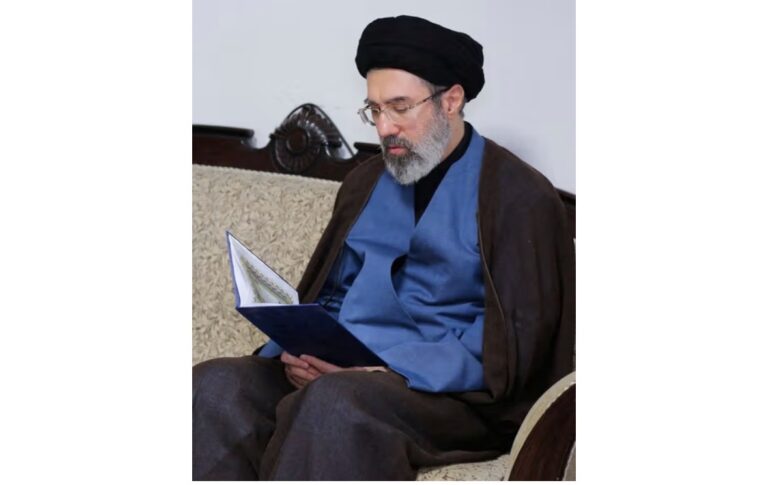
Mojtaba Khamenei, the son of former Iranian Supreme Leader Ayatollah Ali Khamenei, has reportedly been appointed as Iran’s new Supreme Leader following his father’s death.
The decision is believed to have been made by Iran’s Assembly of Experts, the powerful clerical body responsible for selecting the country’s highest authority. Mojtaba Khamenei, 56, has long been considered an influential figure within Iran’s political establishment and is known to have close ties with the Islamic Revolutionary Guard Corps.
WHY TRUMP’S ATTACK ON IRAN A CALCULATED STRIKE AGAINST CHINA’S RISE
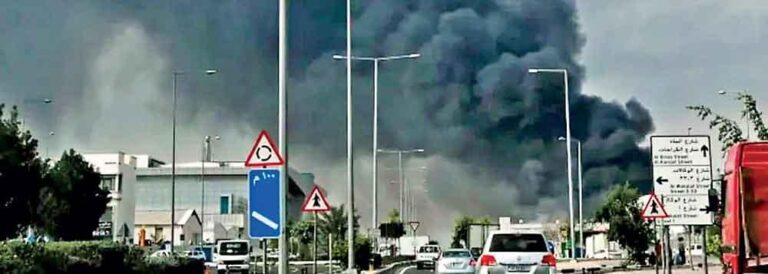
Middle East faces a period of unprecedented tension and instability
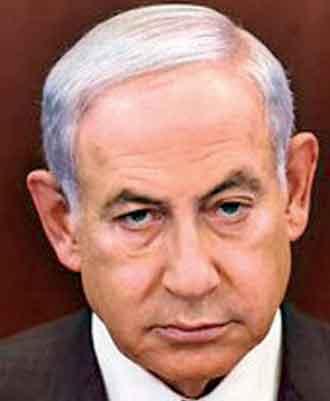
Israeli PM Benjamin Netanyahu
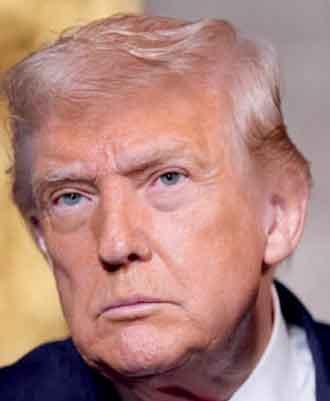
US President Donald Trump
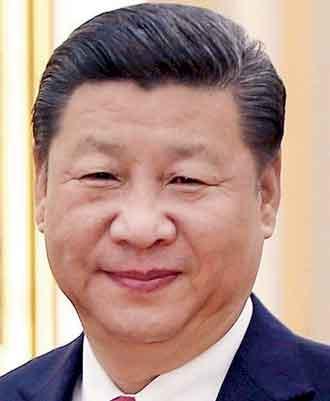
Chinese President Xi Jinping
The 2026 strikes were timed to exploit a moment of perceived Iranian domestic vulnerability, following the massive January 2026 protests
Iranian crude was the lifeblood of China’s economic resilience against Western sanctions and a key component of its long-term strategic planning

In the current geopolitical landscape of 2026, the Trump administration’s maneuvers against Iran and Venezuela appear less as isolated regional disputes and more as a coordinated campaign to preserve American hegemony by strangling the energy lifelines of its primary rival, China
The following article examines how the targeting of Tehran and Caracas serves as a mechanism to disrupt the ‘Beijing-Tehran-Moscow’ axis and maintain the US status as the world’s sole superpower.
The shift from non-proliferation to economic containment
For decades, the US policy towards Iran was framed through the lens of nuclear non-proliferation. However, the re-escalation under the second Trump term suggests a shift in priorities. By moving beyond the Joint Comprehensive Plan Of Action (JCPOA), the US has targeted Iran’s most vital export, oil.
China is currently the world’s largest importer of crude oil, and its economic growth is inextricably linked to energy security. By placing Iran under a “maximum pressure” campaign characterised by the 2026 executive orders imposing 25% tariffs on Iran’s trading partners the US is not just targeting a regime; it is imposing a ‘tax’ on Chinese industrial production.
The energy squeeze: Trump’s strategy to contain China and preserve hegemony
In the early twenty-first century, the international system has transitioned from a post-Cold War unipolarity to a state of intense ‘Great Power Competition.’ Central to this competition is the rivalry between the United States and the People’s Republic of China.
This article argues that the second administration of Donald Trump has moved beyond traditional trade and technological containment, adopting a systemic ‘Energy Squeeze Doctrine.’ By targeting the energy infrastructures and export capabilities of Iran and Venezuela, China’s primary sources of discounted, non-dollar crude the United States aims to stifle Chinese industrial expansion and military modernisation. Simultaneously, this strategy provides a geopolitical shield for Israel to pursue its own regional hegemony and for Prime Minister Benjamin Netanyahu to maintain domestic political survival.
This article justifies these observations through an analysis of energy flow data, currency hegemony, and regional security dynamics.
The geopolitical context: US hegemony and the Chinese challenge
The transition of global power in the early twenty-first century has been characterised by a profound and multifaceted competition between the United States and the People’s Republic of China. This ‘Great Power Competition’ is often analysed through the lens of trade wars, technological rivalry, and territorial disputes in the South China Sea. However, a more systemic and sophisticated strategy has emerged from the second administration of Donald Trump, which we can define as the ‘Energy Squeeze Doctrine.’ This doctrine identifies energy security as the fundamental vulnerability of Chinese global ascension. Rather than engaging in a direct and potentially catastrophic military confrontation with Beijing, the Trump administration has opted for a strategic indirect approach: the systematic dismantling and control of the energy supply lines that fuel the Chinese industrial machine. By targeting Iran and Venezuela two of China’s most vital, non-aligned energy partners the United States aims to reassert its global hegemony and prevent the displacement of the dollar-denominated international order.
This approach represents a shift from traditional non-proliferation objectives toward a more aggressive economic containment strategy designed to preserve American unipolarity at any cost. The rationale behind targeting Tehran and Caracas is not merely a localised desire for regime change or nuclear non-proliferation. Instead, it represents a calculated maneuver to manage the transition of power in the international system.
Historically, the United States has maintained its status as the ‘World Number One’ through its control over global financial institutions and its role as the ultimate guarantor of maritime security. However, China’s rapid economic expansion and its ‘Belt and Road Initiative’ (BRI) threatened to create a parallel, independent economic ecosystem. Central to this ecosystem was the secure flow of discounted, sanctioned crude oil from Iran and Venezuela, often traded outside the American-led banking system. By disrupting these flows, Washington seeks to impose an ‘energy tax’ on Chinese growth, forcing Beijing back into the US-dominated energy market and preserving the status quo of American leadership.
This article explores the mechanics of this strategy, the role of regional allies like Israel, and the profound implications for global peace in this defining decade.
The Venezuelan precedent: Testing the energy blockade
The execution of the ‘Energy Squeeze’ began in earnest with the 2026 operations in Venezuela. For years, the Maduro administration served as a vital node in China’s energy security architecture, providing millions of barrels of crude in exchange for debt relief and infrastructure investment. These transactions were frequently conducted through ‘shadow fleets’ and opaque financial channels designed to bypass the Office of Foreign Assets Control (OFAC) sanctions.
The January 2026 operation, which resulted in the detention of Nicolás Maduro and the installation of a transitional government aligned with Washington, was a watershed moment in the restoration of the Monroe Doctrine. It was not merely an exercise in promoting democracy; it was a strategic seizure of the world’s largest proven oil reserves to prevent their use by a global rival.
Following the ouster of Maduro, the Trump administration immediately moved to redirect Venezuelan oil flows. President Trump’s rhetoric on board Air Force One in late January 2026 stating that China was ‘welcome’ to buy Venezuelan oil but only under ‘legitimate and authorised channels’ revealed the true objective of the operation. By forcing China to purchase Venezuelan oil in US dollars and through approved companies, the United States effectively reclaimed the power to monitor, tax, and restrict Beijing’s energy intake. The ‘discount era’ for Chinese ‘teapot’ refineries, which relied on cheap, sanctioned Orinoco crude, came to an abrupt end. This move hit the Chinese economy where it hurts most; its industrial profit margins. The loss of cheap Venezuelan energy forced Chinese state-owned enterprises to look toward more expensive alternatives, thereby slowing the capital accumulation necessary for their military and technological modernisation programmes. Venezuela, under the new ‘Donroe Doctrine’ framework, was transformed from a Chinese energy outpost into a lever for American economic diplomacy. This successful operation provided the strategic blueprint for the subsequent, and more dangerous, escalation against the Islamic Republic of Iran, ensuring that the Western hemisphere’s energy resources remained under American oversight.
The Iranian campaign: Cutting the dragon’s lifeline
The focus then shifted to Iran, the most defiant pillar of the Beijing-Tehran-Moscow axis. While the mainstream media and international observers focused on the breakdown of nuclear negotiations and the subsequent ‘Operation Epic Fury’ in February 2026, the underlying strategic logic remained consistent with the Venezuelan precedent. Iran’s nuclear programme, while a significant security concern, served as the primary casus belli for a broader campaign to sever China’s most significant energy lifeline in the Middle East. As of early 2026, China was importing one million barrels of oil per day from Iran, representing a critical portion of its total energy requirements. This Iranian crude was the lifeblood of China’s economic resilience against Western sanctions and a key component of its long-term strategic planning.
Trump’s strategy toward Iran moved beyond the ‘Maximum Pressure’ of his first term into a phase of ‘Maximum Interruption.’ By targeting not just the Iranian leadership but the very infrastructure that enabled the export of oil to the East such as the Kharg Island terminal and the IRGC-controlled shadow fleet operations the United States aimed to create a strategic energy vacuum.
The logic was clear: An Iran, that cannot export oil is an Iran that cannot support China’s rise. Furthermore, the 2026 strikes were timed to exploit a moment of perceived Iranian domestic vulnerability, following the massive January 2026 protests. By degrading Iran’s naval and missile capabilities, the US ensured that Tehran could not effectively retaliate by closing the Strait of Hormuz, a move that would have triggered a global energy crisis detrimental to the U.S. as well. Instead, the US aimed for a ‘controlled strangulation’ where Iranian oil was removed from the Chinese market while American shale production and Saudi output were ramped up to keep global prices stable for Western consumers.
This maneuver forced China into a precarious position. Without the one million-plus barrels of Iranian oil, Beijing faced a choice either deplete its strategic petroleum reserves or accept a significant slowdown in economic growth. The ‘Iranian Squeeze’ also had a secondary effect on China’s military objectives. The People’s Liberation Army (PLA) requires massive quantities of refined fuel for its expanding blue-water navy and air force operations. By increasing the cost and decreasing the reliability of energy supplies, the United States effectively placed a logistical ceiling on China’s ability to project power in the Indo-Pacific.
The targeting of Iran was, therefore, a preemptive economic strike in a long-term war for global primacy, aimed at ensuring that China’s military ambitions remained resource-constrained.
Currency hegemony and the ‘petrodollar’ status quo
The defence of the US dollar’s status as the world’s primary reserve currency is the invisible thread connecting the operations in Iran and Venezuela. For decades, the ‘petrodollar’ system has allowed the United States to run large deficits and maintain an outsized military presence globally, as the world’s need for dollars to buy energy ensures a constant demand for the currency. China’s attempts to promote the ‘petroyuan’ and conduct oil trades with Iran and Russia in local currencies posed an existential threat to this hegemony. By disrupting these non-dollar energy corridors, the Trump administration sought to reinforce the necessity of the dollar in global trade.When President Trump spoke of ‘making a deal’ with China for Venezuelan or (potentially) post-regime Iranian oil, he was asserting that energy must be traded within the American financial architecture. This is why the control of energy supply lines is more effective than direct military conflict.
A war with China would be mutually assured destruction, but an ‘energy blockade’ conducted through the proxy of sanctioning and striking energy suppliers allows the US to degrade Chinese power without firing a single shot at a Chinese vessel. This economic warfare ensures that the United States remains the ‘World Number One’ by default, as no other power can sustain its economy if the US controls the valves of global energy. The world peace is currently in a ‘crucial moment’ because this strategy pushes China into a corner where it must either submit to the American-led order or take desperate measures to secure its energy needs, potentially through territorial expansion in the South China Sea or Central Asia. The hesitation of the American leadership to give up the status quo has led to a high-stakes game of geopolitical brinkmanship where energy is the ultimate prize and the ultimate weapon in the battle for 21st-century supremacy.
Israel’s strategic convergence: The quest for regional dominance
Concurrent with the American global strategy is the regional ambition of Israel, led by Prime Minister Benjamin Netanyahu. In the context of the 2026 strikes on Iran, Israel’s objectives are both domestic and strategic. Domestically, Netanyahu has long utilised the Iranian threat as a unifying force to maintain his coalition and remain in power amidst various legal and political challenges. By positioning himself as the only leader capable of securing Israel against an existential threat, he has effectively sidelined his opposition. However, beneath the rhetoric of national survival lies a broader strategic goal: the establishment of Israel as the undisputed Middle East superpower and the realization of a ‘Greater Israel’ not necessarily in terms of physical borders alone, but in terms of absolute regional hegemony.
Israel has skillfully leveraged the Trump administration’s anti-China energy strategy to achieve its own ends. By taking cover behind the American campaign to weaken Iran, Israel has been able to conduct sustained military operations targeting the ‘Shiite Crescent’ across Syria, Lebanon, and Iran with minimal international pushback. The degradation of Iran’s proxy network, including Hezbollah and the Houthis, serves both US interests (by securing Red Sea energy routes) and Israeli interests (by removing regional rivals). The concept of ‘Greater Israel’ in the 21st century involves a region where Israel’s military and technological superiority allows it to dictate terms to its neighbours, ensuring that no regional power can challenge its dominance.
The total neutralisation of the Iranian regime is the final piece of this puzzle. With Iran weakened and its energy supply lines to the East severed, the regional balance of power shifts irrevocably in Israel’s favour. This synergy between Washington’s desire for global hegemony and Jerusalem’s quest for regional supremacy creates a powerful, if volatile, alliance that shapes the current geopolitical epoch, prioritising the preservation of power over the search for a sustainable regional peace and potentially locking the Middle East into a cycle of perpetual conflict.
Conclusion: Implications for world peace
In conclusion, the targeting of Iran and Venezuela under the Trump administration is a sophisticated manifestation of the ‘Energy Squeeze Doctrine.’ By controlling the lifelines of the Chinese economy, the United States seeks to prolong its global hegemony and prevent the rise of a peer competitor. This strategy, while avoiding direct war with China, creates a high-pressure environment that threatens global stability. Simultaneously, Israel utilises this geopolitical shift to consolidate its own regional power and secure Netanyahu’s political future. The current era represents a defining moment where the pursuit of ‘Number One’ status quo by the US and the regional ambitions of Israel converge, leaving the prospects for world peace hanging in a delicate balance. The struggle for energy is, in reality, a struggle for the future of the international order, and the actions taken today will echo through the remainder of the century as the world grapples with the fallout of this energy-centric power play. This dynamic underscores the deeply integrated nature of modern geopolitics where economics and security are no longer distinct spheres of action. The Iranian regime finding itself isolated must now rely on a dwindling set of allies as the global hegemon tightens the noose around its energy exports. The strategic implications for the Beijing-Tehran partnership are dire, as the lack of reliable crude imports stifles the very industrial capacity that China requires to contest maritime dominance. Moreover, the Israeli position in this conflict is not merely reactive but proactive, shaping the theater to ensure long-term survivability against asymmetric threats. The preservation of the current order demands a level of strategic discipline that shuns the idealism of past decades in favour of a hard-nosed realism. As we move forward, the interplay between energy markets and military readiness will continue to be the decisive factor in determining which power emerges victorious in the struggle for global leadership. The future of peace depends on it. The United States has long utilised a strategy of ‘energy strangulation’ to impede China’s economic ascent, primarily by leveraging sanctions to sever Beijing’s access to discounted petroleum from Venezuela and Iran. However, the current escalation in the Middle East threatens to transform this containment policy into a strategic boomerang. If the Iranian conflict results in a protracted regional war, the ensuing global energy shock and the potential collapse of Western-aligned security architectures may inflict more damage on the American-led order than on the Chinese economy. History serves as a grim reminder that conflict is inherently non-linear; the ‘perfect plan’ to contain a rival often becomes the very catalyst for one’s own overextension.
(The writer is a battle hardened Infantry Officer who served the Sri Lanka Army for over 36 years, dedicating 20 of those to active combat. In addition to his military service, Dr. Perera is an international researcher and a writer, having authored more than 200 research articles and 16 books. He holds a PhD in economics and is an entrepreneur and international analyst specialised in national security, economics and politics. He can be reached at [email protected])