Mainly dry weather will prevail in the most parts of the island.
Misty conditions can be expected at some places in Western, Sabaragamuwa, Central, Southern, North-western and North-central provinces and in Jaffna district during the early hours of the morning.
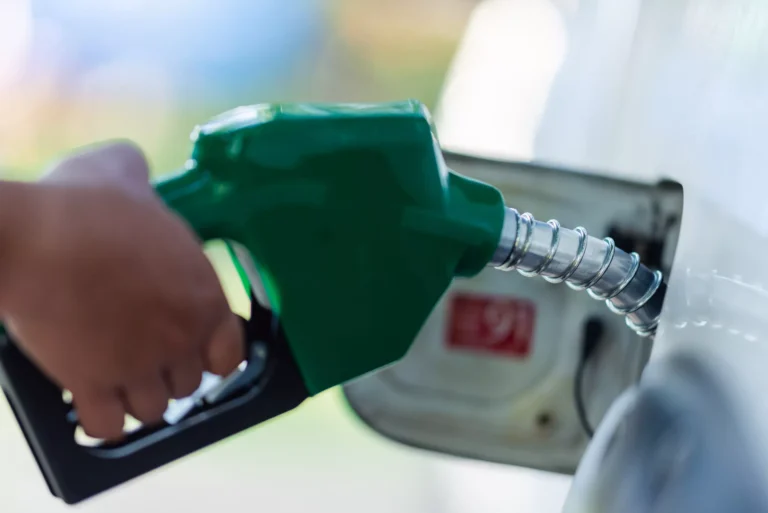
March 03, Colombo (LNW): Sri Lanka has confirmed it has enough fuel stocks to avoid shortages through May, despite global uncertainties and the ongoing Middle East crisis. Ceylon Petroleum Corporation (CPC) Chairman D.J. Rajakaruna assured the public on March 2, 2026, that total availability—including current stocks and confirmed shipments is sufficient for over a month.
Sri Lanka’s government expects fuel queues to disappear from Tuesday (03) as authorities have taken action to curb fuel hoarding and ensured adequate supply, officials said.
Fuel queues returned to Sri Lanka as panic buying by motorists across the country led to artificial demand after the U.S. and Israel jointly bombed Iran.
“We have enough fuel stocks for one month and there are no supply issues,” Cabinet Spokesman and Media & Health Minister Nalinda Herath told reporters at a special media briefing in Colombo.
“We are not going to implement a QR code to restrict consumption because we have enough supply.”
A detailed breakdown of fuel reserves shows petrol at 37 days, auto diesel at 35 days, super diesel at 72 days, and jet/aviation fuel at 47 days. This buffer ensures that daily operations and transport networks across the country can continue without disruption.
Sri Lanka’s fuel imports are primarily sourced from refining hubs in India and Singapore, with additional shipments from Malaysia and South Korea. While these countries are not major crude oil producers, they are global refining centers capable of converting crude into ready-to-use petroleum products. This strategy allows Sri Lanka to bypass direct exposure to conflict zones in the Middle East and ensures immediate usability of imported fuel.
The state-run Sapugaskanda refinery, which processes crude oil domestically, currently has sufficient raw stock for approximately one month of operation. Even on the March 2 Poya holiday, CPC continued fuel issuance to meet high demand, demonstrating the government’s commitment to uninterrupted supply. Anti-hoarding regulations remain strict, prohibiting filling stations from dispensing fuel into containers, with legal action threatened against bulk buyers reselling for profit.
Experts note that Sri Lanka’s reliance on refining hubs like India and Singapore is sustainable in the short to medium term. Both nations maintain significant strategic stockpiles and access to diverse crude sources from around the world. Geographic safety is another advantage: shipments avoid the Strait of Hormuz, a critical chokepoint currently threatened by regional conflicts.
However, vulnerabilities remain. CPC admits that Sri Lanka’s domestic storage infrastructure is limited, capable of holding fuel for only a few weeks. Any disruption in shipments from major refining hubs would deplete reserves rapidly, triggering potential price spikes and economic pressure.
“The current system works well while global refining hubs maintain supply,” said an energy analyst. “But any extended shortage abroad would force Sri Lanka to rely on more expensive alternatives, with immediate ripple effects on transport and essential goods.”
For now, the government continues to monitor global markets closely while reassuring the public. Citizens are encouraged to avoid panic buying, as fuel remains abundant and distribution channels are functioning effectively.
March 03, Colombo (LNW): Cyclone Support Hinges on Sri Lanka’s Reform, EU plus Facility Prospects
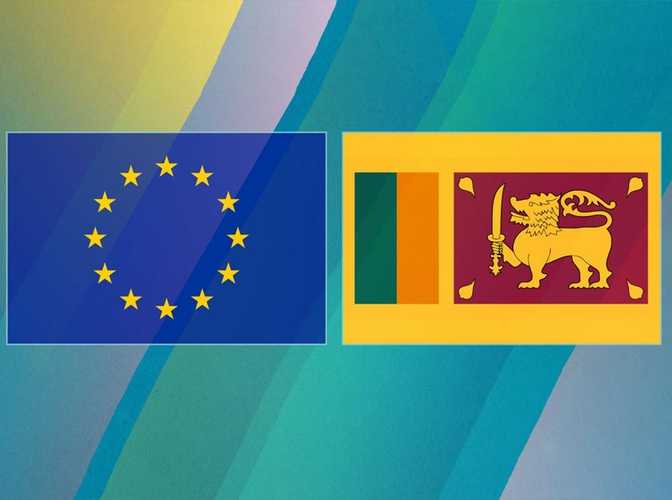
The European Union has reaffirmed its humanitarian commitment to cyclone‑hit Sri Lanka by allocating an additional €1 million (over Rs. 370 million) to help communities recover from the devastating effects of Tropical Cyclone Ditwah. But beyond emergency relief, Brussels is signaling that broader development aid including the long‑anticipated “EU Plus” facility is increasingly tied to governance reforms, fiscal transparency, and climate resilience planning.
Tropical Cyclone Ditwah, which struck in late November 2025, unleashed severe flooding and landslides across all 25 districts of Sri Lanka, damaging homes, infrastructure, schools, and livelihoods. In the immediate aftermath, the EU mobilized €2.35 million in emergency humanitarian funding through partner organizations on the ground, alongside engineering and in‑kind support from member states such as France, Germany, Italy, and Luxembourg. These efforts focused on rapid response: search and rescue coordination, temporary shelter provision, water and sanitation support, and critical repairs to damaged public infrastructure.
The newly announced €1 million tranche is intended to support ongoing needs that extend far beyond the immediate emergency phase. EU officials describe the funding as “lifesaving and life‑sustaining,” earmarked for basic services including drinking water access, sanitation facilities, household supplies, and community‑based recovery projects. The extra allocation recognizes that many affected families remain displaced, economically vulnerable, or reliant on informal support networks months after the cyclone.
However the backdrop to humanitarian assistance is a broader negotiation over long‑term development financing. Sri Lanka and the EU have been engaged in talks over a comprehensive “EU Plus” facility—a mixed financing package combining grants, concessional loans, and technical assistance aimed at supporting economic stabilization, climate resilience, and structural reforms. Sri Lanka views the facility as a key pillar of its post‑IMF Extended Fund Facility (EFF) strategy.
In Brussels, senior officials have emphasized that EU disbursements will be aligned with measurable actions on governance, financial accountability, and climate adaptation. Sources familiar with the negotiations say that progress on public finance management, anti‑corruption measures, and electricity sector reform are being weighed alongside humanitarian urgency. This represents a shift toward “strategic conditionality,” where development cooperation is linked more directly to policy performance.
Civil society and aid agencies in Sri Lanka have generally welcomed the additional humanitarian funding but urged that it reflects only part of the country’s recovery needs. Many rural and estate communities are still living in substandard housing with limited access to clean water and income opportunities. Non‑governmental organizations have called for a scaling up of long‑term resilience investments, particularly in disaster‑prone areas.
Meanwhile, some development partners outside the EU such as Japan and the World Bank have made parallel commitments to reconstruction and climate adaptation, independent of political conditionality frameworks. But analysts say that the EU’s approach, given its scale and visibility, could shape other donors’ strategies.
For Sri Lankan authorities, the unfolding negotiations over the EU Plus facility and the implicit link between aid and reform pose both an opportunity and a challenge. Success could unlock substantial support for economic stabilization and climate resilience. Failure, analysts warn, could leave a critical gap in the country’s development financing at a time of mounting climate risk and slow economic recovery.
As Brussels balances humanitarian support with strategic policy expectations, Sri Lanka’s next steps on governance reforms may prove decisive for both short‑term recovery and long‑term international cooperation.
March 03, Colombo (LNW): Energy Minister Kumara Jayakody is facing a pivotal legal challenge as Sri Lanka’s anti-corruption authorities move toward filing formal charges over alleged fertilizer tender irregularities just as his ministry confronts the unfolding coal procurement scandal.
As of March 1, 2026, the Commission to Investigate Allegations of Bribery or Corruption has directed officials to prepare indictment papers against Jayakody. The case, to be filed in the Colombo High Court, centers on allegations that Rs. 8 million was misappropriated in 2015 when he served as head of the Fertilizer Corporation’s tender board.
Core Allegations
Investigators examined irregularities in payment procedures and the handling of performance bonds linked to a fertilizer import contract. After reviewing written submissions from the minister’s legal counsel, CIABOC determined that sufficient grounds existed to proceed with formal action.
If indicted, Jayakody would become the first minister in the current National People’s Power (NPP) administration to face corruption charges a development with significant political ramifications.
Political and Institutional Fallout
The timeline of the investigation reveals escalating pressure. In August 2025, President Anura Kumara Dissanayake was reportedly advised by close confidantes that the minister might consider stepping aside while investigations were ongoing. By October 2025, CIABOC had sought legal advice amid concerns that media leaks could compromise proceedings.
In January 2026, opposition MPs intensified criticism, directly linking the minister’s past fertilizer-related allegations to the present coal procurement controversy. Though the coal case and fertilizer indictment are legally separate, critics argue that both involve questions about tender oversight and financial accountability.
Jayakody has denied wrongdoing. Government allies characterize the charges as politically motivated and stress that legal proceedings must run their course.
However, governance analysts warn that the convergence of a multi-billion-rupee coal loss and a pending corruption indictment within the same ministry risks deepening public distrust. As Sri Lanka grapples with rising electricity costs and economic recovery challenges, the credibility of its procurement systems and the accountability of those overseeing them now stand under intense national scrutiny.
March 03, Colombo (LNW): Sri Lanka’s Ceylon Electricity Board (CEB) is at a pivotal stage in its unbundling into six fully state-owned successor entities, with implementation delays, labor opposition, and regulatory hurdles pushing back the “appointed date” crucial for formal asset transfer.
The unbundling, envisioned under legislation passed in 2024–2025 as part of the IMF Extended Fund Facility (EFF) structural benchmarks, aims to divide the CEB into six companies: Electricity Generation Ltd (EGL), National Transmission and Network Service Provider (NTNSP), National System Operator (NSO), Electricity Distribution Ltd (EDL), CEB Energy Fund (CEBEF), and Electricity Ventures Ltd (EVL). While originally targeted for 2025, the appointed date was rescheduled for January 1, 2026, then February 1, 2026. As of late February, gazetting of the final date remained pending due to documentation delays.
The restructuring is closely tied to the Voluntary Retirement Scheme (VRS), with more than 2,150 employees opting for early exit. The Rs. 8,831 million cost of the VRS remains unfunded due to PUCSL’s refusal to pass it on to consumers. This funding gap risks delaying the creation of new entities and smooth transfer of assets.
Financial fragility remains a pressing concern. The CEB recorded losses exceeding Rs. 361 billion following a 2025 tariff reduction. Q1 2026 tariff proposals were rejected for technical errors, prompting a 13.56% Q2 hike request to cover operational and VRS costs. Meanwhile, under an IMF-approved plan, Rs. 71,830 million in legacy debt is to be recovered over 15 years through tariffs, offering a potential mechanism for VRS funding if Treasury intervention is approved.
Labor tensions compound the challenge. Twenty-four unions, including engineers, have threatened strikes, citing non-transparent unbundling processes and inadequate benefits. Business groups also raise concerns that the new electricity policy may insufficiently support renewable energy integration, risking investor confidence.
The Ministry of Energy has emphasized that finalizing the appointed date, transferring assets and liabilities, and stabilizing tariffs are critical to avoid disruptions in national electricity supply. Analysts warn that failure to complete these steps could erode public trust, destabilize the sector, and imperil compliance with IMF structural benchmarks.
As of early 2026, Sri Lanka’s electricity reform remains at a crossroads: balancing labor, regulatory, and financial pressures while seeking to implement a legally and operationally sustainable unbundling of the CEB.
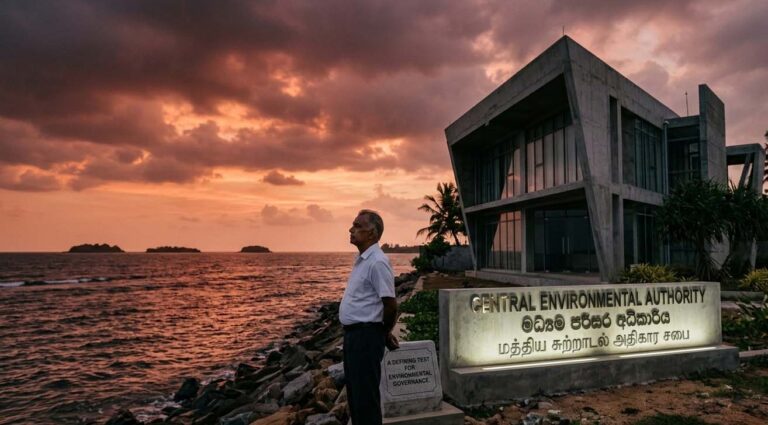
March 03, Colombo (LNW): Sri Lanka stands at a delicate juncture in its environmental reform journey, and the spotlight now falls squarely on the Central Environmental Authority. In moments such as this, institutions are not merely administrative bodies; they become symbols of national intent.
Whether Sri Lanka’s environmental agenda will command credibility — both at home and abroad — depends not only on policy declarations, but on the stability and continuity of those entrusted to implement them.
A concerned citizen, Roger Srivasan, has described this as a defining moment, and the phrase is not misplaced. Across the globe, environmental governance has become intertwined with economic resilience, foreign investment confidence, and international partnerships. For Sri Lanka, still navigating post-crisis recovery and seeking to rebuild trust in its regulatory institutions, environmental reform is more than a technical exercise. It is a test of seriousness and state capacity.
Article:
By Roger Srivasan
This is, unmistakably, a defining moment for the Central Environmental Authority.
If Sri Lanka’s environmental reform agenda is to command credibility — domestically and internationally — institutional stability must be safeguarded.
Retaining seasoned legal stewardship during a period of legislative transition is not a luxury; it is a strategic necessity. Nations do not falter because they lack ambition.
They falter when they fail to preserve the wisdom that makes ambition workable.
If experience is permitted to walk away unchecked, reform may yet become an edifice built upon sand.
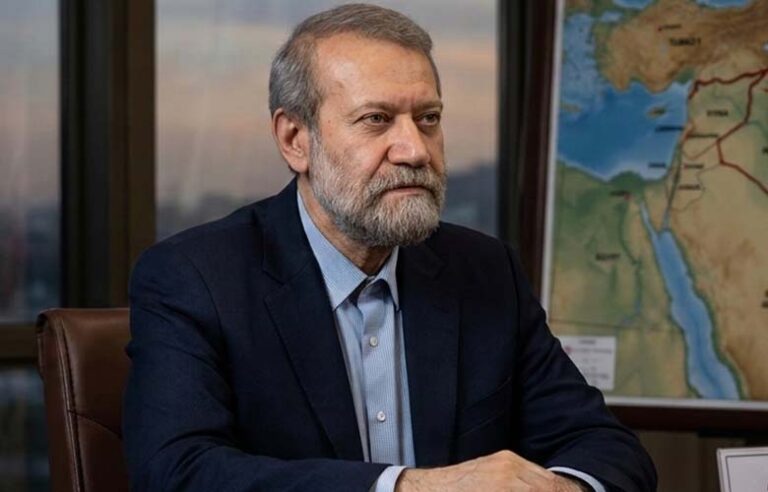
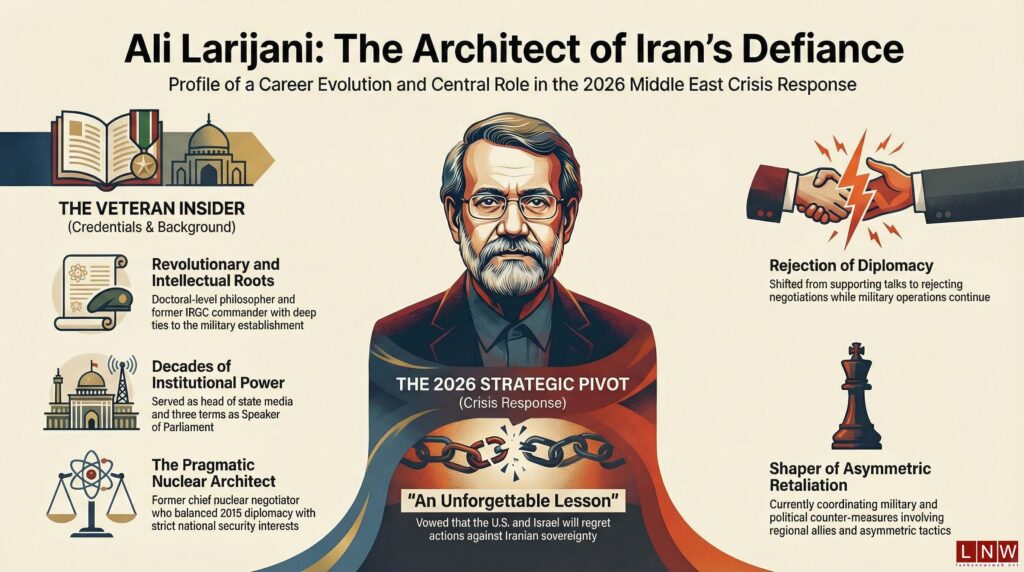
March 03, World (LNW): As tensions in the Middle East spiral following the killing of Iran’s Supreme Leader in February 2026, one man has emerged at the forefront of Tehran’s response. Ali Larijani, a veteran conservative power broker and long-time security insider, has promised that the United States and Israel will receive an “unforgettable lesson” for what he describes as illegitimate aggression against Iran.
Larijani’s rhetoric has been fierce and unambiguous. In public statements and televised appearances, he has warned that Washington and Tel Aviv “will regret their actions”, insisting that Iran’s response will be calibrated but devastating. Framing the strikes as a direct assault on Iran’s sovereignty, he has declared that the Islamic Republic did not initiate the conflict but will respond in self-defence with measures that its adversaries “will never forget”.
A Power Broker, Not a Populist
Born on June 03, 1958 in Najaf, Iraq, into a prominent clerical family originally from northern Iran, Larijani is widely regarded as part of a political dynasty. His father was a respected Shi’a cleric, and his brothers have held senior roles within the judiciary and foreign policy apparatus. Unlike firebrand ideologues who cultivate mass appeal, Larijani’s influence stems from decades embedded within the Islamic Republic’s security and legislative institutions.
Educated to doctoral level in philosophy at the University of Tehran, he combines intellectual credentials with revolutionary experience. During the Iran–Iraq War, he served as a commander in the Islamic Revolutionary Guard Corps (IRGC), forging ties within the military establishment that would underpin his later ascent.
Throughout the 1990s and early 2000s, Larijani occupied senior bureaucratic posts before heading the state broadcaster, Islamic Republic of Iran Broadcasting (IRIB), from 1994 to 2004. In that role, he tightened the regime’s grip over media output, reinforcing his reputation as a staunch guardian of the system’s ideological boundaries.
Architect of Nuclear Policy
Larijani’s prominence grew further when he became secretary of Iran’s Supreme National Security Council between 2005 and 2007, serving as the country’s chief nuclear negotiator with European powers. He later returned to the post in 2025 amid rising tensions with Washington and Tel Aviv.
He played a key role in shaping Iran’s approach to the 2015 nuclear agreement, the Joint Comprehensive Plan of Action. While firmly aligned with the red lines set by the late Supreme Leader, he demonstrated a pragmatic streak, supporting diplomacy when it could relieve sanctions without, in his view, compromising national security.
From 2008 to 2020, Larijani served three consecutive terms as Speaker of Parliament, consolidating his status as a central figure in legislative and security circles. He backed the nuclear deal through parliament but also supported stringent domestic controls, including measures against protest movements — a dual approach that has defined his political identity as a “pragmatic conservative”.
The 2026 Crisis and a Hardening Tone
Following the death of the Supreme Leader in February 2026, Larijani rapidly positioned himself as a coordinating voice within the regime’s response architecture. Iranian outlets describe him as deeply involved in shaping both military and political counter-measures.
His recent comments suggest a sharp pivot away from any near-term diplomacy. Whereas he had previously characterised Iran’s stance towards talks with Washington as “positive” under certain conditions, he now rejects negotiations outright. Speaking to regional media, he has argued that dialogue is meaningless while the United States and Israel continue military operations.
Larijani has gone further, accusing Washington of subordinating its own national interests to Israeli strategy. He has criticised President Donald Trump’s “America First” slogan as having become “Israel First”, alleging that American forces are being drawn into a broader regional conflict at Israel’s behest.
Calibrated Retaliation or Escalation?
Despite the combative language, analysts note that Larijani’s career reflects more than ideological rigidity. He has historically balanced hard-line rhetoric with tactical flexibility. His background in nuclear diplomacy and legislative negotiation suggests he understands the costs of uncontrolled escalation.
Yet his promise of an “unforgettable lesson” has resonated domestically, particularly among conservative constituencies demanding retaliation. He has signalled that Iran’s response could extend beyond conventional military action, potentially involving regional allies and asymmetric measures.
Whether this marks a slide towards full confrontation or a calculated strategy designed to strengthen Iran’s bargaining position remains uncertain. What is clear is that Larijani’s words carry weight. As a seasoned insider trusted within security circles, he is not merely issuing slogans; he is helping shape the direction of Iran’s next move.
At a moment of acute instability, Ali Larijani stands as both symbol and strategist of Iran’s defiance — a man who blends intellectual pedigree, revolutionary credentials and political endurance. His vow that the United States will “regret” its actions may prove either the prelude to wider escalation or the opening gambit in a new phase of high-stakes brinkmanship.
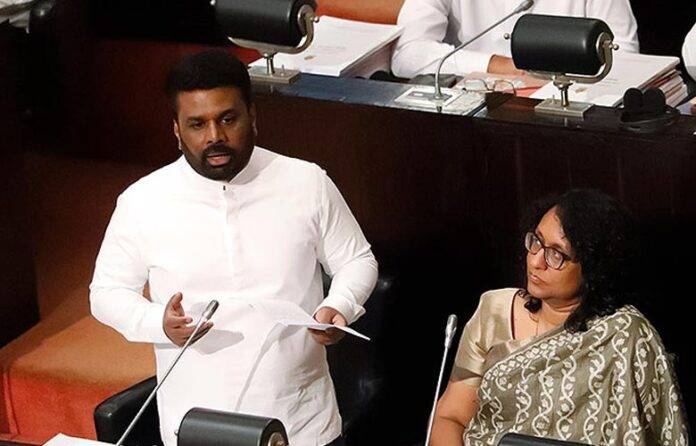
March 03, Colombo (LNW): President Anura Kumara Dissanayake has appealed for an immediate and peaceful end to the escalating conflict in the Middle East, warning that the repercussions of continued hostilities could reverberate far beyond the region and significantly affect Sri Lanka’s fragile recovery.
Addressing Parliament today (03), the President stressed that modern warfare, powered by increasingly advanced military technology, poses grave risks not only to those directly involved but to the wider global community. Sri Lanka’s official stance, he said, is clear: all sides must demonstrate genuine commitment to de-escalation and work towards a negotiated settlement without delay.
He cautioned that Sri Lanka cannot insulate itself from the economic and social consequences of the crisis. Disruptions to global oil and gas supplies, he noted, could drive up energy costs, while Sri Lankans employed in the Middle East may face uncertainty. The knock-on effects could extend to tourism, remittances, maritime trade and aviation — sectors that remain critical to national stability.
To mitigate potential fallout, the government is formulating a coordinated national response. The Central Bank has undertaken a rapid assessment of possible economic impacts, with findings expected imminently, while the Ministry of Finance is preparing a parallel review focused on implications for public welfare. Measures are also being devised to safeguard essential services both for citizens at home and those working overseas.
The President acknowledged public anxiety, observing that memories of previous crises remain fresh. He underlined that reassurance must be matched by practical action, insisting that stability cannot be secured through rhetoric alone. Although the current administration has navigated a number of serious challenges since assuming office, he described the unfolding Middle East situation as uniquely unpredictable.
Energy security featured prominently in his remarks. Sri Lanka’s petroleum storage capacity, he explained, is limited, with facilities at Kolonnawa and Muthurajawela holding around 150,000 metric tonnes, excluding additional capacity in Trincomalee. Stocks are managed in line with scheduled shipments rather than maintained as a large emergency reserve.
At present, diesel supplies are projected to last approximately 33 days, supported by ongoing refinery output. Petrol stocks are sufficient for nearly four weeks, with an incoming consignment expected to extend coverage to roughly 40 days. Aviation fuel reserves are estimated to be adequate for close to seven weeks, while crude oil supplies on hand, combined with an imminent delivery, should enable refinery operations to continue for more than six weeks.
Several fuel shipments are already scheduled throughout March to ensure continuity of supply. Based on current projections, the President assured lawmakers that there is no immediate shortage of petroleum products, though vigilance remains essential.
Concluding his address, President Dissanayake called for unity across political lines, emphasising that navigating the uncertainty ahead will require cooperation between the government, Parliament and the public. The responsibility for steering the country through potential turbulence, he said, rests not with individuals alone but with the nation as a whole acting with shared purpose.
March 03, Colombo (LNW): Sri Lanka’s Minister of Ports and Civil Aviation, Anura Karunatilake, has confirmed that authorities are actively working to restore wider flight operations by making use of air corridors that remain partially accessible amid ongoing regional restrictions.
Speaking in a recent television interview, the Minister explained that only a handful of airspaces in the Middle East are presently available on a limited basis, notably routes passing through Oman and Saudi Arabia. Meanwhile, key aviation zones over Iran and the Gulf hubs of Sharjah, Abu Dhabi and Dubai remain entirely closed, significantly affecting established flight paths.
In response, aviation officials are engaged in discussions with international counterparts to maximise the use of the restricted but open corridors. Particular attention is being given to maintaining vital transit links for long-haul services to the United States and Europe, where rerouting options are being carefully assessed to minimise disruption for passengers and cargo operators alike.
Minister Karunatilake indicated that negotiations are progressing steadily and expressed cautious optimism that broader access arrangements could be finalised in the coming days. He added that ensuring passenger safety and operational efficiency remains the government’s foremost priority during these adjustments.
Encouragingly, direct services between Sri Lanka and England have already recommenced, offering some relief to travellers and signalling gradual recovery in selected sectors despite the broader regional constraints.
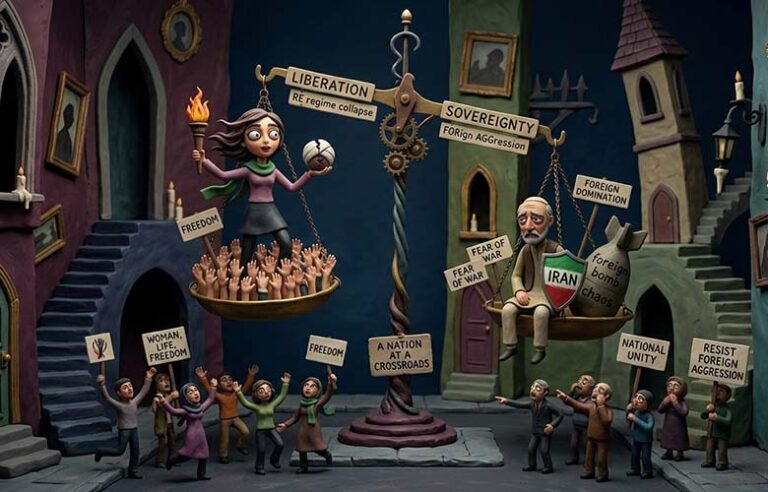
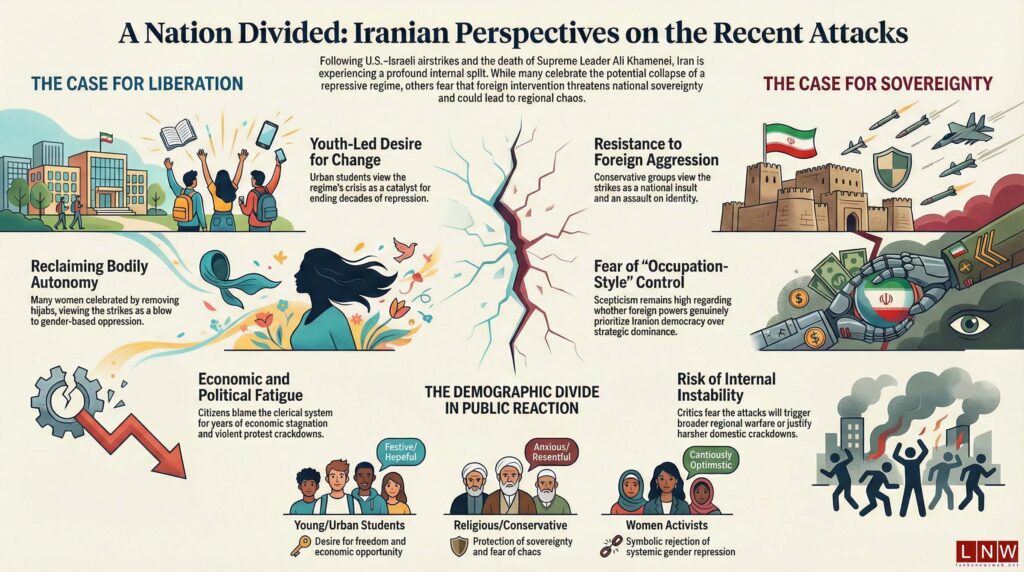
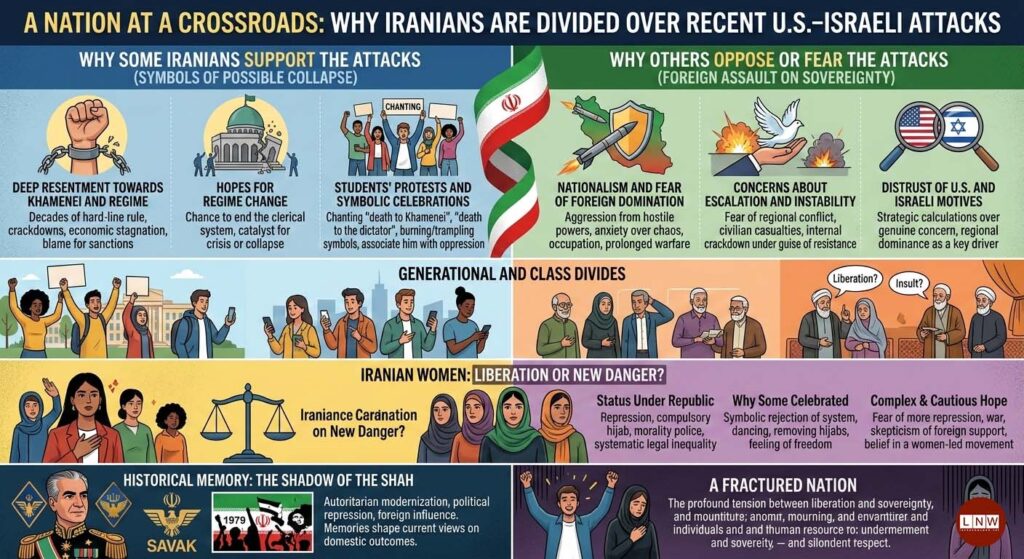
March 03, World (LNW): A storm of recent social media posts may suggest that Iranians are sharply divided over the recent U.S.–Israeli attacks because, for some, they symbolise the possible collapse of a repressive regime, while for others they represent a foreign assault on national sovereignty and identity.
The footage of university students cheering and chanting “death to Khamenei” reflect years of accumulated anger against the Islamic Republic, especially among young, urban and educated Iranians who have borne the brunt of repression and economic hardship.
Why Some Iranians Support the Attacks
Many Iranians blame Supreme Leader Ali Khamenei for decades of hard-line rule, repeated crackdowns on protests and economic stagnation under sanctions. After the violent suppression of recent demonstrations—reportedly involving thousands of deaths—some citizens privately and publicly celebrated his death as a break from what they describe as a “murderous” and dictatorial leadership.
The United States and Israel have openly framed the strikes as an attempt to weaken or unseat the Islamic Republic. Some Iranians interpret the attacks as an opportunity to end the clerical system. University-age Iranians, who have never known life before the 1979 revolution, see the attacks as a catalyst that could push the regime into crisis or collapse, even if they remain wary of the foreign powers behind them.
In the days before and after Khamenei’s death, students at major universities such as Sharif, Amir-Kabir and Tehran University gathered to chant “death to Khamenei”, “death to the dictator” and “freedom, freedom”. Some burned or trampled regime symbols. For many within this educated youth demographic, the supreme leader’s killing was not viewed as a humiliation of Iran, but as the downfall of a figure they personally associate with oppression.
Many Iranians, particularly among more conservative and religious segments, regard the United States and Israel as hostile powers that have long sought to undermine Iran. They see the strikes as foreign aggression, regardless of their personal views on Khamenei. There is anxiety that the country could descend into chaos, face occupation-style control or become embroiled in prolonged warfare.
Concerns About Escalation and Instability
Some Iranians draw a distinction between opposing the regime and allowing foreign bombs to determine their future. They fear the attacks could spark a broader regional conflict, result in significant civilian casualties or prompt a harsh internal crackdown justified by the regime under the banner of resisting a “foreign enemy”.
Even among those who welcome the weakening of the clerical elite, scepticism persists. Many doubt that the United States or Israel are motivated by genuine concern for Iranian democracy or human rights. Instead, they suspect strategic calculations and regional dominance are the real drivers. This distrust fosters ambivalence rather than wholehearted support.
Generational and Class Divides
Younger, urban and often middle-class Iranians—especially university students—are more likely to celebrate Khamenei’s death and tolerate or welcome foreign pressure on the regime. Their outlook is shaped by direct exposure to repression and economic frustration. In contrast, older, more religious or economically dependent groups, including those tied to state-affiliated patronage networks, tend to view the attacks as a national insult, even if they criticise governance privately.
Many Iranians describe feeling both “internally festive” and fearful at the same time: relieved that a reviled leader is gone, yet anxious that foreign powers may now shape their country’s destiny. This mixture of emotions has produced a fractured public reaction—some celebrating in the streets, others mourning on television, and many remaining silent out of fear.
Iranian Women: Liberation or New Danger?
Women’s reactions to the attacks, and particularly to Khamenei’s death, must be understood in light of four decades of systematic repression.
Under the Islamic Republic, women are legally treated as second-class citizens in areas such as marriage, divorce, inheritance, child custody and court testimony, where a woman’s testimony is worth half that of a man’s. The state enforces compulsory hijab through strict morality laws, surveillance and new veiling bills imposing heavy fines, lengthy prison sentences and even death-penalty-linked provisions for resistance.
Security forces and morality police have used arbitrary arrests, beatings, car chases and public humiliation, especially since the 2022 “Woman, Life, Freedom” uprising triggered by Mahsa Jina Amini’s death. Women activists have been jailed, flogged and in some cases sentenced to death on national-security-related charges.
Following the announcement of Khamenei’s death, some women were seen dancing, removing their hijabs, honking car horns and chanting “Khamenei is dead” and “freedom”. For them, this was a symbolic rejection of a system that policed their bodies and criminalised dissent. Some described the moment as the happiest they had felt in years—a brief window to reclaim public space and bodily autonomy.
Yet many women remain cautious. They fear that foreign strikes could trigger further repression, war or even occupation-style control. There is concern that authorities may use the narrative of foreign aggression to justify renewed crackdowns, accusing protesters of collaboration.
There is also scepticism that foreign governments truly prioritise women’s rights over geopolitical interests. While some see the weakening of the regime as an opening, others insist that lasting equality must come from within Iran, through a women-led movement rather than external military intervention.
Historical Memory: The Shadow of the Shah
The debate is also shaped by Iran’s pre-1979 history. Under the Pahlavi monarchy, Iran was not a democracy but an authoritarian state marked by rapid modernisation and consumer-style liberalism for some, alongside political repression. The secret police, SAVAK, used surveillance, torture and executions to silence dissent.
Urban elites enjoyed relative cultural freedoms, yet political opposition was dangerous. Women experienced expanded access to education and work, but family law remained patriarchal. The Shah’s pro-Western stance, wealth inequality and reliance on oil revenue fuelled resentment, culminating in the 1979 revolution.
Today, memories of both dictatorship and foreign influence inform public opinion. Many Iranians who oppose the current regime are wary of repeating a history in which foreign powers shape domestic outcomes.
A Nation at a Crossroads
Ultimately, the division reflects a profound tension between the desire for liberation and the instinct to defend national sovereignty. For some, the strikes represent a controversial but necessary blow against a repressive system. For others, they are a dangerous intrusion that threatens chaos and renewed subjugation.
Iran’s fractured response reveals a society wrestling not only with its present crisis, but with decades of repression, revolution and unresolved questions about who should determine its future.