February 26, Colombo (LNW): Property values across the Colombo District have continued their steady ascent, with residential plots leading the charge in the latter half of 2025, according to newly released figures from the Central Bank of Sri Lanka.
Data indicate that residential land prices rose by 12.4 per cent compared with the corresponding period in 2024, signalling sustained demand for housing space within the capital region. Commercial land followed closely behind, registering an annual increase of 11.3 per cent, reflecting renewed business confidence and expanding retail and office activity.
The Central Bank’s Land Valuation Indicator (LVI) for Colombo — a widely watched gauge of land price movements — advanced by 10.6 per cent year-on-year during the second half of 2025. Growth was recorded across all major categories tracked by the index. In addition to the sharp rise in residential and commercial segments, industrial land values also moved higher, posting an 8.0 per cent annual gain.
On a six-month basis, the market demonstrated more measured, yet still positive, growth compared with the first half of the year. Both residential and commercial sectors outperformed their earlier gains, suggesting a strengthening trajectory as 2025 progressed. Analysts note that improved credit conditions, infrastructure upgrades and sustained urban migration may have contributed to the buoyancy seen in Colombo’s land market.
The continued rise in land prices underscores Colombo’s position as the country’s commercial hub, with investors and developers remaining active despite broader economic headwinds. Market observers expect demand for well-located residential and mixed-use plots to remain firm into 2026, particularly as new development projects gather pace.
Colombo Land Market Maintains Upward Momentum as Property Values Climb
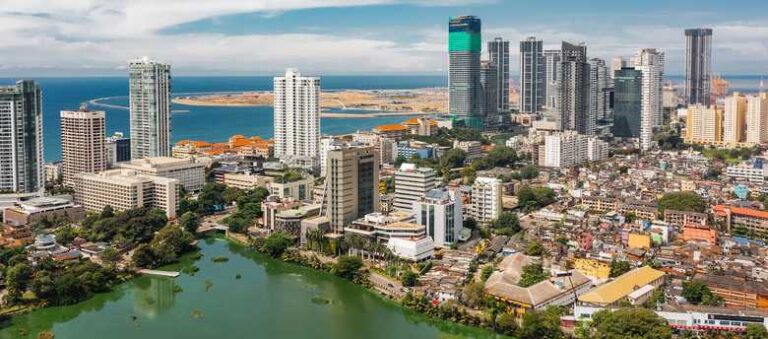
Mainly fair weather to prevail over Island (Feb 26)

February 26, Colombo (LNW): Mainly fair weather will prevail over most parts of the island, with a few being likely to occur in the coastal areas of the Western Province during the morning, the Department of Meteorology said in its daily weather forecast today (26).
Showers or thundershowers are likely at a few places in Southern province and in Rathnapura and Monaragala districts after 2.00 p.m.
Misty conditions can be expected at some places in Central, Sabaragamuwa, Western, North-western and North-central provinces and in Galle, Matara, Monaragala, Mannar and Vavuniya districts during the early hours of the morning.
Marine Weather:
Condition of Rain:
Mainly fair weather will prevail over sea areas around the island.
Winds:
Winds will be north-easterly in the sea areas from Kankasanthurai to Hambantota via Batticaloa. Winds will be north-westerly or variable in the other sea areas around the island. Wind speed will be (20-30) kmph.
State of Sea:
The sea areas around the island will be moderate.
The coal scandal rocking the NPP government
By Adolf
In early 2026, allegations of a massive coal procurement scandal surfaced in Sri Lanka, centring on how the government awarded and managed a multi‑billion‑rupee tender for importing coal used at the Norochcholai (Lakvijaya) Coal Power Plant. What began as technical objections quickly snowballed into claims of corruption, financial mismanagement, and political misconduct — leaving the unity government on the defensive as criticscalled it one of the most damaging controversies of the current regime, a controversy analysts say has shattered what little confidence citizens had left in the current administration:
What Happened: The Coal Tender and Quality Issues
The dispute began over a government tender to import coal for power generation at Sri Lanka’s largest coal‑fired plant. Opposition lawmakers and analysts raised questions about the quality and calorific value of recent coal consignments, alleging that several shipments failed to meet the minimum technical specifications required for efficient electricity generation. According to Parliamentary members, laboratory tests confirmed that multiple imported coal batches were substandard, below the minimum energy output levels specified in the tender requirements.
Opposition leader Sajith Premadasa accused the government of “daylight robbery” and said the decision to import substandard coal had cost more than Rs. 8 billion — money that could otherwise have supported public services or kept electricity prices stable.
Even broader estimates shared in parliamentary discussions suggested losses approaching or exceeding Rs. 7.9 billion due to purchasing and using inferior coal across eight shipments.
Political Fallout and Accusations
The political backlash has been severe. Opposition MPs argued that the tender procedure was manipulated: they say deadlines were extended and eligibility criteria altered to favour a specific company, undermining competition and transparency. As pressure mounted, some lawmakers publicly challenged the Energy Minister Kumara Jayakody to defend his conduct and explain the procurement decisions, with one MP even calling for a televised debate over alleged corruption.
Party leaders and critics outside Parliament have taken an even harsher tone. Figures such as Wimal Weerawansa alleged that powerful individuals in the government — including senior ministers — influenced the tender process after overseas discussions with foreign suppliers, suggesting improper interference. These accusations have created the perception of political patronage and backroom deals, and even calls for the Energy Minister to resign or be removed.
Government Response
The government has denied any deliberate wrongdoing. Senior officials, including the Minister of Agriculture Lal Kantha, acknowledged that some coal consignments were of inferior quality but insisted that there was no corruption in how the tender was conducted. They argued that proper procurement procedures were used and that mechanisms exist to recover losses through penalties against the supplier. In fact, the government has levied millions of dollars in penalties on several substandard coal shipments — more than US$2 million on the first alone and smaller fines on subsequent batches. Officials maintain this shows they are acting within legal and contractual frameworks.
Analysts and Public Reaction
Despite governmental reassurances, analysts and opposition figures alike argue that the scandal has done enormous reputational damage. Critics claim that the crisis exposes deep flaws in procurement transparency and accountability — especially in a sector as vital as energy. For many Sri Lankans, the issue is more than technical procurement process debate; it symbolizes the broader problem of governance integrity. Observers have noted that a government that campaigned on promises of accountability and clean governance now finds itself defending against widespread corruption accusations.
Wider Economic Consequences
Beyond political embarrassment, the scandal has economic implications. Substandard coal reduces power generation efficiency, meaning the state must either import additional fuel or run more expensive alternatives like diesel plants to meet demand — costs eventually passed on to consumers. Opposition voices warn that continued losses or higher electricity tariffs could further strain household budgets and undermine public trust in the government’s ability to manage core services. In summary, the Sri Lankan coal controversy has escalated into a major political and economic crisis — one that analysts say has severely undermined the credibility of the current government. While calls for independent investigations and ministerial accountability are growing, public perception of governance and transparency remains deeply shaken. Unfortunately, due to the lacklustre leadership of the opposition, the scandal is unlikely to be fully leveraged politically. Meanwhile, surveys from Verité Research, led by Nishan de Mel, continue to produce findings that critics argue can be misleading — at times even confusing international observers like the IMF.
Former Intelligence Chief Suresh Salley Arrested in Easter Sunday Probe

Former State Intelligence Service Director Suresh Salley has been taken into custody by Sri Lankan authorities in connection with the ongoing investigation into the 2019 Easter Sunday bombings.
Sources confirmed that the arrest was made this morning (25) by officers of the Criminal Investigation Department (CID).
Paramount Skydance Raises Bid for Warner Bros Discovery, Challenging Netflix Deal

Paramount Skydance has increased its offer to acquire Warner Bros Discovery, potentially sidelining rival bidder Netflix in the contest for the media giant.
Warner Bros, which put itself up for sale last year, confirmed that Paramount has agreed to raise its bid by $1 per share. The company’s board said the revised offer “could reasonably be expected to lead to a superior proposal.”
The board added that it would engage in further discussions before deciding whether to abandon the agreement it reached with Netflix in December.
Under the terms of that December deal, Netflix agreed to acquire Warner Bros’ film and streaming divisions, including HBO, for $27.75 per share—valuing the transaction at approximately $82 billion, including debt. Warner Bros also said it would spin off its remaining assets, including traditional television networks and CNN, into a separate independent company.
Following Paramount’s revised offer, Netflix has four days to submit a counter-offer. The company has not yet commented on the latest development.
In a recent BBC interview conducted before Paramount’s increased bid was announced, Netflix co-chief executive Ted Sarandos declined to speculate on a potential bidding war, describing the negotiations as “part of the process.”
“We very much like the deal where we’re at right now. We’re very disciplined buyers and we always have been,” Sarandos said, adding that the situation was “a process of price discovery.”
Paramount Skydance, backed by tech billionaire Larry Ellison and led by his son David Ellison, has been actively pursuing Warner Bros since last year in a bid to strengthen its position in Hollywood. Although its initial offer proposed paying $30 per share to acquire the entire company, Warner Bros had previously rejected those advances.
The latest proposal raises the offer to $31 per share in cash, with additional payments if the deal’s completion is delayed. Paramount has also agreed to pay $7 billion if the deal collapses and to cover the $2.8 billion break-up fee Warner Bros would owe Netflix if it terminates the existing merger agreement.
Warner Bros said its board has not yet reached a final decision.
Both proposals have attracted scrutiny from US lawmakers over potential monopoly concerns and the broader impact on the entertainment industry. During a recent congressional hearing, Sarandos faced questions about possible price increases and the future of cinemas.
The Ellison family’s ties to the Trump administration have also drawn attention from Democratic lawmakers.
Warner Bros said it would continue discussions to determine whether a “superior proposal” can be reached. Analysts suggest the bidding could escalate further, with some estimating the final price could rise to as much as $33 per share.
Gold Status Governance: Incentive Reform or Inequality Risk?

The Inland Revenue Department’s new Privilege Card programme has ignited debate over how far a revenue authority should go in rewarding its largest contributors. Positioned as a compliance recognition initiative, the scheme offers streamlined administrative access to individuals who meet stringent filing and payment standards and who have contributed millions in income tax during the preceding Year of Assessment.
Under the framework, taxpayers who have demonstrated punctual filing, full settlement of liabilities and proper remittance of source-deducted taxes may qualify for either Silver or Gold status, depending on the scale of their contributions. The thresholds are substantial, underscoring that the initiative targets a narrow but financially significant segment of the taxpayer base.
Cardholders are granted priority engagement with senior officials, faster communication channels within their Tax Services Units and on-site advisory support when required. While the benefits do not include tax concessions or financial incentives, they create a clear hierarchy of administrative access.
Supporters argue that such differentiation is pragmatic. A relatively small pool of high-income taxpayers often accounts for a significant share of direct revenue, and maintaining strong relationships with them enhances predictability and reduces compliance disputes. Recognition may also function as a behavioural incentive, reinforcing a culture in which timely tax payment is associated with prestige rather than obligation.
Opponents, however, caution against the optics of exclusivity. Public institutions traditionally operate on principles of uniform service, and introducing privileged access could be perceived as institutionalising inequality. At a time when governments emphasise fairness and shared sacrifice, visible distinctions between ordinary taxpayers and elite contributors may invite scrutiny.
The broader significance of the scheme lies in what it signals about administrative philosophy. The IRD appears to be adopting a client-segmentation model common in modern revenue systems, blending enforcement with engagement. The success of this experiment will depend not on the number of Gold Cards issued, but on whether the Department can maintain transparency, safeguard equal treatment and strengthen overall trust in the tax system.
In the end, the Privilege Card is less about symbolism than about strategy. It reflects a calculated effort to secure revenue stability by cultivating loyalty among top contributors. Whether that strategy enhances compliance culture or deepens perceptions of disparity will shape public judgment in the years ahead.
From Bailout to Breakthrough: Sri Lanka Faces Tough Reform Conditions
Sri Lanka stands at a crossroads between relief and renewal, according to the International Monetary Fund. The country has moved beyond the brink of collapse, yet the IMF warns that without deeper reforms, the promise of transformation may stall.
Addressing investors in Colombo, IMF Resident Representative Dr. Martha Woldemichael outlined a demanding roadmap. Her message was forward-looking but firm: stabilisation achieved under the Extended Fund Facility must evolve into systemic economic change.
The IMF’s managing director, Kristalina Georgieva, recently lauded Sri Lanka’s progress. Growth has returned. Inflation is subdued. Debt restructuring is nearing completion. Government revenue has climbed from 7.3% of GDP in 2022 to 12.4% in 2024. These are not cosmetic improvements they signal a country regaining macroeconomic footing.
Yet the IMF’s constructive critique focuses on what lies beneath the surface. Sri Lanka’s economic model, long reliant on narrow export bases and policy inconsistency, must diversify and modernise. Trade liberalisation and integration into global supply chains are framed as growth multipliers. Labour market reforms particularly boosting female workforce participation are described as untapped engines of productivity.
Digital transformation features prominently in the IMF’s vision. Automating tax systems and public services is seen as a way to expand compliance, reduce corruption vulnerabilities, and increase state capacity. Predictable regulatory frameworks and restrained, transparent tax incentives are positioned as prerequisites for attracting foreign direct investment.
But the toughest conditions relate to discipline. The IMF stresses the need to avoid monetary financing, maintain Central Bank independence, and preserve cost-recovery energy pricing. These measures, though technocratic in language, carry political weight. Rolling them back could quickly erode hard-won stability.
The Fund also emphasises fiscal buffers. Stronger reserves and credible public debt management are described as insurance against future shocks. “Buffers buy the ability to absorb shocks swiftly,” Woldemichael noted, underscoring the fragility of recovery in a volatile global environment.
Importantly, the IMF acknowledges the human cost of adjustment. With a recent cyclone threatening to push thousands into poverty, sustaining social protection programmes is not optional—it is foundational. Reform sustainability depends on public buy-in, and public buy-in depends on visible fairness.
This dual message discipline with equity defines the IMF’s current stance. Sri Lanka is no longer in freefall, but it is not yet future-proof. The next phase requires more than compliance with quarterly targets; it demands structural re-engineering of trade, labour, governance, and investment frameworks.
The IMF’s position can be read as both endorsement and warning. Progress is tangible, but the window for transformation is narrow. Policy inconsistency, reform fatigue, or political short-termism could squander the opportunity.
Sri Lanka’s challenge now is to convert IMF-backed stabilisation into self-sustaining growth. The bailout chapter may be closing. The breakthrough chapter, however, has yet to be written.
Customs Control of Export Zones Triggers Industry Alarm

Sri Lanka’s decision to centralize trade inspections under Sri Lanka Customs is being portrayed by policymakers as a necessary corrective to systemic weaknesses. But beneath the surface, the reassignment of powers from the Board of Investment raises broader questions about economic governance, institutional balance, and long-term competitiveness.
The government’s rationale rests on three pillars: fiscal accountability, legal consistency, and international obligations. A July 2025 assessment by the International Monetary Fund emphasized revenue mobilization as central to Sri Lanka’s recovery program. As part of that framework, authorities reportedly agreed to vest Customs with full control over goods entering and exiting special economic zones.
Officials argue that overlapping jurisdictions created grey areas ripe for abuse. Allegations of smuggling and the unlawful sale of duty-free inputs into the local market have fueled calls for tighter supervision. From a governance standpoint, consolidating inspection authority under a single statutory body could enhance transparency and reduce opportunities for regulatory arbitrage.
However, the broader economic calculus is more complex. The BOI’s operational model was designed not merely as a regulatory mechanism but as an investor facilitation service. By providing expedited clearance and on-site inspection within zones, it reduced transaction costs and signaled a pro-business environment. The shift to centralized Customs oversight alters that dynamic fundamentally.
Economists warn that reform must balance enforcement with facilitation. If Customs procedures prove slower or more cumbersome, the cost of compliance could rise for exporters already grappling with thin margins and volatile global demand. The apparel sector, heavily reliant on strict shipment deadlines, may be particularly vulnerable.
Infrastructure readiness is another pivotal factor. Customs will need robust digital integration, risk-based inspection systems, and expanded human resources to manage increased volumes. Without such enhancements, congestion at ports and free trade zones could ripple through the economy, affecting foreign exchange earnings and investor sentiment.
Supporters of the reform counter that credible enforcement strengthens investor confidence in the long term. Transparent, uniform procedures can reduce perceptions of favoritism and ensure a level playing field. Moreover, plugging revenue leakages bolsters public finances an essential prerequisite for macroeconomic stability.
The policy’s phased rollout, including a pilot at Katunayake, suggests authorities recognize the operational challenges ahead. The success of that trial period will likely shape investor perceptions and determine whether the transition becomes a model of institutional modernization or a cautionary tale.
Ultimately, the issue transcends administrative reshuffling. It touches on Sri Lanka’s strategic positioning in a competitive Asian manufacturing landscape. The outcome will depend not only on the intent behind the reform but on its execution whether it can harmonize fiscal discipline with the agility demanded by global trade.
Seven-Member Committee Appointed to Review Coal Supply Mechanism
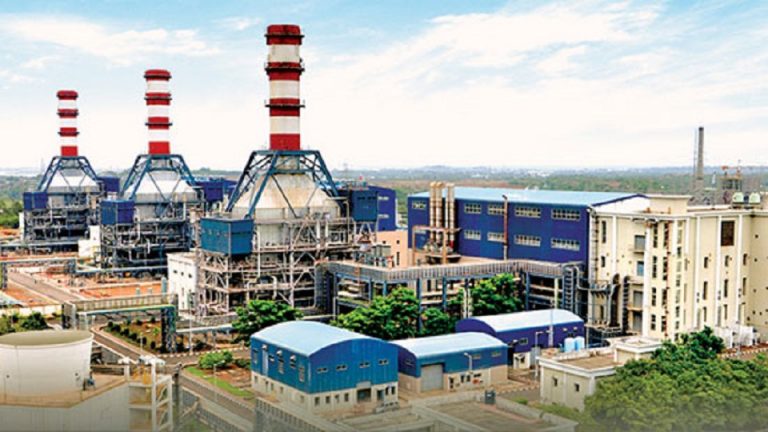
The Ministry of Energy has announced the appointment of a seven-member committee to review the existing coal supply mechanism to the Norochcholai Lakvijaya Power Plant.
Professor W.D.A.S. Rodrigo, Head of the Department of Electrical Engineering at the University of Moratuwa, has been appointed as Chairman of the committee.
The committee comprises the following members:
- Prof. W.D.A.S. Rodrigo (Chairman) – Head, Department of Electrical Engineering, University of Moratuwa
- Dr. N.A.I.D. Nissanka (Member) – Senior Lecturer (Grade I), Department of Mechanical Engineering, University of Moratuwa
- Dr. I.U. Attanayake (Member) – Senior Lecturer (Grade II), Department of Mechanical Engineering, University of Moratuwa
- Dr. R.M.D.S. Gunarathne (Member) – Senior Lecturer (Grade II), Department of Chemical and Process Engineering, University of Moratuwa
- Dr. Udith Wijewardana (Member) – Senior Lecturer, Department of Electrical and Electronic Engineering, University of Sri Jayewardenepura
- Dr. Geethal Siriwardana (Member) – Department of Mechanical Engineering, University of Sri Jayewardenepura
- K.L.R.C. Wijayasinghe (Convener) – Additional Secretary (Power and Power Reform), Ministry of Energy
The committee is expected to examine the current coal procurement and supply process and provide recommendations aimed at improving efficiency and transparency.
DMT Issues 400,000 Permanent Driving Licences to Clear Backlog

The Department of Motor Traffic (DMT) has taken steps to address a major backlog by printing and issuing permanent driving licence cards to individuals who had previously been issued temporary licences due to a card shortage.
Commissioner General of Motor Traffic Kamal Amarasinghe stated that around 400,000 permanent licences have been issued so far to clear the backlog.
The initiative is being supported by the expansion of service locations for processing licences, including Werahera, Bandaranaike International Airport (BIA), Kurunegala, Hambantota, Gampaha, Anuradhapura and Jaffna as of February 2026.
He further noted that an additional 100,000 permanent driving licence cards have already been printed and will be distributed to temporary licence holders in the coming days.
The procurement process for a further one million licence cards has been completed, and steps will be taken to import them in due course, the Commissioner General added.