Home Blog Page 804

Sri Lanka’s economic reforms show promise with continued IMF support

0

By: Isuru Parakrama

November 25, Colombo (LNW): Sri Lanka’s ongoing partnership with the International Monetary Fund (IMF) is vital for the country’s economic recovery and long-term stability, Peter Breuer, the IMF’s Senior Mission Chief for Sri Lanka, said.

In a recent interview with Ada Derana’a @Hydepark, Breuer emphasised the importance of maintaining the Extended Fund Facility (EFF) programme, which has been crucial in stabilising the nation’s economy after years of turmoil.

Breuer explained that the continuation of the IMF programme will help ensure that Sri Lanka’s growth is not only stable but also inclusive, benefitting all segments of the population.

Whilst the nation continues to grapple with challenges such as high levels of poverty, he highlighted that there are positive signs, with indicators from institutions like the World Bank showing a downward trend in poverty levels.

Poverty remains a significant issue, but the trajectory is improving,” Breuer noted, pointing out that the successful implementation of IMF-backed reforms is essential to further reduce poverty and foster sustainable growth.

Since the commencement of the IMF programme in March 2023, following the staff-level agreement reached in September 2022, Sri Lanka has made noticeable progress. Breuer commended the government’s commitment to fiscal discipline, a cornerstone of the reforms, as Sri Lanka continues to address its structural weaknesses.

The IMF’s involvement goes beyond financial assistance, with the programme holding the government accountable for necessary policy adjustments aimed at enhancing economic resilience.

A critical aspect of the IMF programme is the fiscal framework, with Breuer stressing the importance of maintaining a primary surplus, boosting revenue, and ensuring the quality of fiscal measures.

These parameters, referred to as the “guardrails” of the programme, provide the government with the flexibility to achieve its priorities within the agreed-upon boundaries.

The government is committed to staying within these guardrails,” he said, adding that the upcoming national budget would be in alignment with the programme’s objectives.

Breuer also reflected on the recent IMF mission in Sri Lanka, which took place from November 17 to 23, during which a staff-level agreement was reached on the third review of the EFF programme.

As part of this agreement, Sri Lanka is set to receive an additional $330 million from the IMF, bringing the total financial assistance under the EFF arrangement to approximately $1.3 billion.

The IMF’s support is seen as instrumental in Sri Lanka’s ambitious reform agenda, which has already shown signs of success, with the economy growing at an average rate of 4 per cent year-on-year.

High-frequency indicators continue to show positive momentum across all sectors, reaffirming the effectiveness of the reforms.

However, Breuer stressed that ensuring macroeconomic stability and restoring debt sustainability would require continued adherence to responsible fiscal policies, including cost recovery pricing for energy, which remains a vital pillar of the IMF-backed programme.

Looking ahead, the IMF has also weighed in on the government’s decision to lift the ban on vehicle imports, a move that could generate significant revenue for the country.

However, Breuer cautioned that the policy should be carefully managed to avoid putting pressure on Sri Lanka’s foreign reserves.

Treasure Frenzy in Veyangoda: Geologist warns against mythical pursuits in search of buried treasure

0

By: Isuru Parakrama

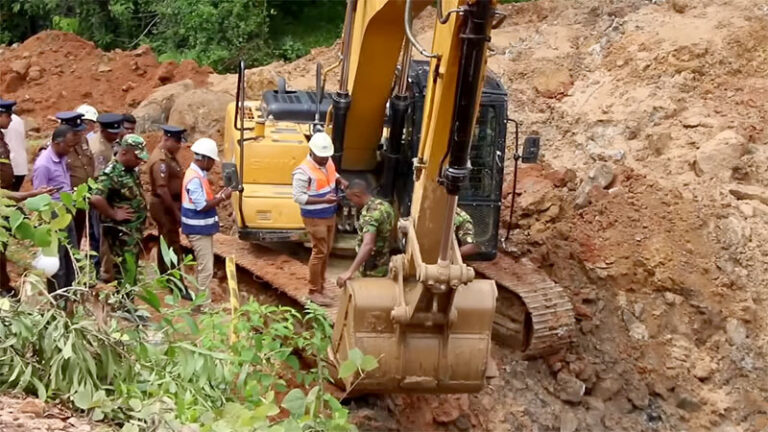
November 25, Colombo (LNW): Professor Atula Senaratne, a distinguished Geologist from the University of Peradeniya, has strongly advised against relying on myths and engaging in fruitless endeavours, following the recent excavation attempts near the Central Expressway construction site in the Wanduramba area of Veyangoda.

The search for alleged buried treasure, which gained public attention over the weekend, has been dismissed by Senaratne as a misguided effort rooted in folklore rather than scientific fact.

In his comments to the media, Prof. Senaratne highlighted the implausibility of the treasure-hunting claims, particularly the notion that treasures could be buried as deep as 40 to 50 feet below the surface.

He pointed out that there is no historical precedent or evidence to suggest that treasures were ever concealed at such depths, nor could they have been sealed with melted rocks, as some local myths suggest.

There has never been a technology, either in the past or present, that would enable rocks to be melted or fused in such a manner,” he emphasised, criticising the fantasy surrounding treasure hunting.

Responding to ongoing speculation regarding the possibility of a treasure buried beneath the expressway reservation in Wanduramba, Prof. Senaratne dismissed the idea as unlikely.

While he acknowledged that signs of decaying rocks may sometimes be misinterpreted as evidence of hidden riches, he warned that pursuing such unsubstantiated claims could lead to a significant waste of time, money, and labour.

Geologists only engage in archaeological surveys at the request of archaeologists, and we would advise against any attempts to excavate without scientific backing,” he remarked.

The professor further elaborated that while there may be historical sites or temples where relics or offerings have been buried, the likelihood of discovering such treasures underground is minimal.

People’s belief in buried treasures, especially in temple sites or chethiyas, is steeped in myth, and the chances of finding anything significant are very low. In my opinion, those chasing these treasures are merely deceiving themselves,” he said.

With over four decades of experience in geology, Prof. Senaratne reiterated his long-standing stance that people should not rely on myths or folklore in their pursuit of material wealth.

I have consistently urged against indulging in such exercises. These treasure hunts are nothing more than futile pursuits based on unfounded beliefs,” he concluded.

Rajasthan Royals secures SL’s Maheesh Theekshana and Wanindu Hasaranga in IPL 2025 Auction

0

November 25, Colombo (LNW): Rajasthan Royals made a notable splash in the Indian Premier League 2025 mega-auction held in Jeddah on Sunday (24), securing two star Sri Lankan spinners, Maheesh Theekshana and Wanindu Hasaranga, to bolster their bowling attack.

Theekshana, one of Sri Lanka’s leading white-ball bowlers, was the first pick in set seven of the auction.

There was stiff competition between Mumbai Indians and Rajasthan Royals for the highly sought-after spinner, but it was Rajasthan who emerged victorious, securing Theekshana for ₹4.40 crore.

The 23-year-old has been a pivotal figure in Sri Lanka’s limited-overs setup, with an impressive record of 126 wickets in 107 matches across all formats.

Having represented Chennai Super Kings since 2022, Theekshana has proven his skill in the IPL, taking 25 wickets from 27 matches.

In another significant development, Rajasthan went head-to-head with Mumbai Indians again to secure Wanindu Hasaranga, who was snapped up for ₹5.25 crore.

The bidding war between the two franchises ended with the Royals clinching the deal for the 27-year-old spinner.

Known for his exceptional skills in the T20 format, Hasaranga is a recognised force in global cricket. With 287 wickets and 2,344 runs, including nine half-centuries, in 200 T20 matches, he is a key player in the shortest format.

Hasaranga has made a significant mark in the IPL, having taken 35 wickets in 26 matches while representing Royal Challengers Bangalore.

Speaker to address MP’s controversial behaviour following incident

0

By: Isuru Parakrama

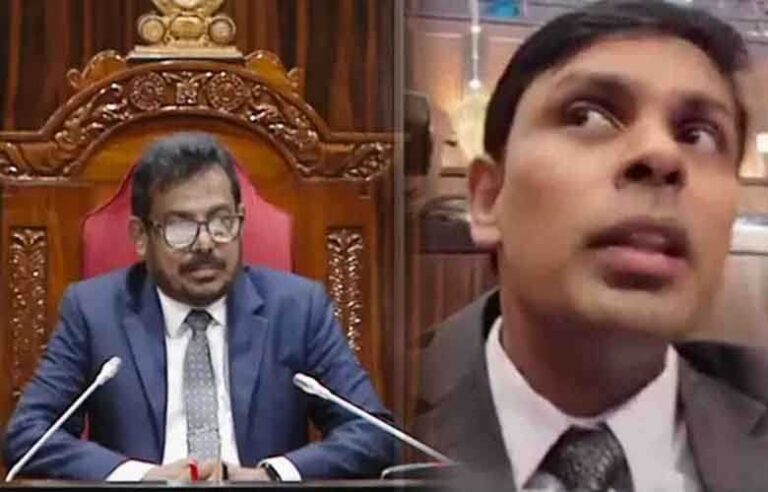
November 25, Colombo (LNW): Speaker of Parliament Ashoka Ranwala has announced that he will be having a direct conversation with Member of Parliament (MP) Dr. Archchuna Ramanathan to discuss the MP’s recent actions that have sparked widespread controversy.

On November 21, a video showing Dr. Ramanathan seated in the Opposition Leader’s designated chair during the inaugural session of the 10th Parliament went viral on social media.

Despite repeated requests from parliamentary staff for him to vacate the seat, the independent MP refused to comply.

This incident, coupled with several provocative comments made by Dr. Ramanathan on his social media platforms, has stirred considerable debate online and drawn criticism from both political circles and the general public.

Speaking to the media after his visit to Kandy on November 24, Speaker Ranwala expressed concern over the MP’s conduct.

He emphasised that while the specific motives behind Dr. Ramanathan’s actions are unclear, it is vital to consider the broader expectations of the people he represents.

The aspirations of the public are clear – they want unity and development, not disruption,” he remarked, adding that citizens from all regions of the country seek harmony, particularly in the current political climate.

The Speaker confirmed that he had reviewed the MP’s actions, including his social media posts, and said that a thorough discussion with Dr. Ramanathan will take place to address the matter appropriately.

Ranwala assured the media that, after speaking with the MP, he would determine the most suitable course of action to resolve the issue.

We are taking a cautious approach,” Ranwala noted. “This is an isolated incident, and it is important to handle it with care. We are committed to ensuring that Parliament upholds its dignity, and we will address this matter in a manner that reflects the best interests of the people.

Ranwala concluded by reiterating that the current government is fully focused on meeting the aspirations of the public and fostering an environment of national unity and progress.

MP Ramanathan representing an independent political party from Jaffna threw himself onto public attention and met with severe backlash following a self-released livesteream revealing Ramanathan refuse to leave the chair allotted for the Leader of the Opposition and later conjure the name of a figure recognised as a terminated terrorist leader, claiming that he is ‘his god’.

Special workshop for new lawmakers in SL to begin today (Nov 25)

0

By: Isuru Parakrama

November 25, Colombo (LNW): A specialised three-day workshop for the newly elected members of the Tenth Parliament of Sri Lanka is set to begin today (25).

This intensive training programme, scheduled to run through November 27, aims to equip parliamentarians with essential knowledge and understanding of the country’s legislative procedures, parliamentary culture, and traditions.

The workshop, which is being held annually for all incoming MPs after each general election, is designed to provide new legislators with a comprehensive orientation to their roles and responsibilities.

Topics covered will include the intricacies of parliamentary debates, legislative processes, and the code of conduct expected of MPs during their tenure.

A formal gazette notice outlining the details of the workshop was published on November 16, ensuring that all members were aware of the forthcoming sessions.

The goal of the workshop is to ensure that all newly elected members of parliament are well-prepared to engage in parliamentary proceedings and serve effectively in their capacities.

This year’s workshop follows the inauguration of the Tenth Parliament on November 21, which brought together members elected in the 2024 General Election.

With new faces and a diverse range of political backgrounds entering the legislative body, the workshop is seen as a vital step in fostering a productive and well-informed parliament.

Low pressure area in Bay of Bengal to further intensify into depression: Heavy rain, strong winds to continue

0

By: Isuru Parakrama

November 25, Colombo (LNW): The low pressure area over the southwest Bay of Bengal is likely to further intensify into a depression over the central-southwest Bay of Bengal by today morning, the Department of Meteorology said in its daily weather forecast today (25).

The system is located about 500 km southeast of Batticaloaat around 0230 this morning. The system is expected to further develop and move closer to the east coast of the island.

Cloudy skies are expected over most parts of the island due to the influence of this system.

Showers or thundershowers will occur at times in the Northern, North-central, Eastern, Central and Uva provinces and in Hambantota district.

Showers or thundershowers will occur at several places elsewhere of the island during the evening or night. Showers or thundershowers may occur over the coastal areas of Western and North-western provinces during the morning too.

Very heavy showers above 150 mm are likely at some places in Eastern province. Heavy showers above 100 mm are likely at some places in Northern, North-central, Central and Uva provinces and in Hambantota district.

Fairly strong winds of about (35-45) kmph can be expected at times over Northern, North-central and Eastern provinces and in Hambantota district.

The general public is kindly requested to take adequate precautions minimise damages caused by temporary localised strong winds and lightning during thundershowers.

Marine Weather:

The low pressure area over the southwest Bay of Bengal is likely to intensify into a depression over the centralsouthwest Bay of Bengal by today morning. The system is located about 500 km southeast of Batticaloa.The system is expected to further develop and move closer to the east coast of the island. Naval and fishing communities are warned not to venture to the deep and shallow seaareas around the island from today (25th November), until further notice.
Condition of Rain:
Showers or thundershowers will occur at times in the sea areas around the island.
Winds:
Winds will be north-easterly in direction in the sea areas around the island. Wind speed will be (40-50) kmph and Wind speed can increase up to (60-70) kmph at times in the sea areas around the island.
State of Sea:
The sea areasaround the islandwill be rough to very rough at times. Temporarily strong gusty winds and very rough seas can be expected during thundershowers.

Sri Lanka Original Narrative Summary: 25/11

0

  1. The annual ‘Poppy Day’ ceremony, organised by the Sri Lanka Ex-Servicemen’s Association (SLESA), was held at the War Memorial in Vihara Maha Devi Park, Colombo, under the patronage of President Anura Kumara Dissanayake: The event honored fallen war heroes and disabled veterans, with a two-minute silence and floral tributes following religious observances to commemorate their sacrifices for the nation’s security.
  2. SJB Leader and Opposition Leader Sajith Premadasa assures details about the party’s national list MPs will be revealed soon, stressing there are no issues with the selections: emphasises the party’s commitment to clear policies, welcoming those who align with its vision: also highlights the public can evaluate the conduct of the new MPs in and outside Parliament.
  3. Ex-President Ranil Wickremesinghe urges his successor, Anura Kumara Dissanayake, to fully implement the “vision document” signed with India in 2023, which outlines key areas of bilateral cooperation, particularly in economic, maritime, energy, and people-to-people ties: emphasises its importance ahead of Dissanayake’s visit to India in December and praised India’s support during Sri Lanka’s economic crisis.
  4. The GCE A/L Examination begins today (25), with 333,185 candidates registered, including 253,390 school and 79,795 private applicants: A total of 2,312 examination centres and 319 coordination centers have been set up across Sri Lanka: To ensure integrity, a special program to prevent examination fraud has been implemented, according to Commissioner General of Examinations, Amith Jayasundara.
  5. The Irrigation Department issues a flood warning for low-lying, flood-prone areas across Sri Lanka from November 25 to 28 due to a low-pressure system in the Bay of Bengal: Affected river basins include Malwathu, Kala Oya, Mahaweli, and others: Residents and travellers are urged to stay alert, and Disaster Management Authorities are advised to take necessary precautions.
  6. Prime Minister Dr. Harini Amarasuriya emphasises the importance of vocational education, stating it directly contributes to the economy and should be viewed as a respectable career path: highlights that vocational education is integral to a holistic education system and ensures a promising future.
  7. An extraordinary Gazette notification appoints Senior Prof. R.M.U.S.K. Rathnayake as the competent authority for the University of Ruhuna, replacing the Vice Chancellor due to administrative dislocation: The appointment, effective from November 25, 2024, follows protests and a strike by university staff and students demanding the removal of the Vice Chancellor, Senior Prof. Sujeewa Amarasena, who has denied the allegations.
  8. The Public Utilities Commission (PUCSL) announces there will be no electricity tariff revisions for 2024 due to delays in the Ceylon Electricity Board’s (CEB) submission of necessary proposals: After multiple extensions, the CEB’s revised proposals are now expected by December 6, 2024: However, any tariff changes will be postponed to 2025, following a review period of six to eight weeks.
  9. The Ceylon Electricity Board Workers’ Union urges the CEB management to distribute bonuses to employees, citing the board’s profitability: General Secretary Ranjan Jayalal sends a letter to the CEB Chairman, requesting bonuses be paid before December 10: criticises the management for failing to act on bonuses over the past two years, despite financial improvements.
  10. Sri Lanka’s Wanindu Hasaranga and Maheesh Theekshana were bought by Rajasthan Royals for the 2025 IPL season in the mega auction: Hasaranga, a match-winning leg-spinner, was sold for ₹5.25 crore, while Theekshana fetched ₹4.40 crore: Hasaranga, a former Sunrisers Hyderabad player, was RCB’s highest wicket-taker in 2022: Both players will strengthen RR’s spin-bowling attack.

Experts Urged to Reconsider Adani Power Project amid Fraud Allegations

0

By: Staff Writer

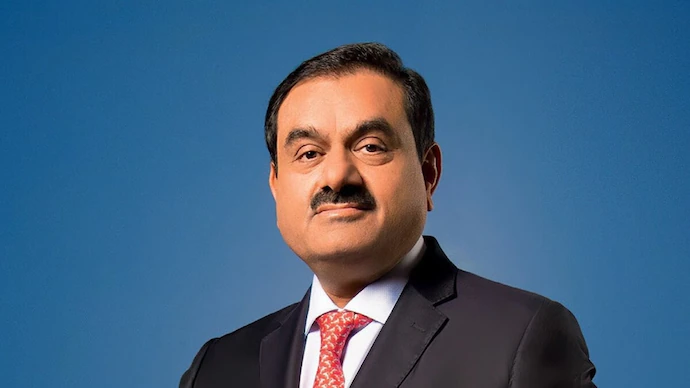
November 24, Colombo (LNW): Experts have raised concerns about Sri Lanka’s partnership with the Adani Group following fraud charges against its Chairman, Gautam Adani, and seven associates by U.S. federal prosecutors in New York.

The charges have triggered calls for increased scrutiny over the conglomerate’s projects in Sri Lanka, including a significant renewable energy initiative in the country.

Nishan De Mel, Executive Director of Colombo-based think tank Verité Research, emphasized the importance of Sri Lanka guarding against potential corruption.

He cited past cases where corruption involving the country was uncovered abroad, such as the SriLankan Airlines’ aircraft purchase scandal linked to Airbus through a UK investigation and the Pandora Papers, which implicated Sri Lankan politicians and business figures.

The recent news of alleged fraud involving the Adani Group has led to widespread concern among Sri Lankan citizens and activists, who have taken to social media to demand greater oversight of the company’s investments on the island.

President Anura Kumara Dissanayake, who assumed office in September, along with his National People’s Power (NPP) alliance—which achieved a landmark two-thirds majority in the November 14 general elections—has made anti-corruption a cornerstone of his administration.

Prior to his victory, President Dissanayake promised to cancel the “corrupt Adani deal” if elected. Following his win, the interim administration signaled plans to review the project after parliamentary elections.

The International Monetary Fund (IMF), in its ongoing program with Sri Lanka, has also highlighted the urgency of tackling “corruption vulnerabilities” as part of the country’s recovery efforts.

Controversial Investment in Renewable Energy

The Adani Group’s $442 million investment in a wind power project in Mannar and Pooneryn, northern Sri Lanka, has been contentious since its inception under the Gotabaya Rajapaksa administration in 2022.

Critics, including the main opposition, argued that the contract was awarded without a transparent tender process. Allegations of external influence surfaced when a senior official from the Ceylon Electricity Board (CEB) claimed that Indian Prime Minister Narendra Modi had “pressured” former President Rajapaksa to award the project to Adani—a statement the official later retracted before resigning.

Despite concerns raised by anti-corruption groups, the administration led by Ranil Wickremesinghe proceeded with the project. In early 2023, after the Adani Group’s stocks were hit by a damning report from U.S. short seller Hindenburg, accusing the conglomerate of fraud, then-Foreign Minister Ali Sabry expressed confidence in the project’s future, describing it as a “government-to-government” agreement with India.

Meanwhile, environmentalists and residents from the Mannar region filed a lawsuit in Sri Lanka’s Supreme Court, challenging the project due to environmental concerns and a perceived lack of transparency. A five-member bench is set to hear the case in March 2025.

In addition to the wind power project, Adani is also leading a $700-million container terminal venture in Colombo. This project recently received a $553-million boost from the U.S. International Development Finance Corporation (DFC), marking a significant foreign investment in the sector.

Renewable Energy Goals Face Hurdles amid Energy Sector Challenges

0

By: Staff Writer

November 24, Colombo (LNW): The Sri Lankan government has pledged to continue the renewable energy (RE) initiatives set forth by former President Gotabaya Rajapaksa, aiming to achieve 70% of electricity generation from renewable sources by 2030.

Despite this ambitious goal, the country’s energy sector is fraught with challenges, including gaps in RE capacity, project delays, and shortfalls in base power generation.

Renewable Energy Aspirations and Current Shortfalls

Sri Lanka’s energy policy targets a 70% RE contribution by 2030, yet current figures show that renewables account for 57.35% of energy generation. To close the gap of 12.65% in the next five years, significant efforts are required.

The Ceylon Electricity Board (CEB) plans to follow the Long-Term Generation Expansion Plan (LTGEP) outlined for 2023-2042.

This document aligns with government policies mandating RE as the primary energy source, discouraging coal and emphasizing clean alternatives like regasified LNG.

The LTGEP highlights a gradual increase in RE capacity, projecting it to grow from 2,711 MW in 2022 to 8,783 MW by 2030 and further to 16,963 MW by 2042.

However, the process involves refurbishing or replacing existing RE plants upon the expiration of their lifespan, creating a continuous need to manage and upgrade infrastructure.

Challenges in Meeting Base Load and LNG Integration

Despite an emphasis on RE, Sri Lanka faces a base power shortage of 300-500 MW. The government’s interim solution involves LNG plants, expected to operate on diesel until a shift to natural gas by 2025, pending the completion of necessary infrastructure.

This transition is central to meeting the growing energy demands.The first two 350 MW natural gas plants, under construction, are expected to be operational by 2024-2025.

 However, delays in infrastructure development pose risks. Plans to convert existing power plants to natural gas by 2025 are underway, but timelines are tight.

 Moreover, the administration is reassessing previous LNG tenders to expedite progress, indicating a need to overcome procedural hurdles.

Delays and Discrepancies in Long-Term Energy Planning

The LTGEP has seen delays and revisions, leading to uncertainty in future energy planning. A revised LTGEP covering 2025-2044 awaits approval from the Public Utilities Commission of Sri Lanka (PUCSL).

This pending approval is critical for long-term energy stability. Meanwhile, PUCSL has raised concerns about cost discrepancies, project timelines, and the absence of comprehensive solutions like integrated solar PV and storage.

Significant projects, including the Uma Oya and Moragolla hydropower plants, have experienced delays, impacting the country’s ability to maintain a reliable energy supply.

To ensure grid stability during anticipated shortages between 2023 and 2025, additional power sources ranging from 320 MW to 120 MW are needed.

Conflicting Roadmaps and Uncertainty Ahead

The PUCSL’s approval of the current LTGEP framework contrasts with the pending review of the updated 2025-2044 plan.

The commission has flagged rising costs for energy storage, exclusion of key projects like the Wewathenna Pumped Storage Plant, and the absence of clear nuclear power and solar integration strategies.

 These discrepancies suggest potential conflicts between regulatory oversight and CEB’s execution plans.

Public consultations are ongoing, yet the lack of a finalized roadmap complicates the country’s path toward a renewable energy transition. 

The new administration’s commitment to RE is evident, but unresolved issues around infrastructure, cost, and project management pose challenges to achieving the 70% target by 2030.

New Government’s 2025 Budget Focuses on Fiscal Stability and Growth

0

By: Staff Writer

November 24, Colombo (LNW): As Sri Lanka gears up for the 2025 budget, the country faces a pivotal moment in its economic recovery. After enduring a prolonged financial crisis, the government aims to stabilize the economy, manage national debt, and encourage development. The 2025 Appropriation Bill, scheduled for March, will set the tone for Sri Lanka’s fiscal path and long-term recovery.

Provisional Budget Estimates and Key Targets

The Finance Ministry has released provisional figures for 2024 to guide the detailed planning for 2025. These estimates are essential in defining a fiscal framework that balances financial discipline with economic growth.

In 2025, the government plans to boost revenue to 15.1% of Gross Domestic Product (GDP) while maintaining expenditures at 20% of GDP. This careful approach aims to sustain economic stability amid recent challenges.

Key objectives for the 2025 budget include: Revenue Goal: Achieving 15.1% of GDP, equivalent to Rs. 3.9 trillion. Expenditure Limit: Capping at 20% of GDP, or around Rs. 5.2 trillion.

Budget Deficit: Targeting below 5% of GDP. Primary Surplus: 2.3% of GDP, aiding debt management. Increased Capital Investment: Over 4% of GDP for growth-oriented projects.

These targets are part of a strategy to ensure effective completion of projects, avoiding delays and cost overruns, thereby contributing to sustainable development.

Fiscal Performance in 2024 and 2025 Outlook

In 2024, Sri Lanka’s revenue collection surpassed expectations. Initial projections set a revenue-to-GDP ratio at 13.02% based on a GDP of Rs. 31,500 billion, aiming for revenue of Rs. 4,100 billion. Adjustments brought the GDP estimate to Rs. 30,000 billion, leading to a higher revenue-to-GDP ratio of 13.67%, an overperformance equivalent to Rs. 201 billion.

For 2025, the Finance Ministry is targeting Rs. 5,000 billion in revenue, with GDP estimates ranging between Rs. 33,000 billion and Rs. 34,500 billion.

These figures translate to revenue-to-GDP ratios of 15.15% and 14.49%, respectively—both above the International Monetary Fund (IMF) benchmarks, signaling confidence in meeting fiscal targets.

Tax Adjustments and Revenue Implications

The 2025 budget will bring several tax modifications. An increase in the tax threshold from Rs. 100,000 to Rs. 200,000, coupled with reduced tax rates, may reduce revenue by Rs. 70-80 billion. Exemptions on Value Added Tax (VAT) for essentials like school supplies and baby food could lead to an additional Rs. 70-80 billion shortfall. Despite this, the strong 2024 revenue performance suggests that these adjustments are manageable.

Interest Payments and Budget Priorities

Professor Wasantha Athukorala from the University of Peradeniya has highlighted concerns about Sri Lanka’s rising domestic debt and interest payments, a growing topic in political discussions.

 In 2024, interest payments totaled LKR 2,651 billion, consuming 40% of total expenditure. This far exceeds the combined 14% allocated for health, education, and social protection, and the 9% earmarked for defense.

These figures underline the challenge of managing interest payments, which dominate government spending more than any other category, signaling the need for careful fiscal planning to prioritize sustainable economic growth.