Home Blog Page 84

Colombo Construction Costs Stabilise Amid Regional Competition

0

 Sri Lanka’s construction sector appears to have entered a phase of cost stabilisation, with Colombo retaining one of the most competitive construction cost positions in Asia, according to the latest industry benchmarks.

The 2025 Construction Cost Report – Colombo, issued by the Ceylon Institute of Builders (CIOB) and prepared by VFORM Consultants Ltd., shows that Colombo ranks among the lowest-cost construction markets across the region. The study compares average construction costs per square metre with major Asian cities including Singapore, Hong Kong, Seoul, Shanghai, Beijing, Kuala Lumpur, Jakarta and Bangalore.

 Findings indicate that Colombo recorded the lowest construction cost position in five of the six building categories assessed, including high-rise apartments, prestige office towers, three-star hotels, five-star resort hotels and large shopping complexes. It ranked second-lowest in industrial warehouse construction. In aggregate cost per square metre, Colombo was the second-lowest city overall in Asia.

 A significant contributor to cost stabilisation has been the easing of key material prices. Data from the Construction Industry Development Authority (CIDA), cited in the report, show that between 2024 and 2025 reinforcement steel prices fell by 21%, fuel costs declined by 10%, and concrete prices edged down by 1%, while cement rose modestly by 3%. Lower fuel costs were a key factor behind reduced concrete pricing, whereas cement increases reflected global input pressures.

 Currency stability also played a role. The Sri Lankan rupee fluctuated within a narrow 1% band against the US dollar during the review period, reducing volatility in imported construction inputs. However, the report underscores the cumulative impact of exchange rate depreciation since 2020: while construction costs rose 13% in US dollar terms over five years, they increased 81% in local currency terms.

 Despite material cost relief, overall construction costs in 2025 rose moderately due to labour-related pressures. Statutory wage revisions and continued migration of skilled workers abroad contributed to approximately 5% growth in skilled labour wages, according to CIDA indices.

 Encouragingly, sector performance indicators point to recovery. Construction activity expanded by 12.2% in the third quarter of 2025, with Gross Value Addition reaching Rs. 499.9 billion. Growth was also observed in mining and material supply subsectors, reinforcing supply chain resilience.

CIOB President Dr. Rohan Karunaratne noted that the annual report serves as a reference for government infrastructure planning, Board of Investment project appraisals, foreign direct investment structuring and multilateral feasibility studies.

While labour and financing pressures persist, Colombo’s sustained regional cost advantage highlights the sector’s capacity to absorb post-crisis shocks. As Sri Lanka seeks to attract investment and accelerate infrastructure delivery, transparent and updated cost benchmarks remain central to informed decision-making and long-term industry planning.


Short-Term UK Visa Glitch Raises Market Confidence Questions in Sri Lanka

0

Sri Lanka’s tourism industry faces a delicate test after a temporary technical issue disrupted the delivery of Electronic Travel Authorisation (ETA) approval notices to travellers in the United Kingdom  the country’s second-largest source market.

The matter, acknowledged by the Sri Lankan High Commission in the United Kingdom, affects approval confirmations issued by the Department of Immigration and Emigration. Authorities have assured travellers that they may proceed without the approval email, with entry verification conducted on arrival at Bandaranaike International Airport.

From a logistical standpoint, the contingency arrangement appears sound. Airlines have been formally notified, minimising the risk of passengers being denied boarding. However, industry stakeholders caution that the short-term impact may be felt less in immediate cancellations and more in consumer sentiment.

The UK market carries disproportionate economic significance. British visitors are among the highest spenders per trip and tend to book longer stays, supporting hotels, boutique properties, tour operators and transport providers during the winter peak season. In early February alone, 17,807 UK travellers arrived, contributing to a year-to-date total of 47,347. With 212,277 arrivals recorded in 2025, the UK remains central to Sri Lanka’s long-haul strategy.

Short-term disruptions can influence booking cycles, particularly among first-time visitors unfamiliar with local procedures. Travel agents report that uncertainty even when clarified  often generates additional reassurance requests, slowing conversions during competitive seasonal windows.

At the same time, the episode underscores how modern tourism ecosystems depend on stable digital infrastructure. Electronic visa systems are now baseline expectations rather than value-added conveniences. Competing destinations in South and Southeast Asia have invested heavily in seamless e-visa processing to attract high-yield travellers.

While authorities are working to restore full ETA functionality, analysts suggest that transparent communication and rapid resolution will be critical in containing reputational risk. Strengthening system redundancy and proactive stakeholder engagement could further safeguard confidence.

In the short term, the disruption is unlikely to derail overall arrival momentum if addressed promptly. Nevertheless it serves as a cautionary signal: in a recovery phase built on premium positioning and operational reliability, administrative precision is inseparable from tourism competitiveness.

Sri Lanka’s Equity Fund Boom Drives Unit Trust Industry Expansion

0

Sri Lanka’s unit trust industry has entered 2026 with measurable momentum, as assets under management climbed past Rs. 600 billion in January, marking a 6.1% year-on-year expansion and a 3.8% increase from December levels.

According to the Unit Trust Association of Sri Lanka, the growth has been propelled largely by equity-related funds, whose AUM doubled to Rs. 67 billion compared with the previous year. A sharp 10.2% month-on-month rise underscores sustained investor interest in capital market exposure following two years of strong stock performance.

In the short term, this shift has important implications. Rising allocations to equity funds enhance liquidity within the Colombo market, potentially supporting valuations and trading volumes. Collective investment vehicles also allow smaller investors to access diversified portfolios, distributing risk more efficiently than direct share purchases.

Investor participation figures reinforce this trend. The industry attracted 3,110 new unit holders in January up 35% year-on-year lifting the total to 147,020 investors, a 25.7% increase. Broader participation strengthens domestic savings mobilisation, an essential component of economic recovery and private sector capital formation.

Nevertheless, analysts caution that short-term market optimism can expose inexperienced investors to volatility if conditions reverse. Sustained performance will depend on disciplined portfolio management and regulatory vigilance by the Securities and Exchange Commission of Sri Lanka.

For now, the data point to rising confidence in professionally managed funds and an evolving investment culture that increasingly favours long-term wealth accumulation over passive savings.

Unit Trust Assets Cross Rs. 600 Billion

Sri Lanka’s unit trust industry has exceeded Rs. 600 billion in assets under management, recording 6.1% year-on-year growth in January 2026.

The Unit Trust Association of Sri Lanka said equity-related funds led the expansion, doubling to Rs. 67 billion, while total investor numbers rose 25.7% to 147,020.

Regulated by the Securities and Exchange Commission of Sri Lanka, the sector continues to attract new participants amid stronger capital market performance.

Rabies a ‘100% Fatal Disease’ Without Treatment – Health Official Warns

0

Health officials have warned that rabies transmission from cats has increased in Sri Lanka. Consultant Community Physician Dr. Athula Liyanapathirana of the Epidemiology Unit at the Ministry of Health has warned that rabies is “100 percent a fatal disease” once symptoms develop, noting that only a very small number of people worldwide have survived the infection.

Dr. Liyanapathirana said recent laboratory testing of animal brain samples has indicated an increase in rabies cases among cats. He added that incidents of cat bites have risen sharply, particularly in the Colombo and Gampaha districts.

According to health officials, most rabies cases reported in Sri Lanka last year were not caused by stray dogs, but by pet dogs kept in homes.

Rabies is a viral disease transmitted through the bites or saliva of infected animals. It can spread through a wide range of animals, including dogs, cats, foxes, squirrels, bandicoots, civet cats, mongooses, cattle and horses.

Health authorities estimate that between 250,000 and 300,000 dog bite incidents are reported annually in Sri Lanka.

Officials stress that rabies is preventable through timely post-exposure vaccination and urge the public to seek immediate medical attention following any animal bite or scratch.

Tourist Arrivals Top 436,000 in Early 2026 – Deputy Minister

0

Tourist arrivals to Sri Lanka have surpassed 436,000 so far this year, reflecting a strong recovery in the country’s tourism sector, Deputy Minister of Tourism Ruwan Ranasinghe said on Thursday (19).

According to the Deputy Minister, 436,000 visitors arrived in the country between January 1 and February 15, marking a significant increase compared to the same period last year.

Speaking at a media briefing in Colombo, Ranasinghe said the government plans to launch a global tourism promotion campaign targeting 15 international markets this year, with an allocation of nearly Rs. 2 billion.

“We have been able to position Sri Lanka’s image very positively at the global level,” he said. “As a result, tourist arrivals have increased significantly. By February 15 alone, arrivals reached around 436,000, which is a very high figure compared to the previous year.”

He noted that international sporting events, particularly T20 cricket tournaments, have helped boost tourist interest, especially in Colombo.

“One of the challenges we faced was the hotel occupancy rate in Colombo,” he added. “At present, occupancy levels are close to 100 percent, with strong demand for rooms in the city.”

Govt Drafting Law to Allow House Arrest for Suspects Amid Prison Overcrowding

0

The government is drafting new legislation to allow courts to place suspects under house arrest instead of remanding them in custody, as part of efforts to address severe prison overcrowding, Justice and National Integration Minister Harshana Nanayakkara said on Thursday.

The Minister noted that Sri Lanka’s prisons, originally built to accommodate around 10,500 inmates, are currently holding nearly 39,000 prisoners.

He stated that the primary cause of overcrowding is the high number of remand prisoners who have not yet been convicted. Of the total prison population, approximately 28,000 are in remand custody, including nearly 20,000 detained on drug-related charges.

Nanayakkara said the proposed legislation, being prepared under the guidance of Justice Yasantha Kodagoda, would enable courts to impose home detention in suitable cases rather than remanding suspects to prison, thereby easing congestion in correctional facilities.

He also pointed out that there is currently no formal mechanism to review or reduce sentences for prisoners serving life imprisonment or facing the death penalty. A committee chaired by Justice Thurairaja has been appointed to examine the introduction of a structured sentence reduction framework for long-term inmates.

The Minister further revealed that Sri Lanka’s courts are currently burdened with approximately 1.1 million pending cases. He said that the rate of case disposal has improved under the current Chief Justice and that steps are being taken to establish new courts, including special courts to hear cases related to the Easter Sunday attacks and bribery charges. Seven additional courts are expected to be set up.

Responding to a question regarding the recent shooting of a lawyer and his wife in Akuregoda, Nanayakkara stated that the legal community as a whole is not under threat due to court appearances and stressed that justice must be served in the case.

He also said the government would amend the proposed rent legislation after considering public feedback and would not proceed with the bill in its current form.

President Holds Bilateral Talks with UAE Crown Prince and Bhutanese PM at AI Summit

0

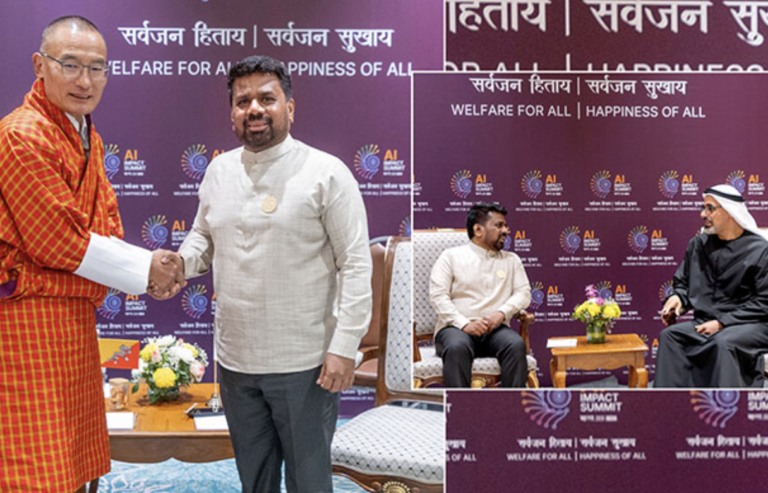
President Anura Kumara Dissanayake held a bilateral discussion with the Crown Prince of Abu Dhabi, Sheikh Khaled bin Mohamed bin Zayed Al Nahyan, yesterday afternoon (19).

According to the President’s Media Division, the meeting took place on the sidelines of the AI Impact 2026 Summit currently underway in New Delhi.

Meanwhile, President Dissanayake also met with Bhutanese Prime Minister Tshering Tobgay on the sidelines of the summit.

Further details of the discussions are expected to be released.

Maha Sangha Conference to Address Alleged Pressures on Buddhism

0

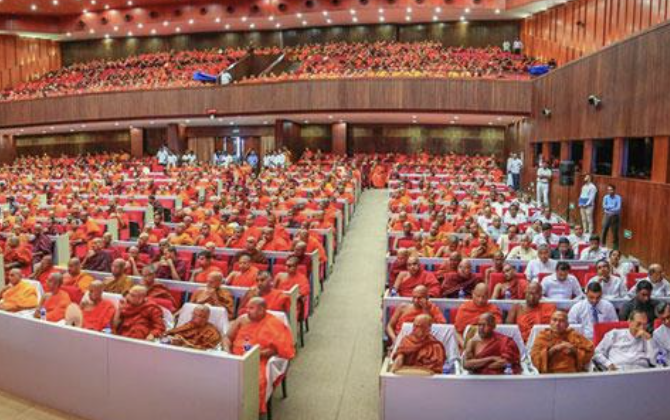
A Maha Sangha Conference is scheduled to be held today (20) with the stated objective of educating the public on what organisers describe as pressures currently being exerted on Buddhism and members of the Maha Sangha in the country.

The conference is set to commence at 2.00 p.m. at the headquarters of the All Ceylon Buddhist Congress (ACBC) in Colombo.

Ven. Muruththettuwe Ananda Thero stated that the conference has not been organised with any political objective. He noted that its primary purpose is to express concern over the alleged pressures faced by Buddhist monks and to raise public awareness regarding these issues.

Meanwhile, a signature collection campaign for a public petition requesting the President to take action against separatism and separatist forces commenced yesterday (19).

The campaign was launched at the Pepiliyana Sunethra Devi Pirivena and was led by Venerable Medagoda Abayathissa Thero, Venerable Induragare Dhammarathana Thero and Venerable Malwane Chandarathana Thero, according to reports.

Organisers said representatives of more than 60 national organisations participated in the event, including Gunadasa Amarasekara and Kalyananda Thiranagama.

The organisers further stated that the public petition is scheduled to be handed over to the President upon completion of the signature collection campaign.

WEATHER FORECAST FOR 20 FEBRUARY 2026

0

Showers will occur at times in Northern, North-central, Eastern, Uva and Central provinces.

Fairly heavy falls about 75 mm are likely at some places in Eastern province and in Matale, Badulla, Mullaitivu and Polonnaruwa districts.

Several spells of showers may occur in Hambantota district.

Showers or thundershowers may occur at several places elsewhere after 1.00 p.m.

Fairly heavy falls above 50 mm are likely at some places in Rathnapura, Galle, Matara and Nuwara-Eliya districts.

Misty conditions can be expected at some places in Central and Sabaragamuwa provinces and in Galle and Matara districts during the early hours of the morning.

The general public is kindly requested to take adequate precautions to minimize damages caused by temporary localized strong winds and lightning during thundershower

Diversify or Decline: Sri Lanka’s UK Export Imperative

0

By:Staff Writer

February 19, Colombo (LNW):  As Sri Lanka grapples with debt restructuring and sluggish domestic demand, expanding and diversifying exports to the United Kingdom has emerged as an economic necessity. The recent awareness forum organized by the Sri Lanka Export Development Board with support from the British High Commission Colombo underscores the urgency of maximizing benefits under the UK’s Developing Countries Trading Scheme.

The DCTS simplifies rules of origin and reduces tariffs, creating openings for competitive pricing. But structural transformation not preferential access alone will determine long-term gains. Sri Lanka must pivot from commodity dependence toward branded, value-added exports tailored to UK demand trends, including sustainable textiles, organic food products, nutraceuticals, high-end ceramics, and digital services.

Export diversification strengthens economic resilience. By reducing overreliance on a narrow product base, Sri Lanka can mitigate external shocks and currency volatility. Higher-value exports also generate stronger multiplier effects boosting SME growth, technological upgrading, and employment quality.

However, policy inconsistency remains a central risk. The National People’s Power government’s ideological shifts from statist rhetoric to pragmatic engagement have raised concerns among investors. Sudden regulatory changes or geopolitical repositioning can deter long-term export contracts, particularly in compliance-sensitive markets like the UK.

During the session, officials including Mangala Wijesinghe and Ellie Parker provided clarity on eligibility and documentation. Exporters welcomed guidance on claiming preferences, yet many stress the need for consistent macroeconomic policy at home.

The UK remains a high-income consumer market with strong demand for ethically sourced, environmentally certified products. Sri Lankan exporters that invest in quality assurance, traceability, and brand positioning can secure premium pricing rather than compete solely on cost.

Economically, expanded UK exports would improve the balance of payments, support reserve accumulation, and reinforce fiscal consolidation efforts. In a context where domestic consumption remains constrained, external demand offers a pathway to growth without inflationary pressure.

Sri Lanka’s challenge is clear: move decisively toward diversified, value-added exports while ensuring stable, investor-friendly policies. Without consistency, even the most generous trade schemes cannot deliver their full promise. With it, the UK market could become a cornerstone of sustainable recovery.