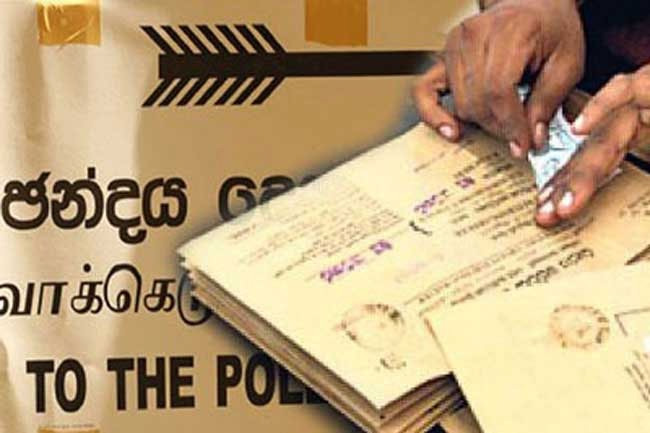
November 01, Colombo (LNW): The marking of postal votes for Sri Lanka’s upcoming General Election 2024 entered its second day this (01) morning, following its initiation on October 30.
The Election Commission has confirmed that postal voting is taking place at designated locations, including police stations, District Secretariats, Election Commission offices, and the offices of the Inspector General of Police (IGP).
Postal voting has been made available today, for members of the armed forces and various government institutions, with an additional day for these sectors scheduled for November 04.
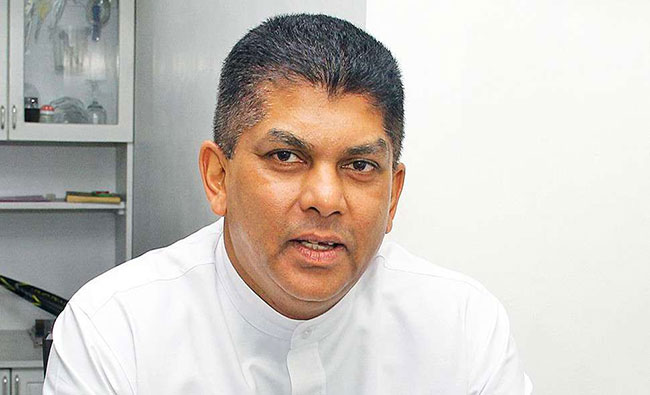
Commissioner General of Elections Saman Sri Rathnayake emphasised that this arrangement aims to accommodate voters from essential service sectors who might otherwise face difficulties in voting on the main election day.
For those unable to cast their postal votes on the allotted days, the Election Commission has introduced an alternative.
Eligible postal voters will have the opportunity to vote at the District Secretariat office closest to their workplace on November 07 and 08, ensuring a wider scope for participation.
The Election Commission’s approach underscores an effort to maximise voter turnout, especially among crucial sectors, while accommodating logistical challenges.
This initiative reflects the broader commitment to a smooth electoral process that considers the varied needs of government and security personnel ahead of a closely watched election.
November 01, Colombo (LNW):The atmospheric conditions are favourable further for afternoon thundershowers in most parts of the island, and showers or thundershowers, therefore, will occur in the most parts of the island during the evening or night, the Department of Meteorology said in its daily weather forecast today (01).
Heavy showers above 100 mm are likely at some places in Uva, Eastern, Central, Sabaragamuwa and North-central provinces.
Showers or thundershowers may occur at a few places in the coastal areas of Northern, Eastern and North-western provinces during the morning too.
The general public is kindly requested to take adequate precautions to minimise damages caused by temporary localised strong winds and lightning during thundershowers.
Marine Weather:
Condition of Rain:
Showers or thundershowers will occur at several places in the sea areas around the Island during the evening or night. Showers or thundershowers may occur at several places in the sea areas off the coast extending from Mannar to Hambantota via Kankasanthurai and Trincomalee during the morning too.
Winds:
Winds will be Westerly to South-westerly in direction and wind speed will be (20-30) kmph.
State of Sea:
The sea areas around the island can be moderate at times. Temporarily strong gusty winds and very rough seas can be expected during thundershowers.
Despite President Anura Kumara Dissanayake’s government’s regulations setting the price of Nadu rice at Rs. 220 per kilo, recent reports indicate an average market price of Rs. 235: During a meeting with President Dissanayake, rice millers agreed to sell Nadu rice at Rs. 218, yet prices have risen due to stock shortages: The Consumer Affairs Authority plans to enforce penalties for vendors exceeding price controls, which may include fines and imprisonment.
SLPP National List member Namal Rajapaksa urges President Anura Kumara Dissanayake and former President Ranil Wickremesinghe to clarify their positions on promised public sector salary increments: highlights the unfulfilled pledges made during their election campaigns: warns that misleading government employees could result in frustration and turmoil, stressing the need for action on this issue.
Prime Minister Dr. Harini Amarasuriya confirms former President Ranil Wickremesinghe will be called to testify on the 2015 Central Bank bond scam: criticises Wickremesinghe’s constitutional knowledge, asserting he disregards public sovereignty by postponing elections and influencing the judiciary: assures legal action against all who misappropriated public funds.
Former State Minister Lohan Ratwatte was arrested in Kandy by Mirihana Police over an unregistered luxury car found at his wife’s residence in Mirihana, Nugegoda: He has been remanded until November 07: Ratwatte claimed the vehicle was brought there by his late private secretary, who was recently found dead with gunshot injuries in Katugastota, Kandy.
Sri Lanka Customs and Russia’s Federal Customs Service ink a mutual agreement in Moscow to combat illegal trading and enhance legal trade facilitation: The agreement, titled the “Mutual Assistance Agreement on Customs Matters,” was signed by Sri Lanka Customs Director General P.B. Sarath Nonis and Russian Customs Head Valery Pikalyov to strengthen future cooperation.
The Ceylon Petroleum Corporation announces a fuel price revision effective from midnight on October 31: Petrol 95 Octane and Super Diesel prices have each been reduced by Rs. 6, now costing Rs. 371 and Rs. 313 per litre, respectively: Prices for Petrol 92 Octane, Auto Diesel, and Kerosene remain unchanged at Rs. 311, Rs. 283, and Rs. 183 per litre.
The Election Commission receives 1,104 complaints regarding the upcoming parliamentary election from September 26 to October 30, including 93 new cases: Of these, 316 were reported to the National Centre for Election Complaint Management and 820 to District Centres: All complaints involve law violations, with 11 incidents classified as violent.
The Health Ministry will conduct a special measles vaccination programme from November 4 – 9, targeting individuals who missed vaccination or received only one dose: Senior Epidemiologist Dr. Hasitha Tissera says it will cover 12 districts, addressing a potential measles resurgence since 2023 despite the country’s previous eradication success: Infants, particularly under 9 months, are at higher risk.
Ceylon Teachers’ Union General Secretary Joseph Stalin urges the Examinations Department to reassure students and parents of a secure 2024 GCE Advanced Level exam process: highlights the need for strict precautions after last year’s agriculture paper leak, which forced students to retake the exam: criticises the lack of accountability for those responsible for the 2023 incident.
Sri Lankan batsman Pathum Nissanka reached career-best ICC rankings, now 7th in ODIs and 8th in T20s after strong performances against West Indies: Kamindu Mendis, Charith Asalanka, and Kusal Mendis also climbed the ICC rankings: Key bowlers Maheesh Theekshana and Wanindu Hasaranga achieved high T20 rankings: Women’s captain Chamari Athapaththu rose to 3rd in ODI and 9th in T20 rankings, reflecting Sri Lanka’s cricketing progress.
November 01, Colombo (LNW): The Ceylon Petroleum Corporation (CEYPETCO) has announced an adjustment to fuel prices, effective from midnight on October 31.
Under the revised pricing, Petrol 95 Octane and Super Diesel have each been reduced by Rs. 6 per litre.
This revision brings the price of Petrol 95 Octane to Rs. 371 per litre, while Super Diesel now stands at Rs. 313 per litre.
Meanwhile, the prices of Petrol 92 Octane, Auto Diesel, and Kerosene will remain unchanged. The updated pricing for fuel grades is as follows:
October 31, Colombo (LNW): Former State Minister Lohan Ratwatte has been remanded until November 07 following his arrest in connection with an unregistered luxury vehicle found at his wife’s residence in Mirihana, Nugegoda.
The Nugegoda Additional Magistrate issued the remand order after Ratwatte was taken into custody by the Mirihana Police and presented in court on 31 October.
Ratwatte was initially detained in Kandy before being transferred to the Mirihana Police Station.
Authorities reported that the car in question, discovered on 26 October, had no number plates.
Acting on information received by police headquarters, officers conducted an inspection at the three-storey home in the Embuldeniya area, registered to Ratwatte’s wife, Shashi Prabha Ratwatte.
This search led to the discovery of the unregistered vehicle, which police suspected was linked to recent investigations.
During the inquiry, Ratwatte and his wife informed the police that the residence is also occupied by his mother-in-law.
They explained that the vehicle was brought to the property roughly three weeks prior by Ratwatte’s private secretary, who recently died in Kandy from gunshot injuries in a separate incident in Katugastota.
The police are currently investigating the vehicle’s origins and ownership details, given the recent tragic circumstances surrounding Ratwatte’s secretary.
Further developments in this case are expected following the court’s remand order and continuing police investigations into both the car’s presence at the residence and any potential links to other ongoing cases.
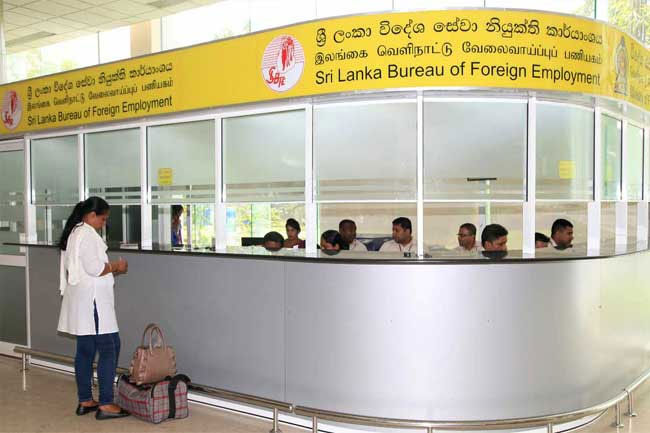
October 31, Colombo (LNW): The Chairman of the Sri Lanka Bureau of Foreign Employment (SLBFE), Kosala Wickramasinghe, recently disclosed troubling details regarding an unlawful E-8 visa agreement signed with South Korea.
This arrangement, made without required Cabinet approval or official government authorization, was orchestrated by a former Sri Lankan minister, who allegedly entered the deal directly with a provincial governor in Wando Province, South Korea.
Wickramasinghe clarified that no private employment agencies in Sri Lanka are legally permitted to send workers to South Korea under the E-8 visa or to collect any fees associated with it.
He noted that the E-8 visa itself is a short-term, five-month visa, primarily intended for seasonal employment, which could leave workers vulnerable due to the lack of official oversight and government sanction.
According to Wickramasinghe, public confusion around the E-8 visa stems largely from misinformation, which has created an unfounded demand for these unauthorized placements.
“There is currently a debate around the E-8 visa system in Sri Lanka,” Wickramasinghe stated. He highlighted the inherent risks of the five-month limit of the E-8 visa, noting the challenges posed by temporary placements and lack of job security.
This, he explained, is why no government authorization has ever been granted for E-8 visa arrangements. He further emphasized that no Sri Lankan agencies are authorized to facilitate worker migration under this visa or to collect money for this purpose.
Upon learning about the unauthorized agreement, South Korean officials expressed concerns, warning Sri Lanka against enabling worker placements under the E-8 visa.
Wickramasinghe reiterated that the SLBFE cannot be held accountable for the actions of the former minister, emphasizing that the agreement lacked both South Korean government support and Sri Lankan government approval.
The SLBFE instead champions the E-9 visa as the legitimate and stable option for Sri Lankan workers seeking employment in South Korea.
Unlike the short-term E-8 visa, the E-9 visa permits longer placements of four years and ten months, offering job security and ensuring fair compensation.
Wickramasinghe pointed out that by the end of this year, more than 7,000 Sri Lankan workers are expected to be deployed to South Korea under the E-9 visa, providing them with a stable income and better job prospects.
Wickramasinghe strongly advised job seekers to avoid paying fees for employment opportunities tied to the unauthorized E-8 visa, stressing the risks and urging Sri Lankans to seek employment only through government-approved channels.
October 31, Colombo (LNW): The Central Bank of Sri Lanka (CBSL) recently issued a clarification regarding its open market operations (OMOs) following reports that it had printed Rs. 100 billion, allegedly to fund government activities.
The CBSL emphasized that these actions are part of standard procedures to manage liquidity and stabilize interest rates, not direct currency printing. These OMOs aim to maintain price stability, manage interest rates, and help the economy function smoothly, rather than financing government deficits directly.
Through open market operations, central banks buy or sell government securities to control money supply and influence interest rates.
In Sri Lanka’s case, the CBSL injected Rs. 100 billion into the financial system to help banks meet cash flow demands, keep interest rates within set targets, and foster economic stability. This method allows banks to have more liquidity, facilitating loans to businesses and individuals, which can stimulate economic activity.
Given Sri Lanka’s economic challenges—such as high debt, currency depreciation, and inflation—the CBSL’s liquidity injection aims to support recovery.
However, there are potential risks. Increasing the money supply can lead to inflation, especially if goods and services do not keep pace with demand. In Sri Lanka, inflation is a concern due to recent currency depreciation and economic instability.
The CBSL also stated that some of the recent liquidity injections were responses to liquidity shortages arising from not renewing maturing Treasury securities.
This situation parallels U.S. Federal Reserve actions, where repo facilities help manage liquidity while keeping interest rates stable. In Sri Lanka, however, a managed exchange rate adds another layer of complexity. Increased liquidity can pressure foreign exchange reserves, particularly if private sector borrowing rises.
Historically, the U.S. Federal Reserve’s open market purchases contributed to economic booms and subsequent downturns, including the Great Depression.
In Sri Lanka, there is growing recognition of the potential risks associated with primary market purchases of Treasury securities and provisional advances, which inject new money directly into state banks. This practice boosts rupee reserves, which may end up as private loans, thus affecting the overall money supply.
In Sri Lanka’s open market purchases, funds flow directly to private or state banks, which can then lend to customers, supporting economic activity. However, if the central bank purchases maturing bills, the money either goes to banks or to the former holders of the bills, ultimately increasing money circulation.
The practice of providing provisional advances—funds meant to be repaid but often extended—has similarities with term reverse repos or overnight operations. The new funds eventually reach private borrowers, potentially straining the balance of payments.
Public concerns about the CBSL’s operations reflect misunderstandings around the central bank’s independence. While the CBSL operates independently of the government, its status as a state entity leads many to associate its actions with political leadership. This dynamic has sparked debate over monetary policies and the role of government in financial regulation.
By clarifying its role in OMOs, the CBSL aims to address the misconceptions surrounding its liquidity injections, ensuring that the public understands these actions as standard policy tools rather than direct financial support for government spending. The debate underscores the broader challenges Sri Lanka faces as it navigates economic recovery and stability.
October 31, Colombo (LNW): Sri Lanka’s export revenue in September 2024 dropped by 3.49% year-on-year to $937.95 million, driven by reduced demand for key items like tea, rubber goods, electronics, and seafood, as reported by Sri Lanka Customs.
Service exports, however, grew by 6.08%, reaching an estimated $329.89 million. Together, merchandise and services exports totaled $1.27 billion for the month, a 1.17% decline from the previous year.
The apparel and textile sector showed resilience, with exports rising 15.71% to $418.68 million, supported by a 36.87% increase in shipments to the U.S. Coconut-based product exports also performed well, growing by 10.36%.
Specific gains in coconut kernel, fiber, and shell products, including notable growth in subcategories like coconut oil and desiccated coconut, contributed significantly.
Spice exports increased by 26.39% to $48.04 million, led by substantial growth in pepper (43.91%) and cinnamon (16.34%). The food and beverages sector rose 8.78%, buoyed by processed food exports, which jumped 69.41%.
ICT sector exports also grew by an estimated 28.66% to $150.28 million, and logistics services exports were up 24.94%, reaching $158.4 million.
Tea, representing 12% of total merchandise exports, saw a 2.44% decrease in revenue to $117.03 million, impacted by a reduction in bulk tea shipments.
Rubber exports, including finished products, dropped by 4.1% to $79.5 million due to lower demand for pneumatic and retreaded tires.
From January to September 2024, cumulative merchandise exports increased 5.07% to $9.44 billion, while service exports grew by an estimated 8.03% to $2.58 billion. Combined, the first nine months recorded $12.01 billion in exports, up 7.24% from the previous year.
Among Sri Lanka’s primary markets, including the U.S., UK, Germany, Netherlands, Canada, and China, exports showed positive growth in September and cumulatively.
The U.S., Sri Lanka’s top export market, reported a 21.57% increase to $245.69 million in September, with exports for January–September rising 5.33% to $2.19 billion.
The UK also saw gains, with September exports up by 3.69% to $77.75 million and cumulative exports for the year’s first nine months up by 7.06% to $691.31 million.
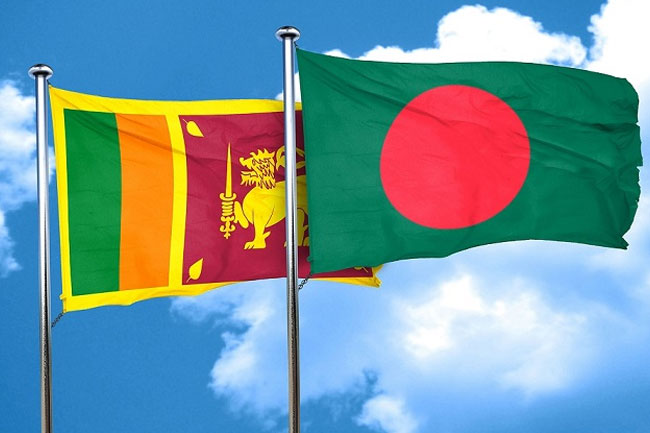
October 31, Colombo (LNW): Bangladesh and Sri Lanka are actively working to expedite negotiations on a Preferential Trade Agreement (PTA) to unlock substantial potential in bilateral trade.
This focus was underscored during a recent meeting between Sri Lankan High Commissioner to Bangladesh, Dharmapala Weerakkody, and Bangladesh’s Foreign Secretary, Md. Jashim Uddin, held at the Foreign Ministry in Dhaka.
At this meeting, the foreign secretary highlighted ongoing reforms and priorities within Bangladesh’s interim government, aimed at ensuring transparent, inclusive elections.
Both countries reviewed existing agreements and pending Memorandums of Understanding (MoUs) and emphasized the importance of concluding critical agreements on coastal shipping, double taxation avoidance, and administrative assistance in customs.
They also discussed the necessity of convening Foreign Office Consultations to address broader aspects of bilateral relations. Following Sri Lanka’s upcoming parliamentary elections scheduled for November 14, new dates for these consultations are expected to be proposed.
A significant challenge for South Asian countries, including Bangladesh and Sri Lanka, is the region’s limited intra-regional trade, which remains below its full potential despite active trade partnerships. One of the reasons is similar production patterns and competing sectors.
The PTA discussions aim to address these issues, with both countries identifying ways to reduce trade costs. Detailed knowledge of products with high export potential is expected to inform the agreement and optimize economic benefits.
Since PTA discussions began in 2018, trade between the two countries has seen modest growth. In 2018, Sri Lankan exports to Bangladesh reached USD 133 million, while imports from Bangladesh were around USD 37 million.
Sri Lanka has consistently maintained a trade surplus with Bangladesh, which could help mitigate its own trade deficit concerns.
Sri Lanka’s list includes 925 products protected under the South Asian Free Trade Area (SAFTA), covering around USD 6.2 million or 23.8% of its imports from Bangladesh.
In contrast, Bangladesh’s sensitive list includes 993 items, accounting for USD 77.6 million or 62% of its imports from Sri Lanka. Thus, lifting or reducing sensitive lists could be advantageous, particularly for Sri Lanka.
For Sri Lanka, the PTA could increase involvement in production value chains, particularly in textiles, while also building on financial support provided by Bangladesh during Sri Lanka’s recent foreign currency shortage.
While removing sensitive lists might promote trade growth, political and economic considerations may prevent it. Both countries are expected to act defensively, as some sensitive list items are crucial for employment and revenue.
The success of the PTA will depend on how many high-export-potential products are included in the final agreement. For example, Sri Lanka’s “offensive list” includes products currently imported by Bangladesh from other global sources, where Sri Lanka has the production capability and a comparative advantage.
If tariffs on the sensitive lists are eliminated, there will be modest export gains for Bangladesh and Sri Lanka in absolute terms. Sri Lanka will gain USD 24.7 to 49.7 million of exports to Bangladesh, while Bangladesh will gain USD 2.1 to 4.5 million of exports to Sri Lanka.
Elimination of sensitive lists will generate a higher tariff revenue loss to Bangladesh, ranging between USD 13.5 million to USD 19.1 million. By contrast, Sri Lanka’s revenue loss will be slight at USD 1.4 million to USD 1.9 million.
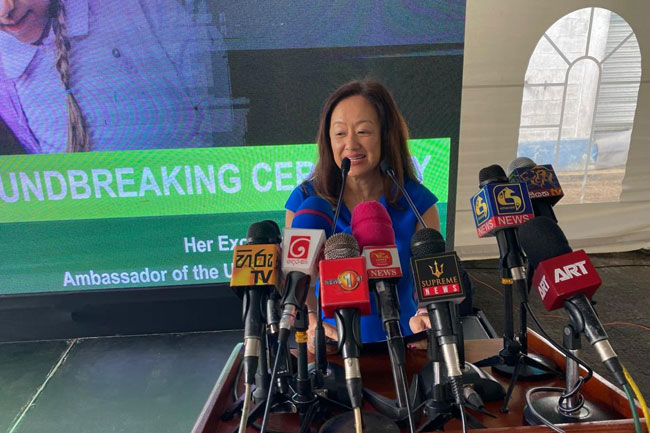
October 31, Colombo (LNW): The United States Ambassador to Sri Lanka, Julie Chung, has encouraged Sri Lanka’s new government to enhance its investment environment, tackle corruption, and promote governance that is transparent and business-friendly.
According to Ambassador Chung, these improvements would not only fortify Sri Lanka’s appeal to foreign investors but could also attract more international manufacturers to establish operations in the country.
The Ambassador made these remarks at a groundbreaking event for the Indiana-based SHIELD company’s new seatbelt manufacturing facility, marking a significant move as SHIELD relocates its production from China to Sri Lanka.
Highlighting this shift, Ambassador Chung remarked, “The decision by SHIELD to move its facility here underscores a rising interest in U.S. investment within Sri Lanka. The United States is already the largest export market for Sri Lanka, and we are thrilled to see this direct investment. It’s our hope to see bilateral trade and investment grow even further in the coming years.”
Chung further emphasised that such shifts in manufacturing, which align with global supply chain diversification trends, present a notable opportunity for Sri Lanka. She asserted that with a strengthened investment framework, Sri Lanka could attract more manufacturers like SHIELD.
“If you build it, they will come,” she said. “A robust investment climate will draw companies, leading to job creation, increased prosperity, and new research and development initiatives.”
Additionally, Ambassador Chung underscored the collaborative foundation of U.S.-Sri Lanka relations, which are built on mutual goals and respect.
She highlighted several joint efforts, from enhancing crop yields for local farmers to expanding school lunch programmes for underprivileged urban children in Colombo and bolstering Sri Lanka’s maritime security.
These projects, Chung noted, are part of a shared vision to support economic growth, improve quality of life, and ensure stability in the region.