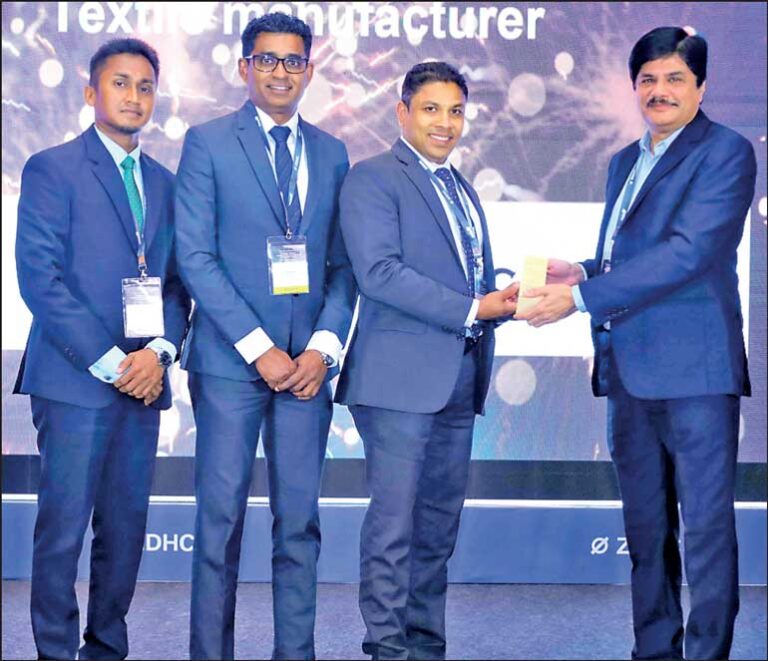
October 08, Colombo (LNW): Hayleys Fabric PLC, Sri Lanka’s largest textile manufacturer, has been honored with the prestigious ZDHC Torchbearer Award for its outstanding leadership in sustainable chemical management.
The award was presented by Prasad Pant, ZDHC South Asia Region Director, at the fifth ZDHC South Asia Regional Conference on Sustainable Chemical Management in the Fashion Industry, held in Chennai, India, on September 25.
Hayleys Fabric’s HR and Administration Executive Director, Prasanna Pathirana, accepted the award on behalf of the company, highlighting its dedication to creating a safer and more sustainable textile industry. The company’s role as the Gold sponsor of the conference further underscored its commitment to promoting sustainable chemical practices.
The ZDHC Foundation, a global non-profit, aims to eliminate harmful chemicals from the textile, apparel, and footwear industries, striving for a sustainable supply chain that safeguards the environment and human health.
The foundation collaborates with leading brands, retailers, manufacturers, and suppliers worldwide to develop and implement standards and tools for sustainable chemical management.
A signatory member of the ZDHC Foundation since 2021, Hayleys Fabric has been actively involved in the ZDHC ‘Roadmap to Zero’ (RtZ) program since 2015, showcasing its long-term dedication to environmental sustainability.
At the conference, Dunstan Weragala, Head of Compliance at Hayleys Fabric, shared insights on how the ZDHC RtZ program has significantly contributed to the company’s sustainability objectives.
Significantly, Hayleys Fabric is the first and only Sri Lankan textile manufacturer to receive the ZDHC Torchbearer Award, marking a major milestone for the country’s textile industry. This recognition highlights Hayleys Fabric’s leading role in implementing the ZDHC ‘Supplier to Zero’ program, which focuses on sustainable chemical management across the supply chain.
In his acceptance speech, Pathirana acknowledged the pivotal role played by Hayleys Fabric’s Managing Director and CEO, Rohan Goonetilleke, whose support has been instrumental in driving the company’s sustainability journey.
He also praised the relentless efforts of the Compliance Division, led by Weragala, and the DGM Compliance, who have been key in advancing the company’s progress in sustainable practices through the ZDHC initiatives.
Hayleys Fabric PLC’s commitment to sustainable chemical management is a core element of its broader sustainability vision, embedded in the Hayleys Life code.
By prioritizing eco-friendly practices, the company contributes to a safer and more responsible textile supply chain, in alignment with the United Nations Sustainable Development Goals (SDGs) and Environmental, Social, and Governance (ESG) principles.
This accolade not only reinforces Hayleys Fabric PLC’s position as a leader in sustainable textile manufacturing in Sri Lanka but also sets a benchmark for other industry players to follow in their pursuit of environmental stewardship.
October 08, Colombo (LNW): Sri Lanka and Jordan have recently signed a Memorandum of Understanding (MoU) to establish a Political Consultation Mechanism aimed at expanding cooperation in various areas of mutual interest.
The agreement was formalized on July 10, 2024, in Amman, with the signing carried out by the Sri Lankan Ambassador to Jordan, J.A.D.S. Priyangika Wijegunasekara, and Majed Thaliji Alqatarneh, Secretary General of the Ministry of Foreign Affairs and Expatriates of Jordan.
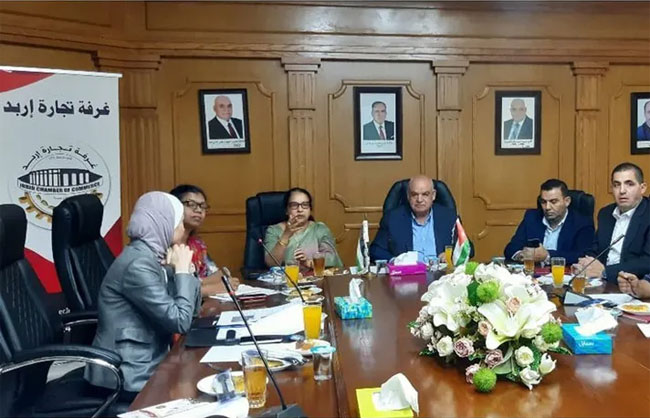
In parallel with the political MoU, discussions on enhancing trade and investment relations between the two nations were held between the Sri Lankan Ambassador and Mohammad Shoha, Chairman of the Irbid Chamber of Commerce.
Shoha emphasized the significance of boosting trade ties, particularly in the agriculture and commerce sectors. He suggested exploring new investment opportunities that could benefit both nations and encouraged greater private sector involvement in advancing bilateral trade, tourism, and investment.
Shoha also proposed organizing joint exhibitions and delegations to further develop economic ties.
He assured that the Irbid Chamber is committed to supporting import and export operations to enhance the flow of goods and services between Jordan and Sri Lanka, with a particular focus on agricultural, industrial, and handicraft products.
Ambassador Wijegunasekara reiterated Sri Lanka’s dedication to strengthening economic cooperation with Jordan.
Highlighting Sri Lanka’s economic potential, she mentioned that approximately 10,500 Sri Lankan workers are currently employed in Jordan, mainly in the textile, knitting, and domestic sectors. In 2023, Sri Lanka’s exports to Jordan were valued at $88 million, while imports from Jordan stood at $1.98 million.
The ambassador pointed out that Jordanian products like olive oil, Dead Sea salts, and dates align well with the needs of the Sri Lankan market. On the other hand, Sri Lanka’s major exports to Jordan include tea, furniture, and plant-based products, while Jordan exports textiles, fabrics, and iron products to Sri Lanka.
Acknowledging the long-standing relations between the two countries, established in 1965, Wijegunasekara called for enhanced collaboration in trade, economic relations, and skilled labor exchange. She invited Jordanian investors to explore opportunities in Sri Lanka’s Port City in Colombo, citing the favorable business environment in the country.
Additionally, she emphasized the benefits of deploying more skilled Sri Lankan workers to Jordan’s industrial cities, leveraging the existing cooperation in the industrial sector. The ambassador expressed her goal of increasing trade volumes and supporting Jordanian companies in promoting their olive oil and Dead Sea salt products to the Sri Lankan market.
Both nations acknowledged the significant growth in trade exchanges during the first half of 2024 and agreed to organize joint economic activities to deepen their bilateral cooperation in various fields.
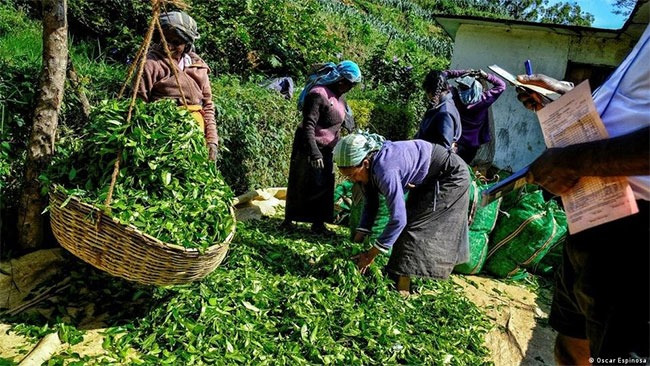
October 08, Colombo (LNW): Despite a previous directive to raise the daily wage of Sri Lanka’s plantation workers to Rs. 1,700, the workers will now receive a revised daily minimum wage of Rs. 1,350, along with an additional allowance of Rs. 50 for each extra kilogram of harvest starting from October 10.
This decision comes after extensive discussions among Regional Plantation Companies (RPCs), trade unions, and the Wages Board, which led to an agreement with the Estate Sector Wage Control Council at the Labour Department.
According to industry sources, the new regulations, outlined in the latest Gazette, require RPCs to pay this base wage of Rs. 1,350 beginning on October 10.
While the Rs. 1,350 excludes contributions to the Employees’ Provident Fund (EPF) and Employees’ Trust Fund (ETF), the total daily earnings for workers will exceed Rs. 1,500 once these benefits are included.
Wages for these plantation workers, generally calculated at the end of each month, are scheduled to be paid on the 10th of the subsequent month.
The current wage agreement, reached on September 10, marked the conclusion of a series of disputes between employers and trade unions, with the workers continuously advocating for improved pay and conditions.
The new wage structure represents a significant step forward for plantation workers, who have long struggled for fairer wages. This productivity-based model allows workers in the tea and rubber sectors to earn additional income, with a potential increase of Rs. 50 or more depending on their output.
This revised wage system specifically targets workers in the tea and rubber industries, encompassing roles in tea cultivation, tea manufacturing, rubber cultivation, and raw rubber processing.
Under the existing system, plantation workers earn a base wage of Rs. 1,000 with an additional Rs. 40 per kilo after achieving a target of 20 kilos of tea leaves.
Previously, plantation companies had legally contested the directive to pay the Rs. 1,700 wage, with the prior government threatening to expropriate firms that did not comply.
An official confirmed that while the base wage of Rs. 1,350 remains, with the addition of EPF, ETF, and gratuity, workers’ earnings could exceed Rs. 2,000 per day.
The wage increase to Rs. 1,700 had initially been announced by former President Ranil Wickremesinghe at a May Day rally earlier in the year, with politicians from the ruling coalition at that time pressuring plantation companies to implement the change.
Despite resistance, about 14 boards ultimately voted in favor of the Rs. 1,700 wage, as noted by, a representative of the Ceylon Workers Congress, the leading labor union.
While the revised wage is lower than the initially proposed Rs. 1,700, it still marks a significant improvement for plantation workers, taking into account the productivity-based incentives.
This approach aims to balance the interests of both workers, who have long been advocating for better pay, and the plantation companies, which had previously opposed the wage increase.
The final agreement showcases a crucial effort to address workers’ grievances while also considering the sustainability of the plantation sector.
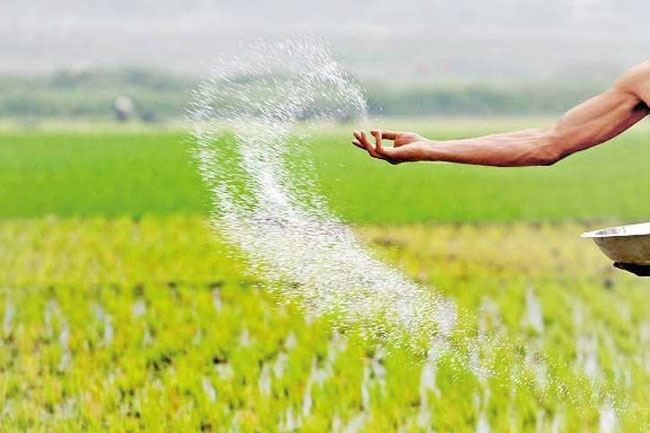
October 08, Colombo (LNW): The Sri Lankan government has announced the commencement of a fertiliser subsidy programme aimed at supporting paddy farmers, with the initiative set to kick off in the Ampara District on Monday, 14 October.
This announcement was made by Cabinet Spokesman Minister Vijitha Herath during a press conference held on 8 October.
Minister Herath highlighted the timing of the subsidy, noting, “As the Maha season approaches, we are keen to ensure that our farmers have the resources they need to cultivate their crops effectively.
We will begin by rolling out the fertiliser subsidy of Rs. 25,000 specifically for the farmers in the Ampara District next week.”
Following the initial implementation in Ampara, the subsidy programme will expand to include farmers in other vital agricultural areas, including Polonnaruwa, Anuradhapura, Mahiyanganaya, and the Mahaweli regions.
This phased approach aims to ensure that farmers across the country receive the necessary support during the crucial planting season.
The government’s decision to introduce this subsidy comes in response to the challenges faced by farmers in recent years, including rising input costs and fluctuating market conditions.
By providing financial assistance for fertiliser, the government hopes to bolster agricultural productivity and enhance food security.
As the Maha season is critical for paddy cultivation in Sri Lanka, this initiative is expected to have a significant positive impact on the livelihoods of farmers.
Minister Herath reassured stakeholders that the government is committed to facilitating the agricultural sector’s growth and sustainability through targeted support measures.
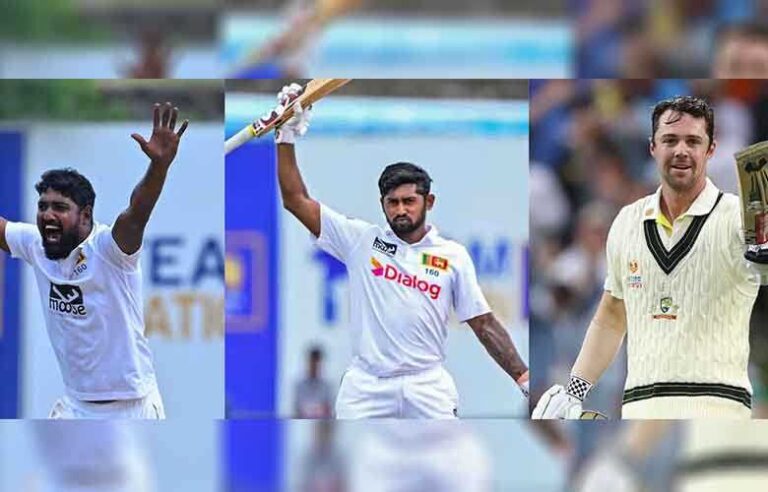
October 08, Colombo (LNW): Two standout Sri Lankan cricketers have been nominated for the prestigious ICC Men’s Player of the Month award for September 2024, alongside Australia’s explosive batter Travis Head.
The nominations are based on their remarkable performances across Test and limited-overs cricket during the month.
Prabath Jayasuriya (Sri Lanka)
Sri Lankan left-arm spinner Prabath Jayasuriya has continued his sensational form in Test cricket, earning a well-deserved nomination. He played a pivotal role in Sri Lanka’s series triumph over New Zealand, taking an impressive nine wickets in each of the two Test victories, including a standout five-wicket haul in both matches.
His 5/68 in the second innings of the first Test in Galle proved decisive on the final day, as Sri Lanka bowled out New Zealand, denying the visitors by 63 runs. Jayasuriya followed up with an outstanding 6/42 in the second Test, helping his team secure a resounding series victory.
Throughout the month, Jayasuriya took 21 wickets in three Tests, including the second Test against England, at an average of 27.90. His achievements also saw him become the fastest Sri Lankan bowler to reach 100 wickets in Test cricket, accomplishing this milestone in just 16 matches, surpassing the previous record of 24 Tests.
Kamindu Mendis (Sri Lanka)
Young batting sensation Kamindu Mendis had a historic month in Test cricket, further enhancing his reputation as one of the brightest talents in the game. Mendis amassed 451 runs at an extraordinary average of 90.20 in four Tests, playing a crucial role in Sri Lanka’s victory at The Oval in England, followed by a home series win over New Zealand.
Mendis became the first male cricketer to score fifty in each of his first eight Test matches, an incredible achievement. Additionally, he reached the 1000-run milestone in just eight Tests, matching the legendary Don Bradman’s record of achieving the feat in 13 innings – the fastest in 75 years.
His month was highlighted by an unbeaten 182 in Sri Lanka’s dominant 602/5 declared during the second Test against New Zealand, which set up a comprehensive victory. However, it was his 114 in the first Test, when Sri Lanka found themselves in trouble at 88/3, that stood out. Mendis held the innings together in a match Sri Lanka won by just 63 runs, further cementing his status as a rising star.
Travis Head (Australia)
Australian batter Travis Head also earned a nomination for his explosive performances in white-ball cricket. As an opener, Head delivered a series of blistering knocks during Australia’s recent T20I and ODI series against England and Scotland.
In his five T20I appearances, Head amassed 182 runs at an astonishing strike rate of 245.94, including a 23-ball 59 against England and a 25-ball 80 against Scotland. The latter effort contributed to Australia registering the highest-ever Powerplay total by a full member nation in T20Is.
Head’s month was capped off with a Player of the Series award in Australia’s 3-2 ODI victory over England. He scored 248 runs at an average of 82.66 in four innings, while also picking up six wickets, including a match-winning 4/28 in the series decider.
These three players showcased exceptional talent in their respective formats, making them worthy contenders for the ICC Men’s Player of the Month award for September 2024.
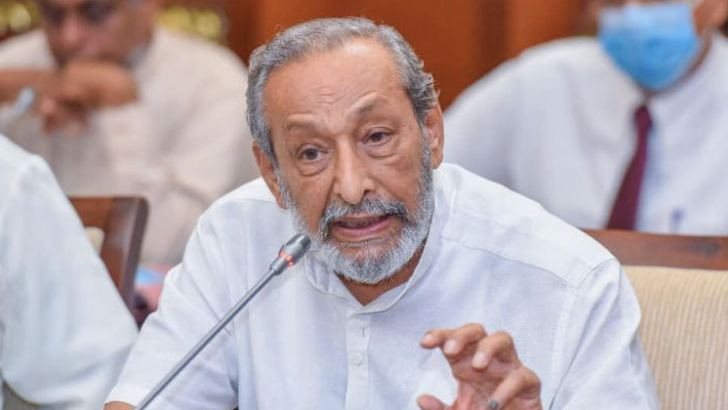
October 08, Colombo (LNW): The Democratic Left Front (Prajathanthravadi Vamanshika Peramuna) has officially pledged its support to the National People’s Power (NPP) in the forthcoming parliamentary elections.
Former MP and leader of the party, Vasudeva Nanayakkara, made the announcement during a press conference held today (08), signalling a significant political alliance ahead of the elections.
Nanayakkara emphasised the Democratic Left Front’s decision to back the NPP, stating, “With the parliamentary elections approaching, our party has resolved to support the National People’s Power. We will be contesting in alignment with them.”
Elaborating on the collaboration, Nanayakkara highlighted the party’s efforts to forge a close working relationship with the NPP.
“We have been striving to strengthen our ties with the National People’s Power and to stand united in this election. During the recent presidential election, we explored cooperation, but the differences in policy stood in the way. Now, we are ready to offer our full support to the NPP.”
He further urged his supporters to consider this alliance in the upcoming elections, stating, “The vote you give us is, in essence, a vote for the National People’s Power. We are wholeheartedly committed to this partnership as we approach this critical electoral contest.”
Nanayakkara, a prominent Sri Lankan socialist political figure but a strong critique against politics exercised by the Janatha Vimukthi Peramuna (JVP), the core faction of the NPP, thereby exhibits his willingness to back the programme led by its leader, President Anura Kumara Dissanayake.
October 08, Colombo (LNW): The Constitutional Council, chaired by Speaker Mahinda Yapa Abeywardena, is set to convene this afternoon (08) at 2 p.m. within the parliamentary complex.
The primary agenda of the meeting is to reach a final decision regarding the appointment of Priyantha Weerasooriya as Acting Inspector General of Police (IGP).
Under existing regulations, any individual serving as Acting IGP for more than 14 days must receive the formal approval of the Constitutional Council.
This provision ensures that key law enforcement positions are filled with full transparency and accountability, particularly during times of transition.
Speaker Abeywardena confirmed that Prime Minister Harini Amarasuriya, who recently assumed office, will attend today’s meeting, along with Minister Vijitha Herath.
The Constitutional Council’s approval will provide the Acting IGP with the full mandate required to execute his duties effectively.
October 08, Colombo (LNW): The Cabinet has resolved to terminate the services of officers and consultants appointed on a contract basis under three major projects initiated by the former government.
The decision was announced by Cabinet Spokesman Vijitha Herath, with the termination being effective from September 30, 2024.
These officers and consultants were originally appointed to support the establishment and execution of several key initiatives, including the ‘Office for the Affairs of Sri Lankans Abroad,’ the ‘National Peoples Council,’ and the ‘Agriculture Modernisation Programme.’
These projects were part of the previous regime’s developmental agenda, which required external expertise for implementation.
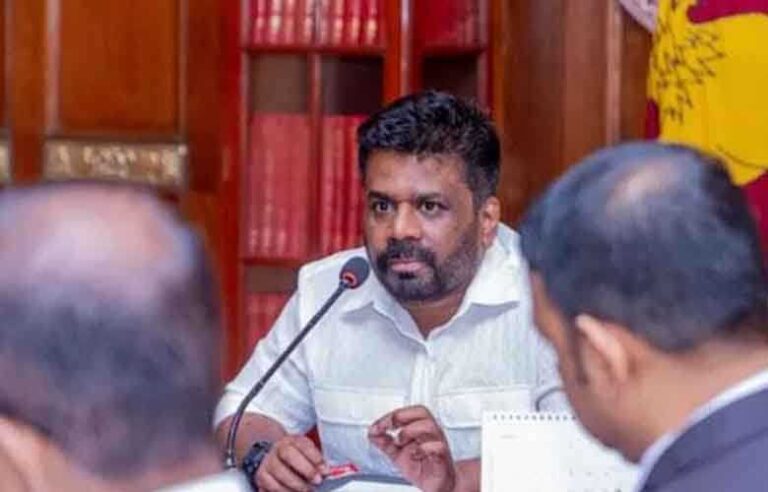
However, with the new government now in place, President Anura Kumara Dissanayake has evaluated the current capabilities of the relevant ministries overseeing these initiatives.
The conclusion reached was that these ministries are sufficiently equipped to manage the ongoing functions and operations internally, without the need for external contract-based consultants or officers.
Minister Vijitha Herath emphasised that this step is part of the government’s broader efforts to streamline administrative processes, reduce reliance on contractual appointments, and enhance efficiency within state institutions.
By integrating the management of these programmes into the permanent functions of the relevant ministries, the government aims to foster greater accountability and resource optimisation, he stressed.
Additionally, the creation of the ‘Office for the Affairs of Sri Lankans Abroad,’ under the President’s Office, signals the administration’s intent to centralise efforts supporting the Sri Lankan diaspora.
Meanwhile, the ‘National Peoples Council’ and the ‘Agriculture Modernisation Programme’ will continue to progress under the direct oversight of the appropriate government ministries.
October 08, Colombo (LNW): The Cabinet of Ministers has approved the appointment of U.D.N. Jayaweera, a Senior Special Grade Officer from the Inland Revenue Department (IRD), as the Acting Commissioner General of Excise with immediate effect.
This decision was announced by Cabinet Spokesman Minister Vijitha Herath during a press conference held earlier today (08).
Minister Herath highlighted the critical role played by the Sri Lanka Excise Department, describing it as one of the government’s principal revenue-collecting bodies.
He stressed that the department’s efficiency and adherence to good governance practices are essential to maintaining and improving government revenue.
The appointment of Jayaweera aims to provide the department with leadership capable of tackling future challenges while continuing to meet its revenue targets.
Herath explained that the government is focused on ensuring the department is well-positioned to achieve its objectives amidst an evolving economic landscape.
The decision also entails the immediate dismissal of the current Commissioner General of Excise, J.M. Gunasiri, who had been serving on a contract basis.
The proposal, submitted by President Anura Kumara Dissanayake in his capacity as Minister of Finance, Economic Development, Policy Formulation, Planning, and Tourism, was approved to ensure that leadership changes aligned with the government’s broader fiscal goals.
Jayaweera, currently serving as Additional Secretary (Agency Coordination II) at the Presidential Secretariat, will take over the leadership of the Excise Department.
His appointment is viewed as a strategic move to bolster the department’s efficiency in revenue collection, an essential factor in the government’s economic recovery plans.
Says unscrupulous reporters, social media influencers in tow with disgruntled elements
Former Sri Lanka Rugby (SLR) President and ex-National Cap Asanga Seneviratne in an exclusive interview with The Daily Morning, charged that certain disgruntled elements have dragged the sport into the gutter for their personal gains.
He said that if rugby administration is cleaned up of uncouth elements who thrive under misinformation and slander by circulating false, negative and misleading articles, Sri Lanka may yet have a future to aspire to in the sport.
He however refused to reveal what ramifications SLR will face in the event of it failing to put its house in order by November from World and Asia Rugby respectively.
Following are excerpts from the interview:
What is your frank view of the state of rugby in this country now and the time that you were involved from a perspective of being a former national player, national coach and President of SLR?
The junior competitions are growing even though the structure is not conducive to long-term growth and success of the players of the future national teams. Some negative coaching methods and practices have been highlighted with over training and serious physical injuries to players and this has to be properly investigated and remedies and controls put in place.
The top club competition has managed to drive away fans to the extent that only a handful turn up for a game. It’s badly organised and there is hardly any interest. Most of the top clubs don’t even have a second side and the rest of the competitions are mainly low level 7’s tournaments. Foreign players have to be allowed to participate once again. Games must be played under lights. No one wants to make it to the grounds at 3.30 p.m.
We have lost our main sponsor in 2020 and this has resulted in over a 400m loss of revenue in the last four years to SLR.
Our national team has dropped in the Asian rugby rankings in the 7’s from a high of no. 2 to no. 9 and to no. 8 in the 15’s and played with India, Qatar and Kazakhstan for the first time. We were in the top four for most of our rugby history. Our women have dropped from no. 4 in Asia to no. 9 as well. Both teams are out of the top 8 in the Asian rankings and top tournaments for the first time including the prestigious Asian 7’s series, a serious setback for a founding member of Asia Rugby with a 140-year playing history.
After hosting over 22 world class international tournaments from 2011-2018 we have hosted just one tournament last year which was the quadrangular mentioned above. Overseas tours have also come to a standstill with both men and women failing to turn up for the Asian 7’s Championships in Dubai.
We made over 25 overseas tours in Men’s, Women’s and age grade rugby Under-17 ,19, 20 (won an Asian championship) during this period.
The Carlton International 7’s held from 2012 – 2017 was a catalyst that gave our top 75 players the financial security needed to play at the highest level and also took out the fear factor in playing against world class foreign opposition. The tournament cost over Rs. 250 million. We managed to convince most of the sponsors to tie up with the A Division clubs as well. Our spectators got to see the top 50 players in the world playing in Sri Lanka and we were the example, developing rugby nations wanted to follow and World Rugby (WR) acknowledged as a potential growth nation and Olympic participant.
This was mainly possible because of the support and efforts of former Parliamentarian Namal Rajapaksa who had a vision and wanted to see SL rugby succeed in becoming a major international participant and sports tourist destination.
SLR separately raised close to Rs. 200 million during the course of the year thus ensuring stability and long-term growth. We had all world-class coaches and trainers looking after our national sides together with a CEO (Priyantha Ekanayake) and Head of Rugby (Imthi Marikar) overlooking the entire operation with a dedicated top-level team of experienced professionals.
In reality SLR was overlooking an investment of over Rs. 450 million per year for rugby in Sri Lanka.
As a former President of Sri Lanka Rugby (SLR), did you ever envisagethis type of stalemate and what do you think has brought about the current impasse between the officials of the Ministry of Sports and those helming the local rugby administration?
The main stakeholders have to take responsibility for the state of the game and administration today. What has happened is that the main clubs are so focused with the own administration they tend to ignore participating in the administration of the national body. The national administration has in the past few years seen an almost complete lack of top-level leadership from the main stakeholders. This has led to a complete breakdown of leadership and critical decision-making. We have also seen over a dozen former national players of repute and professionals resign from the governing body due to the uncouth behaviour of the leadership, thus leaving a massive vacuum in management and basic rugby etiquette.
The Sports Ministry is involved since all the main stakeholders (the A Division clubs) have engaged them to sort out the issues concerning governance and the constitution since they have found it impossible to work with the remaining officials of SLR. Also now the office bearers have been removed for the third time in three years by three different Sports Ministers thus leaving the stakeholders very little option but to deal directly with the Sports Ministry.
It is the concerted view of rugby critics that certain disgruntled elements within the local rugby fraternity have brought about this situation for their personal gain, rather than working together to take the game in this country to the next level. Do you concur with this assessment or if not why?
Disgruntled elements and trouble makers in sports administration is nothing new in sports in Sri Lanka. Since of late we have seen some elements drag the sport into the gutter with how they conduct themselves. They are only interested in destroying all the hard work done with misinformation and slander because they are envious. Unable to fathom how to manage the process and office they represent. Chaos is created by getting unscrupulous reporters and social media influences to circulating false, negative and misleading articles.
SLR has fallen to a new low with an interim administration having to take over running affairs, after a fallout with stakeholders, sponsors, administrators, international bodies and pretty much all concerned.
Before we talk about taking it to the ‘Next level’, we will have to consider how we get back to the level we were at six years ago. We have no junior international rugby programme, no senior programme and our club and schools’ tournaments need serious restructuring with sponsors coming in. We need a top CEO, Men, Women and Youth Head of Coaching a world-class trainer, manager and basic administration. Whoever aspires to take over the leadership of SLR must do so with a concrete plan and the ability to deliver.
Basically we will have to start from scratch since all the coaching and management structures, administration, player welfare, international hosting and tours for our Men, Women and Youth teams have been dismantled and destroyed.
Do you reckon that the current rugby politics in Sri Lanka would have a detrimental effect on the overall future of the game and on those plying the trade if things are not resolved satisfactorily sooner than later?
As stated previously it has already had a serious negative impact and we are in a perilous state. Most young school leavers are walking away from the sport since they see no future. We have lost a host of top players in the last four to five years due to uncertainty, no international competitions or a pathway, lack of funds and employment and with all the major sponsors pulling out.
It’s no longer a dream of a young player to play club and national rugby. Only the ones with no other options are continuing.
The challenges an incoming administration has are many. Appointing a competent, qualified CEO with top-level rugby experience and setting up a team to raise finance, resurrect the A Division and other tournaments, restoring the national team with top-level coaches, management, trainers and setting up and ensuring age grade and women’s teams participate internationally.
In your view, being an official with inside knowledge of Asia Rugby, do you think Sri Lanka will be at risk of its membership being suspended by both AR and WR in the event of the SLR administration failing to resolve its current deadlock?
I am not involved in the decision-making of this nature in Asia Rugby. Neither have I participated in these matters in the past. I am one of the two independent members of the Council representing 36 member countries and the Chairperson of Competitions and High Performance. My committee at Asian Rugby conducts approximately 25 tournaments across the largest continent. WR has already conducted investigations, facilitated discussions and hosted stakeholder meetings at which decisions were made and agreed by all. Now some self-appointed officials seem to want to go back on what was agreed. Yes, SLR will face serious consequences if it does not resolve its administrative issues and have an elected body in place shortly.
If the current impasse were to continue for a few months more, will it affect Sri Lanka’s participation in both 15 and Sevens competitions in the region in the coming months and what would its impact be for the stakeholders concerned?
SLR is not in the top 8 in the 7’s in the Asian circuit so they are not participating in the 7’s Championships taking place at the moment. They are due to play in the next tier of teams in October in Nepal. WR has extended the time limit to comply until mid November. I cannot comment on what may happen after the deadline if we don’t comply and have an administration in place.
Are you content with the current standards of school rugby and sports and do you think we do enough to help school boys and girls aspire to national honours?
The standard of school-boy rugby has to be improved if we are serious about being competitive internationally. Our youth must be given the opportunity, training, nutrition and guidance in order to be successful. We must have a system in place like we did from 2011-2018 where SLR took on the responsibility of Youth Rugby. We must invest in educating our coaches and players continuously like we did in those years. This is a massive ask and the current rugby administration managing schools’ rugby is diabolical and clueless. They don’t even know what to ask sponsors and have no interest in developing youth or competing Internationally. The sad part is none of the Heads of schools seem to care.
The local product at the moment is exciting to watch and enjoyable since they are competing on pretty much on even terms. This all changes when you have to play overseas against unfamiliar opponents and conditions.
The sad fact is that as a nation we really don’t care much about our youth. This is amply demonstrated in a majority of sports and how we conduct our sporting activities and competitions across the boards. The facilities we offer are dire and no one cares. The impact sports have on one’s life is completely lost on our leadership be it in schools, clubs or national bodies.
Can you also give us your candid view of the standard of local referees this year in the schools rugby circuit and do you also champion the cause for hiring foreign referees, as done by both Royal and Trinity for the Bradby this season?
The standard will be what the administration invests and puts in place in terms of finance, management and accountability.
There is a lot at stake since the game is professional and the Schools tournament is now a Rs. 400-500 million investment.
The behaviour and language displayed by some parents, old boys and supporters at matches have been disgraceful and unacceptable. School authorities must take action to ensure decency and an enjoyable experience for all. Most of the time the calls they are questioning, made by the referee are incorrect. Unfortunately, it’s gone against their team and the referee is blamed.
Yes, we must bring in foreign referees from time to time. The two matches were a joy to watch. In the past we had some of the best referees in the world overlooking match day and conducting training and education programs for our local referees. New Zealander Garratt Willamson, South African Jonathan Kaplan were two of top referees and the calibre of gentleman overlooking and training our charges. They are gentlemen who have officiated in World Cup finals and been ranked 1 in the world. The local referees went to the Sports Minister and got the committee appointed to overlook the development disbanded and sent Williamson home.
The SLR must overlook the Referees Society and ensure accountability. The Referees Society members can’t be the judge, jury and executioner. We had a midweek review where a complaint could be lodged and reviewed. I am not sure if they do this anymore.
The biggest challenge I see is that we don’t have any top-level players taking up the whistle. This creates a massive discrepancy in how some calls are made. There has to be some serious changes made before next season as to how referee performances are analysed and managed. training and overseas exposure is a must.
Besides rugby, what are the other sports that you were actively engaged in from an administrative side ?
I was involved with Sri Lanka Cricket from 2011-2015 and we came into four World Cup finals and won one. We increased local sponsorship from Rs. 300 million to Rs. 1.1 billion and the TV rights from $ 29 million to $ 42 million. It’s a lot larger now with the explosion in the T 20 format, the World Test Championship (WTC) and the limited overs all drawing massive viewership and worldwide sponsors. I was also involved with the National Olympic Committee from 2016-2020. We created a High Performance Unit which I headed and introduced a training, monitoring and finance model which was well received. I am also Heading Baseball which I believe has a good future in Sri Lanka.
Also as a former first-class cricketer for CCC and Sri Lanka Youth teams, what is your honest take on the state of cricket in Sri Lanka and do you reckon we are on the right track after a lull in team performances?
I think we have finally somewhat got our act together. The appointment of Sanath Jayasuriya, a top-class local cricketer as a coach is a good decision. Cricketers in the 90’s and 2000’s were on par or better than the best in the world. How they are overlooked for overseas personnel who have hardly played the game at any decent level is mind-boggling. The difference now is we have a former legend in the dressing room, on the grounds, at practice and in the hotel spending time with the players. This is critical. He will talk the talk and walk the walk. It’s a learning experience for him and we must be patient. It’s probably one of SLC’s best investments. Mahinda Halangoda, another top-class former cricketer as the manager is also a good foil for Sanath.
Shammi Silva and Ashley De Silva are two of the finest first class cricketers to have played the game. Both captains of their schools and clubs and have represented Sri Lanka. They know the game inside out and were both excellent leaders on the field. If they are allowed to run SLC’s cricket side of things independently we will see tremendous progress and results will follow. Jerome Jayaratne being appointed back to the role of High Performance Head and Development is a critical move that will help us identify real talent and transfer them to national representation. He did this from the early 90’s to 2015 and was suddenly discarded. You can see the fall out and repercussions. He will have to rebuild his team since almost all our top coaches have left for overseas assignments. He is technically the most qualified coach in Asia and I place him amongst the best in world cricket today. He will also introduce and push to play outstanding local talent that has been ignored and deserve breaks which clearly has been the bane in the past 10 years.
All these gentlemen were incredible athletes with over 100 first class matches each behind them with multiple National Championships under their belts and decades of experience at the highest level. They hate losing and have all individually achieved real success on the field and I have no doubt they will impart extremely positive vibes that will create champions.