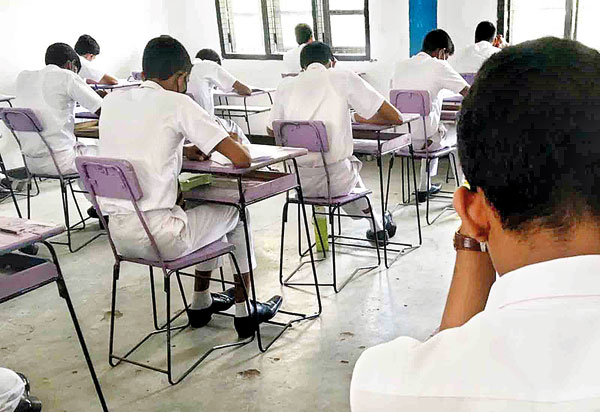
February 16, Colombo (LNW): School candidates preparing to sit the 2025 G.C.E. Ordinary Level Examination have been strongly advised to double-check the official timetable before attending their respective centres.
Commissioner General of Examinations, A. K. S. Indika Kumari Liyanage, issued the reminder during a press briefing held on the eve of the examination, which is due to begin tomorrow (17).
She stressed that only the schedules published through the Department of Examinations’ official website and its verified Facebook page should be treated as authoritative.
According to the Commissioner General, several adjustments have been made to this year’s timetable, particularly affecting the order of subjects scheduled for the fifth through eighth days of the examination.
The revisions, she explained, were introduced to streamline administrative arrangements and improve the overall conduct of the examination process.
She cautioned that relying on outdated or unofficial versions of the timetable could lead to unnecessary confusion or even missed papers. Candidates, parents and school authorities were therefore urged to ensure that they are referring to the most recent and accurate schedule.
More than a hundred thousand pupils across the country are expected to sit the examination this year, making it one of the largest national assessments conducted by the Department. Officials have assured that all logistical arrangements are in place to ensure the smooth and orderly commencement of the examination period.
Candidates Warned to Check Revised Timetable Ahead of 2025 O/L Examination
High Court Defers Hearing in Namal Rajapaksa ‘Krrish’ Case

February 16, Colombo (LNW): Proceedings in the Colombo High Court relating to the controversial ‘Krrish’ project involving Member of Parliament Namal Rajapaksa have been deferred until February 19.
The matter was taken up before the court today (16), but was postponed after members of the legal profession chose to refrain from appearing, resulting in limited court activity.
Despite the circumstances, Rajapaksa was present in court when the case was called, demonstrating his compliance with the judicial process.
Presiding judges subsequently fixed a new date in February for the continuation of the trial.
The case was instituted by the Attorney General, who alleges that Rajapaksa violated provisions of the Prevention of Money Laundering Act. According to the indictment, he is accused of accepting a sum of Rs. 70 million from the Indian firm ‘Krrish’, purportedly for the promotion and development of rugby in Sri Lanka.
Showery trend persists in several provinces (Feb 16)

February 16, Colombo (LNW): Several spells of showers will occur in Central and Uva provinces and in Ampara, Batticaloa and Hambantota districts.
Showers or thundershowers are likely at a few places in Western and Sabaragamuwa provinces and in Galle and Matara districts after 2.00 p.m.
Misty conditions can be expected at some places in Western, Sabaragamuwa and Central provinces and in Galle and Matara districts during the early hours of the morning.
The general public is kindly requested to take adequate precautions to minimise damages caused by temporary localised strong winds and lightning during thundershowers.
Marine Weather:
Condition of Rain:
Showers or thundershowers will occur at several places in the sea areas off the coast extending from Galle to Batticaloa via Hambantota and Pottuvil. Showers or thundershowers may occur at a few places in the sea areas off the coast extending from Colombo to Galle via Kaluthara in the evening or night.
Winds:
Winds will be north-easterly and wind speed will be (30-40) kmph. Wind speed can increase up to (45-50) kmph at times in the sea areas off the coast extending from Kaluthara to Mannar via Puttalam and from Matara to Pottuvil via Hambantota.
State of Sea:
The sea areas off the coast extending from Kaluthara to Mannar via Puttalam and from Matara to Pottuvil via Hambantota will be fairly rough at times. Other sea areas around the island will be moderate.
Temporarily strong gusty winds and very rough seas can be expected during thundershowers.
LNW EXCLUSIVE: Sri Lanka’s NPP Government Eyes Provincial Elections Amid High Approval

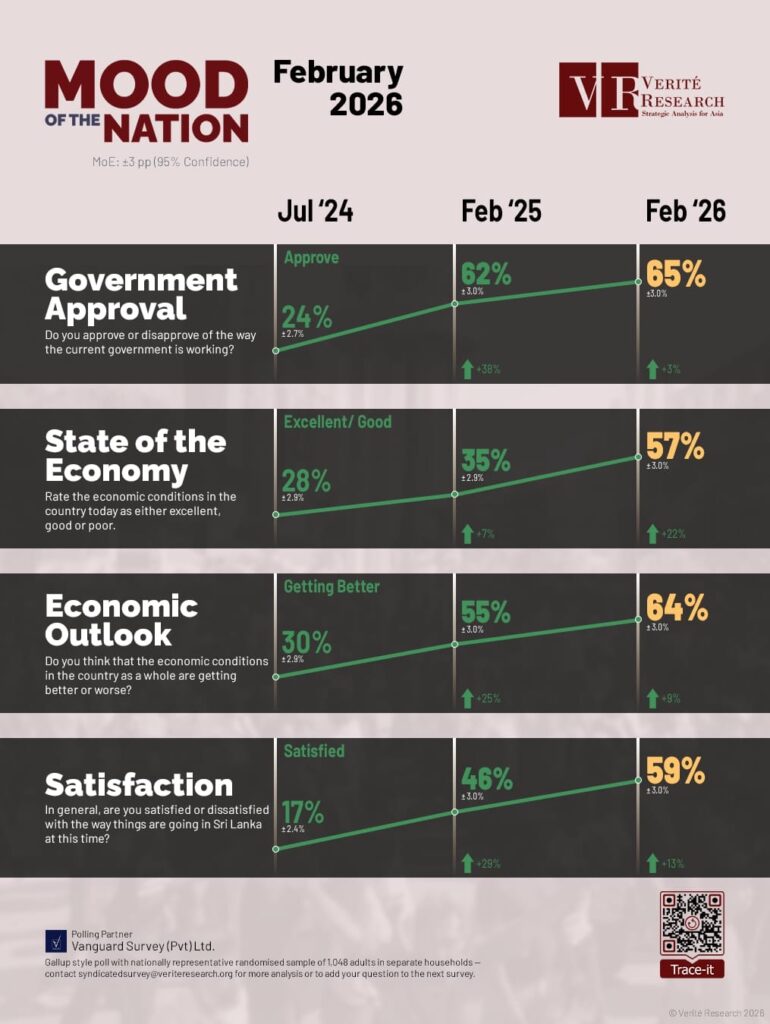
February 15, LNW(Colombo): Verité Research, led by Oxford and Harvard alum, Dr. Nishan De Mel, reports President Anura Kumara Dissanayake’s government holds a commanding 65% public approval rating.
This strong mandate has fueled speculation about snap provincial council elections, which haven’t been held for a long time. Political observers suggest the National People’s Power (NPP) government may leverage this popularity to consolidate power at the provincial level, demonstrating robust democratic legitimacy to international stakeholders. Such elections would test whether the NPP’s parliamentary landslide in November 2024 translates to grassroots support, potentially reshaping Sri Lanka’s provincial governance structure after years of central government administration.
Universal Broadband by 2029: Ambition Meets Infrastructure Reality

By: Staff Writer
February 15, Colombo (LNW): The Government’s pledge to provide every citizen with high-speed broadband connectivity by 2029 represents one of the most ambitious pillars of its digital economic strategy. Yet achieving that goal will require far more than headline coverage statistics and annual budget allocations.
At a recent meeting of the Sectoral Oversight Committee on Science, Technology and Digital Transformation chaired by MP Dr. Janaka Senarathne, officials outlined the scale of the challenge. Senior Adviser to the President on Digital Economy Dr. Hans Wijayasuriya stated that although national internet coverage stands at approximately 98%, this does not translate into universal access to reliable, high-speed broadband. To meet actual demand particularly for students, businesses and public institutions network capacity must expand by at least 25%.
The infrastructure gap is substantial. While 100 new telecommunication towers are scheduled for installation this year, between 600 and 1,000 additional towers will ultimately be required nationwide. Deployment will occur in phases, with authorities proposing a commercial model that invites private sector participation through competitive bidding.
This approach signals recognition that public finances alone cannot support the scale of investment required. However, tower construction is only one element of a broader ecosystem. Fibre backhaul expansion, spectrum management, regulatory facilitation and power supply stability are equally critical components of a high-speed broadband framework.
The Committee also stressed that digital transformation must extend beyond infrastructure. Digital literacy disparities remain pronounced outside Colombo and other major urban centres. Proposals were made to coordinate structured digital skills programmes through District Secretariat offices to ensure rural inclusion.
The 2026 Budget allocations for the Digital Economy and Science and Technology Ministries were reviewed alongside institutional performance reports, underscoring parliamentary oversight of the strategy’s implementation.
While the roadmap reflects strategic intent, the 2029 deadline leaves limited margin for delay. Timely procurement, inter-agency coordination and investor confidence will determine whether the initiative delivers inclusive connectivity or falls short of expectations. The coming years will test whether infrastructure expansion can effectively underpin the country’s broader digital economic ambitions.
Experts Urge Evidence-Based Reparations amid Colonial Debate
By: Staff Writer
February 15, Colombo (LNW): Sri Lanka’s call for colonial-era reparations has reignited debates over history, justice, and accountability. While the Foreign Minister pushes for compensation from former imperial powers and the return of cultural artifacts, experts warn against overstating colonial responsibility for modern economic failures.
Historical Context Matters
The debate mirrors India’s well-known reparations argument popularized by Shashi Tharoor. India suffered dramatic economic decline under British rule, losing industrial capacity, enduring famines, and seeing literacy and life expectancy stagnate. These claims are evidence-based and historically verifiable.
Sri Lanka’s Unique Colonial Experience
Sri Lanka’s pre-colonial economy, however, was never globally dominant. While British policies distorted land use and economic priorities, historians find no evidence of large-scale industrial collapse or engineered famine comparable to India. Experts highlight that post-independence governance failures including fiscal mismanagement, corruption, weak institutions, and ethnically driven policy decisions are far more significant drivers of the country’s current crises.
Targeted Reparations for Indian Tamil Workers
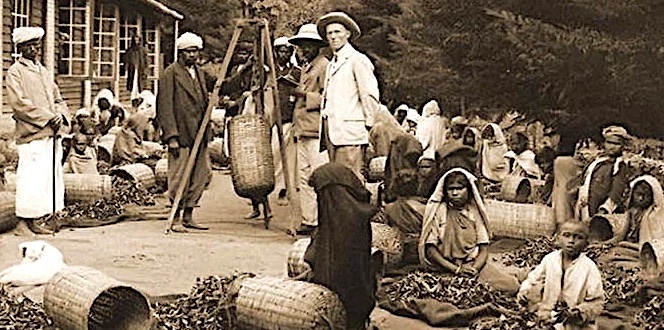
A defensible claim exists in the case of Indian Tamil estate workers. Brought to Sri Lanka under harsh colonial labor conditions, they endured starvation wages, poor housing, and systemic exclusion from citizenship and political rights after independence. Their intergenerational suffering is directly linked to colonial policies and post-independence state neglect.
Cultural Restitution Remains Valid
Meanwhile, efforts to reclaim Sri Lankan artifacts from British museums remain a legitimate, separate pursuit. Returning these objects can bolster cultural identity and advance historical justice.
Conclusion
Analysts argue that credible engagement with history requires separating colonial exploitation from post-independence mismanagement. By focusing on evidence-based reparations claims and confronting domestic governance failures honestly, Sri Lanka can strengthen its moral and historical credibility, avoid importing narratives from other countries, and pursue both justice and cultural restitution effectively.
Sri Lanka Inflation Rebounds amid Fragile Recovery
By: Staff Writer
February 15, Colombo (LNW): The Central Bank of Sri Lanka (CBSL) has signalled a decisive shift in the country’s price trajectory, forecasting a steady rise in inflation toward its 5% target in the second half of 2026. The outlook, contained in its February 2026 Monetary Policy Report, reflects a transition from prolonged deflation to a demand-driven recovery but risks remain significant.
After nearly two years of deflationary pressure, headline inflation returned to positive territory in August 2025. Since then, price growth has gradually accelerated. The bank now expects inflation to stabilise around 5% over the medium term, provided policy settings remain consistent and external shocks are limited.
A major turning point lies in energy and transport costs. These sectors, deeply negative for much of the past two years, are expected to register positive inflation soon. While part of this shift reflects statistical base effects, global fuel price volatility and geopolitical tensions continue to pose threats. Sri Lanka’s heavy reliance on imported energy leaves domestic prices exposed to external shocks.
Core inflation — which strips out volatile food and energy components is also projected to rise gradually. The CBSL attributes this to strengthening domestic demand and imported cost pressures, particularly linked to global food markets. Corporate sector inflation expectations have risen in recent months, broadly aligning with actual inflation trends. Short-term and medium-term expectations are converging toward the 5% target, suggesting that inflation psychology may be stabilising.
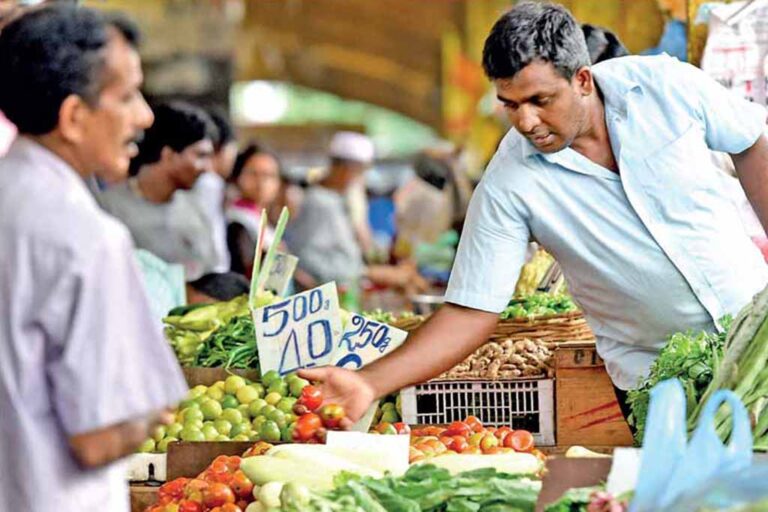
Food prices, however, remain a major wildcard. The recent Cyclone Ditwah disrupted agricultural output, creating near-term upward pressure on prices. While restoration and re-cultivation efforts are under way, recurring extreme weather events highlight Sri Lanka’s vulnerability to climate-related shocks. Food inflation is expected to remain elevated in the short run, underscoring structural weaknesses in agricultural resilience.
The broader concern is uncertainty. Inflation projections remain sensitive to global geopolitical volatility, commodity prices, and the pace of domestic structural reforms. Any renewed spike in oil prices or external supply chain disruptions could derail price stability.
For policymakers, the challenge is delicate: nurture the recovery without reigniting instability. The CBSL’s message is cautiously optimistic, but it is clear that inflation’s return is not yet a sign of full normalisation. Rather, it marks the beginning of a complex balancing act between recovery and restraint in a still-fragile economy.
Storm-Battered Sri Lanka Banks on India-Pakistan T20 Millions

By: Staff Writer
February 15, Colombo (LNW): As cyclone cleanup crews cleared debris in Sri Lanka’s coastal districts, Colombo’s skyline told a different story sold-out hotels, packed restaurants, and fully booked flights. The India–Pakistan T20 World Cup showdown became an economic counterweight to climate disruption, engineered through high-stakes regional diplomacy.
President Anura Kumara Dissanayake played a central role in facilitating the politically sensitive fixture. For a leader whose political roots lay in Marxist nationalism and skepticism toward India, the mediation marked a visible pivot. Hosting the subcontinent’s fiercest rivalry signaled a recalibrated foreign policy balanced engagement with New Delhi and Beijing, framed through economic pragmatism.
The fiscal arithmetic underscores the strategy.Using conservative assumptions:
• 6,000 Indian visitors
• Average total spend per visitor: $1,900
(Airfare $750; hotel $750; ticket & hospitality $100; food/transport/retail $300)
Visitor expenditure alone: $11.4 million.
Add domestic spectators approximately 20,000 locals spending $40 each contributing $800,000.
Corporate boxes, sponsorship activations, merchandising and local service contracts injected an additional $1-1.5 million.
Total short-term direct activity: roughly $13-14 million.
With a tourism multiplier of 1.5, the broader economic impact likely approached $18- $20 million.
Security and logistical costs, heightened due to both cyclone disruptions and the political sensitivity of the fixture, may have reached several hundred thousand dollars. Even so, the net fiscal position remains strongly positive.
Tax gains were immediate. Increased hotel levies and airport service charges averaging 12-15% generated an estimated $1.7-2.1 million in state revenue, excluding indirect tax flows across supply chains.
Just as crucial was the publicity dividend. India–Pakistan matches routinely draw global audiences exceeding 200 million. Every broadcast frame orderly crowds, operational transport, and restored infrastructureprojected resilience despite recent cyclone damage.
For investors, airlines and tour operators evaluating post-crisis Sri Lanka, such imagery reinforces stability. For the government, it demonstrates that even amid natural disaster recovery and fiscal consolidation, the country can execute complex, high-visibility events.
In effect, Dissanayake transformed cricket into economic statecraft. The stadium became not only sporting theatre but fiscal instrument turning geopolitical tension into measurable revenue.
In cyclone-hit Sri Lanka, the scoreboard told one story. The balance sheet told another.
Overseas Investors Channel Nearly US$30 Million into Sri Lankan Rupee Bonds
LISTEN TO STORY
WATCH STORY
By: Isuru Parakrama
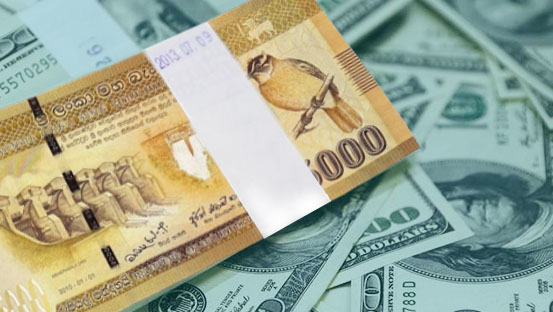
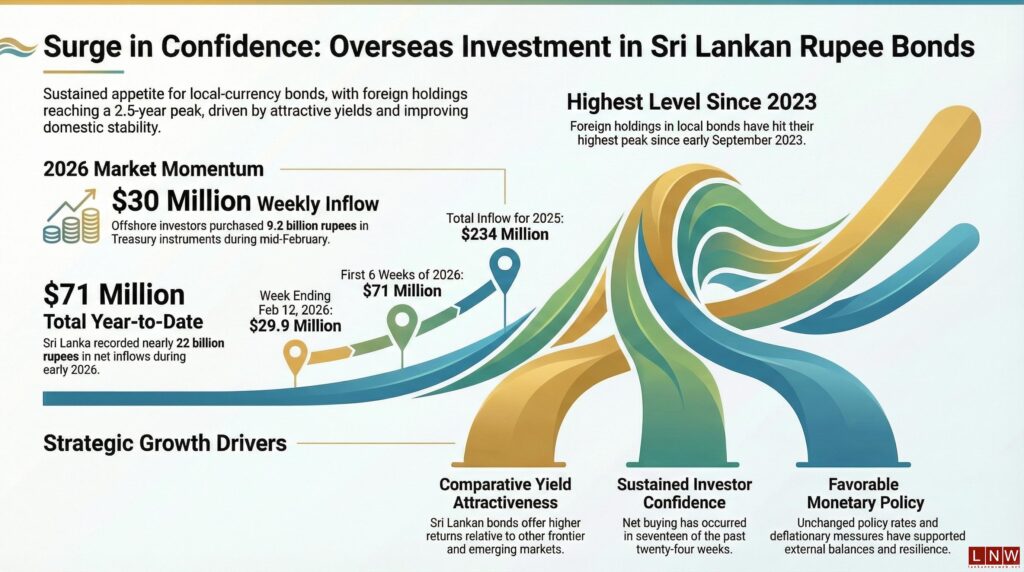
February 15, Colombo (LNW): Foreign appetite for Sri Lankan government securities has strengthened once again, with almost US$30 million flowing into local-currency bonds during the week ending February 12, figures released by the Central Bank of Sri Lanka (CBSL) disclosed.
The latest data indicate that offshore investors purchased a net 9.2 billion rupees’ worth of Treasury instruments over the week — equivalent to roughly US$29.9 million at prevailing exchange rates. This marks the seventeenth week of net foreign buying in the past twenty-four weeks, signalling sustained confidence in the island’s debt market.
Over the most recent three-week period alone, overseas investors have channelled more than 23 billion rupees (approximately US$76–77 million) into rupee-denominated government securities. As a result, total foreign holdings in local bonds have climbed to their highest level in nearly two and a half years, reaching a peak last seen in early September 2023.
Cumulatively, Sri Lanka has recorded a net foreign inflow of nearly 22 billion rupees — about US$71 million — during the first six weeks of 2026. Market participants suggest that this steady influx reflects improving macroeconomic indicators and relative yield attractiveness compared with other frontier and emerging markets.
Globally, investors remain watchful of signals from the Federal Reserve regarding potential interest rate reductions. Historically, expectations of rate cuts in the United States have encouraged capital to seek higher returns in emerging economies. Analysts note that such shifts can redirect funds towards markets like Sri Lanka, particularly when domestic reforms and fiscal consolidation are perceived to be on track.
Sri Lanka experienced total foreign inflows of around 71.5 billion rupees (approximately US$234 million) into rupee bonds during 2025. However, sentiment has not been immune to global volatility. In the wake of tariff announcements by former US President Donald Trump last April, the country saw an outflow of just over 10 billion rupees within a fortnight, accompanied by renewed pressure on the rupee.
Despite episodes of currency depreciation, foreign investors have continued to accumulate local bonds. Analysts attribute this resilience to tight monetary conditions and deflationary policies that have curtailed imports and supported external balances. The Central Bank has maintained its key policy rates unchanged since May last year, following an aggressive easing cycle that delivered cumulative cuts of 825 basis points over two years.
With yields remaining comparatively attractive and external financing conditions gradually stabilising, market observers believe Sri Lanka could continue to draw selective foreign inflows — provided global risk sentiment does not deteriorate sharply.
Judicial Service Commission Orders Annual Reporting on Court-Ordered Drug Destruction

February 15, Colombo (LNW): A new directive has been circulated requiring courts to submit detailed yearly reports on the destruction of narcotics and other hazardous substances carried out under judicial orders.
The circular, issued under the authority of Prasanna Alwis, Secretary of the Judicial Service Commission, instructs relevant judicial officers to forward comprehensive accounts of all such disposals to the National Dangerous Drugs Control Board no later than December 31 each year.
According to the new guidelines, courts must compile and formally transmit annual summaries covering the destruction of poisons, opium and all other categories classified as dangerous drugs. The reports are expected to include quantities destroyed, dates of disposal and confirmation that procedures were conducted in accordance with legal and safety standards.
Officials say the measure is intended to enhance transparency, strengthen regulatory oversight and ensure accurate national record-keeping relating to controlled substances seized through criminal proceedings. It is also seen as a move to reinforce public confidence in the judicial handling of narcotics-related cases.
Legal observers note that systematic documentation of court-ordered destruction will enable the National Dangerous Drugs Control Board to maintain an updated central database, support policy planning and assist in monitoring trends in drug-related offences.
Court registrars and administrative staff have reportedly been advised to ensure meticulous record maintenance throughout the year in order to comply fully with the new reporting requirement.