Home Blog Page 91

Power Sector Under Fire Over Dubious Coal Imports

0

Sri Lanka’s coal procurement process is under mounting parliamentary scrutiny following explosive findings presented to the Sectoral Oversight Committee on Infrastructure and Strategic Development. At the center of the controversy are discrepancies between shipment documentation and plant-level performance data linked to the Lanka Coal Company and the Ceylon Electricity Board.

Officials revealed that load and discharge port reports did not match quality assessments conducted at the Lakvijaya Power Plant, Sri Lanka’s largest coal-fired facility. The first three shipments were found to have Gross Calorific Values below 5,900 kcal/kg, reducing power generation efficiency. Lower energy content coal requires greater volumes to produce equivalent electricity, inflating operational costs and increasing environmental emissions per unit generated.

Financial implications are significant. CEB reports indicate that while penalties allowed recovery of losses from the first shipment, similar recovery was not possible for subsequent consignments. This inconsistency has fueled allegations of weak contract enforcement and potential manipulation of compliance reporting. Concerns have also been raised about the credibility of Indian laboratory certifications that initially validated the coal’s quality.

Sri Lanka imports nearly all its coal requirements, making procurement oversight critical to macroeconomic stability. In recent years, fuel imports have strained foreign exchange reserves, contributing to broader fiscal pressures. Any inefficiency or inflated pricing in coal contracts compounds these vulnerabilities.

The Public Utilities Commission of Sri Lanka has been instructed to calculate the total financial loss resulting from the use of substandard coal. Analysts estimate that even minor efficiency reductions at Lakvijaya could translate into billions of rupees in additional generation costs annually, costs that may ultimately be passed on to consumers through tariff adjustments.

The Auditor General has also recommended reinstating stricter supplier registration standards that existed before 2023, arguing that relaxed criteria may have exposed procurement processes to higher risk. Lawmakers criticized officials for failing to escalate these recommendations to Cabinet, suggesting possible administrative concealment.

Energy sector transparency has long been a contentious issue in Sri Lanka. With electricity tariffs already politically sensitive, any confirmation of procurement irregularities could have far-reaching economic and political consequences. Independent laboratory testing of disputed shipments has been proposed to restore credibility.

As investigations continue, the controversy highlights the urgent need for stronger institutional safeguards in strategic infrastructure procurement. Without accountability and rigorous quality control, Sri Lanka risks compounding its fiscal and energy challenges at a time when economic stabilization remains fragile.


SriLanka Vehicle Tax Revenues Rise as Growth Investment Shrinks

0

Sri Lanka’s recovering vehicle market is generating renewed fiscal income, but economists warn that the apparent rebound masks deeper structural imbalances. The Vehicle Importers’ Association of Sri Lanka highlights rising demand for mid-range imports such as the Honda Vezel and Toyota Raize, driven partly by higher Japanese auction prices and local purchasing momentum.

From a fiscal standpoint, vehicle imports are attractive. Duties, excise taxes, VAT, and the forthcoming 2.5% SSCL increase are expected to boost customs revenue. In a country striving to maintain a primary budget surplus under IMF-supported reforms, such inflows provide immediate relief. However, this revenue is largely absorbed by recurrent expenditure and interest servicing rather than reinvested into productive capital projects.

Sri Lanka’s public debt remains above 100% of GDP despite restructuring efforts. Interest payments consume close to half of total government revenue, crowding out development spending. Capital expenditure has declined significantly compared to regional peers, often falling below 3% of GDP. The result is limited investment in infrastructure, energy transformation, logistics modernization, or industrial expansion sectors crucial for export growth.

Meanwhile, foreign exchange dynamics present a counterweight. Even modest increases in vehicle imports could widen the current account deficit. If annual imports expand by several thousand units, foreign currency outflows may reach hundreds of millions of dollars. With reserves still below comfortable import coverage thresholds, renewed consumption-driven imports risk destabilizing external balances.

Banking sector policy compounds the issue. The 50% LTV cap restricts financing for lower-cost models such as the Daihatsu Mira and Suzuki Wagon R, limiting access for middle-income earners. Although policy rates have declined from peak crisis levels above 25%, leasing and lending rates remain relatively high compared to pre-crisis norms, dampening broad-based consumer participation.

The economic paradox is evident: the state benefits from higher import taxes, yet the broader economy bears the burden of foreign exchange depletion and constrained investment. Passenger vehicle imports do not enhance export competitiveness or industrial output. Instead, they increase fuel consumption and urban congestion while offering limited multiplier effects.

Sri Lanka’s recovery hinges not merely on revenue collection but on strategic capital allocation. If tax windfalls are directed primarily toward servicing legacy debt, growth momentum may stall. Sustainable recovery requires redirecting fiscal space toward sectors that generate foreign exchange earnings and productivity gains. Without such rebalancing, the current import surge could reinforce a cycle of short-term revenue dependence and long-term economic stagnationwhether this engagement marks a transformative chapter or remains an aspirational dialogue.

Marland’s Colombo Mission: Can Commonwealth Capital Revive Sri Lanka?

0

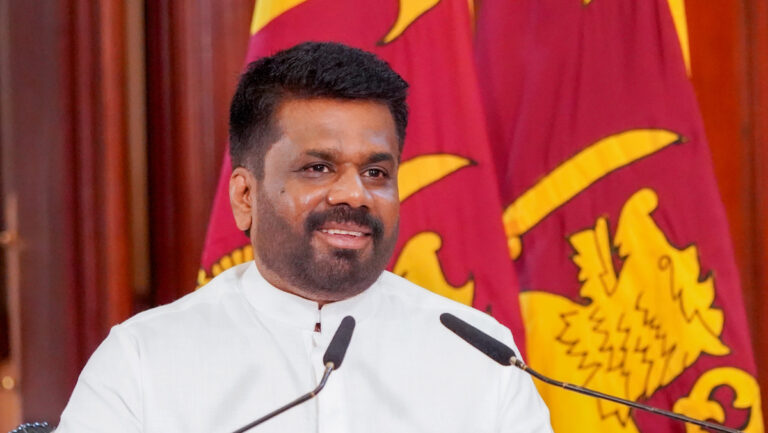
When Lord Marland of Odstock arrived in Colombo this week, his discussions with President Anura Kumara Dissanayake signaled more than diplomatic courtesy. The visit by the Chairman of the Commonwealth Enterprise and Investment Council (CWEIC) represents a calculated attempt to reposition Sri Lanka within a 56-nation trade bloc that spans Africa, Asia, the Caribbean, and the Pacific.

CWEIC functions as the principal business network of the Commonwealth, facilitating cross-border trade and private investment. For Sri Lanka, emerging cautiously from economic crisis and sovereign default, this platform could be critical. The President made it clear: the country is not seeking aid, but private capital directed toward “bankable and economically impactful projects.”

Central to discussions was the ambitious vision of transforming Colombo Port City into a South Asian equivalent of the City of London Corporation a globally competitive financial hub. The comparison is bold. London’s financial district thrives on deep capital markets, regulatory credibility, and centuries-old institutional trust. Replicating that ecosystem in Colombo would require robust legal certainty, transparent governance, and strong investor protections.

The President also proposed collaboration with established financial centres such as Dubai and Singapore to strengthen regional capital flows and trade connectivity. Such partnerships could help integrate Sri Lanka into supply chains spanning services, apparel, agriculture, logistics, and IT.

Yet structural challenges persist. While macroeconomic indicators suggest stabilisation, poverty and inequality remain acute. The government argues that high-quality investments in tourism, digital infrastructure, and logistics could generate employment and technology transfer. However, investors will scrutinise political stability, debt sustainability, and policy continuity before committing significant capital.

Lord Marland’s background as a former UK Energy and Climate Change Minister adds another dimension. In the wake of Cyclone Ditwah’s estimated $4.1 billion in damages, both parties stressed climate-resilient infrastructure. If CWEIC can mobilise green finance aligned with global ESG standards, Sri Lanka could position itself as a sustainable investment destination rather than merely a frontier market.

Ultimately, the visit underscores a strategic pivot: Sri Lanka is seeking integration, not isolation. Whether Commonwealth capital answers that call will depend on the credibility of reforms and the speed at which regulatory frameworks evolve to match investor expectations.

Sri Lanka’s Fiscal Discipline Key to IMF Double Payout Plan

0

Deputy Finance Minister Anil Jayantha Fernando’s assertion that the delayed fifth review can be expedited alongside the sixth review rests on the premise that Cyclone Ditwah merely shifted timelines. While true procedurally, IMF architecture is built on performance sequencing. Each review assesses data from a defined monitoring period before recommending Board approval.

Under the US$ 2.9 billion Extended Fund Facility approved in March 2023, Sri Lanka committed to fiscal consolidation, structural reforms, and debt sustainability. The programme’s backbone includes:

• Achieving sustained primary surpluses (targeted at -2.3-2.5% of GDP).

• Reducing the fiscal deficit gradually toward medium-term thresholds.

• Eliminating central bank financing of the deficit under the 2023 Central Bank Act.

• Implementing cost-reflective energy pricing and SOE governance reforms.

While the 2026 Budget’s 5.1% deficit and 2.5% primary surplus targets align broadly with IMF parameters, delivery remains the key variable. Revenue mobilization especially maintaining post-reform VAT and direct tax compliance will determine whether fiscal consolidation is durable or cyclical.

Moreover, debt sustainability analysis (DSA) is dynamic. Even with restructuring progress, the IMF evaluates forward-looking debt ratios and financing needs. A single quarter of strong performance does not replace cumulative compliance.

It is also important to distinguish between staff-level agreement and Executive Board approval. IMF staff may recommend review completion, but the Board’s vote ultimately triggers disbursement. Historically, countries have received multiple tranches within one calendar year when delayed reviews were successfully completed but only when macroeconomic indicators showed sustained stability.

Constructively, the Government’s forward-leaning stance could strengthen investor sentiment if matched by transparent data and reform continuity. However, premature expectations risk credibility gaps if benchmarks are narrowly missed.

The upcoming visit of IMF Managing Director Kristalina Georgieva on Monday 16 will reinforce partnership, yet the institution’s credibility depends on conditionality not diplomacy.

Sri Lanka’s path to a double disbursement is therefore technically possible but procedurally demanding. The deciding factor will not be ambition, but arithmetic.

Govt Plans Nationwide High-Speed Broadband Access by 2029

0

Officials of the Ministry of Digital Economy have announced plans to provide high-speed broadband connectivity to every person in Sri Lanka by 2029.

The remarks were made during a meeting of the Sectoral Oversight Committee on Science, Technology and Digital Transformation held in Parliament on February 6, under the chairmanship of MP Dr. Janaka Senarathne. The meeting focused on the action plan related to the allocation of 2026 budget provisions for the Ministry of Digital Economy and the Ministry of Science and Technology.

During the session, Senior Advisor to the President Dr. Hans Wijayasuriya delivered a detailed presentation on the proposed programme to expand high-speed broadband access nationwide.

He stated that steps are being taken this year to install 100 new telecommunication towers. To fully meet national requirements, however, between 600 and 1,000 towers will be needed, with implementation planned in phases.

Dr. Wijayasuriya noted that although approximately 98% internet coverage currently exists across the country, it does not meet the standards required for high-speed broadband services. He explained that existing network capacity must be increased by around 25% to ensure access to high-speed broadband facilities for every child.

He further said that a commercial model would be developed for the expansion of telecommunication towers, with opportunities provided for private sector participation through a bidding process.

The Committee also highlighted the need to improve digital literacy outside Colombo, proposing that awareness and training programmes be conducted through District Secretariat offices.

In addition, discussions were held on the allocation of 2026 budget provisions for the Ministry of Science and Technology, and several annual and performance reports of institutions were approved.

The meeting was attended by Deputy Minister Chathuranga Abeysinghe and Members of Parliament Chandima Hettiarachchi, Lasith Bhashana Gamage, Chathura Galappaththi, Aboobucker Athambawa and Ruwan Wijeweera.

Cabinet Approval Sought to Extend Degree Completion Deadline for Teacher Recruitment

0

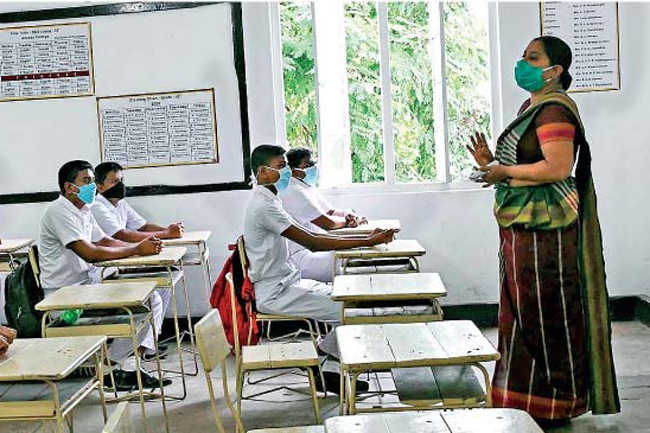
The Ministry of Education has announced that Cabinet approval is expected to be sought to extend the deadline for completing degree qualifications for applicants applying under the open recruitment process for teachers in national and provincial schools.

The move follows Clause 5.1 of the notice published in Extraordinary Gazette No. 2474/19 dated February 2, 2026, which called for applications to fill teacher vacancies in Sinhala, Tamil and English medium schools.

In line with Cabinet directives, the Ministry sought the Attorney General’s advice to amend the deadline for completing degree qualifications to March 5, 2026. The relevant instructions have now been received and are scheduled to be submitted to the Cabinet of Ministers for approval on February 16, 2026.

President to Attend India–AI Impact Summit 2026 in New Delhi

0

President Anura Kumara Dissanayake is scheduled to attend the India–AI Impact Summit 2026, which will be held in New Delhi from February 16 to 20.

According to a press release issued by India’s Ministry of External Affairs, the summit is hosted by the Government of India and will bring together global leaders, policymakers, innovators and experts to deliberate on the future of Artificial Intelligence (AI).

The event is anchored on three central themes — People, Planet and Progress — reflecting India’s approach to international cooperation and governance in the field of AI.

President Dissanayake will participate at the invitation of Indian Prime Minister Narendra Modi, alongside leaders from more than 20 countries, including France, Brazil, Spain, the Netherlands, Switzerland, Mauritius and the United Arab Emirates.

The United Nations Secretary-General and senior officials from several international organisations are also expected to attend. Additionally, ministerial delegations from over 45 countries will take part in the summit.

Discussions at the summit are expected to focus on responsible AI development, global governance frameworks and the role of emerging technologies in advancing sustainable development.

President Holds Talks with Protesting Madel Fishermen, Protest Called Off

0

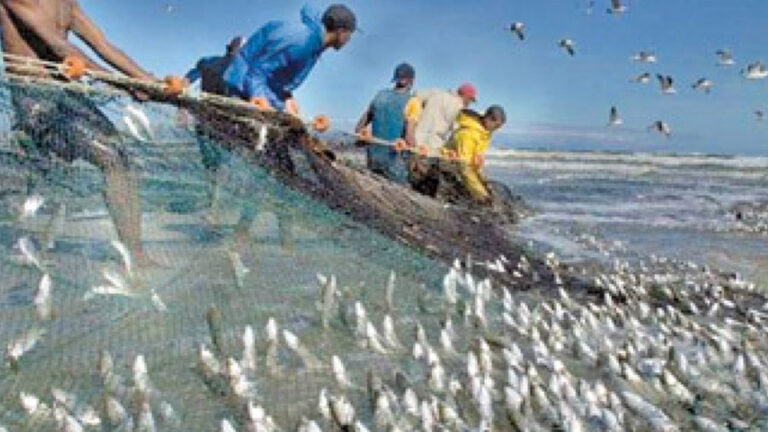
A discussion between President Anura Kumara Dissanayake and Madel (beach seine net) fishermen who staged a protest in front of the Presidential Secretariat was held yesterday afternoon (13) at the Presidential Secretariat.

The President invited the protesting fishermen for talks and engaged in an extensive discussion, during which representatives briefed him on the current situation of the Madel fishing industry. They explained that while the industry commenced in 2010, labour-related issues led to the adoption of the winch method from 2013 onwards.

According to the President’s Media Division (PMD), the fishermen’s representatives expressed their gratitude to the President for granting them the opportunity for dialogue and for paying attention to their concerns.

After listening to the matters raised, President Dissanayake emphasized that the Government has no intention of undermining anyone’s livelihood while seeking solutions to issues surrounding the Madel fishing industry. He reiterated that the Government remains committed to strengthening the economic conditions of all communities.

The President noted that any resolution must take into account complaints from the broader fishing community, concerns raised by environmental organisations, and reports from State institutions engaged in scientific research, as well as relevant bodies under the Ministry of Fisheries.

He stressed the importance of preventing economic harm to fishermen, ensuring environmental protection, safeguarding marine resources in line with international conventions for the benefit of future generations, and prohibiting the use of banned fishing methods.

According to the PMD, it was agreed that all parties would work together to propose suitable solutions through discussions within a short period. The fishermen also agreed to call off the protest.

Further discussions involving all relevant stakeholders are scheduled to commence next Monday. It was also agreed to arrange talks with the Ministry of Finance to address leasing and other payment-related issues faced by those engaged in the industry under the current method during the discussion period.

Sri Lankan Crew Member Found Dead in Hooghly River After Reported Jump

0

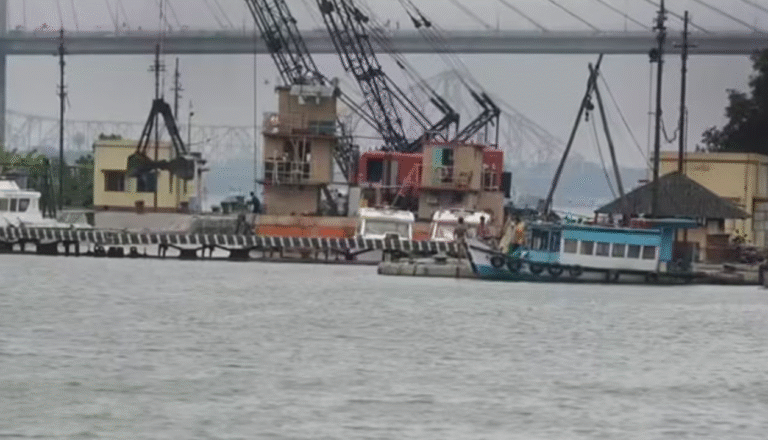
The body of a Sri Lankan crew member serving aboard a Singapore-bound container vessel was recovered from the Hooghly River in Kolkata on Friday evening, after he reportedly jumped into the water near Netaji Subhas Dock.

Police said the deceased was employed on the vessel Kota Dunia. Preliminary information identified him as Bandarawatte Vidanelage Prabashwara Tharindu Bandarawatte, a Sri Lankan national.

According to Deputy Commissioner (Port) Harikrishna Pai, the West Port Police Station received information at around 11.26 p.m. on Thursday that a crew member had allegedly jumped into the river near the dock area. The vessel, travelling from Singapore via Chittagong, was stationed mid-stream at the time and had not yet berthed.

DC Pai stated that other crew members noticed the incident and immediately informed the captain, who alerted the Port Traffic Department and requested urgent assistance. Two tugboats from the Port Marine Department initiated search operations in the surrounding waters, but the individual could not be located during the initial search.

Subsequently, a Disaster Management Group team comprising expert divers was deployed through the Kolkata Police Control Room at Lalbazar. Port divers also joined the operation. After several hours of search efforts, the body was recovered at approximately 5.05 p.m. on Friday.

Police said they have contacted the Sri Lankan Embassy to inform the family and determine whether any complaint would be lodged. Authorities have not released further details regarding the exact location of recovery or the condition of the body, stating that further information will be provided following the post-mortem examination and confirmation of the cause of death.

WEATHER FORECAST FOR 14 FEBRUARY 2026

0

Showers will occur at times in Central and Uva provinces and in Ampara, Batticaloa and Hambantota districts. Fairly heavy falls about 50 mm are likely at some places in Uva and Central provinces and in Ampara and Batticaloa districts. 

Several spells of showers will occur in Northern and North-central provinces and in Trincomalee district. 

Showers or thundershowers will occur at several places elsewhere after 1.00 p.m. and fairly heavy showers about 75 mm are likely at some places in Western and Sabaragamuwa provinces and in Galle and Matara districts.

Misty conditions can be expected at some places in Western, Sabaragamuwa and Central provinces and in Galle and Matara districts during the early hours of the morning.

The general public is kindly requested to take adequate precautions to minimize damages caused by temporary localized strong winds and lightning during thundershowers.