Home Blog Page 921

Sri Lanka and Thailand agree to enhance public debt management capacity

0

July 27, Colombo (LNW): Sri Lanka plans to fully operationalize its Public Debt Management Office (PDMO) by January 2026, following its establishment in the fourth quarter of 2024 under the new Public Debt Management (PDM) Law. 

Thailand and Sri Lanka’s Ministry of Finance signed a Record of Discussion (RoD) to launch a Capacity Building Program for officials associated with the upcoming PDMO. 

This development was discussed at a recent Committee on Public Finance (COPF) meeting. The PDMO will operate within the Ministry of Finance, as outlined in the proposed PDM Bill, and is expected to be set up by Q4 2024 according to guidelines from the International Monetary Fund (IMF).

Deputy Secretary to the Treasury, A.K. Senavirathna, mentioned that the proposed PDM bill would introduce a Medium Term Debt Management Strategy (MTDMS) for parliamentary approval. 

This strategy will guide the government’s future debt-raising activities and will be updated annually along with the budget over a five-year period, based on the fiscal rules in the proposed Public Financial Management Bill once it is enacted.

Central Bank Governor Nandalal Weerasinghe explained that the Minister of Finance, who will have exclusive authority to raise debt, along with the PDMO, will need to adhere to the Parliament-approved MTDMS.

Ajith Abeysekara, Director General of the External Resources Department, noted that the IMF initially wanted Sri Lanka to create an independent debt management authority. 

However, due to Sri Lanka’s traditional democratic setup, establishing an independent authority was considered challenging, leading to the creation of the PDMO with operational autonomy within the Treasury under the Finance Minister.

To enhance Sri Lanka’s fiscal framework and public debt management capacity, the Neighbouring Countries Economic Development Cooperation Agency (NEDA) of Thailand and Sri Lanka’s Ministry of Finance signed a Record of Discussion (RoD) to launch a Capacity Building Program for officials associated with the upcoming PDMO. 

This cooperation is a significant step towards efficient public debt management.

The agreement was signed following an invitation from the Department of External Resources of the Finance Ministry. A NEDA delegation, led by President Perames Vudthitornetiraks, met with Treasury Secretary Mahinda Siriwardana in Colombo.

This initiative is crucial as Sri Lanka aims to establish the PDMO by the end of the year to enhance its public debt management practices and ensure long-term fiscal sustainability.

 Treasury Secretary Siriwardana noted the government’s fiscal and monetary policy initiatives that have significantly contributed to the country’s recovery from its recent economic crisis. 

He emphasized the government’s commitment to preventing future economic crises and highlighted the longstanding cultural and religious ties between 

Thailand and Sri Lanka, particularly through Theravada Buddhism. Siriwardana also expressed optimism about future development cooperation between the two countries.

NEDA President Perames Vudthitornetiraks praised the Sri Lankan government’s progress and affirmed NEDA’s readiness to share its expertise in public debt management. 

Ode to a Comrade Dr. Wickramabahu Karunaratne

0

The last line of the final chapter of conviction politics has just now been written. The muse of time has rested her pen and the mould from which such great men are made has been permanently cast away, never to be found or used. Our dear comrade has rested his head on the cold tomb stone, for the final time, at the ripe old age of 81 years.

The Late Dr. Wickramabahu Karunaratne, to those whose lives he touched, will ever remain as the greatest “head of state of Sri Lanka” never to be. Persons of his calibre cannot, by the rule of opportunistic politics, succeed. Dr. Wickramabahu Karunaratne remained true to the his political beliefs and consciously rejected the opportunities which were easily within his reach. His life, is the lesson and the legacy, he leaves behind. To be an insignificant part of his life and legacy is my pleasure and pride.

As a staunch “fourth internationalist” comrade Wickramabahu stood firm when a large section of the Samasamajists succumbed to the lure of a high political offices. As a brilliant engineer with a first-class degree from the then University of Ceylon and the PhD. from the University of Cambridge, he had the world at his feet; but he chose to serve the mankind, transcending the man made divides. He never wavered in his mission.

Death is a great leveler, and when it places its icy cold hands, even the king’s crown and the sceptre will tumble down. Only the good deeds will stand tall, smelling sweet forever.

May his soul rest in peace.

Dr. K.P. Nagulesan

London

Scope Cinema opens IMAX Theatre at Havelock City Mall 

0

July 27, Colombo (LNW): Scope Cinemas is set to revolutionize the cinematic experience in Sri Lanka with the grand opening of its new IMAX Theatre at Havelock City Mall on July 24. . 

This eagerly awaited launch provided an unprecedented level of audio-visual immersion for Sri Lankan moviegoers, marking a significant milestone in the country’s entertainment landscape. 

Globally renowned for its cutting-edge technology and unique film presentation, IMAX’s latest theatre at Scope Cinemas Multiplex will feature the advanced IMAX with Laser projection system. 

This next-gen laser system, combined with IMAX Precision Sound and stadium-style seating designed for optimal viewing, promises the most immersive cinematic experience available today.

Scope Cinemas, Sri Lanka’s first multi-sensory luxury entertainment company, has been a leader in the local cinema industry since its inception in 2017.

 The company initially gained popularity with its reliable online booking system, transforming how Sri Lankans purchase movie tickets by eliminating long queues and offering the convenience of selecting seats and ordering food online. 

The customer experience was further enhanced with the introduction of a mobile app, enabling users to make reservations and food orders directly from their smartphones.

Beyond technological advancements, Scope Cinemas is dedicated to providing luxury and convenience. Its theatres offer gourmet cinema dining, including freshly made burgers, wraps, and various beverages, ensuring a complete dining experience alongside the movie.

 The VIP Gold Class theatres elevate this experience with reclining seats, cozy blankets, and personalized service, offering a truly first-class movie experience. 

The company is also known for its exceptional customer service, with staff trained to assist with ticket reservations and deliver food and beverages directly to guests’ seats seamlessly.

Scope Cinemas Director and CEO Thushan Rangana Meemanage expressed pride in the new IMAX Theatre, describing it as the crown jewel in their network. He highlighted Scope Cinemas’ ongoing mission to set international standards and provide unparalleled cinema experiences in Sri Lanka.

 Bringing IMAX to the country represents a landmark achievement in this vision, and Meemanage looks forward to dazzling audiences with the new technology.

Executive Chairman Naveed Cader echoed this enthusiasm, emphasizing the company’s passion for offering Sri Lankans a revolutionary cinematic experience. Cader noted the hard work invested in preparing for the IMAX launch to ensure perfection.

 He expressed excitement about elevating the cinema experience by partnering with IMAX, providing customers with a world-class, premium, large-format movie experience right in Sri Lanka

Bird Island in Beira Lake to be transformed into a cultural heritage site 

0

July 27, Colombo (LNW): The Sri Lankan government has approved a lease of Bird Island, located on Beira Lake, to the Sri Jinarathana Vocational Technical Training Centre for 50 years.

 The decision aims to transform the island into a cultural heritage site to attract tourists. The proposal was made by the Chief Incumbent of the Gangarama Temple and supported by the Urban Development and Housing Minister Prasanna Ranatunga, receiving Cabinet approval.

Bird Island covers 143 perches on the southwest part of Beira Lake and was originally transferred to the Urban Development Authority (UDA) in 2000 under the Beira Lake Restoration Project, part of the Colombo City Development Plan. 

The lease value is based on the government’s Chief Assessor’s valuation. Minister Bandula Gunawardena stated that this development would enhance Colombo’s cultural and tourist appeal, contributing to the city’s vibrancy.

Tourism and Lands Minister Harin Fernando revealed plans to transform the Beira Lake area into a major entertainment destination, inspired by Clarke Quay River in Singapore, featuring amusement, dining, and entertainment. 

The initiative, personally assigned by President Ranil Wickremesinghe, includes floating restaurants, street food corners, and other amusement options. The goal is to develop an active district while preserving the cultural value of the country.

The UDA will manage the cleaning and maintenance of Beira Lake to support the new operations. Additionally, Sri Lanka has partnered with Extreme, a global adventure brand, to introduce high-profile adventure sports like hot air ballooning, skydiving, and bungee jumping, aimed at attracting tourists and boosting spending on these activities.

Minister Fernando announced ambitious tourism targets, aiming for over USD 2.5 billion in revenue from 1.6 million tourist arrivals in 2023, with projections to increase to 2.5 million arrivals and USD 4 billion in revenue by 2024.

 This would position tourism as Sri Lanka’s second-largest foreign exchange earner, surpassing the apparel sector. The strategy includes attracting high-spending tourists from new source markets such as Japan, Korea, and Australia.

Fernando highlighted that 33% of Sri Lanka’s tourists are repeat visitors. The country has promoted itself with the marketing concept “Sri Lanka Come Back for More” and “Sri Lanka, a Safe Destination to Travel” on platforms like the World Travel Market (WTM).

The efforts have encouraged more airlines to add Colombo to their destinations, and several international hotel chains are showing interest in opening properties in Sri Lanka. As Minister of Lands, Fernando mentioned that land for these projects could be offered with minimal bureaucracy and favorable conditions, further boosting tourism development

ADDING DUNG TO THE MILK CONTAINER

0

Currently, both the Sports Minister and the Sports Director

General have a positive and logical reputation in the field of

sports. Roshan Ranasinghe and Arjuna Ranatunga can be said to

be better than Hareen, except for those rare people who take them

as pure characters. Shermal Fernando’s influence behind Harin’s

decisions is also significant. We are well aware of that. However,

when working on the rugby game, it deviates from the generally

positive work order to support the preparation of the rugby

constitution in Sri Lanka in a manner that prioritizes a few elite

sports clubs and centralizes power, while neglecting common

issues such as the expansion of rural rugby and decentralization

of authority.We asked the minister to claim that these sports clubs are first

class. How are all those sports clubs first class? Such is the

question we are asking the minister. They are permanently placed

in the first tier because there is no system in place that requires a

talented team emerging from the second tier to enter the first tier

and the first tier team to qualify for the first tier again. If the sports

minister truly loves rugby in the country, this is what he should

suggest. However, the minister dissolved the rugby

administration based on allegations of non-constitutionality and

an unelected tenure. Thus disbanded, the Director General of

Sports was elected and allowed to give way to a new

administration.

But the Director General started by appointing the head of the

disbanded administration as its facilitator. On the surface, we see

the Director General, but the minister may be behind the

appointment.

After learning that the Director General of Sports would intervene

in the General Assembly to amend the constitution, the provincial

associations of voters went to court. Following the court order,

they agreed to discuss all matters except the constitutional

amendment. However, the Director General did not convene the

General Assembly as per the court order. While the order only

prohibited discussions about the new constitution at the General

Assembly, halting the assembly itself could be seen as exceeding

the court’s directive. Additionally, there is a need to introduce a

new constitution with the Director General’s intervention in the

General Assembly.This situation is bad. It is the duty and responsibility of the

Ministry and the Sports Development Department to conduct the

election and talk to the World Association and give permission to

change the constitution. Otherwise, the sports ministry of the

country cannot propose to the international association to change

the rugby constitution and impose it on the rugby administration

of the country.

Also, if the World Rugby has suggested to several sports clubs

playing first-class rugby in any other country to prepare a

constitution to determine the behavior of the rugby players of that

country, it should also be shown ideally.

It is a ridiculous crime to amend the constitution in such a way

that a few sports clubs get a shape and power that is not found

anywhere in the world.

What is needed is an amendment to the Sri Lanka rugby

constitution that strengthens both the first and second tiers of

rugby, allowing for promotion and relegation between them and

ensuring that the second-tier tournament is as robust as the first.

Additionally, the constitution should guarantee power to the

rugby community, encouraging greater involvement in rural areas

and providing village teams with more control and influence.Through this, the Minister of Sports as well as the Director

General also make excrement in important decisions regarding

other sports. The rights of the ruggers must be settled by the

ruggers themselves. The rugby constitution should be changed by

closing down the space that has been given to several grassroots

sports clubs to flourish in competitive ways. Facing that situation

in practice should be entrusted to the people who will come to

power after the election of Sri Lanka Rugby.

In the end, if Sri Lankan rugby is banned again and after that, the

sins of side dangers that may happen to rugby forever will fall on

the shoulders of this political behavior. It is problematic that the

Sports Minister, after disbanding the Rugby administration in

accordance with his powers, now allows his Director General to

behave like this. He can tell the officer under him how to fulfill

the responsibility. Can also be assigned. But what is happening

now is that the bad accusations against the director general can be

seen as the use of a gang of cronies under him as political power.

Sri Lanka Original Narrative Summary: 27/07

0
  1. President Ranil Wickremesinghe emphasized the crucial role of the Sri Lankan tea industry in transitioning the country towards an export economy. He underscored the need for a comprehensive promotion strategy, developed in collaboration with both public and private sectors. The President noted that “Ceylon Tea” is a world-renowned brand and should be further promoted through a new strategic program.
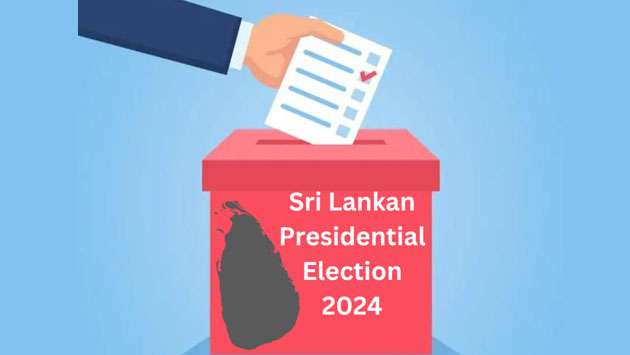
  2. The National People’s Power (NPP) has launched an Election Monitoring Centre, following the official announcement of the Presidential Election to be held on September 21. The NPP has named an eight member operational committee comprising former ministry secretaries and retired senior Police officers.
  3. The Sri Lanka State-Owned Enterprise Restructuring Unit (SOERU) has issued a statement clarifying what it said were inaccurate reports on the divestitures of Hotel Developers Lanka Ltd (HDL) and Sri Lanka Telecom PLC (SLT). Contrary to reports, the land involved in the divestiture of HDL, the owning company of the Colombo Hilton, amounts to 4.61 acres, with an additional 1.875 acres to be leased, not 7 acres as claimed, SOERU said. Dismissing the claim of a USD 124 million valuation, the statement said that the Government Chief Valuer’s previous assessment was in Sri Lankan Rupees and was lower than its current valuation.
  4. Tamil National Alliance (TNA) MP M.A. Sumanthiran says that the Ilankai Thamil Arasu Katchchi (ITAK) will not nominate a candidate for the upcoming Presidential Election. However, the party will hold discussions with the main candidates, he said.
  5. Sri Lanka’s tourism sector has experienced a notable surge, with 127,925 tourists arriving in the past three weeks, according to the Sri Lanka Tourism Development Authority. The majority of these visitors were from India, accounting for 30,442 arrivals. A high volume of tourists also arrived in the island from Britain, China, Germany, and the Netherlands.
  6. As the upcoming presidential election has been announced by the Election Commission, State Minister of Defence Premitha Bandara Tennakoon has instructed the security chiefs to take all necessary measures to ensure the security of the presidential candidates, citizens and the entire country during this election period.
  7. Foreign Secretary Aruni Wijewardane will lead Sri Lanka’s delegation to the Seventh Round of Bilateral Political Consultations between Sri Lanka and Pakistan, scheduled to be held in Islamabad on 30 July 2024, the Ministry of Foreign Affairs said. The Seventh Round of Bilateral Political Consultations will be co-chaired by Foreign Secretary Aruni Wijewardane and the Foreign Secretary of Pakistan Muhammad Syrus Sajjad Qazi.
  8. The National Police Commission has rejected the Inspector General of Police’s request for the immediate transfer of 210 police officers. The decision was made because the relevant recommendations were not made in accordance with transfer policies.
  9. The Sri Lanka Navy successfully conducted mobile dental services for children of Batticaloa area. The dental services, organized by the Directorate of Naval Dental Services of Sri Lanka Navy, were held for the benefit of children of Kirimichchaiodai Tamil School, Mathurankernikulam Tamil School and Kokuvil Tamil School in Batticaloa. Around 156 children participated in these programmes, which significantly enhanced their knowledge of good oral hygiene practices as well.
  10. All-rounder Ramesh Mendis has been called up for the Sri Lanka T20 squad for the series against India. This decision comes as fast bowler Binura Fernando is suffering from a fever, putting his participation in the upcoming matches in doubt, according to sources.

IGP Position Issue to be Resolved by Constitutional Council, Says Education Minister

0

July 27, Colombo (LNW): Leader of the House and Education Minister Dr. Susil Premajayantha told Parliament yesterday (26) that resolving the current issue regarding the position of Inspector General of Police (IGP) falls under the responsibilities of the Constitutional Council.

He made this statement while clarifying the interim order issued by the Supreme Court concerning the IGP’s position. The Leader of the House further elaborated, “The role of a Leader of the House is to support the operations of the House, which is what I am attempting to do. I explained the principle of separation of powers. The Speaker is the head of the Constitutional Council. The Constitutional Council confirms the names for positions mentioned in the schedule of the Constitution, which the President nominates.

“We can discuss the decision in a case. Otherwise, we cannot learn or teach the law. The Supreme Court can issue an interim order to suspend the IGP. According to Article 126, this is correct. As a lawyer, I agree with it. The suspension does not vacate the position but stops the function.

“Can an order be given to vacate the position? When taken as an argument, if it is an executive part, it should be referred back to the appointing body, and beyond that, the responsibility falls on Parliament. According to this process, the question is whether the IGP position is vacant or not. How can an acting appointment be made if the position is not vacant? The issue arises whether another person can be appointed to act when there is someone in the position. I suggest that this issue should be referred back to the Speaker.

“Accordingly, it is up to the Constitutional Council to decide whether to convene or not, and if the position is vacant, to appoint an acting official. If the position is not vacant, how can an acting official be appointed? There is no constitutional provision for appointing acting ministers when ministers travel abroad. However, appointments and other matters under Article 7(a) of the Constitution are different and fundamental to the Constitution. Therefore, the acting minister position when a minister travels abroad and the positions in this process are different. It is constitutional and cannot be violated.”

Dr. Premajayantha clarified these points to address the queries raised about the current situation regarding the IGP position in Parliament.

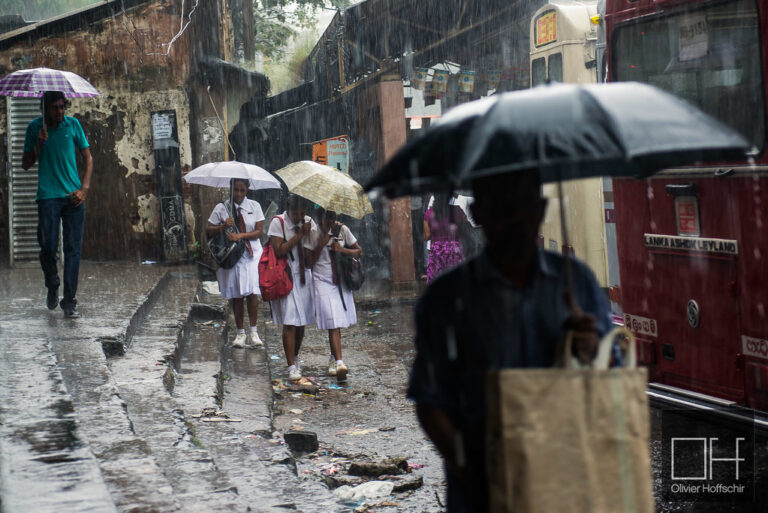
Showers will occur at times in Sabaragamuwa province and in Kandy and Nuwara-Eliya districts.

0

July 27, Colombo (LNW): Several spells of showers will occur in Western and North-western provinces and in Galle and Matara districts.

Strong winds of about (50-55) kmph can be expected at times over Western slopes of the central hills and in Northern, North-central and North-western provinces and in Trincomalee, Monaragala and Hambantota districts.

Fairly strong winds about (30-40) kmph can be expected at times elsewhere of the island.

Palm oil import causes significant foreign currency outflows from Sri Lanka

0

By: Staff Writer

July 26, Colombo (LNW): A significant financial impact has been exerted on Sri Lanka economy by Palm oil imports in to the country, recent discussions at an international conference in Colombo highlighted.

There is a substantial drain on the country’s finances as millions of rupees are binged on palm oil imports in Sri Lanka, experts recently pointed out at an international conference.

Experts revealed that the country’s high dependency on palm oil—used in 90% of food processing and found in over 60% of supermarket products—necessitates a reevaluation of the current ban on palm oil.

The “Sustainable Futures” workshop, hosted by the Nucleus Foundation at Cosmic by Citrus, Lotus Tower, was attended by key figures from the Agriculture Ministry, Plantation Industries, and international partners including the Malaysian High Commission,

Indonesian Embassy, and Solidaridad. The event emphasized the potential economic and environmental benefits of palm oil, drawing parallels to Sri Lanka’s successful tea industry.

Dr. Shatadru Chattopadhayay from Solidaridad Asia argued that palm oil could offer similar benefits. Unlike other vegetable oils, palm oil yields both palm oil and palm kernel oil, making it a more land-efficient option. Palm oil cultivation also creates jobs and supports industrialization, which is crucial for addressing Sri Lanka’s trade deficit.

Chattopadhayay pointed out that neighboring countries like Pakistan and Bangladesh present trade opportunities for palm oil, highlighting the global dominance of palm oil producers like Indonesia, Malaysia, and Thailand, which together account for over 90% of global production.

Asian Palm Oil Alliance Chairman Atul Chaturvedi addressed common misconceptions about palm oil. He noted that despite misinformation, palm oil is a critical component of the edible oil market due to its versatility and affordability.

As Sri Lanka’s economy grows, its reliance on palm oil imports will persist unless the ban on oil palm cultivation is reconsidered. He compared Sri Lanka’s situation to India’s, where reliance on imported edible oil is substantial. India spends approximately $1.37 billion annually on promoting palm oil and plans to expand local cultivation to reduce its import bill.

Dr. Suresh Motwani from Solidaridad Asia emphasized the development of sustainable palm oil standards, such as IPOS in India and the proposed SRI POS for Sri Lanka. Implementing such frameworks can help address sustainability concerns.

Dr. B.V. Mehta from the Solvent Extractors Association India highlighted palm oil’s widespread use in consumer products and its critical role in Sri Lanka’s economy. He noted that local palm oil cultivation covers only about 12,000 hectares, a small fraction of the agricultural land, and that expanding coconut oil production is neither feasible nor sufficient to meet the demand.

Overall, the workshop underscored the economic and social benefits of palm oil, including job creation and contributions to sustainable development. The palm oil industry supports food security and economic growth in producing countries, reflecting its vital role in the Asian economy.

Sri Lanka urged to prioritize quality over expanding investment zones

0

By: Staff Writer

July 26, Colombo (LNW): The Verité Research Economic Policy Group has raised concerns about the expansion of investment zones proposed under the Economic Transformation Bill (ETB) in Sri Lanka.

They argue that enhancing the quality of these zones, rather than increasing their number, is key to boosting the country’s competitiveness. In their recent research note, they suggest three strategies for improving investment zones:

Legislative Framework: Implement dedicated, overarching legislation for governing investment zones. This approach, used by other countries, ensures clarity, consistency, and transparency in investment rules.

Quality Standards: Improve zone quality by setting minimum standards and criteria for selecting investors to develop and manage these zones.

Private Sector Involvement: Encourage private sector participation by clearly separating the roles of regulators, developers, and operators, creating a level playing field. Private sector-managed zones have often outperformed public ones in terms of economic yield, market access, and amenities.

These recommendations address three main issues hindering Sri Lanka’s progress compared to regional peers:Under-Investment: Both the quantity and quality of zones have been insufficient.

The country has relied exclusively on the public sector for building and managing zones.: There is a lack of a proper regulatory framework to attract private investment and improve zone performance.

The note underscores the necessity of a stronger regulatory framework than what is proposed in the ETB, which was gazetted on 14 May and will be discussed in Parliament on 25 July. Given the scarcity of land and intense competition for foreign investments in Asia, Sri Lanka needs to adopt quality improvement measures to enhance its competitiveness.

The Verité Research Economic Policy Group has reiterated that Sri Lanka needs to prioritize quality over quantity regarding investment zones, which are set to expand under the Economic Transformation Bill (ETB).

They argue that merely increasing the number of investment zones will not solve the country’s competitiveness issues. Instead, improving the quality of zones to overcome current constraints and encouraging private sector initiatives is the path to attracting investment.

Their recommendations for improving investment zones include enacting separate, overarching legislation to govern zones, enhancing the quality of zones by mandating minimum standards, and encouraging private sector participation by separating the roles and responsibilities of regulators, developers, and operators.

In contexts where the private sector manages investment zones, these zones have typically outperformed their public counterparts in terms of economic yield, market access, and quality of amenities.

The research note addresses three critical problems that have hindered Sri Lanka’s progress compared to regional peers. 

First, there has been under-investment in both the quantity and quality of zones. Second, the country has exclusively depended on the public sector to build and manage zones. 

Third, there is a lack of an appropriate regulatory framework to attract private sector investment and enhance the quality and performance of zones.The note emphasizes that a more robust regulatory framework than what is proposed in the ETB is necessary due to the scarcity of land and intense competition for foreign investments in Asia. The ETB was gazetted on 14 May and is expected to be discussed in Parliament on 25 July.