Home Blog Page 956

Govt refutes claims of significant tax arrears as misinformation

0

August 27, Colombo (LNW): The Commissioner General of the Excise Department, M.J. Gunasiri, has rejected allegations of substantial tax arrears within three major revenue-collecting agencies—Inland Revenue, Sri Lanka Customs, and the Excise Department—referring to such claims as exaggerated.

Addressing a media briefing at the Presidential Media Centre (PMC) on 26th August, Gunasiri clarified that the outstanding taxes amount to only Rs. 90 billion, which is consistent with the typical 3%-5% shortfall seen in most countries.

The Commissioner General underscored that these three institutions achieved record revenue in 2023, exceeding Rs. 3 trillion, and managed to create a primary budget surplus for the first time in 25 years.

He noted that much of the arrears involve payments from government entities and are already in the process of recovery through legal channels. He explained that the delayed collection is part of standard financial procedures and is not indicative of systemic failure.

Gunasiri also highlighted the significant growth in revenue generated by the Excise Department, which recorded Rs. 179 billion in 2023, with a target of Rs. 232 billion for 2024.

By August this year, the department had already amassed Rs. 132.7 billion, reflecting a 24.6% increase compared to the previous year.

Further elaborating on the tax situation, Deputy Commissioner General B.K.S. Shantha of the Inland Revenue Department outlined their ambitious revenue target of Rs. 2,024 billion for 2024.

The department has initiated robust measures to streamline tax collection, including establishing a Risk Management Unit and accelerating efforts to resolve pending legal cases.

He dispelled rumours circulating on social media regarding officials allegedly visiting institutions undercover to collect taxes, confirming that their visits are strictly for awareness purposes.

Anura Muthukude, Finance Officer at Sri Lanka Customs, explained that their department has already collected Rs. 963.7 billion by late August, with a target of Rs. 1,533 billion for the year.

He clarified that Rs. 57.6 billion of the reported arrears are owed by government entities and are unlikely to be recovered, while the remaining sums are being pursued through the courts.

He also mentioned the department’s introduction of a “Smart Unit” for public complaints, emphasising the commitment to transparency despite staffing shortages.

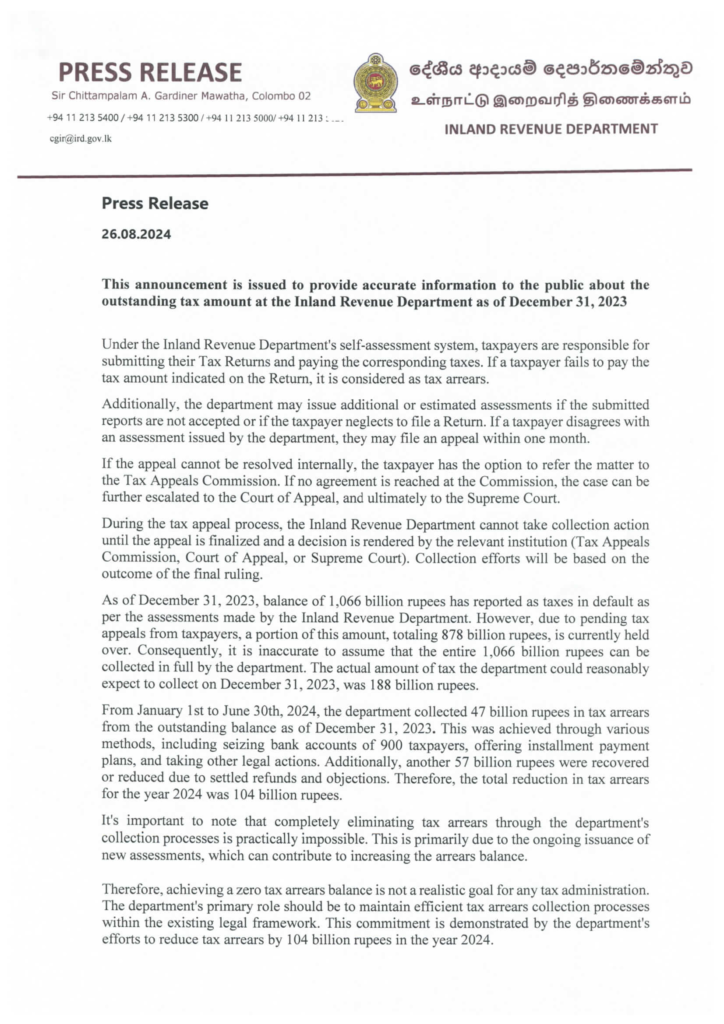
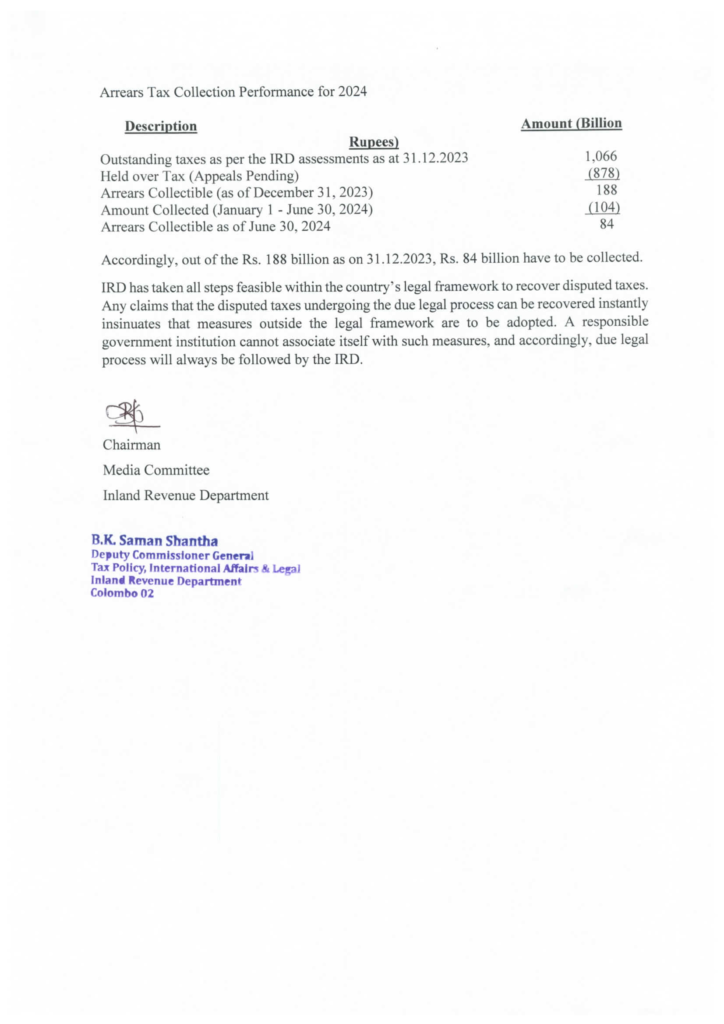
Meanwhile, in a press release issued by the Inland Revenue Department, the speculations involving tax arrears have been debunked, stating that the IRD has taken all steps feasible within the country’s legal framework to recover disputed taxes, and that any claims that the disputed taxes undergoing the due legal process can be recovered instantly insinuates that measures outside the legal framework are to be adopted.

As of December 31, 2023, balance of 1,066 billion rupees has reported as taxes in default as per the assessments made by the Inland Revenue Department. However, due to pending tax appeals from taxpayers, a portion of this amount, totaling 878 billion rupees, is currently held over. Consequently, it is inaccurate to assume that the entire 1,066 billion rupees can be collected in full by the department. The actual amount of tax the department could reasonably expect to collect on December 31, 2023, was 188 billion rupees,” the IRD statement read.

It added: “From January 1st to June 30th, 2024, the department collected 47 billion rupees in tax arrears from the outstanding balance as of December 31, 2023. This was achieved through various methods, including seizing bank accounts of 900 taxpayers, offering instalment payment plans, and taking other legal actions. Additionally, another 57 billion rupees were recovered or reduced due to settled refunds and objections. Therefore, the total reduction in tax arrears for the year 2024 was 104 billion rupees.

The Department emphasised that completely eliminating tax arrears through its collection processes is practically impossible. This is primarily due to the ongoing issuance of new assessments, which can contribute to increasing the arrears balance, the IRD pointed out.

Therefore, achieving a zero tax arrears balance is not a realistic goal for any tax administration, the Department went on, adding that its primary role should be to maintain efficient tax arrears collection processes within the existing legal framework.

This commitment is demonstrated by the department’s efforts to reduce tax arrears by 104 billion rupees in the year 2024.

It further clarified that a responsible government institution cannot associate itself with such measures, and accordingly, due legal process will always be followed by the IRD.
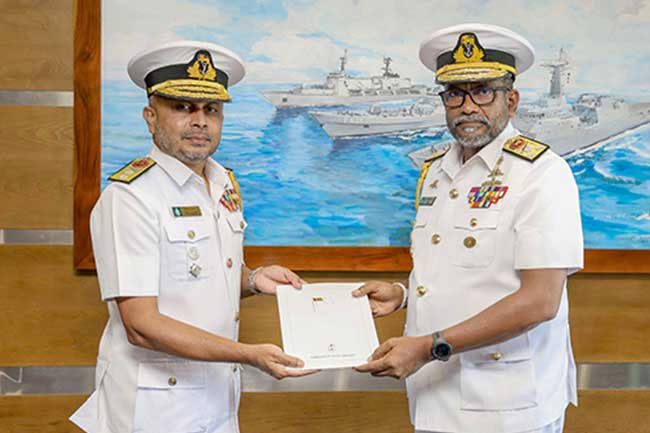
Rear Admiral Kanchana Banagoda takes over as SL Navy Chief of Staff

0

August 27, Colombo (LNW): Rear Admiral Kanchana Banagoda has officially assumed the role of Chief of Staff of the Sri Lanka Navy, effective from 16th August 2024, following his appointment by President Ranil Wickremesinghe, the Commander-in-Chief of the Armed Forces.

The appointment letter was ceremoniously handed over by Navy Commander Vice Admiral Priyantha Perera at Navy Headquarters on the 26th of August.

A seasoned naval officer, Rear Admiral Banagoda embarked on his military career in 1989 as an Officer Cadet in the Executive Branch of the 19th intake. He was commissioned as a Sub Lieutenant in 1991 after completing his basic training at the Naval and Maritime Academy in Trincomalee.

His professional development includes specialised training in Anti-Submarine Warfare in India and significant advancements, including a Staff Course in Bangladesh and multiple advanced degrees in Maritime Policy and Human Resource Management.

Rear Admiral Banagoda’s distinguished service includes commanding various Fast Attack Craft, naval ships, and key establishments. His leadership roles span appointments as Director of Naval Training and command positions in the Southeastern, North Central, and Northern Naval Areas.

Most recently, he served as Commander of the Eastern Naval Area prior to his current appointment.

In recognition of his service and commitment, he has been awarded the prestigious Rana Sura Padakkama for gallantry and the Uththama Sewa Padakkama (USP) for his exemplary conduct.

His extensive career reflects not only his strategic expertise but also his dedication to the nation’s maritime security.

Scattered showers, strong winds expected in multiple provinces: Coastal areas warned of rough seas (Aug 27)

0

August 27, Colombo (LNW): A few showers may occur in Western, Sabaragamuwa and North-western provinces and in Galle and Matara districts, with showers or thundershowers being expected to occur at a few places in Badulla, Ampara and Batticaloa districts during the evening or night, the Department of Meteorology said in its daily weather forecast today (27).

Mainly fair weather prevail elsewhere.

Fairly strong winds about (30-40) kmph can be expected at times over Northern, North-central and North-western provinces and in Hambantota and Trincomalee districts.

The general public is kindly requested to take adequate precautions to minimise damages caused by temporary localised strong winds and lightning during thundershowers.

Marine Weather:

Condition of Rain:
Several spells of showers will occur in the sea areas off the coast extending from Puttalam to Galle via Colombo.
Winds:
Winds will be south-westerly in direction and wind speed will be (30-40) kmph. Wind speed can increase up to (5560) kmph at times in the sea areas off the coasts extending from Trincomalee to Puttalam via Kankasanthurai and Mannar and from Hambantota to Pottuvil. Wind speed can increase up to 50 kmph at times in the sea areas off the coasts extending from Puttalam to Hambantota via Colombo and Galle.
State of Sea:
The sea areas off the coasts extending from Trincomalee to Puttalam via Kankasanthurai and Mannar and from Hambantota to Pottuvil will be rough at times. The sea areas off the coasts extending from Puttalam to Hambantota via Colombo and Galle may be fairly rough at times.

Religious, Civil Society leaders urge Presidential Candidates to address Ethnic Issue in upcoming Election

0

August 26, Colombo (LNW): A coalition of religious, civil society, and academic leaders from across Sri Lanka has compiled a position paper urging presidential candidates to commit to resolving the country’s ethnic conflict.

The paper, the outcome of extensive consultations, proposes policies including regional power-sharing, transitional justice, and equal protection for minorities. The initiative builds on the 2023 “Himalaya Declaration” and calls for candidates to endorse these measures in their manifestos, ensuring implementation regardless of election outcomes.

Key proposals include devolving power, addressing past human rights violations, and enhancing economic and social equality for all communities.

The document has been endorsed by prominent religious figures, academics, and civil society leaders, who stress the importance of cross-party support and effective governance reforms to promote peace and unity in Sri Lanka.

Full Statement:

Position Paper by Members of Religious and Civil Society and the Academic Community from all parts of the country to Presidential Candidates seeking their Commitment to Resolving Sri Lanka’s Ethnic Problem

Background:

This document has been compiled by members of religious and civil society and the academic community from all parts of the country after extensive discussion and consultations conducted over a period of several months. It is to be presented to the presidential candidates to include in their manifestos along with the pledge that they will support its implementation regardless of the outcome of the election. Among other initiatives, this document builds on the initiative taken in April 2023 by a group of Buddhist monks and Tamil Diaspora who formulated the “Himalaya Declaration” as a starting point for a national dialogue towards a political solution.

Objectives:

· Broaden the support for the statement to include other groups including political parties, professional organizations and other interest groups.

· Have consultations with the main presidential candidates

· Candidates pledge to give cross party support to the implementation of the policies and actions outlined below.

· Follow up the implementation of the measures by the elected president

Proposed Policies and Actions:

  1. Power sharing:

o Ensure balanced devolution of power to regions and power-sharing at the centre (Senate – upper chamber), promoting unity while respecting regional autonomy.

o Protection of minority rights: This will apply to regional numerical minorities in all parts of the country.

o Streamline and demarcate administrative districts to ensure greater ethnic and religious cohesion.

o Operationalize national land policy through a land commission and implement the devolution of land and police powers as specified in the 13th Amendment

o Transfer Concurrent List Powers and Stop Interfering with the Devolved list of powers: Empower provincial councils with all devolved concurrent list powers to enable greater local governance and autonomy.

o Conduct Provincial Council and other local government elections without further delay following the Presidential Election

  1. Transitional justice:

o Resolve issues of the war in accordance with international standards of transitional justice: These include missing persons, prisoners, reparations and accountability for gross human rights violations, including emblematic cases.

o Equitable Military Presence: Normalize Troop Levels and ensure that the presence of armed troops in the North and East is proportionate to other regions, fostering a sense of normalcy and security.

o Standardize Policing Practices: Mandate that police operations in the North and East are conducted with the same standards and respect for human rights as in other parts of the country, and recruiting personnel from the same regions.

o Apply principles of transitional justice to the Malaiyaha Tamil community who were deprived of their citizenship at the time of Independence, remain among the most discriminated against and politically, economically and socially marginalised communities and have not received reparations for this grave human rights violation.

o Provide land and housing to the Malaiyaha Tamil people: Confer ownership of houses with adequate land to enable lives of safety and dignity.

  1. Equal Protection

o Safeguard Religious Heritage: Protect religious sites from encroachment and appropriation by adherents of other religions, preserving cultural and religious diversity. Respect the pluralism and diversity of religious communities and local religious traditions in their respective places.

o Reallocate Land to the people: Return land acquired from people during the war including opening of roads to provide access to the public.

o Enforce Language Equality: Ensure the effective implementation of the official languages law, guaranteeing linguistic rights for all communities.

o End Caste Discrimination: Implement measures to eradicate caste-based discrimination throughout the country, ensuring equality and social justice.

o Enhance Employment in State and Private Sectors: Provide equal employment opportunities for ethnic and religious minorities in state and private sector entities, end all discrimination and provide affirmative action to enable economic equity

o Provide Equal Access to State facilities for Economic Wellbeing: Offer financial services to start-up ventures in the North and East on par with other regions, stimulating economic growth and entrepreneurship.

o Malaiyaha Tamils: Ensure that the land rights and other entitlements to government services and support to Malaiyaha Tamils displaced and living in the North and the East are fulfilled without any discrimination.

  1. Good Governance

o Ensure accountability through strengthening the judiciary and respect for the rule of law; End corruption at all levels and promote transparency at all levels

o Create and promote institutions of trust building between the state and the people, and between political parties and ethnic and religious communities.

o Sustainable development while protecting the economically and socially marginalized

o Creation of independent institutions and provide security of tenure to public officers through the reinstitution of Permanent Secretaries to Ministries

o Fulfill international obligations with respect to human rights covenants and to resolutions of the UN system

o Balanced foreign policy reflecting values and national interests and protect the non-aligned legacy of Sri Lanka

Endorsed by;

Ven Dr. Madampagama Assaji Mahanayake Thero
Ven Kalupahana Piyaratana Thero
Fr C.G.Jeyakumar
Bishop (emeritus) Asiri Perera
Mr A.W Hilmy Ahamed
Dr Vinya Ariyaratne
Prof Fazeeha Azmi
Ms Visaka Dharmadasa
Mr S.C.C. Elankovan
Prof T Jayasingam
Dr S Jeevasuthan
Mr V. Kamaladas
Mr Niranjan
Dr Dayani Panagoda
Dr Jehan Perera
Dr Paikiasothy Saravanamuttu
Prof Kalinga Tudor Silva
Prof S S Sivakumar
Dr Shanmugarajah Srikanthan
Dr Joe William

Customs Dept targets Record Revenue of Rs.1.5 trillion in 2024 with China’s Support

0

By: Staff Writer

August 26, Colombo (LNW): Sri Lanka Customs (SLC) is poised to exceed its 2023 revenue of Rs. 970 billion, setting an ambitious goal of Rs. 1.5 trillion for 2024, thanks to increased Value Added Tax (VAT) and the lifting of import restrictions in October 2023.

To further strengthen its capabilities, China has committed to financially backing and enhancing Sri Lanka Customs by introducing advanced technologies.

This collaboration will unfold in three phases, with a focus on safety, security, and international cooperation under the ‘Smart Customs Project.’ China is also committed to bolstering the ‘Single Window System,’ which aims to improve mutual understanding and security.

Sarath Nonis, the Director-General of Sri Lanka Customs, expressed confidence that the Department is on track to achieve a historic revenue milestone of Rs. 1 trillion by mid-September 2024.

Nonis highlighted the significant progress in tax revenue collection this year. He announced that the Department had already reached Rs. 973 billion in tax revenue, and he is optimistic about surpassing the Rs. 1 trillion mark for the first time in history by the following month.

He attributed this success to enhanced detection of commercial transactions and smuggling, along with additional revenue from fines and penalties.

He emphasized that technological advancements, particularly the implementation of the Automated Risk Management Unit, have played a crucial role in minimizing human intervention and improving operational efficiency.

Addressing concerns about corruption, Nonis stressed that Sri Lanka Customs has taken decisive actions to combat it, including suspending around 25 officers and initiating legal proceedings against those involved in corrupt practices.

He encouraged industry stakeholders to report any wrongdoing, assuring them of the Department’s commitment to maintaining high standards of trade facilitation.

In addition to discussing revenue, Nonis provided insights into Sri Lanka’s spice export performance.

He noted that spice exports have shown modest growth, reaching $393 million in 2023, up from $355 million in 2013, reflecting an annual growth rate of just 1.03%. Approximately 32% of these exports go to India, 24% to Mexico, 10% to the US, and 5% to Peru, with minimal exports to other countries.

 Nonis also highlighted the opportunities in the European Union (EU) market, which is expected to reach $7 billion by 2025. However, Sri Lanka’s current contribution to this market is only 0.6%, indicating the need for a stronger presence in higher-value markets.

To enhance Sri Lanka’s competitive edge in global spice markets, Nonis urged the industry to focus on value addition, product differentiation, and quality assurance. He called for collaborative efforts between the Government, industry, and trade associations to elevate Sri Lanka’s spice sector and drive economic growth.

IMF Proposes Progressive Tax Reforms to Boost Sri Lanka’s Revenue: A Focus on Fairness and Property Taxation

0

By: Staff Writer

August 26, Colombo (LNW): The International Monetary Fund (IMF) has proposed reforms to enhance the fairness and progressivity of Sri Lanka’s tax system by introducing a nationwide property tax.

The report suggests taxing the imputed rental value of owner-occupied homes as an effective way to generate revenue while adhering to constitutional limits that prevent direct taxation of property at the central government level.

This approach, combined with a progressive tax rate and suitable exemption thresholds, is expected to increase fiscal consolidation by targeting wealthier individuals with minimal economic distortion.

For effective implementation, the IMF emphasizes the need for substantial investments in data infrastructure, including the establishment of a digital registry for property sales and rental values.

Additionally, the report proposes improving subnational assessment rates (local property taxes) and suggests complementary reforms at both the national and subnational levels to ensure a fairer and more productive tax system.

Meeting the goals set under the current IMF program will necessitate new central government taxes. The IMF notes that Sri Lanka has committed to overhauling its property tax system and introducing a wealth transfer tax to support fiscal consolidation.

However, given that the constitution directs property-related tax revenue to subnational governments, which currently contributes around 0.2% of GDP, the IMF recommends taxing imputed rental income from owner-occupied and vacant residential properties.

 This strategy would allow the central government to raise revenue without breaching constitutional constraints, as the tax would be levied under the Inland Revenue Act.

Imputed rental income is defined as the hypothetical income homeowners could earn if they rented out their properties. For taxation purposes, this income could be calculated as a fixed percentage of the property’s market value.

While this method avoids the legal challenges of direct property taxation, it shares similar economic implications, such as enhancing the tax system’s progressivity. However, the limited data on market values makes it difficult to predict the revenue generated by such a tax, with the IMF cautioning that it may fall short of expectations.

To address potential shortfalls, the IMF suggests additional tax reforms, including revising the capital gains tax to replace the current exemption for the first home with a value threshold. The report also recommends aligning the VAT treatment of owner-occupied housing with international standards by taxing the first sale of residential property.

Moreover, increasing stamp duties on lease contracts and vehicle registration fees could reduce transfers to local governments. In the medium term, the IMF advises reducing reliance on stamp duties at both central and local levels. If further revenue is needed, an electricity surcharge could be introduced, although it would be less equitable and not as effectively targeted.

Sri Lanka affirms support for independent EU election observation mission

0

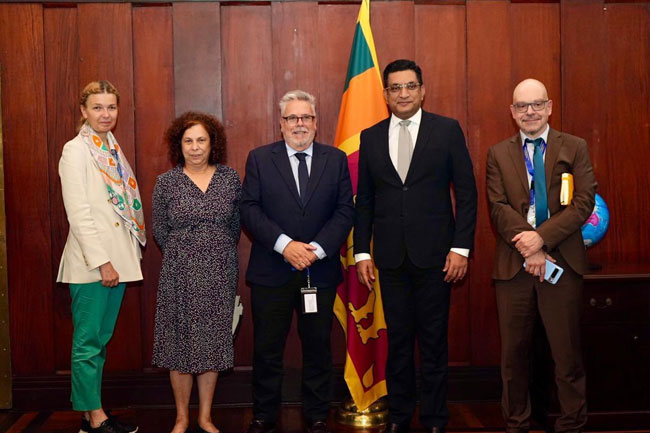
August 26, Colombo (LNW): Sri Lankan Foreign Minister Ali Sabry met today (26) with Nacho Sánchez Amor, Chief Observer of the EU Election Observation Mission (EOM) and Member of the European Parliament, at the Foreign Ministry.

The meeting focused on ensuring full government cooperation for a transparent and independent observation process during the upcoming presidential election.

The EU, responding to an invitation from Sri Lanka’s Election Commission, has decided to deploy an EOM for the presidential election scheduled for 21 September 2024.

The EU’s longstanding involvement in monitoring Sri Lankan elections—this being their seventh mission—underscores its commitment to democratic processes in the country.

Minister Sabry reaffirmed the government’s readiness to facilitate the mission’s work throughout the election period, ensuring impartial access and transparency.

The mission is expected to provide critical insights into the electoral process, helping to enhance credibility and fairness.

Nacho Sánchez Amor was appointed Chief Observer by Josep Borrell, High Representative of the EU for Foreign Affairs and Security Policy, reflecting the EU’s continuous engagement and partnership with Sri Lanka.

Sri Lankan Trade Associations call for Industrial Water Tariff Reductions

0

By: Staff Writer

August 26, Colombo (LNW): A coalition of Sri Lankan trade associations is urging the government to lower water tariffs for industrial users to alleviate financial burdens on local industries. T

he group, which includes prominent organizations like the Joint Apparel Association Forum (JAAF), the Federation of Chambers of Commerce and Industry in Sri Lanka (FCCISL), the European Chamber of Commerce in Sri Lanka (ECCSL), and the Exporters Association of Sri Lanka (EASL), is advocating for a fair pricing system that reflects the actual cost of utilities.

Recently, the Sri Lankan government announced a new pricing formula aimed at reducing water tariffs. Cabinet Spokesman and Minister of Transport, Highways, and Mass Media Bandula Gunawardana revealed that a 7% reduction in water tariffs for domestic users would be implemented starting 23 August.

Additionally, a gazette was published that includes a 4.5% reduction for government hospitals and a 6.3% reduction for places of religious significance. These changes, initiated by Water Supply and Estate Infrastructure Development Minister Jeevan Thondaman, took effect on 21 August.

However, the trade associations expressed concern that these reductions did not extend to industrial tariffs. They argue that water is a crucial component in the operations of Sri Lankan industries and that high tariffs could harm competitiveness and deter investment, particularly in sectors such as manufacturing.

 JAAF Secretary General Yohan Lawrence emphasized the importance of a progressive approach to water tariffs to support economic recovery and maintain global competitiveness.

The new pricing formula, developed in agreement with the International Monetary Fund (IMF), is designed to reflect the actual cost of water supply. Following recent reductions in fuel and electricity tariffs, there is growing pressure to further adjust water tariffs, particularly for industrial users.

Despite the reductions in domestic tariffs, industrial water tariffs have remained unchanged. For instance, the tariff for water supplied to Board of Investment (BOI) zones rose from Rs. 65 to Rs. 85 in 2022 and was further increased to Rs. 150 per unit in 2023.

The trade associations argue that, given the recent reductions in electricity and fuel costs, there is a strong case for revisiting and lowering industrial water tariffs as well.

The existing water charges were implemented by the National Water Supply and Drainage Board starting 1 August 2023, following the approved tariff policy and formula.

The trade associations believe that reducing water tariffs for industrial users is essential to support economic recovery and ensure that essential services remain affordable for all Sri Lankans.

Sri Lanka’s Budget deficit persists: Challenges of Revenue Targets, Spending, and Debt Management

0

By: Staff Writer

August 26, Colombo (LNW): Sri Lanka continues to grapple with its longstanding budget deficit, a challenge that has plagued successive governments due to poor financial management. Recent findings from Verité Research highlight that the country is set to miss its budget revenue targets for the 33rd consecutive year, continuing a pattern of borrowing to cover deficits.

Despite an ambitious goal in the 2024 Budget to increase revenue by 42% from the previous year, Verité Research predicts a more modest outcome, with a 14% shortfall compared to the government’s optimistic projections.

This aligns closely with the International Monetary Fund’s (IMF) forecasts, underscoring the difficulties in achieving significant revenue growth.

The government’s estimates also show a significant rise in total expenditure for 2024, with interest payments accounting for 66% of the increased allocations. However, budget deficits have consistently exceeded the prescribed limits, including the proposed deficit for 2024, which stands at 7.6% of GDP.

In the first half of 2024, Sri Lanka’s budget deficit decreased by 52% to 515.7 billion rupees, while revenues increased by 42% to 1,860.6 billion rupees.

 Tax revenues saw a 43% increase, while non-tax revenues grew by 30%. Current spending, aided by stable exchange rates and lower interest rates due to effective monetary policy, decreased by 5% to 2,218.4 billion rupees.

 However, the prospect of wage hikes for state workers threatens to push current spending higher unless there is a reduction in the public sector workforce.

Capital spending increased by 5% to 344 billion rupees, slightly higher than the previous year’s 234.1 billion rupees. As foreign aid projects resume with the completion of bilateral debt restructuring, capital spending is expected to rise further.

The overall budget deficit decreased to 598.7 billion rupees, or about 1.9% of the projected GDP for the year. This figure does not account for state bank recapitalization, for which 450 billion rupees have been allocated. Domestic borrowings also saw a significant decline to 515 billion rupees, compared to 1,218 billion rupees in the previous year, while net foreign borrowings increased slightly.

Interest costs decreased by 10% to 1,142.1 billion rupees, as nominal rates began to fall due to the reduced deficit and decreased demand for credit from state enterprises and the private sector. The overall budget deficit is now lower than the interest bill, with the primary account of the budget showing a surplus of 543 billion rupees.

Sri Lanka’s budget issues have roots in historical economic policies, including the collapse of the US dollar in 1971 and subsequent attempts to target money supply without a clean float. The country’s current high inflation target, which often triggers currency crises, is based on the flawed doctrine of a trade-off between inflation and growth.

 Analysts warn that this flawed monetary framework could destabilize the system once private credit recovers, potentially leading to a default on restructured debt.

Official exchange rates in SL today (Aug 26)

0

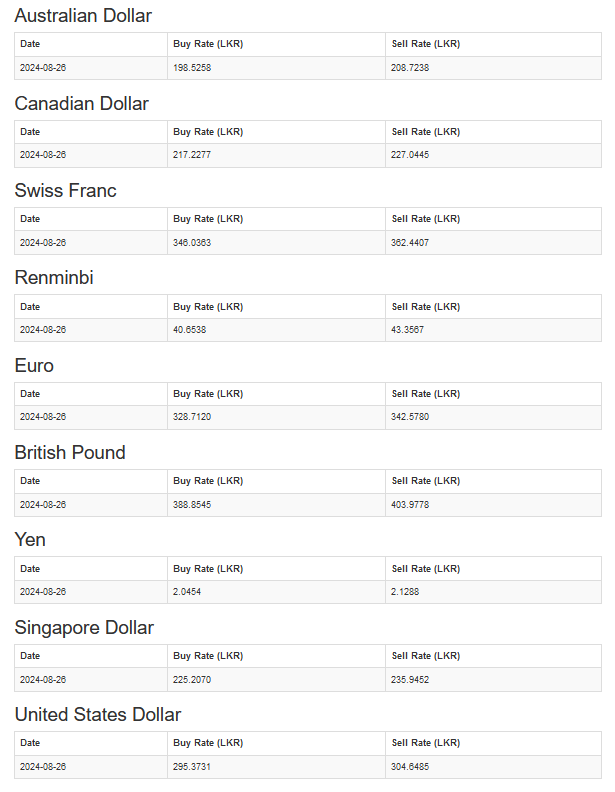
August 26, Colombo (LNW): The Sri Lankan Rupee indicates slight appreciation against the US Dollar today (26) in comparison to last week, as per the official exchange rates released by the Central Bank of Sri Lanka (CBSL).

Accordingly, the buying price of the US Dollar has dropped to Rs. 295.37 from Rs. 296.55, and the selling price to Rs. 304.64 from Rs. 305.80.