President Ranil Wickremesinghe warns against altering Sri Lanka’s IMF agreement, stating that the terms are non-negotiable: emphasises the importance of the agreement, which ensures about US$700 million every six months from major financial institutions, crucial for stabilising the economy: cautions that changes could lead to halted IMF funding and a lengthy renegotiation process, risking economic instability.
SJB Presidential Candidate and Opposition Leader Sajith Premadasa says for the first time in the 76 years of democratic history, the Samagi Jana Balawegaya (SJB) remains as an opposition party that added value to the school system in Sri Lanka through ‘Sakwala’ and ‘Husma’ initiatives, amounting close to Rs. 1 billion: asserts he has the best, strongest and smartest team to work with.
Anura Kumara Dissanayake, presidential candidate for the National People’s Power (NPP), launches his manifesto titled “A Thriving Nation, A Beautiful Life” in Colombo: The event, attended by party members and dignitaries, emphasises the manifesto as a binding social contract: NPP MP (Dr.) Harini Amarasuriya stresses the party’s commitment to adhering to the manifesto’s values and policies.
The Election Commission reports nearly 1,000 complaints regarding the upcoming presidential election as of 26 August: Of the 925 complaints received since 31 July, 901 involve alleged election law violations, one concerns violence, and 23 are miscellaneous: The surge in complaints has alarmed the Commission, while election monitoring bodies, including PAFFREL, have recorded about 250 issues, reflecting growing concerns over election fairness and transparency ahead of the 21 September vote.
The Ministry of Education announces the third term for government and recognised schools begins today (26), following the end of the second term on August 16: This term will run until November 22 and is crucial for students preparing for year-end exams: Teachers are urged to complete the curriculum and focus on revision, with schools balancing academic and extracurricular activities: The Ministry stresses adherence to the academic calendar and maintaining standards.
Sri Lanka Customs, led by Director General Sarath Nonis, is set to surpass Rs 1 trillion in revenue shortly: At the Spices and Allied Products Producers and Traders Association AGM, Nonis highlighted the importance of export earnings for economic recovery and urged exporters to focus on value-added goods: Customs aims for Rs 1.5 trillion in revenue this year and is enhancing trade efficiency and market penetration, particularly in the European spice market.
Australia’s United Petroleum plans to invest US$ 20-30 million in Sri Lanka to establish a food manufacturing plant for its ‘Pie Face’ brand, producing pies and convenience foods: Set to begin in early 2025, the facility will be located in a Board of Investment zone and aims to export 80% of production to key markets: Additionally, UPL will invest in 50 new fuel stations and convenience centres across Sri Lanka.
The Postal Department will receive a crucial shipment of registered postal ballot papers today (26) for the 2024 Presidential Election: Distribution of polling cards starts on 3 September, with 8 September set aside for broader distribution: All postal staff leave is suspended until the election’s end to ensure smooth operations: Postal voting will occur on 4, 5, and 6 September, with additional days on 11 and 12 September. Out of 736,589 postal vote applications, 712,321 are eligible.
Renowned Sri Lankan filmmaker Sugathapala Senarath Yapa passes away at 89: Celebrated for his visionary contributions to Sinhala cinema, Yapa directed iconic films such as “Hanthane Kathawa,” “Pembara Madhu,” and “Induta Mal Mitak”: His works are acclaimed for their profound social themes and artistic storytelling, significantly impacting the nation’s cinematic heritage.
Sri Lanka Cricket captain Dhananjaya de Silva attributes the first Test loss to England at Old Trafford to mistakes in the first innings, acknowledging missed opportunities and the need for better execution: Despite individual efforts, including Kamindu Mendis’ century, the team faltered under England’s disciplined bowling: Dinesh Chandimal praises Kamindu and hints this could be his final England tour after battling a recurring thumb injury.
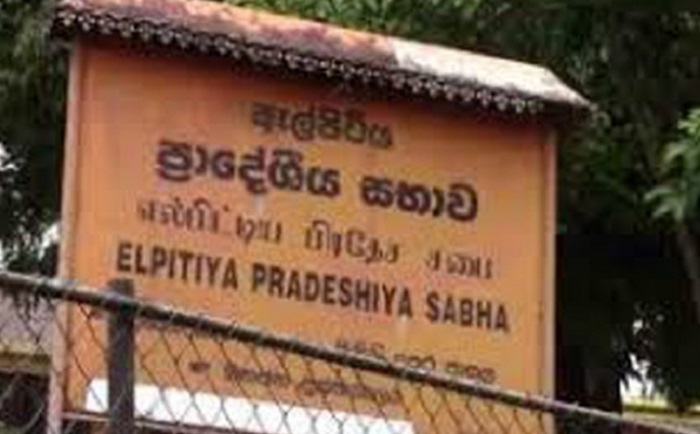
August 26, Colombo (LNW): The National Election Commission has released the official schedule for the upcoming election of the Elpitiya Pradeshiya Sabha.
Candidates interested in participating will be able to submit their deposits from 26 August to 11 September 2024.
Nominations for the election will be accepted from 09 to 12 September.
All submissions will be processed at the Galle District Secretariat, as specified by the Returning Officer for the Elpitiya Pradeshiya Sabha.
The term of the Elpitiya Pradeshiya Sabha, which began in November 2019, officially concluded on 06 March 2024 following the repeated failure of the budget proposal.
This persistent budget defeat led to the appointment of a Special Commissioner, as stipulated by the Local Council Act.
Additionally, Prime Minister Dinesh Gunawardena issued a special gazette extending the term of the Elpitiya Pradeshiya Sabha members until 04 November 2024.
This extension allows for a smooth transition and preparation for the upcoming election.
August 26, Colombo (LNW): The Sri Lankan Rupee (LKR) indicates slight appreciation against the US Dollar today (26) in comparison to last week, as per leading commercial banks in the country.
At Peoples Bank, the buying price of the US Dollar has dropped to Rs. 294.68 from Rs. 295.67, and the selling price to Rs. 305.26 from Rs. 206.27.
At Commercial Bank, the buying price of the US Dollar has dropped to Rs. 294.19 from Rs. 295.43, and the selling price to Rs. 304 from Rs. 305.25.
At Sampath Bank, the buying price of the US Dollar has dropped to Rs. 295.50 from Rs. 296.50, and the selling price to Rs. 304.50 from Rs. 305.50.
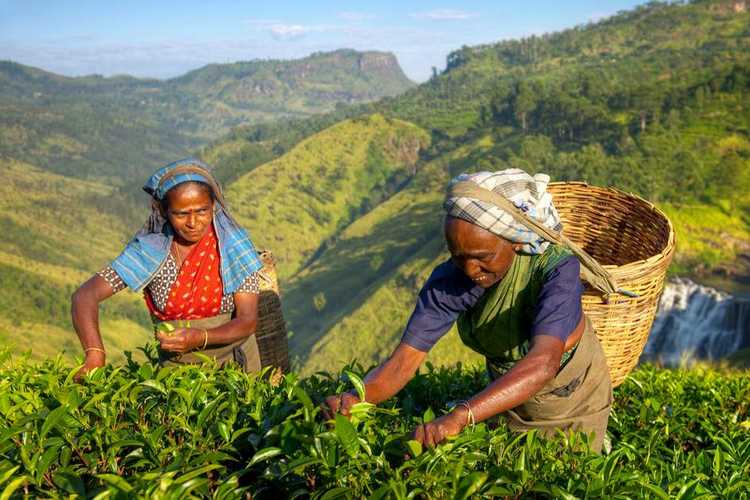
August 25, Colombo (LNW): The Ministry of Agriculture and Plantation Industries has reinstated its fertiliser subsidy programme to alleviate costs for tea growers in Sri Lanka.
This initiative, aimed at reducing financial pressures on tea cultivators, involves lowering the prices of five essential types of fertiliser produced by the State Fertiliser Company.
Under this new scheme, the cost of a 50kg bag of tea fertiliser has been slashed by Rs. 4,000, providing significant relief to tea planters nationwide.
The fertiliser types affected by this price reduction include T 200, T 750, U 709, U 834, and T 65.
Minister of Agriculture and Plantation Industries, Mahinda Amaraweera, announced that the programme will be funded with an investment of Rs. 2.4 billion from the Sri Lanka Tea Board, with no government funds being used.
This substantial financial commitment reflects the government’s dedication to supporting the tea industry and stabilising its input costs.
August 26, Colombo (LNW): President Ranil Wickremesinghe has issued a strong caution against any attempt to alter Sri Lanka’s agreement with the International Monetary Fund (IMF), emphasising that the terms are not open for renegotiation.
The President highlighted the significance of the agreement, noting that it secures approximately US$ 700 million every six months from the IMF, Asian Development Bank, and World Bank, which is crucial for stabilising the nation’s finances until January next year.
Drawing comparisons with Greece’s economic crisis, Wickremesinghe underscored the potential dangers of deviating from the current programme, which was established to prevent Sri Lanka from sliding back into economic turmoil.
He expressed particular concern over proposals from the Samagi Jana Balawegaya (SJB) and Janatha Vimukthi Peramuna (JVP) to reconsider the arrangement, warning that any modifications could lead to the suspension of IMF funding in the coming year.
The President explained that restarting negotiations with the IMF would be a lengthy process, potentially taking up to three months, followed by a six-week waiting period for approval from the IMF Board of Directors.
Given the precarious state of the economy, Wickremesinghe argued that it would be unwise for Sri Lanka to endure such a delay in financial support.
The President made these remarks during a United National Party (UNP) meeting held yesterday (25) at the party headquarters, Sirikotha, in Colombo.
August 26, Colombo (LNW): Anura Kumara Dissanayake, the presidential candidate for the National People’s Power (NPP), has officially launched his election manifesto in Colombo, outlining his vision for the nation.
The manifesto, titled “A Thriving Nation, A Beautiful Life,” was unveiled at an event attended by party members, religious leaders, and other dignitaries.
During the ceremony, NPP parliamentarian Harini Amarasuriya highlighted the stark contrast between typical political promises and the NPP’s approach.
She expressed that many parties often disregard their manifestos once in power, but emphasised that the NPP’s manifesto represents a binding social contract between the party and the people.
According to Amarasuriya, this contract is not just a collection of promises but a commitment to governing in alignment with the values and policies set out within the manifesto.
The manifesto is seen as a roadmap for transforming the country, reflecting the party’s intention to remain true to its pledges if entrusted with leadership.
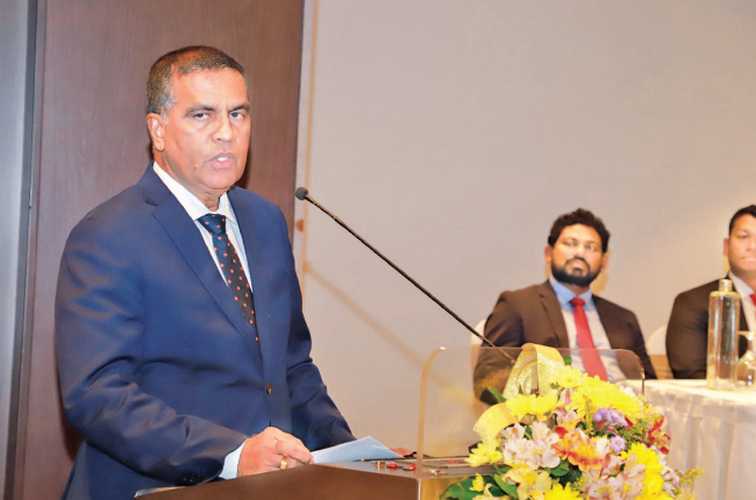
August 26, Colombo (LNW): Sri Lanka Customs is on the verge of achieving a significant milestone by surpassing Rs 1 trillion in revenue within the next few days, according to its Director General, Sarath Nonis.
He made this announcement at the 40th Annual General Meeting of the Spices and Allied Products Producers and Traders Association, held recently at Hilton Residencies, Colombo.
Nonis emphasised the crucial role of export earnings in revitalising the nation’s economy during challenging times. He urged exporters to focus on producing value-added goods to maximise export revenue and tap into high-value markets.
“As the country navigates economic and social challenges, export growth is essential in stabilising our financial situation. The government is shifting towards an export-oriented economic model by implementing policies aimed at streamlining bureaucratic processes, attracting foreign investment, and enhancing low-cost industries.
Numerous trade agreements are also being pursued to provide preferential access to larger markets,” he said.
The Director General further highlighted the impressive achievements of the Customs Department, which recorded its highest-ever tax revenue of Rs 972 billion in 2023.
This year, the department targets Rs 1.5 trillion in revenue, and as of August, it has already reached Rs 975 billion, positioning it to achieve the historic Rs 1 trillion mark soon.
Addressing the spice industry, Nonis pointed out that Sri Lanka’s share in the European spice market remains minimal. He stressed the need for greater value addition to compete more effectively in lucrative global markets.
“Our penetration into key markets reveals that around 32% of our spice exports go to India, 24% to Mexico, 10% to the USA, and 5% to Peru. However, our share in the European spice market, projected to reach USD 7 billion by 2025, is currently a mere 0.6%. This indicates the untapped potential for exporting higher-value products.”
Nonis called for further studies to better understand the export performance of various sectors and the impact of value addition under export facilitation schemes.
He also highlighted ongoing efforts to combat malpractices in the export process, including enhanced detection of fraud and smuggling, which have generated substantial revenue through fines and improved Sri Lanka’s standing in international trade.
To improve operational efficiency, Customs has introduced automated cargo clearance systems and initiatives to minimise human intervention, thereby enhancing trade compliance.
“Our strategic plan for the next five years prioritises integrity and the development of high standards in our operations,” he added.
During the meeting, Christopher Fernando of Malwatte Valley Plantations PLC was elected as the new President of the association.
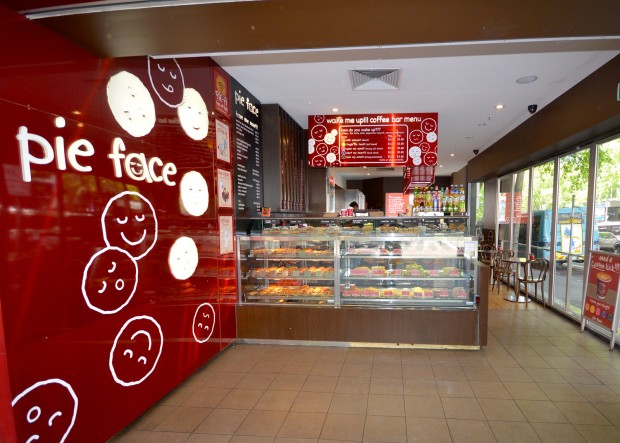
August 26, Colombo (LNW): Australia’s United Petroleum is planning a substantial investment of US$ 20-30 million in a food manufacturing venture in Sri Lanka, aiming to produce pies and other convenience foods under the iconic Australian brand ‘Pie Face’, a report by Daily Mirror disclosed.
This new venture is expected to commence by the first quarter of 2025, according to Dr. Prabath Samarasinghe, Director and CEO of United Petroleum Lanka (UPL), a fully-owned subsidiary of the Australian company.
While the exact location of the manufacturing facility is yet to be confirmed, Dr. Samarasinghe mentioned that the plant would be situated in a Board of Investment (BOI) zone.
The company’s strategic focus is on exporting 80 percent of its production to key markets such as India, Malaysia, Singapore, South Africa, and the Middle East.
To achieve this, UPL plans to relocate one of its four existing factories from Australia to Sri Lanka, primarily to cut down on logistics costs for exports to Europe and Asia.
Once operational, the plant is projected to produce an impressive 15,000 units of pies and other convenience food items per minute. The Pie Face brand is well-known for its premium French-style pies, which have garnered multiple awards for their quality.
United Petroleum’s venture in Sri Lanka also aims to tap into the Indian market, leveraging Sri Lanka’s geographic proximity and logistical advantages.
In addition to the food manufacturing project, UPL has plans to invest heavily in establishing 50 new fuel stations across Sri Lanka. This development is part of a broader mixed-use strategy that may include the creation of full-scale convenience centres featuring residential apartments, entertainment zones, and food outlets.
The company has already identified over 70 locations for these ventures, with ambitions to convert the sites into comprehensive convenience centres offering diverse services and real estate opportunities.
Dr. Samarasinghe highlighted that these ventures are designed not only to expand United Petroleum’s footprint in Sri Lanka but also to create a range of integrated services that align with evolving market needs and consumer preferences.
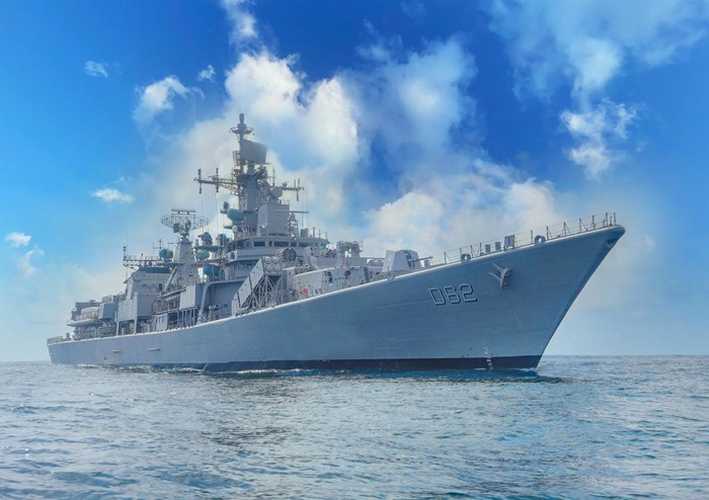
August 26, Colombo (LNW): The Indian Navy’s flagship warship, INS Mumbai, is set to arrive in Colombo today for a three-day visit, where it will be ceremonially received by the Sri Lanka Navy.
The visit, announced by the Indian High Commission, underscores the deepening maritime cooperation between the two neighbouring countries.
INS Mumbai is the third vessel in the Delhi-class destroyers, a symbol of India’s naval prowess, built indigenously and commissioned into service on 22 January 2001.
Constructed at Mazagon Dock Limited in its namesake city, the ship recently completed a comprehensive mid-life upgrade and rejoined the Eastern Naval Command in Visakhapatnam on 8 December 2023.
This marks INS Mumbai’s maiden visit to Sri Lanka and the eighth call by Indian naval vessels to Sri Lankan ports this year, following earlier visits by INS Kabra, Karanj, Kamorta, and Shalki, alongside Indian Coast Guard ships Samarth, Abhinav, and Sachet.
A key highlight of this visit is the delivery of critical spare parts for the Dornier maritime patrol aircraft operated by the Sri Lanka Air Force (SLAF). The Dornier aircraft, inducted two years ago, plays a vital role in surveillance across Sri Lanka’s expansive maritime zones and significantly enhances search and rescue operations.
The Indian Navy has been instrumental in supporting the maintenance and operation of this aircraft, providing technical assistance, spares, and training for SLAF pilots and navigators. Earlier this year, Indian ships like INS Kabra and ICGS Sachet also delivered essential spare parts for the Sri Lanka Coast Guard vessel Suraksha.
During its stay, INS Mumbai will host a familiarisation tour for Sri Lanka Navy personnel to foster knowledge exchange and share best practices. Such collaborations have been ongoing, as demonstrated by the recent visit of Sri Lankan naval cadets aboard the submarine Shalki during a previous port call.
The Indian Navy also continues to provide specialised training, including in hydrography, aimed at enhancing the operational capabilities of the Sri Lanka Navy.
INS Mumbai is scheduled to depart Colombo on 29 August 2024, concluding yet another chapter in the growing defence partnership between the two nations.
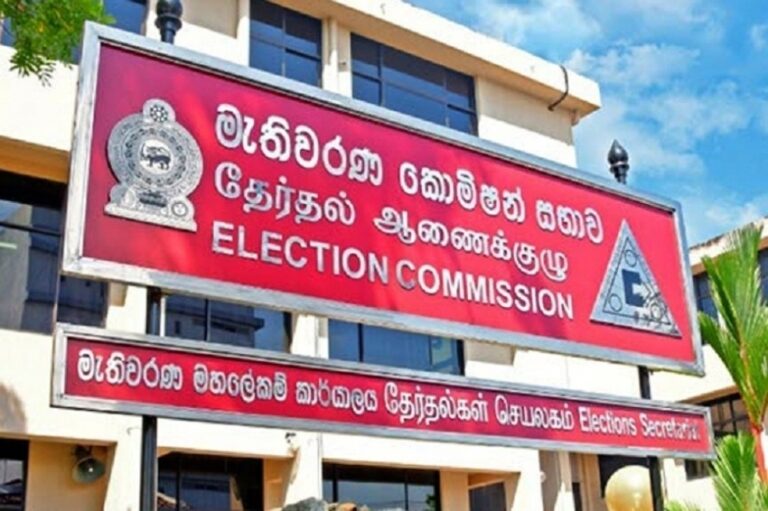
August 26, Colombo (LNW): The Election Commission of Sri Lanka has reported a significant rise in complaints related to the forthcoming presidential election.
As of 26 August, nearly 1,000 complaints have been registered, reflecting growing concerns over election conduct.
Between 31 July and 26 August, the Commission received 925 complaints. Of these, 901 pertain to alleged violations of election laws, one involves an act of violence, and 23 are classified as miscellaneous concerns.
The surge in complaints within such a short period has been described by the Commission as highly alarming.
In parallel, election monitoring bodies have expressed growing unease over the misuse of state resources during the campaign period.
The People’s Action for Free and Fair Elections (PAFFREL) has logged approximately 250 complaints in connection with election-related irregularities.
Its Executive Director Rohana Hettiarachchi noted that this figure is expected to increase as the election date approaches, underscoring the need for vigilant oversight.
The mounting complaints signal rising tensions and highlight the challenges of ensuring a fair and transparent electoral process as the country prepares for the critical presidential election, which is scheduled for September 21, 2024.