Home Blog Page 98

Does the Epstein Scandal Reach Sri Lanka? Separating Fact from Speculation in a Global Controversy

0

LISTEN TO STORY

WATCH STORY

By: Isuru Parakrama

February 08, Colombo (LNW): The name Jeffrey Epstein continues to cast a long and troubling shadow over international politics, finance, and elite social networks. Years after the death of this convicted paedophile in a New York jail cell in 2019, fresh document releases and renewed media scrutiny have kept his case firmly in the public eye.

As millions of pages of records have been unsealed between 2024 and 2026, questions have emerged across many countries: was there any connection to Epstein’s network, and could local figures be implicated? In Sri Lanka, similar concerns have surfaced, fuelled by social media rumours and fragmented online claims.

A closer examination, however, suggests that the island nation has remained largely untouched by the scandal.

Recent analysis of the publicly released archive of Epstein-related documents indicates that Sri Lanka is mentioned 188 times across emails, travel notes, and correspondence, but these references are overwhelmingly incidental and carry no indication of criminal links or operational involvement in Epstein’s activities.

These mentions largely appear in passing contexts, such as individuals noting that they were “in Sri Lanka”, planning visits, or referring to time zones, residences, or professional backgrounds. Legal experts and media analysts have repeatedly stressed that such raw database “hits” are meaningless without proper context.

Importantly, none of the documents link Sri Lanka to Epstein’s trafficking network, abuse operations, or financial dealings. Nor do they suggest that any Sri Lankan individuals were involved in facilitating or concealing his crimes.

The references are scattered across thousands of files and do not form any coherent pattern. In practical terms, they reflect the global nature of elite travel and communication rather than any substantive connection.
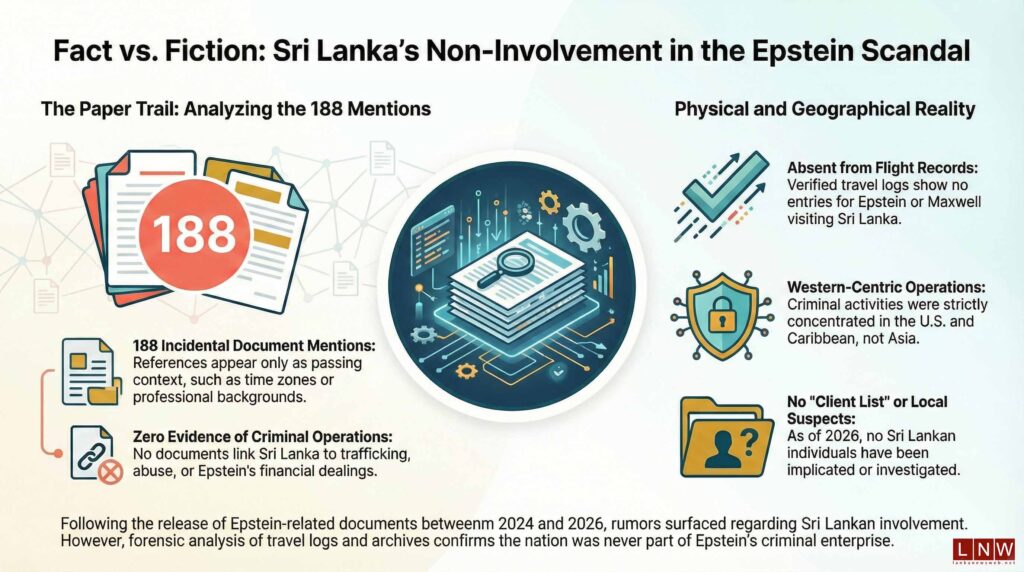
Flight records and travel logs further reinforce this conclusion. Epstein’s documented movements between the 1990s and early 2000s, including those disclosed during the prosecution of Ghislaine Maxwell, show extensive travel across the United States, Europe, the Caribbean, and parts of the Middle East. Notably absent are any entries involving Sri Lanka or major regional hubs such as Colombo. There is no verified evidence that Epstein or Maxwell ever visited the country.

This geographical reality aligns with what is known about Epstein’s operations. His core activities were concentrated in specific locations: his Manhattan townhouse, Palm Beach estate, New Mexico ranch, and Little St. James island in the US Virgin Islands. These sites formed the physical backbone of his trafficking network. Asia, including South Asia, does not feature in serious investigative accounts of his criminal enterprise.

Despite this, fringe theories occasionally circulate online, suggesting hidden connections between Epstein and various countries, including Sri Lanka. These claims often rely on misinterpreted documents, anonymous blog posts, or recycled conspiracy narratives.

Similar to allegations about cannibalism or secret “client lists”, such stories thrive in the absence of context and in an environment of mistrust towards institutions. However, no credible investigative body, court, or journalistic outlet has produced evidence supporting such assertions in relation to Sri Lanka.

Sri Lankan media organisations and independent fact-checkers have also examined the released files. Their conclusions mirror international assessments: references to Sri Lanka are casual and background-related, and no Sri Lankan names or entities are flagged for further investigation. In many cases, personal identifiers remain redacted for privacy reasons, meaning that country-level searches yield mentions without revealing any meaningful personal or legal significance.
The absence of Sri Lankan involvement does not, however, diminish the global relevance of the Epstein scandal. On the contrary, the case has highlighted systemic failures in law enforcement, judicial accountability, and elite oversight that resonate far beyond the United States. For countries like Sri Lanka, it serves as a cautionary example of how wealth and influence can distort justice, and how victims’ voices can be marginalised for years.

It also raises broader questions about transparency in international financial and social networks. Epstein’s ability to cultivate relationships across borders illustrates how globalised elite circles operate, often with minimal scrutiny. While Sri Lanka does not appear to have been part of this network, the case underscores the importance of regulatory vigilance, journalistic independence, and institutional integrity everywhere.

As of early 2026, no investigations have implicated Sri Lankan individuals in Epstein-related offences, and the US Department of Justice has stated that no verifiable “client list” exists. Ghislaine Maxwell remains imprisoned, and most inquiries have been formally closed due to a lack of prosecutable evidence. Victims’ advocates continue to demand full transparency, but nothing released so far suggests any connection to Sri Lanka.

In a closing remark, it should be noted that while Sri Lanka’s name appears sporadically in the vast Epstein document archive, these references are incidental and legally insignificant. There is no credible evidence linking the country, its citizens, or its institutions to Epstein’s crimes. The controversy remains a predominantly Western and Atlantic-centred scandal. For Sri Lanka, the story is not one of involvement, but of observation—a reminder of how global power, secrecy, and abuse can intersect, and why accountability must remain a universal priority.

*Photos: Internet
Attorney General Dismisses Claims of Pulling Out of Overseas Legal Actions

0

LISTEN TO STORY

WATCH STORY

By: Staff Writer

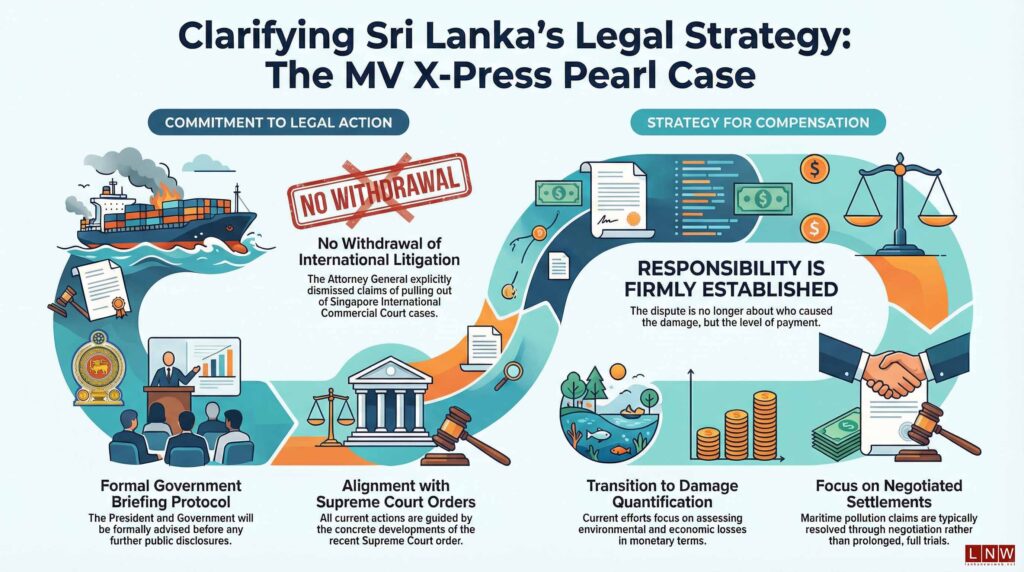
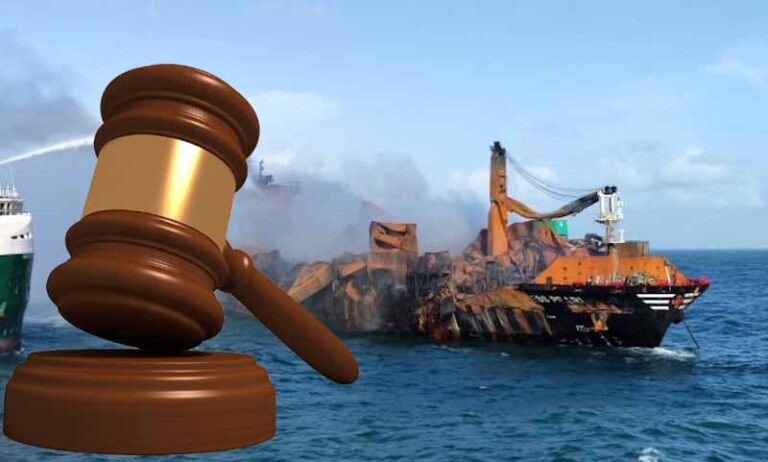
February 08, Colombo (LNW): The Attorney General has categorically denied reports suggesting that Sri Lanka is preparing to withdraw legal proceedings filed in foreign jurisdictions, including cases before the Singapore International Commercial Court.

Addressing the speculation with The Sunday Morning, Attorney General Parinda Ranasinghe stated that there is no intention to abandon any ongoing litigation. He clarified that while certain strategic considerations are still under review, no decision has been taken to discontinue proceedings. Once these matters are settled, he said, the Government and the President will be formally briefed on the recommended way forward. At present, he noted, the only confirmed development is the recent order issued by the Supreme Court.

With regard to suggestions that I am attempting to withdraw the case, there is absolutely no truth to them. We do not intend to withdraw any pending litigation. There are several strategic decisions to be made. Once those are finalised, we will advise the Government and inform the President of the appropriate course of action. For the time being, the only concrete development is the order issued by the SC,” he told The Sunday Morning.

He further explained that the dispute surrounding the sunken MV X-Press Pearl should not be viewed as one concerning responsibility, which he said has already been firmly established, but rather as a question of determining the appropriate level of compensation. Drawing on international practice in maritime pollution cases, he observed that such disputes are typically resolved through negotiated settlements rather than prolonged trials.

These are not cases we expect to lose. In maritime pollution claims worldwide, the standard outcome is a negotiated settlement. You negotiate to secure the necessary compensation. The shipping company may initially refuse, much like an insurance company disputing a quotation for vehicle repairs, but matters rarely proceed to full trial. Ultimately, the fact that we suffered damage is beyond dispute. The ship sank, and we sustained significant injuries and losses. It is now simply a question of quantification,” he emphasised.

According to the Attorney General, the damage suffered by Sri Lanka is not in dispute, pointing to the sinking of the vessel and the resulting environmental and economic losses. The remaining task, he said, is to accurately assess and quantify those losses in monetary terms, a process that often involves extended negotiations with ship owners and insurers.

He also stressed that any decisions relating to enforcement or settlement would first be communicated within the Government. Emphasising the importance of protocol, he said the administration would be briefed directly before any further details are made public, adding that disclosures through official channels would follow in due course.

Consequent to the SC order, our priority is to advise the Government. It is appropriate that the Government is informed directly rather than through the press. Once the Government has been advised, we will be in a position to disclose further details.

Trade Unions Back Drive to Digitise Excise Operations and Boost Revenue

0

February 08, Colombo (LNW): All trade unions attached to the Excise Department have thrown their support behind a proposed programme to digitalise and modernise excise operations, aimed at strengthening revenue collection.

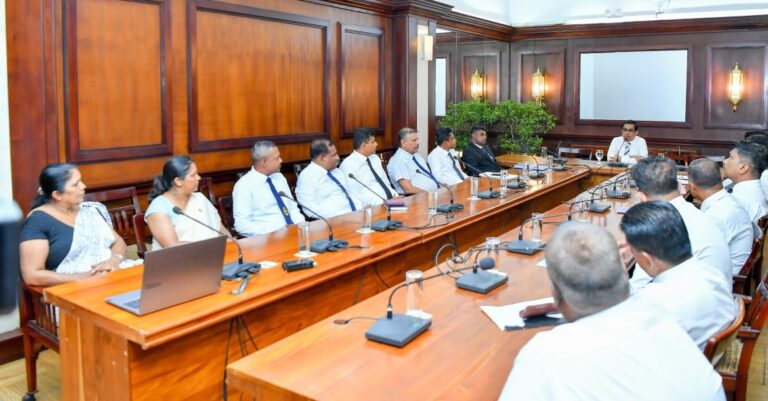
The agreement was reached during a meeting held on February 03 at the Presidential Secretariat, where officials from the Excise Department met with trade union representatives, the Revenue Administration Reform and Modernisation Bureau and the Secretary to the President, Dr Nandika Sanath Kumanayake.

Discussions centred on ways to improve efficiency within the department in order to enhance state revenue, with particular emphasis on the introduction of digital systems and updated operational frameworks. Participants examined a range of reform proposals, including the use of technology to streamline procedures and reduce delays.

The meeting also addressed the need to invest in human resource development, while ensuring the welfare and professional growth of excise officers as part of the modernisation effort.

Director General of Excise M. B. N. A. Premarathne, senior departmental officials and representatives from all recognised trade unions were present at the discussion, which concluded with broad consensus on moving forward with the reform agenda.

Sri Lanka Bank on Home Comforts as Ireland Open World Cup Campaign

0

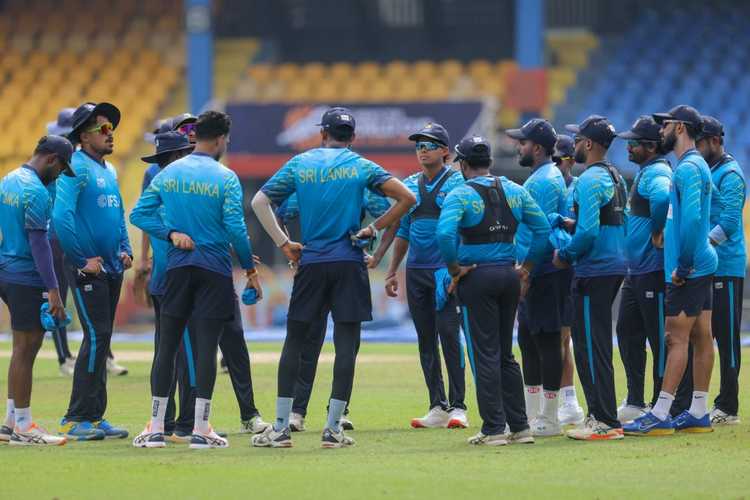
February 08, Colombo (LNW): Sri Lanka begin their ICC Men’s T20 World Cup 2026 journey today (08) with a Group B clash against Ireland at the R. Premadasa International Cricket Stadium in Colombo, where the evening fixture is set to get under way at 7 p.m.

The co-hosts come into the tournament eager to steady the ship after a sobering home series against England, which ended in a 3–0 sweep. That result exposed several frailties, but familiar surroundings in Colombo offer Sri Lanka a timely chance to reset and rediscover their edge.

Local conditions are expected to play a significant role, with the Premadasa surface traditionally rewarding quality spin. Much will therefore rest on Wanindu Hasaranga and Maheesh Theekshana, a pairing capable of controlling the middle overs and exploiting any grip on offer as the night progresses.

Preparations have not been entirely smooth, however. Fast bowler Eshan Malinga has been sidelined with a shoulder injury picked up during the England series, forcing a late change to the squad. Pramod Madushan steps in, returning to T20 international cricket after a lengthy absence, and will be keen to make an immediate impression.

Sri Lanka’s biggest question mark lies with the bat. Their recent outings against England were marked by inconsistency, ranging from modest totals in the low hundreds to a more assertive display that still proved insufficient under the Duckworth–Lewis calculations. Finding rhythm at the top of the order will be crucial if they are to capitalise on home advantage.

Ireland, by contrast, arrive in upbeat mood following a clean sweep of the UAE in Dubai. Harry Tector and Lorcan Tucker have anchored the batting with authority, while Matthew Humphreys and Barry McCarthy provide balance and bite with the ball.

The two sides last met in a T20 World Cup contest in 2022, when Sri Lanka cruised to a nine-wicket win, guided by a fluent unbeaten innings from Kusal Mendis. While history favours the hosts, Ireland will see this fixture as an opportunity to test themselves against a side still searching for momentum.

Sri Lankan Workers Emerge as Russia Looks to South Asia to Ease Deepening Labour Shortage

0

LISTEN TO STORY

WATCH STORY

By: Isuru Parakrama

February 08, Colombo (LNW): Sri Lanka is increasingly coming into focus as Russia turns to South Asia to address one of the most severe labour shortages it has faced in decades, driven by demographic decline and the prolonged war in Ukraine.

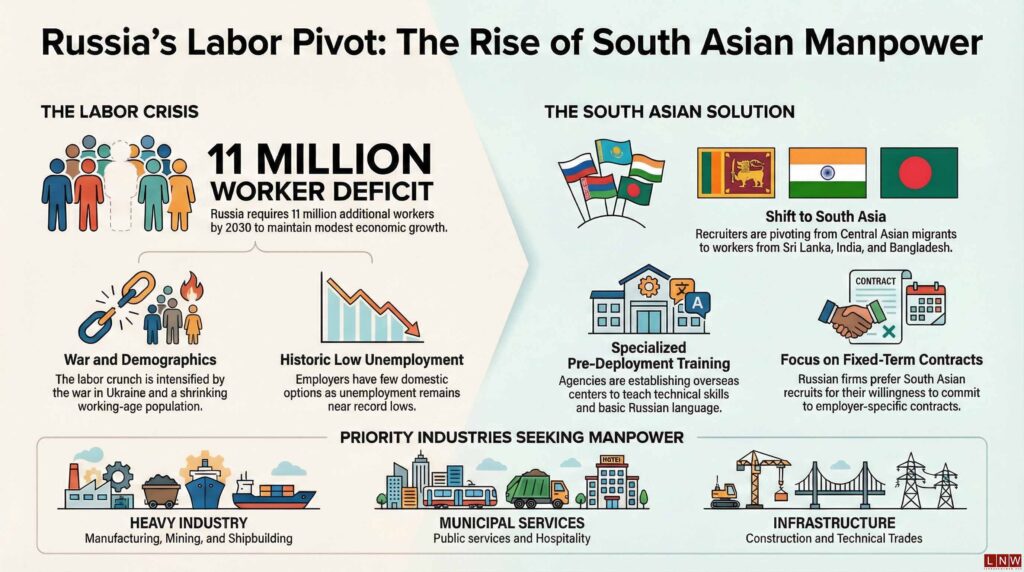
For years, Russia depended largely on migrant workers from Central Asia to sustain its workforce. That model is now shifting as the country grapples with a shrinking working-age population and rising demand for labour across key sectors. Russian officials estimate that the economy will require as many as 11 million additional workers by the end of the decade to maintain even modest growth.

As a result, recruiters are expanding their search well beyond traditional source countries. South Asia has emerged as a priority region, with Sri Lanka now being viewed alongside India and Bangladesh as a potential supplier of much-needed manpower.

Recruitment agencies report growing interest in Sri Lankan workers for roles ranging from construction and manufacturing to hospitality and municipal services.

This change reflects a broader recalibration of Russia’s labour policies. During President Vladimir Putin’s visit to New Delhi late last year, Moscow signed agreements aimed at easing procedures for temporary labour migration.

Even before those arrangements, work permits issued to Indian nationals had risen sharply, while overall permits for foreign workers reached their highest level in years in 2025.

Although Central Asian states such as Turkmenistan continue to send workers, a significant share of new arrivals now comes from farther afield. In major Russian cities, South Asian workers have begun appearing in public services, construction sites and restaurants, highlighting what recruiters describe as a structural transformation of the labour market.

Recruitment firms are also adapting. Some have begun scouting actively in Sri Lanka and Southeast Asia, seeking workers willing to commit to fixed-term contracts tied to specific employers. According to industry sources, this approach is preferred by Russian companies, as workers from visa-free countries are more likely to switch jobs frequently.

Training initiatives are also expanding. Agencies have set up overseas centres to prepare recruits in technical skills and basic Russian language proficiency before deployment. For certain industries, bilingual supervisors act as intermediaries on job sites, reducing communication barriers.

Russia’s labour crunch has been intensified by the war in Ukraine. Hundreds of thousands of working-age Russians have either been absorbed into the defence sector or have left the country altogether, while tighter migration rules introduced after security concerns in 2024 further reduced the inflow of foreign workers. At the same time, unemployment remains near historic lows, leaving employers with few domestic options.

Major Russian companies are already feeling the strain. Mining, shipbuilding and heavy industry firms have publicly acknowledged staff shortfalls running into the thousands, forcing some operations to scale back production despite offering comparatively high wages.

Cost considerations are also shaping recruitment. Employers often find that hiring from South Asia, including Sri Lanka, is more affordable, particularly for skilled trades, without compromising productivity.

Based on comments by analysts, Russia’s labour shortage is unlikely to ease anytime soon. With an ageing population and declining birth rates, the reliance on foreign workers is expected to become a long-term feature of the economy. For Sri Lanka, this shift could open new overseas employment opportunities, provided recruitment is managed responsibly and worker protections are ensured.

Economic Progress Hinges on Innovation and Modern Production: CB Governor

0

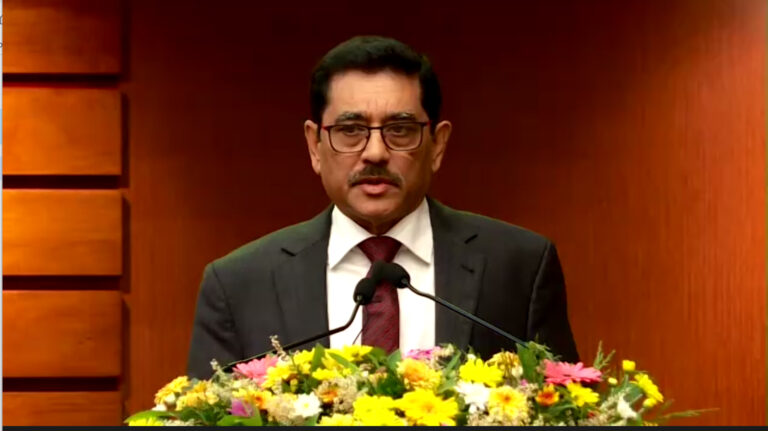
February 08, Colombo (LNW): Central Bank Governor Dr Nandalal Weerasinghe has stressed that sustained economic growth in Sri Lanka will depend on the country’s ability to modernise and innovate across all areas of production.

Speaking at the International Conference of the Sri Lanka Economic Association in Colombo, he remarked that genuine prosperity cannot be achieved without building a competitive and efficient economic structure.

In this regard, he pointed to the importance of strengthening all three core sectors of the economy — agriculture, industry and services — rather than treating them in isolation.

Dr Weerasinghe noted that modern supply chains, both domestic and international, are increasingly interconnected. He explained that even a basic agricultural product requires the support of industrial processes and service inputs to be transformed into a high-value good capable of competing in global markets.

According to the Governor, nations that succeed in streamlining these linkages and improving productivity tend to advance economically, while those that fail to adapt risk being left behind.

He underscored that the adoption of new technologies remains the most decisive factor in ensuring that economic activity remains efficient, resilient and competitive at both national and international levels.

Fishermen Press On with Protest Over Seine Fishing Restrictions

0

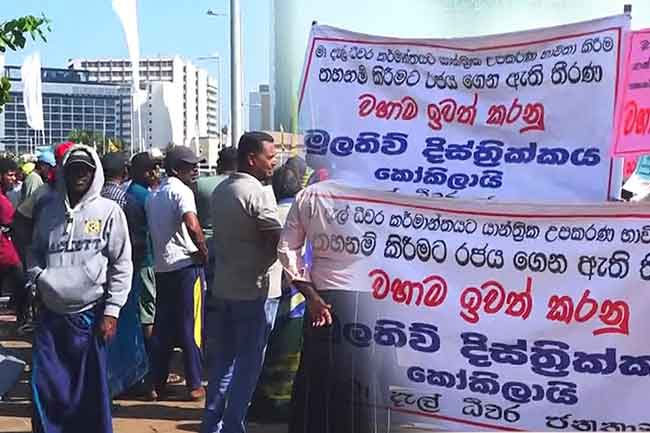
February 08, Colombo (LNW): A satyagraha campaign organised by fishermen calling for the removal of restrictions on tractor-powered winches used in Madel, or seine net, fishing has entered its fourth day today (08).

The protest began on February 05 outside the Presidential Secretariat, with participation from seine fishermen representing a number of coastal communities, including Mullaitivu and Kokilai. Protesters say the ban has severely affected their livelihoods, limiting their ability to carry out traditional fishing practices.

According to the demonstrators, several rounds of discussions have taken place with officials from the Department of Fisheries and Aquatic Resources as well as representatives of the Presidential Secretariat. However, they claim the talks ended without any concrete outcome or assurances.

In the absence of a satisfactory response from the authorities, the fishermen have decided to continue their non-violent protest indefinitely, vowing to maintain the satyagraha until their demands are addressed.

Thousands Gather at Gangaramaya as Rare Buddha Relics Draw Devotees for Fourth Day

0

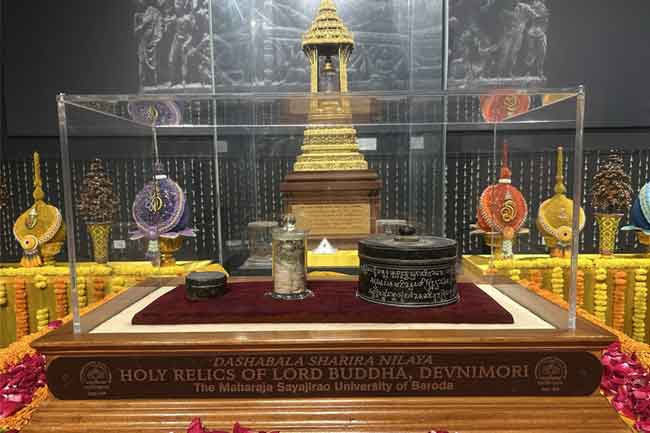
February 08, Colombo (LNW): The public exposition of the revered Devnimori relics of Lord Buddha entered its fourth day today (08) at the Gangaramaya Temple in Hunupitiya, Colombo, attracting a steady flow of devotees from across the country.

The sacred relics, which arrived from India earlier this month, have been on display since February 05 and continue to draw widespread attention due to their immense historical and religious significance. Unearthed during archaeological excavations in the 1960s at the ancient Devnimori site in Gujarat, the relics are believed to be among the most important discoveries linked to the Buddha. This marks the first occasion on which they have been taken beyond Indian borders.

From the early hours of the morning, long queues were seen around the temple premises as worshippers gathered to pay homage in an atmosphere of reverence and calm. Religious observances and security arrangements remain in place to facilitate the large crowds.

Several prominent figures, including Opposition Leader Sajith Premadasa and former President Maithripala Sirisena, were among those who visited the temple yesterday to venerate the relics, alongside a number of ministers and public representatives.

Temple authorities have announced that devotees will be allowed continuous access to the relics around the clock until 7.00 a.m. on February 11, 2026, enabling the faithful to take part in this rare spiritual occasion without interruption.

Parliament to Debate Bill Scrapping MPs’ Pensions on Feb 17

0

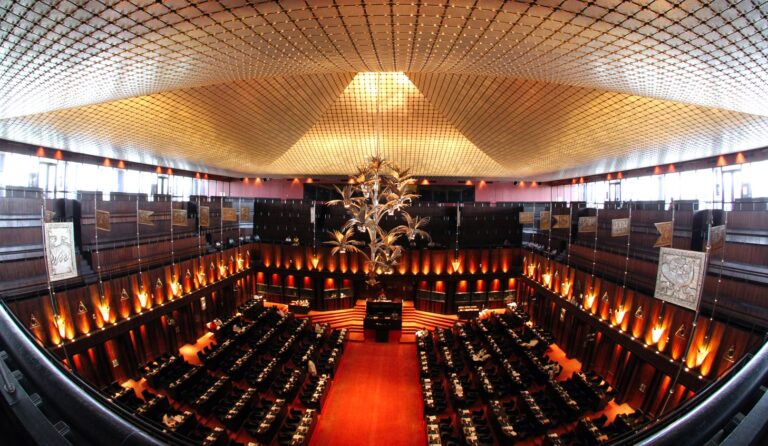
February 08, Colombo (LNW): The Parliamentary Business Committee has fixed February 17 for the debate on the Parliamentary Pensions (Repeal) Bill, according to Leader of the House Bimal Rathnayake.

He indicated that the proposed legislation is expected to be debated and put to a vote on the same day, signalling a swift parliamentary process.

Addressing the House, Speaker Dr Jagath Wickramaratne confirmed that the Supreme Court has determined the Bill to be in line with the Constitution. The Court ruled that it may be passed with a simple majority under Article 121(1), dismissing the need for any additional procedural requirements.

The ruling came in response to legal challenges filed by a group of former Members of Parliament, who argued that the Bill infringed upon fundamental rights and therefore required approval by a special parliamentary majority and a public referendum.

The legislation, tabled in Parliament on 7 January by Justice Minister Dr Harshana Nanayakkara, aims to end the existing pension entitlement granted to former parliamentarians.

New Police Unit to Tackle Growing Cybercrime Threat

0

February 08, Colombo (LNW): Public Security and Parliamentary Affairs Minister Ananda Wijepala has announced plans to set up a dedicated police division to address the increasing incidence of cybercrime in Sri Lanka.

The Minister made the disclosure while attending the opening of the Polpitiya Police Station on Friday (06), noting that offences committed through digital platforms have risen sharply in recent years. He observed that authorities now receive between 23 and 25 cybercrime complaints each day, a figure he described as alarming.

According to the Minister, the Police Department is in the process of strengthening its capacity to respond to such offences through the introduction of modern technology, specialised expertise and updated investigative methods.

These measures, he said, are being rolled out in a structured manner to ensure more effective detection and prosecution of cyber-related crimes.

He further stressed that the government remains committed to transforming the Sri Lanka Police into a professional, efficient and corruption-free institution. As part of this effort, steps are being taken to create better career opportunities for capable officers, while firm action is being pursued to remove those found guilty of misconduct from the service.