February 08, Colombo (LNW): The Department of Posts has confirmed that postal tariffs will be revised upward from tomorrow (09), with several commonly used services affected by the change.
Under the new pricing structure, the minimum charge for postal items will be increased to Rs. 70. Officials stated that the adjustment is part of a broader review of operational costs and service sustainability.
Registered mail will also see a price revision, with the fee rising by Rs. 20. As a result, the cost of sending a registered letter will increase from Rs. 110 to Rs. 130 from tomorrow onwards.
The Department noted that the revised charges will apply nationwide and urged customers to take note of the new rates when using postal services.
Postal Fees Set to Rise as Revised Rates Take Effect Tomorrow

Free Life Insurance to Be Linked with Cooperative Spending: Minister
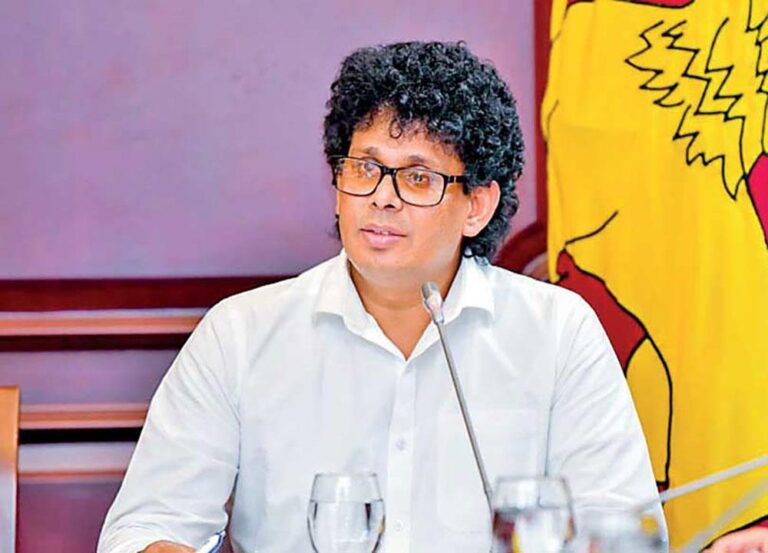
February 08, Colombo (LNW): Consumers who spend more than Rs. 10,000 in a month at cooperative retail outlets will soon be entitled to complimentary life insurance, according to Trade, Commerce, Food Security and Cooperative Development Minister Wasantha Samarasinghe.
Addressing the reporters after attending an event in Anuradhapura, the Minister revealed that the proposed insurance cover would exceed Rs. 300,000, marking a significant incentive aimed at encouraging greater public engagement with the cooperative sector.
He noted that the benefit would not be limited to shoppers alone, adding that registered members of cooperatives would also qualify for life insurance protection under the scheme.
The Minister further explained that cooperative employees are set to receive improved remuneration packages, including insurance benefits, as part of broader measures to revitalise cooperatives and position them as a key driver of economic activity.
Outlining the government’s wider plans, he said the cooperative movement would undergo extensive reforms, with new cooperative retail centres planned for every region of the country. In addition, low-interest financing is expected to be made available to support the establishment of large-scale cooperative outlets, particularly in urban centres.
Prevailing showery conditions expected to reduce temporarily (Feb 08)

February 08, Colombo (LNW): The prevailing showery condition over the island is expected to be temporarily reduced from February 08 to 11, the Department of Meteorology said today (08).
A few showers may occur in Uva province and in Matale, Nuwara-Eliya, Ampara, Batticaloa and Polonnaruwa districts.
Showers or thundershowers may occur at a few places in Western and Sabaragamuwa provinces and in Galle and Matara districts after 2.00 p.m.
Fairly strong winds about (30-40) kmph can be expected at times over Eastern slopes of the central hills, Northern, North-central and North-western provinces and in Matale, Trincomalee and Hambantota districts.
Misty conditions can be expected at some places in Western, Sabaragamuwa and Central provinces and in Galle, Matara and Badulla districts during the early hours of the morning.
The general public is kindly requested to take adequate precautions to minimise damages caused by temporary localised strong winds and lightning during thundershowers.
Marine Weather:
Condition of Rain:
Showers or thundershowers may occur at a few places in the sea areas off the coast extending from Colombo to Hambantota via and Galle in the evening or night.
Winds:
Winds will be north-easterly and wind speed will be (30-40) kmph. Wind speed can increase up to (50-55) kmph at times in the sea areas off the coast extending from Colombo to Kankasanthurai via Puttalam and from Matara to Pottuvil via Hambantota.
State of Sea:
The sea areas off the coast extending from Colombo to Kankasanthurai via Puttalam and from Matara to Pottuvil via Hambantota will be rough at times. Other sea areas around the island will be moderate.
Temporarily strong gusty winds and very rough seas can be expected during thundershowers.
India Giving JVP State Patronage for credibility
By Adolf
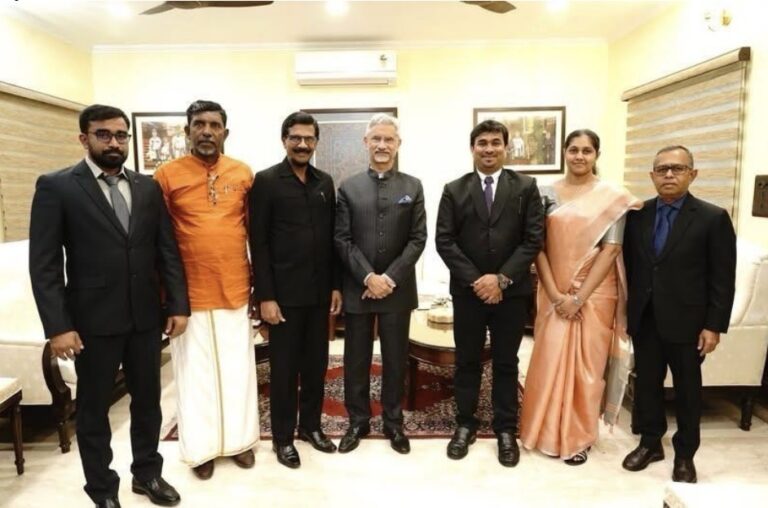
Recent developments suggest that India may be leveraging state patronage not merely for strategic or economic purposes, but to advance ideological influence in Sri Lanka through selective support of the JVP. While the World Bank (2000) defines state capture primarily as the use of state functions for private gain, what we are witnessing represents a different and arguably more insidious phenomenon: the use of democratic processes to extend external ideological control. Traditionally, state capture involves private actors manipulating public institutions for enrichment. In this case, the concern is ideological capture: a democratically elected government—backed or influenced externally—is using policy, funding, and institutional engagement to promote a political philosophy aligned with a foreign state’s interests. The JVP, a socialist-oriented party, appears to be receiving selective support, enabling it to advance an ideological agenda that could reshape Sri Lanka’s political and social landscape. Unlike conventional capture, this does not target private profit but seeks to influence the trajectory of governance and public discourse.
Political Risks
The risk of ideological patronage is particularly acute in a pluralistic democracy like Sri Lanka. Its institutions are designed to mediate competing interests and protect civil liberties. When foreign support is funneled to reinforce a specific ideological faction, it can distort this balance, effectively privileging one vision of governance over others. The methods are subtle yet powerful: funding, policy advice, development projects tied to governance frameworks, and influence over educational, media, or civic institutions. Over time, these mechanisms can normalize a preferred ideology, crowding out debate, dissent, and independent policy-making.
Unchecked
Unchecked ideological capture has profound implications for governance. Democratically elected parties enjoy legitimacy, enabling them to implement reforms with minimal opposition. If external actors exploit this legitimacy through ideological patronage, liberal democratic forces may struggle to resist. The political spectrum could narrow, dissenting voices could be marginalized, and policy choices could increasingly reflect external priorities rather than national consensus. Within just a few election cycles, Sri Lanka could risk a scenario resembling one-party dominance, eroding pluralism and constraining the liberties citizens have historically enjoyed.
Conclusion
Addressing this challenge requires both urgency and vigilance. Political parties committed to liberal democracy, civil society organizations, and independent institutions must insist on transparency in foreign assistance, safeguard institutional autonomy, and ensure that policy debates remain rooted in national priorities. Electoral politics is a critical front: allowing ideological patronage to shape candidate selection, party platforms, or political dominance risks embedding external agendas into Sri Lanka’s governance. While conventional state capture targets private enrichment, ideological capture is a subtler but equally consequential threat. India’s support for the JVP, if aimed at consolidating ideology rather than fostering mutually beneficial partnership, could undermine Sri Lanka’s sovereignty, democratic freedoms, and institutional independence. Proactive engagement by liberal forces is essential to ensure democracy remains a forum for open debate, pluralism, and national decision-making, rather than a conduit for external influence. The historical context makes this even more concerning. In 1988–89, under leaders like Tilwin, the JVP carried out an anti-India campaign that resulted in the deaths of thousands of young Sri Lankans. That a respected diplomat like Dr. Jaishankar Foreign Secretary now gives time and legitimacy to an unelected JVP terror leaderlike Tilwin sends a very troubling signal—especially for a country that is now a leading economic and strategic power in Asia. It is, at best, a pathetic display of state craft and intelligence readiness .
Sri Lanka Considers Compensation for Colonial Abuses
Sri Lanka’s Parliament has become the latest arena in a growing international conversation on colonial reparations, as the government signals it may seek compensation from Britain for damages inflicted during the colonial era.
Foreign Affairs Minister Vijitha Herath confirmed that the issue is under consideration, following calls from Opposition Leader Sajith Premadasa to emulate African nations that have formally demanded reparations from former colonial rulers. The move reflects a broader reassessment of colonial history, as nations reassess the long-term economic and human costs of imperialism.
British colonial rule in Sri Lanka reshaped the island’s political economy in ways that continue to influence present-day challenges. While often portrayed as a period of administrative modernization, historians argue that colonial governance prioritized imperial profit over local welfare, producing structural inequalities that persist decades after independence.
The plantation economy introduced by the British transformed Sri Lanka into a mono-crop exporter dependent on tea, rubber, and coffee. This system relied on expropriated land and imported indentured labor, while profits flowed largely to British companies and the imperial treasury. At independence, Sri Lanka inherited an economy highly dependent on volatile global commodity markets, with limited industrial diversification.
Beyond economics, colonial rule involved widespread appropriation of cultural heritage. Archaeological expeditions conducted during the colonial period removed artifacts from ancient kingdoms such as Anuradhapura and Polonnaruwa. Palm-leaf manuscripts containing Buddhist texts, medical knowledge, and historical chronicles were shipped to British libraries, where many remain inaccessible to Sri Lankan scholars.
The loss of life during colonial suppression campaigns is another unresolved grievance. The brutal response to rebellions in the 19th century, particularly in Uva-Wellassa, is increasingly cited as evidence of crimes that would today constitute violations of international humanitarian norms. Entire communities were displaced, leaders executed, and livelihoods destroyed as part of punitive military operations.
The reparations debate is not without challenges. International law offers limited mechanisms for historical claims, and Britain has previously resisted formal compensation demands, arguing that colonial actions occurred before modern legal frameworks. However, recent precedentssuch as compensation paid to Kenyan victims of colonial-era abuses have strengthened the moral and political case for redress.
Analysts say Sri Lanka’s approach is likely to combine diplomatic engagement, historical documentation, and coordination with other formerly colonized nations. Rather than immediate financial compensation, outcomes could include restitution of cultural property, development partnerships, debt relief, or formal acknowledgements of wrongdoing.
Minister Herath’s statement marks a shift from silence to scrutiny, signaling that Sri Lanka is prepared to revisit its colonial past not merely as history, but as an unresolved political and economic issue with contemporary relevance.
Sri Lanka’s US Trade Surplus Faces Test amid Rising Tariffs
Sri Lanka’s trade relationship with the United States remains one of its strongest bilateral economic partnerships, but emerging tariff pressures from Washington are raising fresh concerns about the sustainability of this advantage. The US continues to be Sri Lanka’s single largest export destination, accounting for nearly a quarter of total merchandise exports, with trade data for 2025 showing a clear surplus in Sri Lanka’s favour.
Exports to the US reached $2.99 billion in 2025, while imports stood at $732 million, generating a trade surplus of over $2.2 billion. Sri Lankan exports also recorded 3.07% growth compared to 2024, underscoring continued demand for products such as apparel, rubber-based goods, coconut kernel products, spices, concentrates and processed foods. Apparel alone contributes the bulk of foreign exchange earnings from the US market, making the sector particularly sensitive to policy shifts.
However, recent increases in US tariffs on selected imports introduced as part of broader protectionist measures have raised red flags among exporters. Industry stakeholders warn that higher duties could erode price competitiveness, especially for small and medium-scale manufacturers already grappling with rising input costs, energy prices and logistics challenges.
Against this backdrop, senior officials from the US Embassy in Sri Lanka recently held discussions with the Export Development Board (EDB), signalling renewed diplomatic engagement on trade facilitation. Talks focused on tariff exemptions, improving market access and encouraging bilateral investment flows. US officials also invited Sri Lankan exporters to participate in the SelectUSA 2026 Investment Summit, aimed at strengthening commercial links and attracting foreign direct investment into the American market.
The Sri Lankan government, meanwhile, is pursuing a parallel strategy to safeguard export earnings. Authorities are actively lobbying for preferential treatment for key export categories, while promoting diversification into higher-value and niche products. The EDB has also invited US buyers, investors and media to Sri Lanka Expo 2026, positioning the country as a reliable sourcing destination amid global supply chain realignments.
While Sri Lanka currently enjoys a strong trade surplus with the US, analysts caution that overdependence on a single market leaves exporters exposed to sudden policy changes. The coming months will test whether diplomatic engagement and strategic repositioning can offset the impact of rising tariffs and preserve one of Sri Lanka’s most vital trade relationships.
World Bank Strategy Targets Jobs, Resilience after Sri Lanka Floods
With Sri Lanka facing recurring floods and cyclones that have inflicted billions of rupees in damage, the World Bank is recalibrating its assistance strategy for 2025 and 2026 to address both immediate recovery needs and long-term economic resilience. Senior World Bank officials visiting Colombo this week reviewed ongoing development programs amid growing concern that climate shocks are undermining fiscal stability and slowing growth.
The Ministry of Finance said discussions focused on how World Bank–supported initiatives could be strengthened to better support national development goals. While Sri Lanka has made progress in stabilizing its economy, officials acknowledged that disaster-related losses have placed additional strain on public finances, infrastructure, and social services.
World Bank Executive Director Parameswaran Iyer emphasized job creation as a central objective of future assistance, noting that employment losses often follow large-scale floods and cyclones. Priority sectors identified by the Bank include transport and energy infrastructure, agribusiness, healthcare, tourism, and value-added manufacturing. These sectors are expected to absorb displaced workers while boosting productivity and export potential.
Tourism, a major foreign exchange earner, has been particularly vulnerable to extreme weather, with floods damaging access roads and facilities in key destinations. Similarly, repeated flooding has affected agricultural output, raising food prices and threatening rural livelihoods. World Bank-backed agribusiness and value-chain investments are seen as vital to restoring stability in these sectors.
Discussions with Treasury Secretary Harshana Suriyapperuma also addressed social development and institutional capacity building. Officials highlighted the need to strengthen safety nets for communities most affected by climate disasters, while improving public institutions’ ability to plan, finance, and implement resilient projects.
Policy experts note that the World Bank’s engagement reflects a broader shift toward climate-responsive development financing. Rather than focusing solely on post-disaster reconstruction, the emphasis is increasingly on building systems that can withstand future shocks, reducing long-term economic losses.
As climate risks intensify across South Asia, Sri Lanka’s experience is emerging as a test case for how development finance can support recovery while preparing economies for an uncertain future. The World Bank’s expanded role in 2025–2026 is expected to be pivotal in shaping whether Sri Lanka’s recovery remains vulnerable or becomes resilient
Rising IPO activity to Redefine Sri Lanka’s Capital Market Position

Sri Lanka’s capital market trajectory in 2026 will be shaped not only but by a broader repositioning of the economy within the regional investment landscape. As macroeconomic stability strengthens and debt vulnerabilities ease, capital markets are increasingly viewed as a strategic tool to bridge the country’s investment gap and sustain long-term growth.
Fiscal consolidation has been central to this shift. Government revenue has recovered to above 15% of GDP, a critical threshold under Sri Lanka’s restructured debt framework. This improvement has enabled the country to meet governance-linked benchmarks while delivering three consecutive years of primary budget surpluses by 2025—an outcome few anticipated during the depths of the crisis.
Debt sustainability metrics have also improved materially. External debt servicing obligations for 2026 and 2027 are projected to remain below $2.5 billion annually, a sharp reduction from pre-restructuring levels. This easing of repayment pressure has translated into a healthier interest expense-to-tax revenue ratio, a key indicator closely monitored by international credit rating agencies as Sri Lanka emerges from default.
However, the growth challenge remains. Sri Lanka’s investment-to-GDP ratio currently stands at around 27%, comprising private investment of approximately 23%, foreign direct investment near 1%, and public investment of about 3%. Historical data suggests that sustained growth above 6% requires investment levels closer to 30–31% of GDP. Bridging this gap will require mobilising long-term capital beyond traditional bank lending.
This is where capital markets and IPOs in particular become strategically important. Equity markets provide risk capital that supports expansion without exacerbating leverage. As domestic credit conditions improve, private sector credit growth has exceeded Rs. 200 billion per month since mid-2025, while Government borrowing from local markets has declined. Importantly, private sector credit-to-GDP has risen to around 31.3% without signs of excessive leverage, indicating room for complementary equity financing.
Regulatory discipline will remain critical. The enforcement of the Public Finance Management Act and Debt Management Act has strengthened investor confidence by institutionalising fiscal restraint. Maintaining this discipline while encouraging private capital formation will be essential to sustaining recovery momentum.
In this context, a vibrant IPO pipeline in 2026 is not merely a market development—it is an economic necessity. A deeper, more liquid capital market can channel savings into productive investment, attract foreign portfolio flows, and reduce systemic dependence on bank credit. If current reforms remain on track, 2026 could mark the year Sri Lanka transitions from crisis recovery to capital market-led growth.
Emergency Extended to Fast-Track Cyclone Ditwah Recovery, PM Assures No Misuse of Powers
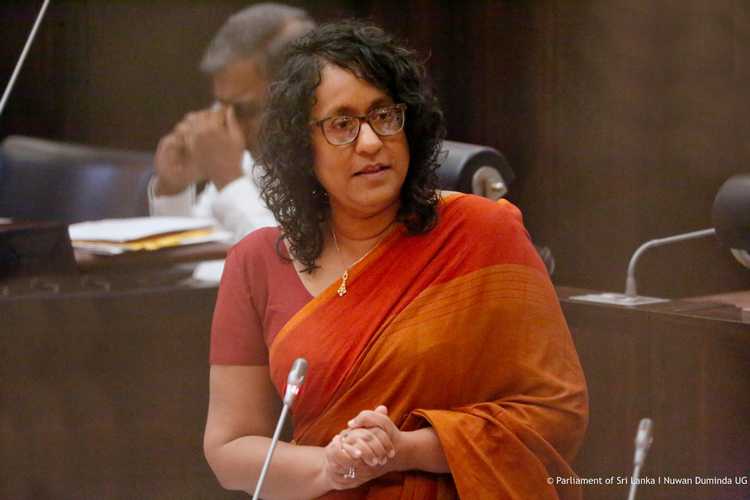
Prime Minister Dr. Harini Amarasuriya told Parliament yesterday (6) that the State of Public Emergency has been extended by a further month solely to facilitate urgent interventions needed to restore the country following the widespread devastation caused by Cyclone Ditwah.
Participating in the parliamentary debate on extending the emergency regulations, the Prime Minister stressed that the Government will under no circumstances use emergency powers to suppress the media or any section of society.
She said Cyclone Ditwah had caused unprecedented damage to national infrastructure, particularly roads and bridges, while a large number of schools require rebuilding or relocation. The country has also experienced landslides on an unprecedented scale, with the National Building Research Organisation (NBRO) reporting around 1,300 landslides so far.
Dr. Amarasuriya noted that the scale of damage and increased risks posed by landslides have placed an extraordinary burden on the State, requiring rapid mobilisation of human resources and materials to carry out recovery and mitigation work across affected regions.
“The need to extend the state of emergency arises only from this situation and not due to any other reasons,” the Prime Minister said, adding that the emergency regulations are being used mainly to maintain essential services and to appoint the Commissioner General of Essential Services.
She emphasized that the Government’s sole objective is to efficiently and swiftly restore affected areas and help communities return to normalcy, and that the extension of the State of Public Emergency was presented to Parliament strictly for that purpose.
Indian External Affairs Minister Meets JVP Delegation, Reaffirms Support for Sri Lanka

Indian External Affairs Minister Dr. Subrahmanyam Jaishankar has held discussions with Janatha Vimukthi Peramuna (JVP) General Secretary Tilvin Silva during a meeting with a JVP delegation currently visiting New Delhi.
Describing the engagement as warm and constructive, Dr. Jaishankar said the talks focused on further strengthening the long-standing ties between India and Sri Lanka, while also exploring avenues for cooperation, including in the area of social welfare.
During the discussions, India reiterated its continued support for Sri Lanka, recalling New Delhi’s assistance during the country’s recent economic crisis as well as support extended following the devastation caused by Cyclone Ditwah.
Dr. Jaishankar emphasized that India will remain a true and trusted partner to Sri Lanka, consistent with its neighbourhood-first policy and broader regional vision.
The meeting highlights ongoing political and social engagement between the two countries, as both sides continue efforts to deepen bilateral cooperation. The JVP delegation is in New Delhi on an official invitation from the Indian government.