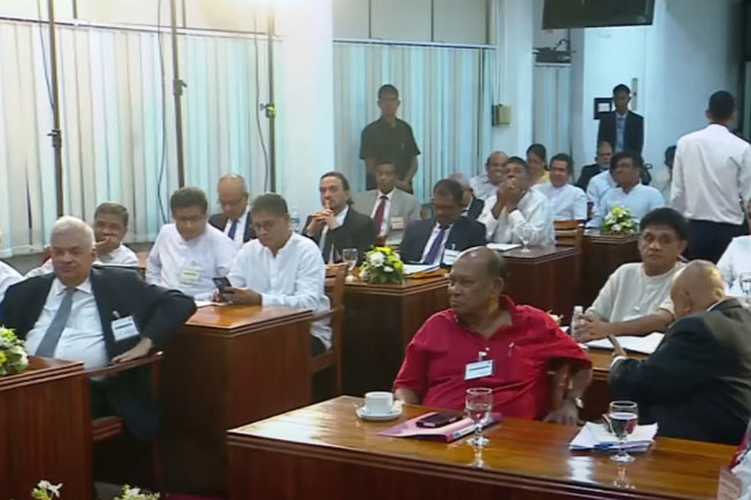
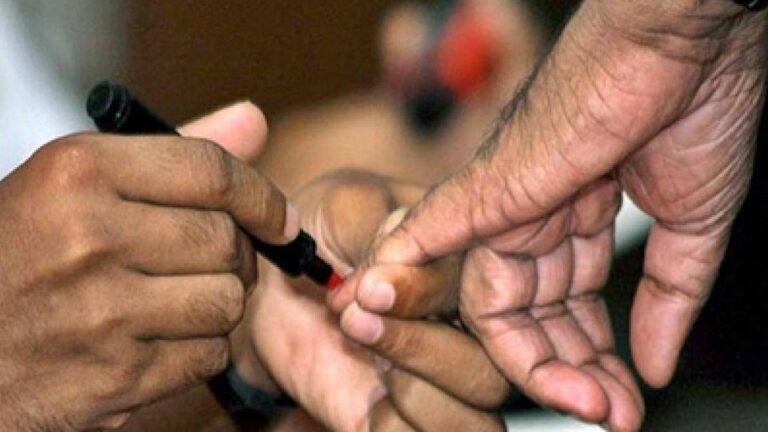
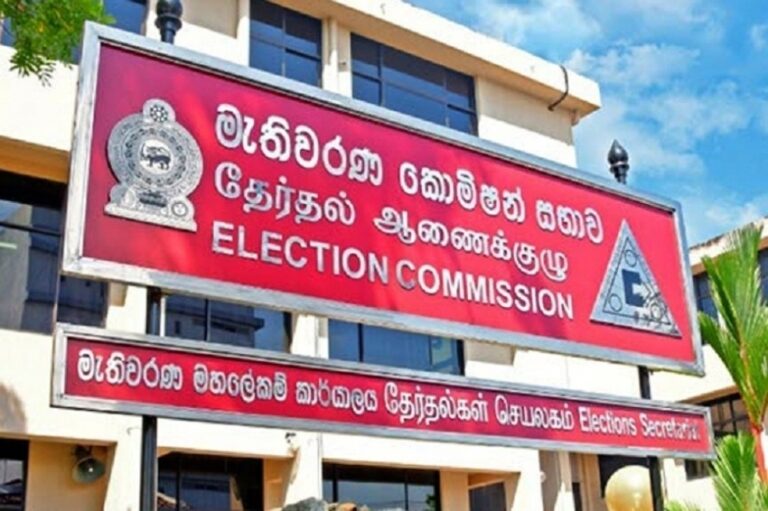
August 15, Colombo (LNW): Nominations for Sri Lanka’s forthcoming Presidential Election wrapped up at 11.00 a.m. today at the Election Secretariat in Rajagiriya.
Election Commission Chairman R.M.A.L. Rathnayake confirmed that 39 out of 40 bond-placing candidates formally submitted their nominations.
The submission window ran from 9.00 a.m. to 11.00 a.m., with objections accepted until 11.30 a.m.
Allocation of symbols for non-recognised parties will follow the objection review.
Among the 40 candidates, 22 represent recognised political parties, one from a smaller party, and 17 stand as independent candidates.
August 15, Colombo (LNW): A Gazette notification has restructured ministerial portfolios, placing the Ministries of Tourism and Lands, Sports and Youth Affairs, and Labour and Foreign Employment directly under President Ranil Wickremesinghe’s purview.
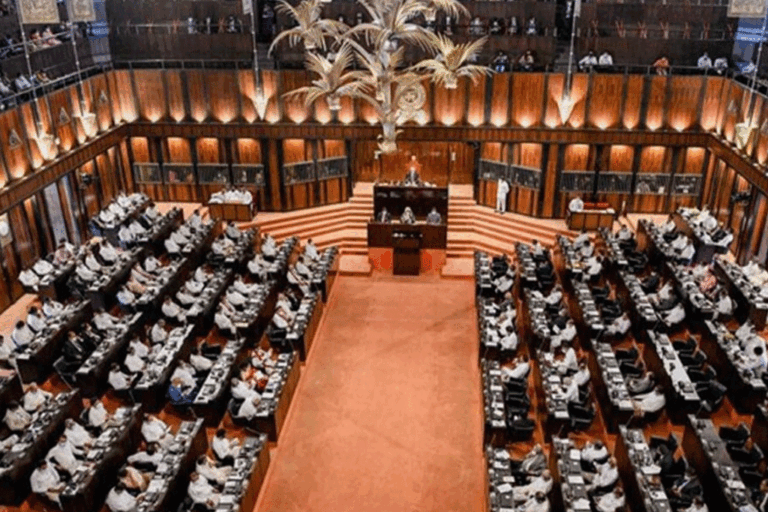
This adjustment follows the Supreme Court’s recent ruling upholding the removal of MPs Manusha Nanayakkara and Harin Fernando from Parliament, after their suspension from the Samagi Jana Balawegaya (SJB) was deemed lawful.
Both MPs were disqualified under the party’s constitution after accepting government ministerial roles in defiance of SJB directives, leading to their expulsion in July 2023.
August 15, Colombo (LNW): The 2024 Presidential Election nomination process begins today from 9.00 a.m. to 11.00 a.m. at the Election Commission office in Rajagiriya.
Candidates who completed deposits by August 14 are expected to submit their nominations. Written objections can be lodged from 9.00 a.m. to 11.30 a.m.
Due to heightened security, Rajagiriya Sarana Mawatha is designated as a special zone, with restricted access and a traffic plan enforced from 8.00 a.m. to 2.00 p.m.
The public is advised to avoid the area, as government offices and hospitals nearby will remain closed.
Parades and processions after nominations are prohibited, with ballot printing set to commence immediately.
A total of 40 candidates have placed deposits, including 22 from recognised political parties and 17 independent candidates.
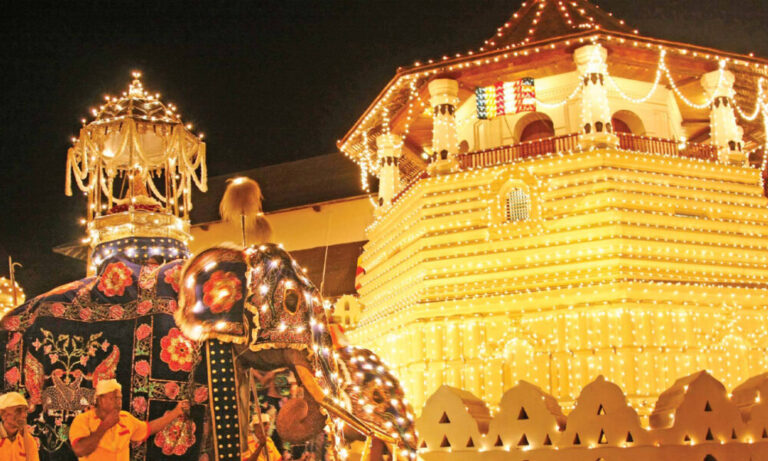
August 15, Colombo (LNW): The historic Kandy Esala Perahera enters a significant phase tonight (15) as the first Randoli Perahera takes to the streets, showcasing one of Sri Lanka’s grandest cultural celebrations.
This procession, which will run until August 19, follows the five-day Kumbal Perahera that commenced on August 10.
The Esala festival will conclude with the water-cutting ceremony at Getambe on August 31, followed by the presentation of the traditional Sannasa to the President.
This year’s event, featuring 40 elephants, is marked by heightened security, with 6,000 police officers deployed across Kandy to ensure public safety.
The festival officially began with the ‘Kap Situweema’ ceremony on August 5, symbolising the start of the sacred rituals.
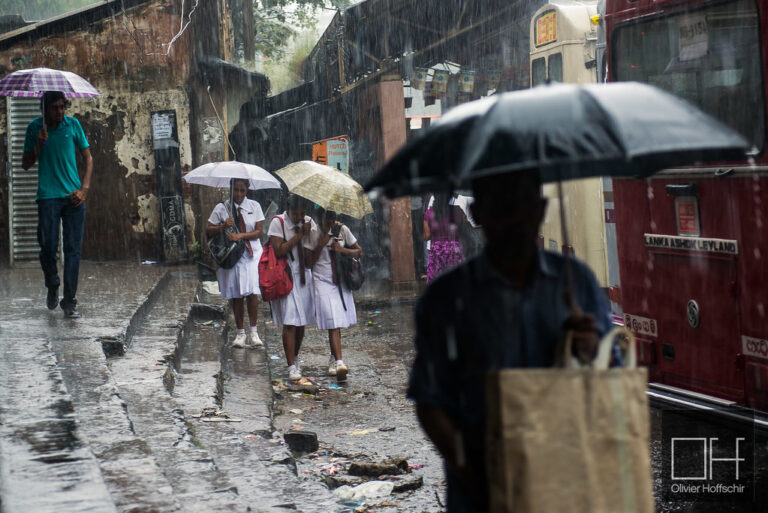
August 15, Colombo (LNW): Showers or thundershowers will occur at times in Western, Sabaragamuwa and North-western provinces and in Kandy, Nuwara-Eliya, Galle and Matara districts, the Department of Meteorology said in its daily weather forecast today (15).
Showers or thundershowers may occur at several places in Eastern and Uva and provinces and in Matale, Polonnaruwa and Mullaittivu districts during the evening or night.
General public is kindly requested to take adequate precautions to minimise damages caused by temporary localised strong winds and lightning during thundershowers.
Marine Weather:
Condition of Rain:
Showers or thundershowers will occur at several places in the sea areas off the coast extending from Colombo to Hambantota via Galle. Showers or thundershowers will occur at a few places in the other sea areas around the island during the afternoon or night.
Winds:
Winds will be south-westerly and wind speed will be (30-40) kmph. Wind speed can increase up to (50-55) kmph at times in the sea areas off the coasts extending from Galle to Batticaloa via Matara, Hambantota and Pottuvil and from Chilaw to Kankasanthurai via Puttalam and Mannar.
State of Sea:
The sea areas off the coasts extending from Galle to Batticaloa via Matara, Hambantota and Pottuvil and from Chilaw to Kankasanthurai via Puttalam and Mannar may be fairly rough at times. Temporarily strong gusty winds and very rough seas can be expected during thundershowers.
August 14, Colombo (LNW): The deadline for placing deposits for the 2024 Presidential Election concludes today at 12 noon. According to the Election Commission, 36 individuals have already submitted their deposits to contest in the upcoming election.
Out of these, 19 candidates are from recognized political parties, while one is from another political party. Additionally, 16 independent candidates have also made their deposits.
The acceptance of nominations for the presidential election is scheduled to begin tomorrow (15th) from 9:00 a.m. to 11:00 a.m.
Acting Police Media Spokesperson DIG Ruwan Gunasekara announced that a special security arrangement will be implemented in the vicinity during the nomination process.
August 14, Colombo (LNW): Aitken Spence PLC, a leading blue-chip conglomerate, has reported an exceptional performance for the first quarter of 2024/25, with its EBITDA (Earnings before Interest, Tax, Depreciation, and Amortization) surging by 111% to Rs. 4.3 billion compared to the same period last year.
The Group achieved a Profit before Tax (PBT) of Rs. 575.8 million, marking a significant improvement from the loss recorded in the previous year.
Key sector performances included: Tourism: Recorded an EBITDA of Rs. 1.7 billion.Maritime, Freight, and Logistics: Achieved an EBITDA of Rs. 1.2 billion.Strategic Investments: Maintained stable performance, bolstered by the strong operational results from hydro power companies and a waste-to-energy power plant.
The Sri Lankan hotels segment and most overseas hotels saw improved occupancy levels, although the Group’s destination management segment was slightly impacted by the appreciation of the Sri Lankan rupee in April 2024.
Additionally, lower freight rates and exchange rate fluctuations affected the maritime and logistics sector’s performance.
Challenges included a lower exchange rate impacting remittances in the money transfer business and additional costs incurred by the elevator segment due to delayed project completions.
During the quarter, Heritance Kandalama celebrated its 30th anniversary, and Aitken Spence Hotels was recognized among LMD’s Top 5 Most Awarded Hall of Fame for leading the hospitality sector.
Aitken Spence Travels won the Best Management Practices Award 2024 in the hospitality and tourism category, and Aitken Spence Cargo secured first place in the ‘Shipping & Shipping Related Services Sector’ at the National Business Excellence Awards 2024.
In sustainability, Aitken Spence’s waste-to-energy power plant was highlighted in a UN Global Compact publication as an impactful initiative from Sri Lanka. As a long-time signatory of the UNGC,
Aitken Spence’s commitment to sustainability aligns with the global Sustainable Development Goals (SDGs), showcasing its significant contributions to both local and global development efforts.
August 14, Colombo (LNW): The latest July 2024 polling data from SLOTS reveals that while a significant portion of Sri Lankans remain concerned about the country’s direction, there has been a small yet notable increase in optimism.
Currently, 72% of Sri Lankans believe the country is moving in the wrong direction, but this is an improvement from previous months, with 8% now stating that the nation is on the right track—up from below 5% in July 2023.
This positive shift, although modest, suggests a growing sense of hope among the population, particularly as the number of uncommitted respondents has decreased.
Despite Sri Lanka still having the highest percentage of people who think their country is on the wrong path compared to other nations polled, this upward trend in positive sentiment is a step in the right direction.
Globally, 62% of adults in 29 countries surveyed by IPSOS in June–July 2024 felt their country was headed in the wrong direction, compared to Sri Lanka’s 93%.
Public opinion in Sri Lanka varies slightly across age groups, with younger adults (ages 18–29) and those aged 30–44 more inclined to believe the country is on the wrong track compared to older adults.
The July 2024 estimates are based on 680 interviews, carefully adjusted to reflect the demographics of Sri Lanka, including age, gender, education, socioeconomic status, ethnicity, religion, geographic location, and sector.
SLOTS gathers public opinion on the country’s overall direction by asking a straightforward question: “Would you say things in the country are headed in the right direction or the wrong direction?”
Respondents have the option to not answer or to express uncertainty. The reported percentages reflect the views of all respondents, with numbers adjusted to account for those who are unsure or declined to respond.
August 14, Colombo (LNW): India’s leading drone Technology Company, Garuda Aerospace forays into Sri Lanka, marking another significant step in the company’s global expansion plans.
Garuda Aerospace’s initial operations in Sri Lanka will primarily target the agricultural sector, introducing advanced drone technology to enhance farming practices in the country while also exploring opportunities in homeland security and industrial applications.
The expansion to Sri Lanka will also support the company in capitalising on the country’s strategic location and drone-friendly regulatory environment.
Cricketer M S Dhoni-backed drone technology firm Garuda Aerospace on Monday announced its entry in the Sri Lankan market to enhance farming practices, besides exploring opportunities in homeland security and industrial applications
This company produces small and medium category drones, had partnered with Greek manufacturer Spirit Aeronautical Systems early this year. It has also signed a pact with French aerospace giant Thales to promote growth and innovation in India’s drone sector.
Spirit Aeronautical specialises in rotary and fixed-wing weaponised drones.
Having clocked over INR 100 crores in revenues in FY2024, Garuda Aerospace now aims to be present in at least 50 countries over the next few years as a part of its global expansion plans with approximately $10 million earmarked for international growth.
A significant allocation of these funds is towards operations in Sri Lanka. Garuda Aerospace’s Sri Lankan operations are set to commence imminently.
Speaking on the development, Agnishwar Jayaprakash, Founder and CEO of Garuda Aerospace, “Our expansion into Sri Lanka marks a meaningful chapter in our journey.
This isn’t merely about growth—it’s about unlocking the full potential of drone technology to create substantial impacts across various sectors. Sri Lanka’s diverse landscape allows us to showcase how our innovative solutions can bring tangible benefits from agriculture to infrastructure.
This move reflects our commitment to driving transformative change through thoughtful innovation, in collaboration with partners who share our vision.”
Garuda Aerospace partnered with Spirit Aeronautical Systems S.A., a leading Greek manufacturer specialising in rotary and fixed-wing weaponized drones in early 2024.
The company also signed a MOU with Thales to promote growth and innovation in India’s drone sector. Garuda Aerospace’s global expansion plans demonstrate its commitment to innovation and economic growth through drone technology.
With a keen focus on local partnerships and specialised sector-specific offerings, Garuda Aerospace is committed to driving sustainable growth for the drone and allied sectors.
Garuda Aerospace is India’s first drone company to receive dual DGCA approvals for manufacturing small and medium-category drones, along with pilot training.
The IPO-bound Dhoni-backed company most recently launched India’s first drone exclusive showroom in Chennai. Spearheading the adoption of agriculture drones, Garuda Aerospace delivered 445 Kisan drones to various Fertilizer companies and PSUs as a part the ‘NaMo Drone Didi’ scheme.
State Minister Pramitha Bandara Tennakoon says that Minister Ramesh Pathirana has been proposed as the General Secretary of the new alliance, which is being formed by the majority of MPs from the Sri Lanka Podujana Peramuna (SLPP).
A total of 27 political parties have entered into a Memorandums of Understanding (MOUs) with the ‘Samagi Bala Sandhanaya’ in order to support Opposition Leader Sajith Premadasa in the upcoming Presidential Election. The MOUs were signed by 27 parties including the United People’s Party, the Democratic People’s Congress, and the National Front which are representing the Human Peoples’ Alliance.
National Peoples’ Power (NPP) Leader MP Anura Kumara Dissanayake says the party will not work according to the agendas of certain media. He alleged that some media institutions were spreading misinformation by making false statements about the NPP and urging provincial reporters to raise such questions from party representatives.
A total of 36 candidates have made cash deposits for the upcoming Presidential election, according to the Elections Commission. This includes 19 candidates representing recognized political parties, one candidate from another political party, and 16 independent candidates who have been nominated by their respective representatives. Among the nominations handed over today is another candidate named Namal Rajapaksa from the Samabima party.
The Telecommunications Regulatory Commission of Sri Lanka (TRCSL) has officially issued a Telecommunications Service Provider License to Elon Musk’s Starlink, the satellite unit of SpaceX, to provide satellite broadband services in Sri Lanka.
The Cabinet of Ministers has granted approval for the proposed salary revisions across all sectors of the public service. An expert committee, chaired by former Presidential Secretary Udaya Seneviratne, was previously appointed to prepare a report with recommendations for implementing these proposals in the 2025 budget.
The National Election Commission of Sri Lanka has reported a surge in election-related complaints, with a total of 29 incidents being filed within the last 24 hours. This recent increase brings the cumulative number of grievances since July 31st to 366.
The Cabinet of Ministers has granted approval for the National Water Supply and Drainage Board (NWSDB) to reduce the water tariffs based on the tariff formula. Accordingly, the water tariff of domestic users is to be reduced by 7%, government hospitals by 4.5%, schools and religious places of worship by 6.3%.
The nominations for the upcoming Presidential Election will be accepted from 9.00 a.m. to 11.00 a.m. on August 15 at the Election Secretariat in Rajagiriya. Accordingly, the police announced that a special traffic plan would be implemented from 8.00 a.m. to 2.00 p.m. on that day.
Sri Lanka Cricket (SLC) has appointed the former England batsman Ian Bell as the ‘Batting Coach’ of the national team for the ongoing tour.