Home Blog Page 997

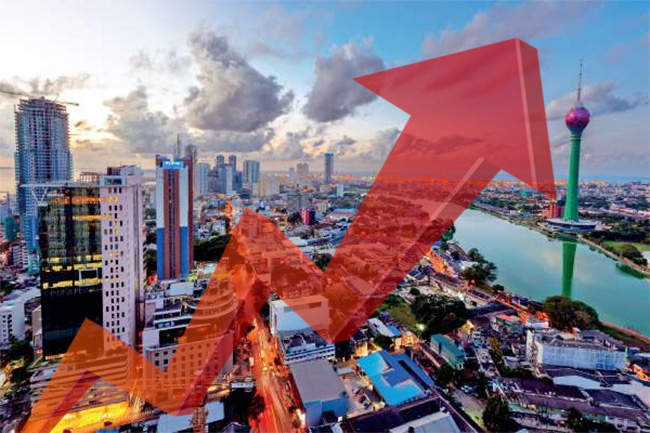
Government instills business confidence bringing down inflation

0

By: Staff Writer

March 05, Colombo (LNW): The government has instilled business confidence in Sri Lanka by maintaining a single digit inflation rate, said State Finance Minister, Shehan Semasinghe.

He said that this was at around 70% last year and prudent and systematic steps were taken to reduce it gradually. This is expected to be retained fewer than 5% throughout the year.

In its March edition, leading business magazine LMD reports that “the gauge of corporate sentiment remains steady, albeit that it is way short of its all-time average.”

LMD notes, “The LMD-PEPPERCUBE Business Confidence Index (BCI) continues to be lacklustre… but steady; it has remained in the 81-85 range for three successive months.

“In February, the index registered a one basis point dip to 81, which is a massive 42 notches shy of its all-time average (123) although compared to 12 months ago (63), the barometer has in fact gained 18 points,”

It notes that PepperCube Consultants attributes the dip in the index to the impact of the VAT hike, “There is a degree of buoyancy regarding the investment climate and expectations about maintaining sales volumes have remained relatively unchanged over the past four weeks – this despite the marginal drop in optimism regarding the economy over the next 12 months.”

LMD says that “the BCI is unlikely to gain any substantial ground at least until there’s clarity on the timing and conduct of one more election this year.”

A spokesperson for LMD explains, “As we said last month, the index is unlikely to gain any substantial ground at least until there’s clarity on the timing and conduct of one more election this year.”

She cites the President’s Media Division’s recent text alert that “the presidential election will be held within the mandated period and according to the current timeline, general elections will be held next year.”

LMD’s publisher, Media Services, says the latest edition of the magazine will be released shortly. Its digital version has been shared on the publisher’s social media platforms (the full BCI report will be uploaded on its website – www.LMD.lk).

State finance  Minister Semasinghe  also said that government revenue is increasing and there is also a sharp increase of new tax payers.

“The total number of registered taxpayers in 2019 was 1,705,233. It decreased to 677,613 in 2020 due to various precedent decisions.”

“In 2021, it was 507,085. We have succeeded in raising the number of tax files from 437,547 in 2022 to one million. Also, the state’s income will be Rs. 3110 billion in 2023.”

 He predicted that Sri Lanka’s economic growth will be 1.7% in the third quarter of 2023. Accordingly, the overall economic growth in 2023 will be around -3%.“But it should also be said that the overall economic growth in 2022 was -11%.”

SLT Group’s financial performance in 4Q 2023 reflects a downturn

0

By: Staff Writer

March 05, Colombo (LNW): The SLT Group’s financial results for the fourth quarter and financial year ending December 31, 2023, reflects a downturn in performance amidst a turbulent macro-economic environment in the country.

For 4Q 2023, SLT Group reported a year-on-year consolidated revenue degrowth of 7.5% amounting to LKR 26 billion compared to LKR 28 billion in 2022.

The Group’s profits decline was attributed to reduced revenue, despite the efforts of cost optimization measures that resulted in a 5.9% reduction in Operating Expenses (Opex).

Consequently, the Group saw a corresponding decline in operating profit, with both Profit Before Tax (PBT) and Profit After Tax (PAT) experiencing decreases in the quarter.

At SLT level, a 3.6% Opex reduction was posted for 4Q 2023 compared to 4Q 2022, attributed mainly to a well-managed cost reduction in staff costs.

 Further, SLT saw cost savings in other areas credited due to a reduction in advertising and activation costs, with repair and maintenance costs also decreasing during the latter part of 2023.

However, these savings were outweighed by a fall in the top line and increase in depreciation, driving overall losses.

Overall, in the financial year of 2023, the Group’s operational costs rose by 9.4% to LKR 74 billion compared to LKR 68 billion in 2022, mainly due to increased electricity tariffs.

Additionally, other costs, including, annual maintenance contract costs, vehicle hiring, fuel, and repair costs, contributed to the overall cost increase year-on-year.

Furthermore, over the twelve-month period of 2023, the Group experienced a loss of LKR 3.9 billion, contrasting sharply with the profit of LKR 4.8 billion recorded in 2022, reflecting a staggering decline of 182.3%.

Similarly, SLT and Mobitel individually reported losses of LKR 1.1 billion and LKR 3.6 billion for the year, respectively.

 Additionally, the Group’s revenue experienced a marginal degrowth of 1.2%, amounting to LKR 106.4 billion, compared to the revenue of LKR 107.7 billion in the financial year of 2022.

Offering a positive trend compared to 3Q 2023, the Group recorded a 13.2% reduction in Opex from 3Q to 4Q and a decrease in net losses from LKR 1.5 billion in 3Q to LKR 1.2 billion in 4Q.

Moreover, the Group recorded an operating profit of LKR 549 million in 3Q 2023, followed by a surge to LKR 1.2 billion in 4Q 2023, indicating optimistic future forecasts.

Despite the performance decline over previous year, Mobitel showed a 3% growth in revenue and improvement in profitability parameters in the second half of 2023 over the first half of the year. The EBITDA reported a 9% growth and operating loss have reduced by 54% during the period as a result of company’s top line growth and cost optimization efforts.

Tourism Ministry aims 2.3 million travellers arrivals this year

0

By: Staff Writer

March 05, Colombo (LNW): Sri Lanka is poised for an exhilarating tourism surge in 2024, with ambitious plans aiming for 2.3 million tourist arrivals, Tourism Ministry sources said.  

Driving this surge is the plans of extension of visa exemption status for Indian travellers beyond March, a strategic move acknowledging India’s pivotal role as the primary tourism market for Sri Lanka.

Sri Lankan Minister of Tourism Haren Fernnado emphasized this significant development at the OTM 2024, underlining the indispensable contribution of Indian tourists in steering Sri Lanka’s tourism recovery

 Sri Lanka aims to attract more visitors, particularly those who prefer last-minute trips and those who like to avoid the tedious visa application process.

Tourist arrivals in February have hit a post-COVID all-time high of 218,350 whilst pushing the cumulative figure to 426,603 setting a positive start for the year, he disclosed. .

Sri Lanka welcomed over 200,000 tourists for three consecutive months, marking a hat trick. February arrivals also set a new benchmark, beating the previous high of 210,352 recorded in December since the onset of the pandemic in March 2020.

The data reflects a sharp growth of 103% year-on-year (YoY), largely influenced by the winter season travel, enhanced connectivity and service from more airlines and growing traveller confidence following promotions.

Nevertheless, the performance in February is still 7.3% lower compared to the 235,618 in the benchmark year 2018.  “As per Sri Lanka Tourism Development Authority (SLTDA), earnings from the sector during the first two months estimated over $ 710 million.

 It is a significant leapfrog from where the industry was post-COVID and other crises. I hope this momentum will continue and be a record-breaking 2024,” Tourism Minister Harin Fernando said.

In February, an average of 7,529 tourists arrived in the country daily, as against the 6,717 daily average in January 2024.

Notably, Sri Lanka has gained recognition as one of the desired destinations for last-minute trips by Indians, and according to Google Trends reports for India,

Sri Lanka ranks 4th among the top 10 most googled travel destinations by Indians. Additionally, FOX News has recently acknowledged it as one of the top 13 affordable destinations.

Amidst this promising landscape, the Sri Lankan Resorts of Cinnamon Hotels & Resorts serve as gateways to unparalleled experiences within the island’s most exotic locations.

Strategically situated amidst breathtaking landscapes, Cinnamon Hotels & Resorts showcases its expertise in destination exploration as these resorts offer more than just accommodation; they provide a portal to immerse oneself in Sri Lanka’s rich culture, heritage, and natural splendour.

As travellers explore Sri Lanka’s diverse offerings, Cinnamon Hotels & Resorts enhances their experience with exclusive last-minute savings of up to 15% on direct bookings made within 7 days, available until 31st December 2024.

With eight stunning properties dotting the island, each promises a unique and unforgettable stay. Furthermore, guests can elevate their experience with exclusive property-specific book direct benefits, ranging from complimentary upgrades to special amenities.

These perks add an extra layer of indulgence, ensuring that every moment spent with Cinnamon Hotels & Resorts is nothing short of extraordinary.

Sri Lanka’s trade deficit widens in January 2024 amidst exports decline

0

By: Staff Writer

March 05, Colombo (LNW): Sri Lanka’s merchandise trade deficit in January widened to US$ 514 million from US$ 445 million in the corresponding month the previous year due to a higher increase in imports.

Provisional data released by the Central Bank this week showed that earnings from merchandise exports recorded a marginal decline of 0.8 percent Year-on-Year (YoY) to US$ 971 million in January 2024 compared to US$ 978 million in January 2023.

In terms of merchandise imports, expenditure increased by 6.2 percent YoY to US$ 1,512 million in January 2024

The increase in expenditure on consumer goods and investment goods partly driven by the relaxation of import restrictions contributed to this increase, the Central Bank said

The decline in industrial goods exports in January 2024 compared to January 2023 was mainly contributed by garments, resulting from lower exports of garments to most major markets.  

However, earnings from petroleum products increased due to the increase in volumes of bunkering and aviation fuel exports. Earnings from the exports of agricultural goods improved in January 2024, compared to a year ago, mainly contributed by minor agricultural products, coconut related products, and tea.

Meanwhile, earnings from mineral exports declined due to the base effect of higher exports of zirconium ores in January 2023.

Expenditure on merchandise imports increased by 6.2 per cent to US dollars 1,512 million in January 2024 compared to US dollars 1,423 million in January 2023.

The increase in expenditure on consumer goods and investment goods partly driven by the relaxation of import restrictions contributed to this increase.

Meanwhile, earnings from mineral exports declined due to the base effect of higher exports of zirconium ores in January 2023.

The increase in the expenditure on consumer goods imports in January 2024 compared to a year ago was resulted by a broad-based increase in expenditure on both food and non-food consumer goods.

Meanwhile, expenditure on intermediate goods imports declined driven by lower fuel imports partly owing to higher hydro power generation. In contrast, expenditure on base metals increased notably while expenditure on textiles and textile articles imports also increased.

Expenditure on investment goods increased mainly driven by higher imports of machinery and equipment while expenditure on building material imports also increased, owing to higher iron and steel imports.

Expenditure on merchandise imports increased by 6.2 per cent to US dollars 1,512 million in January

2024 compared to US dollars 1,423 million in January 2023. The increase in expenditure on consumer goods and investment goods partly driven by the relaxation of import restrictions contributed to this increase.

Sri Lanka Original Narrative Summary: 05/03

0

  1. President Ranil Wickremesinghe reveals that over the past 14 months, the Parliament has enacted 42 new laws to facilitate the country’s economic transformation: highlights the necessity of passing an additional 62 laws through Parliament: underscores that if this cannot be achieved in the current parliamentary session, the bills will be reintroduced in the subsequent session for approval.
  2. Opposition Leader Sajith Premadasa has voiced concern over economic malpractices, alleging certain entities of monopolising state resources and infringing on citizens’ rights: promises decisive action under an SJB administration, vowing legal scrutiny for the ‘economic terrorists’ responsible and efforts to restore appropriated assets to the Sri Lankan populace.
  3. Basil Rajapaksa, founder of SLPP, returns to Sri Lanka after a trip to the USA: mentions no official decisions have been made on election candidates: affirms his commitment to leading SLPP’s election preparations, irrespective of their type.
  4. S.C. Muthukumarana, representing the Sri Lanka Podujana Peramuna (SLPP), sworn in as a member of Parliament: Muthukumarana fills in the parliamentary seat vacant upon the resignation of Uddika Premaratna.
  5. CEYPETCO has announced a fuel price reduction effective from midnight on March 04. Petrol 95 Octane will be Rs. 447 per litre (down by Rs. 9), Super Diesel will be Rs. 458 per litre (down by Rs. 10), and Kerosene will be Rs. 257 per litre (down by Rs. 5). However, prices for Petrol 92 Octane and Auto Diesel remain unchanged. Lanka IOC and Sinopec have pledged to adjust their prices in line with CEYPETCO’s revisions.
  6. The Sri Lanka Administrative Service Association (SASA) expresses concerns over the recent salary increase for Sri Lanka Administrative Service officers by the Central Bank: stresses the importance of CB officials having a broader understanding beyond economics, including knowledge in social sciences: highlights potential social unrest and urges consideration of historical context and disparities in decision-making: emphasises the need for a holistic approach considering societal impacts and long-term consequences.
  7. CEB concluded fiscal year 2023 with notable profitability, reporting Rs. 75.7 billion in profits, with Rs. 61.2 billion from the Board: Factors include increased rainfall and a tariff hike in Q423: Revenue totaled Rs. 679 billion, resulting in Rs. 132 billion gross profit: Distribution costs reduced by 13.7%, and other expenses by 15.3%. Finance income increased by 29%, with a 42.8% rise in finance costs: However, recent scrutiny revealed an overestimation of costs by Rs. 140 billion, emphasising the importance of accurate financial management.
  8. The Public Utilities Commission endorses a tariff modification, effective from midnight on March 4, resulting in a 21.9% reduction overall: Following a review of proposals by the Ceylon Electricity Board (CEB), the PUCSL determined this reduction, offering significant relief across consumer categories, notably reducing tariffs for domestic consumers by 33% for those using less than 30 units of electricity: Other sectors will also see reductions ranging from 18% to 33%: Additionally, the CEB has been instructed to settle outstanding payments to renewable power plant owners and formulate plans to meet renewable energy targets by 2030.
  9. Dr. Benjami Reyes, Secretary General of Colombo Plan (CP), met with Saudi Arabian Ambassador to Sri Lanka Khalid Hamoud Alkahtani to discuss maritime sector cooperation: explore infrastructure, capacity building, and trade facilitation: The Saudi Ambassador expresses optimism for future collaboration with CP: Meanwhile, the United States funds key projects of the CP, including a three-year capacity building programme for the Sri Lanka Ports Authority.
  10. Tourism is thriving with a surge in visitors, attributed to visa-free travel for tourists from key countries like China, India, and Russia: Over 200,000 tourists arrived in January 2024, marking a 103.1% increase compared to last year: Russia leads arrivals with 15%, followed by India: Sri Lanka anticipates welcoming 2 million visitors in 2024, potentially generating $6 billion in revenue.

14th Chinese National People’s Congress commences in Beijing

0

March 05, World (LNW): The second session of the 14th Chinese National People’s Congress commenced in Beijing this morning (05), marking a significant event in the country’s governance framework, reflecting socialist democracy with Chinese characteristics.

Approximately 2900 representatives from the Chinese Communist Party, government officials, and delegates of the National People’s Congress, including Chinese President Xi Jinping, convened at the opening ceremony to participate in deliberations.

During this session, the Chinese Premier presented the 2024 State Work Report, highlighting China’s achievements in overcoming the challenges posed by the Covid-19 pandemic and attaining major economic and social development objectives.

Emphasising the nation’s commitment to building a modern socialist country, the Premier underscored the pivotal role of this year, which marks the 75th anniversary of the founding of the People’s Republic of China, in advancing the implementation of the ’14th Five-Year Plan’.

Dollar rate at SL banks today (Mar 05)

0

March 05, Colombo (LNW): The Sri Lankan Rupee (LKR) indicates slight appreciation further against the US Dollar today (05) in comparison to yesterday, as revealed by leading commercial banks in the country.

At Peoples Bank, the buying price of the US Dollar has dropped to Rs. 302.39 from Rs. 302.52, and the selling price to Rs. 312.93 from Rs. 313.84.

As of 10 am this morning, Commercial Bank reveals the buying price of the US Dollar to be Rs. 301.18, and the selling price, Rs. 312. These figures, however, may subject to change later today.

At Sampath Bank, the buying price of the US Dollar has dropped to Rs. 303 from Rs. 303.50, and the selling price to Rs. 312 from Rs. 312.50.

Sri Lanka Administrative Service Association issues statement on CB’s salary increase decision

0

March 05, Colombo (LNW): In response to the recent decision by the Central Bank of Sri Lanka (CBSL) to increase salaries for Sri Lanka Administrative Service officers, the Sri Lanka Administrative Service Association (SASA) has issued a statement highlighting several concerns.

The association emphasised the need for CBSL officials to possess a broader understanding beyond economics, advocating for knowledge in social sciences such as sociology, peace and conflict studies, and human behaviour.

This broader understanding is essential for comprehending the societal implications of policy decisions, according to SASA.

Expressing concerns about potential social unrest, SASA cited recent incidents brought to light on social media as examples of the consequences of decisions made without considering broader societal impacts.

The association urged CBSL officials to consider historical context, pointing out past policy changes that have affected salary structures and contributed to economic challenges.

SASA also called attention to disparities in access to resources and infrastructure funded by public taxes, emphasising the importance of recognising these disparities in decision-making.

The association highlighted the role of neuroscience and early childhood experiences in moral development, urging CBSL officials to adopt a more holistic approach to decision-making to ensure the well-being of both the economy and society.

In conclusion, SASA urged the Governor of the CBSL to consider not only market rates but also the broader social and moral implications of salary increase decisions, emphasising the interconnectedness of market and social conditions and the potential long-term consequences for future generations.

Full Statement:

Dear all respected Citizens of Sri Lanka,

With all due respect, we’d like to raise some points that haven’t been addressed in conversation that had between Dr. Nandalal Weerasinhe and Mr. Jayantha Kovilgodage.

Central Bank officials should have a broader understanding than just economics. Their education should encompass social sciences like sociology, peace and conflict studies, and human behavior to better grasp the societal implications of their decisions.

The current decision-making process, lacking this broader understanding, risks perpetuating social unrest. This recent incident, brought to light by social media, exemplifies this concern.

The Central Bank of Sri Lanka, meant to be a professional body supporting policymakers, has unfortunately contributed to the current economic situation, impacting other social development indicators.

Confined within their own environment, Central Bank professionals might rely solely on data,neglecting the human factor. This approach stands in stark contrast to other government services directly interacting with citizens and experiencing the real consequences of policy decisions.

It’s important to consider historical context. In 1978, salaries of similar-graded officials of SLAS, Central Bank and State Owned Enterprises (SOEs) were comparably similar level.

However, a policy change implemented by a former Central Bank official, who later became the Treasury secretary, allowed SOE salaries to be renegotiated every three years through collective bargaining.

This policy set a precedent for the Central Bank to increase its own salaries, contributing to a drain of non-taxable income from SOEs that previously flowed into the national treasury.

Another former Central Bank official who served as Treasury secretary prioritized unnecessary public service recruitment over salary increases. His belief that financial bookkeeping alone could manage societal issues proved shortsighted. He also received two pensions, further burdening the nation.

Therefore, we urge the Governor of the CBSL to consider not just market rates but also the broader social and moral implications of your decisions.

The market and social conditions are intricately linked. While CBSL officials, like all citizens, are consumers, their access to resources and infrastructure funded by public taxes differs. It’s crucial to recognize this disparity.

Neuroscience tells us that the prefrontal cortex, responsible for executive functions, also plays a role in decision-making and morality.

Additionally, early childhood experiences significantly impact moral development.

By neglecting these factors, CBSL risk fostering a nation of dissatisfied citizens, with negative consequences impacting future generations who will bear the cost of these decisions.

We hope this comprehensive perspective encourages a more holistic approach to decision-making,ensuring the well-being of both the economy and society as a whole.

S.C. Muthukumarana sworn in as MP

0

March 05, Colombo (LNW): S.C. Muthukumarana, representing the Sri Lanka Podujana Peramuna (SLPP), officially assumed office as a Member of Parliament today (05).

In a ceremony held at the commencement of the parliamentary session, Muthukumarana took the oath of office before Speaker Mahinda Yapa Abeywardena.

PUCSL approves significant electricity tariff reductions following comprehensive review

0

March 05, Colombo (LNW): The Public Utilities Commission of Sri Lanka (PUCSL) has officially endorsed the modification of electricity tariffs, effective from midnight yesterday (04), resulting in an overall reduction of 21.9 per cent, announced PUCSL chairman Prof. Manjula Fernando during a press conference held in Colombo yesterday.

Prof. Fernando emphasised that the decision was reached following a comprehensive review of proposals and cost data presented by the Ceylon Electricity Board (CEB) regarding the tariff adjustment.

This process adhered to the stipulations outlined in Section 30 of the Sri Lanka Electricity Act No. 20 of 2009 and the regulations of the Public Utilities Commission of Sri Lanka.

Initially, the CEB proposed a tariff reduction of 3.4 per cent in January, subsequently revising it to 16 per cent in a proposal submitted on February 22.

After careful consideration of public feedback and thorough examination of the CEB’s cost data, the PUCSL determined a tariff reduction of 21.9 per cent to be appropriate.

Under this revised tariff structure, significant relief is extended to all consumer categories, with a notable reduction of 33 per cent for domestic consumers utilising less than 30 units of electricity.

Additionally, consumers falling within the consumption brackets of 61-90 units, 91-180 units, and over 180 units will experience reductions of 30 per cent, 24 per cent, and 18 per cent, respectively. Religious institutions will benefit from a tariff reduction of 33 per cent.

Tariffs for general-purpose consumers will be decreased by 23 per cent, while government institutions will witness a reduction of 22 per cent.

Furthermore, reductions of 18 per cent, 18 per cent, and 20 per cent will apply to the hotel, industry, and street lamp sectors, respectively.

In conjunction with the tariff adjustment, amendments have been made to monthly fixed charges and unit prices across various consumption tiers to reflect the new rates.

Additionally, the CEB has been instructed to settle outstanding payments and interest arrears owed to owners of renewable power plants, including roof-mounted solar power plants, by the end of this month.

The PUCSL has imposed further obligations on the CEB, including the formulation of plans to achieve renewable electricity generation targets by 2030, with a deadline for submission set for June 30.

In conjunction with the tariff revision, the PUCSL has stipulated 13 additional conditions for implementation by the CEB.