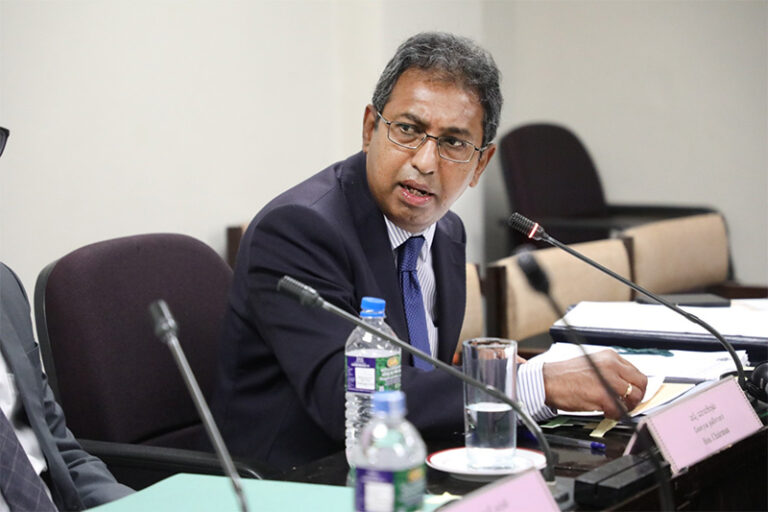
May 13, Colombo (LNW): The newly established ‘Office of International Trade’ (OIT) within the President’s office has conveyed its staffing challenges to the Committee on Public Finance (CoPF), Committee Chief MP (Dr.) Harsha De Silva told Parliament today (13).
According to the Opposition MP, A.G. Weerasinghe, the chief negotiator of the OIT, informed CoPF that the office lacks adequate personnel to conduct feasibility studies on pending Free Trade Agreements (FTAs) with China and Thailand.
In light of this, Dr. Silva proposed a decision-making process regarding the future of the Department of Commerce.
He suggested that considerations should be made on whether to maintain or close down the Department of Commerce.
Furthermore, he indicated the possibility of transferring officers from the Department of Commerce to the OIT should the decision be made to cease operations of the Commerce Department.
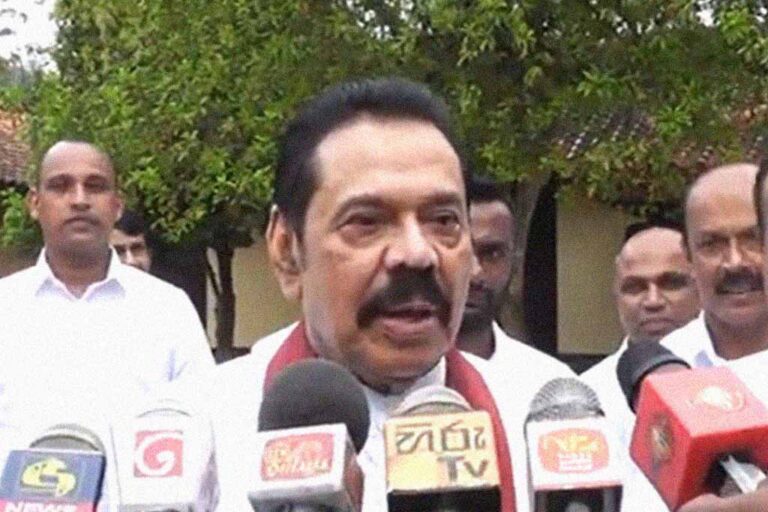
May 13, Colombo (LNW): Leader of the Sri Lanka Podujana Peramuna (SLPP), former President Mahinda Rajapaksa urged the government to postpone any plans for the privatisation of national assets and state-owned enterprises (SOEs) until after a new government is elected.
In a statement issued yesterday, Rajapaksa expressed concerns over the government’s intentions to privatise certain national assets and SOEs, citing unrest among trade unions, political groups, and citizens.
Rajapaksa highlighted that the current government is an interim arrangement, tasked with managing the country during the remainder of the ousted President Gotabaya Rajapaksa’s term.
He argued that selling state-owned assets during this interim period might not yield the best outcomes for the nation.
In response to Rajapaksa’s statement, former SLPP member MP Charitha Herath noted that the majority of MPs representing the SLPP have supported every decision made by the current administration led by President Ranil Wickremesinghe.
He emphasised the importance of honesty in political discourse and urged the SLPP to oppose the government’s actions in Parliament.
Opposition MP Harsha de Silva also weighed in on Rajapaksa’s statement, suggesting that by opposing SOE reform, Rajapaksa had undermined President Ranil Wickremesinghe’s position.
He questioned the next steps for Wickremesinghe in light of Rajapaksa’s stance.
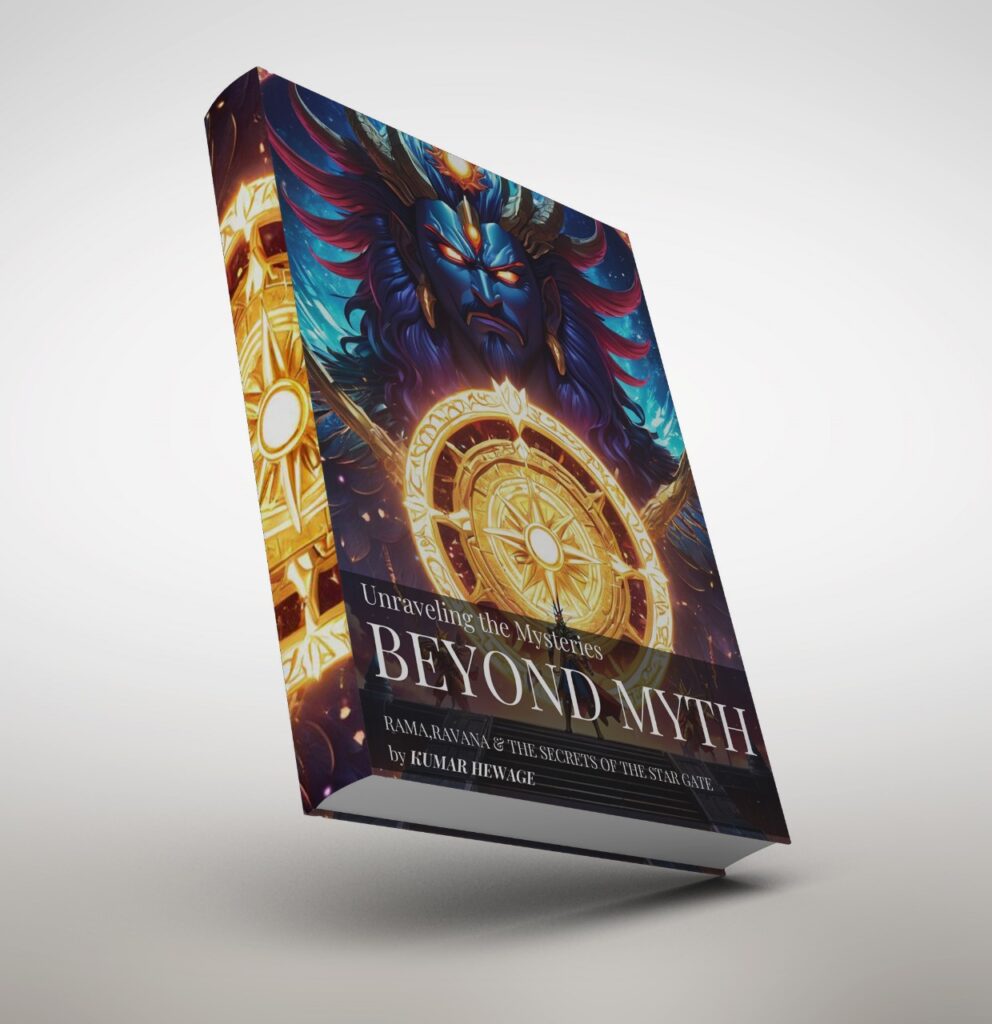
May 13, Colombo (LNW): In a captivating blend of history, mythology, and adventure, Kumar Hewage’s “Beyond Myth, Rama, Ravana & the Secret of Star Gate” embarks on a thrilling quest.
The story begins with the unsettling disappearance of Professor William Johnson, a scholar engrossed in deciphering ancient Brahmi inscriptions. His son, Eric, joins forces with Mohan, a friend from India, to unravel the secrets behind his father’s vanishing act.
Their pursuit takes them on a whirlwind journey through the timeless epic of Ramayana. They delve into the cultural tapestry of India, Sri Lanka, and Southeast Asia, exploring hidden corners where whispers of Rama and Ravana linger. From Bali in Indonesia to the enigmatic sites of China and Thailand, they meticulously comb through written evidence, hoping to unearth a connection to the missing professor.
As Eric and Mohan delve deeper, their path intersects with a seasoned meditation master. Will this encounter prove to be the key in unlocking the whereabouts of Professor Johnson? Hewage masterfully weaves together various elements, including:
Deciphering the Past: The cryptic inscriptions in Brahmi script hold the potential to unlock forgotten knowledge. Can Eric and Mohan crack the code and unearth the secrets they conceal?
The Symbolism of Ramayana: The epic tale of Ramayana is not merely a story; it’s a treasure trove of symbolism and imagery. Will these symbols provide clues in their search for the professor?
The Legend of Ravana and Sigiriya: The enigmatic fortress of Sigiriya in Sri Lanka shrouds itself in legends of Ravana. Does it hold a key to the professor’s disappearance or the secrets of the Star Gate?
A Lost Scholar’s Legacy: Professor Johnson’s dedication to unraveling ancient mysteries has come at a cost. Can Eric and Mohan complete his mission and bring him home?
The Power of Meditation: The story explores the potential link between meditation and the ability to access hidden knowledge. Will the meditation master be the key to unlocking the Star Gate’s secrets?
“Beyond Myth, Ramayana, Ravana & the Secret of Star Gate” promises to be a captivating read for those who enjoy a captivating blend of history, mythology, and suspense. With its exotic locales, ancient secrets, and thrilling quest, the book is sure to transport readers on an unforgettable adventure.
Explore the Secrets Now: Embark on this captivating adventure with “Beyond Myth, Rama, Ravana & the Secret of Star Gate,” now available on Kindle!
This article is to present the actual profitability of the central bank (CB) in 2022 and 2023 against the colossal losses published by the CB.
Loss scenario – Business accounting standards
The CB has reported a loss of Rs. 374 bn for 2022 and Rs. 114 bn for 2023 (see table below).
This is based on adoption of evolving business accounting standards recommended for large commercial-based financial institutions. Therefore, the adoption of same standards for the CB is inappropriate for the CB as it is a financial regulatory institution operating on monopoly money printing license of the government. For instance, huge book-keeping/unrealised losses of Rs. 737 bn in 2022 and Rs. 597 bn in 2023 resulted annual losses for 2022 and 2023.
A detailed article was released in this blog yesterday (Read the article here) to explain inappropriateness of business accounting standards for central banks and questionable accounting used for the CB.
Profit scenario – Central bank accounting standards
These standards account income and expenses only on realised and accrued basis. Accordingly, assets and liabilities are valued at cost. Therefore, the accounting concept of unrealized gain/loss (book-keeping profit) arrived at valuation of assets at model-based market prices is not accepted for central banks. Accordingly, the unrealized exchange gain/loss on revaluation of foreign assets and liabilities at new exchange rates also is not taken into income.
Accordingly, a profit of Rs. 379 bn for 2022 and Rs. 492 bn for 2023 (see the Table below) is calculated on the basis of financial information gathered from financial statements published by the CB.
Accordingly, the government should have received a dividend of at least Rs. 417 bn in 2023. In 2022, the government received no dividend but should have received at least Rs. 142 bn. It should have been more as the retained profit of Rs. 235 bn in 2022 is excessive and unjustified.
The annual profit and the profit distributable to the government should have been significantly higher if not for
arbitrarily lower interest offered to banks on CB lending and liquidity facilities (reverse repo suctions, special liquidity facility and intra-day liquidity facility) (For instance, the lost income on overnight repo auctions alone is Rs. 11 bn in 2023) and
payment of interest (standing deposit facility rate) on bank excess/idle reserve balances at the CB unreasonably as explained in the previous article stated above.
Serious public concerns
Financial statements published by the CB are based on inappropriate business accounting standards and, therefore, do not represent true outcomes of money printing connected monetary operations of the CB.
In fact, these financial statements are creative accounting purposely adopted by relevant professionals of the CB despite the conventional accounting principles and practices available in the central banking literature, especially the world’s leading central bank, the US Federal Reserve.
Therefore, the Parliament and Minister of Finance being the supervisory/oversight authorities of the CB are responsible for the offence of creating accounting of the CB unless they investigate and rectify it.
Otherwise, true affairs of monetary system and economy and the cost to tax payers are misrepresented and misreported which are not trustworthy for the use of macroeconomic management.
Financial reporting of other state institutions also may have such creating accounting that causes significant cost to the national budget and tax payers. For example, in 2023 the government lost nearly Rs. 417 bn of dividend income from the CB that could have been utilized to reduce same amount of tax burden of the public.
This article is released in the interest of participating in the professional dialogue to find out solutions to present economic crisis confronted by the general public consequent to the global Corona pandemic, subsequent economic disruptions and shocks both local and global and policy failures. All are personal views of the author based on his research in the subject of Economics which have no intension to personally or maliciously discredit characters of any individuals.)
P Samarasiri
Former Deputy Governor, Central Bank of Sri Lanka
(Former Director of Bank Supervision, Assistant Governor, Secretary to the Monetary Board and Compliance Officer of the Central Bank, Former Chairman of the Sri Lanka Accounting and Auditing Standards Board and Credit Information Bureau, Former Chairman and Vice Chairman of the Institute of Bankers of Sri Lanka, Former Member of the Securities and Exchange Commission and Insurance Regulatory Commission and the Author of 12 Economics and Banking Books and a large number of articles published.
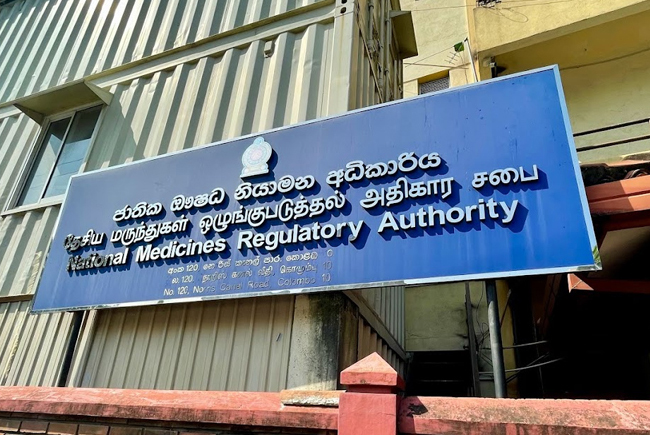
May 13, Colombo (LNW): In a bid to address the concerning influx of substandard and hazardous medicines into Sri Lanka via unregistered importers, such as the recent human immunoglobulin scandal, the National Medicines Regulatory Authority (NMRA) is set to introduce a security sticker for future pharmaceutical registration certificates.
This decision comes in response to allegations surrounding the fraudulent acquisition of registration certificates by unauthorised importers or vendors, according to Dr. Ananda Wijewickrama, Chairman of the NMRA.
These allegations have surfaced amid ongoing legal cases, including the human immunoglobulin scam and the distribution of substandard eye drops, suggesting the falsification of NMRA-issued registration certificates.
Dr. Wijewickrama emphasised the gravity of this issue, prompting the NMRA to introduce a new security measure by affixing security stickers to all pharmaceutical registration certificates.
The initiative aims to prevent the entry of dangerous or substandard medicines into the country.
The Chairman disclosed plans to implement the security feature within approximately one month, stating that orders for the production of the new security stickers have been placed with the Government Press.
Implementation will commence promptly upon receipt of the new batch of stickers.
May 13, Colombo (LNW): Sri Lanka is poised to triple its investment target for 2024, emphasised Investment Promotion State Minister Dilum Amunugama, citing the successful implementation of necessary initiatives outlined by the Finance Ministry for the first quarter of 2024.
Addressing a press conference on Friday (10), Amunugama expressed confidence in attracting over US$ 3 billion in investments to the country.
He emphasised that investments from projects signed in 2023, though not included in this year’s tally, will be executed during the current year.
Amunugama highlighted a remarkable 200 per cent improvement in Sri Lanka’s investment landscape compared to two years ago, asserting that the country has become increasingly favourable for investors.
Efforts to promote investment in foreign countries have been initiated this year, with the appointment of representatives to the investment board.
Notable successes have been achieved in countries such as Britain, Canada, France, Italy, and Germany through project promotion activities conducted via global forums involving Sri Lankan expatriate businessmen.
Amunugama highlighted the establishment of private industrial zones near Trincomalee, Mankulam, Paranthan, and Kankesanthurai, with the Kankesanthurai Private Industrial Zone being set up to commence operations.
A Sri Lankan business group based in Canada is leading this initiative with a US$ 500 million investment and is responsible for attracting projects to the zone, he added.
Additionally, sectors like solar and wind energy, along with green hydrogen, are expected to emerge as significant investments in Sri Lanka under the Trincomalee District Development Plan.
Amunugama stressed the importance of expediting this development project in collaboration with India following the completion of debt restructuring.
May 13, Colombo (LNW): In response to allegations of police officers abusing their authority within the “Yukthiya” (Justice) Operation and colluding with criminals for bribes, Public Security Minister Tiran Alles has affirmed that strict measures will be implemented against any officers found engaging in such misconduct.
Alles told Daily Mirror his zero-tolerance policy towards such incidents, stating that he has already taken action against certain police officers implicated in such allegations and their connections with criminal elements.
Recent events have underscored the decisive action he has taken against those found misusing their uniforms, the Minister affirmed.
Allegations of human rights abuses within the Yukthiya Operation surfaced, with several MPs raising concerns that innocent individuals, including school children, are being detained under the Yukthiya Operation for minor infractions in certain police stations and subsequently charged under Act 54 of the Criminal Procedure.
SLPP MP Samanpriya Herath highlighted issues faced by individuals in the Kurunegala district, where youths found loitering at junctions and roads are reportedly detained and charged under Act 54.
In response, Minister Alles refuted claims of wrongful detentions under the operation, suggesting that such incidents may occur during routine police operations rather than under the Yukthiya operations specifically.
Elaborating on the focus of the Yukthiya Operation, Alles clarified its primary objective of apprehending identified drug traffickers rather than individuals solely involved in drug consumption.
Addressing concerns over police conduct, Minister Alles acknowledged issues within certain police stations and committed to taking action against any officers found engaging in misconduct.
He asserted that while there are concerns within specific police stations, it is crucial to adhere to due process in addressing these issues.
The Minister emphasised that he remains steadfast in upholding the integrity of law enforcement and will not yield to political pressure.
Alles further reiterated his commitment to combating drug-related crimes and expressed confidence in public support for the government’s efforts.
However, he did underscore that any instances of police misconduct will be swiftly dealt with.
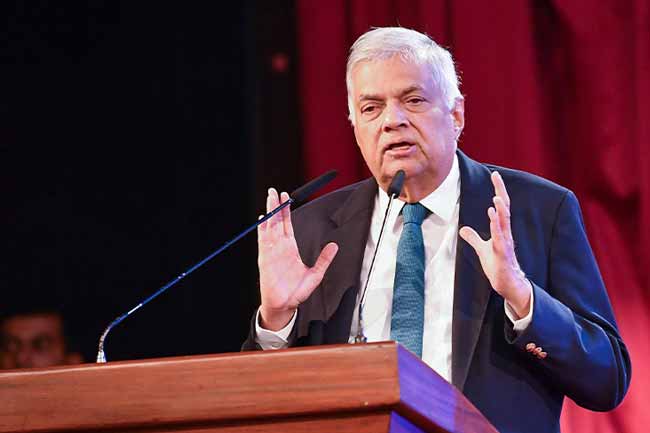
May 13, Colombo (LNW): In a speech delivered during the International Nurses Day celebration at Temple Trees, President Ranil Wickremesinghe outlined ambitious plans for Sri Lanka’s economic growth and government reforms.
The President expressed his aim to achieve a 3 per cent growth rate for the country’s economy by 2025 and announced forthcoming measures to raise the salaries of government employees.
He highlighted the introduction of four key laws aimed at propelling economic development, including legislation to grant autonomy to the Central Bank of Sri Lanka (CBSL) and foster an export-driven economy.
Reflecting on past economic challenges, President Wickremesinghe emphasised the importance of bipartisan cooperation in driving the country towards recovery.
He urged unity in embracing the proposed legislative agenda, which includes laws to enshrine agreements with international financial institutions into law and steer the economy towards sustainable growth.
The President also underscored the need for significant investment in education and healthcare, stressing that these priorities could only be met through the successful implementation of the proposed economic programme.
Additionally, the President inaugurated the Sri Lanka Nursing University and announced enhancements to allowances for nursing staff.
He acknowledged the contributions of various stakeholders, including Venerable Dr. Muruththettuwe Ananda Nayaka Thero, and called for continued support for the nursing profession.
The event, commemorating the birthday of Florence Nightingale, highlighted the pivotal role of nurses in healthcare and society, under the theme ‘Our Nurses – Our Future, The Economic Power of Nursing’.
Notable dignitaries, including Prime Minister Dinesh Gunawardena and Health Minister Dr. Ramesh Pathirana, were present at the celebration.
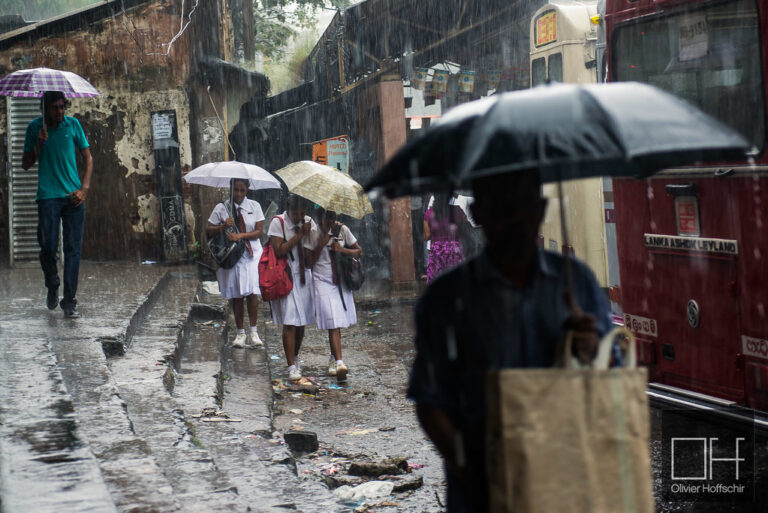
May 13, Colombo (LNW): Due to a low-level atmospheric disturbance in the vicinity of Sri Lanka, showery condition is expected to be enhanced during the next few days, the Department of Meteorology said in its daily weather forecast today (12).
Showers or thundershowers will occur at several places in most provinces of the island after 1.00 p.m., with heavy showers above 100mm being likely to occur at some places in Western, Sabaragamuwa, Central, North-western and Uva provinces and in Galle and Matara districts, the statement added.
Showers may occur at a few places in the coastal areas of Eastern and Southern provinces during the morning as well.
Misty conditions can be expected at some places in Western, Sabaragamuwa and Central provinces and in Galle and Matara districts during the morning.
General public is kindly requested to take adequate precautions to minimise damages caused by temporary localised strong winds and lightning during thundershowers.
Marine Weather:
Condition of Rain:
Showers or thundershowers will occur atseveral places in the sea areas off the coast extending from Trincomalee to Galle via Batticaloa, Pottuvil, and Hambantota. Showers or thundershowers will occur at several places in the other sea areas around the island during the evening or night.
Winds:
Winds will be south-westerly or variable and wind speed will be (20-30)kmph. Wind speed may increase up to 40-45 kmph at times in the sea areas off the coasts extending from Kankasanthurai toTrincomalee via Mullaitivu.
State of Sea:
The sea areas off the coasts extending from Kankasanthurai toTrincomalee via Mullaitivu can be fairly rough at times. The other sea areas around the island will be slight. Temporarily strong gusty winds and very rough seas can be expected during thundershowers.
May 12, Colombo (LNW): Sri Lanka is keen to expedite its economic partnership withUran and Russia, which has been severely impacted by U.S. sanctions, while for the island nation, increasing trade and securing foreign investments is critical at this juncture
Iran aims to navigate its limitations amid sanctions, with a focus on fostering trade, economic cooperation, and maritime connectivity, all of which are foundational to the emerging ties between Iran and Sri Lanka.
For many years, Russia has been a trusted friend and key partner in Sri Lanka’s development, consistently assisting without any conditions.
The country played a crucial role in transforming Sri Lanka into an industrial hub by assisting in the establishment of sugar, steel, and tire production industries within the country.
Sri Lanka will deal with Iran and Russia for investments and trade without being caught into the United States-led sanctions, the island nation’s Foreign Minister Ali Sabry said.
Sri Lanka has been hit by Western sanctions imposed on Iran and Russia. The island nation could not receive $450 million from Iran for a recently opened Uma Oya multipurpose project started before the sanctions.
Sri Lanka was also forced to buy light crude from Malaysia and Dubai instead of Iran after 2012 sanctions.
The Western economic sanctions have already prevented Russian tourists from using their usual payment system and discouraged some visitors from Russia visiting to Sri Lanka, tourism industry officials say.
“We are not going into their sanctions. There are number of areas where the sanctions do not get caught. So, a lot of countries work on that,” Ali Sabry told reporters on Wednesday (08).
“We will do in terms of international rules and regulations,” he said citing how Sri Lanka is paying pending import bill of $251 million for crude oil to Iran.
Sri Lanka now exports tea to Iran for no dollar payment. Instead, Sri Lanka tea producers are paid by the state-owned Ceylon Petroleum Corporation (CPC) in rupees for the pending crude oil import payments for Iran.
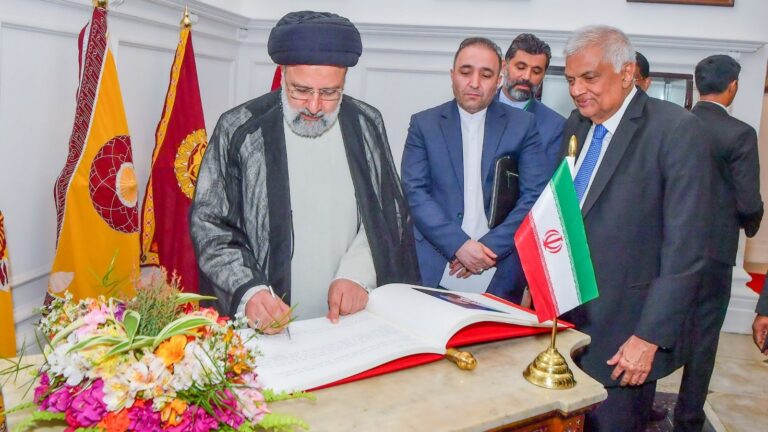
“It is important for us that these captive markets are not neglected,” Sabry said.Iran President Ebrahim Raisi visited Sri Lanka last month on a official tour to launch the Uma Oya project.