The United States has decided to donate 10 helicopters to Sri Lanka for use in disaster response operations. According to a post shared by US Ambassador to Sri Lanka, Julie Chung, on her official X account, the helicopters are of the TH-57 (Bell 206 Sea Ranger) type and are manufactured in Texas, United States.
The helicopters will be transferred to Sri Lanka at no cost under the Excess Defense Articles (EDA) program and are expected to arrive in the country during the first half of 2026. The Ambassador also emphasized the critical role of helicopters in search and rescue operations during natural disasters, citing events such as Cyclone Ditva.
It is expected that the addition of these 10 helicopters to the Sri Lanka Air Force will significantly strengthen its helicopter fleet, enhance pilot training capabilities, and improve the country’s overall disaster response efficiency.
At a time when Sri Lanka’s tourism industry is celebrating a near-complete rebound in visitor arrivals, Tourism Promotion Bureau Chairman Buddika Hewawasam is urging caution—arguing that growth without accuracy is a risk the sector can no longer afford.
Despite welcoming over 2.36 million tourists in 2025 and earning more than US $3 billion, Hewawasam has deliberately delayed announcing revenue targets for 2026. His reasoning challenges a long-standing industry culture that equates success with volume rather than value.
According to Hewawasam, Sri Lanka’s tourism planning has been compromised for years by outdated assumptions, particularly those based on decade-old expenditure surveys. With global travel patterns transformed by the pandemic and climate-related disruptions such as Cyclone Ditwah, he argues that only verified, current data can guide sustainable policy.
The revised estimate of US $140 daily tourist spending, emerging from a new nationwide survey, has sparked debate within the industry. Yet Hewawasam maintains that acknowledging lower yields is preferable to masking them with inflated averages that distort investment and marketing decisions.
His approach also places renewed emphasis on domestic tourism and revenue leakage, two areas historically overlooked in Sri Lanka’s tourism accounting. The forthcoming leakage survey and Tourism Satellite Accounting system aim to quantify tourism’s real economic footprint rather than its perceived one.
In the short term, this data-first philosophy may temper expectations of rapid post-cyclone recovery. In the long term, however, it could redefine Sri Lanka’s tourism model shifting it from headline-driven optimism to evidence-based resilience.
As the industry looks toward 2026, Hewawasam’s stance suggests that credible numbers, not ambitious slogans, will determine whether tourism truly delivers national recovery.
Sri Lanka has taken a significant step toward environmentally sustainable agriculture with the signing of a new grant agreement with the European Union (EU) under the AgriGreen Initiative – Green Economic Growth through Sustainable Agriculture Practices. The €8 million EU-funded programme is designed to promote eco-friendly farming methods, strengthen food security, and support the country’s transition to a greener and more resilient economy.
The initiative is a jointly developed project led by the Ministry of Plantation and Community Infrastructure, working in close collaboration with the Rubber Development Department and the Rubber Research Institute of Sri Lanka. Implementation will be carried out in partnership with the European Union, reflecting a shared commitment to sustainable development and responsible economic growth.
The official exchange of the grant agreement took place between Treasury Secretary Dr. Harshana Suriyapperuma, representing the Government of Sri Lanka, and Dr. Johann H. Hesse, Head of Cooperation of the EU Delegation to Sri Lanka, on behalf of the European Union. The agreement formalizes EU financial support for a programme that aligns closely with Sri Lanka’s long-term development and environmental priorities.
At the core of the AgriGreen Initiative is the objective of encouraging sustainable consumption and production practices, particularly within selected value chains of the rubber sector. By introducing greener technologies and climate-smart agricultural methods, the project aims to improve productivity while reducing environmental impact. The initiative also seeks to enhance the resilience and global competitiveness of Sri Lanka’s rubber industry, an important contributor to rural livelihoods and export earnings.
A key feature of the programme is its strong focus on social inclusion. Special emphasis will be placed on empowering youth and women by increasing their participation in sustainable agricultural activities and value-added production. Through skills development, access to improved practices, and greater market integration, the initiative is expected to create new economic opportunities while promoting equitable growth.
Addressing the occasion, Treasury Secretary Dr. Suriyapperuma expressed appreciation for the EU’s continued support to Sri Lanka, noting that the project complements national efforts to promote environmentally sustainable production systems. He highlighted that the initiative supports market-oriented value addition, deeper integration with export markets, and the broader goal of green economic transformation.
The agreement further reinforces the longstanding partnership between Sri Lanka and the European Union. It marks an important milestone in their shared commitment to sustainable agriculture, responsible consumption, climate resilience, and enhanced food security, while laying the groundwork for inclusive and environmentally responsible economic growth.
Sri Lanka has officially launched the CORRAL (Conservation of Reefs for All Lives and Livelihoods) Conservation Trust Fund, a landmark initiative aimed at safeguarding the country’s vital coral reef ecosystems. The fund will focus on protecting Pigeon Island National Park, Bar Reef Marine Sanctuary, Kayankerni Marine Sanctuary, and their associated marine landscapes, marking a major advancement in long-term environmental financing.
The Trust was established through a formal Deed signed by the Settlor, Environment Foundation (Guarantee) Ltd (EFL), together with the Board of Trustees. It forms a key component of the Sri Lanka Coral Reef Initiative (SLCRI), a six-year programme funded by the Global Fund for Coral Reefs and implemented by the International Union for Conservation of Nature and Natural Resources (IUCN).
EFL played a crucial role in operationalizing the Trust, providing legal and policy expertise that shaped the Trust Deed. Their review ensured that governance structures meet the highest standards of transparency, accountability, and professional management. EFL will also guide the Trust’s operational setup, reinforcing its long-term sustainability.
“This initiative is more than a conservation programme it represents a lasting financial mechanism to protect coral reefs, which are essential for marine biodiversity, climate resilience, and the livelihoods of coastal communities,” said Dr. Shamen Vidanage, IUCN Sri Lanka Country Representative.
The Board of Trustees, carefully selected for their expertise and commitment, includes Palitha Gamage, Prof. (Ms.) Sevvandi Jayakody, Nalin Karunatileka, Dr. (Ms.) Nishanthi Perera, Chanaka Wickramasuriya, and Nishad Wijetunga. Their oversight ensures the Trust will meet its objectives while maintaining professional management and accountability.
Unlike time-bound conservation projects, the CORALL CTF is designed to operate beyond the six-year SLCRI programme, offering a platform for mobilizing further private, government, and international funding for marine ecosystem conservation.
EFL highlighted the significance of this milestone, reflecting the organization’s 45-year commitment to environmental justice, policy development, and public interest advocacy. The creation of the CORAL Trust Fund exemplifies innovative approaches to financing nature conservation in Sri Lanka, ensuring that the country’s coral reefs receive the protection and resources necessary for their long-term survival.
By combining financial sustainability with scientific and policy oversight, the CORAL Conservation Trust Fund sets a precedent for long-term environmental stewardship. This initiative promises to protect Sri Lanka’s coral reefs while supporting the resilience of coastal communities that depend on these fragile ecosystems.
Sri Lanka’s decision to grant up to 15 years of tax exemptions for billion-dollar investors in the Colombo Port City has reopened an old fault line in the country’s economic policy whether growth should be bought through fiscal concessions or earned through stability and reform. While the government insists the new framework is rule-based and more disciplined than before, critics argue it directly contradicts International Monetary Fund (IMF) guidance, which explicitly discourages extended tax holidays as inefficient, distortionary, and prone to abuse.
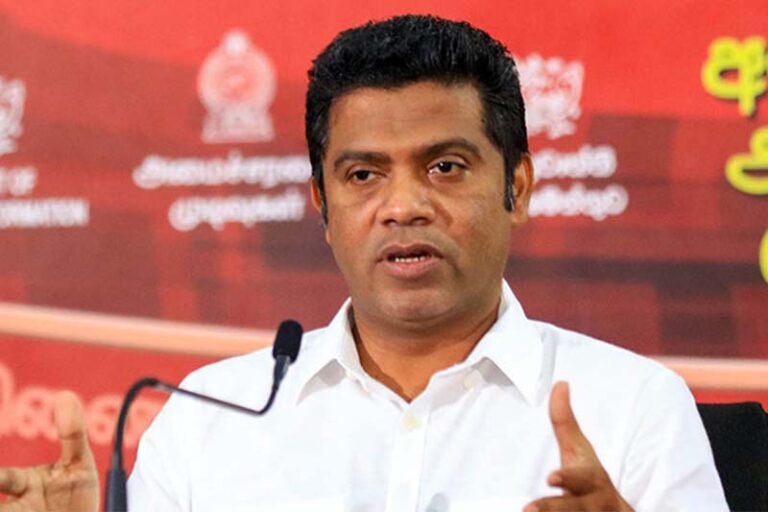
Deputy Finance Minister Anil Jayantha Fernando told Parliament that the amended Port City law replaces arbitrary concessions of up to 25 years with a structured system tied to investment size and job creation. Strategic investments are now classified from US$1 billion to US$25 million, with corresponding tax benefits scaled accordingly. On paper, this removes discretion—a long-standing source of corruption in Sri Lanka’s investment regime.
However the core issue is not transparency alone. The IMF program Sri Lanka entered after its sovereign default is built on broadening the tax base, increasing revenue predictability, and reducing carve-outs. A 15-year tax holiday for large investors especially in a dollarized enclave runs counter to that philosophy. It signals that while ordinary citizens face higher income taxes and consumption levies, elite investors continue to enjoy preferential treatment.
The government argues that Sri Lanka has rarely attracted billion-dollar investments and must compete aggressively with regional hubs such as Dubai and Singapore. But those jurisdictions rely less on tax holidays and more on monetary stability, regulatory certainty, and infrastructure efficiency. Sri Lanka, by contrast, has a history of currency crises triggered by expansionary monetary policy, forcing repeated IMF bailouts and post-crisis tax hikes.
This contradiction weakens the Port City’s appeal. Investors may welcome tax exemptions, but they price in exchange-rate risk, energy costs, and policy volatility. Sri Lanka’s high electricity tariffs, weak dollar inflows, and repeated currency depreciation undermine the very incentives the Port City seeks to offer.
There is also a fiscal opportunity cost. Corporate tax holidays reduce direct revenue, while personal income tax and VAT typically major revenue sources remain constrained. Sri Lanka still lacks VAT on electricity, unlike most East Asian economies, further narrowing the tax base. In effect, the burden of adjustment shifts to domestic taxpayers.
The Port City may yet attract interest, as officials report improved stability over the past two years. But without aligning investment incentives with IMF-backed structural reform particularly monetary discipline the 15-year tax holiday risks becoming another short-term fix in a long cycle of fiscal imbalance.
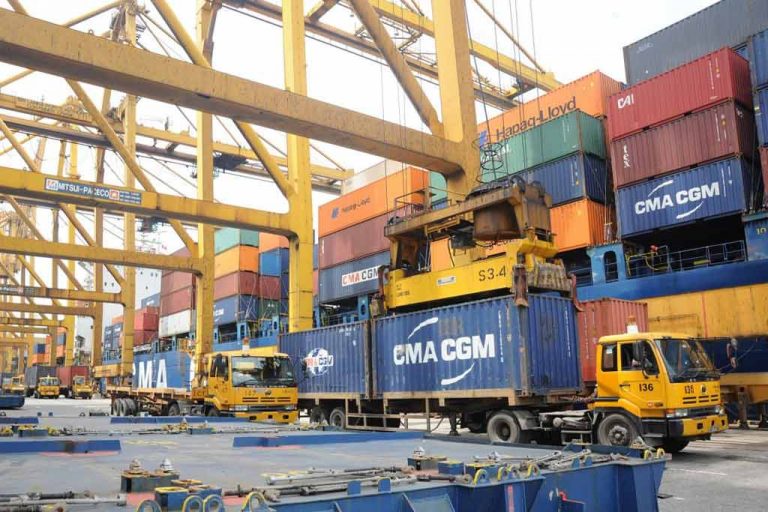
Justice and National Integration Minister Harshana Nanayakkara informed Parliament yesterday (08) that the Select Committee appointed to investigate the controversial release of 323 containers from the Port without the required scanning will be convened during the current Parliamentary sessions.
Responding to a question raised by Samagi Jana Balawegaya (SJB) MP Ajith P. Perera, the Minister said the Government is fully committed to holding the Parliamentary Select Committee (PSC) meetings to probe the incident. He added that the roadmap and programme for conducting the committee meetings would be communicated to committee members in due course.
Minister Nanayakkara explained that the delay in convening the PSC meetings was due to the inability of a majority of committee members to attend a meeting scheduled in December 2025, following the sudden convening of Parliament on that day. He noted that this decision and the reasons for postponement had already been conveyed to MP Ajith P. Perera last month.
Raising the issue in Parliament, MP Ajith P. Perera said the PSC had been appointed to investigate a matter of serious national concern, yet no meetings had been held since November 2025.
“This is a crucial issue that the entire country discussed, and even the ruling party agreed that a Select Committee should investigate it. However, no meetings have been held so far,” he said.
Perera stressed that the responsibility for convening the meetings lies with the Chairman of the Select Committee, who is the Justice Minister. He added that although a meeting scheduled last month was postponed, any deliberate delay or discouragement in holding the inquiry would raise further concerns.
“I am a member of this committee and we are fully prepared to actively participate. The people of this country want to know how Parliament intends to address this issue,” he said.
The SJB MP called on the Government to present a clear roadmap outlining when the committee meetings will begin, how many days they will be held, and the overall programme of investigations, so that members can plan accordingly.
Chief Government Whip and Minister of Health and Mass Media, Dr. Nalinda Jayatissa, told Parliament yesterday that the Government will take immediate action on any security-related issue faced by a Member of Parliament, provided it is formally reported.
Responding to accusations by the Leader of the Opposition and several opposition MPs that the Speaker had failed to adequately address a security concern raised by SJB MP Rohana Bandara, the Minister said the Government gives equal attention to the security of MPs from both the ruling party and the opposition.
Dr. Jayatissa stated that if any MP receives death threats or faces other security risks and reports the matter through proper channels, necessary steps will be taken based on the assessment of the Security Intelligence Unit. He cited the recent case of Opposition MP Jagath Withana, noting that after a formal complaint was made, both he and the Speaker intervened to ensure security was provided.
Referring to the allegation made by MP Rohana Bandara, the Minister said no formal notice regarding a security threat had been submitted. He added that it was surprising that Opposition Leader Sajith Premadasa, with decades of parliamentary experience, had not raised the issue through the appropriate procedures.
Dr. Jayatissa stressed that MPs should follow established processes to ensure their concerns are addressed effectively, rather than making public claims aimed at media attention.
The United States has announced that it will provide 10 US Navy TH-57 (Bell 206 Sea Ranger) helicopters to the Sri Lanka Air Force (SLAF) at no cost for the equipment itself.
In a post on social media platform X, US Ambassador to Sri Lanka Julie Chung said the helicopters, manufactured in Texas and known for their reliability, are being transferred under the US Excess Defence Articles (EDA) Programme. She added that the aircraft are expected to arrive in Sri Lanka in early 2026.
“So pleased that the United States can offer 10 @USNavy TH-57 (Bell 206 SEA RANGER) helicopters to @AirForceLK at no cost for the equipment itself. Crises like Cyclone Ditwah demonstrate the vital role helicopters play in search & rescue. These 10 helicopters will support the Sri Lanka Air Force by enhancing its fleet & pilot training for more effective disaster response,” Ambassador Chung said.
The transfer is expected to significantly strengthen Sri Lanka’s disaster preparedness and response capabilities, particularly in search and rescue operations during emergencies such as Cyclone Ditwah, while also enhancing pilot training and overall operational readiness of the Sri Lanka Air Force.
The Central Bank of Sri Lanka (CBSL) has presented its Policy Agenda for 2026 and Beyond, outlining strategic priorities aimed at maintaining price stability, safeguarding financial system stability and supporting sustainable economic growth, CBSL Governor Dr. Nandalal Weerasinghe announced.
According to the policy document, the Sri Lankan economy is expected to continue the growth momentum recorded over the past two years, with economic growth projected at around 4–5 per cent in 2026.
While acknowledging ongoing efforts by national and international stakeholders to restore economic normalcy, the Central Bank emphasised the urgent need to prioritise disaster preparedness and long-term resilience building, especially in light of recent climate-related challenges.
The policy agenda notes that the external current account is estimated to have recorded a surplus for the third consecutive year. As a result, the market-determined exchange rate remained relatively less volatile and experienced a gradual depreciation during the year.
Despite challenging conditions, including meeting external debt servicing obligations without corresponding inflows and increased demand for vehicle imports, Sri Lanka’s Gross Official Reserves (GOR) showed notable improvement. Reserves, which hovered between USD 6.0 billion and USD 6.3 billion for most of the year, surpassed USD 6.8 billion by the end of 2025—marking the highest reserve level recorded since the economic crisis.
Looking ahead, the Central Bank stated that it intends to implement several policy measures in 2026, with a strong focus on strengthening the formulation and execution of monetary policy. Continued efforts will also be made to enhance the transparency and predictability of policy actions, the CBSL said.
The government has not taken any decision to replace Employees’ Provident Fund (EPF) and Employees’ Trust Fund (ETF) benefits with a pension scheme, Labour Minister Anil Jayantha Fernando said.
Issuing a media statement yesterday (09), the Minister categorically rejected reports claiming that the government was preparing to introduce a pension system in place of EPF and ETF contributions, describing such claims as false and misleading.
He emphasised that EPF and ETF funds belong to the contributors and assured that employees will be able to access their savings without any hindrance upon retirement. The Minister further noted that contributors are currently allowed to withdraw up to around 30 percent of their funds to meet emergency needs.
Minister Fernando stressed that the government has no intention of reducing, curtailing or diverting any existing employee benefits.
“Our government will not take any action to reduce the entitlements of workers. On the contrary, we are committed to providing additional benefits,” he said.
Addressing public discussion on the possible introduction of a pension system in the future, the Minister clarified that while such debates may exist in society, no decision has been taken to convert EPF funds into a pension scheme or to replace the existing lump-sum payment system.
“The money saved through the hard work of the people will be used solely for their needs. There is no government decision to divert EPF funds into a pension system,” he added.